Japanese maples reward careful planting and thoughtful maintenance with beautiful foliage, graceful branching, and rich autumn color. Learn where to plant them, how to water and prune correctly, and what to do when leaves brown or branches wilt. Discover seasonal advice, troubleshooting tips, and practical solutions for healthier trees.
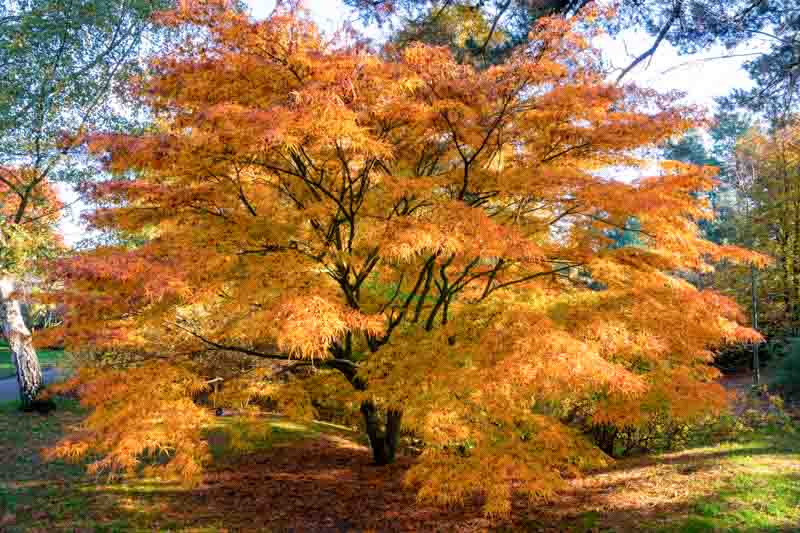


A Japanese maple can look magnificent in spring, then develop crisp, brown leaf edges by August. Another may wilt shortly after planting, even though the soil feels wet. These problems are frustrating, especially when the tree looked perfectly healthy at the nursery.
Fortunately, Japanese maples are not especially difficult to grow when their basic needs are met. The secret is choosing a suitable location, protecting their roots, providing consistent moisture without waterlogging, and allowing their natural shape to develop.
Whether you’re planting your first Japanese maple (Acer palmatum), caring for an established tree, or trying to rescue a struggling specimen, this guide explains what works, what to avoid, and how to recognize common problems.
Japanese Maple Care at a Glance
Most important: Healthy roots are the key to a healthy Japanese maple. Correct planting depth, good drainage, and appropriate watering prevent many problems before they begin.
Japanese maples are native to woodland environments in East Asia, where many grow in sheltered positions beneath taller trees. This provides a useful clue to their preferred garden conditions.
Most Acer palmatum cultivars are grown in USDA Zones 5-8, although individual hardiness varies. Some also flourish in suitable Zone 9 locations.
Winter hardiness does not measure summer heat tolerance. A Japanese maple may survive a hot climate but develop damaged foliage during prolonged heatwaves, particularly when exposed to drying winds or inadequate moisture.
Gardenia’s site-selection tip: Visit the planting area during the hottest afternoon hours. Check for reflected heat, drying winds, and access to irrigation. A sheltered location often matters more than choosing a cultivar advertised as sun tolerant.
| Hardiness |
5 - 9 |
|---|---|
| Climate Zones | 2, 3, 4, 5, 6, 7, 8, 9, 10, 12, 14, 15, 16, 17, 18, 19, 20, 21, 22, 23, 24 |
| Plant Type | Shrubs, Trees |
| Plant Family | Sapindaceae |
| Genus | Acer |
| Exposure | Full Sun, Partial Sun |
| Season of Interest | Spring (Early, Mid, Late), Summer (Early, Mid, Late), Fall, Winter |
| Maintenance | Low |
| Water Needs | Average |
| Soil Type | Chalk, Clay, Loam, Sand |
| Soil pH | Acid, Neutral |
| Soil Drainage | Moist but Well-Drained |
| Characteristics | Showy |
| Tolerances | Rabbit |
| Landscaping Ideas | Beds And Borders, Patio And Containers, Small Gardens |
| Garden Styles | City and Courtyard, Gravel and Rock Garden, Informal and Cottage, Japanese Garden, Traditional Garden, Woodland Garden |
Japanese maples prefer fertile soil that retains moisture while allowing excess water to drain. Loam enriched with organic matter is ideal, but other soil types can work when drainage and watering are appropriate.
Slightly acidic to neutral soil is generally preferred. Japanese maples do not automatically need acidifying fertilizer, and unnecessary amendments can create nutrient imbalances.
Yes, provided the clay drains adequately. Compacted, waterlogged soil restricts oxygen around the roots and can lead to decline.
Where drainage is poor, consider a broad, gently raised planting area. Avoid filling a deep hole with compost-rich soil surrounded by dense clay, as this can create a pocket where water accumulates.
Japanese maples also develop relatively shallow feeder roots. Protect the soil beneath established trees from compaction, excessive digging, and repeated cultivation.
Early spring and autumn are generally excellent planting seasons. Mild temperatures allow roots to establish before extreme summer heat or severe winter cold. Spring may be preferable in regions with particularly harsh winters.
Choose the right location. Allow room for the tree’s mature height and spread, not just its dimensions at purchase.
Inspect the root ball. Look for tightly circling or girdling roots. Correct manageable defects carefully, preserving healthy roots. Severe structural defects may justify rejecting the tree.
Find the root flare. Locate where the uppermost structural roots emerge from the trunk. Remove excess nursery soil covering this area.
Dig a wide, shallow hole. Make it approximately twice as wide as the root ball, but no deeper than necessary to position the root flare at or slightly above soil level.
Backfill with native soil. Settle the soil gently, water thoroughly, and keep any graft union above ground.
Apply mulch. Spread 2-3 inches of organic mulch over the surrounding root zone without piling it against the trunk.
Stake only when necessary, using flexible ties. Remove temporary supports once the tree can stand securely.
A Japanese maple planted too deeply may decline gradually, sometimes years after installation. Buried root flares and developing girdling roots can interfere with healthy growth.
Gardenia’s Planting Checklist
These simple checks can prevent problems that are difficult to correct once the tree is established.
There is no universal watering schedule. A newly planted tree in sandy soil during a heatwave needs very different care from an established maple growing in shaded loam.
Newly planted Japanese maples require close attention while their roots establish. Check the root ball and surrounding soil frequently, particularly during hot or windy weather.
Water slowly and thoroughly when the root zone begins to dry, allowing excess moisture to drain. The aim is consistently moist soil, not permanently saturated ground.
Establishment may take more than one growing season, especially for larger nursery trees. Continue monitoring during the second summer if necessary.
Established Japanese maples usually tolerate brief dry periods but may need supplemental watering during prolonged drought.
Check soil moisture several inches beneath the mulch. If dry at root depth, water deeply across the root zone rather than applying a brief spray close to the trunk.
Yes. Waterlogged soil restricts oxygen around the roots, reducing their ability to absorb moisture. As a result, an overwatered tree may wilt much like a drought-stressed one.
Gardenia’s Watering Decision Guide
Always examine the root-zone conditions before deciding what your tree needs.
Japanese maples are not heavy feeders. An established tree growing normally in fertile soil often needs no supplemental fertilizer.
If growth is unusually weak, investigate drainage, root health, soil moisture, and possible nutrient deficiencies before feeding. When fertilizer is justified, use an appropriate product at the recommended rate during early spring growth.
Avoid excessive nitrogen, which can encourage soft shoots vulnerable to frost and environmental stress.
Apply 2-3 inches of shredded bark, leaf mold, or similar organic mulch over a generous area beneath the canopy. Mulch conserves moisture, moderates soil temperature, and protects shallow roots.
Keep the trunk and root flare exposed, and replenish mulch as it decomposes rather than continuously increasing its depth.
Japanese maples usually need surprisingly little pruning. Their naturally layered branches and graceful silhouettes are among their finest qualities.
Remove dead, damaged, or rubbing branches when appropriate. For structural pruning, late summer through early winter is often a useful period, depending on local conditions, because growth has slowed and the branch framework can be assessed.
Avoid unnecessary heavy pruning near spring budbreak, when maples may bleed sap. Sap bleeding is generally not seriously harmful, but selective pruning at a more suitable time helps preserve the tree’s natural shape and minimizes stress.
For upright varieties, selectively remove crossing, damaged, or poorly positioned branches while preserving the main framework. Make cuts at appropriate branch junctions instead of shortening every shoot.
For weeping laceleaf maples, follow the cascading branch structure. Remove dead interior twigs and selectively thin congested growth rather than shearing the canopy into a dense dome.
Never top a Japanese maple to control its height. Remove vigorous shoots emerging from below the graft union, as they belong to the rootstock and may overwhelm the ornamental cultivar. Explore How and When to Prune Japanese Maples.
Compact Japanese maples can flourish in containers, bringing graceful foliage and seasonal color to terraces, courtyards, and patios.
Choose a sturdy pot with generous drainage holes and a quality potting medium. Avoid ordinary garden soil, which can compact in containers.
Check moisture frequently during warm weather, especially when pots stand on hot paving. Repot when roots become congested, preferably during dormancy before spring growth. Move to a slightly larger pot or perform careful root management where appropriate.
Unlike established trees growing in fertile garden soil, container-grown Japanese maples may benefit from occasional light feeding because nutrients are gradually depleted or washed from the potting medium. Use a suitable fertilizer at the recommended rate, avoiding excessive applications.
In cold regions, insulate or shelter containers during severe freezing because exposed roots are more vulnerable than those growing in garden soil.
Explore Great Japanese Maples for Containers for suitable varieties and planting ideas.
Adjust maintenance to your local climate and the tree’s growth stage rather than following a rigid calendar.
| Season | Care priorities |
|---|---|
| Spring | Check for frost damage and aphids, monitor moisture, and refresh mulch. |
| Summer | Watch for drought stress, leaf scorch, and mites. Water deeply when needed. |
| Autumn | Enjoy fall color, remove diseased fallen foliage, and plant young trees where conditions permit. |
| Winter | Inspect branching, protect container roots from severe cold, and check mulch and drainage. |
Late spring frosts can damage tender new leaves. Healthy trees may produce replacement growth, so allow time to assess the extent of injury before removing apparently lifeless branches.
When damaging frost is forecast after budbreak, protect small or newly planted trees with horticultural fleece or another suitable breathable covering. Container-grown maples can be moved temporarily into a sheltered, cool position until the danger passes.
Brown leaves, wilting, and branch dieback do not necessarily indicate disease. Different problems often produce similar symptoms, making careful observation essential.
| What you see | Possible causes | What to check first |
|---|---|---|
| Brown leaf margins | Heat, drought, wind, salts, or root stress | Moisture and sun exposure |
| Wilting with dry soil | Insufficient water | Root-ball moisture and irrigation |
| Wilting with wet soil | Poor drainage, root damage, or root disease | Root-zone saturation |
| Yellow leaves outside autumn | Root stress, nutrient imbalance, or pH | Drainage and soil conditions |
| New tree losing leaves | Transplant shock or moisture imbalance | Planting depth and root-ball moisture |
| Progressive branch dieback | Root problems, frost, cankers, or vascular disease | Tree history and symptom progression |
| Sticky leaves or insects | Aphids or scale insects | Young shoots and leaf undersides |
Leaf scorch causes crisp, brown leaf tips and margins when water loss exceeds the roots’ ability to replace moisture.
Heat, drought, wind, excess salts, and root injury can contribute. Damaged foliage will not turn green again. Correct the underlying cause and protect healthy leaves rather than applying fungicides to environmental injury.
Is Your Japanese Maple Looking Unhealthy? Brown leaf edges, curling foliage, and wilting branches can have very different causes. Discover how to tell ordinary leaf scorch from watering problems, root damage, and serious diseases in our Japanese Maple Problems: Brown Leaves, Leaf Scorch and Wilting guide, with a practical symptom checker to help you decide what to do next.
A recently planted tree may wilt, drop leaves, or develop brown edges while its root system adjusts. This is commonly called transplant shock, but the symptoms should not automatically be dismissed as harmless.
Check whether the original root ball is drying out while surrounding soil remains moist. Examine planting depth, drainage, and recent heat exposure. Persistent severe wilting or progressive dieback requires closer investigation.
Yes. Prolonged waterlogging can damage roots and favor diseases such as Phytophthora root rot. Affected trees may develop yellowing leaves, persistent wilting, reduced growth, or branch dieback.
Improve drainage and avoid excessive irrigation, but remember that root rot cannot be reliably diagnosed from foliage symptoms alone. Suspected infections may require professional testing. Simply adding more water or fertilizer can make an already stressed root system worse.
Frost injury, root damage, cankers, and vascular diseases can cause similar symptoms. Verticillium wilt may produce wilting and dieback affecting part of the crown.
Symptoms alone cannot reliably confirm the disease. Laboratory examination of suitable symptomatic tissue may be necessary. Accurate diagnosis is important because there is no dependable chemical cure for Verticillium-infected trees.
Aphids may gather on young shoots and produce sticky honeydew. Scale insects attach to stems, while spider mites can cause fine leaf stippling during hot, dry weather.
Identify the pest and assess the damage before treating. Small infestations may require little intervention, particularly where natural predators are active.
Check the soil: Is it dry, moderately moist, or saturated beneath the surface?
Check the pattern: Are exposed leaves affected, or are whole branches dying?
Check recent changes: Was the tree planted, pruned, exposed to frost, or affected by an irrigation problem?
These observations help distinguish environmental stress from possible pests or disease before you choose a treatment.
Japanese maples can be grown from seed, but seedlings vary genetically and will not reliably reproduce named cultivars such as ‘Bloodgood’ or ‘Sango-kaku’. Seeds commonly need cold, moist stratification before germination.
Named cultivars are generally propagated by grafting onto compatible rootstocks. Some can be propagated from cuttings, although rooting success varies and may require controlled conditions.
If you want predictable foliage, mature size, and growth habit, choose a correctly labeled nursery-grown cultivar.
Even excellent care cannot compensate indefinitely for a tree planted in unsuitable conditions. A vigorous upright cultivar needs different space from a compact maple or a low, spreading laceleaf.
Explore Gardenia’s Japanese Maple collection, featuring 47 recorded varieties, and use Gardenia’s Maple Comparison to evaluate mature size, growth habit, and growing requirements. Review our Best Japanese Maples for Small Gardens.
For suitable underplanting, see Companion Plants for Your Japanese Maples and Plant Combination Ideas with Japanese Maples.
Compare Japanese maples by mature size, sunlight, hardiness, and growing requirements. Then use Gardenia’s Design Tool to check how your chosen tree fits with suitable companion plants.
Japanese maples are generally manageable when planted in a suitable location. They need well-drained soil, reliable moisture while establishing, and protection from extreme heat in warm climates. Healthy established trees often require little fertilizer or pruning.
Water according to soil moisture, weather, tree age, and drainage rather than a fixed schedule. Newly planted trees need frequent moisture checks. Established trees may need supplemental water during drought. Avoid keeping the root zone permanently saturated.
Many Japanese maples tolerate full sun in cool-summer regions when moisture is adequate. In hot climates, morning sun and afternoon shade are generally preferable. Pale, variegated, and delicate laceleaf varieties may be especially susceptible to scorch.
Japanese maples need minimal pruning. Remove dead or damaged wood as appropriate, and perform structural pruning during late summer or a suitable dormant period according to local conditions. Avoid topping and unnecessary heavy pruning near spring budbreak.
Possible causes include root-ball drought, saturated soil, deep planting, damaged roots, and excessive heat exposure. Check planting depth, moisture, drainage, and recent weather. Progressive branch dieback may require professional diagnosis.
Usually not. Japanese maples growing normally in fertile soil often need no additional fertilizer. If growth is poor, investigate root health, drainage, soil moisture, and nutrient availability before feeding.
Updated and reviewed by Gardenia: October 2026
| Hardiness |
5 - 9 |
|---|---|
| Climate Zones | 2, 3, 4, 5, 6, 7, 8, 9, 10, 12, 14, 15, 16, 17, 18, 19, 20, 21, 22, 23, 24 |
| Plant Type | Shrubs, Trees |
| Plant Family | Sapindaceae |
| Genus | Acer |
| Exposure | Full Sun, Partial Sun |
| Season of Interest | Spring (Early, Mid, Late), Summer (Early, Mid, Late), Fall, Winter |
| Maintenance | Low |
| Water Needs | Average |
| Soil Type | Chalk, Clay, Loam, Sand |
| Soil pH | Acid, Neutral |
| Soil Drainage | Moist but Well-Drained |
| Characteristics | Showy |
| Tolerances | Rabbit |
| Landscaping Ideas | Beds And Borders, Patio And Containers, Small Gardens |
| Garden Styles | City and Courtyard, Gravel and Rock Garden, Informal and Cottage, Japanese Garden, Traditional Garden, Woodland Garden |
Create a membership account to save your garden designs and to view them on any device.
Becoming a contributing member of Gardenia is easy and can be done in just a few minutes. If you provide us with your name, email address and the payment of a modest $25 annual membership fee, you will become a full member, enabling you to design and save up to 25 of your garden design ideas.
Join now and start creating your dream garden!