Are your Japanese maple leaves turning brown, curling, or wilting? Don't assume your tree is dying. Learn to distinguish ordinary leaf scorch from drought, waterlogged roots, frost injury, and serious diseases. Follow a practical symptom checker to identify likely causes, choose the right response, and help your maple recover.
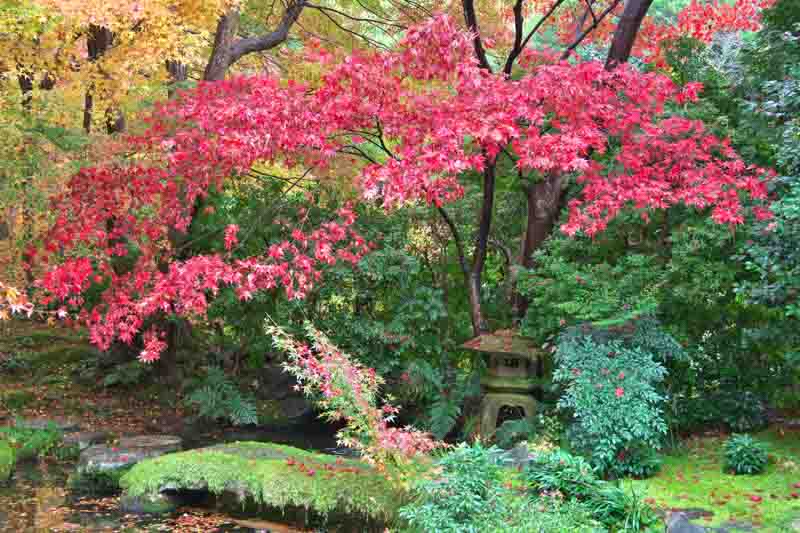


Few things are more disappointing than watching a beautiful Japanese maple develop brown, curling leaves. One week the tree looks perfectly healthy. The next, its leaf tips are crispy, branches are drooping, or part of the canopy appears to be dying.
Is it too much sun? Not enough water? Root rot? Or a disease such as Verticillium wilt?
The answer often depends on three clues: where the damage appears, how quickly it develops, and what is happening around the roots. Brown edges after a heat wave tell a different story from one branch suddenly wilting while the rest of the tree remains green.
Fortunately, many Japanese maple (Acer palmatum) problems are caused by environmental stress rather than infectious disease. Leaf scorch can look alarming without permanently harming the tree. Other symptoms, however, deserve closer attention.
This guide will help you recognize common Japanese maple problems, narrow down their likely causes, and take the right action before making matters worse.
Japanese Maple Problems at a Glance
Start here: Check soil moisture and the pattern of damage before adding water, fertilizer, pesticides, or pruning.
Before deciding what is wrong with your Japanese maple, look carefully at how the symptoms are distributed. Are the brown leaves concentrated on the sun-facing side? Is the entire canopy wilting? Or is one branch declining while the others appear healthy?
Gardenia’s symptom checker uses four steps: identify what you see, consider possible causes, check the most relevant conditions, and choose the next action.
| What you see | Possible causes | What to check | What to do next |
|---|---|---|---|
| Brown, crispy leaf tips and edges | Leaf scorch, heat, wind, drought | Recent weather and soil moisture | Correct watering or exposure; retain partly green leaves |
| Afternoon wilting, overnight recovery | Temporary water imbalance | Heat exposure and root-zone moisture | Monitor closely; adjust care if wilting recurs |
| Wilting with dry soil | Drought stress | Moisture several inches below the surface | Water thoroughly and reassess |
| Wilting with persistently wet soil | Root oxygen deprivation, root injury, root rot | Drainage and irrigation frequency | Stop unnecessary watering; investigate roots |
| One branch or one side wilting | Canker, Verticillium wilt, localized root damage | Bark lesions, recent injury, symptom progression | Seek diagnosis if unexplained or worsening |
| Distinct brown or black spots | Leaf spots, anthracnose, chemical injury | Lesion patterns, weather, recent sprays | Identify cause before considering treatment |
| Tender spring leaves turning black | Late frost injury | Recent cold nights and affected new growth | Allow time for healthy buds to develop |
Remember: These are clues, not diagnoses. A Japanese maple can experience more than one problem simultaneously, and several different causes may produce nearly identical leaves.
You do not need to identify a fungus or insect immediately. Start with five simple observations that can eliminate many common explanations.
Gardenia’s five-minute rule: If you cannot establish whether the roots are too dry or too wet, don’t change the watering schedule yet. More water helps a drought-stressed maple but can worsen oxygen deprivation around saturated roots.
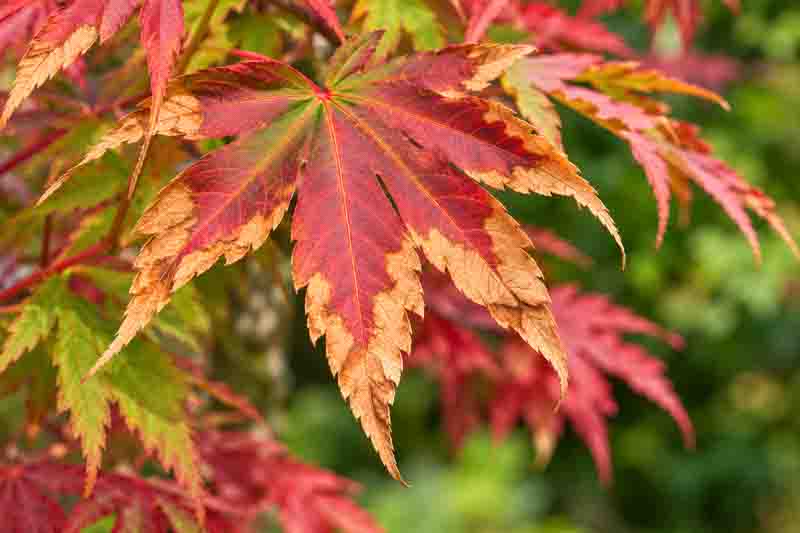 Illustration of Japanese maple leaf scorch, showing dry, brown leaf margins
The most frequent explanation is environmental leaf scorch. It develops when leaves lose moisture more quickly than the roots can replace it.
Damage commonly begins at the leaf tips and margins, which turn tan or brown. With prolonged stress, leaves may curl, shrivel, or become entirely crisp.
Several factors can trigger the same response:
Japanese maples with finely dissected foliage and pale or variegated leaves can be particularly vulnerable in hot, exposed gardens.
Explore Gardenia’s Leaf Scorch guide for a broader explanation of this common plant disorder.
Will brown leaves turn green again? No. Once leaf tissue has died, its color will not recover. However, a Japanese maple with healthy branches and buds may produce normal foliage during later growth or the following spring.
Leaf scorch is a symptom of stress, not a disease that automatically requires spraying. Treatment begins with improving the conditions that caused the damage.
If the root zone is dry, water slowly and thoroughly. Newly planted maples need particular attention because their roots have not yet spread extensively into surrounding soil.
Check how the soil drains before repeating irrigation. If it remains saturated, investigate why.
Morning sun and afternoon shade are often ideal in hot-summer regions. Temporary shade cloth may help young or container-grown specimens during severe heat.
Avoid unnecessary pruning, which can expose previously shaded branches to direct sunlight.
Apply approximately 2-3 inches (5-7.5 cm) of organic mulch across the root zone, keeping it away from the trunk and root flare.
Mulch helps moderate soil temperature and evaporation, but it cannot correct inadequate drainage.
Even damaged leaves can continue photosynthesizing where green tissue remains. Stripping the canopy may increase stress and encourage additional sun exposure.
Skip heavy fertilization while the tree is recovering.
A wilted Japanese maple is not necessarily thirsty. Both dry soil and excessive moisture can interrupt water delivery to the leaves.
Dry soil at root depth, drooping foliage, crisp leaf margins, and recent hot weather suggest insufficient moisture.
Water thoroughly and reassess the tree. Avoid relying on frequent shallow sprinkling that does not adequately wet the root zone.
Persistently saturated soil can exclude oxygen from the root zone. Without adequate oxygen, roots cannot function normally and may eventually die.
The canopy may wilt even though there is plenty of water in the ground. Yellowing leaves, weak growth, and continued decline can accompany the problem.
Waterlogging alone can damage roots without any infectious disease being present. Phytophthora and other root pathogens are additional possibilities, not automatic consequences of every wet planting site.
Correct excessive irrigation and drainage problems first. Seek diagnostic help if the tree continues declining.
A common mistake: Seeing wilted leaves and immediately watering again. If the soil is already wet, additional irrigation can make a root problem worse.
Wilting occurs when leaves lose firmness because water supply cannot keep pace with demand.
If foliage droops during a hot afternoon but recovers overnight, temporary water stress is possible. That recovery is reassuring, but it does not prove that the roots are healthy. Repeated wilting, especially with browning or leaf drop, deserves further investigation.
Begin with the root zone. Check moisture, drainage, recent transplanting, soil disturbance, and extreme weather.
Newly planted trees are particularly vulnerable when irrigation wets the surrounding soil but fails to penetrate a dry original root ball.
Localized wilting points toward a different set of possibilities.
Look for a sunken or cracked area of bark, a recent injury, or signs that the branch’s water supply has been interrupted. Branch cankers, localized root damage, and vascular diseases such as Verticillium wilt can cause similar patterns.
If one branch rapidly declines for no obvious reason, especially while the rest of the tree remains healthy, a professional assessment may be appropriate.
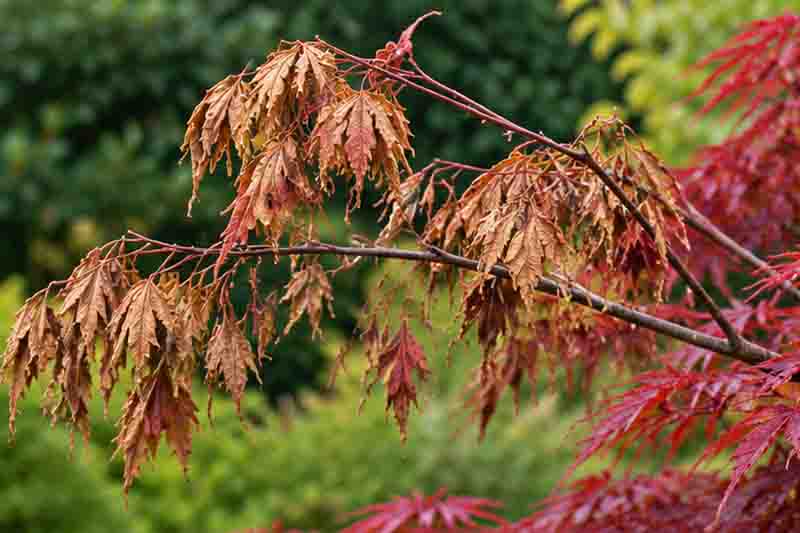 Illustration of localized branch dieback on a Japanese maple. Several causes are possible
Both problems can cause individual branches to wilt and die, but they affect the tree differently.
Verticillium wilt is caused by soilborne Verticillium fungi that enter through the roots and colonize water-conducting tissues.
Symptoms may include sudden wilting of one or several branches, scorched foliage, smaller leaves, and progressive dieback. Some affected branches develop greenish, olive, or brown staining within the sapwood.
However, internal discoloration is not always present, and its appearance alone cannot confirm the disease.
Cankers affect bark and underlying tissues. They may appear as localized sunken, cracked, or discolored areas, sometimes accompanied by branch death beyond the affected section.
Unlike a vascular wilt, a canker may be associated with an identifiable external lesion. However, branch wounds and staining are not always easy to interpret.
Construction damage, girdling roots, and other localized root problems can also cause uneven canopy decline. A single dying branch is therefore not proof of infection.
When to seek a diagnosis
If branch dieback progresses without an obvious cause, contact a university extension plant diagnostic laboratory or qualified arborist. Verticillium wilt cannot be reliably diagnosed from leaf color alone, and there is no established chemical cure for a systemic infection.
Roots are the hidden foundation of a healthy Japanese maple. When they struggle, the canopy may display scorch, wilting, yellowing, or premature leaf drop.
Phytophthora organisms are water molds that can damage roots and sometimes the lower trunk, especially where drainage is poor.
Symptoms may include weak growth, wilting, leaf discoloration, and progressive branch dieback. These signs are not specific enough for diagnosis without additional investigation.
Improving drainage and avoiding excessive irrigation are essential preventive measures. A confirmed disease may require professional management, and severely damaged roots may not recover.
Roots that circle and compress the trunk can restrict growth and water transport as the tree matures. A deeply buried root flare may also contribute to chronic decline.
Possible clues include poor growth, repeated scorch, and a trunk that disappears into the soil without its normal widening at the base.
Avoid aggressive excavation around an established Japanese maple. Have substantial root defects assessed by an arborist.
Paving, construction, trenching, and heavy foot traffic can restrict or damage roots. Protect the remaining root zone and prevent further disturbance while the tree recovers.
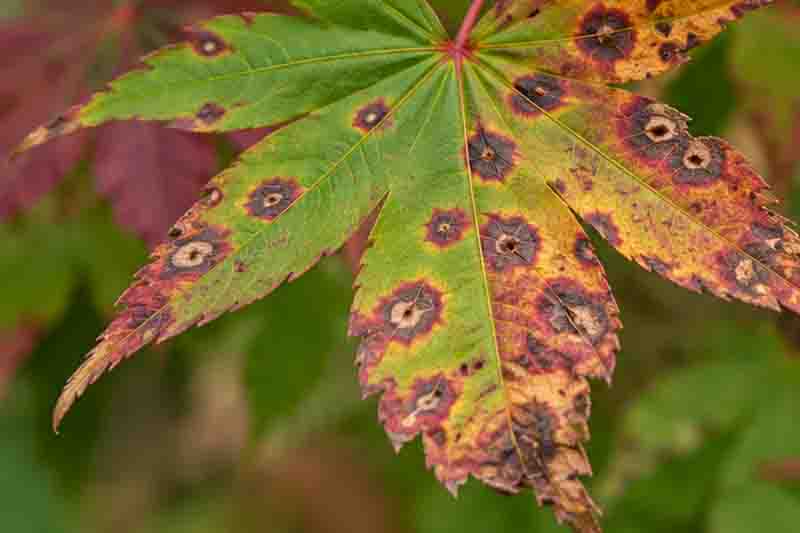 Illustration of leaf-spot symptoms on Japanese maple foliage. The pathogen has not been identified
Environmental scorch usually produces continuous browning along leaf edges. Separate circular or irregular spots may suggest a different cause.
Some fungal diseases cause dark lesions, irregular patches, or premature leaf drop, especially during prolonged wet weather.
Minor infections are often primarily cosmetic. Remove heavily infected fallen leaves, avoid unnecessary overhead watering, and improve growing conditions.
See Gardenia’s Leaf Spot Diseases guide for more information about identifying leaf lesions.
Inspect leaf undersides and twigs for mites, scale insects, or other signs of feeding.
Herbicide drift, spray injury, and excessive fertilizer salts can also cause distorted or scorched foliage. Review recent garden treatments before assuming the tree has a fungal disease.
Do not apply fungicides or insecticides simply because leaves are brown. First establish whether a treatable pest or pathogen is actually present.
Leaf curling commonly accompanies scorch as damaged tissues dry and contract. Irregular watering, pests, and frost can also distort foliage.
When tender young leaves suddenly blacken in spring, check whether temperatures fell below freezing the previous night.
Late frost can damage new Japanese maple growth even when the tree itself is hardy enough for the climate.
Allow time for healthy buds to develop before removing apparently damaged shoots. If no frost occurred, investigate other possible causes, especially where branch dieback accompanies the blackened leaves.
Japanese maples naturally shed their leaves in autumn. Losing foliage in midsummer, however, can indicate severe environmental stress or declining root health.
Heat waves, prolonged drought, saturated soil, transplant shock, and disease can all trigger early leaf drop.
A tree that sheds leaves after a short period of extreme weather may recover if its buds and branches remain healthy. Repeated defoliation or progressive dieback is more concerning.
Keep growing conditions stable, avoid heavy fertilization, and watch for healthy bud development. Do not attempt to force late-season regrowth with aggressive feeding.
Japanese maples grown in pots are particularly vulnerable to rapid changes in temperature and moisture.
In summer, a container exposed to afternoon sunshine can become surprisingly hot. During dry weather, a small root ball may lose moisture quickly. Yet blocked drainage holes and unsuitable potting media can also keep roots saturated.
If your potted Japanese maple is wilting or developing brown leaves, check the potting medium at different depths, confirm free drainage, inspect for root crowding, and assess exposure to afternoon heat.
Consider root-feeding pests such as vine weevil larvae where unexplained root damage is suspected.
For more advice, explore Great Japanese Maples for Containers.
There is no universal treatment for brown leaves. Recovery depends on correcting the original cause.
| Problem | Helpful response | Avoid |
|---|---|---|
| Sun or heat scorch | Moderate exposure and maintain appropriate moisture | Removing every damaged leaf |
| Dry roots | Water deeply and monitor | Shallow, ineffective sprinkling |
| Wet roots | Correct irrigation and assess drainage | Adding more water automatically |
| Unexplained branch wilt | Examine branches and seek diagnosis if progressing | Unconfirmed disease treatments |
| Spring frost damage | Wait for replacement growth | Immediate severe pruning |
Keep mulch clear of the trunk, maintain reasonable soil moisture, and avoid unnecessary pruning or fertilizer while the tree is stressed.
If dieback is extensive, progresses rapidly, or appears to involve the root system, seek qualified assistance rather than relying on trial-and-error treatments.
Once you’ve identified the likely cause of brown leaves or wilting, explore Gardenia’s Japanese maple growing information to better understand suitable light, soil, moisture, and mature size. If the planting site is unsuitable, use Plant Finder to find appropriate companions or alternatives, then check your choices in the Garden Design Tool.
The best prevention begins with selecting a Japanese maple suited to its location.
For a complete guide to keeping your tree healthy, explore How to Grow and Care for Japanese Maple Trees, including planting, watering, sunlight, soil requirements, and seasonal maintenance.
In hot-summer regions, morning sun and afternoon shade often provide a comfortable balance. Shelter from drying winds is also helpful, especially for delicate laceleaf and variegated cultivars.
Plant in moisture-retentive but well-drained soil, keep the root flare visible, and protect the root zone from compaction or disturbance.
Different Japanese maple cultivars vary in mature size, growth habit, and tolerance of exposed conditions. Compare their requirements before planting rather than relying on pruning or irrigation to compensate for an unsuitable location.
Browse Gardenia’s Japanese Maple collection for cultivar descriptions and growing requirements.
Brown Japanese maple leaves are frequently caused by environmental leaf scorch from hot sun, drying winds, drought, or impaired root function. Check the pattern of browning, soil moisture, and recent weather before assuming the tree has a disease.
Yes. Mild or moderate scorch often does not permanently damage an otherwise healthy Japanese maple. Brown tissue will not turn green again, but healthy branches and buds can produce new foliage. Correct the underlying moisture or exposure problem.
Wet-soil wilting may result from insufficient oxygen around the roots, root injury, or root rot. Waterlogging alone can damage roots without infection. Investigate drainage and irrigation before adding more water.
Verticillium wilt can cause sudden wilting of individual branches, progressive dieback, and sometimes internal sapwood discoloration. Similar symptoms may result from cankers, root damage, or environmental stress. Laboratory diagnosis is recommended.
Usually not. Partly scorched leaves may still photosynthesize, and removing them can expose branches to more sunlight. Leave damaged foliage in place unless a particular disease-management reason justifies removal.
Tender new Japanese maple leaves may blacken after a late frost. Check recent temperatures and whether the damage affects new growth. Wait for healthy buds to develop before pruning, and investigate other causes if frost is unlikely.
Updated and reviewed by Gardenia: October 2026
| Hardiness |
5 - 9 |
|---|---|
| Climate Zones | 2, 3, 4, 5, 6, 7, 8, 9, 10, 12, 14, 15, 16, 17, 18, 19, 20, 21, 22, 23, 24 |
| Plant Type | Shrubs, Trees |
| Plant Family | Sapindaceae |
| Genus | Acer |
| Exposure | Full Sun, Partial Sun |
| Season of Interest | Spring (Early, Mid, Late), Summer (Early, Mid, Late), Fall, Winter |
| Maintenance | Low |
| Water Needs | Average |
| Soil Type | Chalk, Clay, Loam, Sand |
| Soil pH | Acid, Neutral |
| Soil Drainage | Moist but Well-Drained |
| Characteristics | Showy |
| Tolerances | Rabbit |
| Landscaping Ideas | Beds And Borders, Patio And Containers, Small Gardens |
| Garden Styles | City and Courtyard, Gravel and Rock Garden, Informal and Cottage, Japanese Garden, Traditional Garden, Woodland Garden |
Create a membership account to save your garden designs and to view them on any device.
Becoming a contributing member of Gardenia is easy and can be done in just a few minutes. If you provide us with your name, email address and the payment of a modest $25 annual membership fee, you will become a full member, enabling you to design and save up to 25 of your garden design ideas.
Join now and start creating your dream garden!