Japanese maple 'Shishigashira', Lion's Head Japanese Maple, Lion's Mane Japanese Maple, Acer palmatum 'Shishi-gashira', Acer palmatum 'Ribesifolium', Acer palmatum 'Crispifolium', Acer palmatum 'Mejishi'

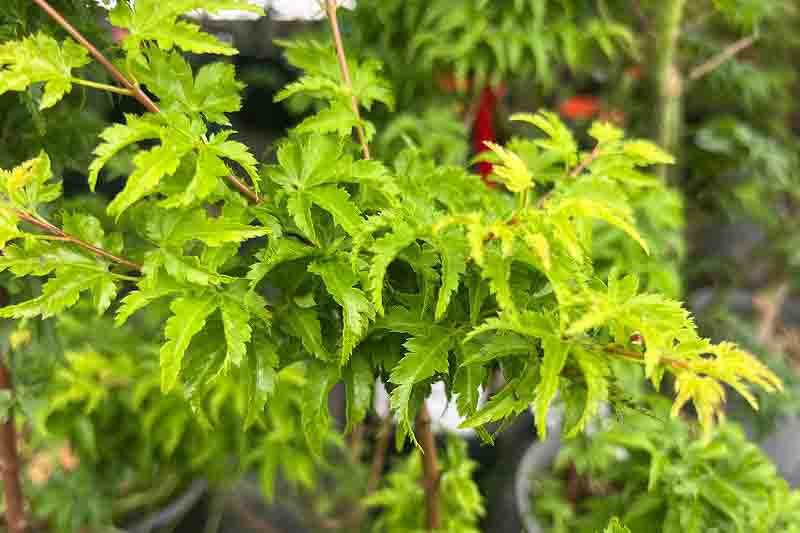
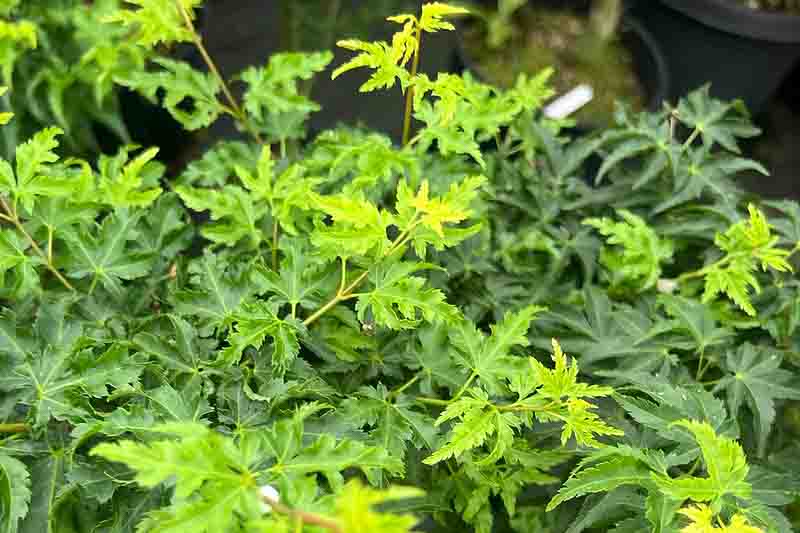


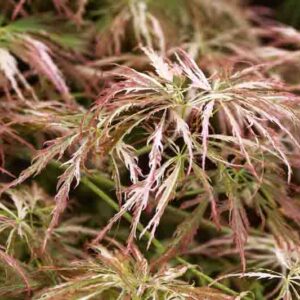
From a distance, Acer palmatum ‘Shishigashira’ can resemble a small tree that has been carefully clipped into shape. Move closer, and its secret becomes clear: hundreds of tightly curled green leaves crowd along short, sturdy shoots, creating a naturally dense, almost sculpted crown.
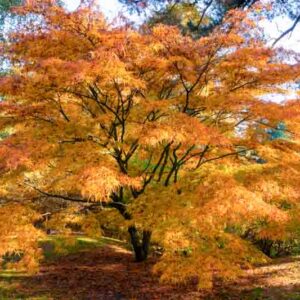
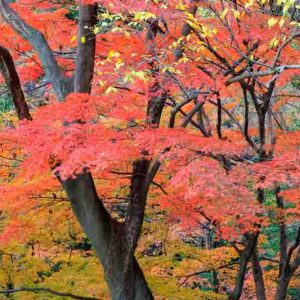
Known as the Lion’s Head Japanese Maple, ‘Shishigashira’ is an unusually upright, slow-growing cultivar with a character all its own. Its glossy, crinkled foliage remains green through summer, then turns gold, orange, and crimson remarkably late in autumn. For Japanese gardens, courtyards, and sheltered borders, few small trees offer quite the same combination of texture, structure, and seasonal color.
Summary: Slow-growing, deciduous Japanese maple with a dense, upright, often vase-shaped habit.
Use: Ideal for Japanese gardens, courtyards, sheltered borders, small gardens, and large containers.
Highlight: Small, heavily curled green leaves, clustered along sturdy branches, with brilliant late autumn color.
Botanical interest: Its unusual foliage resembles a lion’s mane, and its fall display often follows that of other Japanese maples.
| Botanical Name | Acer palmatum ‘Shishigashira’ |
|---|---|
| Alternative Names | ‘Shishi-gashira’; ‘Ribesifolium’, ‘Crispifolium’, ‘Mejishi’ (historical synonyms) |
| Family | Sapindaceae |
| Common Names | Lion’s Head Japanese Maple, Lion’s Mane Japanese Maple |
| Origin | Japanese cultivated selection; parent species native to East Asia |
| Plant Type and Habit | Deciduous small tree or large shrub; slow-growing, upright, densely branched |
| Hardiness | USDA Zones 5-8; RHS H6 |
| Size at 10 Years / Mature Size | About 7 ft. (2.1 m) tall after 10 years; commonly 7-15 ft. (2.1-4.5 m) tall and 5-12 ft. (1.5-3.6 m) wide over many years. Exceptional specimens may grow taller. |
| Exposure | Full sun to partial shade; afternoon shade in hot climates |
| Soil | Fertile, moist but well-drained clay, loam, sand, or suitable chalky soil; preferably acidic to neutral |
| Foliage | Small, crinkled, 5-7-lobed green leaves; gold, orange, and crimson fall color |
| Flowers and Fruit | Small reddish-purple spring flowers followed by paired winged samaras |
| Pet Safety | No established cultivar-specific toxicity classification; discourage ingestion |
‘Shishigashira’ is a Japanese selection of Acer palmatum whose name translates to “lion’s head”. Its crowded, curled leaves resemble a lion’s mane. Known historically as ‘Ribesifolium’ and ‘Mejishi’, it is now widely grown under the name ‘Shishigashira’, although the RHS uses ‘Shishi-gashira’.
Short, sturdy shoots give this maple a dense, upright, sometimes vase-shaped silhouette. Young trees may look surprisingly open, but the crown becomes fuller with age. The Dawes Arboretum records approximately 7 ft. (2.1 m) of height after 10 years.
Missouri Botanical Garden gives a longer-term size of 7-15 ft. (2.1-4.5 m) tall and 5-12 ft. (1.5-3.6 m) wide. Growth continues beyond ten years, and exceptional old specimens can exceed these estimates. Allow room for its eventual crown rather than planning around the size of a young nursery tree.
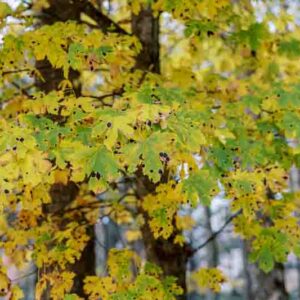
The small, 5-7-lobed leaves, usually about 2 in. (5 cm) long, have irregularly toothed margins curled upward and inward. They emerge bright green, deepen during summer, then develop gold, orange, and crimson shades in autumn. Their tight clustering makes the branches appear unusually thick.
Small reddish-purple flowers appear in spring, typically April or May, followed by paired winged fruits called samaras. Neither is particularly showy from a distance.
Hardy in USDA Zones 5-8, ‘Shishigashira’ holds its green foliage unusually late before coloring. After leaf fall, its sturdy, often twisted branching provides winter structure.
‘Shishigashira’ has earned the prestigious Award of Garden Merit of the Royal Horticultural Society.
The small spring flowers may attract visiting insects, while the branches provide limited shelter. It is primarily an ornamental tree, not a major wildlife resource.
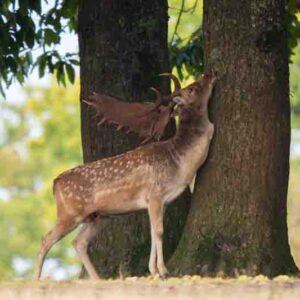
Japanese maples are generally rabbit-tolerant and show some resistance to deer browsing. Deer may still browse tender shoots or rub young trunks with their antlers.
Established trees tolerate brief dry periods, but prolonged drought can cause leaf scorch. Regular moisture is especially important during hot weather.
No established cultivar-specific toxicity classification is available. Japanese maple should not be confused with red maple (Acer rubrum), whose wilted leaves are dangerous to horses. Discourage ingestion of ornamental foliage.
‘Shishigashira’ is not generally considered invasive. Japanese maple seedlings can occasionally establish outside cultivation in favorable regions, but this cultivar is not known for aggressive spreading.
‘Shishigashira’ is recognizable once you know what to look for, but young trees may not yet display the dense crown seen on established specimens.
Buying tip: Ask to see photographs of mature nursery stock. An open-looking young tree is not necessarily mislabeled. Confirm the cultivar’s provenance rather than relying on foliage alone.
| Cultivar | Habit | Key Difference |
|---|---|---|
| ‘Shishigashira’ | Upright, dense | Tightly curled green leaves in crowded tufts |
| ‘Mikawa yatsubusa’ | Compact, layered | Overlapping, shingled green leaves without pronounced curling |
| ‘Skeeter’s Broom’ | Narrow, upright | Compact red foliage rather than crinkled green leaves |
| ‘Bloodgood’ | Upright, spreading | Larger purple-red leaves and a broader crown |
For more choices, explore Gardenia’s Japanese maples for small gardens and containers.
Grow in full sun to partial shade. Cooler climates allow more sunlight, while hot-summer regions benefit from afternoon shade. The RHS notes that foliage color is generally best in partial shade.
Choose fertile, moist but well-drained soil, ideally slightly acidic to neutral. Clay, loam, sand, and suitable chalky soils are possible, provided drainage is good. Highly alkaline soil may cause chlorosis.
Water deeply during establishment and mulch to keep roots cool. Avoid both prolonged drought and saturated soil.
Shelter from drying winds and exposed, heat-reflecting sites. Newly emerging leaves can suffer late spring frost damage, while container roots need protection during severe freezing.
‘Shishigashira’ is among the later-coloring Japanese maples. Combining it with an earlier-coloring cultivar can extend autumn interest, although exact timing varies with climate and seasonal weather.
Plant in spring or autumn with the root flare at soil level and the graft union above ground. For containers, choose a large pot with drainage holes and a moisture-retentive, well-drained growing mix. Repot as needed.
Remove dead, damaged, or crossing branches during dormancy. Avoid heavy shaping: the naturally dense crown is the attraction. Fertilize lightly only when necessary.
Grafting is commonly used to preserve this cultivar, although softwood cuttings are possible. Seedlings will not reliably reproduce its compact habit and distinctive leaves.
Curled foliage is normal for ‘Shishigashira’. The important question is whether the leaves remain healthy or show additional signs of stress.
| What You See | Possible Explanation | What to Check |
|---|---|---|
| Firm, green curled leaves throughout | Normal cultivar foliage | No treatment needed |
| Crispy brown margins | Heat, wind, or moisture stress | Afternoon exposure and soil moisture |
| Distorted new shoots, sticky residue | Possible aphid infestation | Shoot tips and leaf undersides |
| Blackened tender spring foliage | Possible frost injury | Recent overnight temperatures |
| Sudden wilting or branch dieback | Root damage, canker, or vascular disease | Drainage and professional diagnosis |
| Long shoots with ordinary flat leaves | Possible rootstock growth | Whether shoots originate below the graft |
Potential pests include aphids, scale insects, and caterpillars. Diseases may include root rot, cankers, leaf spots, and Verticillium wilt.
Normal: Green, evenly curled leaves with firm texture and healthy shoots.
Investigate: Sudden distortion, brown patches, sticky deposits, wilting, or individual dying branches.
Act carefully: Identify the cause before pruning or applying treatments. Similar symptoms can have different causes.
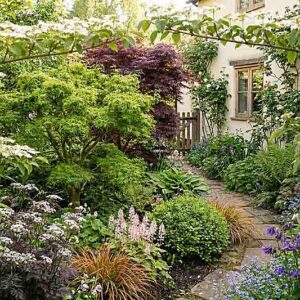
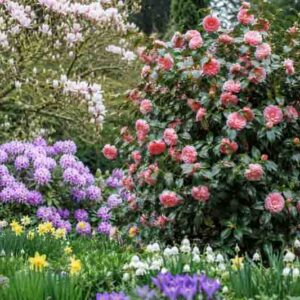
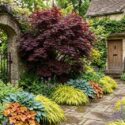
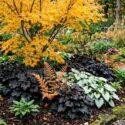
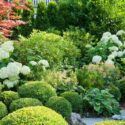
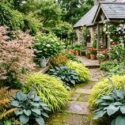
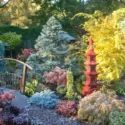
The dense green crown of ‘Shishigashira’ looks particularly good with flowing grasses, broad blue leaves, and delicate woodland flowers. Select companions sharing its preference for partial shade and moist but well-drained soil.
Growing conditions: USDA Zones 5-8; partial shade; fertile, moist but well-drained soil.
Gardenia planning note: These quantities illustrate the composition, not a fixed planting density. Hakone grass may spread 18-24 in. (45-60 cm), while the maple can eventually reach 5-12 ft. (1.5-3.6 m) across. Check mature sizes, available space, and local growing conditions before planting.
The combination balances a strong vertical focal point with softer ground-level planting. Keep companions clear of the trunk and avoid disturbing established maple roots.
The Dawes Arboretum reports about 7 feet of height after 10 years. Over many years, trees commonly reach 7-15 feet tall and 5-12 feet wide, although some old specimens grow taller.
Small, tightly curled leaves are normal for ‘Shishigashira’. Brown, brittle, sticky, or suddenly distorted foliage may indicate scorch, moisture stress, frost damage, or insects rather than the cultivar’s natural appearance.
‘Shishigashira’ grows in full sun to partial shade. More sun is suitable in cooler regions, while hot-summer climates benefit from afternoon shade. Keep the soil moist but well-drained.
‘Shishigashira’ is one of the later-coloring Japanese maples. Its leaves usually turn gold, orange, and crimson in late autumn, although the timing and intensity depend on local conditions.
Yes. Its slow growth makes it suitable for large containers. Provide good drainage, regular watering, protection from extreme root temperatures, and enough space for continued growth.
Royal Horticultural Society – Acer palmatum ‘Shishi-gashira’.
Missouri Botanical Garden – Acer palmatum ‘Shishigashira’.
The Dawes Arboretum – Shishigashira Japanese Maple.
Gardenia – Great Japanese Maples for Containers.
Updated: October 2026
| Hardiness |
5 - 8 |
|---|---|
| Heat Zones |
2 - 8 |
| Climate Zones | 2, 2B, 3, 3A, 3B, 4, 5, 6, 7, 8, 9, 10, 12, 14, 15, 16, 17, 18, 19, 20, 21, 22, 23, 24, A3 |
| Plant Type | Shrubs, Trees |
| Plant Family | Sapindaceae |
| Genus | Acer |
| Common names | Japanese Maple, Maple |
| Exposure | Full Sun, Partial Sun |
| Season of Interest | Spring (Early, Mid, Late), Summer (Early, Mid, Late), Fall |
| Height | 7' - 15' (210cm - 4.6m) |
| Spread | 5' - 12' (150cm - 3.7m) |
| Spacing | 60" - 144" (150cm - 3.7m) |
| Maintenance | Low |
| Water Needs | Average |
| Soil Type | Clay, Chalk, Loam, Sand |
| Soil pH | Acid, Neutral |
| Soil Drainage | Moist but Well-Drained |
| Characteristics | Showy |
| Tolerances | Rabbit, Clay Soil |
| Garden Uses | Beds And Borders |
| Garden Styles | City and Courtyard, Informal and Cottage, Japanese Garden, Traditional Garden |
| Toxic to Humans | No known toxicity |
| Toxic to Cats | No known toxicity |
| Toxic to Dogs | No known toxicity |
| Toxic to Horses | No known toxicity |


| Hardiness |
5 - 8 |
|---|---|
| Heat Zones |
2 - 8 |
| Climate Zones | 2, 2B, 3, 3A, 3B, 4, 5, 6, 7, 8, 9, 10, 12, 14, 15, 16, 17, 18, 19, 20, 21, 22, 23, 24, A3 |
| Plant Type | Shrubs, Trees |
| Plant Family | Sapindaceae |
| Genus | Acer |
| Common names | Japanese Maple, Maple |
| Exposure | Full Sun, Partial Sun |
| Season of Interest | Spring (Early, Mid, Late), Summer (Early, Mid, Late), Fall |
| Height | 7' - 15' (210cm - 4.6m) |
| Spread | 5' - 12' (150cm - 3.7m) |
| Spacing | 60" - 144" (150cm - 3.7m) |
| Maintenance | Low |
| Water Needs | Average |
| Soil Type | Clay, Chalk, Loam, Sand |
| Soil pH | Acid, Neutral |
| Soil Drainage | Moist but Well-Drained |
| Characteristics | Showy |
| Tolerances | Rabbit, Clay Soil |
| Garden Uses | Beds And Borders |
| Garden Styles | City and Courtyard, Informal and Cottage, Japanese Garden, Traditional Garden |
| Toxic to Humans | No known toxicity |
| Toxic to Cats | No known toxicity |
| Toxic to Dogs | No known toxicity |
| Toxic to Horses | No known toxicity |
How many Acer palmatum ‘Shishigashira’ (Lion’s Head Japanese Maple) do I need for my garden?
| Plant | Quantity | |
|---|---|---|
| Acer palmatum ‘Shishigashira’ (Lion’s Head Japanese Maple) | N/A | Buy Plants |
Create a membership account to save your garden designs and to view them on any device.
Becoming a contributing member of Gardenia is easy and can be done in just a few minutes. If you provide us with your name, email address and the payment of a modest $25 annual membership fee, you will become a full member, enabling you to design and save up to 25 of your garden design ideas.
Join now and start creating your dream garden!