Creeping Boobialla, Creeping Myoporum, Slender Myoporum, Trailing Myoporum, Dwarf Native Myrtle, Small-leaved Myoporum, Prostrate Myoporum, Australian Racer, Myoporum humile, Myoporum verrucosum, Pogonia aspera, Pogonia scabra, Pogonia tuberculata, Pogonia verrucosa
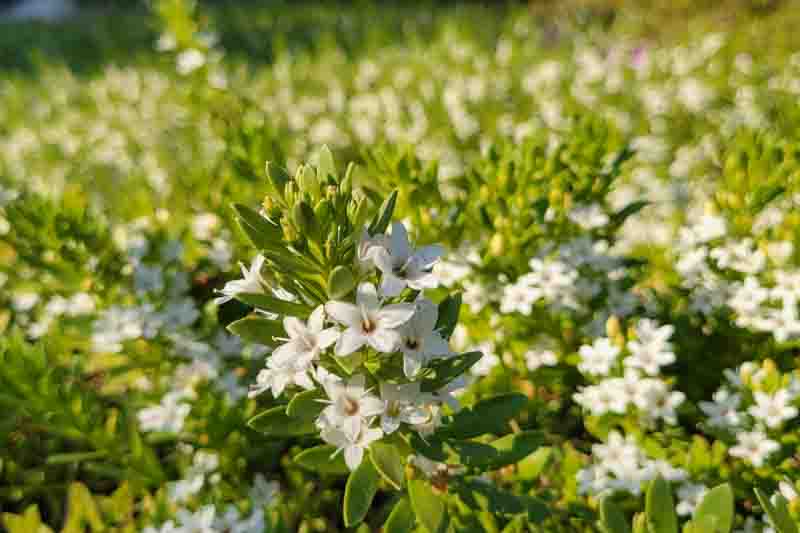
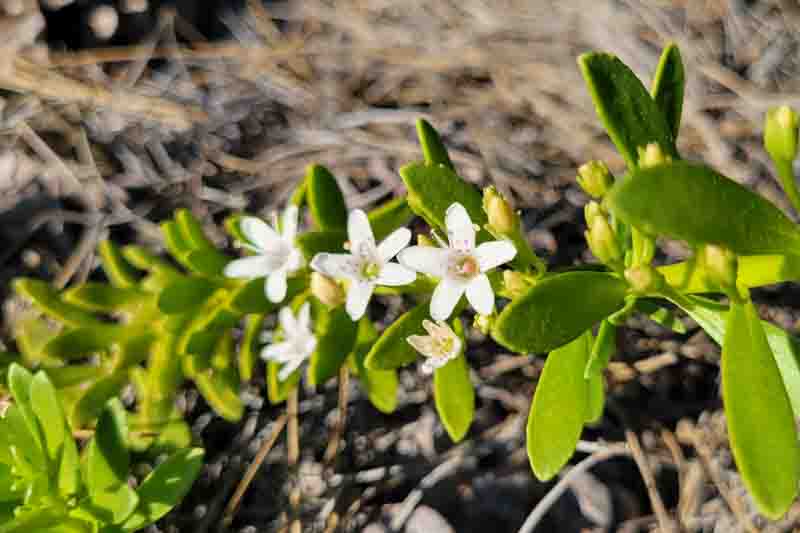


Myoporum parvifolium, commonly known as creeping boobialla, creeping myoporum, prostrate myoporum, or dwarf native myrtle, is a fast-growing evergreen ground cover prized for its dense, low carpet of small green leaves, tiny starry flowers, drought tolerance, coastal resilience, and excellent soil-stabilizing performance. Native to southern Australia, it is especially useful on slopes, banks, dry borders, coastal gardens, retaining walls, rock gardens, native plantings, and low-water landscapes where a tough, spreading plant is needed.
This is not a delicate filler plant. Creeping boobialla is a hardworking, practical, polished ground cover that can knit bare soil into a living mat, soften hard edges, reduce erosion, and bring a fresh green finish to hot, open spaces. In the right site, it grows quickly, roots where stems touch the soil, and creates a broad evergreen blanket that looks calm, clean, and intentional.
Myoporum parvifolium is a low, spreading evergreen Australian shrub grown as a drought-tolerant ground cover for full sun, light shade, coastal gardens, slopes, banks, erosion control, and low-maintenance landscapes. It performs best in well-drained soil, tolerates sandy and clay soils if drainage is good, and needs regular water while establishing before becoming more drought tolerant.
Use: Ground cover, slope planting, erosion control, coastal gardens, rock gardens, dry borders, retaining walls, native gardens, and low-water landscapes.
Highlight: Forms a dense, low evergreen mat with small green leaves and masses of white or pale pink star-shaped flowers, sometimes followed by small purplish fruits.
Design note: Use in broad sweeps rather than single dots. It is most powerful when allowed to spill, spread, and visually connect planting areas.
| Botanical Name | Myoporum parvifolium |
|---|---|
| Family | Scrophulariaceae |
| Common Names | Creeping Boobialla, Creeping Myoporum, Prostrate Myoporum, Dwarf Native Myrtle |
| Native Range | Southern Australia |
| Plant Type | Low-growing evergreen shrub used as a ground cover |
| Hardiness | Best in USDA Zones 9-11; tolerates light frost once established |
| Height | Usually 3-12 in. tall, depending on cultivar and site |
| Spread | Often 6-15 ft. wide over time |
| Sun Exposure | Full sun to part shade |
| Soil | Well-drained sandy soil, loam, gravelly soil, or improved clay; prefers slightly acidic to neutral soil |
| Bloom Time | Spring to summer, with sporadic bloom possible in mild climates |
| Flower Color | White, pale pink, or pink depending on form |
| Foliage | Evergreen, small, narrow to slightly fleshy, bright to medium green |
| Water Needs | Low to moderate once established; water regularly during establishment |
| Attracts | Bees and small pollinators |
| Best Uses | Slopes, banks, erosion control, coastal gardens, dry gardens, ground cover, and retaining wall edges |
Myoporum parvifolium is a prostrate evergreen shrub with fine-textured, narrow to slightly fleshy leaves and long, spreading stems. It is usually grown as a ground cover rather than a conventional shrub because it stays low while spreading widely. As stems creep across soil, they may root at the nodes, helping the plant create a dense, soil-hugging mat.
The flowers are small but charming. They appear along the stems as white, pink-tinged, or pale pink star-like blooms, often from spring into summer. Close up, they are delicate and pretty; from a distance, they give the foliage a soft, sprinkled look. After flowering, small purple or reddish fruits may form, although fruiting varies with climate and selection.
Garden truth: Creeping boobialla is best treated as a living surface, not a lawn. It covers ground beautifully, but its stems can be brittle, so it is not a good choice for regular foot traffic.
Myoporum parvifolium is native to southern Australia, where it occurs in open, often dry or coastal environments. That background explains its garden strengths: sun tolerance, wind tolerance, coastal usefulness, drought resilience once established, and a preference for drainage rather than constantly wet soil.
Creeping myoporum is fast growing in warm weather. Many plants stay only 3-6 inches tall, though some selections or irrigated sites may reach closer to 12 inches. Width is the real story. A single plant can spread several feet, and vigorous forms may eventually cover 8-15 feet if left untrimmed. Space plants according to how quickly you want coverage and how much maintenance you are willing to do.
The foliage is evergreen, small, smooth, and bright to medium green, giving the plant a clean, refined look. Some cultivars vary in flower color, leaf size, density, or growth habit. The flowers are usually most noticeable in spring and early summer, but in mild climates, scattered bloom may appear at other times.
Myoporum parvifolium is best in mild-winter regions, especially USDA Zones 9-11. It can tolerate light frost, but severe freezes may damage the foliage or stems. In borderline climates, plant it in a warm microclimate with excellent drainage, such as a sunny slope, raised bed, courtyard, or wall edge.
Plant creeping boobialla in full sun for the densest growth and best flowering. It also tolerates part shade, especially in hot inland climates, but too much shade can make the plant looser, thinner, and less floriferous. Morning sun with light afternoon shade can work well where summers are hot and dry.
Good drainage is the foundation of success. Creeping myoporum tolerates sandy soil, gravelly soil, loam, and clay that has been improved or planted on a slope, but it does not appreciate stagnant winter wetness. Slightly acidic to neutral soil is ideal. In heavy clay, plant high, loosen a broad area rather than a narrow hole, and avoid burying the crown.
Water regularly and deeply during the first growing season. This helps roots move into the surrounding soil and supports faster coverage. Once established, Myoporum parvifolium becomes drought tolerant, especially in coastal or mild climates. Even so, occasional deep irrigation during long dry spells keeps the foliage denser and fresher.
Feed lightly in spring if growth is weak or soil is poor. Compost, a low-dose slow-release fertilizer, or a native-plant-friendly fertilizer is usually enough. Avoid heavy feeding, which can push soft, overly lush growth that needs more pruning and may be more vulnerable to stress.
Mulch around young plants to reduce weeds and conserve moisture, but keep mulch away from the crown and avoid burying creeping stems under heavy organic matter. Fine gravel, decomposed granite, composted bark, or coarse mulch can work, depending on the garden style.
Care tip:
The secret to a good Myoporum parvifolium planting is simple: sun, drainage, room to spread, and deep watering during establishment. Once rooted in, it becomes one of the most efficient evergreen ground covers for dry, open landscapes.
Myoporum parvifolium is most valuable where soil needs coverage and the design needs a low, relaxed, evergreen finish. It is excellent on slopes because the spreading stems help shade the soil and reduce surface erosion. It is also attractive spilling over retaining walls, softening driveway edges, covering banks, or weaving between drought-tolerant shrubs.
Prune creeping myoporum to control spread, refresh edges, and prevent it from overrunning paths or neighboring plants. Light trimming is usually better than hard, infrequent cutting. Use sharp shears or pruners to define edges after the main spring growth flush or whenever stems wander out of bounds.
If a planting becomes woody, patchy, or too thick, selective renewal pruning can help. Remove dead stems, thin congested areas, and encourage younger growth to fill in. Avoid scalping the entire planting into old wood unless you know the plant is vigorous and actively growing.
Myoporum parvifolium struggles in poorly drained soil, low wet spots, dense shade, and places with regular foot traffic. It may also become patchy if irrigation is uneven during establishment or if older woody stems are never refreshed. In humid or high-rainfall climates, drainage and airflow become especially important.
| Task | Best Time |
|---|---|
| Planting | Spring, or fall in mild climates |
| Flowering | Spring to summer, with sporadic bloom in mild climates |
| Pruning | After flowering, or late winter to spring before strong new growth |
| Cuttings | Warm growing season, using softwood or semi-hardwood material |
The easiest way to propagate Myoporum parvifolium is from cuttings. Take softwood or semi-hardwood cuttings during active growth, remove the lower leaves, place them in a free-draining propagation mix, and keep them lightly moist until rooted. Stems that have rooted naturally where they touch the soil can also be lifted and replanted.
While myoporum thrips are a serious pest of some Myoporum species in California, UC IPM notes that live thrips and damage have not been observed on Myoporum parvifolium in California. Still, monitor for curled, distorted, or gall-like new growth, especially where myoporum thrips are active nearby.
Root rot is most likely in overwatered, poorly drained soil. Yellowing, collapse, thinning, or sudden dieback may point to saturated roots. Improve drainage, reduce irrigation, and avoid planting in low spots where water collects.
Patchiness usually comes from uneven watering during establishment, too much shade, poor soil contact on slopes, or old woody stems. Water deeply, pin flexible stems to encourage rooting, and trim lightly to promote branching.
Creeping myoporum looks like a walkable carpet, but it is not a turf replacement for daily use. Stems can snap under repeated stepping. Use stepping stones, gravel paths, or defined access routes through the planting.
Fast diagnostic: Thin growth usually means too much shade. Yellowing often points to wet soil. Crispy edges suggest drought, heat, or establishment stress. Broken stems usually mean the plant is being walked on too often.
Good companions for Myoporum parvifolium should enjoy mild climates, full sun to light shade, well-drained soil, and low to moderate water once established. Choose plants with similar drought tolerance so the myoporum is not forced to live in soggy conditions. In heavier soils, pair it with companions that also tolerate clay only when drainage is improved or the planting is raised.
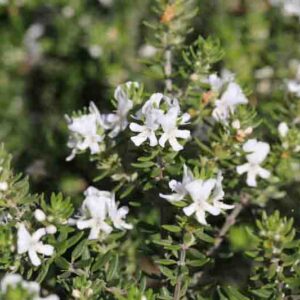
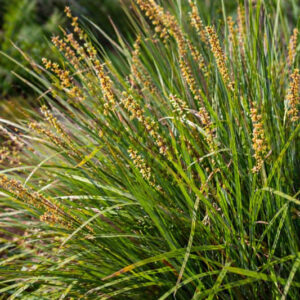
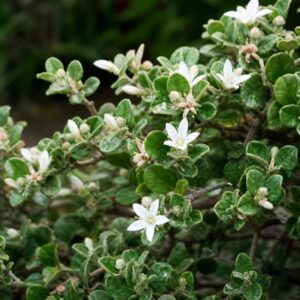
Excellent companions include Westringia fruticosa for a low, salt- and wind-tolerant coastal shrub layer, Lomandra longifolia for tough grassy texture in sandy, windy, salt-influenced sites, Creeping Rosemary for sunny slopes, wall edges, dry banks, and coastal gardens, Rosemary for aromatic evergreen structure in dry, sunny, salt- and wind-exposed landscapes, Banksia integrifolia for larger coastal structure and windbreak value, and Correa alba for a mild-climate Australian shrub companion that handles sandy coastal soils, salt-laden winds, sun, and part shade.
Yes. Myoporum parvifolium is an excellent evergreen ground cover for sunny, well-drained sites, especially slopes, banks, coastal gardens, dry borders, and erosion-control plantings.
Myoporum parvifolium is fast growing in warm weather when planted in sun, well-drained soil, and watered regularly during establishment. It can spread several feet over time.
Myoporum parvifolium tolerates part shade, especially in hot climates, but it grows densest and flowers best in full sun. Too much shade can make it thin and leggy.
Yes. Myoporum parvifolium is drought tolerant once established, but it needs regular deep watering during the first growing season and looks better with occasional irrigation during long dry spells.
No. Myoporum parvifolium is not a lawn substitute for regular foot traffic. Its spreading stems can be brittle, so use stepping stones or paths where access is needed.
Yes. The small star-shaped flowers of Myoporum parvifolium can attract bees and other small pollinators, especially when plants bloom heavily in spring and summer.
Yellowing or dieback is most often linked to poor drainage, overwatering, root rot, transplant stress, or severe pest damage. Check soil moisture and drainage before adding fertilizer.
Updated: May 2026 • Reviewed by Gardenia Editors
| Hardiness |
9 - 11 |
|---|---|
| Climate Zones | 8, 9, 12, 13, 14, 15, 16, 17, 18, 19, 20, 21, 22, 23, 24 |
| Plant Type | Shrubs |
| Plant Family | Scrophulariaceae |
| Exposure | Full Sun, Partial Sun |
| Season of Interest | Spring (Early, Mid, Late), Summer (Early, Mid, Late), Fall, Winter |
| Height | 3" - 1' (8cm - 30cm) |
| Spread | 6' - 15' (180cm - 4.6m) |
| Spacing | 72" (180cm) |
| Maintenance | Low |
| Water Needs | Low |
| Soil Type | Loam, Sand |
| Soil pH | Acid, Neutral |
| Soil Drainage | Well-Drained |
| Characteristics | Showy, Evergreen |
| Native Plants | Australia |
| Tolerance | Drought, Salt, Dry Soil, Rocky Soil, Deer, Rabbit |
| Attracts | Bees, Birds |
| Garden Uses | Banks And Slopes, Beds And Borders, Ground Covers |
| Garden Styles | City and Courtyard, Coastal Garden, Gravel and Rock Garden, Informal and Cottage, Mediterranean Garden, Pollinator Garden |


| Hardiness |
9 - 11 |
|---|---|
| Climate Zones | 8, 9, 12, 13, 14, 15, 16, 17, 18, 19, 20, 21, 22, 23, 24 |
| Plant Type | Shrubs |
| Plant Family | Scrophulariaceae |
| Exposure | Full Sun, Partial Sun |
| Season of Interest | Spring (Early, Mid, Late), Summer (Early, Mid, Late), Fall, Winter |
| Height | 3" - 1' (8cm - 30cm) |
| Spread | 6' - 15' (180cm - 4.6m) |
| Spacing | 72" (180cm) |
| Maintenance | Low |
| Water Needs | Low |
| Soil Type | Loam, Sand |
| Soil pH | Acid, Neutral |
| Soil Drainage | Well-Drained |
| Characteristics | Showy, Evergreen |
| Native Plants | Australia |
| Tolerance | Drought, Salt, Dry Soil, Rocky Soil, Deer, Rabbit |
| Attracts | Bees, Birds |
| Garden Uses | Banks And Slopes, Beds And Borders, Ground Covers |
| Garden Styles | City and Courtyard, Coastal Garden, Gravel and Rock Garden, Informal and Cottage, Mediterranean Garden, Pollinator Garden |
How many Myoporum parvifolium (Creeping Boobialla) do I need for my garden?
| Plant | Quantity | |
|---|---|---|
| Myoporum parvifolium (Creeping Boobialla) | N/A | Buy Plants |
Create a membership account to save your garden designs and to view them on any device.
Becoming a contributing member of Gardenia is easy and can be done in just a few minutes. If you provide us with your name, email address and the payment of a modest $25 annual membership fee, you will become a full member, enabling you to design and save up to 25 of your garden design ideas.
Join now and start creating your dream garden!
Create a membership account to save your garden designs and to view them on any device.
Becoming a contributing member of Gardenia is easy and can be done in just a few minutes. If you provide us with your name, email address and the payment of a modest $25 annual membership fee, you will become a full member, enabling you to design and save up to 25 of your garden design ideas.
Join now and start creating your dream garden!