Fuchsia-flowered Gooseberry, Fuchsiaflower Gooseberry, Fuchsia-flowering Gooseberry, Fuchsia Flowered Gooseberry, Fuchsia-flowered Ribes, Specious Currant, Specious Gooseberry

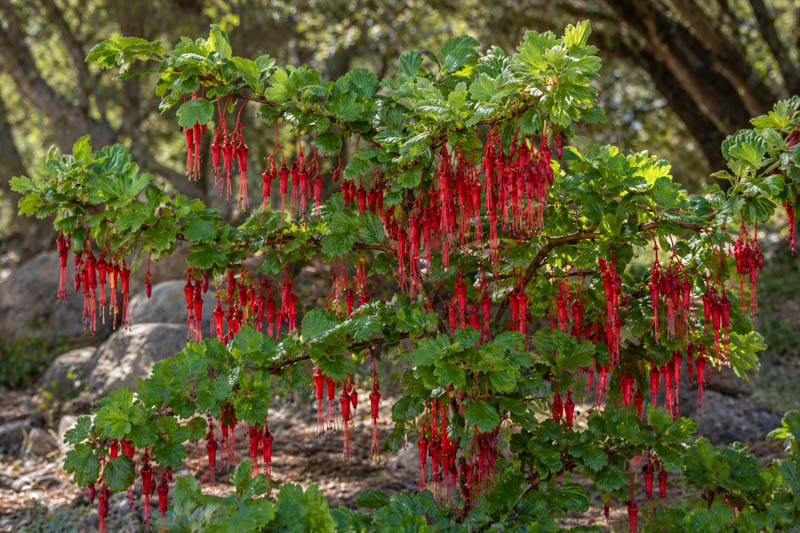


Ribes speciosum, commonly known as Fuchsia-Flowered Gooseberry or Fuchsiaflower Gooseberry, is a striking California and Baja California native shrub prized for its pendant crimson flowers, glossy green leaves, arching spiny stems, and strong value to hummingbirds. Blooming from winter into spring, this dramatic Ribes brings cool-season color to dry shade gardens, oak understories, chaparral-inspired plantings, slopes, wildlife gardens, and protective native hedges.
Ribes speciosum is a spiny, nearly evergreen to summer-deciduous California native shrub grown for brilliant red, fuchsia-like flowers from winter into spring. Plant it in bright shade, part shade, or gentle morning sun, in well-drained soil, and give little to occasional water once established. It is especially useful for hummingbird gardens, dry shade, slopes, oak-edge plantings, wildlife borders, and protected sites where its sharp spines will not snag passersby.
Use: Excellent for California native gardens, hummingbird gardens, dry shade, oak-edge plantings, chaparral gardens, slopes, wildlife hedges, and thorny barrier plantings.
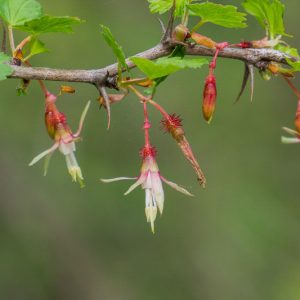
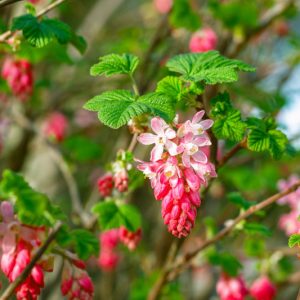
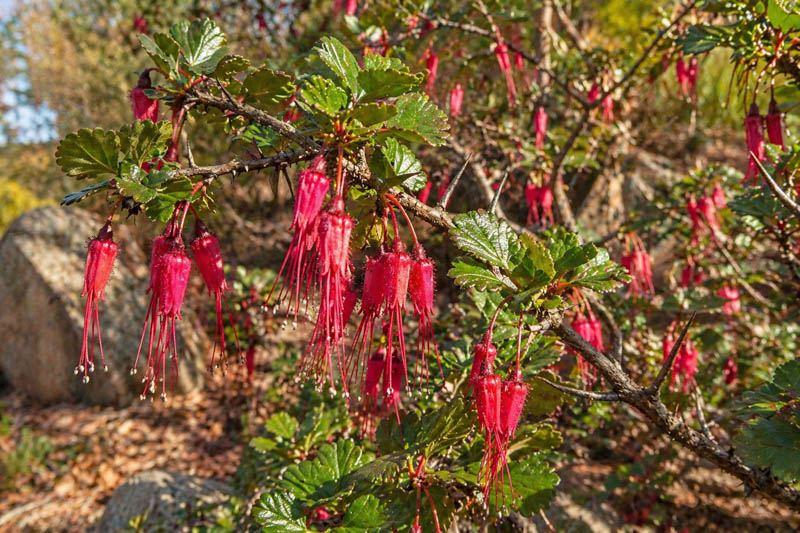
Highlight: Pendant scarlet to crimson flowers with long protruding stamens in winter and spring.
Design note: Site it where the flowers can be admired from below or at eye level, but keep it away from narrow paths because the stems carry sharp spines.
| Botanical Name | Ribes speciosum |
|---|---|
| Family | Gooseberry family (Grossulariaceae) |
| Common Names | Fuchsia-Flowered Gooseberry, Fuchsiaflower Gooseberry, Californian Fuchsia |
| Native Range | Coastal and southern California into Baja California, especially chaparral, coastal sage scrub, canyons, and shaded slopes |
| Native U.S. States | California |
| Plant Type | Spiny native shrub; nearly evergreen in mild sites, often semi-deciduous or summer-deciduous in dry inland gardens |
| Hardiness (approx. USDA) | Best in USDA Zones 8-10 in Mediterranean-climate gardens; may tolerate colder protected sites where drainage is excellent |
| Height | 3-10 ft. (0.9-3 m), often 5-8 ft. in gardens |
| Spread | 4-8 ft. (1.2-2.4 m), depending on pruning, water, shade, and site conditions |
| Sun Exposure | Bright shade, part shade, morning sun; more sun in cool coastal gardens, afternoon shade inland |
| Soil | Well-drained soil; suitable for dry shade and native garden soils |
| Bloom Time | Winter to spring, commonly January-May in California gardens |
| Flower Color | Bright red, scarlet, or crimson |
| Foliage | Glossy green; nearly evergreen in mild, favorable sites but often sheds leaves in hot, dry, or stressful summer conditions |
| Drought Tolerant | Yes, once established; avoid frequent summer irrigation, especially in heavy soil or near native oaks |
| Deer Resistant | Often avoided because of sharp spines, though young plants may need protection |
| Attracts | Hummingbirds, bees, beneficial insects, birds, and small garden wildlife |
| Pet and Child Safety | Sharp spines are the main practical hazard; do not encourage eating the bristly berries unless local edibility guidance is verified |
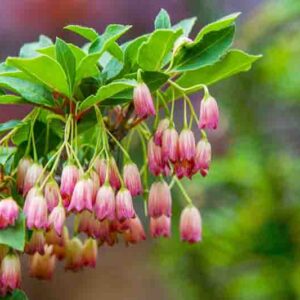
Fuchsia-Flowered Gooseberry is a distinctive native shrub in the genus Ribes, the group that includes currants and gooseberries. Unlike ornamental fuchsias, it is not a true fuchsia. The common name comes from the plant’s showy red flowers, which hang beneath the branches like miniature lanterns and carry long stamens that extend beyond the floral tube.
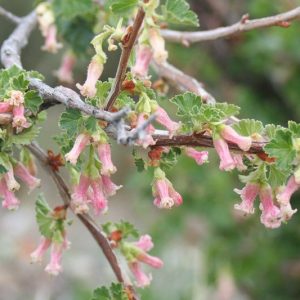
Ribes speciosum forms an arching, twiggy, protective shrub with small glossy leaves, bristly stems, and conspicuous spines at the nodes. Its intricate branch structure looks especially beautiful in informal native gardens, on banks, and at woodland edges. In late winter and spring, the shrub produces bright red pendant flowers, usually solitary or held in small clusters. These are followed by bristly orange-red berries that may be used by wildlife.
Fuchsia-Flowered Gooseberry is native to coastal and southern California and Baja California. In the wild, it is associated with chaparral, coastal sage scrub, canyons, dry slopes, and shaded or partly shaded habitats. In gardens, it is most at home in California-style Mediterranean plantings with winter rain, dry summers, good drainage, and protection from intense reflected heat.
This shrub is especially valuable because it flowers when many gardens are still quiet. Depending on climate and rainfall, blooms may appear from winter into spring, with many California garden displays occurring between January and May. The tubular red flowers are highly attractive to hummingbirds, which are well suited to feeding from the pendant blossoms.
The foliage is glossy, small, and refined, giving the shrub a polished look during the cool season. In mild, favorable sites, it may remain nearly evergreen. In hot inland gardens or during dry summers, it may shed some or many leaves as a drought response. This seasonal slowdown is normal and should not be mistaken for failure if the stems remain healthy.
In gardens, Fuchsia-Flowered Gooseberry commonly reaches about 5-8 ft. tall and wide, though mature plants may be smaller or larger depending on climate, shade, irrigation, soil, and pruning. In protected sites with occasional moisture, it can become a substantial barrier shrub. In hotter, drier, more exposed places, growth is usually more compact.
Ribes speciosum is best adapted to mild winter, dry-summer climates, especially Mediterranean-climate gardens in USDA Zones 8-10. It may tolerate colder protected sites where drainage is excellent, but it is not a good choice for humid, wet-summer regions or hot locations with reflected afternoon heat. In marginal climates, plant it against a protected wall or in a sheltered, well-drained position.
Ribes speciosum has received the Royal Horticultural Society’s Award of Garden Merit, a strong endorsement of its ornamental value in suitable gardens.
The red tubular flowers are highly attractive to hummingbirds, especially in the cool season when fewer shrubs are blooming. Bees and other beneficial insects may also visit the flowers, while the dense, thorny growth offers shelter for small birds. The bristly berries can support wildlife, making the shrub useful in habitat-focused plantings. For more wildlife-focused planting ideas, see Wildlife-Friendly Plants: Attract Bees, Butterflies & Birds and the Gardenia guide to bees.
Fuchsia-Flowered Gooseberry is often avoided once mature because of its sharp spines, but no plant is completely deer-proof or rabbit-proof. Young plants, tender new growth, and plants under drought stress may still be browsed. Protect new plantings where deer or rabbits are active. For broader browsing-resistant plant ideas, see deer-resistant plants and rabbit-resistant plants.
Once established, Ribes speciosum is well adapted to dry-summer gardens. Water deeply but infrequently during the first year to help roots establish, then reduce irrigation. In hot inland gardens, occasional light or indirect summer water can help the plant retain foliage, but avoid frequent soaking, daily irrigation, or planting it in wet summer beds. For more drought-wise options, explore drought-tolerant plants.
This ornamental gooseberry is not usually grown as a household fruit crop. The bristly berries may be used by wildlife, but gardeners should not encourage people or pets to eat them unless local edibility guidance is verified. The main everyday safety concern is physical rather than toxicological: the spines are sharp. Wear gloves, long sleeves, and eye protection when pruning, and avoid placing the shrub where children, pets, or visitors must brush against it.
Ribes speciosum is not generally considered invasive in gardens. Within its native range, it is a well-behaved California native shrub when placed correctly. It can become dense and broad with age, but that is usually a siting and pruning issue rather than an invasive habit.
Fuchsia-Flowered Gooseberry usually does not need heavy fertilizer. In native plant gardens, compost mulch, leaf litter, or a light organic mulch is typically enough. Too much nitrogen can encourage soft, weak growth and may reduce the rugged structure that makes the plant useful.
Use a light layer of organic mulch to cool the soil, conserve moisture, and reduce weeds. Keep mulch away from the crown and stems. In oak gardens, natural leaf litter is often the most appropriate mulch, provided it is not piled against the shrub’s base.
Design tip:
Place Ribes speciosum where winter light can shine through the dangling red flowers. The shrub is at its best when the blooms are backlit and hummingbirds can move through the branches.
Prune after flowering if needed. Remove dead, crossing, damaged, or awkwardly placed stems, but avoid shearing the shrub into a tight ball. Its beauty comes from arching branches, visible structure, and pendant flowers. Always wear thick gloves, long sleeves, and eye protection.
Do not panic if the plant looks quieter in summer. In hot or dry sites, Ribes speciosum may pause growth or shed leaves. This is a normal Mediterranean-climate survival strategy. Avoid forcing lush summer growth with frequent irrigation, especially in heavy soil or near oaks.
Fuchsia-Flowered Gooseberry can be grown in a large container, but it is easier in the ground. Use a deep pot, excellent drainage, and a gritty native-plant mix. Place it in morning sun or bright shade. Container plants dry faster than in-ground shrubs, so check moisture regularly while still avoiding a constantly wet potting mix.
Care tip:
The fastest way to ruin this shrub is to treat it like a thirsty flowering hedge. Give it drainage, seasonal rhythm, light shade where summers are hot, and enough room to arch naturally.
Ribes speciosum is tough in the right garden, but it is not a universal shrub. Avoid hot reflected walls, narrow walkways, soggy summer beds, humid wet-summer climates, poorly drained clay without slope or mounding, and heavily irrigated lawn edges. In hot inland gardens, the combination of afternoon sun, paving, and dry wind can scorch foliage and reduce flowering.
| Task | Best Time |
|---|---|
| Planting | Fall to early winter, so roots establish with seasonal rain. |
| Flowering | Winter to spring, commonly January-May in gardens. |
| Pruning | After flowering, before new structure becomes too tangled. |
| Mulching | Fall or winter, before the dry season. |
| Watering | Deeply but infrequently during establishment; little to occasional water after establishment. |
Ribes speciosum can be propagated from seed or cuttings. Home gardeners usually have the best results with fresh seed from known local sources or semi-hardwood cuttings taken during active growth. For habitat restoration, native plant projects, or ecologically sensitive sites, use regionally appropriate genetic stock whenever possible.
Weak bloom is usually caused by too much shade, poor establishment, hard pruning at the wrong time, or excessive irrigation and fertilizer. If a young plant grows well but produces few flowers, move it to brighter shade or morning sun, and prune only after bloom.
Summer leaf drop can be normal, especially in hot, dry, or inland conditions. If the stems remain healthy, the shrub is likely conserving water. Occasional light or indirect irrigation may help in very dry gardens, but avoid turning the site into a wet summer bed.
Brown, crispy foliage usually points to hot afternoon sun, reflected heat, drought stress, wind exposure, or root disturbance. Provide afternoon shade, mulch lightly, and water carefully during establishment.
Constant moisture can cause decline. If leaves yellow, stems die back, and soil remains wet, improve drainage and reduce irrigation. This shrub is far more comfortable in a dry native border than along a frequently watered lawn edge.
The spines are not a disease, but they are the plant’s main maintenance challenge. Site the shrub carefully from the beginning. Avoid planting it where people, pets, hoses, or clothing will repeatedly brush against the branches.
Fuchsia-Flowered Gooseberry is generally tough when planted in the right site. Watch for aphids on tender new growth, occasional scale insects, and fungal issues where airflow is poor. Root rot is the most serious avoidable problem and is usually linked to poor drainage or excessive summer irrigation.
Use Ribes speciosum as a living jewel in a California native garden. Its red flowers are spectacular against dark evergreen shrubs and beautiful with gray, silver, and blue-green foliage. In naturalistic plantings, combine it with other chaparral, oak woodland, and coastal-sage scrub plants to create layered habitat, winter-spring color, and year-round structure.
Choose companions that tolerate dry summers, good drainage, and similar light conditions. In brighter edges, use sun-tolerant chaparral species. In oak-edge or woodland plantings, choose dry-shade natives that do not require frequent summer irrigation.
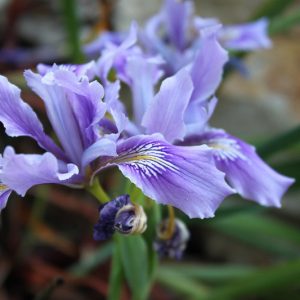
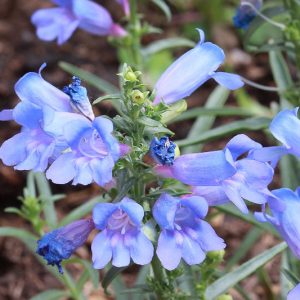
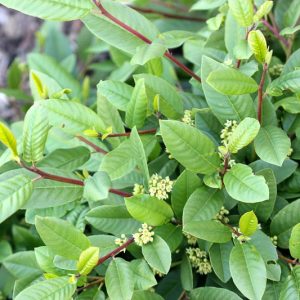
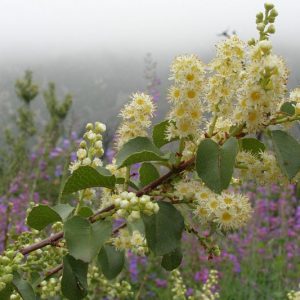
Best companion plants: hummingbird sage (Salvia spathacea), island alum root (Heuchera maxima), coral bells (Heuchera spp.), Douglas iris (Iris douglasiana), foothill penstemon (Penstemon heterophyllus), coffeeberry (Frangula californica), toyon (Heteromeles arbutifolia), hollyleaf cherry (Prunus ilicifolia), coast live oak (Quercus agrifolia), western redbud (Cercis occidentalis), coyote mint (Monardella villosa), yarrow (Achillea millefolium), and California fuchsia (Epilobium canum) in brighter edges.
Yes. In the United States, Ribes speciosum is native to California. Its broader native range also extends into Baja California, Mexico.
Fuchsia-Flowered Gooseberry blooms from winter into spring, often January to May in California gardens, depending on climate and rainfall.
Yes. The bright red, tubular, pendant flowers are excellent for attracting hummingbirds, especially during the cool season when fewer shrubs are in bloom.
It can be nearly evergreen in mild, favorable sites, but it is often semi-deciduous or summer-deciduous in hot, dry, or stressful conditions.
Plant it in bright shade, part shade, or morning sun, in well-drained soil. Keep it away from narrow paths because the stems have sharp spines.
Yes, once established. It is adapted to dry-summer Mediterranean gardens, but young plants need deep, infrequent watering while roots establish.
It is often avoided because of its spiny stems, but no plant is completely deer-proof. Protect young plants where deer pressure is high.
Yes, it can be a good choice for bright shade or dry shade near oaks, provided drainage is good and summer irrigation is restrained.
Updated: April 2026 • Reviewed by Gardenia Editors
| Hardiness |
8 - 10 |
|---|---|
| Climate Zones | 7, 8, 9, 14, 15, 16, 17, 19, 20, 21, 22, 23, 24 |
| Plant Type | Shrubs |
| Plant Family | Grossulariaceae |
| Genus | Ribes |
| Common names | Currant, Gooseberry |
| Exposure | Full Sun, Partial Sun |
| Season of Interest | Spring (Early), Winter |
| Height | 3' - 10' (90cm - 3m) |
| Spread | 4' - 8' (120cm - 240cm) |
| Spacing | 72" - 96" (180cm - 240cm) |
| Maintenance | Low |
| Water Needs | Low, Average |
| Soil Type | Chalk, Clay, Loam, Sand |
| Soil pH | Acid, Alkaline, Neutral |
| Soil Drainage | Moist but Well-Drained, Well-Drained |
| Characteristics | Fruit & Berries, Plant of Merit, Semi-Evergreen |
| Native Plants | California, United States |
| Tolerance | Deer, Drought, Clay Soil |
| Attracts | Bees, Hummingbirds, Birds |
| Garden Uses | Hedges And Screens, Wall-Side Borders |
| Garden Styles | Informal and Cottage, Pollinator Garden, Woodland Garden |


| Hardiness |
8 - 10 |
|---|---|
| Climate Zones | 7, 8, 9, 14, 15, 16, 17, 19, 20, 21, 22, 23, 24 |
| Plant Type | Shrubs |
| Plant Family | Grossulariaceae |
| Genus | Ribes |
| Common names | Currant, Gooseberry |
| Exposure | Full Sun, Partial Sun |
| Season of Interest | Spring (Early), Winter |
| Height | 3' - 10' (90cm - 3m) |
| Spread | 4' - 8' (120cm - 240cm) |
| Spacing | 72" - 96" (180cm - 240cm) |
| Maintenance | Low |
| Water Needs | Low, Average |
| Soil Type | Chalk, Clay, Loam, Sand |
| Soil pH | Acid, Alkaline, Neutral |
| Soil Drainage | Moist but Well-Drained, Well-Drained |
| Characteristics | Fruit & Berries, Plant of Merit, Semi-Evergreen |
| Native Plants | California, United States |
| Tolerance | Deer, Drought, Clay Soil |
| Attracts | Bees, Hummingbirds, Birds |
| Garden Uses | Hedges And Screens, Wall-Side Borders |
| Garden Styles | Informal and Cottage, Pollinator Garden, Woodland Garden |
How many Ribes speciosum (Fuchsia-Flowered Gooseberry) do I need for my garden?
| Plant | Quantity | |
|---|---|---|
| Ribes speciosum (Fuchsia-Flowered Gooseberry) | N/A | Buy Plants |
Create a membership account to save your garden designs and to view them on any device.
Becoming a contributing member of Gardenia is easy and can be done in just a few minutes. If you provide us with your name, email address and the payment of a modest $25 annual membership fee, you will become a full member, enabling you to design and save up to 25 of your garden design ideas.
Join now and start creating your dream garden!
Create a membership account to save your garden designs and to view them on any device.
Becoming a contributing member of Gardenia is easy and can be done in just a few minutes. If you provide us with your name, email address and the payment of a modest $25 annual membership fee, you will become a full member, enabling you to design and save up to 25 of your garden design ideas.
Join now and start creating your dream garden!