Black leaves, sticky residue, white powder, bark bumps, or sudden leaf drop can make a beautiful crape myrtle look seriously ill. Learn how to distinguish aphids, sooty mold, bark scale, powdery mildew, Cercospora leaf spot, and Japanese beetles - then choose effective treatment without spraying the wrong problem.
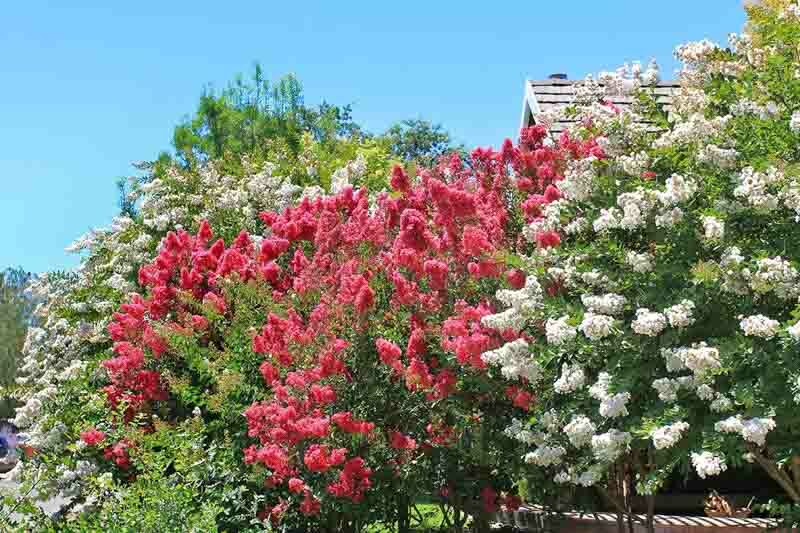


Your crape myrtle was planted for months of brilliant flowers, handsome foliage, colorful fall leaves, and beautifully exfoliating bark. Then something changes. The leaves turn black and sticky. White powder coats the new growth. Brown spots spread through the canopy. Tiny insects crowd beneath the leaves, or strange white bumps appear on the trunks.
The symptoms may look alarming, but they do not all point to the same problem. Black leaves are often coated with sooty mold growing on insect honeydew. White leaves may indicate powdery mildew, while white bumps on the bark suggest crape myrtle bark scale. Brown-spotted leaves that yellow and fall prematurely are more consistent with Cercospora leaf spot.
Correct identification matters because the treatments are completely different. A fungicide will not control aphids or bark scale. An insecticide will not cure powdery mildew. Washing black mold from the bark may improve appearances, but the mold will return if honeydew-producing insects remain active.
This guide helps you diagnose the most common crape myrtle diseases and pests, understand what the symptoms mean, decide when treatment is necessary, and prevent the same problem from returning.
Fast diagnosis: Black usually points to honeydew and sooty mold. White powder on leaves suggests mildew. Separate white bumps attached to bark suggest scale. Brown spots followed by yellowing and leaf drop suggest Cercospora.
Several crape myrtle problems produce similar symptoms. Aphids and bark scale both excrete honeydew and cause sooty mold. Powdery mildew and bark scale are both white, but one coats leaves while the other forms individual waxy bumps on bark. Cercospora leaf spot and drought stress can both cause premature leaf drop.
Before reaching for a pesticide, inspect the affected plant closely:
Black, white, yellow, and brown are symptoms, not diagnoses. Find the insect, fungal growth, leaf spot, or environmental cause before choosing a treatment.
| What You See | Most Likely Cause | Where to Inspect |
|---|---|---|
| Black coating and sticky residue | Sooty mold caused by aphids or bark scale | Leaf undersides, shoot tips, trunks, and branches |
| White-gray powder on foliage and buds | Powdery mildew | Young leaves, shoots, buds, and flowers |
| Tiny white felted bumps attached to bark | Crape myrtle bark scale | Trunks, branch unions, pruning wounds, and twig crotches |
| Small pear-shaped insects and curled new leaves | Aphids | Undersides of leaves and tender shoot tips |
| Brown spots, yellow leaves, early leaf drop | Cercospora leaf spot | Lower and interior foliage first |
| Leaves eaten between the veins | Japanese beetles or other chewing insects | Upper canopy and flowers during summer |
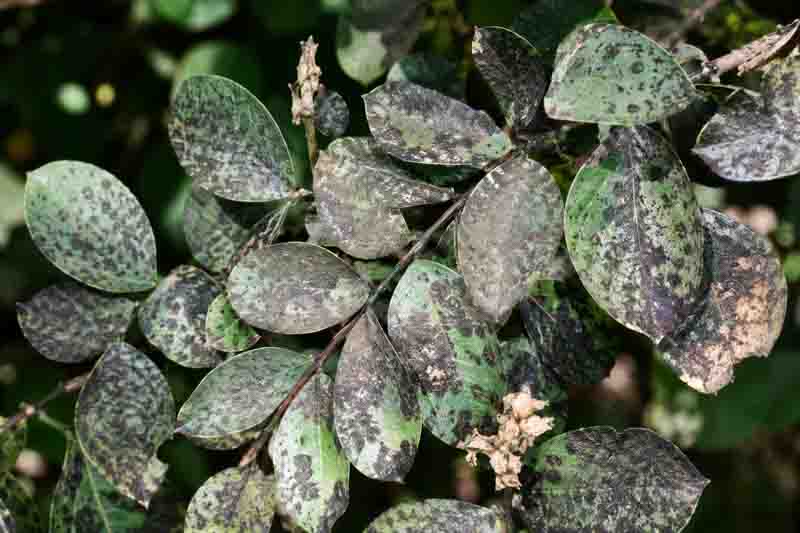
Black leaves, trunks, or branches are usually covered with sooty mold. This dark fungal coating grows on honeydew, a sugary liquid excreted by sap-feeding insects.
Sooty mold does not normally infect the crape myrtle’s living tissue. It grows on the sticky surface created by aphids, crape myrtle bark scale, or occasionally another honeydew-producing pest. A heavy coating can reduce light reaching the leaves and spoil the appearance of the bark, but the insects are the primary problem.
Run a finger over an affected leaf. If it feels sticky beneath the black coating, inspect for:
Do not begin with a fungicide. Control the aphids or bark scale producing the honeydew. Once that food source disappears, the sooty mold will gradually weather away or can be washed from reachable surfaces.
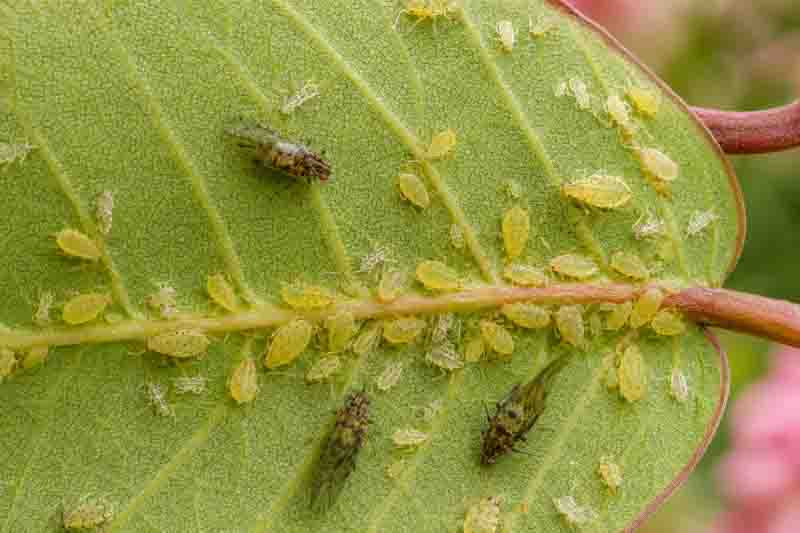
The crape myrtle aphid, Tinocallis kahawaluokalani, is a small, soft-bodied insect that gathers beneath leaves and along tender shoots. It is usually pale yellow-green with dark markings and may be difficult to notice until sticky honeydew begins falling from the canopy.
Light infestations usually cause little permanent harm. Heavy populations may curl young leaves, reduce vigor, and cover the plant and surrounding surfaces with honeydew and black sooty mold.
Begin with the least disruptive approach:
Soap and oil must contact the aphids directly to work. Thorough coverage is essential, and repeat treatment may be needed according to the label. Do not use household dish detergent as a substitute for a labeled insecticidal soap.
Look before you spray: Lady beetle larvae may look unfamiliar or even threatening, but they are valuable aphid predators. Broad-spectrum insecticides can kill these helpers and trigger a rapid aphid rebound.
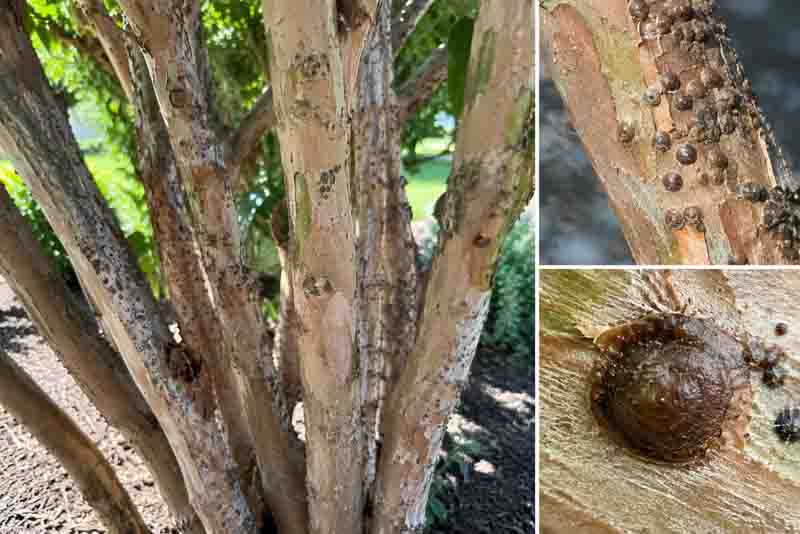
Crape myrtle bark scale, Acanthococcus lagerstroemiae, is an invasive felt scale that feeds on trunks, branches, and twigs. Adult females are tiny and protected beneath white or gray felted wax.
Unlike aphids, which gather on leaves and tender growth, bark scale remains attached to woody tissue. Colonies commonly develop in branch crotches, bark crevices, old pruning wounds, and shaded areas beneath limbs.
Important clues include:
Wash and gently scrub accessible colonies with water and a soft brush. Preserve predatory lady beetles, including mealybug destroyers and other scale-feeding species.
Contact treatments work best against tiny pink crawlers before they develop protective wax. Double-sided sticky tape wrapped around a small infested branch can help detect crawler activity.
Dormant or delayed-dormant horticultural oil may suppress overwintering stages when the bark is covered thoroughly. Systemic products such as dinotefuran or imidacloprid are recommended in some regions for serious infestations, but guidance differs because of possible exposure to bees and other flower visitors. Follow local extension recommendations and the current product label.
Scale forms separate white bumps attached to bark. Powdery mildew creates a diffuse white coating on leaves, buds, and flowers. Their treatments are not interchangeable.
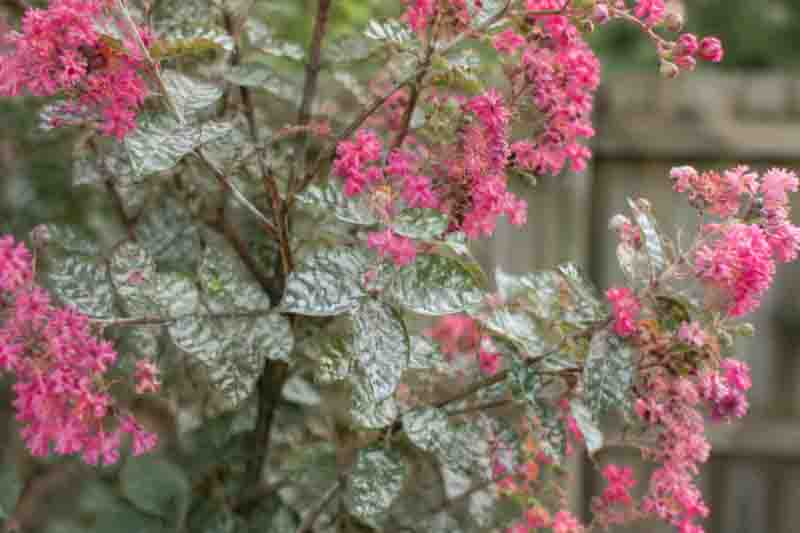
Powdery mildew is one of the most common crape myrtle diseases. It is caused by Erysiphe lagerstroemiae and appears as a white or gray powdery coating on leaves, tender shoots, flower buds, and flowers.
Young leaves may curl, pucker, twist, or remain stunted. Infected flower buds may develop poorly or fail to open, making early-season outbreaks far more damaging than a light coating on mature leaves late in the year.
The disease is favored by:
Powdery mildew does not require wet foliage to infect. Full sun, good spacing, moderate fertilization, and resistant cultivars provide more reliable prevention than simply attempting to keep leaves dry.
Remove infected basal suckers and a few badly affected shoots, but do not strip the canopy. Improve sunlight and airflow without topping the tree.
A light late-season outbreak on a mature, vigorous plant may not require fungicide treatment. When mildew appears early, spreads rapidly, or coats flower buds, apply a product labeled for powdery mildew on ornamental trees at the first signs of disease.
Depending on the product label, active ingredients may include myclobutanil, propiconazole, thiophanate-methyl, copper, sulfur, horticultural oil, neem-based fungicides, or potassium bicarbonate. Do not combine oil and sulfur unless both labels specifically permit the mixture and timing.
Copper and sulfur can injure sensitive foliage under certain weather conditions. Test an unfamiliar product on a small area when directed by the label, and discontinue use if scorching, spotting, or distortion develops.
Treat: Mildew appears early, distorts new growth, spreads quickly, or threatens unopened flower buds.
Tolerate: A light infection appears late on mature leaves after most flowering is complete.
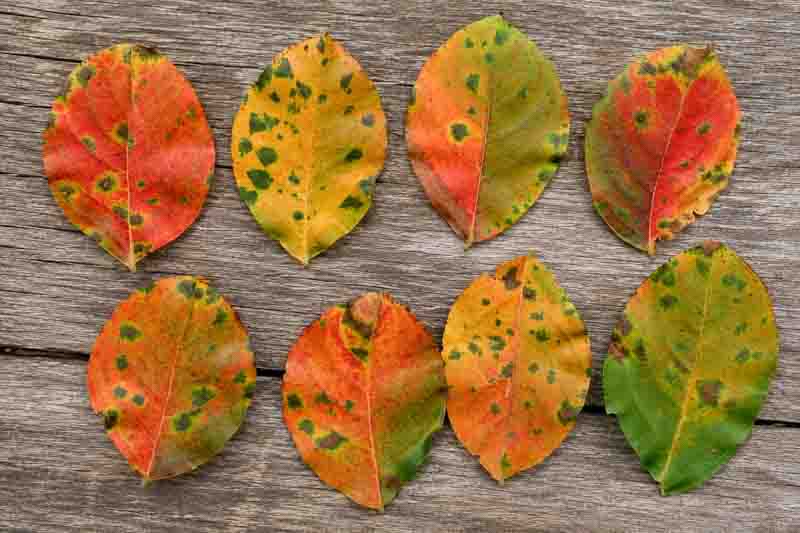
Cercospora leaf spot commonly becomes noticeable during warm, moist weather later in the growing season. It is caused by Cercospora lythracearum. Small yellow, tan, brown, or dark spots develop on the foliage, often beginning in the lower or interior canopy. White-gray fungal growth may be visible on the undersides of affected leaves.
Cercospora leaf spot rarely kills an established crape myrtle, but repeated severe defoliation reduces ornamental quality and may weaken young or stressed plants.
Fungicides protect uninfected foliage better than they restore spotted leaves. Preventive applications must begin before extensive symptoms and may require repetition according to the label.
Important distinction: Powdery mildew coats leaves with white fungal growth. Cercospora creates separate brown spots followed by yellowing and leaf drop.
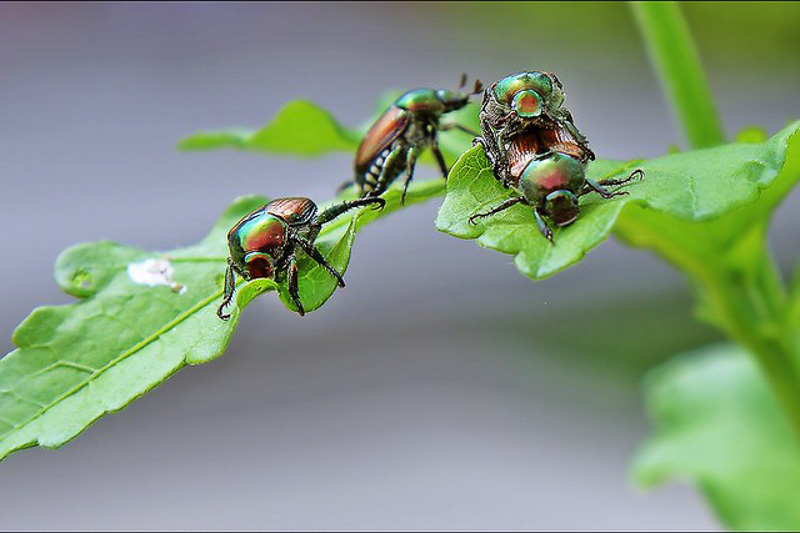
Japanese beetles are metallic green and copper-colored insects that feed openly during summer. They chew the soft tissue between leaf veins, leaving a lacy or skeletonized appearance.
Small numbers can often be removed by hand early in the morning and dropped into soapy water. On established crape myrtles, moderate feeding is usually cosmetic and temporary.
Avoid Japanese beetle traps beside valuable plants. The floral lure can attract more beetles into the immediate area than the trap captures. If traps are used for monitoring, position them well away from the plants being protected.
Not every yellow, wilted, or dropping leaf is caused by a pathogen or insect. Crape myrtles may show similar symptoms when affected by:
Examine the pattern. Disease and insects often create characteristic spots, coatings, feeding damage, or visible pests. Environmental stress may affect entire branches or the whole plant more uniformly.
Healthy crape myrtles are not immune, but correct planting and care reduce both disease pressure and the need for pesticides.
Browse crape myrtle varieties to compare mature size, hardiness, flower color, and disease resistance before planting.
A resistant cultivar planted in full sun with enough room to mature usually requires less spraying, less corrective pruning, and less ongoing intervention.
Contact a qualified arborist, plant-health professional, or local extension service when:
Do not spray a tall canopy from a ladder. Professional equipment may be necessary to achieve safe coverage while minimizing drift and exposure to people, neighboring plants, and pollinators.
Most crape myrtle problems become easier to manage once the symptom is translated into the correct diagnosis. Black, sticky leaves usually indicate sooty mold caused by aphids or bark scale. White powder on foliage and buds points to powdery mildew. White felted bumps on trunks indicate bark scale, while brown spots and premature leaf drop suggest Cercospora.
Begin with inspection rather than automatic spraying. Protect beneficial insects, improve growing conditions, tolerate minor cosmetic damage when appropriate, and reserve pesticides for correctly identified problems that justify treatment.
Black leaves are usually covered with sooty mold growing on sticky honeydew produced by aphids, crape myrtle bark scale, or another sap-feeding insect. Control the insect rather than treating the mold with fungicide.
White or gray powder on leaves, shoots, buds, and flowers is usually powdery mildew caused by Erysiphe lagerstroemiae. Shade, crowding, humid nights, susceptible cultivars, and poor airflow increase disease pressure.
Aphids are small mobile insects found beneath leaves and on tender shoots. Crape myrtle bark scale forms separate white or gray felted coverings attached to trunks, branches, twig crotches, and pruning wounds.
Brown or dark spots followed by yellowing and premature leaf drop commonly indicate Cercospora leaf spot. The disease is favored by warm, humid conditions and often begins in lower or interior foliage.
Sooty mold rarely kills a healthy crape myrtle directly because it grows on insect honeydew rather than invading the plant. Heavy coatings may reduce photosynthesis and appearance, while the underlying aphid or scale infestation can reduce vigor.
Dislodge aphids with a strong stream of water, preserve lady beetles and other predators, avoid excess nitrogen, and use commercial insecticidal soap or horticultural oil if populations remain damaging. Follow the product label.
No. Light aphid feeding, minor Japanese beetle damage, or late-season powdery mildew may be tolerated on a mature, vigorous tree. Treatment is more justified when new growth, flower buds, vigor, or repeated seasonal health are affected.
Plant a disease-resistant cultivar in full sun, provide adequate spacing and well-drained soil, avoid excessive fertilizer, remove unwanted suckers, maintain healthy roots, and inspect leaves and bark regularly.
Updated: July 2026 • Reviewed by Gardenia Editors
| Hardiness |
6 - 10 |
|---|---|
| Plant Type | Shrubs, Trees |
| Plant Family | Lythraceae |
| Genus | Lagerstroemia |
| Exposure | Full Sun |
| Season of Interest | Spring (Late), Summer (Early, Mid, Late), Fall |
| Height | 2' - 30' (60cm - 9.1m) |
| Spread | 2' - 30' (60cm - 9.1m) |
| Maintenance | Low |
| Water Needs | Average |
| Soil Type | Chalk, Loam, Sand |
| Soil pH | Acid, Neutral |
| Soil Drainage | Well-Drained |
| Characteristics | Showy |
| Tolerances | Deer, Drought, Clay Soil |
| Landscaping Ideas | Beds And Borders, Patio And Containers, Wall-Side Borders |
| Garden Styles | City and Courtyard, Informal and Cottage, Mediterranean Garden |
| Hardiness |
6 - 10 |
|---|---|
| Plant Type | Shrubs, Trees |
| Plant Family | Lythraceae |
| Genus | Lagerstroemia |
| Exposure | Full Sun |
| Season of Interest | Spring (Late), Summer (Early, Mid, Late), Fall |
| Height | 2' - 30' (60cm - 9.1m) |
| Spread | 2' - 30' (60cm - 9.1m) |
| Maintenance | Low |
| Water Needs | Average |
| Soil Type | Chalk, Loam, Sand |
| Soil pH | Acid, Neutral |
| Soil Drainage | Well-Drained |
| Characteristics | Showy |
| Tolerances | Deer, Drought, Clay Soil |
| Landscaping Ideas | Beds And Borders, Patio And Containers, Wall-Side Borders |
| Garden Styles | City and Courtyard, Informal and Cottage, Mediterranean Garden |
Create a membership account to save your garden designs and to view them on any device.
Becoming a contributing member of Gardenia is easy and can be done in just a few minutes. If you provide us with your name, email address and the payment of a modest $25 annual membership fee, you will become a full member, enabling you to design and save up to 25 of your garden design ideas.
Join now and start creating your dream garden!
Create a membership account to save your garden designs and to view them on any device.
Becoming a contributing member of Gardenia is easy and can be done in just a few minutes. If you provide us with your name, email address and the payment of a modest $25 annual membership fee, you will become a full member, enabling you to design and save up to 25 of your garden design ideas.
Join now and start creating your dream garden!