When should you prune roses, and how much should you cut? The answer depends on your rose type, flowering habit, and climate. Discover the best pruning times, essential cuts, and practical techniques for hybrid teas, floribundas, English roses, climbers, and ramblers, with helpful guidance for every growing region.


Should you cut your roses back hard in February, wait until spring, or leave them alone until after flowering? The answer depends on the rose growing in front of you.
A hybrid tea rose may respond beautifully to hard pruning, producing strong new stems and magnificent flowers. Give a once-flowering Gallica rose the same treatment, and you could lose nearly an entire season of blooms. Climbing roses present another challenge: remove their main canes, and you may sacrifice years of carefully trained flowering growth.
The best time to prune roses depends on three things: rose type, flowering habit, and local climate. This guide explains when to prune, where to cut, and how much growth to remove for healthier plants and more abundant flowers.
Rose pruning: the golden rule
Most repeat-flowering bush roses are pruned in late winter or early spring. Once-flowering roses generally receive their main pruning after blooming. If you are unsure which type you have, start cautiously. You can always remove more growth later.
For most repeat-flowering roses, late winter to early spring is the ideal pruning season. The plants are dormant or beginning to grow, making it easier to identify healthy stems and shape their framework before vigorous growth begins.
However, there is no universal pruning month. Roses in Minnesota experience very different winters from those in coastal California or Arizona.
| Climate | Typical timing | What matters most |
|---|---|---|
| Cold climates, generally USDA Zones 3-5 | March-April, sometimes later | Wait until severe cold passes and winter dieback becomes visible. |
| Temperate climates, generally Zones 6-7 | Late February-April | Prune around bud swell, when prolonged severe freezes are unlikely. |
| Mild coastal and Mediterranean climates | January-March | Prune during the cooler, slower-growing season. |
| Hot low-desert regions | January-February | Finish major pruning before spring growth. Avoid severe pruning during summer heat. |
| Frost-free subtropical climates | Cooler, slower-growing season | Follow local growth and flowering cycles rather than fixed dates. |
These dates apply mainly to established repeat-flowering bush roses. USDA zones describe winter minimum temperatures, not local frost dates. Even gardens in the same zone can need different pruning schedules.
In cold climates, delay substantial pruning until severe freezing weather has passed. In mild regions, roses may retain their leaves through winter but still benefit from pruning before the main spring flush.
Important exception: Once-flowering old garden roses and most traditional ramblers are routinely pruned after blooming, rather than during the general winter pruning season.
Perhaps you inherited a rose with your house or lost its label. Before making major cuts, observe how it grows and flowers. Does it produce one spectacular flush, or does it bloom repeatedly through the growing season?
| What you observe | Likely rose type | Safest approach |
|---|---|---|
| Large flowers, often singly on long stems; repeat blooms | Hybrid tea | Prune in late winter or early spring. |
| Clusters of flowers on a bushy plant; repeat blooms | Floribunda | Moderate spring pruning. |
| Large arching shrub with one major spring or summer display | Once-flowering shrub | Wait until after flowering. |
| Long canes trained on a support; repeat blooms | Climbing rose | Keep main canes; shorten side shoots. |
| Very long, flexible stems; one abundant annual display | Rambling rose | Prune after flowering. |
These are clues, not absolute identification rules. Some climbing and shrub roses flower only once, while certain old roses repeat. If uncertain, remove damaged wood but postpone severe pruning until you have observed a full flowering season.
Different roses need different pruning techniques. Explore Gardenia’s rose types and individual varieties to understand their flowering habits, growth patterns, and pruning requirements before making major cuts.
Growing a rose on a fence or arch? Learn how to tell climbing roses from ramblers.
Start with sharp bypass pruners, sturdy gloves, and loppers or a pruning saw for thick canes. Clean tools between plants when disease is suspected.
Outward-facing buds help create an open framework, but they are not compulsory. For a spreading shrub, an inward-facing bud may encourage more upright growth.
Before removing a large old cane, check whether younger replacements exist. A rose supported by only one substantial woody stem may struggle if that entire framework is removed.
Hybrid tea roses produce large, often solitary flowers on long stems. Established vigorous plants tolerate relatively hard annual pruning.
This traditional method encourages vigorous new flowering growth, but the final height should reflect the cultivar, winter damage, and local climate. Avoid cutting weak or stressed plants as severely as vigorous mature bushes.
Floribunda roses produce clusters of flowers, making a well-branched framework especially valuable.
In warm climates, vigorous floribundas may be maintained taller. Preserve enough healthy branching for a balanced display rather than cutting every cane to an identical height.
Grandiflora roses combine large blooms with vigorous, often tall growth.
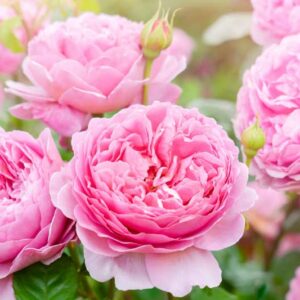
English roses and many modern shrub roses are best pruned to preserve their naturally rounded or arching shape.
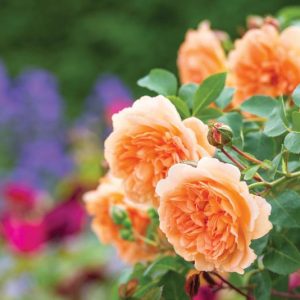
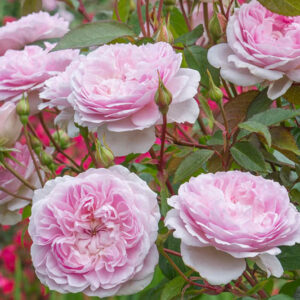
Gardenia example: ‘Gertrude Jekyll‘ can be grown as a shrub or trained as a short climber. A shrub-grown plant can be shortened more freely, while a trained climbing specimen needs its main structural canes preserved. Discover more in Gardenia’s David Austin English Rose guide.
Many Alba, Gallica, Centifolia, and once-flowering Damask roses bloom mainly on established older growth. Pruning before flowering can remove much of the coming season’s display.
Preserve their graceful, arching outlines rather than shaping them into rigid mounds. Remember that some old garden roses, including many Bourbons, Chinas, and Portlands, repeat flower and follow different pruning rules.
Most established repeat-flowering climbers bloom from shorter shoots growing along long structural canes. Treating them like hybrid teas is a common reason for poor flowering.
During the dormant season:
Horizontal training encourages flowering along the canes instead of concentrating blooms at the top of a fence or arch. Avoid forcing stiff, mature stems into sharp bends.
Most traditional ramblers produce one spectacular flush of flowers in late spring or early summer. New shoots formed afterward provide much of the following year’s flowering framework.
Routine pruning differs from renovation. Regular shaping is generally done after flowering, while major renovation of a neglected rambler may be undertaken in late autumn or winter, preserving sufficient healthy framework.
These roses generally require lighter pruning. Remove dead or crowded growth, then shorten excessive shoots to maintain their shape.
| Rose type | Best time | Pruning approach |
|---|---|---|
| Hybrid tea | Late winter-early spring | Fairly hard; encourage strong stems |
| Floribunda | Late winter-early spring | Moderate to hard; retain branching |
| Grandiflora | Late winter-early spring | Moderate; preserve height |
| English / repeat-flowering shrub | Late winter-early spring | Light to moderate; retain natural form |
| Once-flowering old rose | After flowering | Light thinning and selective renewal |
| Repeat-flowering climber | Dormant season | Keep main canes; shorten laterals |
| Once-flowering rambler | After flowering | Replace older canes selectively |
| Miniature / patio | Late winter-early spring | Usually light shaping |
| Groundcover | Depends on flowering habit | Light trimming or occasional renewal |
New roses need time to establish a strong framework before receiving the same maintenance pruning as mature plants.
Neglected roses can often be restored. Start by removing dead wood, then identify younger healthy canes that can form the future framework.
With climbers and ramblers, preserve healthy replacement canes before removing major old stems.
Watch for rootstock suckers. On grafted roses, shoots emerging from below the graft union may belong to the rootstock rather than the named variety. Trace them to their origin and remove them carefully. Do not confuse them with vigorous shoots growing from above the graft.
Summer pruning is usually lighter than winter pruning. Its purpose is to manage growth and encourage further blooming without removing excessive foliage.
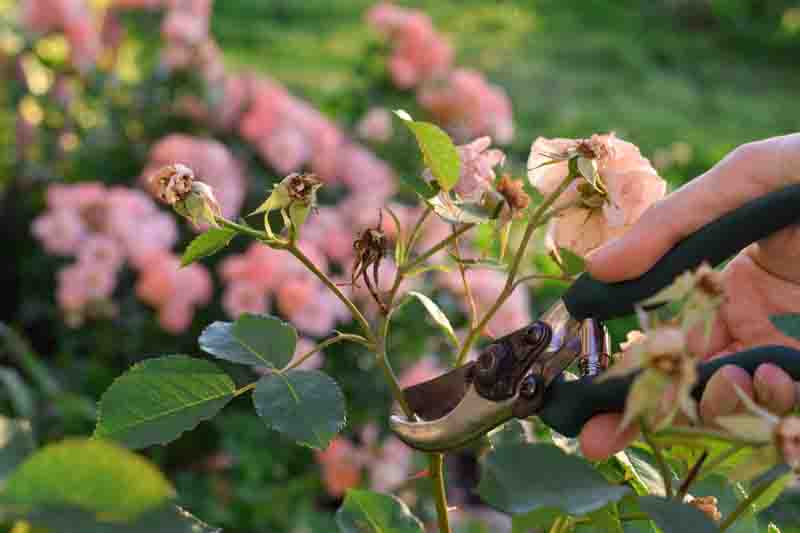
For more flowers: On repeat-flowering roses, remove faded blooms by cutting back to a healthy leaf or strong shoot. There is no universal requirement to cut above a five-leaflet leaf every time. The remaining stem should be strong enough to produce another flowering shoot.
During extreme heat: Avoid severe pruning or removing excessive foliage, particularly in hot desert climates where exposed stems can suffer sun damage.
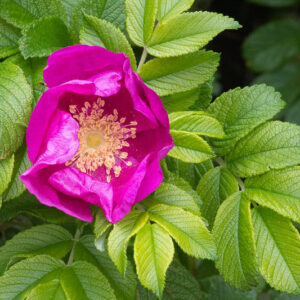
For colorful autumn hips: Allow selected spent flowers to develop fruit instead of deadheading them. Discover more about rose hips.
Correct pruning strengthens the rose’s framework, but poor timing and unnecessary cuts can reduce flowering and increase plant stress.
With dormant foliage out of the way, pruning provides an opportunity to check for pests, damage, and disease.
Look for overwintering scale insects, damaged canes, and suspicious swellings. During the growing season, monitor new shoots for aphids and thrips, which may distort developing buds and flowers.
Other common rose pests include spider mites, particularly during hot, dry weather, and Japanese beetles, which can damage leaves and flowers.
Pruning crowded growth can improve air circulation and make plants easier to inspect, but it does not guarantee disease prevention. Watch for rose black spot, powdery mildew, and rust. These problems require identification and appropriate management, not simply harder pruning.
Remove diseased clippings and fallen infected leaves. Clean tools when moving between diseased plants, and avoid unnecessary wounds to healthy canes.
Apply organic mulch over the root zone, keeping it away from the stems. Feed established roses as active spring growth resumes, water according to soil and weather conditions, and check that climbing rose ties and supports remain secure.
For seasonal watering, fertilizing, planting, and winter protection, see Gardenia’s complete Rose Bush Care Guide.
The right rose in the right location needs less corrective pruning. Gardenia helps you explore rose varieties by climate suitability, mature size, flowering characteristics, and growing conditions.
Most repeat-flowering roses are pruned in late winter or early spring. This may mean January or February in mild climates and March or April in colder areas. Once-flowering roses are generally pruned after blooming.
Established hybrid teas often tolerate hard pruning, leaving four to six healthy buds on strong shoots. Floribundas generally receive moderate to hard pruning, while many shrub roses need only a one-third reduction. Climbing roses should retain their healthy main canes.
Avoid major fall pruning of most repeat-flowering roses in cold climates because it may encourage tender growth before freezing weather. Remove broken or diseased stems and secure wind-prone canes. Once-flowering ramblers are usually pruned earlier, after blooming.
You can still remove dead, damaged, or diseased wood. If the rose is actively growing, postpone major restructuring until the next suitable pruning period. Light shaping and deadheading are generally safer than severe cutting during summer heat.
Remove dead and crossing stems first. Observe whether the rose flowers once or repeatedly and whether it develops long climbing canes. Avoid severe pruning until its flowering habit is clear, particularly if it has only one substantial old stem.
Yes. Hard pruning a once-flowering rose before its bloom season can remove developing flower buds. Excessive removal of climbing rose canes can also reduce flowering. Insufficient sunlight and other growing stresses are additional possible causes.
Light pruning and deadheading are usually suitable during summer. Avoid severe pruning during extreme heat or drought. Once-flowering old garden roses and ramblers may require routine shaping after their early-summer flowering period.
The best rose pruning is selective, not automatic. Identify how your rose flowers, choose the right season for your climate, and preserve the healthy framework that supports its next display. A few well-placed cuts can make the difference between a struggling shrub and a rose covered in flowers.
Explore more expert advice in Gardenia’s Rose Growing Guides.
Updated and reviewed by Gardenia: October 2026
| Hardiness |
4 - 10 |
|---|---|
| Climate Zones | 1, 1A, 1B, 2, 2A, 2B, 3, 3A, 3B, 4, 5, 6, 7, 8, 9, 10, 11, 12, 13, 14, 15, 16, 17, 18, 19, 20, 21, 22, 23, 24, A1, A2, A3, H1, H2 |
| Plant Type | Roses, Shrubs |
| Plant Family | Rosaceae |
| Genus | Rosa, Rosa - English Rose, Rosa - Floribunda Rose, Rosa - Grandiflora Rose, Rosa - Groundcover Rose, Rosa - Hybrid Tea Rose, Rosa - Shrub Rose |
| Exposure | Full Sun, Partial Sun |
| Season of Interest | Spring (Late), Summer (Early, Mid, Late), Fall |
| Maintenance | Average |
| Water Needs | Average |
| Soil Type | Chalk, Clay, Loam, Sand |
| Soil pH | Acid, Alkaline, Neutral |
| Soil Drainage | Moist but Well-Drained, Well-Drained |
| Characteristics | Cut Flowers, Fragrant, Showy |
| Landscaping Ideas | Beds And Borders, Ground Covers, Hedges And Screens, Patio And Containers, Wall-Side Borders, Small Gardens |
| Garden Styles | City and Courtyard, Informal and Cottage |
Create a membership account to save your garden designs and to view them on any device.
Becoming a contributing member of Gardenia is easy and can be done in just a few minutes. If you provide us with your name, email address and the payment of a modest $25 annual membership fee, you will become a full member, enabling you to design and save up to 25 of your garden design ideas.
Join now and start creating your dream garden!