Danaus gilippus
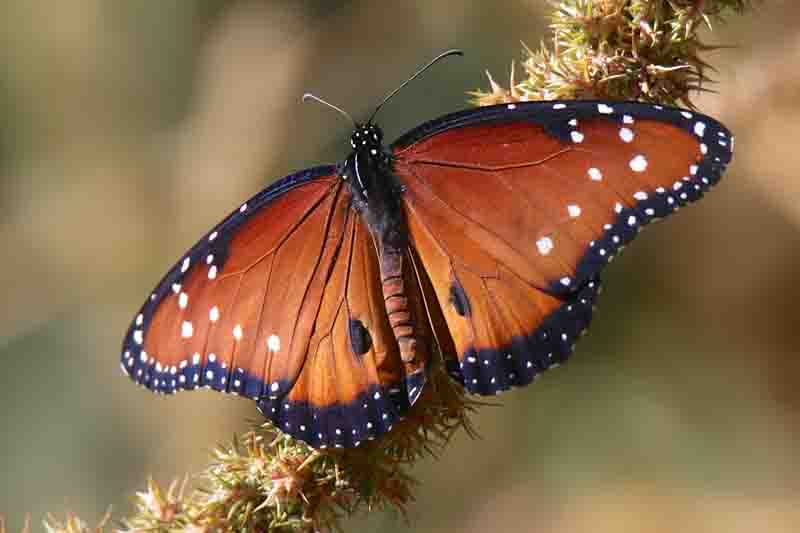
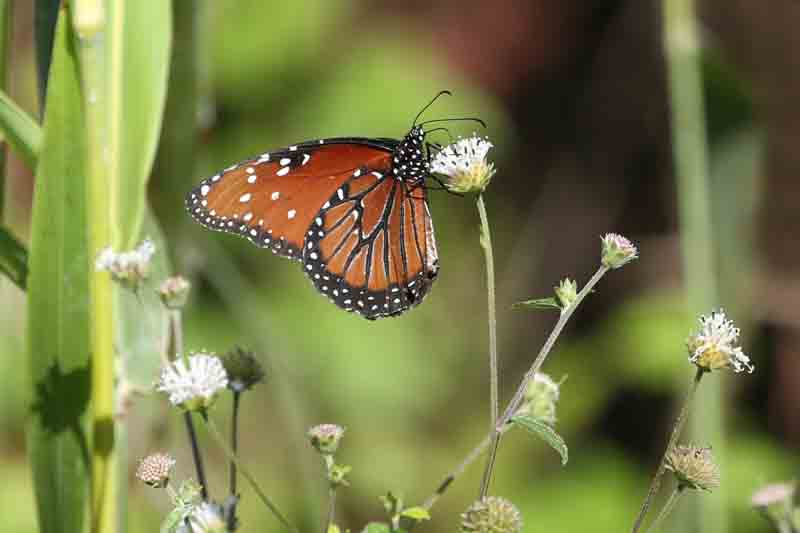
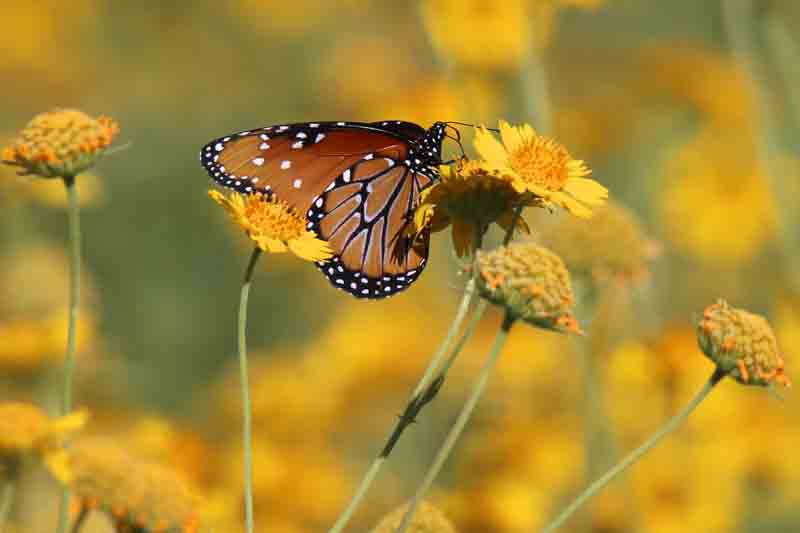
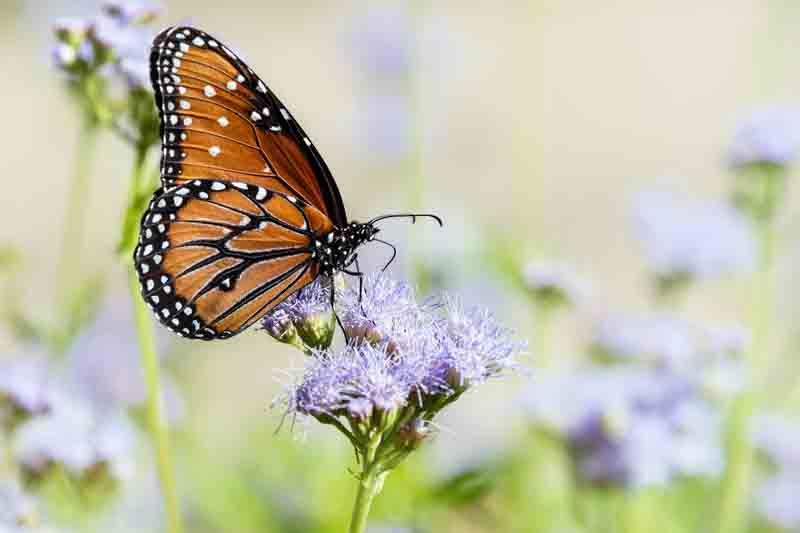
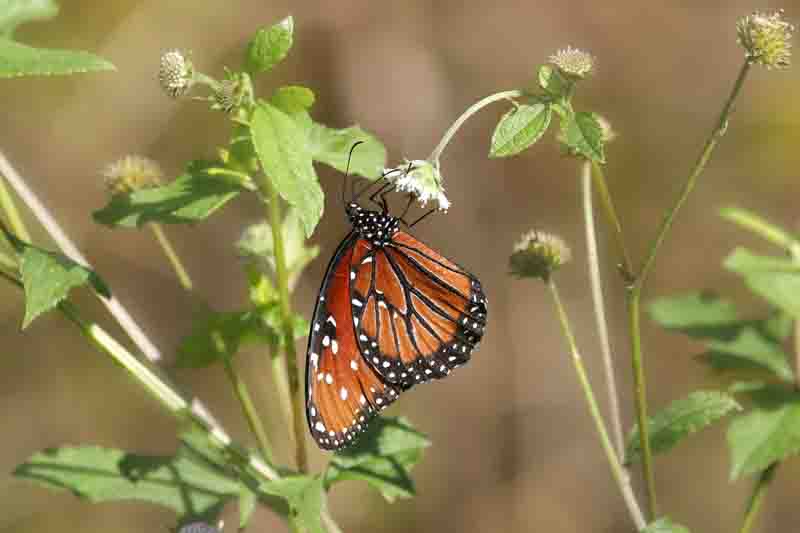
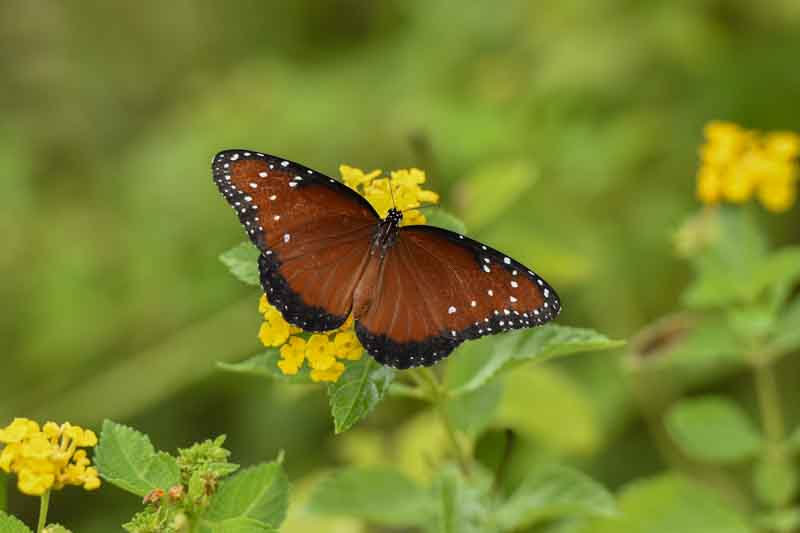


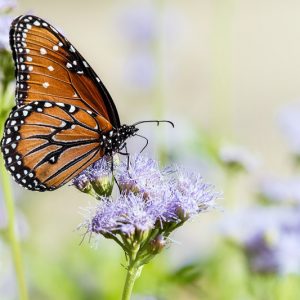
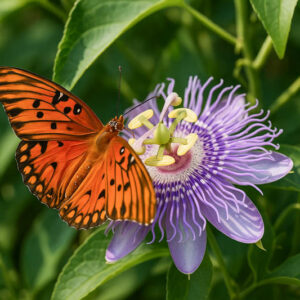
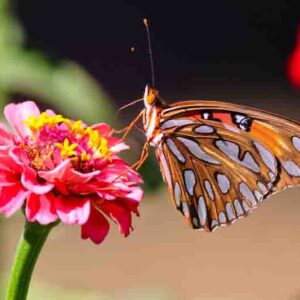
The Queen butterfly (Danaus gilippus) is a close relative of the Monarch, but its story is distinctly its own. Rich mahogany-brown wings, black borders sprinkled with white spots, and an unhurried gliding flight make this warm-climate butterfly easy to admire once you know what to look for.
Its biology is even more interesting. Queen caterpillars feed on milkweeds and other plants in the milkweed family. On some hosts, they sequester cardiac glycosides that contribute to their chemical defense, although the strength of that protection can vary considerably with the host plant. Adult males use an elaborate pheromone system during courtship, and Queens may gather communally when roosting.
In warm regions such as Florida and southern Texas, adults may fly year-round and several generations can occur each year. For gardeners, that means attracting one adult with flowers is only the beginning. A functioning Queen butterfly habitat needs a regionally appropriate larval host, enough usable foliage, reliable nectar, sunny feeding space, and nearby shelter.
Gardenia’s Queen butterfly principle: “plant milkweed” is a starting point, not a complete habitat plan. Choose a documented Queen host for your region, make sure it fits your garden, then surround it with the food and structure the adult butterfly needs.
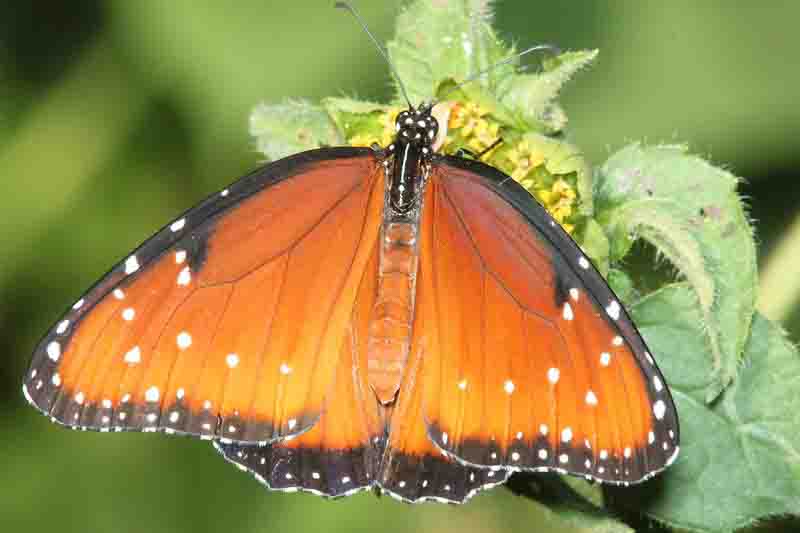
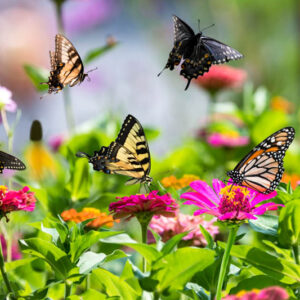
Queen butterflies are frequently confused with Monarchs, especially where both species share milkweed patches and nectar gardens. Look at the upper wings and the difference becomes much clearer.
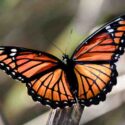
Wing color: deep chestnut, mahogany, or reddish brown rather than the brighter orange typical of a Monarch.
Upper-wing pattern: relatively plain brown, without the Monarch’s bold black network of veins.
White markings: numerous white spots decorate the black forewing tips and outer wing borders.
Wingspan: about 2 5/8 to 3 7/8 inches (6.7-9.8 cm).
Male marking: males carry a conspicuous dark scent patch on each hindwing.
The underside is also brown but shows more obvious dark veins and white-spotted borders. In flight, Queens often appear relaxed and graceful, alternating steady wingbeats with gliding.
Quick Queen ID: mahogany-brown wings + white-spotted black borders + relatively weak black veining above. On males, look for the dark hindwing scent patches.
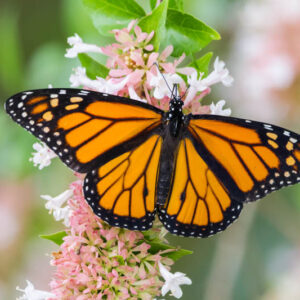
 Monarch Butterfly (Danaus plexippus)
The Queen, Monarch, and Soldier belong to the same group of milkweed butterflies, and all use warning coloration associated with chemical defense. That family resemblance can make identification confusing.
Queen vs. Monarch: Monarchs are brighter orange with strong black veins crossing both pairs of wings. Queens are browner and much less heavily veined above. The caterpillars provide another excellent clue: a mature Queen caterpillar has three pairs of long fleshy filaments, while a Monarch caterpillar has two.
Queen vs. Soldier: these two are much closer in appearance. Queens are generally browner and less strongly veined above. On the underside, the Soldier hindwing usually has a pale band that the Queen lacks. Southwestern Queens can show paler veins than eastern individuals, so location and underside markings are useful when identification is uncertain.
The Queen is primarily a butterfly of warm climates. Its range extends from the southern United States through Mexico, Central America, the Caribbean, and into South America.
In the United States, Queens are especially associated with Florida, Texas, southern Arizona, southern New Mexico, southern California, and other warm parts of the South and Southwest. Adults may wander farther north during favorable seasons, but cold winters restrict permanent populations.
Queen butterfly habitat is usually sunny and relatively open. Look for them in fields, prairies, pinelands, marsh margins, desert washes, dunes, roadsides, pastures, parks, gardens, and open areas along waterways.
This matters when designing habitat. Queens do not need a dense woodland garden. They benefit from easily discovered host plants and flowers in warm, open areas, with enough nearby vegetation to provide resting and roosting structure.
Queen caterpillars use plants in the dogbane family, Apocynaceae, particularly milkweeds and related milkweed vines. But “milkweed” is not one interchangeable garden plant. Different host species thrive in dramatically different conditions, and the hosts used by Queens vary across their range.
Important documented hosts include:
Pineland Milkweed – Asclepias humistrata – an important Florida host adapted to sunny, sandy habitats and dry pinelands.
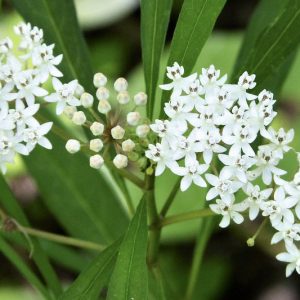
White Swamp Milkweed – Asclepias perennis – one of the best-documented Queen hosts in Florida and the Southeast. It thrives in moist to wet soils and is especially useful around wet meadows, pond margins, floodplains, and rain gardens.
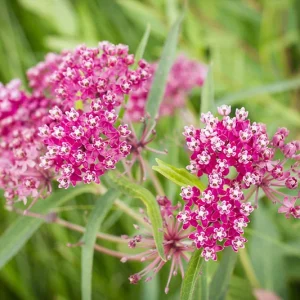
Swamp Milkweed – Asclepias incarnata – another documented Queen host suited to moist soils, wet meadows, rain gardens, and stream margins.
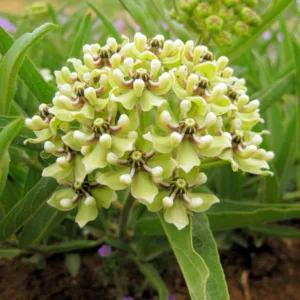
Showy Milkweed – Asclepias speciosa – a western North American milkweed and documented larval host for both the Queen (Danaus gilippus) and Monarch (Danaus plexippus). It is especially useful in sunny western gardens where a native milkweed adapted to seasonally dry conditions is needed.
Whorled Milkweed – Asclepias verticillata – a native milkweed documented in Florida Queen habitat and adapted to generally drier, open sites than the swamp milkweeds.
Fewflower Milkweed – Asclepias lanceolata – another Florida native associated with Queen habitat, occurring in moist to seasonally wet open landscapes.
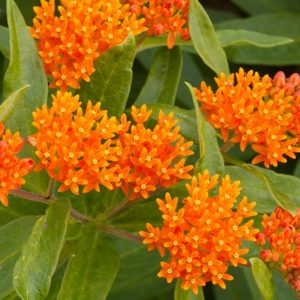
Butterfly Weed – Asclepias tuberosa – a beautiful dry-site milkweed and excellent nectar plant. It is only rarely used by Queen caterpillars in Florida, so it should not automatically replace better-documented regional hosts.
White Twinevine – Funastrum clausum – a twining milkweed relative and documented Queen host in Florida.
Florida Milkvine – Matelea floridana – another native milkweed-family vine used by Queen caterpillars in Florida.
Host choice changes as you move west. Queens in desert and western landscapes use milkweeds adapted to much drier conditions. Showy Milkweed (Asclepias speciosa), Mojave Milkweed (Asclepias nyctaginifolia), and other western milkweeds can serve as Queen hosts, depending on region. A wet-site Florida milkweed and a western dry-site milkweed solve completely different horticultural problems.
Gardenia’s Queen Host Rule: “plant milkweed” is only the first step. Start with host plants documented for Queens in your region, then choose among them according to sunlight, soil, drainage, moisture, hardiness, mature size, and available space.
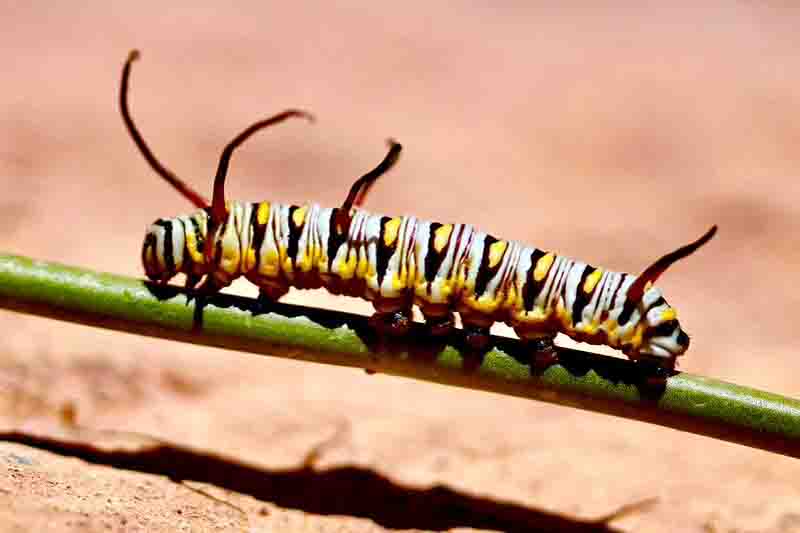
A Queen caterpillar resembles a Monarch caterpillar, but one feature makes identification much easier.
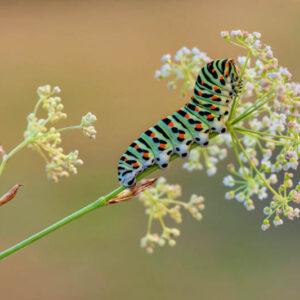
The mature larva is striped black, yellow, and white and has three pairs of long fleshy filaments: one pair near the head, one around the middle of the body, and one near the rear. Monarch caterpillars have only two pairs.
Females generally lay pale eggs individually on suitable host plants. After hatching, larvae feed on the leaves and may also consume tender stems, buds, or flowers as they grow through successive instars.
Queen caterpillar or Monarch? Count the filament pairs. Queen caterpillars have three pairs; Monarch caterpillars have two.
The familiar answer – that Queen caterpillars eat milkweed and become chemically protected – is useful, but incomplete.
Some Queen host plants contain cardiac glycosides, or cardenolides, that caterpillars can sequester and retain through metamorphosis. These compounds can make caterpillars and adult butterflies distasteful or emetic to vertebrate predators.
However, not all Queen host plants provide the same chemical protection. Research has found substantial host-related differences in the amount of cardenolide retained by Queens and in their resulting palatability to predators. A Queen raised on one host may therefore be chemically better defended than one raised on another.
That nuance makes the Queen’s ecology particularly interesting: a plant can function as larval food without necessarily providing the same chemical benefit as another host.
Host plant does more than feed the caterpillar. In Queens, the plant a larva eats can influence the strength of the chemical defense carried into adulthood.
Like other butterflies, the Queen develops through four stages: egg, caterpillar, chrysalis, and adult.
Egg: females generally lay eggs singly on the leaves, stems, buds, or flowers of milkweed-family host plants.
Caterpillar: the striped larva feeds on host tissue, growing through several instars and potentially accumulating defensive plant chemicals along the way.
Chrysalis: the Queen chrysalis is typically green, sometimes with pinkish tones, and decorated with metallic-looking gold and dark markings. Its shape and coloring make it much less conspicuous than the caterpillar.
Adult: the butterfly emerges to feed, mate, and begin another generation. In the warmest parts of its U.S. range, Queens may remain active through the year and produce several generations annually.
Male Queens do far more than chase females through a flower patch. Their courtship includes an elaborate chemical signaling system.
Near the end of the abdomen, males possess expandable brush-like structures called hairpencils. During courtship, these structures help deliver pheromone to the female. Classic experiments showed that males deprived of functional hairpencils could still court but were far less successful at inducing females to mate.
Male Queens can obtain pyrrolizidine alkaloids from particular plants. These plant-derived chemicals provide precursors used in producing components of the male courtship pheromone. Some acquired compounds may also be transferred to females during mating and subsequently reach the eggs.
That means the adult Queen’s relationship with plants is more complicated than nectar alone. Some plants can provide chemistry used in reproduction, while milkweed-family plants feed the caterpillar and flowers supply adult energy.
More than a nectar garden: Queen butterfly reproduction links larval host chemistry, adult feeding behavior, male scent organs, and pheromone communication in an unusually intricate plant-insect relationship.
Adult Queen butterflies feed primarily on flower nectar, but some plants are much better documented for this species than others. Queen-specific nectar records include Frogfruit, Beggarticks or Shepherd’s Needle, Mistflower, native Lantanas, and milkweed flowers.
That distinction matters. A plant may be excellent for butterflies generally without being a particularly well-documented Queen food plant. For a Queen-focused garden, start with plants the butterfly is actually known to use, then add compatible nectar plants only where they help extend the flowering season.
These plants are especially useful:
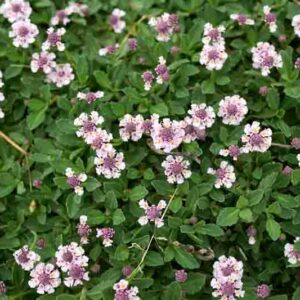
Frogfruit – Phyla nodiflora – one of the best-documented Queen nectar plants. This low, spreading native groundcover flowers for months in warm climates and works well in sunny lawns, paths, meadow edges, rain gardens, and informal butterfly plantings.
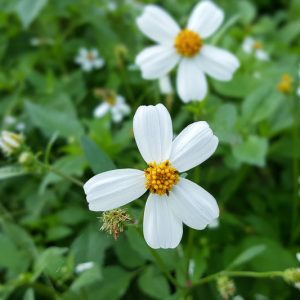
Beggarticks or Shepherd’s Needle – Bidens alba – another specifically documented Queen nectar source. Its small white flowers can appear over an exceptionally long season in warm climates, making it valuable where continuous adult food matters. It self-seeds freely, so it is best suited to naturalistic areas where some spread is acceptable.
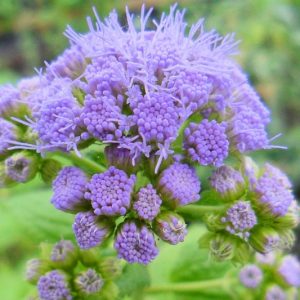
Blue Mistflower – Conoclinium coelestinum – specifically listed as a Queen nectar plant in Florida. Its fluffy blue-purple flowers bloom from summer into fall and can attract impressive numbers of butterflies. It prefers moist, reasonably fertile soil and can spread vigorously by rhizomes.
Buttonsage – Lantana involucrata – a Florida native Lantana specifically documented as a Queen nectar source. Its white to pale-lavender flower clusters can appear nearly year-round in warm climates, providing an unusually long feeding season in sunny, sandy, well-drained sites.
Gregg’s Mistflower – Conoclinium greggii – an especially important southwestern choice. Queen butterflies are strongly attracted to its lavender-blue flowers, and males obtain pyrrolizidine alkaloids associated with their courtship chemistry while feeding on the plant. It is particularly useful in Texas, New Mexico, Arizona, and other warm, relatively dry regions.
Texas Lantana – Lantana urticoides – a heat- and drought-tolerant native shrub well suited to Queen country in Texas and the Southwest. Its long season of yellow, orange, and red flowers provides nectar through hot weather when many less-adapted plants struggle.
White Swamp Milkweed – Asclepias perennis – combines larval-host value with nectar-producing flowers. It is especially useful in moist to wet southeastern gardens, where a single plant group can support both caterpillars and feeding adults.
Swamp Milkweed – Asclepias incarnata – another moisture-loving milkweed whose flowers provide nectar while its foliage may support Queen caterpillars. It works best in rain gardens, wet meadows, pond margins, and other consistently moist sites.
Antelope-Horns Milkweed – Asclepias asperula – a useful western and southwestern milkweed for sunny, dry, rocky, or sandy sites. It provides nectar as well as host-plant value in regions where Queens occur, making it far better suited to dry landscapes than wetland milkweeds.
Butterfly Weed – Asclepias tuberosa – a strong nectar plant for hot, sunny, well-drained gardens. Although it is not among the most frequently used Queen larval hosts in Florida, its orange flowers can strengthen the adult feeding landscape where dry conditions make swamp milkweeds inappropriate.
Pineland Lantana – Lantana depressa – one of the native Lantanas specifically identified as a Queen nectar source in Florida. This low-growing Florida native is especially appropriate in warm, sunny native landscapes rather than substituting potentially invasive ornamental Lantanas.
Wild Lantana – Lantana canescens – another native Lantana specifically documented as a Queen nectar plant. Where it is regionally appropriate, it can contribute long-season nectar without relying on introduced ornamental Lantana species.
Southeastern Sunflower – Helianthus agrestis – Queens are regularly observed visiting its yellow flowers in Florida. This native annual adds a different flower form and color to warm, sunny butterfly habitat while helping broaden the feeding season.
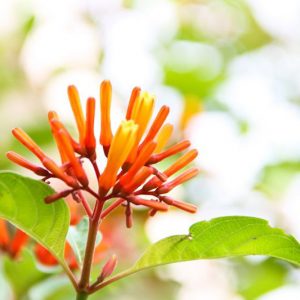
Firebush – Hamelia patens – not one of the core published Queen-specific nectar records, but a valuable warm-climate companion plant where Queens occur. Its long season of orange-red flowers provides reliable nectar for many butterflies in Florida and other subtropical gardens.
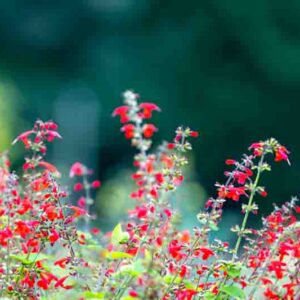
Scarlet Sage – Salvia coccinea – another broader butterfly nectar plant rather than a core Queen-specific record. Its long flowering season, heat tolerance, and southeastern native range make it a useful companion where it fills a genuine seasonal nectar gap.
The first plants in this list are not interchangeable geographically. Blue Mistflower, Buttonsage, White Swamp Milkweed, and Beggarticks are especially relevant to humid southeastern and Florida landscapes. Gregg’s Mistflower, Texas Lantana, and Antelope-Horns Milkweed make much more sense in drier parts of Texas and the Southwest.
That regional difference is important for Queen butterflies because their U.S. range crosses landscapes as different as Florida wetlands and desert washes. A plant can be excellent Queen food and still be completely wrong for a particular garden.
Gardenia’s Queen nectar strategy: begin with documented Queen food plants from your region, then use other butterfly flowers only to fill genuine seasonal gaps. Match every choice to climate, sunlight, soil, drainage, moisture, and available space. A Florida Queen garden and a southwestern Queen garden should not look the same.
Yes. Adult Queens may form communal roosts, gathering together when they are not feeding or flying.
This is another reason butterfly habitat needs structure as well as flowers. Shrubs, tall perennials, grasses, branches, and other vegetation can provide resting and roosting sites close to feeding areas.
Queens remain strongly associated with warm, sunny, open country, so the goal is not dense shade. Think instead of sunny feeding space connected to nearby shelter.
A flower-filled garden can attract an adult Queen without supporting a single caterpillar. To build habitat for the complete life cycle:
Choose a documented regional host. Do not assume every milkweed is equally useful everywhere.
Match the host to the site. Soil moisture, drainage, sunlight, hardiness, and available space matter as much to the plant as host status matters to the butterfly.
Expect caterpillar feeding. Missing leaves are evidence that a host plant is performing its ecological role.
Provide a long nectar season. Combine documented Queen foods with compatible butterfly flowers that bloom at different times.
Connect sunshine with shelter. Keep open feeding and basking areas while retaining nearby vegetation for resting and roosting.
Avoid broad-spectrum insecticides. Products that kill unwanted caterpillars can also kill the Queen caterpillars the garden was designed to support.
The Queen shows exactly why “plant milkweed” is useful advice, but incomplete advice.
1. Start with a regional host.
Choose a milkweed or related host documented for Queens where you live, rather than relying on one national plant list.
2. Make sure the host actually fits.
A wetland milkweed will not thrive in every dry border, and a desert-adapted host belongs in a very different planting. Match sunlight, soil, drainage, water, and space.
3. Build a long nectar season.
Begin with documented Queen food plants such as Frogfruit and Beggarticks, then add compatible flowers to close feeding gaps.
4. Connect sunshine with shelter.
Keep open feeding areas while retaining nearby vegetation where adults can rest and gather.
Gardenia’s shortcut: regional host + site fit + long-season nectar + sunny habitat connected to shelter. That turns “plant milkweed” into a Queen butterfly habitat plan that can actually work.
If a Queen visits your garden, the next question is not simply “Which flower attracted it?” It is “Could its caterpillar live here too?”
Build Queen butterfly habitat that actually fits your garden.
The caterpillar needs the right regional host. The adult needs reliable nectar, sunshine, and nearby sheltered vegetation.
Use the Gardenia Plant Finder to narrow host and nectar plants by hardiness, native range, sunlight, soil, drainage, water needs, mature size, wildlife value, toxicity, and other growing conditions.
Then build the habitat with the Gardenia Garden Design Tool – combine milkweed with nectar and companion plants that can actually thrive together, compare seasonal interest, and catch compatibility problems before planting.
Don’t stop at “plant milkweed.” Find the Queen host that belongs in your region, make sure it belongs in your garden, and build the habitat around it.
Queen caterpillars feed on milkweeds and related plants in the dogbane family. Host species vary by region and include Pineland Milkweed, White Swamp Milkweed, Swamp Milkweed, White Twinevine, Florida Milkvine, and Mojave Milkweed.
Queens are deep mahogany brown and lack the Monarch’s strong black vein pattern above. Queen caterpillars also have three pairs of long fleshy filaments, while Monarch caterpillars have two pairs.
Queen caterpillars are striped black, yellow, and white and have three pairs of long fleshy filaments – one near the head, one around the middle, and one toward the rear.
Queen caterpillars can sequester cardiac glycosides from certain milkweed-family hosts, making them and the resulting adults distasteful to some predators. The strength of this chemical defense varies with the host plant.
Adult Queens drink flower nectar. Documented foods include frogfruit, shepherd’s needle or beggarticks, and milkweed flowers. Other butterfly nectar plants can extend the feeding season.
Yes. Adult Queens may form communal roosts, so nearby shrubs, tall vegetation, and other sheltered structure can complement sunny feeding habitat.
Male Queens use expandable scent organs called hairpencils to deliver pheromone during courtship. Plant-derived pyrrolizidine alkaloids provide chemical precursors used in this reproductive signaling system.
Choose a documented Queen host for your region, match it to your site’s growing conditions, provide long-season nectar, retain sunny feeding areas and nearby shelter, and avoid broad-spectrum insecticides.
Updated and reviewed by Gardenia: September 2026
Create a membership account to save your garden designs and to view them on any device.
Becoming a contributing member of Gardenia is easy and can be done in just a few minutes. If you provide us with your name, email address and the payment of a modest $25 annual membership fee, you will become a full member, enabling you to design and save up to 25 of your garden design ideas.
Join now and start creating your dream garden!