Strymon melinus
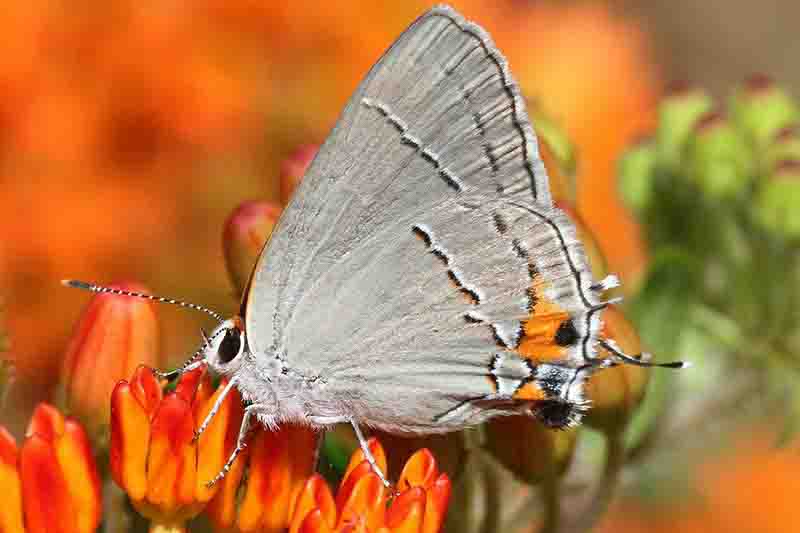
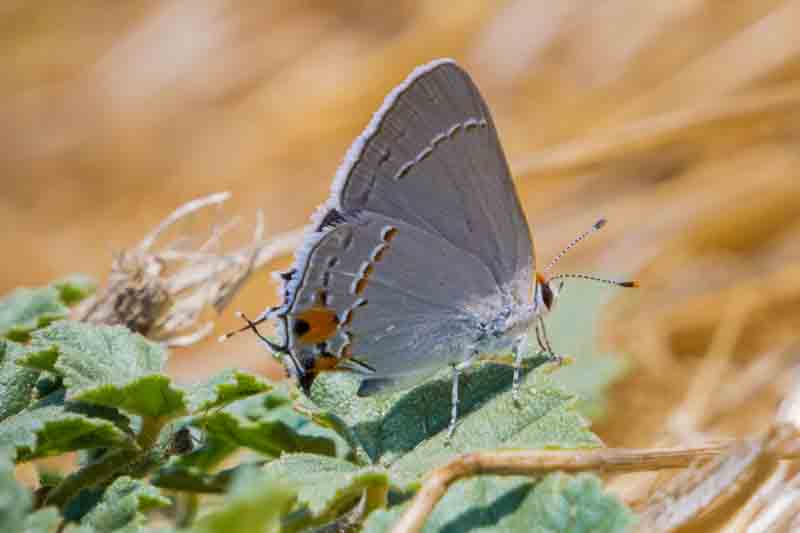
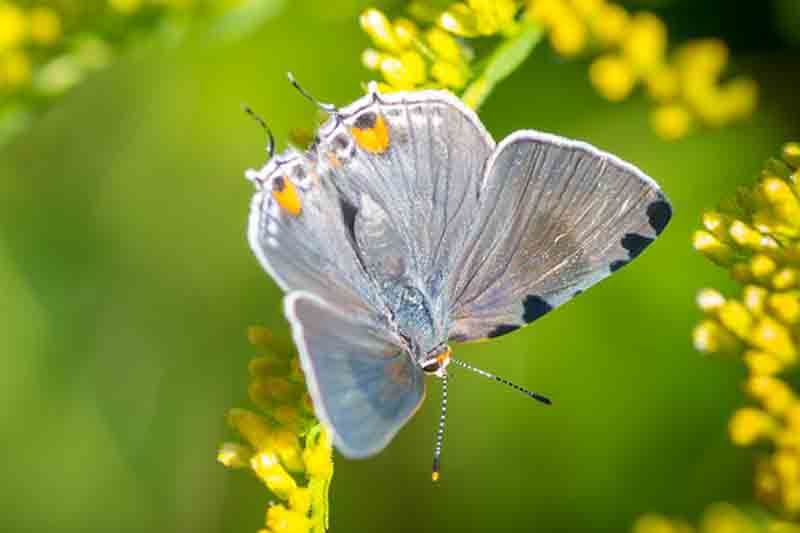
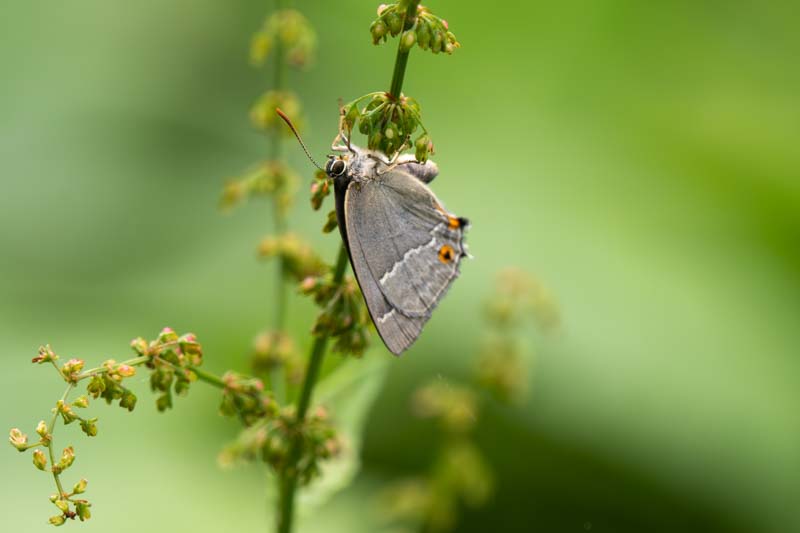
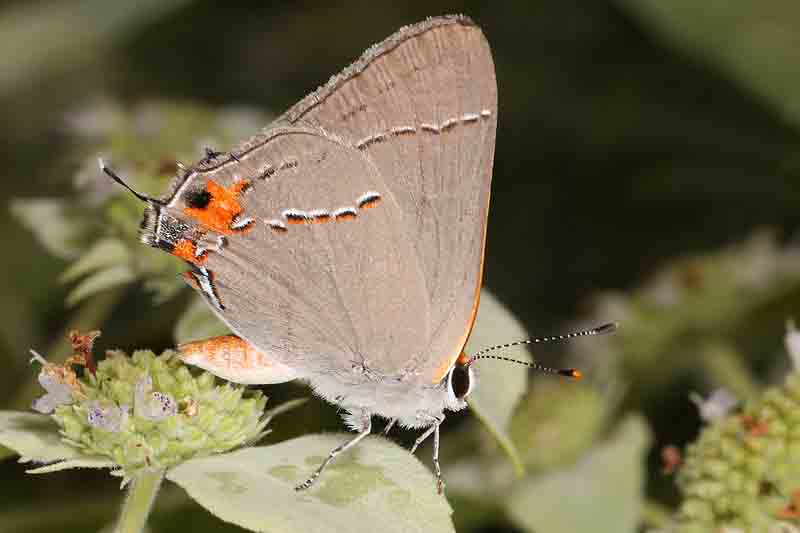


The Gray Hairstreak butterfly (Strymon melinus) is tiny, fast, and easy to overlook – until you notice the delicate hindwing tails, orange-capped black spots, and fine lines crossing its silvery-gray wings. Found across most of North America and south through Mexico, Central America, and into Venezuela, it is one of the most widespread hairstreak butterflies in the Americas.
Its success comes partly from extraordinary flexibility. Unlike butterflies whose caterpillars depend on one genus or even one plant species, Gray Hairstreak larvae can use plants from many families. Peas, clovers, mallows, beans, partridge pea, ticktrefoils, milkpeas, alfalfa, cotton, and many other plants have all been recorded as hosts.
There is an important detail gardeners often miss: young Gray Hairstreak caterpillars frequently feed on flowers, flower buds, developing fruits, and seeds rather than simply eating leaves. Females often lay single eggs directly on buds or blossoms. A host that is repeatedly mown, harvested, or deadheaded before flowering may therefore offer much less breeding habitat than the same plant allowed to complete part of its reproductive cycle.
Gardenia’s Gray Hairstreak principle: don’t just grow the host – let part of the host flower, fruit, and form seed. For this butterfly, habitat depends not only on what you plant, but on what you allow the plant to become.
The Gray Hairstreak is a small, delicate butterfly in the gossamer-wing family, Lycaenidae. Once you know what to look for, its combination of gray wings, slender tails, and orange-and-black markings is quite distinctive.
Wings: pale to medium gray underneath, sometimes with a slightly brownish cast.
Wing markings: a narrow black-and-white line crosses the underside of both wings in a fairly straight path.
False-head markings: each hindwing has a conspicuous black spot bordered or capped with orange near the outer edge.
Tails: one fine, hairlike tail extends from each hindwing, helping create the illusion of a second head.
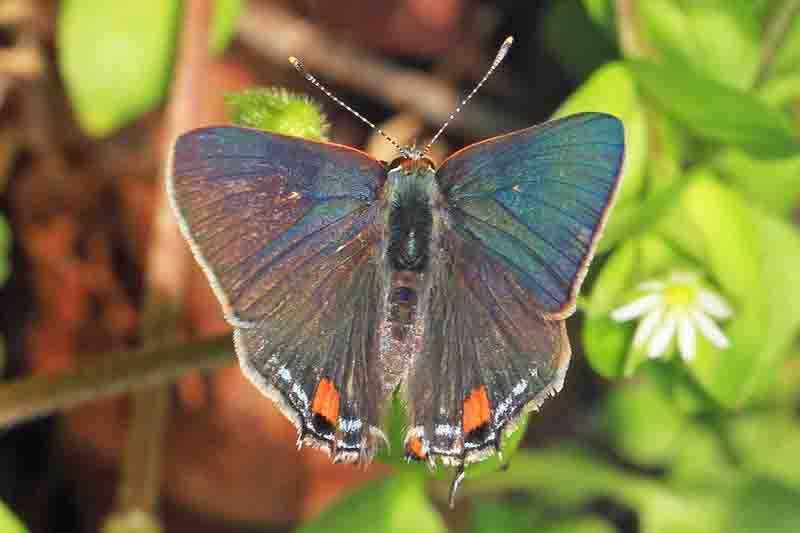
Upper side: blue-gray to slate gray, with orange-red markings near the hindwing tails.
Wingspan: roughly 7/8-1 3/8 inches (2.2-3.5 cm).
Seasonal variation: spring and fall adults are generally darker, while summer individuals may appear noticeably paler.
The Gray Hairstreak is much smaller than familiar garden butterflies such as Monarchs or swallowtails. Its most useful field marks are the single tail on each hindwing, the orange-capped black spot beside it, and the relatively straight black-and-white line across the underside.
Quick Gray Hairstreak ID: tiny gray butterfly + one hairlike tail on each hindwing + orange-and-black false-head markings + a narrow, fairly straight line crossing the underside.
The Gray Hairstreak carries one of the most intriguing visual defenses among small butterflies. The black spots near the rear of the hindwings resemble eyes, while the slender tails resemble antennae. Together they create the illusion of a second head.
When perched, hairstreaks often move or rub their hindwings. The tails then twitch in a way that can resemble moving antennae, drawing attention toward the false head rather than the butterfly’s real one.
This arrangement may help misdirect attacks. A bird, spider, or lizard striking toward the false head may damage the outer edge of a hindwing instead of hitting the butterfly’s actual head or thorax.
Watch the tails. If a perched Gray Hairstreak repeatedly moves its hindwings, the apparent “antennae” are at the wrong end of the butterfly. You are watching the false-head illusion in action.
The Gray Hairstreak is one of the most widespread hairstreaks in the Americas. Its range extends from southern Canada across the continental United States and Mexico, then south through Central America to Venezuela.
Unlike many hairstreaks closely tied to woodland trees or specialized habitats, Gray Hairstreaks thrive in sunny, open and disturbed landscapes. They occur in gardens, roadsides, old fields, vacant lots, parks, farms, grasslands, scrub, open woodland edges, and weedy places.
That adaptability helps explain why the species succeeds around people. Clover in a lawn edge, partridge pea in a meadow strip, mallows near a fence, beans in a vegetable garden, and nectar flowers in a sunny border can collectively provide useful resources.
Flight season varies with climate. In northern regions, two main broods are typical from roughly late spring through summer. In warmer southern areas, three or four generations may occur, with adults potentially flying from late winter into November.
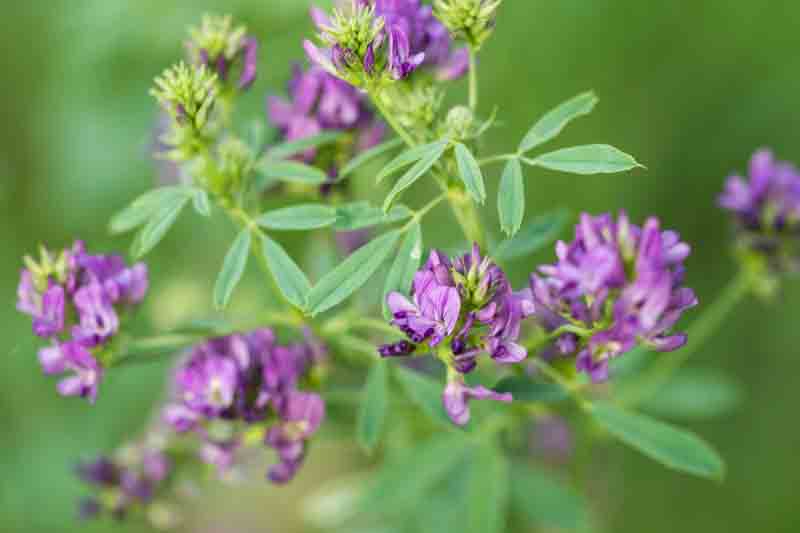 Alfalfa – Medicago sativa
The Gray Hairstreak is an unusually adaptable caterpillar. Unlike highly specialized butterflies that depend on one plant genus, Strymon melinus has been recorded using host plants from many different families. Members of the pea family, Fabaceae, and mallow family, Malvaceae, are especially important, but the host range also includes selected milkweeds, mints, hawthorns, oaks, and other plants.
This broad diet is one reason Gray Hairstreaks can thrive in gardens, meadows, farms, roadsides, and disturbed habitats across such a large geographic range. Frequently documented hosts include clovers, beans, alfalfa, partridge pea, ticktrefoils, milkpeas, mallows, cotton, false indigo, Butterfly Weed, mountain mints, hawthorns, and other species.
Useful and documented examples include:
Partridge Pea – Chamaecrista fasciculata – one of the most useful native legume hosts for sunny prairies, meadows, slopes, and naturalized gardens. Its yellow flowers develop into slender seed pods, giving larvae access to the flowers, developing fruits, and seeds they often prefer.
White Clover – Trifolium repens – a well-documented host that shows how even an informal lawn edge can contribute butterfly habitat when some clover is allowed to flower instead of being continually mown.
Common Mallow – Malva sylvestris – mallows belong to one of the principal host groups used by Gray Hairstreak caterpillars. Larvae may feed on flower buds, blossoms, developing fruits, and foliage.
Beans – Phaseolus spp. – classic Gray Hairstreak hosts. Caterpillars often feed on flowers and developing pods, helping explain the older common name “bean lycaenid.”
Alfalfa – Medicago sativa – an important host in agricultural, roadside, and disturbed habitats, particularly in western North America.
Ticktrefoils – Desmodium spp. – native legumes widely used by Gray Hairstreak larvae. Their flowers and developing seed pods make them especially relevant to the caterpillar’s preference for reproductive plant tissues.
Milkpeas – Galactia spp. – native legumes used by Gray Hairstreak caterpillars, particularly in the Southeast. NCSU specifically identifies Eastern Milkpea (Galactia regularis) as a larval host.
Cotton – Gossypium spp. – a well-known agricultural host. Larvae may feed on developing flower buds, historically called cotton squares, which led to the name “cotton square borer.”
Indigo Bush – Amorpha fruticosa – a native leguminous shrub documented by NCSU as a Gray Hairstreak larval host. Its nectar-rich purple flower spikes also attract adult butterflies, bees, and other pollinators.
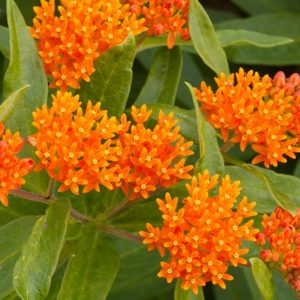
Butterfly Weed – Asclepias tuberosa – better known as a Monarch host, but NCSU also specifically lists it as a larval host for the Gray Hairstreak. Its bright orange flowers additionally provide abundant nectar for adult butterflies.
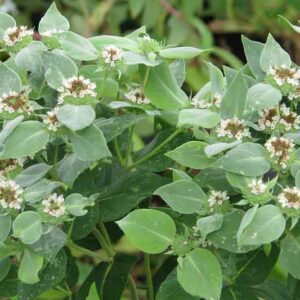
Appalachian Mountain Mint – Pycnanthemum flexuosum – NCSU identifies this southeastern native mint as a larval host for the Gray Hairstreak. Its flowers also attract an exceptional diversity of bees, butterflies, moths, and beneficial wasps.
Cockspur Hawthorn – Crataegus crus-galli – one of several hawthorns documented by NCSU as Gray Hairstreak larval hosts. Its spring flowers support pollinators, while the fruits provide food for birds later in the season.
Other Hawthorns – Crataegus spp. – NCSU also records Gray Hairstreak use of species including Mayhaw (Crataegus aestivalis), Pasture Hawthorn (C. spathulata), Entangled Hawthorn (C. intricata), Alabama Hawthorn (C. alabamensis), and Rough Hawthorn (C. senta). Host use is therefore not limited to herbaceous legumes and mallows.
Darlington Oak – Quercus hemisphaerica – NCSU includes this southeastern oak among trees supporting Gray Hairstreak larvae. Oaks also support an exceptionally broad community of other moth and butterfly caterpillars.
Other Oaks – Quercus spp. – NCSU records Gray Hairstreak associations with several oaks, including Chestnut Oak, Bluejack Oak, Dwarf Live Oak, Nuttall Oak, Shingle Oak, and others. These records broaden the caterpillar’s documented host range beyond the smaller flowering plants most often associated with the species.
Balloon Vine – Cardiospermum corindum – an occasional Gray Hairstreak larval host documented by NCSU in the southern United States. It is better known as a host for other hairstreaks, so it should be regarded as an additional rather than primary Gray Hairstreak host.
This diversity is important. The Gray Hairstreak is not simply a “clover and mallow butterfly.” Its caterpillars can exploit annuals, herbaceous perennials, vines, shrubs, and even trees, although host use varies by region and some plants are much more commonly used than others.
There is also an important difference between a plant being botanically capable of serving as a host and being the best host for a particular garden. A large hawthorn or oak may be excellent wildlife habitat but completely unsuitable for a small border, while Partridge Pea, White Clover, Butterfly Weed, or a native milkpea may fit easily into a sunny pollinator garden.
Whatever host you choose, remember that young Gray Hairstreak larvae frequently concentrate on flower buds, blossoms, developing fruits, seeds, and pods. A host that never reaches its reproductive stage because it is constantly mown, harvested, or deadheaded may provide much less useful caterpillar habitat.
Gardenia’s Gray Hairstreak Host Rule: don’t search for the longest possible host list. Choose a documented host that fits your garden, then allow part of it to flower and develop buds, fruit, or seed. The right host in the right place is more valuable than a biologically suitable plant that cannot thrive there.
Most butterfly-gardening advice focuses on leaves. Gray Hairstreaks are different.
Females frequently place individual eggs on flowers or flower buds. Newly hatched caterpillars often begin by eating floral tissues, young fruits, developing seeds, or pods. Older larvae may also consume foliage.
This creates an interesting tension with conventional garden maintenance. Deadheading encourages repeat bloom, harvesting removes developing fruits, and mowing keeps clover tidy. Yet if every flower or developing pod disappears immediately, some of the caterpillar’s most useful food disappears with it.
You do not need to stop maintaining the garden. Instead, leave part of a host patch unmanaged long enough to bloom and mature. Allow some clover to flower, leave several partridge pea pods intact, or let a few mallow stems complete their cycle.
For Gray Hairstreaks, “don’t deadhead everything” can be habitat advice. A flower bud may be more than tomorrow’s bloom – it may already be the caterpillar’s nursery.
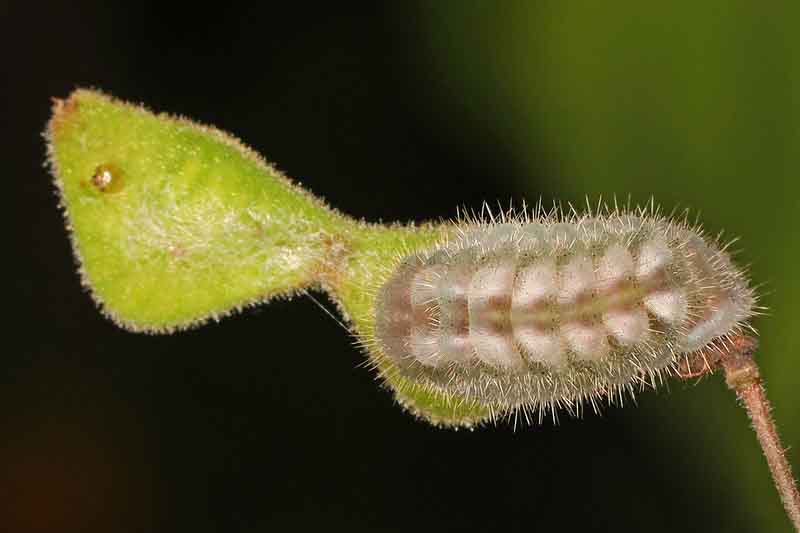
The Gray Hairstreak caterpillar looks nothing like the delicate adult. It is short, broad, and somewhat slug-shaped, a body form typical of many members of the gossamer-wing family.
Color is highly variable. Caterpillars may be green, yellow-green, cream, pinkish, reddish, or brownish. Their bodies are covered with fine short hairs, producing a soft, velvety appearance.
This variable coloration provides effective camouflage. A green larva on a young bean pod may be almost invisible, while a pinkish individual feeding among flower buds can blend remarkably well with its surroundings.
If you are searching for larvae, examine flower clusters, developing fruits, seed pods, and buds rather than looking only for chewed leaves.
Gray Hairstreak caterpillars may sometimes be attended by ants, a behavior seen in a number of butterflies in the Lycaenidae family.
Lycaenid caterpillars are well known for specialized relationships with ants, often involving chemical signals and nutrient-rich secretions. In Gray Hairstreaks, ant attendance has been reported, but it is best regarded as an interesting association rather than an essential requirement for larval development.
For gardeners, ant activity can still provide a useful clue. If several ants repeatedly visit a flower cluster, pod, or other known host tissue, look carefully nearby. A well-camouflaged hairstreak caterpillar may be present.
Look twice when ants gather on a host. They may simply be foraging, but repeated activity around buds or pods is a good reason to inspect closely.
Like other butterflies, the Gray Hairstreak develops through four stages: egg, caterpillar, chrysalis, and adult.
Egg: females generally lay eggs singly on flowers or flower buds of suitable host plants.
Caterpillar: young larvae feed heavily on flowers, developing fruits, seeds, and buds. As they mature, they may also eat foliage.
Chrysalis: after completing larval development, the caterpillar forms a small, inconspicuous pupa. The species generally overwinters in the pupal stage.
Adult: butterflies emerge when temperatures and host growth become favorable. Multiple generations occur during the year, with more broods in warmer climates.
In northern parts of the range, two main flights are typical from approximately May through September. Southern populations can produce three or four generations, extending activity from late winter well into fall.
Adult Gray Hairstreaks are flexible nectar feeders, visiting a wide range of wildflowers, native perennials, shrubs, and other flowering plants. Documented adult foods include dogbane, milkweeds, mints, goldenrods, clovers, and other nectar-rich flowers. Because this butterfly can be active over a long season, the most useful garden is not one filled with a single favorite flower, but one offering overlapping bloom from spring through fall.
The plants below provide a varied mix of nectar sources for sunny borders, meadows, pollinator gardens, dry landscapes, and wetter sites. Not every plant is appropriate everywhere, so choose species that fit your climate, soil, moisture, and available space.
Dogbane – Apocynum cannabinum is one of the specifically documented adult nectar plants for Gray Hairstreaks. Its clusters of small, nectar-rich flowers attract butterflies and many other beneficial insects. Because it can spread vigorously by rhizomes, it is best suited to larger naturalistic plantings and meadow-style gardens.
Common Milkweed – Asclepias syriaca produces fragrant summer flower clusters rich in nectar. Gray Hairstreaks are among the many butterflies that may visit milkweed flowers, making this vigorous native particularly useful in larger pollinator gardens and naturalized landscapes.
Butterfly Weed – Asclepias tuberosa brings brilliant orange flowers to sunny, well-drained gardens. Its nectar-rich umbels attract a broad range of butterflies, while its compact, drought-tolerant habit makes it easier to accommodate than some of the more vigorous milkweeds.
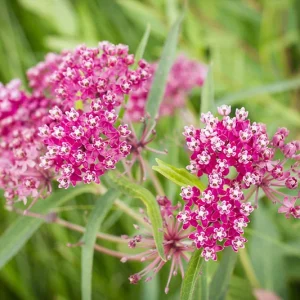
Swamp Milkweed – Asclepias incarnata extends the milkweed option into moist soils, rain gardens, wet meadows, and pond edges. Its fragrant pink flowers provide abundant summer nectar for butterflies and other pollinators.
Goldenrods – Solidago spp. are among the most useful late-season nectar plants. Their masses of yellow flowers can sustain adult Gray Hairstreaks when many summer perennials are fading, helping extend the garden’s nectar supply into fall.
Blunt Mountain Mint – Pycnanthemum muticum is an exceptional pollinator perennial, producing dense summer flower clusters surrounded by silvery bracts. Mountain mints attract butterflies, native bees, wasps, and many other beneficial insects and are excellent choices for sunny native gardens.
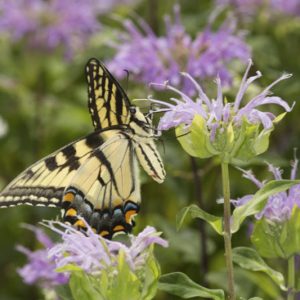
Wild Bergamot – Monarda fistulosa produces nectar-rich lavender flowers from midsummer into early fall. Its long flowering period helps bridge the gap between early summer bloomers and later asters and goldenrods.
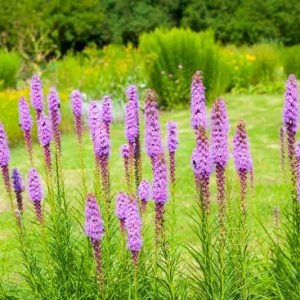
Blazing Star – Liatris spicata sends up striking vertical spikes packed with nectar-rich flowers. Blooming from midsummer into fall, it provides both a strong architectural accent and a useful nectar source in sunny borders, prairies, and meadow gardens.
Purple Coneflower – Echinacea purpurea offers a long summer bloom season and broad, accessible flower heads regularly visited by butterflies. It combines easily with milkweeds, blazing stars, goldenrods, and native grasses in sunny pollinator plantings.
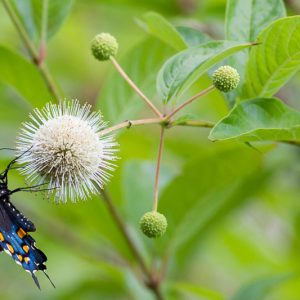
Buttonbush – Cephalanthus occidentalis is a native shrub with distinctive spherical flowers rich in nectar. It is especially valuable where soils stay moist, making it an excellent option for rain gardens, wet borders, pond edges, and streamside plantings.
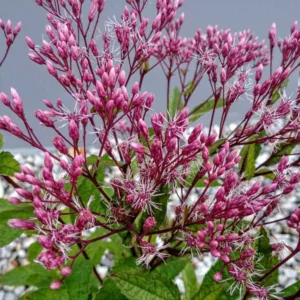
Sweet-Scented Joe-Pye Weed – Eutrochium purpureum produces broad clusters of pink-purple flowers from midsummer into early fall. Its tall stature makes it ideal for the back of borders, meadow plantings, and naturalistic gardens where it can provide abundant late-season nectar.
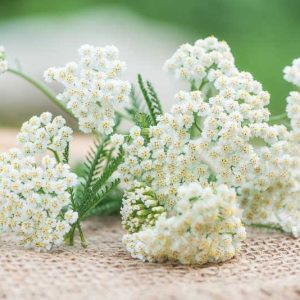
White Yarrow – Achillea millefolium bears broad, flat-topped flower clusters that provide convenient landing platforms for small butterflies. Its long flowering season, drought tolerance, and ability to thrive in lean soils make it useful in dry, sunny gardens.
California Buckwheat – Eriogonum fasciculatum is particularly valuable in western gardens. Its nectar-rich flower clusters bloom for months from late spring into fall, providing a long-lasting food source in hot, dry landscapes.
White Clover – Trifolium repens can play a double role: its flowers provide nectar for adults, while the plant can also serve as a Gray Hairstreak larval host. Allowing some clover to bloom in an informal lawn edge or meadow can therefore support more than one stage of the butterfly’s life cycle.
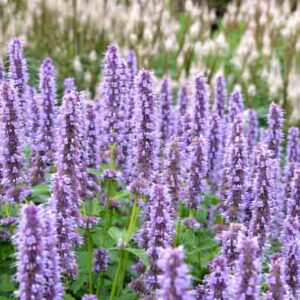
Anise Hyssop – Agastache foeniculum produces tall spikes of lavender-purple flowers over a long summer-to-fall season. Rich in nectar and highly attractive to butterflies, bees, and hummingbirds, it is especially useful for extending bloom in sunny pollinator and prairie-style gardens.
Gardenia’s nectar strategy: don’t choose 15 plants simply because they attract butterflies. Build a sequence of nectar-rich flowers that fit your own growing conditions and overlap in bloom, so Gray Hairstreak adults can find food throughout their flight season.
Not every garden needs all 15 plants. A dry western garden might rely on California Buckwheat, Yarrow, Butterfly Weed, and other drought-tolerant species, while a moist eastern garden could emphasize Swamp Milkweed, Buttonbush, Joe-Pye Weed, Wild Bergamot, and Mountain Mint. The goal is not the longest plant list – it is the right combination of plants, flowering at the right time, in the right place.
Think in two food systems: nectar sustains the adult butterfly, while suitable host plants feed the caterpillar. The strongest Gray Hairstreak garden connects both stages of the life cycle rather than assuming one plant has to do everything.
Gray Hairstreaks are active, quick-flying butterflies that often remain relatively low over vegetation. Adults regularly pause on flowers or sunny leaves, sometimes opening the wings enough to reveal their slate-blue upper surfaces.
Males are territorial and may perch on shrubs, low trees, or elevated vegetation during the afternoon while watching for passing females. The species can also exhibit hilltopping behavior where suitable topography is available.
Once you know the pattern – fast flight, short nectar visits, repeated perching, and twitching hindwing tails – this tiny butterfly becomes much easier to notice.
Because Gray Hairstreak caterpillars can use such a broad range of plants, creating habitat is often less about finding one rare host and more about managing ordinary plants in a butterfly-friendly way.
Grow documented hosts. Partridge Pea, clovers, mallows, beans, native legumes, and other suitable plants can provide larval food.
Let some hosts flower and mature. Avoid mowing, harvesting, or deadheading every host before reproduction occurs.
Provide nectar through the season. Combine spring, summer, and fall bloom so successive adult generations have dependable food.
Keep sunny open habitat. Gray Hairstreaks thrive in gardens, fields, roadsides, meadow edges, and other relatively open landscapes.
Accept a little feeding damage. A chewed bud or developing pod may be evidence that your garden is supporting reproduction.
Avoid broad-spectrum insecticides. Products aimed at unwanted caterpillars can kill Gray Hairstreak larvae as well.
The Gray Hairstreak exposes a limitation in the familiar “host plant + nectar plant” formula. For this species, how a host is maintained can matter almost as much as which host is planted.
1. Choose a host that fits the site.
Start with a documented Gray Hairstreak host appropriate to your region, sunlight, soil, moisture, and available space.
2. Protect some reproductive growth.
Allow part of the host planting to produce buds, flowers, immature fruits, and seed pods.
3. Build nectar across the season.
Use overlapping flowering periods so successive generations of adults have dependable food.
4. Preserve sunny open structure.
Keep host and nectar plants accessible rather than burying everything beneath dense shade.
5. Accept evidence of breeding.
A damaged bean pod, chewed flower bud, or disappearing clover head may be ecologically more valuable than a cosmetically perfect plant.
Gardenia’s shortcut: right host + reproductive growth left intact + season-long nectar + sunny open habitat + tolerance for caterpillar feeding. For the Gray Hairstreak, habitat is not just what you plant – it is what you allow the plant to become.
If a Gray Hairstreak visits your garden, the most useful question is not simply “Which flower attracted it?” Ask instead: “Where could it lay an egg, and would that host still have flowers or pods when the caterpillar hatches?”
Build Gray Hairstreak habitat around the caterpillar’s real diet.
Use the Gardenia Plant Finder to identify host and nectar plants suited to your hardiness, native range, sunlight, soil, drainage, water needs, mature size, wildlife goals, tolerances, and other growing conditions.
Then use the Gardenia Garden Design Tool to combine those plants into a garden where host and nectar plants can thrive together, compare seasonal interest, and catch compatibility problems before planting.
Don’t stop at “plant butterfly flowers.” Give the adult nectar, give the female flowering hosts, and leave enough reproductive growth for the caterpillar that follows.
Gray Hairstreak caterpillars use an unusually broad range of plants, especially members of the pea and mallow families. Common hosts include clovers, beans, partridge pea, alfalfa, ticktrefoils, milkpeas, mallows, cotton, and many other flowering plants.
Look for a small gray butterfly with one thin tail on each hindwing, an orange-capped black spot near the tail, and a relatively straight black-and-white line crossing the underside of the wings.
Gray Hairstreak caterpillars are short, broad, and velvety. Their color can vary from green and yellow-green to pink, reddish, cream, or brown, allowing them to blend with flowers, pods, or developing fruit.
Young Gray Hairstreak caterpillars frequently feed on flowers, buds, developing fruits, seeds, and pods. Females therefore often place individual eggs directly on flowers or flower buds near the larva’s first food.
Adults drink nectar from many flowers. Documented sources include dogbane, milkweeds, mints, winter cress, goldenrods, ticktrefoils, white sweet clover, heliotrope, and other wild and cultivated flowers.
The hindwing tails and nearby eyespots create a false-head illusion. Moving the hindwings makes the tails resemble antennae and may help direct a predator’s attack toward the rear of the wings instead of the butterfly’s real head.
Gray Hairstreak caterpillars may sometimes be attended by ants. Ant associations are common among many lycaenid butterflies, but ant attendance is not required for every Gray Hairstreak caterpillar.
Grow documented host plants, allow some of them to flower and form pods or fruit, provide nectar throughout the season, maintain sunny open habitat, tolerate modest caterpillar feeding, and avoid broad-spectrum insecticides.
Updated and reviewed by Gardenia: October 2026
Create a membership account to save your garden designs and to view them on any device.
Becoming a contributing member of Gardenia is easy and can be done in just a few minutes. If you provide us with your name, email address and the payment of a modest $25 annual membership fee, you will become a full member, enabling you to design and save up to 25 of your garden design ideas.
Join now and start creating your dream garden!