Heliconius charithonia
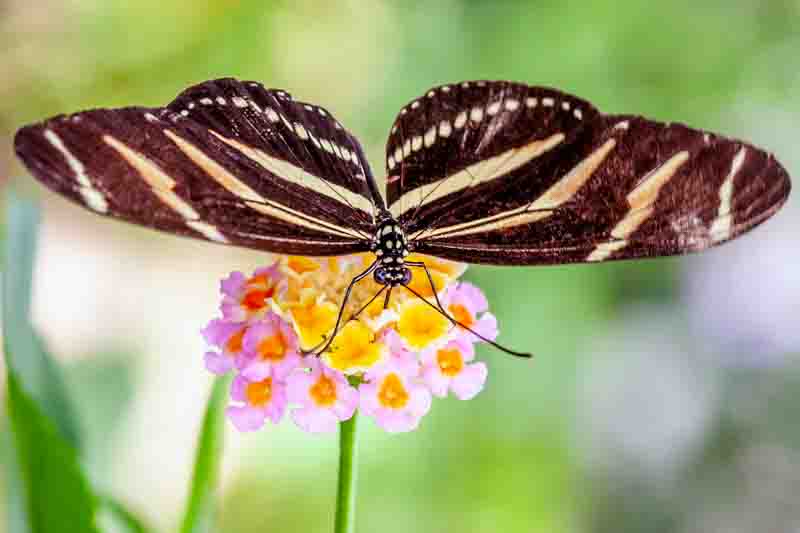
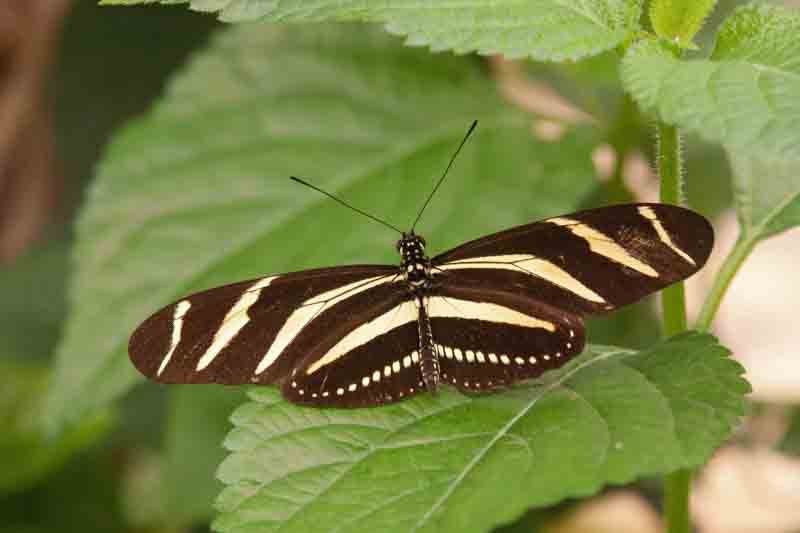
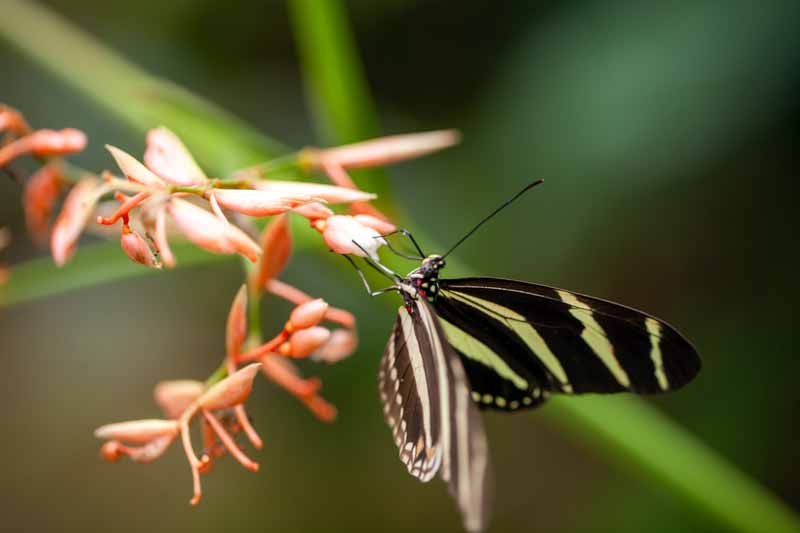
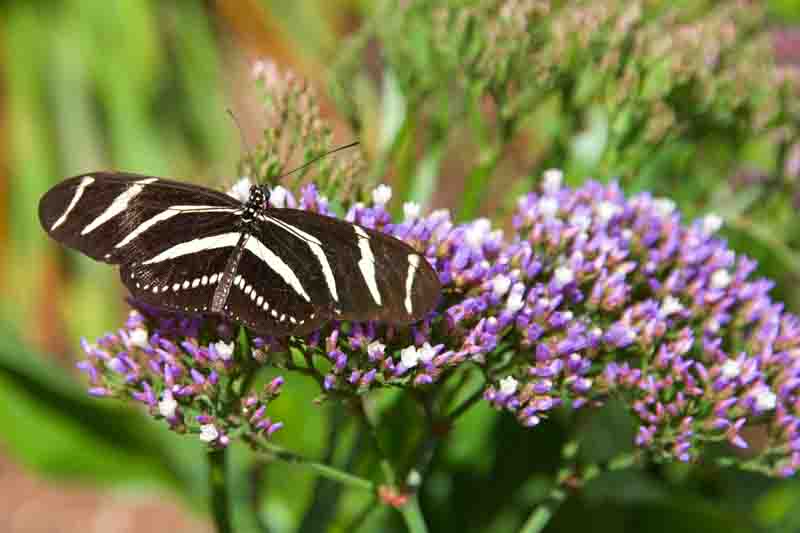
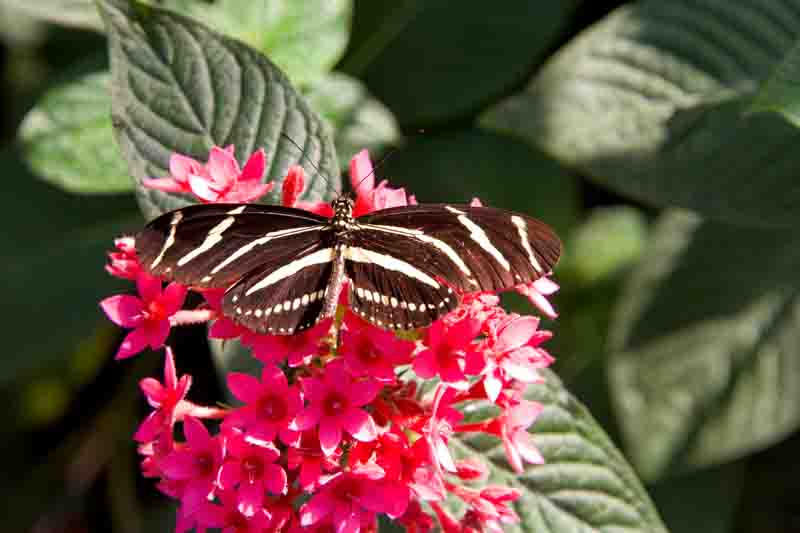
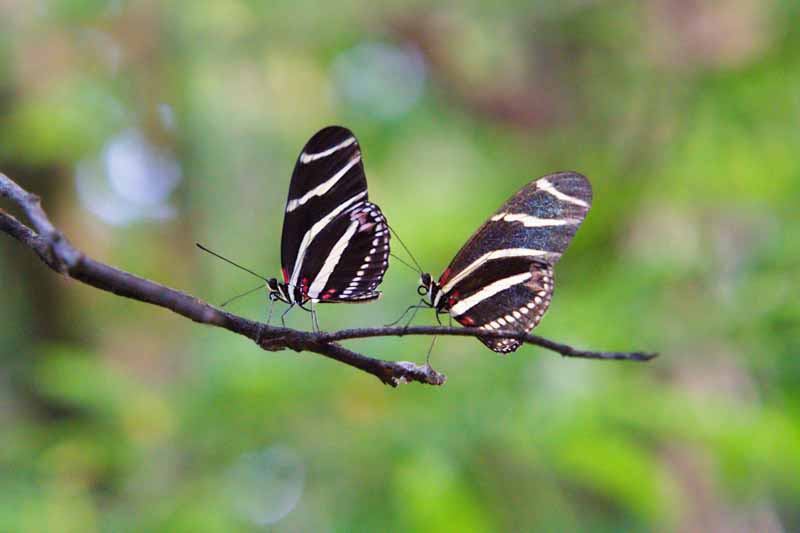


The Zebra Longwing butterfly (Heliconius charithonia) is one of North America’s most distinctive and biologically unusual butterflies. Its long black wings are crossed by narrow pale-yellow stripes, giving it an unmistakable zebra pattern, while its slow, floating flight makes it look almost effortless in the air.
In Florida, where it is the official state butterfly, Zebra Longwings can be seen in gardens, parks, forest margins, tropical hardwood hammocks, and other warm, sheltered landscapes. But their appearance is only the beginning of the story.
Zebra Longwing caterpillars depend on passionflower vines (Passiflora). Adults feed not only on nectar but also on pollen, gaining extra nutrients that help them live for several months. They gather in communal night roosts, return repeatedly to favored roosting sites, and even display remarkable mating behavior around female chrysalises.
That means a successful Zebra Longwing garden needs much more than a few nectar flowers. It needs passionflower for the caterpillar, healthy host growth, a long season of nectar and pollen, and sheltered vegetation that supports the adults’ unusual social behavior.
Gardenia’s Zebra Longwing principle: build habitat for a butterfly that may live for months, not weeks. Passionflower creates the nursery, but long-season flowers and sheltered structure keep the adult landscape working far beyond one flush of bloom.
The Zebra Longwing is one of the easiest butterflies in Florida to recognize.
Wings: long, narrow, and much more elongated than the rounded wings of many familiar butterflies.
Color: mostly black with several narrow pale-yellow stripes crossing the forewings and hindwings.
Underside: similar striped pattern, usually paler, with small reddish markings near the base of the wings.
Wingspan: generally about 3 to 3 1/2 inches (7.5-9 cm).
Flight: slow, graceful, and floating rather than fast and erratic.
Males and females look broadly similar, so sex is difficult to determine from casual observation alone.
Quick Zebra Longwing ID: elongated black wings + narrow yellow stripes + slow, floating flight. Few North American butterflies share that combination.
Zebra Longwings range from the southern United States through Mexico, Central America, the Caribbean, and much of tropical South America. In the United States, Florida is their principal stronghold.
Adults may be found year-round through much of central and southern Florida, although unusually cold winters can reduce populations farther north. Their typical habitat includes open woodlands, forest margins, gardens, parks, tropical hammocks, and other warm landscapes with both shelter and flowers.
Unlike butterflies that spend most of their time in open meadows, Zebra Longwings frequently move between shaded vegetation and brighter flowering areas. A layered woodland-edge garden can therefore provide a particularly useful combination of host plants, food, and shelter.
Where conditions remain warm, Zebra Longwings produce multiple generations each year. That makes continuous habitat especially valuable: the garden may be supporting eggs, caterpillars, chrysalises, newly emerged adults, and older pollen-feeding adults at the same time.
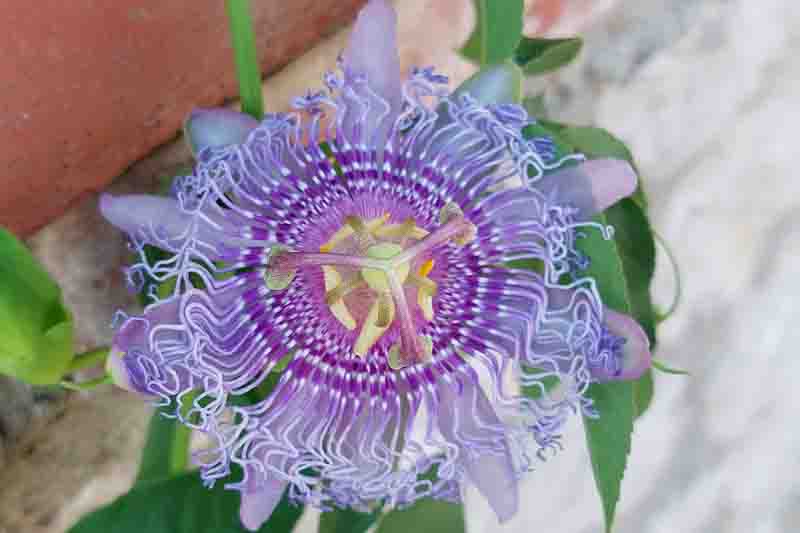
Maypop or Passiflora incarnata
Zebra Longwing caterpillars feed on passionflower vines in the genus Passiflora. Without a suitable passionflower, adults may visit flowers, but the garden cannot support the caterpillar stage.
Important North American hosts include:
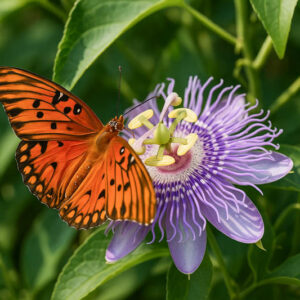
Maypop – Passiflora incarnata – a vigorous native passionflower with spectacular lavender-purple flowers. It is a documented Zebra Longwing host and is especially useful beyond frost-free South Florida because it is considerably more cold-hardy than many tropical passionflowers.
Yellow Passion Flower – Passiflora lutea – a native eastern and south-central U.S. vine with small pale flowers. It grows naturally in woodland and forest-edge conditions and is a documented host for Zebra Longwings.
Corkystem Passionflower – Passiflora suberosa – an important host in Florida and tropical regions. Its flowers are much smaller and less showy than those of many ornamental passionflowers, but its larval value is substantial.
Females lay their small yellow eggs singly or in small clusters on new growth, especially terminal leaves and tendrils. That makes the active growing portions of the vine especially important during breeding periods.
Maypop can spread vigorously by underground shoots, while other passionflowers may behave very differently. Some need large trellises; others fit woodland edges or smaller structures. Host selection should therefore be both biological and horticultural.
Gardenia’s passionflower rule: don’t choose a host vine only because the caterpillar can eat it. Choose the Passiflora that fits your climate, sunlight, moisture, mature size, available support, and garden style.
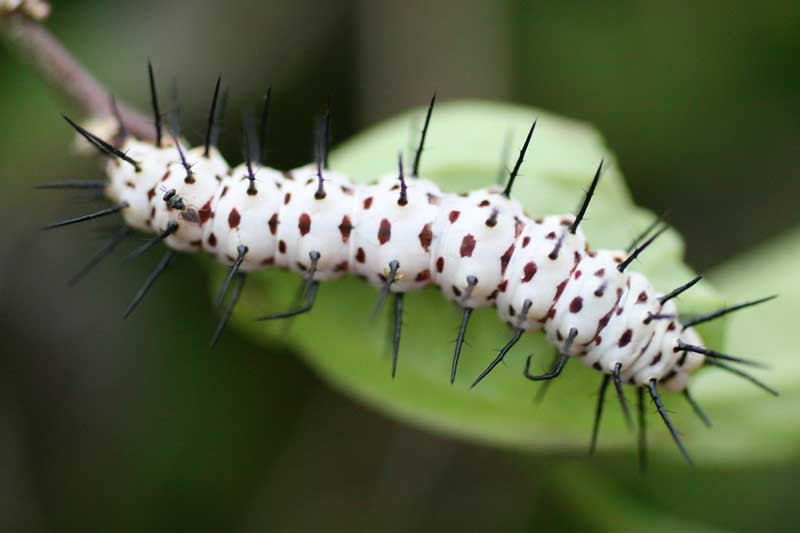
Mature Zebra Longwing caterpillars are white to cream with black spots and numerous long, branching black spines. The contrast makes them unusually conspicuous against green passionflower foliage.
The spines look formidable, but their appearance is part of a broader warning strategy associated with the caterpillar’s chemical defenses.
Passionflowers contain cyanogenic compounds, and Heliconius butterflies have evolved an unusually sophisticated chemical relationship with their hosts. They can sequester some cyanogenic glucosides from passionflower tissues and also synthesize defensive cyanogenic compounds themselves. Together, those defenses help make Zebra Longwings distasteful to many predators.
Chewed passionflower foliage should therefore not automatically trigger pest control. A vine carrying eggs, caterpillars, and missing leaves may be doing exactly what a butterfly host plant is supposed to do.
Before treating chewed passionflower leaves, look closely. White caterpillars with black spots and branching black spines may be the next generation of Zebra Longwings.
The Zebra Longwing passes through four stages – egg, caterpillar, chrysalis, and adult – and can repeat that cycle multiple times each year in warm climates.
Eggs: Females deposit small yellow eggs singly or in small groups on new passionflower growth, including terminal leaves and tendrils.
Caterpillars: Larvae feed on Passiflora foliage and grow through several instars, becoming increasingly conspicuous as their black-spotted white bodies and branching spines develop.
Chrysalis: Mature caterpillars leave their feeding position and pupate on or near host vegetation. The pupa is brown, irregularly shaped, and surprisingly leaf-like, with two long projections near the head.
Adult: The newly emerged butterfly begins an adult life that can last far longer than that of most familiar garden butterflies because Zebra Longwings supplement nectar with nutrient-rich pollen.
That long adult stage changes the gardening equation. Habitat must remain useful long after one flowering plant has finished.
Zebra Longwings have one of the most unusual mating systems among familiar North American butterflies.
Males can locate female pupae before the females emerge. Once a male identifies a female chrysalis, he may return repeatedly, perch on or near it, and defend it from rival males. As emergence approaches, guarding becomes increasingly intense.
Mating may begin while the female is still partly inside the chrysalis and continue as she emerges and expands her wings. During mating, the male also transfers compounds that make the female less attractive to subsequent males.
For gardeners, the practical lesson is simple: passionflower habitat supports far more than feeding caterpillars. Chrysalises on or near host vegetation can become the center of remarkably complex reproductive behavior.
A chrysalis is not an inactive ending. In Zebra Longwings, it can become the stage for mate location, competition, guarding, and the beginning of the adult reproductive cycle.
This is one of the defining features of the Zebra Longwing.
Most adult butterflies rely mainly on nectar for energy. Zebra Longwings feed on nectar too, but they also collect and digest flower pollen. Adults gather pollen on the proboscis, moisten and manipulate it, and extract nutrients from it.
Pollen supplies amino acids and other nutrients that are scarce in nectar alone. Those additional nutrients help Zebra Longwings survive for several months as adults, far longer than the two- to four-week adult lifespan typical of many butterflies.
This is why flowering continuity matters so much. A garden that erupts into bloom for three weeks and then goes quiet provides a very different resource from one that offers overlapping flowers month after month.
Gardenia’s feeding insight: Zebra Longwings are not simply looking for nectar calories. Their unusual pollen diet rewards gardens with long, overlapping bloom rather than a single spectacular flowering moment.
Zebra Longwings are unusually social butterflies. As evening approaches, adults often gather in small groups on branches, vines, shrubs, and other sheltered vegetation.
These communal roosts may be used repeatedly, with butterflies returning to familiar sites night after night. Zebra Longwings are among the Heliconius species documented forming such recurring roosts.
Experimental research on Heliconius communal roosting supports an important anti-predator benefit: grouped butterflies experienced fewer predation attempts than solitary individuals, suggesting that communal roosting can strengthen their warning signal and dilute individual risk.
That gives garden structure a biological role. Shrubs, vine tangles, sheltered branches, and hanging vegetation can become repeatedly used nighttime habitat rather than merely decorative background.
Look for them twice: during the day, Zebra Longwings drift among flowers. Near dusk, check sheltered vegetation for small groups settling into a communal roost.
Because Zebra Longwings can live for months, adult food should remain available over a long season. The strongest habitat combines documented or frequently used adult food plants with other long-blooming butterfly plants suited to warm-climate gardens.
These 15 choices can help create that extended feeding season:
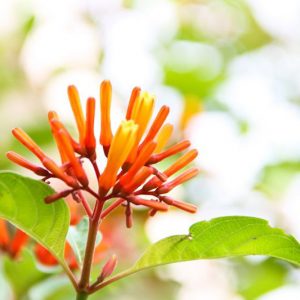
Firebush – Hamelia patens – a Florida native with orange-red tubular flowers produced for months in warm climates. It provides dependable nectar and is especially valuable in sunny subtropical butterfly gardens.
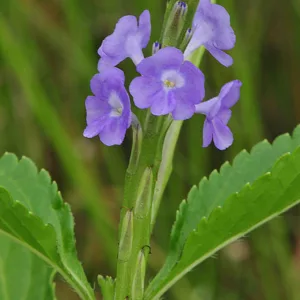
Blue Porterweed – Stachytarpheta jamaicensis – a Florida native or regional native perennial-shrub with lavender-blue flowers opening over an exceptionally long season. Its flower spikes attract butterflies repeatedly.
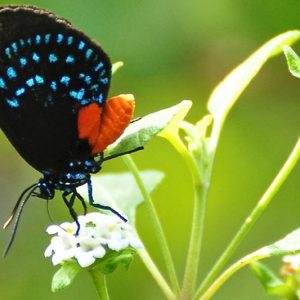
Buttonsage – Lantana involucrata – a native Florida shrub with white to lavender flower clusters that can bloom through much of the year and attract butterflies, bees, and hummingbirds.
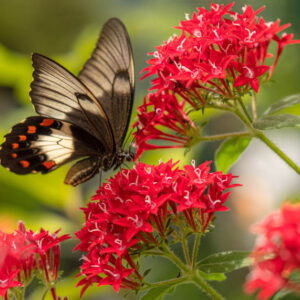
Pentas – Pentas lanceolata – an easy warm-climate perennial or annual with dense clusters of red, pink, purple, or white flowers. It is especially useful in beds and containers where long-season butterfly nectar is needed.
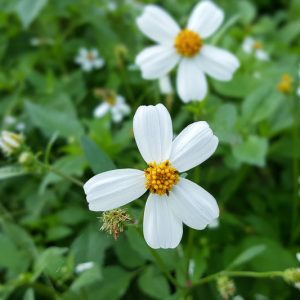
Beggarticks – Bidens alba – a prolific Florida native wildflower whose small white daisies can bloom almost year-round. It is an outstanding general butterfly nectar plant, though its abundant seed can make it weedy.
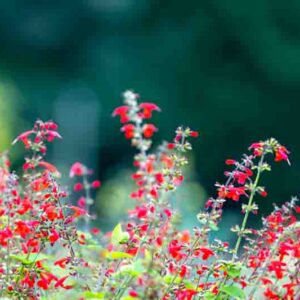
Scarlet Sage – Salvia coccinea – a heat-tolerant southeastern native with red, pink, coral, or white flowers over a long season. Its nectar-rich blooms support butterflies, bees, and hummingbirds.
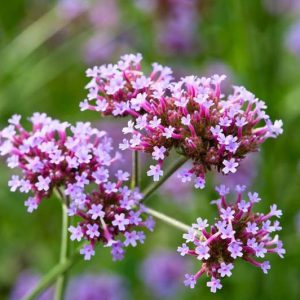
Purpletop Vervain – Verbena bonariensis – tall, airy stems carry purple flower clusters from summer until frost. It is highly attractive to butterflies, although gardeners should check local invasive guidance before planting.
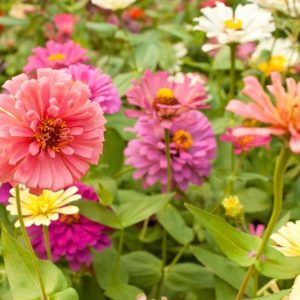
Zinnia – Zinnia elegans – a long-blooming annual with colorful, accessible flowers. Single and semi-double forms generally offer easier access to floral rewards than densely doubled cultivars.
Wild Coffee – Psychotria nervosa – a Florida native evergreen shrub suited to partial shade. Its small pale flowers add adult food value, while the dense foliage also contributes sheltered structure.
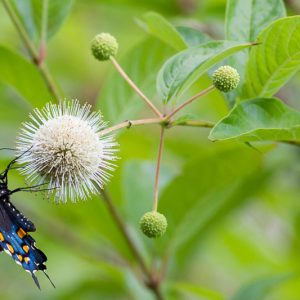
Buttonbush – Cephalanthus occidentalis – a native wet-site shrub whose spherical flowers are packed with nectar. It is especially useful near ponds, rain gardens, streams, and naturally damp areas.
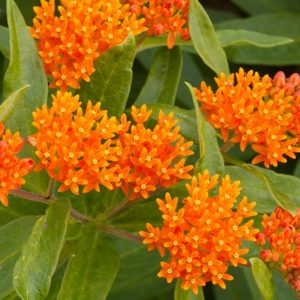
Butterfly Weed – Asclepias tuberosa – a strong general butterfly nectar plant for sunny, dry, well-drained sites. Its brilliant orange flowers diversify the feeding landscape where wet-loving species would struggle.
American Blue Vervain – Verbena hastata – a moisture-loving native perennial whose purple flower spikes extend summer nectar in rain gardens, wet borders, and streamside plantings.
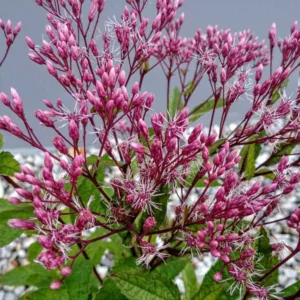
Sweet-Scented Joe-Pye Weed – Eutrochium purpureum – a broader butterfly-garden recommendation with large pink-purple flower clusters that provide abundant nectar from midsummer into early fall in suitable climates.
Ironweeds – Vernonia spp. – vivid purple flower heads help extend the feeding season into late summer and fall and work well in sunny naturalistic plantings.
Golden Dewdrop – Duranta erecta – violet-blue flowers provide warm-season butterfly nectar in subtropical and tropical gardens. Its golden berries are poisonous to people and most animals, so placement matters.
Not every one of these plants is a published Zebra Longwing-specific pollen or nectar record, and that distinction matters. The purpose of the broader list is to create long, overlapping bloom with proven butterfly plants while matching the choices to the garden itself.
In South Florida, Firebush, Blue Porterweed, Buttonsage, Beggarticks, Scarlet Sage, Wild Coffee, and other subtropical natives can keep the landscape productive for long periods. Buttonbush and Blue Vervain favor wetter sites, while Butterfly Weed needs much drier, better-drained soil. The best planting is therefore a sequence, not a universal list.
Gardenia’s Zebra Longwing feeding strategy: build for duration. Combine plants that flower at different times, then narrow them by climate, sunlight, soil, moisture, mature size, and garden style. A butterfly that may live for months needs a landscape that keeps producing food.
A Zebra Longwing garden needs more than flowers. The strongest habitat supports feeding, breeding, shelter, and social behavior.
Plant passionflower. Without an appropriate Passiflora host, the garden cannot support caterpillars.
Protect healthy terminal growth. Females place eggs on new leaves and tendrils, so avoid pruning away every active shoot during the breeding season.
Provide flowers for months, not weeks. Pollen feeding allows adults to live unusually long lives, making overlapping bloom especially important.
Keep sheltered vegetation. Shrubs, vines, low branches, and hanging foliage can provide the protected structure used for communal night roosts.
Leave pupae undisturbed. Chrysalises may occur on or near passionflower habitat and can be difficult to see.
Avoid broad-spectrum insecticides. Caterpillar feeding is part of the habitat, not evidence that the passionflower has failed.
The Zebra Longwing shows why butterfly habitat should be designed around behavior as well as food.
1. Build the nursery with passionflower.
Choose a Passiflora that fits your climate, space, sunlight, moisture, and available support.
2. Protect healthy host growth.
Keep enough terminal leaves and tendrils available for egg laying and enough foliage to support developing caterpillars.
3. Build a long nectar and pollen season.
Adults may live for several months, so overlap flowering plants instead of relying on one short seasonal peak.
4. Keep sheltered roosting structure.
Retain shrubs, vines, branches, and protected vegetation where adults can gather communally at night.
Gardenia’s shortcut: passionflower + protected host growth + long-season nectar and pollen + sheltered roosts. The caterpillar needs a nursery, but the unusually long-lived adult needs a landscape that keeps working for months.
If Zebra Longwings are drifting through your garden, the next question is not simply “Which flower attracted them?” It is “Can this landscape support them for the long haul?”
Build Zebra Longwing habitat that actually fits your garden.
The caterpillar needs passionflower. The adult needs months of nectar and pollen plus sheltered vegetation for communal night roosts.
Use the Gardenia Plant Finder to narrow host and flowering plants by hardiness, sunlight, soil, drainage, water needs, mature size, native goals, wildlife value, toxicity, and other growing conditions.
Then build the habitat with the Gardenia Garden Design Tool – combine passionflower with nectar and companion plants that can actually thrive together, compare bloom timing and seasonal interest, and catch compatibility problems before planting.
Don’t stop at “plant passionflower.” Build a garden that can raise the next generation and keep the adult butterfly fed for months.
Zebra Longwing caterpillars feed on passionflower vines in the genus Passiflora. Important hosts include Maypop (Passiflora incarnata), Yellow Passion Flower (Passiflora lutea), and Corkystem Passionflower (Passiflora suberosa).
Zebra Longwings have long, narrow black wings crossed by pale yellow stripes. Their slow, floating flight and elongated wing shape make them easy to recognize.
Mature Zebra Longwing caterpillars are white or cream with black spots and numerous long, branching black spines. They feed on Passiflora foliage.
Zebra Longwings feed on both nectar and pollen. Pollen supplies amino acids and other nutrients that help adults survive for several months, much longer than many other butterflies.
Zebra Longwings form communal night roosts and often return to familiar roost sites. Communal roosting can reduce predation risk by strengthening the warning signal of these distasteful butterflies and diluting individual risk.
Yes. Males can locate female pupae before emergence, repeatedly visit and guard them from rivals, and mating may begin as the female emerges from the chrysalis.
Adults can survive for several months. Their unusually long lifespan is linked in part to their ability to obtain additional nutrients from pollen as well as nectar.
Plant an appropriate Passiflora host, protect healthy host growth, provide long-blooming nectar and pollen plants, preserve sheltered vegetation for communal roosting, leave pupae undisturbed, and avoid broad-spectrum insecticides.
Updated and reviewed by Gardenia: September 2026
Create a membership account to save your garden designs and to view them on any device.
Becoming a contributing member of Gardenia is easy and can be done in just a few minutes. If you provide us with your name, email address and the payment of a modest $25 annual membership fee, you will become a full member, enabling you to design and save up to 25 of your garden design ideas.
Join now and start creating your dream garden!