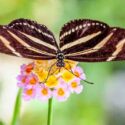
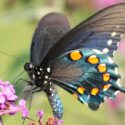
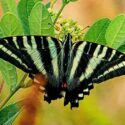
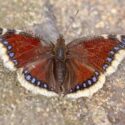
Vanessa virginiensis
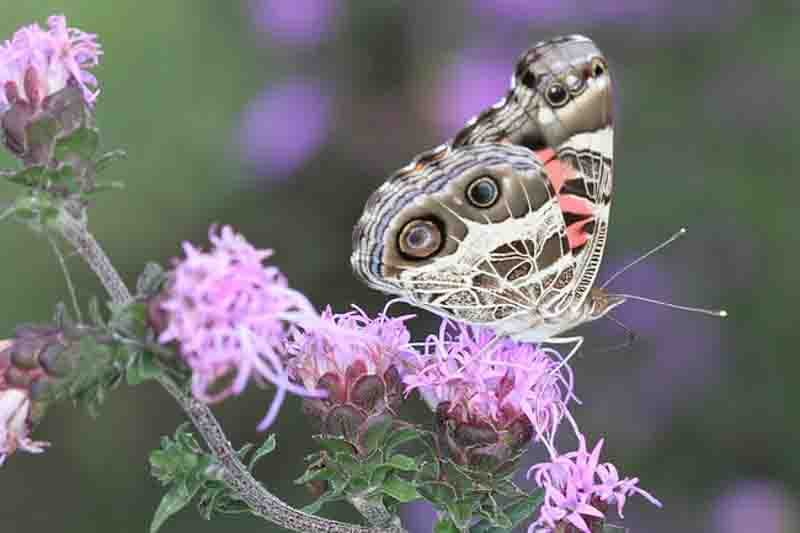
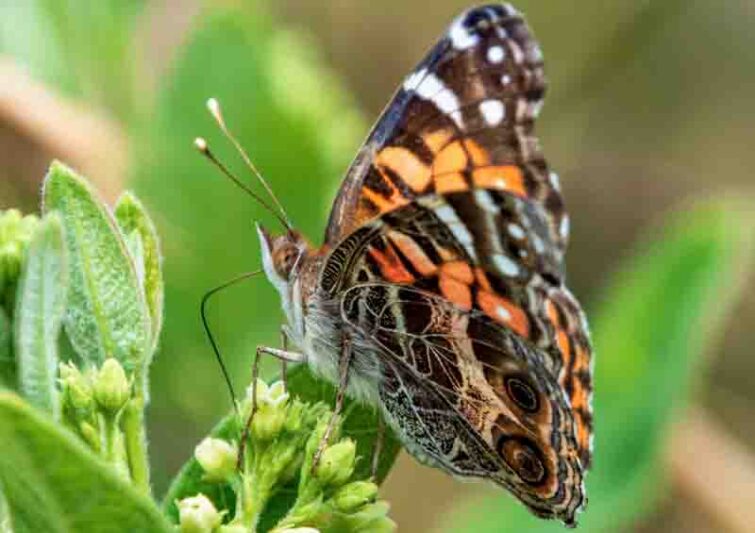
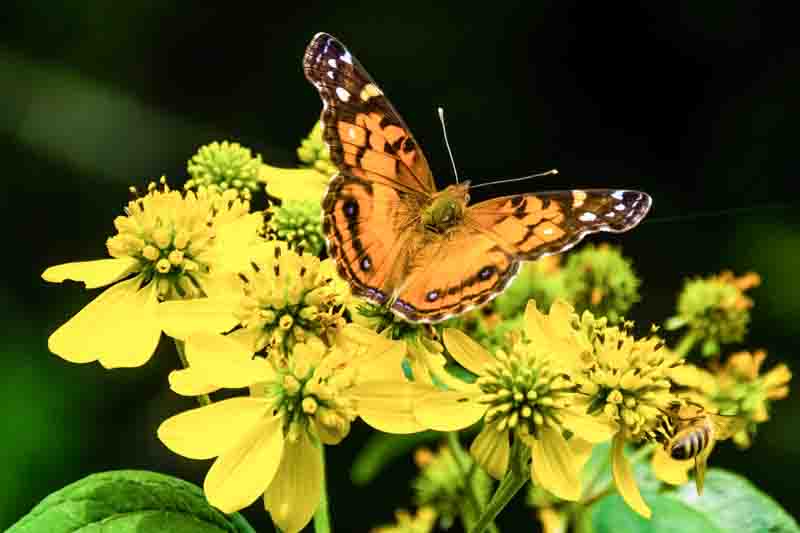
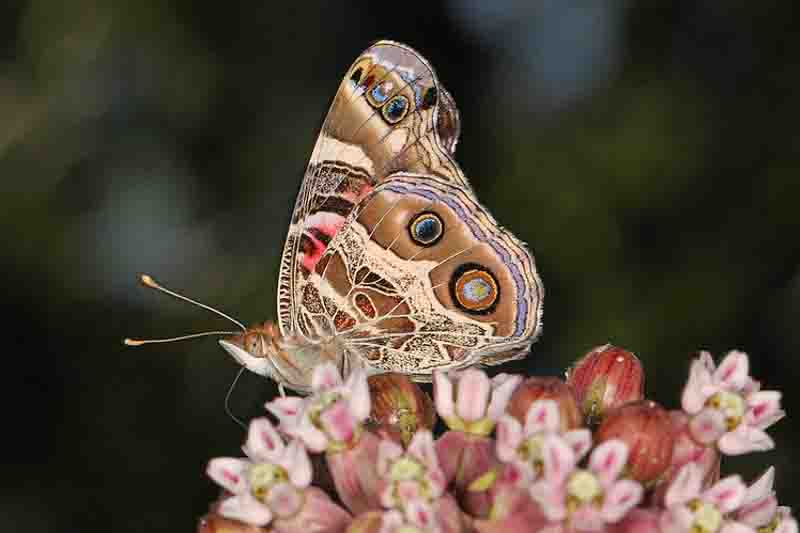
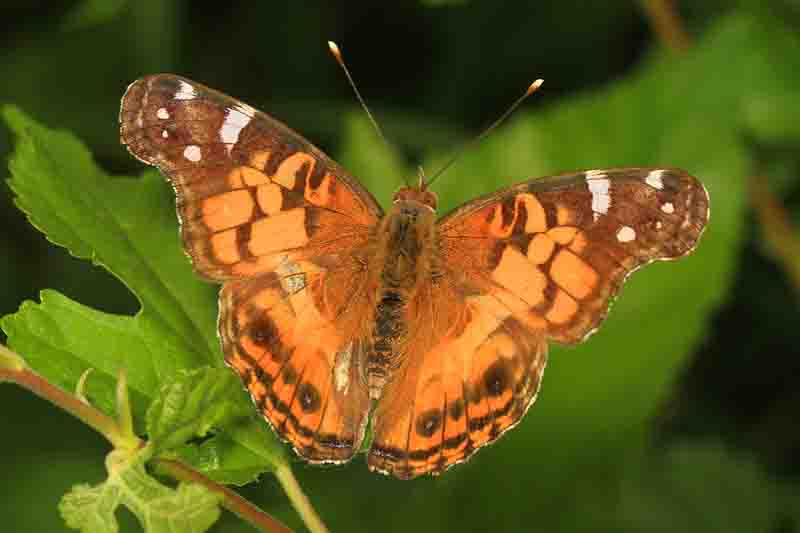


The American Lady butterfly (Vanessa virginiensis) is a beautifully patterned orange, black, and brown butterfly found across much of the Americas. It is often confused with the Painted Lady, but one feature can make identification surprisingly easy: when its wings close, the underside of each hindwing usually displays two enormous eyespots.
The caterpillar has an equally memorable signature. American Lady larvae do not simply sit exposed on their food plants. They build individual shelters by fastening host-plant leaves and flower material together with silk, then hide and feed within them. A clump of everlasting or pussytoes with webbed, folded, partly eaten foliage may therefore be doing exactly what a butterfly host plant is supposed to do.
That behavior makes the American Lady especially interesting for gardeners. Nectar flowers can attract a passing adult, but a garden that supports reproduction needs more: the right larval host plants, enough foliage for caterpillars to feed and build shelters, nectar through the season, sunny open habitat, and plants that actually suit the site.
Gardenia’s American Lady principle: do not design only for the butterfly you can see. Design for the caterpillar hidden inside the leaves. A successful American Lady garden protects the nursery as carefully as it provides flowers for the adult.
The American Lady belongs to the brush-footed butterfly family, Nymphalidae. Its wingspan is roughly 1 3/4-2 5/8 inches (4.5-6.7 cm), making it a medium-sized butterfly with a fast, active flight.
From above, the wings show an irregular pattern of orange, yellow-orange, brown, and black. The forewing tips are black with white markings, and a small white spot often appears within the orange portion of the forewing below the dark tip. The hindwings carry dark marginal spots, sometimes highlighted with blue.
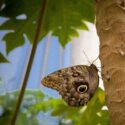
The underside provides the most useful field mark. Against a finely mottled background of brown, gray, cream, and olive, the hindwing usually carries two very large eyespots. These bold markings are much larger and fewer than those of the Painted Lady.
Season can also affect appearance. American Ladies emerging during cooler conditions may be smaller and paler, while warm-season individuals can appear larger and more vividly colored.
Quick American Lady ID: orange-and-black upper wings + a small white spot in the orange forewing area + two oversized eyespots beneath each hindwing.
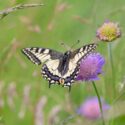
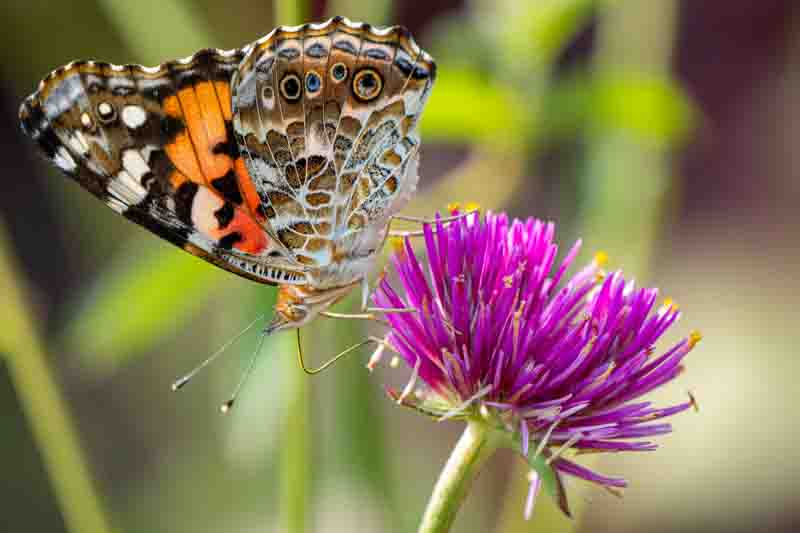 Painted lady butterfly on a Knapweed flower in a garden
The American Lady and Painted Lady (Vanessa cardui) are close relatives and can look frustratingly similar from above. Both have orange-and-black patterned wings with dark forewing tips and white markings.
The best clue is underneath the hindwing. The American Lady has two large eyespots. The Painted Lady has a row of several much smaller eyespots, typically four prominent ones.
The American Lady also commonly shows a small white spot surrounded by orange on the upper forewing. That mark can help, but wear, lighting, and viewing angle can make it difficult to see, so the underside remains the more dependable field character.
In parts of western North America, the West Coast Lady (Vanessa annabella) can cause additional confusion. Once again, looking for the American Lady’s pair of very large ventral eyespots is the simplest practical shortcut.
Two big eyespots or several small ones? If you can see the underside, this is usually the fastest way to separate an American Lady from a Painted Lady.
The American Lady occurs from southern Canada through the United States, Mexico, Central America, the Caribbean, and into northern South America.
It favors sunny, open and semi-open habitats rather than deep forest. Typical places include fields, meadows, dunes, roadsides, gardens, lawns, disturbed ground, woodland edges, flatwoods, sandhills, parks, and vacant lots.
In warmer portions of the range, adults may be present for much of the year. In Florida, several generations occur annually and the species is particularly common in spring. Farther north, populations are more seasonal.
Adults overwinter in the southern United States and move northward during the growing season. Very cold winters may prevent survival farther north, so some areas can be recolonized from southern populations in spring.
For gardeners, this distribution reveals an important habitat clue: the American Lady is well suited to sunny gardens that combine low-growing host plants, flowering perennials, and relatively open flight space.
 Vernonia noveboracensis – New York Ironweed
American Lady caterpillars feed mainly on plants in the sunflower family, Asteraceae. Everlastings and cudweeds are particularly important hosts, but several related plant groups are also documented.
Host use varies by region. In Florida, cudweeds such as Gamochaeta species and sweet everlasting are especially important. Farther north and west, Pearly Everlasting and pussytoes become prominent host plants.
Important documented hosts include:
Pearly Everlasting – Anaphalis margaritacea – one of the best garden-worthy American Lady hosts. Its silvery foliage and papery white flowers suit sunny borders, native gardens, meadows, and relatively dry sites.
Plantain-leaved Pussytoes – Antennaria plantaginifolia – a low-growing native host ideal for lean, dry soil, rock gardens, slopes, meadow edges, and naturalistic groundcover plantings.
Cudweeds and Everlastings – Gamochaeta and Pseudognaphalium spp. – among the characteristic American Lady hosts, particularly in the southern United States. Older references may place some species under the former genus name Gnaphalium.
Wormwoods and Sagebrushes – Artemisia spp. – documented American Lady hosts with species ranging from low-growing perennials to larger shrubby plants. Choose a species appropriate to your region and garden conditions.
Ironweeds – Vernonia spp. – tall native perennials reported as hosts. Their purple flowers also provide valuable nectar for many adult pollinators.
Burdocks – Arctium spp. – documented hosts, though usually less desirable in designed gardens because of their coarse habit, burs, and tendency to spread.
Gardenia’s American Lady Host Rule: start with a documented host, then choose the host that actually fits the garden. Pussytoes can work as a low groundcover in dry soil. Pearly Everlasting fits sunny borders and meadows. Ironweed belongs farther back where its height can be accommodated. Host status matters, but horticultural fit determines whether the plant will succeed.
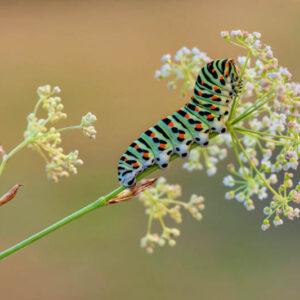
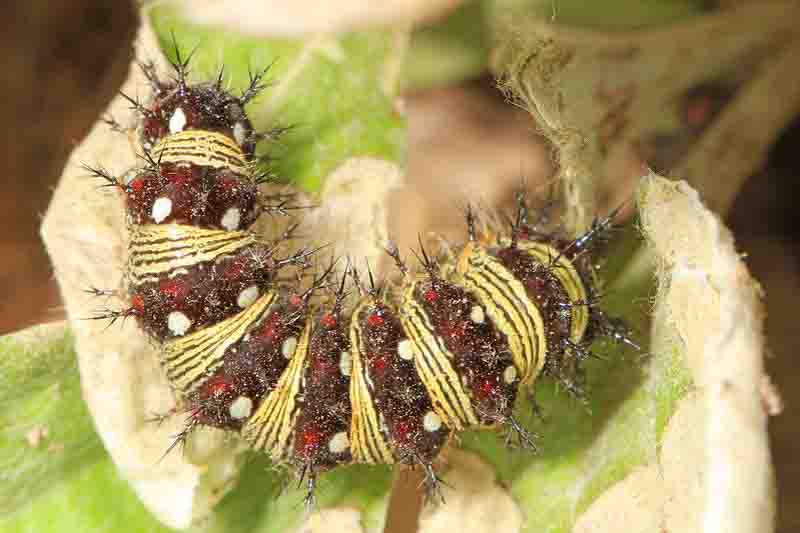
A mature American Lady caterpillar is striking once you find it. The body is usually dark or yellow-and-black, with rows of branched spines that may have orange or reddish bases. Many larvae also show pale lateral markings or small white spots along the sides.
Color varies considerably, which means appearance alone is not always the best identification tool. The host plant and shelter can be even more informative.
Females lay eggs singly on the upper surface of host-plant leaves. After hatching, the caterpillar constructs a nest near the upper portions of the plant by pulling leaves, flower material, and surrounding plant debris together with silk.
The larva often remains concealed in this shelter during the day and emerges more actively at night or during cloudy conditions to feed.
Do not tidy away the nursery. Webbed flower heads, folded leaves, and partially eaten foliage on cudweed, Pearly Everlasting, or Pussytoes may contain an American Lady caterpillar. What looks messy may be the strongest evidence that your butterfly garden is actually working.
The American Lady develops through four familiar butterfly stages: egg, caterpillar, chrysalis, and adult.
Egg: females usually lay small yellow-green eggs singly on the upper surfaces of suitable host leaves.
Caterpillar: after hatching, the larva begins feeding on the host and builds a silk-bound shelter from surrounding leaves and flower material. As it grows, it passes through several larval stages.
Chrysalis: the mature caterpillar leaves the feeding stage and forms a hanging chrysalis. The pupa can vary in color, often blending well with dried vegetation or stems.
Adult: the butterfly emerges, expands and dries its wings, then begins feeding and eventually reproducing. In warm climates, several generations may occur each year.
Adults can overwinter in the southern United States. Northern populations may depend partly on seasonal movement from warmer areas because survival through severe winters is uncertain.
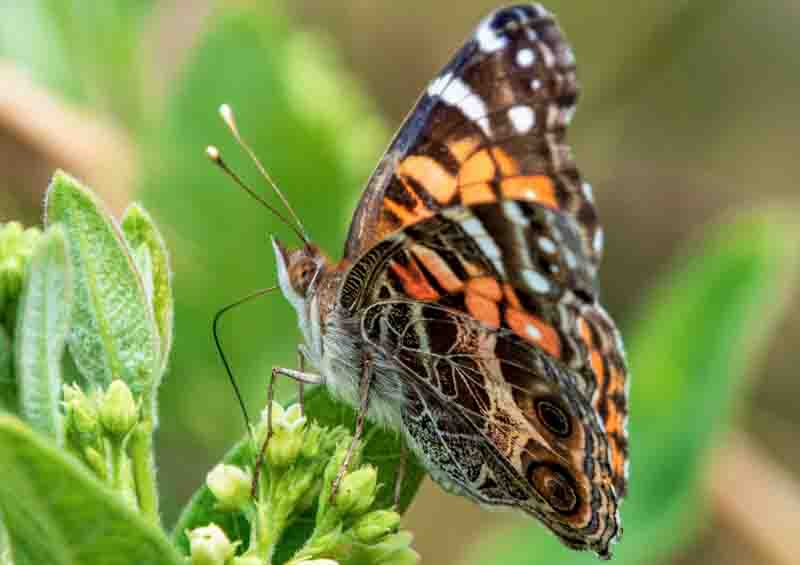
Adult American Ladies feed primarily on flower nectar. Authoritative butterfly records specifically name dogbane, asters, goldenrods, marigolds, selfheal, Common Milkweed, and vetches among their nectar plants. Adults may also visit tree sap, fermenting fruit, and damp ground for moisture and dissolved minerals.
Those documented foods provide the best starting point, but American Ladies are not restricted to a short fixed list. Direct observations and regional butterfly-garden records also document visits to coneflowers, zinnias, mountain mints, sunflowers, hyssops, buttonbush, lantanas, and other nectar-rich flowers.
The goal is therefore not simply to grow 15 “butterfly plants.” Build a sequence of nectar from summer into fall, while choosing species that fit your region, soil, moisture, sunlight, and available space.
Dogbane – Apocynum cannabinum – one of the specifically documented American Lady nectar plants. This North American native produces small, nectar-rich flowers in summer and works best in larger naturalistic areas where its spreading habit can be accommodated.
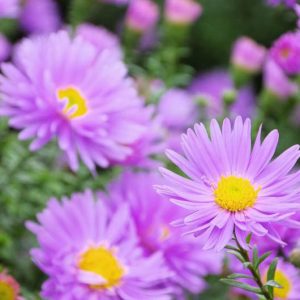
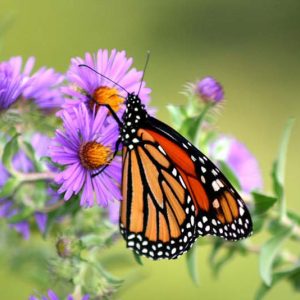
Asters – specifically documented American Lady nectar plants and among the most useful late-season resources. Their fall flowers can keep adults feeding after many summer perennials have finished blooming.
Goldenrods – Solidago spp. – another specifically documented nectar source. Their dense yellow flower clusters provide abundant late-summer and fall nectar and support a remarkable diversity of other pollinating insects.
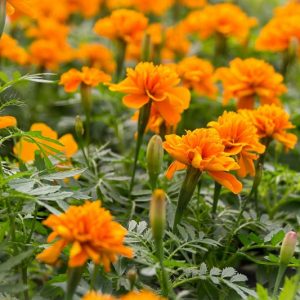
French Marigold – Tagetes patula – marigolds are included among documented American Lady nectar plants. This compact annual flowers from summer until frost and can help fill nectar gaps in borders and containers.
Selfheal – Prunella vulgaris – a specifically documented American Lady nectar plant. Its low purple flower spikes are useful in informal borders, meadow plantings, and wildlife gardens.
Common Milkweed – Asclepias syriaca – a documented American Lady nectar source. It is important to distinguish its role here: American Lady adults visit the flowers, but Common Milkweed is not one of their characteristic caterpillar hosts.
Vetches – Vicia spp. – included among documented American Lady nectar sources. Their pea-like flowers can provide spring and summer nectar, although gardeners should choose regionally appropriate species because some vetches spread aggressively.
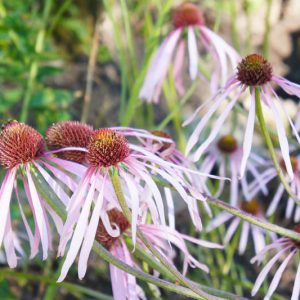
Pale Purple Coneflower – Echinacea pallida – American Ladies have been directly photographed feeding on its flowers by the U.S. Fish and Wildlife Service. Its long, drooping pale-purple petals and prominent cones make it especially attractive in prairie and native plant gardens.
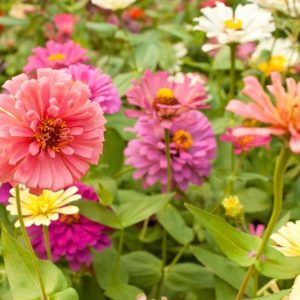
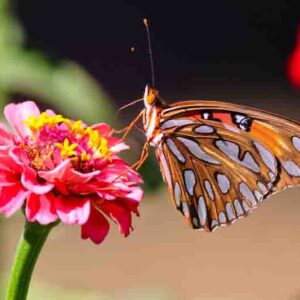
Zinnia – Zinnia elegans – a directly observed American Lady nectar source. USDA researchers have photographed American Ladies actively feeding on Zinnia nectar. This easy annual provides colorful flowers over a long summer season.
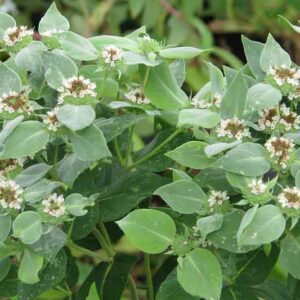
Blunt Mountain Mint – Pycnanthemum muticum – mountain mints are included in regional American Lady nectar records. Their dense flower clusters attract an extraordinary range of butterflies, bees, and other beneficial insects.
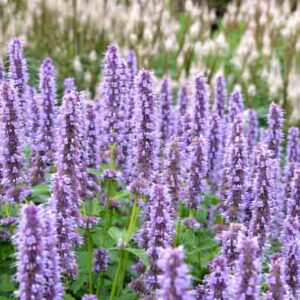
Anise Hyssop – Agastache foeniculum – American Ladies have been observed feeding among its long lavender flower spikes. Its long bloom season makes it especially useful for maintaining nectar through summer and early fall.
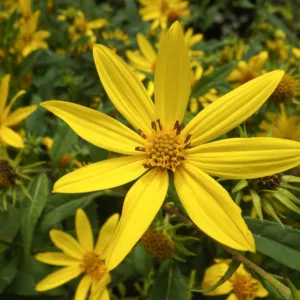
Woodland Sunflower – Helianthus divaricatus – another flower on which American Ladies have been directly observed feeding. Unlike many sunflowers, it tolerates partial shade and is useful along sunny woodland edges.
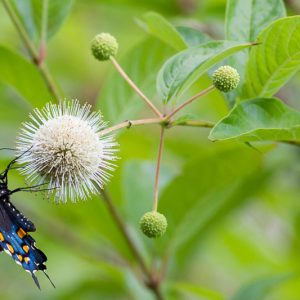
Buttonbush – Cephalanthus occidentalis – a nectar-rich native shrub recorded as an American Lady feeding plant in regional butterfly references. Its unusual spherical flowers are especially valuable in rain gardens, pond margins, and consistently moist landscapes.
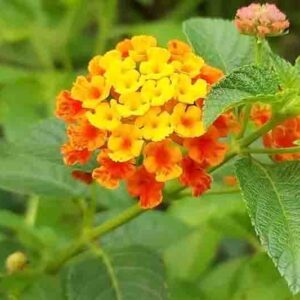
Texas Lantana – Lantana urticoides – Lantanas are frequently visited by American Ladies, and this native southwestern species provides a long season of flowers through intense summer heat. It is especially useful in Texas and other warm, dry landscapes.
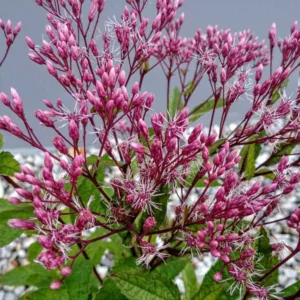
Sweet-Scented Joe-Pye Weed – Eutrochium purpureum – a tall native perennial included in regional American Lady nectar recommendations. Its large pink-purple flower heads provide abundant midsummer to early-fall nectar in moist, sunny to partly shaded gardens.
These plants should not be treated as interchangeable. Dogbane and Common Milkweed can spread strongly. Buttonbush and Joe-Pye Weed suit moisture-retentive sites. Texas Lantana belongs in hot, comparatively dry landscapes. Zinnias and marigolds are useful annuals for filling temporary nectar gaps, while asters and goldenrods are particularly valuable late in the season.
Gardenia’s American Lady nectar strategy: start with species-specific nectar records, then extend the flowering season with plants that American Ladies are directly observed using and that actually belong in your garden conditions. The best 15-plant list is not the same for every garden.
Remember the two jobs: nectar plants feed the adult; host plants feed the caterpillar. Pearly Everlasting or Pussytoes can raise the next generation, while Goldenrod, Asters, Zinnias, and other nectar plants keep the flying adults fueled.
You can attract an American Lady with flowers. Supporting its complete life cycle requires a more deliberate plan.
Plant a documented caterpillar host. Pearly Everlasting and Pussytoes are particularly useful choices for designed gardens.
Plant enough host foliage. A healthy patch provides more food and more potential nesting sites than one isolated, struggling plant.
Leave silk-bound shelters alone. Do not automatically remove webbed leaves or damaged flower heads from host plants.
Provide nectar over a long season. Combine plants that flower at different times rather than relying on one short burst of bloom.
Keep the planting sunny and reasonably open. American Ladies are associated with fields, meadows, gardens, roadsides, and similar habitats.
Avoid broad-spectrum insecticides. Products intended to eliminate caterpillars can also kill American Lady larvae inside their host plants.
The American Lady shows why generic “butterfly garden” advice can fall short. The adult, the caterpillar, and the host plant each have different requirements.
1. Build the nursery first.
Choose at least one documented American Lady host appropriate to your region and garden conditions.
2. Protect the caterpillar’s shelter.
Expect folded leaves, webbed flower heads, and chewed foliage. Do not prune away the nursery just because the plant looks untidy.
3. Build a nectar sequence.
Provide overlapping bloom rather than concentrating all adult food into one short flowering period.
4. Preserve sunny flight space.
American Ladies favor open and semi-open landscapes, so combine flowering vegetation with areas where adults can fly and bask easily.
5. Make the plants fit the site.
Match every host and nectar plant to hardiness, sunlight, soil, drainage, moisture, mature size, and available space. A documented butterfly plant that cannot thrive in your garden will not provide dependable habitat.
Gardenia’s shortcut: host patch + protected silk shelters + season-long nectar + sunny open habitat + garden fit. The American Lady adds one unusual requirement to the standard butterfly-garden formula: sometimes the most useful thing you can do is leave the messy leaves untouched.
If an American Lady lands on an aster or goldenrod, your garden has already provided adult food. The next question is more revealing: could its caterpillar live here?
Build American Lady habitat from the nursery outward.
Use the Gardenia Plant Finder to find host and nectar plants suited to your hardiness, native range, sunlight, soil, drainage, water needs, mature size, wildlife goals, tolerances, and other growing conditions.
Then use the Gardenia Garden Design Tool to combine those plants into a garden where the host plants and nectar plants can actually grow together, compare seasonal interest, and identify compatibility problems before planting.
Don’t stop at “plant flowers for butterflies.” Give the adult somewhere to feed, the female somewhere to lay eggs, and the caterpillar enough untouched foliage to build its hidden nursery.
American Lady caterpillars use several plants in the sunflower family, especially cudweeds and everlastings, Pearly Everlasting, pussytoes, wormwoods, ironweeds, and burdock. Host use varies by region.
Look at the underside of the hindwing. The American Lady usually has two very large eyespots, while the Painted Lady has several much smaller eyespots.
American Lady caterpillars are variable in color but typically have dark and yellow markings with rows of branched spines. They often hide inside shelters made by fastening host-plant leaves and flower material together with silk.
An American Lady caterpillar may be inside. The larvae build silk-bound shelters from host-plant leaves and flower material and remain concealed there while resting and feeding.
Adults feed mainly on flower nectar. Documented nectar plants include dogbane, asters, goldenrods, marigolds, selfheal, Common Milkweed, and vetches. They may also feed on sap, fermenting fruit, and moisture from damp ground.
American Ladies occur from southern Canada through the United States, Mexico, Central America, the Caribbean, and into northern South America. They favor sunny open and semi-open habitats such as fields, meadows, roadsides, gardens, dunes, lawns, and woodland edges.
Adults overwinter in the southern United States and move northward during the growing season. Very cold winters may prevent survival in some northern areas, which can be recolonized from southern populations.
Grow a documented caterpillar host such as Pearly Everlasting or Pussytoes, leave silk-bound caterpillar shelters intact, provide nectar across the season, maintain sunny open habitat, and avoid broad-spectrum insecticides.
Updated and reviewed by Gardenia: September 2026
Create a membership account to save your garden designs and to view them on any device.
Becoming a contributing member of Gardenia is easy and can be done in just a few minutes. If you provide us with your name, email address and the payment of a modest $25 annual membership fee, you will become a full member, enabling you to design and save up to 25 of your garden design ideas.
Join now and start creating your dream garden!