Vanessa atalanta
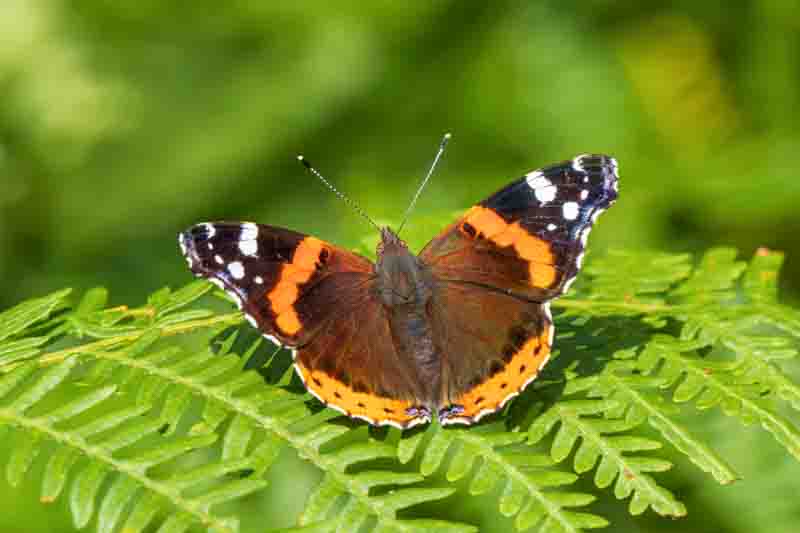


The Red Admiral (Vanessa atalanta) is one of the most recognizable butterflies in North America. Velvety black wings are crossed by vivid red-orange bands, while bright white spots mark the tips of the forewings. Its colors are dramatic, but its behavior may be even more memorable: Red Admirals are fast, territorial, inquisitive, and often remarkably willing to investigate whatever enters their space.
This is also a butterfly that challenges the idea that a butterfly garden is simply a flower garden. Adult Red Admirals certainly drink nectar, but they also feed readily on tree sap, fermenting fruit, and other nutrient-rich food sources. Their caterpillars have completely different requirements, relying mainly on plants in the nettle family (Urticaceae), with the exact host species varying by region.
That distinction is central to attracting Red Admirals successfully. Flowers may bring adults into view. Nettle-family host plants give females somewhere to lay eggs and caterpillars somewhere to grow.
Gardenia’s Red Admiral rule: flowers can attract visiting adults, but host plants create breeding habitat. If you want more than a passing butterfly, protect the nettles and related plants its caterpillars need.
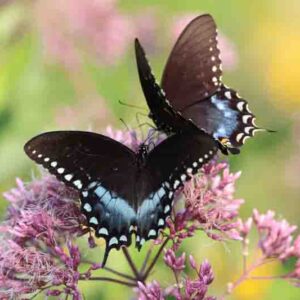
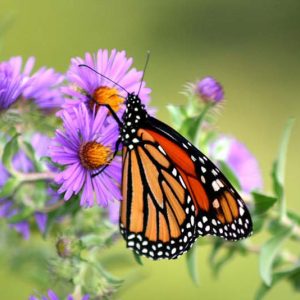
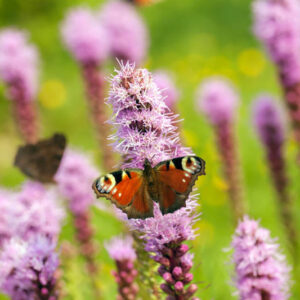
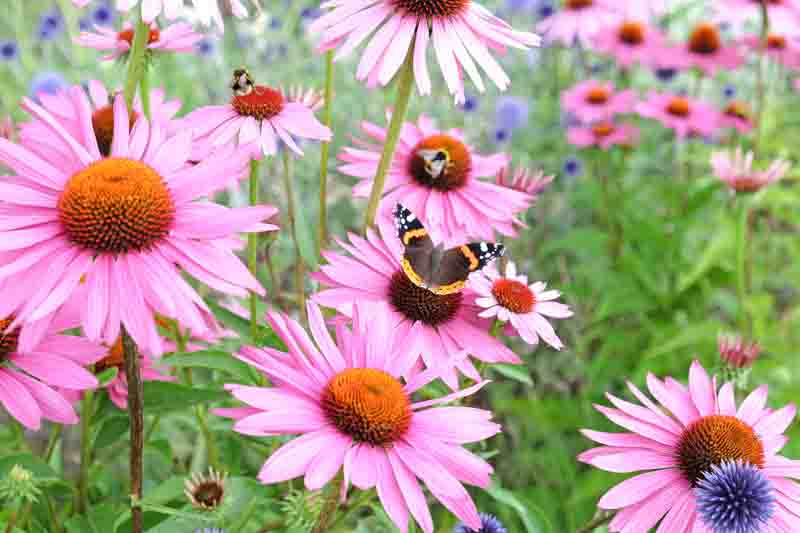 Red Admiral butterfly basking on a purple coneflower
Red Admirals have an exceptionally broad geographic range. They occur across much of North America, Europe, northern Africa, and Asia. In North America, they can be found from Canada through the United States and south into Mexico and Central America.
They are adaptable butterflies rather than specialists of one pristine habitat. Red Admirals occur around woodland edges, moist fields, streamsides, marshes, gardens, parks, roadsides, and disturbed places, especially where nettle-family host plants grow nearby.
They are also surprisingly comfortable in towns and cities. A patch of nettles behind a fence, flowering plants in a sunny border, mature trees leaking sap, and sheltered basking sites can provide several of the resources they use.
Their seasonal abundance varies enormously by region. In warmer parts of North America, adults may be present for much of the year. Farther north, Red Admirals are often much more conspicuous after spring migrants arrive and successive generations develop during the warmer months.
Where to look: check sunny woodland edges, gardens near nettles, stream corridors, parks, and sheltered openings. A territorial adult may repeatedly return to the same warm perch.
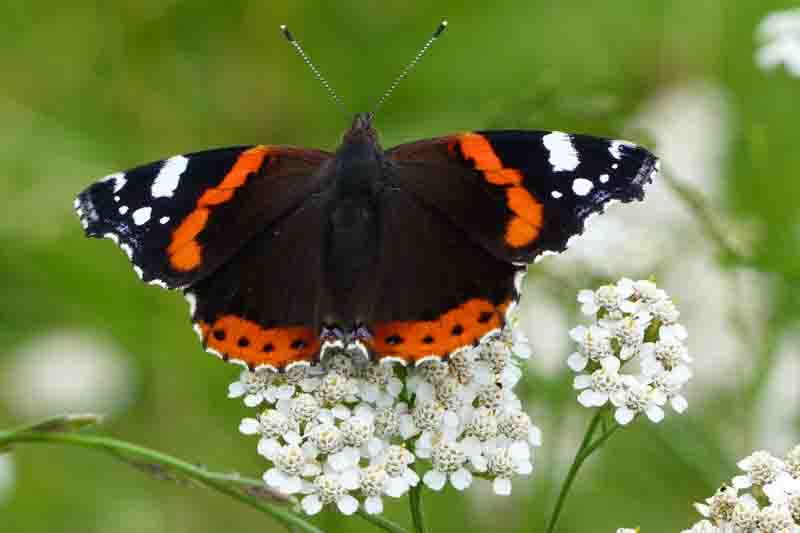
The Red Admiral is distinctive enough that a good view usually makes identification straightforward.
Wingspan: roughly 1 3/4 to 3 inches (4.5-7.6 cm).
Upper forewings: predominantly black with a broad red-orange band running diagonally across each wing.
Forewing tips: marked with several crisp white spots that contrast sharply with the black background.
Hindwings: dark above with a red-orange band along the outer margin.
Underside: far less conspicuous. The hindwing is intricately mottled in brown, gray, black, and cream, providing effective camouflage when the wings are closed.
Flight style is another clue. Red Admirals tend to fly quickly and decisively, mixing strong glides with rapid turns. A male may launch from a perch, chase another butterfly, then return to almost the same location.
Fresh adults look especially striking, with deep black wings and intense red-orange bands. Older individuals can become faded, scratched, or chipped but usually retain the basic pattern.
Quick Red Admiral ID: black wings + one bold red-orange band across each forewing + red-orange hindwing margins + white spots near the forewing tips.
Red Admiral caterpillars are much less uniform than the adults. Their color can range from pale brown through gray to almost black, often with yellowish or whitish markings and a broken pale line along the side.
The body is covered with rows of branching spines, giving the caterpillar a formidable appearance. Color variation is substantial, so the caterpillar’s behavior and host plant can sometimes be more useful for identification than color alone.
The most characteristic clue is the shelter it builds.
Red Admiral caterpillars use silk to fold, roll, or draw together leaves of their host plant. They hide and feed inside these shelters, constructing new ones as they grow. A nettle leaf that looks oddly folded or tied shut may contain a caterpillar rather than ordinary leaf damage.
Before removing damaged nettle leaves, look closely. A leaf folded with silk may be a Red Admiral caterpillar shelter. Leaving it intact may be one of the simplest things you can do for the butterfly.
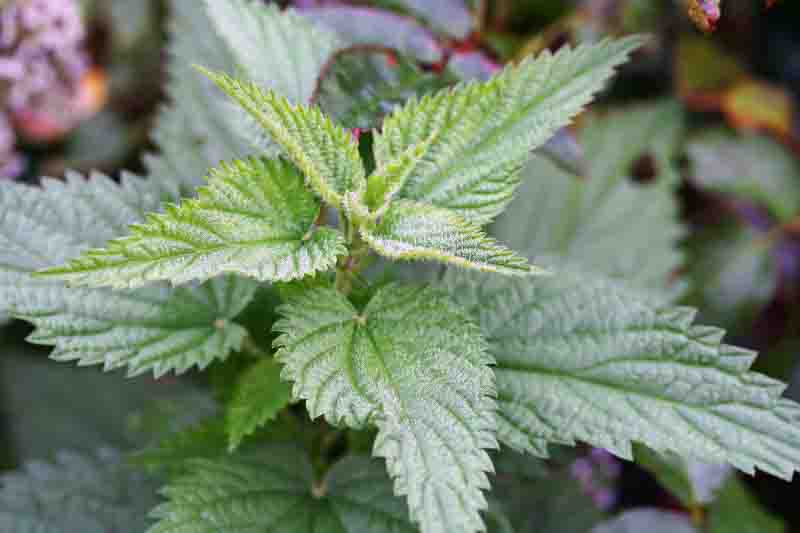 Stinging Nettle (Urtica dioica)
If you want Red Admirals to reproduce rather than merely visit, host plants matter more than adding another nectar flower.
Red Admiral caterpillars rely mainly on plants in the nettle family (Urticaceae). The particular species used varies geographically, which is why locally occurring nettles and related plants are especially valuable.
Important North American host plants include:
Stinging Nettle – Urtica dioica – one of the best-known Red Admiral hosts across much of its range.
Native nettles – Urtica species – regional native nettles can serve the same essential caterpillar-food role.
Wood Nettle – Laportea canadensis – an important woodland host in eastern North America.
False Nettle – Boehmeria cylindrica – especially useful because it belongs to the nettle family but lacks the familiar stinging hairs of true nettles.
Pellitory – Parietaria species – another nettle-family host used in parts of the Red Admiral’s range.
Gardeners often remove nettles because they look weedy or, in the case of stinging nettle, because contact can be unpleasant. A better compromise is to create a small, intentional host patch away from paths and seating areas.
A back fence, woodland edge, lightly managed corner, or wildlife strip can accommodate host plants without putting stinging foliage where people regularly brush past it.
Gardenia’s host-plant priority: if you have room for either another nectar flower or a safe patch of locally appropriate nettle-family plants, the host patch adds something flowers cannot – somewhere for Red Admirals to reproduce.
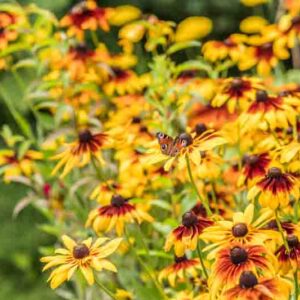
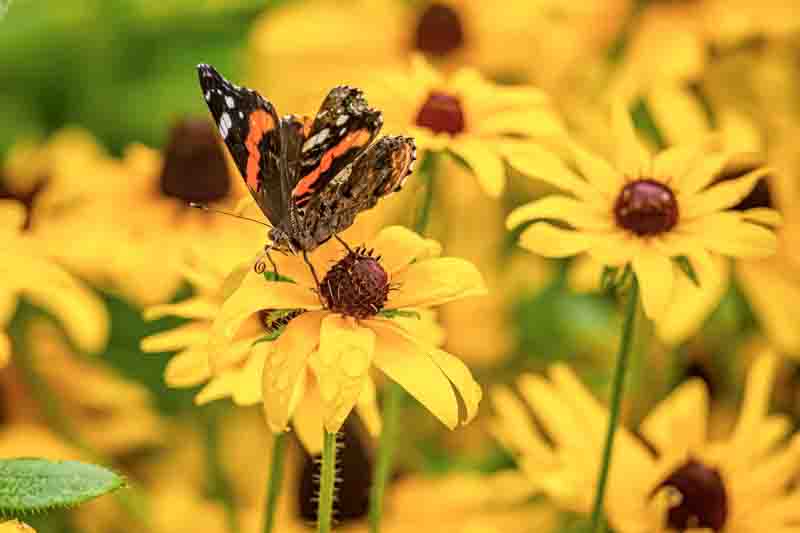 Red Admiral butterfly on a black-eyed susan flower
Like other butterflies, the Red Admiral undergoes complete metamorphosis: egg, caterpillar, chrysalis, and adult.
Egg: Females typically lay their small green eggs singly on suitable nettle-family host plants. This places the newly hatched caterpillar directly beside the foliage it needs.
Caterpillar: After hatching, the larva begins feeding and creates a protective leaf shelter using silk. As it grows through successive stages, it may abandon one shelter and construct another from larger leaves.
Chrysalis: The mature caterpillar leaves its feeding shelter and forms a hanging chrysalis. The pupa is generally brownish or grayish and may show metallic-looking gold markings that help break up its outline among vegetation.
Adult: Once development is complete, the butterfly emerges, expands its wings, and begins feeding. Males establish territories, females search for host plants, and some adults move considerable distances as part of seasonal migration or dispersal.
The number of generations varies with climate. Warm regions can support more generations per year than northern areas with short growing seasons.
This flexibility is one reason the Red Admiral can appear almost suddenly in large numbers when weather and migration conditions align.
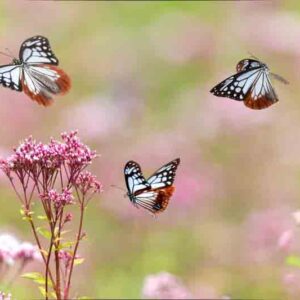
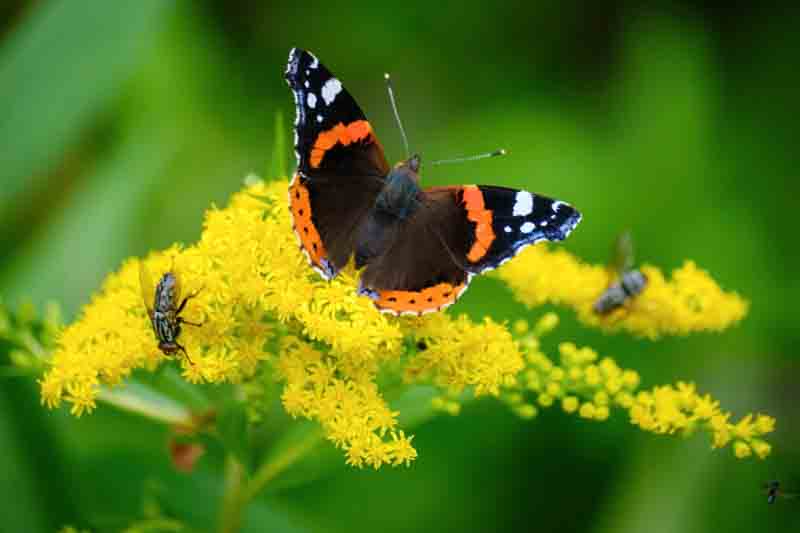 Red Admiral butterfly perched on goldenrod flowers
Red Admirals are not butterflies you should design for with flowers alone. Adults certainly drink nectar, but they are also well known for feeding on fermenting or overripe fruit, tree sap, and other nutrient-rich organic sources. This varied diet explains why a Red Admiral may sometimes ignore a flower border and settle instead on fallen fruit or a sap flow on a tree.
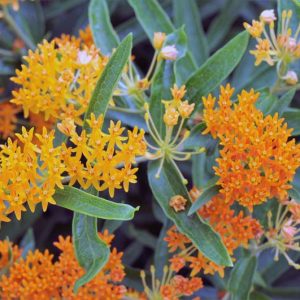
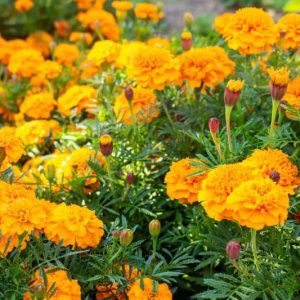
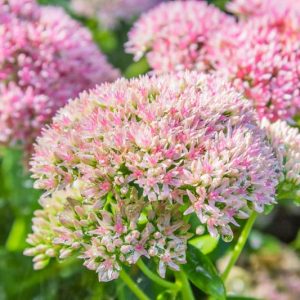
That said, nectar-rich flowers are still an important part of a Red Admiral garden. Good choices include butterfly bush, asters, milkweeds, sedums, and marigolds.
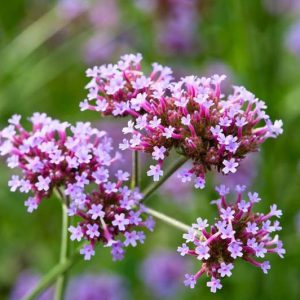
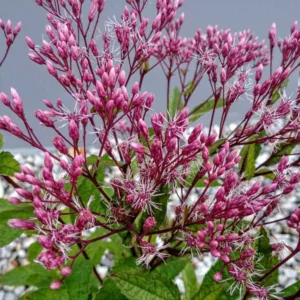
Two excellent nectar plants for a butterfly garden that Red Admirals may visit are Sweet Joe-Pye Weed and Purpletop Vervain. Both produce nectar-rich flowers that attract Red Admirals and other butterflies, while their tall, airy growth makes them easy to weave through sunny pollinator borders.
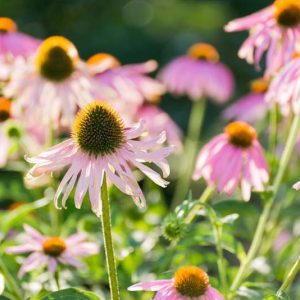
Other strong additions include coneflowers, blazing stars, and goldenrods. Together, these plants can extend nectar availability from summer into fall while supporting a much broader community of butterflies, bees, and other pollinators.
In warm climates, Blue Porterweed – Stachytarpheta jamaicensis is another valuable nectar plant visited by Red Admirals where it can be grown appropriately.
For the strongest planting, aim for several nectar sources flowering at the same time rather than relying on a single favorite plant. Red Admirals move readily between flowers, fruit, sap, and other food sources, so variety is particularly useful for this adaptable species.
Gardenia’s Red Admiral feeding strategy: provide nectar-rich flowers for adults, tolerate occasional natural food sources such as overripe fruit or tree sap, and keep nettle-family host plants nearby for caterpillars. Adult food brings Red Admirals into the garden – host plants allow them to reproduce there.
Yes. Red Admirals are migratory, although their movements are more variable and regionally complex than the famous migration of the Monarch.
Across much of North America, adults move northward during spring and help repopulate areas where consistent winter survival is difficult. In favorable years, these movements can become highly conspicuous, with unusually large numbers appearing over relatively short periods.
What happens in fall is less uniform. Red Admirals can move southward, disperse regionally, or survive locally in places with mild winter conditions. Migration patterns vary with latitude, weather, geography, and the conditions experienced by each population.
In warmer parts of their range, adults may overwinter successfully and become active again during suitable weather. In colder regions, many of the Red Admirals seen the following season originate from migrants arriving from farther south rather than from adults that survived the local winter.
A sudden spring influx of Red Admirals may be migration in action. Numbers can change dramatically from one year to the next depending on weather and population movements.
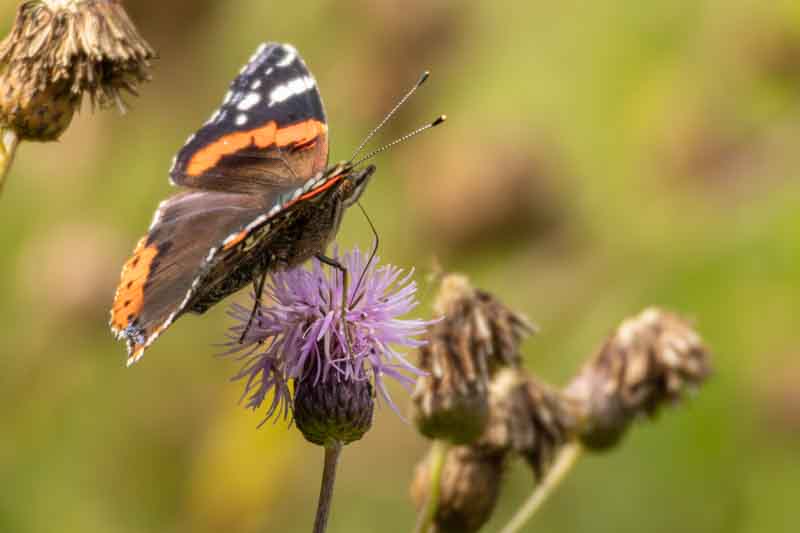
A Red Admiral that repeatedly races away from a sunny perch and then returns may not be feeding at all. You may be watching a territorial male.
Male Red Admirals often occupy sunny territories or prominent perches, particularly later in the day. From these stations they fly out to inspect passing butterflies and may chase other males before returning to the same general area.
The behavior is linked to finding mates and defending access to a favorable territory. To a gardener, however, it can look surprisingly personal: a Red Admiral may fly toward another butterfly, a bird, or even a person who walks through its patrol area.
This tendency to return repeatedly to a favorite perch makes the species particularly enjoyable to observe. Rather than following the butterfly around the garden, sometimes the best strategy is simply to stay near its chosen territory and let it return to you.
Watch the pattern, not just the chase. If the butterfly repeatedly leaves and returns to the same sunlit perch, you may be watching territorial behavior rather than random flight.
For Red Admirals, attracting an adult and supporting a breeding population are different goals. A strong garden does both.
Protect nettle-family host plants. If you want eggs and caterpillars, this is the most important step. Preserve locally appropriate nettles, false nettle, or other suitable Urticaceae in a safe part of the garden.
Keep stinging nettles away from paths. A host patch can be valuable without being inconvenient. Place it beside a back fence, woodland edge, wildlife strip, or another lightly trafficked area.
Provide useful adult nectar choices. Asters, milkweeds, Joe-Pye weed, sedum, marigolds, and Butterfly Bush can help provide nectar, depending on region and season.
Add broader butterfly flowers for seasonal continuity. Coneflowers, blazing stars, goldenrods, and other long-season nectar plants help make the overall garden more useful to butterflies.
Leave suitable natural food sources where practical. An occasional fallen or overripe fruit can attract adult Red Admirals, although fruit should not be allowed to create sanitation or pest problems.
Protect leaf shelters. Folded or silk-bound nettle leaves may contain caterpillars. Avoid automatically cutting them away as damaged foliage.
Provide sunny, sheltered places. Butterflies rely on external warmth, and males may use sunlit perches as territories.
Avoid broad-spectrum insecticides. Red Admiral larvae are leaf-eating insects. A product intended to kill caterpillars can also kill the butterflies you are trying to encourage.
Gardenia’s How to Create a Butterfly Garden explains how host plants, nectar, shelter, sunlight, water, and pesticide choices work together. For a broader nectar palette, explore Best Flowers to Attract Butterflies.
Gardenia’s 3-Layer Red Admiral Habitat Plan organizes the garden around three different needs: a caterpillar nursery, varied adult food, and protected habitat structure.
1. Build the nursery.
Grow locally appropriate nettle-family plants where females can lay eggs and caterpillars can feed inside their folded-leaf shelters.
2. Feed the adults.
Provide documented nectar plants, supplement the garden with a broader succession of butterfly flowers, and recognize that adults may also use sap and fermenting fruit.
3. Protect the habitat.
Preserve sunny perches, sheltered edges, host-plant leaf shelters, and some lightly managed vegetation while minimizing pesticide use.
The distinction matters because each layer answers a different biological need. A flower border may feed visiting adults. A nettle patch allows reproduction. Shelter and pesticide restraint help both stages persist.
Gardenia’s shortcut: host plants create the nursery, varied food feeds the adults, and protected structure keeps the habitat usable.
If a Red Admiral visits your garden, the next question is not simply “Which flower attracted it?” It is “Can this garden support the next generation?”
Build Red Admiral habitat around both the caterpillar and the adult.
The caterpillar needs nettle-family host plants, while adults benefit from nectar, sunny feeding areas, and natural food sources such as sap and fermenting fruit.
Use the Gardenia Plant Finder to narrow host and nectar plants by hardiness, sunlight, soil, drainage, water needs, mature size, native goals, wildlife value, and other growing conditions.
Then build the habitat with the Gardenia Garden Design Tool – combine host plants with nectar and companion plants that can actually thrive together, compare seasonal interest, and catch compatibility problems before planting.
Don’t stop when the butterfly arrives. A flower visit shows the adult found food. Nettles, eggs, and folded leaves show the garden is supporting the next generation.


What does a Red Admiral butterfly look like?
A Red Admiral is a medium-sized black butterfly with a bright red-orange band across each forewing, a red-orange band along the hindwing margin, and white spots near the tips of the forewings.
What are the host plants for Red Admiral caterpillars?
Red Admiral caterpillars rely mainly on plants in the nettle family, including stinging nettles, native Urtica species, wood nettle, false nettle, and pellitory. The exact host plants used vary by region.
What do adult Red Admiral butterflies eat?
Adult Red Admirals drink flower nectar but also feed readily on tree sap, fermenting or overripe fruit, and other nutrient-rich organic sources. Their diet is broader than nectar alone.
Do Red Admiral butterflies migrate?
Yes. Red Admirals commonly move northward in spring across North America and recolonize areas where winter survival is limited. Their seasonal movements vary by region, weather, and latitude.
Where do Red Admirals spend the winter?
Red Admirals can overwinter successfully in warmer parts of their range, while many colder northern areas are repopulated by migrants. Winter survival and movement vary considerably with regional climate.
Why do Red Admiral caterpillars fold nettle leaves?
Red Admiral caterpillars use silk to fold or join leaves of their nettle-family host plants into shelters. They hide and feed inside these shelters and often construct new ones as they grow.
How do I attract Red Admirals to my garden?
Protect locally appropriate nettle-family host plants, provide nectar flowers through the season, preserve sunny sheltered areas and caterpillar leaf shelters, avoid broad-spectrum insecticides, and allow natural adult food sources such as overripe fruit where practical.
Why do Red Admiral butterflies chase each other?
Male Red Admirals are territorial. They often perch in sunny areas, fly out to investigate or chase passing butterflies, and return repeatedly to the same territory while searching for potential mates.
Updated and reviewed by Gardenia: September 2026
Create a membership account to save your garden designs and to view them on any device.
Becoming a contributing member of Gardenia is easy and can be done in just a few minutes. If you provide us with your name, email address and the payment of a modest $25 annual membership fee, you will become a full member, enabling you to design and save up to 25 of your garden design ideas.
Join now and start creating your dream garden!