Phyciodes tharos
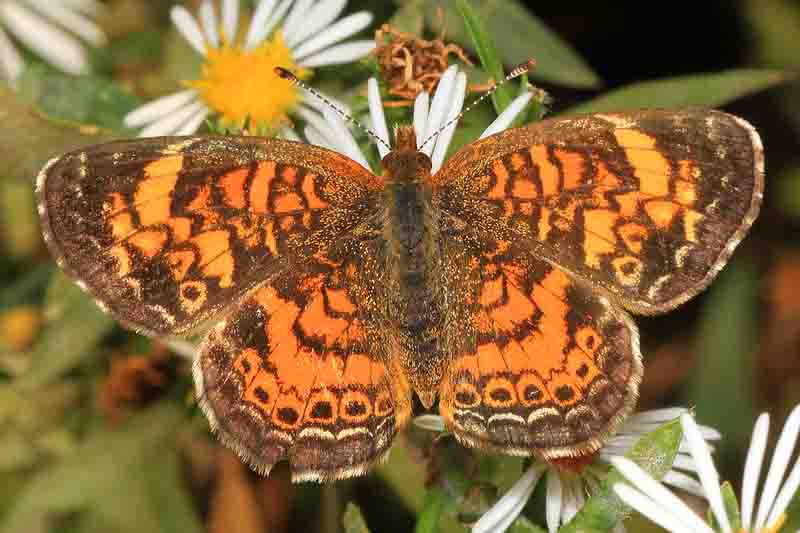
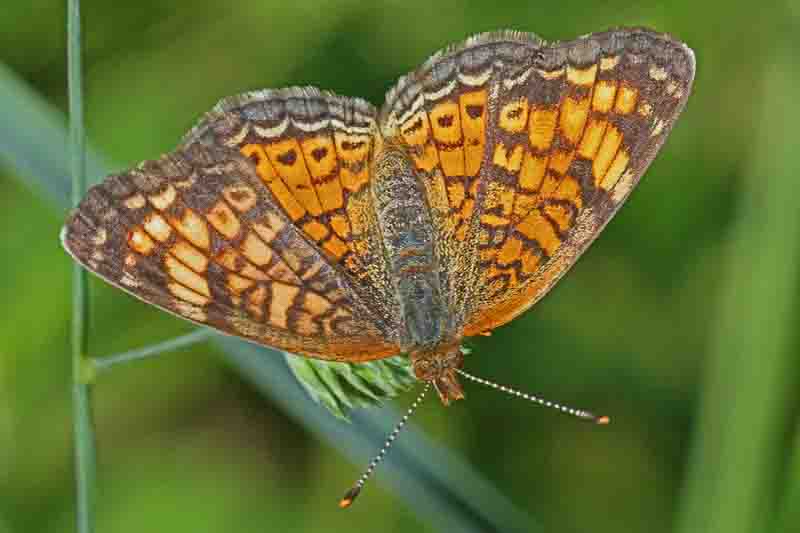
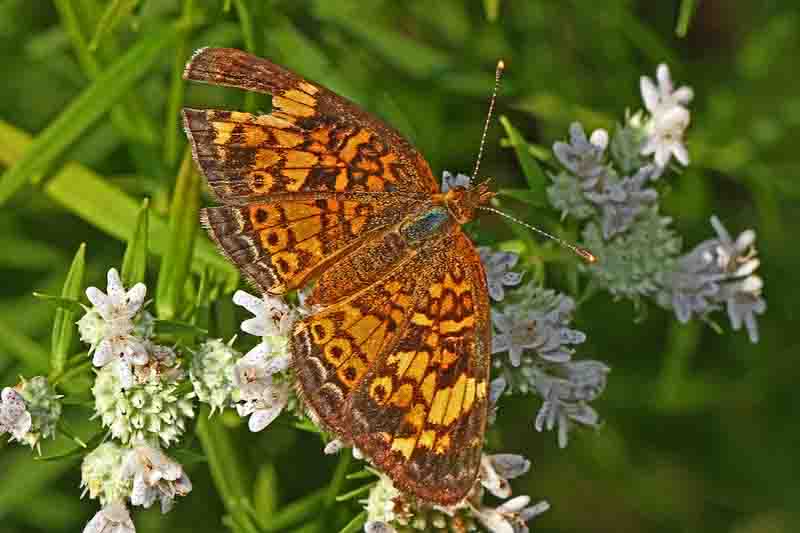
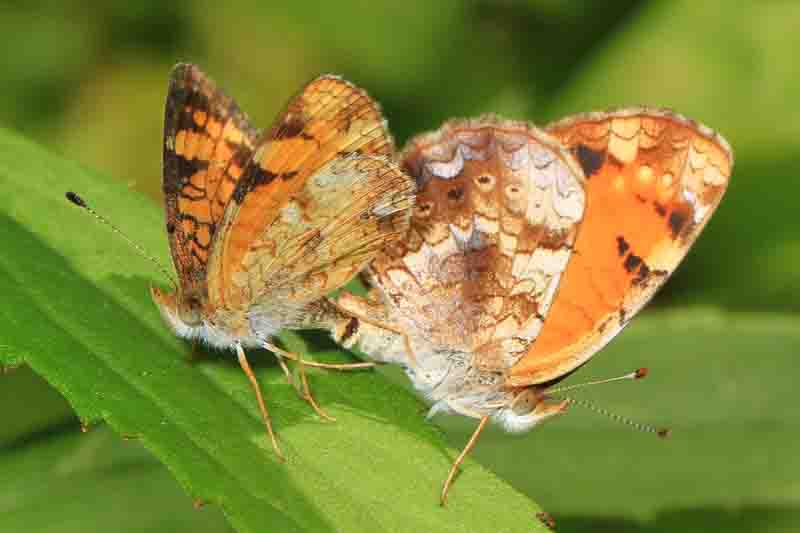
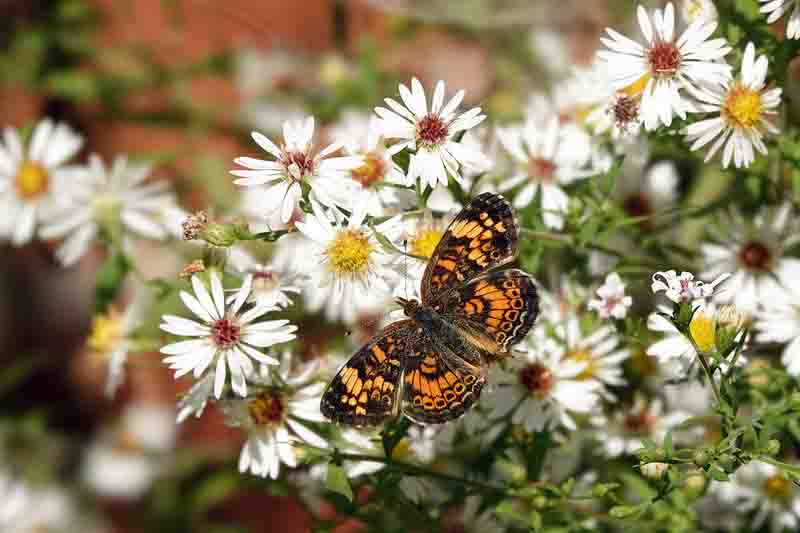


The Pearl Crescent butterfly (Phyciodes tharos) is one of the most familiar small orange butterflies across much of eastern North America. It darts through lawns, meadows, roadsides, gardens, vacant lots, and sunny woodland openings, often flying so low and quickly that its intricate wing pattern is easy to miss.
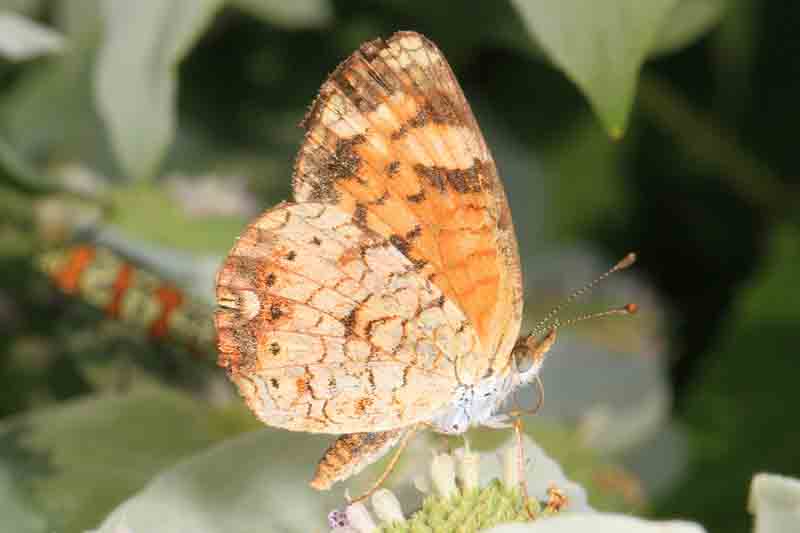
Look more closely and this little butterfly is beautifully marked. Orange wings are crossed with fine black lines and bordered in black, while the underside of the hindwing carries the pale crescent-shaped mark that gives the species its name.
For gardeners, however, the most important part of the Pearl Crescent story is not on the adult’s wings. It is hidden beneath the leaves of asters.
Female Pearl Crescents lay groups of eggs on the undersides of suitable host leaves. The young caterpillars hatch together, remain gregarious during their earliest stages, and feed on aster foliage. Later generations can overwinter as partially grown caterpillars before resuming development when conditions improve.
That biology changes how a Pearl Crescent garden should be designed. A single decorative aster may provide some value, but a healthy patch of suitable asters with enough foliage to share can function as an actual butterfly nursery.
Gardenia’s Pearl Crescent principle: don’t plant asters only for their flowers. Grow enough host foliage to raise caterpillars. The adult may visit many flowers, but the next generation begins underneath an aster leaf.
The Pearl Crescent belongs to the brush-footed butterfly family, Nymphalidae. It is a small butterfly, but the combination of orange wings, black markings, and the pale crescent beneath the hindwing makes it distinctive once you know what to look for.
Wings: orange above with black borders and numerous fine black markings crossing the forewings and hindwings.
Underside: paler and more subdued than the upper surface, with a dark marginal patch on the hindwing containing a small pale or pearly crescent.
Wingspan: generally about 1 1/4-1 3/4 in. (3.2-4.5 cm).
Antennae: males usually have dark or black antennal clubs, a useful clue when separating Pearl Crescent from Northern Crescent.
Seasonal appearance: spring and fall butterflies can look noticeably different from summer individuals. Cooler-season forms may show a more strongly mottled gray-brown hindwing underside.
Flight: quick, low, and active, with adults frequently darting among low flowers or returning to sunny perches.
The species is quite variable, so no single black mark should be used in isolation. Shape, underside markings, antennal color in males, location, season, and neighboring crescent species all help with identification.
Quick Pearl Crescent ID: small orange butterfly + fine black patterning + dark hindwing border + pale crescent inside a darker patch on the underside.
Pearl Crescent and Northern Crescent can be frustratingly similar. Both are small orange-and-black butterflies in the genus Phyciodes, and their markings vary enough that photographs are not always easy to identify with complete confidence.
One useful clue involves the males. Male Pearl Crescents usually have black antennal clubs, while male Northern Crescents typically have orange clubs. Northern Crescents also tend to have broader, cleaner orange areas above, while Pearl Crescents often appear more heavily crossed by fine black markings.
Habitat, geography, and season also help. Pearl Crescents are widespread in open habitats and can produce several generations each year. Northern Crescents are more northern in distribution and typically have fewer broods.
Identification caution: Pearl and Northern Crescents are genuinely similar. When the photograph does not show the antennae or underside clearly, it is better to acknowledge uncertainty than to force an identification from one wing mark.
Pearl Crescents occupy a huge portion of North America. Their range includes much of the eastern United States, parts of southern Canada, the central and southwestern United States, and extends south into Mexico.
They are butterflies of open country rather than dense forest. Typical habitats include meadows, grasslands, fields, pastures, roadsides, vacant lots, gardens, lawns, woodland openings, and open pine woods.
This preference makes the Pearl Crescent particularly relevant to gardeners. The species does not require an untouched wilderness. A sunny yard containing suitable asters, nectar flowers, open flight space, and relatively low pesticide use can provide meaningful habitat.
In northern regions, adults may be seen from roughly April through November, with several generations during the growing season. In the Deep South and Mexico, adults may occur throughout the year.

Asters are the principal larval host plants for Pearl Crescent caterpillars. Older references often place these plants in the genus Aster, but many North American species are now classified as Symphyotrichum, Eurybia, or other related genera. BAMONA specifically lists smooth-leaved asters such as Aster pilosus and Aster laevis, now treated as Symphyotrichum pilosum and Symphyotrichum laeve. Other regional sources document additional native asters as hosts.
This gives gardeners a major advantage: Pearl Crescent habitat does not depend on one universal aster. You can choose among several documented host plants according to your sunlight, soil moisture, climate, and available space.
Well-supported examples include:
Hairy Aster – Symphyotrichum pilosum – one of the classic Pearl Crescent hosts, historically known as Aster pilosus. It performs well in sunny, relatively dry meadows, prairies, roadsides, and naturalized plantings.
Smooth Aster – Symphyotrichum laeve – one of the best-documented Pearl Crescent hosts. Its smooth foliage and blue-violet late-season flowers make it especially useful in sunny native borders and meadow gardens.
New England Aster – Symphyotrichum novae-angliae – specifically documented as a Pearl Crescent caterpillar host. Its abundant late-season flowers also provide nectar for adult butterflies, bees, and migrating Monarchs.
New York Aster – Symphyotrichum novi-belgii – another documented host, particularly useful in sunny sites with somewhat more consistent moisture.
Blue Wood Aster – Symphyotrichum cordifolium – a useful woodland-edge aster that broadens Pearl Crescent habitat into sites receiving partial shade.
White Wood Aster – Eurybia divaricata – explicitly documented as a Pearl Crescent host and especially valuable in partial shade and dry woodland-edge gardens.
Climbing Aster – Ampelaster carolinianus – a southeastern native explicitly documented as a Pearl Crescent larval host. Unlike the upright meadow asters above, it is a vigorous, sprawling to climbing perennial that can reach into shrubs and fences, making it useful where vertical or informal habitat is appropriate.
Heath Aster – Symphyotrichum ericoides – a documented Pearl Crescent host for sunny, dry to medium-moisture sites. Its masses of small white flowers also provide valuable late-season nectar for bees and butterflies.
Aromatic Aster – Symphyotrichum oblongifolium – regional sources report Pearl Crescent use, although this species is also strongly associated with the Silvery Checkerspot. Its compact, mounding habit and tolerance of dry, rocky soils make it especially useful in sunny borders and xeric native gardens.
Hollow Joe-Pye Weed – Eutrochium fistulosum – NCSU specifically identifies this tall, moisture-loving native as supporting Pearl Crescent larvae. Its large pink-purple flower clusters also provide abundant nectar for adult butterflies and many other pollinators.
The host range therefore spans far more than one type of aster garden. A sunny prairie can support Hairy Aster or Smooth Aster, a dry border can use Heath Aster or Aromatic Aster, a woodland edge can support White Wood Aster, and a wetter garden can incorporate New England Aster or Hollow Joe-Pye Weed.
Young Pearl Crescent caterpillars often feed together after hatching, so a single isolated stem offers less useful habitat than a healthy patch with enough foliage to support several larvae. Females lay clusters of eggs on the undersides of host leaves, and the caterpillars feed directly on the foliage rather than on flower buds or developing fruits.
Gardenia’s Aster Rule: don’t simply “plant an aster.” Choose a documented Pearl Crescent host that fits your sun, soil, moisture, climate, and available space – then plant enough of it to provide a real patch of caterpillar foliage.
Pearl Crescent females do not usually place one isolated egg on a host and fly away. Eggs are deposited in groups on the undersides of aster leaves, and young caterpillars feed together after hatching.
That makes host quantity relevant.
One small aster can technically be a host plant, but several asters growing together provide far more foliage for a group of hungry larvae. A broader patch also gives females more egg-laying opportunities and reduces the chance that routine pruning, animal browsing, or accidental damage removes the entire nursery.
This does not mean you need a huge meadow. Even a drift of several suitable asters can be more useful than one isolated specimen tucked among unrelated ornamentals.
For Pearl Crescents, think “nursery patch,” not “token host plant.” Females lay multiple eggs and young caterpillars feed together, so enough healthy aster foliage matters.
Pearl Crescent caterpillars are very different from the bright adults. Mature larvae are generally brownish-black to dark brown, with pale spots, yellowish markings along the sides, and rows of branching yellow-brown or brownish spines. The head is dark, often with a paler marking toward the front.
The spiny appearance can make them look intimidating, but the caterpillars are not garden pests in the conventional sense. They are simply doing what a host plant is supposed to support: converting aster foliage into the next generation of butterflies.
Young caterpillars are particularly interesting because they are gregarious. Several siblings may feed together on the same plant before dispersing as they grow.
If a native aster develops clusters of small chewing marks or partially skeletonized leaves, inspect the undersides carefully before assuming an unwanted insect is responsible.
The Pearl Crescent develops through four familiar butterfly stages: egg, caterpillar, chrysalis, and adult, but its seasonal cycle contains a few details that gardeners should know.
Egg: females place groups of eggs on the underside of suitable aster leaves. This positions newly hatched larvae directly beside their food.
Caterpillar: young larvae feed together on host foliage. As they mature, they become more independent.
Overwintering: in regions with cold winters, Pearl Crescents can pass the dormant season as third-stage caterpillars. Late-season host habitat therefore matters even after adult butterflies disappear.
Chrysalis: after completing larval development, the caterpillar forms a chrysalis from which the adult eventually emerges.
Adult: multiple generations can occur during a single growing season. In the North, adults commonly fly from spring through fall; in warmer parts of the range, the season can be much longer.
The gardening consequence: Pearl Crescent habitat does not end when the flowers fade. Because partially grown caterpillars can overwinter, avoid treating every dormant aster patch as disposable garden debris the moment fall arrives.
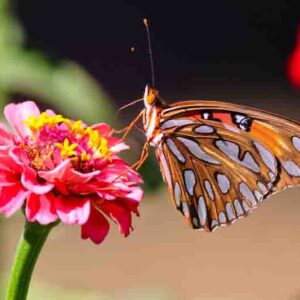
Adult Pearl Crescent butterflies are active nectar feeders and visit a broad range of small, accessible flowers. Well-documented nectar sources include dogbane, swamp milkweed, Shepherd’s Needle, asters, winter cress, Black-Eyed Susan, thistles, Gloriosa Daisy, White Clover, tall verbena, and zinnias.
Because Pearl Crescents can produce several generations in a season, the best nectar garden provides overlapping bloom from spring through fall rather than relying on one or two flowers.
Dogbane – Apocynum cannabinum is one of the specifically documented nectar sources for adult Pearl Crescents. Its small summer flowers are rich in nectar and attract many other butterflies and beneficial insects as well.
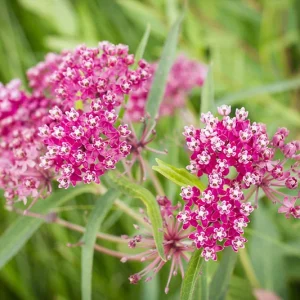
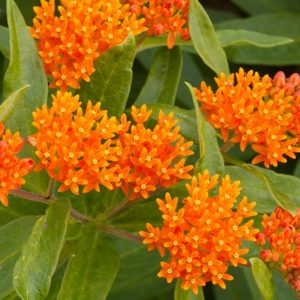
Swamp Milkweed – Asclepias incarnata is another directly documented Pearl Crescent nectar plant. Its fragrant pink flowers are especially valuable in moist, sunny gardens, rain gardens, and wet meadow plantings.
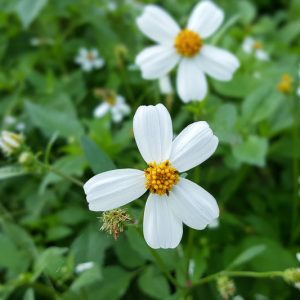
Shepherd’s Needle – Bidens alba is a documented adult food plant, particularly important in warmer regions. Its small white daisy-like flowers provide easily accessible nectar over a long flowering season.
New England Aster – Symphyotrichum novae-angliae provides abundant late-season nectar. Asters are especially valuable because they can support Pearl Crescents at both ends of the life cycle – foliage for caterpillars and flowers for adults.
Smooth Aster – Symphyotrichum laeve is another useful aster for sunny native gardens, meadows, and borders. Its late bloom helps keep nectar available when many summer flowers have faded.
Winter Cress – Barbarea vulgaris is specifically listed as a Pearl Crescent nectar source. Its yellow spring flowers can help provide food earlier in the season, before the main summer bloom begins.
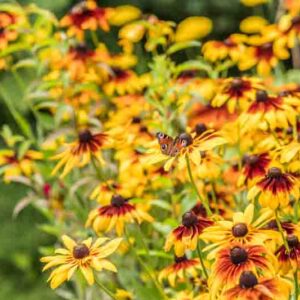
Black-Eyed Susan – Rudbeckia hirta is documented as an adult nectar source for Pearl Crescent butterflies. Its long summer flowering season and broad flower heads make it a practical addition to sunny borders and meadow-style plantings.
\White Clover – Trifolium repens is another documented nectar source. Allowing some clover to flower in an informal lawn edge or meadow can provide a surprisingly useful feeding resource for small butterflies.
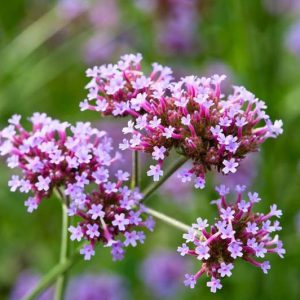
Tall Verbena – Verbena bonariensis is specifically listed by UF/IFAS among nectar plants used by Pearl Crescents. Its airy clusters of purple flowers provide nectar over a long summer season and are especially effective woven through sunny borders.
Common Zinnia – Zinnia elegans is also specifically listed by UF/IFAS for Pearl Crescent nectar. Its open, colorful flowers are easy for small butterflies to access and make it a useful annual for filling summer gaps in the nectar sequence.
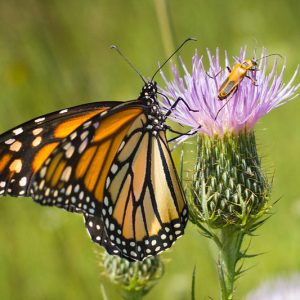
Thistles – Cirsium spp. are documented Pearl Crescent nectar sources. Native species such as Field Thistle can provide abundant nectar while also supporting a wide range of native bees and other butterflies.
Gardenia’s Pearl Crescent nectar strategy: start with plants specifically documented for Pearl Crescents, then arrange them as a bloom sequence rather than a random list – early flowers such as winter cress, summer nectar plants such as milkweed and Black-Eyed Susan, and late asters to carry adults into fall.
Not every garden needs every plant. A dry, sunny border might combine Black-Eyed Susan, White Clover, zinnias, and asters, while a moist site could emphasize Swamp Milkweed and asters. In warmer regions, Shepherd’s Needle and long-blooming annuals can keep nectar available for repeated generations.
Think beyond nectar alone: adult Pearl Crescents need flowers, but their caterpillars need suitable asters. The strongest garden connects host foliage + continuous nectar + sunny open habitat so the butterfly can complete its entire life cycle rather than simply stop for a meal.
Despite its delicate appearance, the Pearl Crescent is an energetic butterfly. Males actively patrol open areas looking for females and may chase other butterflies or insects that enter their space.
Adults frequently fly close to the ground, stopping at low flowers before darting away again. They also visit damp soil and puddles, where butterflies can obtain water and dissolved minerals.
This behavior explains why open structure matters. A Pearl Crescent garden does not need to be packed wall-to-wall with flowers. Sunny gaps, low vegetation, meadow edges, and accessible patches of damp ground can all contribute to useful habitat.
Don’t confuse “butterfly garden” with “maximum flower density.” Pearl Crescents naturally use open, sunny landscapes. Flowers matter, but so do visibility, warm basking areas, and room to patrol.
Attracting an adult Pearl Crescent to nectar is relatively easy. Supporting the complete life cycle requires a little more thought.
Plant documented host asters. Choose species appropriate to your climate, exposure, soil, and moisture.
Plant more than one host when space allows. Young caterpillars feed communally, so a useful nursery needs adequate foliage.
Accept some leaf damage. Chewed aster foliage may be evidence that the habitat is working.
Provide flowers across the season. Adults have several broods and need dependable nectar beyond the brief bloom period of any single plant.
Maintain sunny, open structure. Pearl Crescents naturally favor fields, roadsides, grasslands, gardens, and woodland openings.
Leave some late-season habitat intact. Partially grown caterpillars can overwinter.
Avoid broad-spectrum insecticides. Products that kill leaf-feeding caterpillars cannot distinguish between a Pearl Crescent larva and an unwanted pest.
Traditional fall cleanup often encourages gardeners to cut perennial borders to the ground as soon as flowering ends. That may create a tidy landscape, but it can conflict with the biology of insects that spend winter in or around perennial vegetation.
Pearl Crescents overwinter as partially grown caterpillars in colder parts of their range. For a butterfly-focused garden, leaving some host vegetation and surrounding plant material undisturbed through winter is therefore a sensible precaution.
You do not need to abandon garden maintenance. Instead, divide the landscape mentally into ornamental areas and habitat areas. Leave the Pearl Crescent host patch less disturbed, then perform major cleanup after winter rather than automatically removing everything in fall.
A useful change in perspective: an aster patch in November may look finished to us, but biologically it may still be occupied habitat.
A generic butterfly garden often starts with nectar flowers. For Pearl Crescents, a more useful design begins with the caterpillar.
1. Choose the right aster.
Select a documented host that matches your region, sunlight, soil, drainage, moisture, and available space.
2. Build a nursery patch.
Where space permits, use several host plants rather than one isolated specimen so egg clusters and young caterpillars have enough foliage.
3. Add nectar around the nursery.
Provide overlapping flowers through the adult flight season so successive generations can feed nearby.
4. Keep some open sunshine.
Include warm, open areas where adults can fly, patrol, bask, and move between host and nectar plants.
5. Protect the habitat beyond bloom.
Tolerate caterpillar feeding and avoid removing the entire host patch as soon as fall arrives.
Gardenia’s Pearl Crescent shortcut: right aster + enough host foliage + season-long nectar + sunny open structure + winter refuge. The goal is not merely to attract a butterfly. It is to make room for its entire life cycle.
If a Pearl Crescent lands on a flower in your garden, the next question is not simply “What else will it nectar on?” Ask: “Could its caterpillars actually live here?”
That shifts the design from a collection of butterfly flowers to a functioning habitat.
Build Pearl Crescent habitat from the aster patch outward.
Use the Gardenia Plant Finder to compare potential host and nectar plants by hardiness, native range, sun exposure, soil, drainage, water needs, mature size, tolerances, and wildlife value.
Then use the Gardenia Garden Design Tool to combine asters and nectar plants that can actually thrive together, compare seasonal interest, and catch compatibility problems before planting.
Don’t stop at “plant asters.” Plant the right aster, grow enough foliage for a nursery, keep nectar nearby, and leave enough habitat for the caterpillar to finish what the butterfly started.
Pearl Crescent caterpillars feed primarily on asters. Documented hosts include Hairy Aster (Symphyotrichum pilosum), Smooth Aster (Symphyotrichum laeve), New England Aster (Symphyotrichum novae-angliae), New York Aster (Symphyotrichum novi-belgii), Blue Wood Aster (Symphyotrichum cordifolium), and White Wood Aster (Eurybia divaricata).
Pearl Crescents are small orange butterflies with black borders and fine black markings. The underside of the hindwing has a pale crescent-shaped mark inside a darker marginal patch. Males usually have black antennal clubs.
Pearl Crescent caterpillars are generally dark brown to brownish-black with pale spots, yellowish side markings, and rows of branching brown or yellow-brown spines.
Females lay groups of eggs on the undersides of suitable aster leaves. The young caterpillars hatch near their food and feed together during their early stages.
Adults drink nectar from many flowers. Documented food sources include dogbane, swamp milkweed, Shepherd’s Needle, asters, and winter cress.
The two butterflies can be difficult to separate. Male Pearl Crescents usually have black antennal clubs, while male Northern Crescents typically have orange clubs. Pearl Crescents also tend to show heavier black markings, but range, season, and underside patterns should also be considered.
In colder parts of its range, the Pearl Crescent overwinters as a partially grown, typically third-stage caterpillar and resumes development when conditions become favorable.
Plant documented host asters in a sunny or otherwise suitable site, provide enough host foliage for caterpillars, add nectar flowers that bloom across the season, leave some open sunny space, avoid broad-spectrum insecticides, and leave part of the host habitat undisturbed through winter.
Updated and reviewed by Gardenia: October 2026
Create a membership account to save your garden designs and to view them on any device.
Becoming a contributing member of Gardenia is easy and can be done in just a few minutes. If you provide us with your name, email address and the payment of a modest $25 annual membership fee, you will become a full member, enabling you to design and save up to 25 of your garden design ideas.
Join now and start creating your dream garden!