Mānuka, Manuka, New Zealand teatree, Broom tea-tree, Tea tree, Kāhikatoa, Manuka myrtle, New Zealand tea tree, New Zealand tea bush, Red tea tree, Australian tea tree, Leptospermum floribundum, Leptospermum scoparium var. eximum, Leptospermum scoparium var. forsteri, Leptospermum scoparium var. incanum, Leptospermum scoparium var. linifolium, Leptospermum scoparium var. myrtifolium, Leptospermum scoparium var. nichollii, Leptospermum scoparium var. parvum, Leptospermum scoparium var. prostratum
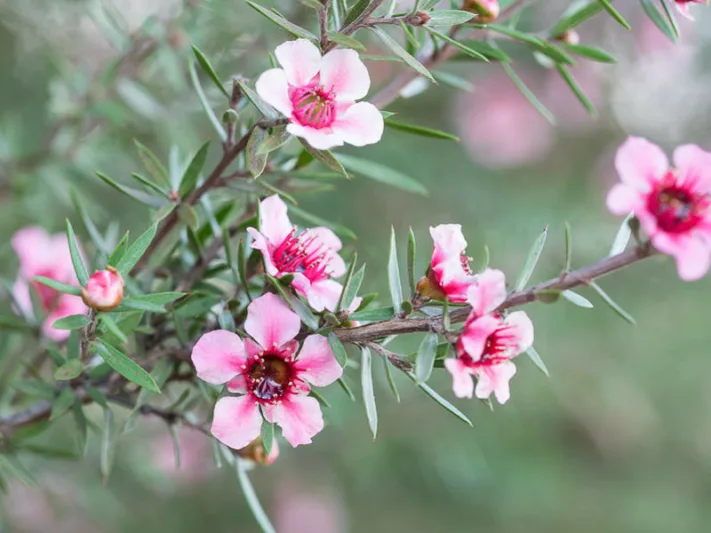


Leptospermum scoparium, commonly known as New Zealand tea tree, manuka, mānuka, broom tea tree, or tea tree, is a graceful evergreen shrub admired for its fine needle-like foliage, aromatic leaves, colorful spring and summer flowers, and remarkable toughness in coastal and Mediterranean-style gardens. Native to New Zealand and southeastern Australia, this plant brings year-round structure, pollinator appeal, and a soft, romantic texture to sunny borders, low-water landscapes, containers, and informal flowering screens.
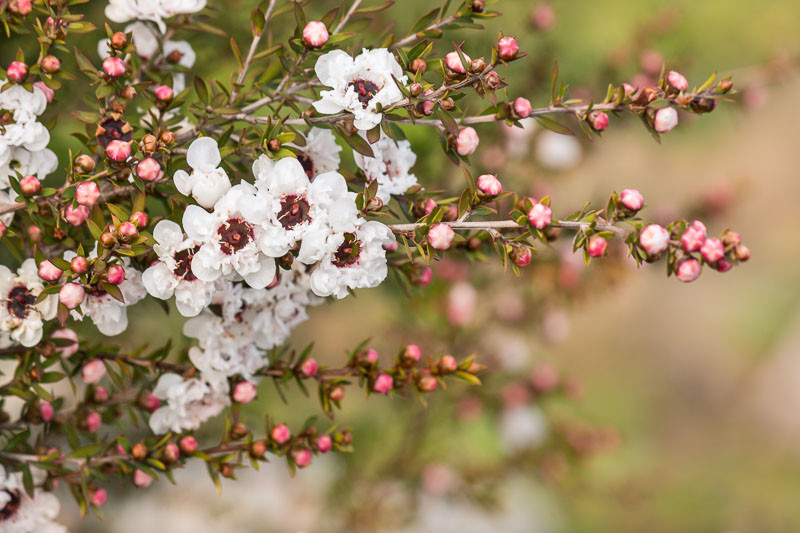
This is the shrub gardeners choose when they want beauty with backbone. Its small, sharp, aromatic leaves create a delicate, heath-like texture, while the flowers appear along the stems in shades of white, pink, rose, red, burgundy, or deep ruby depending on the cultivar. Some varieties carry single, open blossoms with dark centers; others look like tiny double roses stitched along the branches. Bees love the nectar-rich flowers, and the woody seed capsules often remain on the stems long after bloom, adding subtle texture through the year.
Leptospermum scoparium is a sun-loving evergreen shrub grown for aromatic foliage, colorful late-spring to summer flowers, drought tolerance once established, coastal resilience, deer resistance, and year-round ornamental value. It performs best in acidic to neutral, fertile, sharply drained soil with full sun, good airflow, and protection from severe cold.
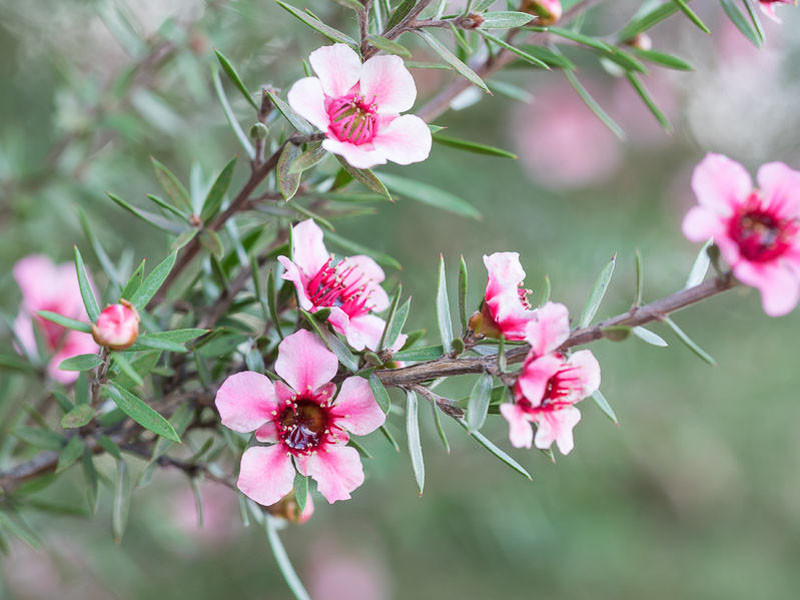
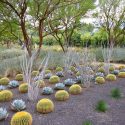
Use: Beds and borders, coastal gardens, Mediterranean gardens, gravel gardens, rock gardens, flowering screens, wildlife gardens, cottage gardens, and containers.
Highlight: Small aromatic evergreen leaves and masses of bee-friendly flowers in white, pink, red, ruby, burgundy, or rose tones.
Design note: Best used as a specimen shrub, loose hedge, flowering backdrop, slope plant, container feature, or fine-textured contrast for bold foliage plants.
| Botanical Name | Leptospermum scoparium |
|---|---|
| Family | Myrtaceae |
| Common Names | New Zealand Tea Tree, Manuka, Mānuka, Broom Tea Tree, Tea Tree |
| Native Range | New Zealand and southeastern Australia |
| Plant Type | Evergreen shrub or small tree |
| Hardiness | Best in USDA Zones 9-10, sometimes grown in protected mild Zone 8 sites |
| Height | Usually 6-10 ft. tall with some forms taller in ideal climates |
| Spread | Usually 6-10 ft. wide, depending on cultivar, pruning, and climate |
| Sun Exposure | Full sun to light shade; best flowering in full sun |
| Soil | Acidic to neutral, well-drained soil; tolerates lean or sandy soils once established |
| Bloom Time | Late spring to summer |
| Flower Color | White, pink, rose, red, ruby, burgundy, or bicolor depending on cultivar |
| Water Needs | Moderate during establishment; lower once established |
| Drought Tolerant | Yes, once established |
| Deer Resistant | Yes, generally avoided by deer |
| Attracts | Bees and other pollinators |
| Pet and Child Safety | Not grown as an edible plant; discourage chewing and avoid homemade medicinal use. |
Leptospermum scoparium is an upright evergreen shrub in the myrtle family, the same broad family that includes eucalyptus, myrtle, bottlebrush, and guava. In gardens, it is prized for its fine-textured foliage, abundant flowers, and tolerance of wind, lean soil, and dry summer conditions once established. The leaves are tiny, narrow, and aromatic when crushed. The stems are often twiggy and densely branched, giving the plant a naturally airy but structured look.
The common name tea tree comes from the historic use of leaves by early European explorers as a tea substitute. However, this plant should not be confused with the commercial tea plant, Camellia sinensis, or with the main source of tea tree essential oil, Melaleuca alternifolia. In horticulture, Leptospermum scoparium is valued primarily as an ornamental flowering shrub, wildlife plant, coastal garden shrub, and drought-tolerant evergreen.
Good to know: Manuka is one of the plants associated with mānuka honey, but garden cultivars are grown for flowers, foliage, and landscape performance rather than honey production.
Leptospermum scoparium is indigenous to New Zealand and southeastern Australia. In the wild, it is highly variable, appearing in coastal scrub, open slopes, shrubland, poor soils, and disturbed sites. This natural adaptability explains why the plant handles lean, acidic soils, wind, coastal exposure, and seasonal dryness better than many showy flowering shrubs.
New Zealand tea tree usually blooms in late spring and summer, with the heaviest display depending on climate, cultivar, and pruning schedule. The flowers are borne along the stems and may be single, semi-double, or fully double. White-flowered wild forms have a natural charm, while garden cultivars add glowing shades of rose, cherry red, ruby, burgundy, blush pink, and crisp white.
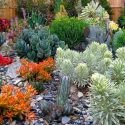
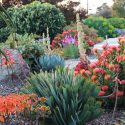
The foliage is evergreen, small, needle-like, and aromatic when crushed. Even outside the bloom season, Leptospermum scoparium gives the garden a fine, textural presence. It works especially well beside bolder plants such as phormium, yucca, agapanthus, lavender, rosemary, or silver-leaved shrubs, where its tiny leaves create soft contrast.
Most garden plants grow about 6-10 feet tall and wide, although some can become larger in mild, frost-free climates. Compact cultivars may stay around 4-5 feet, while vigorous selections can reach 10-12 feet or more. Always check the cultivar name before planting near paths, windows, fences, or patios, because mature size varies widely.
New Zealand tea tree is best suited to mild climates, especially USDA Zones 9-10. It may grow in protected Zone 8 gardens where winters are not severe and soil drains quickly, but young plants should be protected from hard cold. Cold, wet soil is more dangerous than cold alone, because soggy roots can lead to decline or rot.
The flowers are attractive to bees and other pollinators. In a wildlife-friendly garden, Leptospermum scoparium is especially useful because it combines evergreen cover with a concentrated bloom season. Pair it with long-flowering perennials and nectar-rich shrubs to extend pollinator support before and after manuka flowers fade. Explore more pollinator-friendly ideas with bee-friendly plants, butterfly plants, and hummingbird plants.
New Zealand tea tree is generally considered deer-resistant, partly because the small aromatic leaves are not especially appealing. No plant is completely deer-proof, especially during drought or food scarcity, but established tea trees are usually passed over in favor of softer growth. For more options, see the Ultimate Guide to Deer-Resistant Plants: Strategies, Lists & Zone Picks.
Once established, Leptospermum scoparium is a useful drought-tolerant shrub for dry-summer gardens. Young plants need consistent moisture while rooting, but mature plants prefer moderate, even moisture rather than wet soil. In hot inland areas, occasional deep watering keeps foliage fresh and flowering strong. Need tough, low-water shrubs? See Drought-Tolerant Shrubs That Bloom Big with Little Water.
Leptospermum scoparium is grown as an ornamental shrub, not as an edible landscape plant. Although the common name “tea tree” reflects historic use of the leaves as a tea substitute, garden plants should not be used for food, tea, essential oil, or medicinal preparations unless properly identified and handled by an expert. Keep pets and children from chewing plant material.
In most garden settings, New Zealand tea tree is managed as an ornamental shrub, but it can self-sow in mild climates where it flowers and sets seed freely. It has naturalized in parts of Hawaii, so gardeners in warm, frost-free regions should check local invasive plant guidance before planting near wildlands, remove unwanted seedlings, and avoid dumping prunings or seed-bearing material in natural areas.
Water regularly after planting so roots establish deeply. Once the shrub is settled, reduce watering frequency but water deeply during long dry spells. Container-grown plants dry faster than in-ground shrubs and need more consistent monitoring, especially in summer.
Feed lightly in spring if growth is weak. A compost mulch or gentle slow-release fertilizer is usually enough. Avoid excessive fertilizer, which can encourage soft growth at the expense of flowering and cold resilience.
Use gravel, bark, leaf mold, or compost as a light mulch to conserve moisture and reduce weeds. Keep mulch away from the crown and lower stems to prevent excess dampness around the base of the plant.
Care tip:
Think sunny, airy, and sharply drained. Leptospermum scoparium dislikes wet feet far more than dry summers.
Prune after flowering to maintain shape, encourage bushier growth, and improve the next season’s bloom display. Light, regular pruning is far better than hard renovation. Remove crossing, dead, or congested branches, and shorten long shoots while leafy growth remains below the cut.
Never cut hard into bare old wood unless you are prepared to lose that branch. New Zealand tea tree does not reliably resprout from old leafless stems. Avoid shearing mature shrubs into tight geometric shapes; their natural beauty comes from fine branching, airy texture, and flowers carried along the stems.
Compact cultivars grow well in containers. Choose a pot with drainage holes, use a free-draining acidic to neutral potting mix, and place the container in full sun. Water before the mix becomes bone dry, but never let the pot sit in standing water.
Species plants can be propagated from seed, but cultivars should be propagated from semi-hardwood cuttings to preserve flower color, form, and size. Take cuttings in summer from healthy, non-flowering shoots. Use a free-draining propagation mix and provide gentle warmth and humidity until roots form.
New Zealand tea tree struggles in heavy clay, waterlogged soil, deep shade, humid stagnant corners, and very cold exposed sites. Yellowing leaves may indicate poor drainage, alkaline soil, nutrient imbalance, or root stress. Sparse flowering usually points to too much shade, excessive nitrogen, or pruning at the wrong time.
| Task | Best Time |
|---|---|
| Planting | Spring, or fall in mild coastal climates |
| Flowering | Late spring to summer |
| Pruning | Immediately after flowering |
| Cuttings | Summer, using semi-hardwood shoots |
| Winter Protection | Before hard frost in marginal climates |
Scale insects may appear on stressed plants, especially in warm, sheltered sites. Improve airflow, avoid overfertilizing, and inspect stems regularly.
Root rot is the main problem in wet soil. Improve drainage, avoid overwatering, and plant slightly high in heavy ground.
Armillaria root rot may affect stressed shrubs, especially where old woody roots remain in the soil. Good drainage, healthy planting conditions, and avoiding chronic stress reduce risk.
Nematodes can cause poor growth in some soils. If plants decline despite good care, inspect the roots and consider replacing with tolerant plants or improving soil health before replanting.
Yellowing foliage may be caused by alkaline soil, poor drainage, overwatering, nutrient deficiency, or root damage. Correct the growing conditions before adding fertilizer, because feeding a waterlogged plant rarely solves the real problem.
Fast diagnostic: Few flowers usually means too much shade or wrong-time pruning. Yellow foliage often means drainage or soil pH stress. Sudden collapse usually points to root trouble.
Use New Zealand tea tree where the planting needs softness, movement, and seasonal color without losing evergreen structure.
Leptospermum scoparium pairs best with companions that share its preference for sun, drainage, mild winters, and moderate-to-low summer water once established.
Leptospermum cultivars vary widely in flower color, flower form, height, and garden mood. Some are compact and romantic, while others become large flowering shrubs for screening and structure.
Yes. Leptospermum scoparium is commonly called New Zealand tea tree, manuka, mānuka, broom tea tree, or simply tea tree. It is an evergreen shrub grown for aromatic foliage and colorful flowers.
Most Leptospermum scoparium plants grow 6 to 10 feet tall and wide, although compact cultivars may stay around 4 to 5 feet and vigorous forms can grow larger in mild climates.
Leptospermum scoparium flowers best in full sun. It tolerates light shade, especially in hot climates, but too much shade can reduce flowering and cause open, leggy growth.
Yes. Leptospermum scoparium is drought tolerant once established, especially in coastal and Mediterranean climates. Young plants need regular moisture until their roots are established.
Prune Leptospermum scoparium just after flowering. Lightly shape leafy stems, remove dead or crossing branches, and avoid cutting hard into bare old wood because it may not resprout well.
Yes. Compact cultivars grow well in containers if the pot has drainage holes, the mix drains freely, and the plant receives full sun. Container plants need more regular watering than in-ground shrubs.
Yes. Leptospermum scoparium is generally considered deer resistant because of its small aromatic foliage, although hungry deer may browse almost any plant in difficult conditions.
Yellow leaves on Leptospermum scoparium are often caused by poor drainage, overwatering, alkaline soil, nutrient stress, or root problems. Check soil moisture and drainage before adding fertilizer.
Updated: May 2026 • Reviewed by Gardenia Editors
| Hardiness |
9 - 10 |
|---|---|
| Heat Zones |
3 - 11 |
| Climate Zones | 14, 15, 16, 17, 18, 19, 20, 21, 22, 23, 24, H1, H2 |
| Plant Type | Shrubs |
| Plant Family | Myrtaceae |
| Common names | Tea Tree |
| Exposure | Full Sun |
| Season of Interest | Spring (Late), Summer (Early) |
| Height | 6' - 10' (180cm - 3m) |
| Spread | 6' - 10' (180cm - 3m) |
| Spacing | 120" (3m) |
| Maintenance | Low |
| Water Needs | Low |
| Soil Type | Chalk, Loam, Sand |
| Soil pH | Acid, Alkaline, Neutral |
| Soil Drainage | Well-Drained |
| Characteristics | Fragrant, Showy, Evergreen |
| Native Plants | Australia |
| Tolerance | Drought, Deer |
| Attracts | Bees, Butterflies |
| Garden Uses | Beds And Borders, Patio And Containers |
| Garden Styles | Coastal Garden, Gravel and Rock Garden, Informal and Cottage, Mediterranean Garden |


| Hardiness |
9 - 10 |
|---|---|
| Heat Zones |
3 - 11 |
| Climate Zones | 14, 15, 16, 17, 18, 19, 20, 21, 22, 23, 24, H1, H2 |
| Plant Type | Shrubs |
| Plant Family | Myrtaceae |
| Common names | Tea Tree |
| Exposure | Full Sun |
| Season of Interest | Spring (Late), Summer (Early) |
| Height | 6' - 10' (180cm - 3m) |
| Spread | 6' - 10' (180cm - 3m) |
| Spacing | 120" (3m) |
| Maintenance | Low |
| Water Needs | Low |
| Soil Type | Chalk, Loam, Sand |
| Soil pH | Acid, Alkaline, Neutral |
| Soil Drainage | Well-Drained |
| Characteristics | Fragrant, Showy, Evergreen |
| Native Plants | Australia |
| Tolerance | Drought, Deer |
| Attracts | Bees, Butterflies |
| Garden Uses | Beds And Borders, Patio And Containers |
| Garden Styles | Coastal Garden, Gravel and Rock Garden, Informal and Cottage, Mediterranean Garden |
How many Leptospermum scoparium (Tea Tree) do I need for my garden?
| Plant | Quantity | |
|---|---|---|
| Leptospermum scoparium (Tea Tree) | N/A | Buy Plants |
Create a membership account to save your garden designs and to view them on any device.
Becoming a contributing member of Gardenia is easy and can be done in just a few minutes. If you provide us with your name, email address and the payment of a modest $25 annual membership fee, you will become a full member, enabling you to design and save up to 25 of your garden design ideas.
Join now and start creating your dream garden!
Create a membership account to save your garden designs and to view them on any device.
Becoming a contributing member of Gardenia is easy and can be done in just a few minutes. If you provide us with your name, email address and the payment of a modest $25 annual membership fee, you will become a full member, enabling you to design and save up to 25 of your garden design ideas.
Join now and start creating your dream garden!