Red Box, Silver Dollar Gum, Silver Dollar Eucalyptus, Eucalyptus polyanthema, Eucalyptus ovalifolia, Eucalyptus ovalifolia var. lanceolata
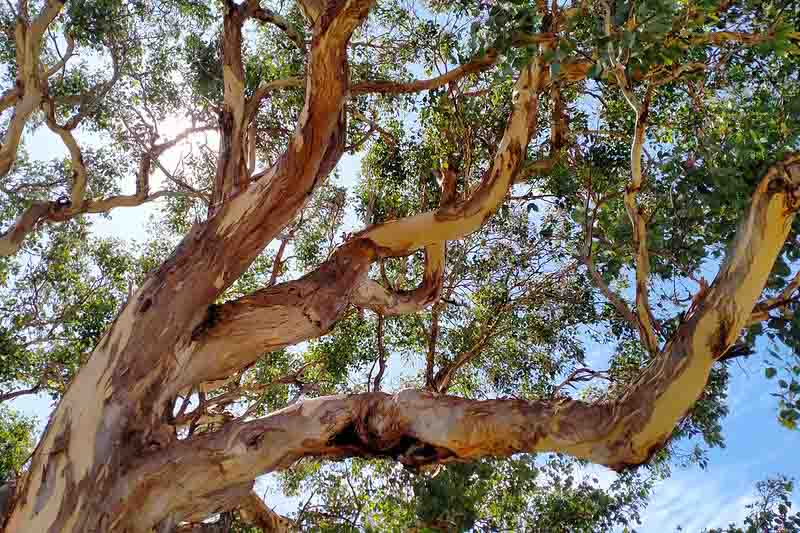
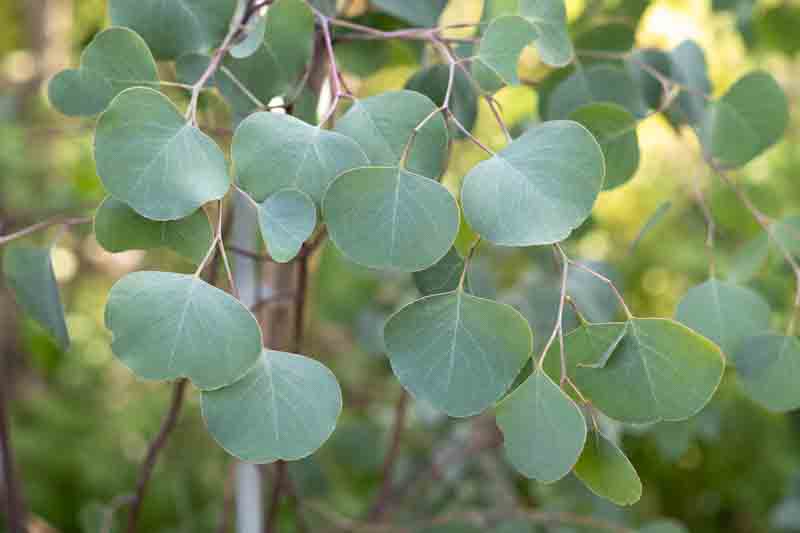


Eucalyptus polyanthemos, commonly known as Silver Dollar Gum or Red Box, is a distinctive evergreen tree admired for its rounded blue-green foliage, open canopy, attractive bark, creamy white flowers, and exceptional drought tolerance. Native to southeastern Australia, it brings year-round structure, filtered shade, and unmistakable architectural character to spacious warm-climate gardens.
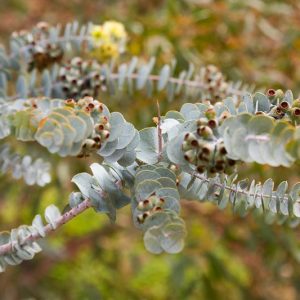
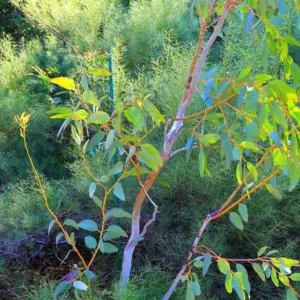
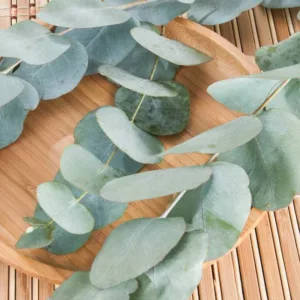
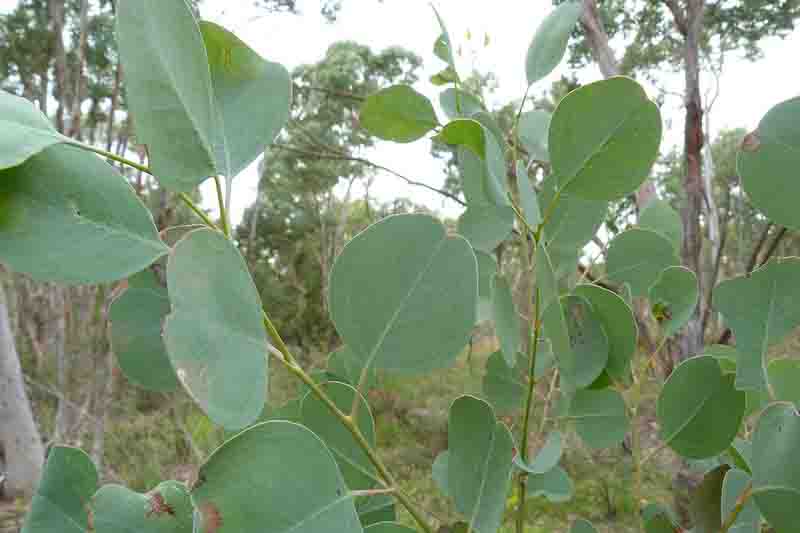
The familiar “silver dollar” effect comes primarily from the tree’s rounded juvenile leaves. Depending on the subspecies and individual plant, mature foliage may remain broadly rounded or become more oval to lance-shaped. This natural variability gives different trees noticeably different appearances, even when they share the same botanical name.
Eucalyptus polyanthemos is a drought-tolerant evergreen tree for full sun, well-drained soil, and warm or mild-winter climates. It is valued for rounded silver-blue foliage, variable smooth to rough gray-brown bark, creamy white flowers, filtered shade, and strong architectural presence. Give it ample space, water deeply while young, and reduce irrigation gradually once established.
Use: Excellent as a specimen tree, filtered-shade tree, wildlife tree, drought-tolerant landscape tree, or structural accent in Australian, Mediterranean, and water-wise gardens.
Highlight: Rounded silver-blue to blue-green foliage, creamy white flowers, an open picturesque crown, and bark that may be smooth, flaky, fibrous, or rough depending on the form.
Design note: Plant it where sunlight can illuminate the foliage and where the canopy has enough space to develop without repeated hard pruning.
| Botanical Name | Eucalyptus polyanthemos |
|---|---|
| Family | Myrtle family (Myrtaceae) |
| Common Names | Silver Dollar Gum, Red Box, Australian Silver Dollar Tree |
| Native Range | Southeastern Australia, primarily New South Wales, Victoria, and the Australian Capital Territory |
| Plant Type | Broadleaf evergreen tree; occasionally multi-trunked or mallee-like |
| Hardiness | Commonly grown in USDA Zones 8-11, although cold tolerance varies considerably by provenance, tree age, drainage, and exposure |
| Height | Typically 30-60 ft. tall (9-18 m) in cultivation, but capable of reaching 65-80 ft. (20-25 m) in favorable conditions |
| Spread | Typically 20-40 ft. wide (6-12 m), occasionally approaching 50 ft. (15 m) in open landscapes |
| Growth Rate | Moderate; young trees may grow more quickly under warm, favorable conditions |
| Sun Exposure | Full sun |
| Soil | Adaptable to sandy, loamy, rocky, and some clay soils, provided drainage is adequate |
| Bloom Time | Variable by subspecies and climate; flowering has been recorded from winter through summer in Australia |
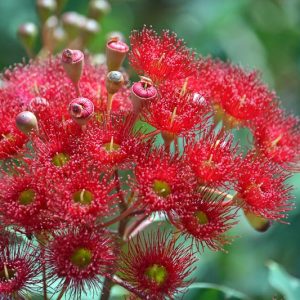
| Flower Color | White to creamy white |
| Foliage | Evergreen, aromatic, blue-green to gray-green; juvenile leaves are rounded and adult leaves vary from broadly ovate to lance-shaped |
| Drought Tolerant | Yes, once established |
| Deer Resistant | Young growth may be browsed; reliable species-specific deer-resistance information is limited |
| Attracts | Bees, nectar-feeding birds, beneficial insects, and other pollinators |
| Pet and Child Safety | Eucalyptus foliage and essential oils should not be ingested. Eucalyptus species are considered toxic to dogs, cats, and horses. |
Silver Dollar Gum is a small to medium-sized Australian eucalyptus belonging to the myrtle family. Its rounded juvenile foliage is often used in floral arrangements and gives the tree its best-known common name. Mature foliage is more variable: some trees retain many broad, rounded leaves, while others develop a greater proportion of oval or elongated adult leaves.
The botanical name polyanthemos means “many-flowered,” referring to the clusters of blossoms produced by mature trees. The petals are not the showy part of the flower. Instead, numerous pale stamens create soft white to creamy flower heads rich in nectar.
Good to know: Several species are sold as “silver dollar eucalyptus.” Eucalyptus polyanthemos is different from Eucalyptus cinerea, the Argyle Apple. Always check the botanical name because mature size, bark, foliage, and hardiness differ among species.
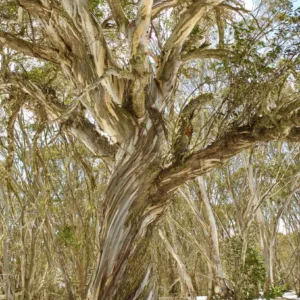
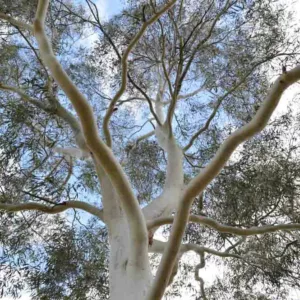
Eucalyptus polyanthemos generally develops an upright trunk and a rounded, spreading, or irregular crown. Bark is variable. Some forms are largely smooth and shed in flakes or patches, while others retain rough, fibrous, or box-like bark over much of the trunk and larger branches. Colors range from pale gray to gray-brown and dark brown.
Young leaves are usually opposite, rounded, and covered with a bluish or gray-green waxy bloom. Adult leaves may be broadly ovate, oval, or lance-shaped. Small woody fruits, commonly called gumnuts, follow the flower clusters.
Silver Dollar Gum is native to southeastern Australia, extending from parts of New South Wales and the Australian Capital Territory into eastern and central Victoria. It occurs in open forests, grassy woodlands, ridges, slopes, and rising ground, often on shallow, rocky, or comparatively low-fertility soils.
Several subspecies or regional forms have been recognized, although taxonomic treatments differ over the status of some names. These forms vary in bark, mature height, leaf shape, flowering period, and geographical distribution.
Flowering time is variable rather than confined to one short season. Depending on the subspecies and location, flowers have been recorded from winter through summer in Australia. In cultivated Northern Hemisphere landscapes, flowering is often described as occurring from spring into summer, but climate, provenance, and tree age all influence timing.
The foliage gives the tree its strongest ornamental identity. Rounded blue-green leaves catch the light and create a luminous canopy, while the irregular branching and visible spaces between leaves produce filtered rather than heavy shade.
The tree is evergreen, but it continually sheds and replaces individual leaves. Bark strips, twigs, flowers, and woody capsules may also fall throughout the year. This natural litter makes Silver Dollar Gum more suitable for informal gardens than for narrow courtyards, pristine paving, or pool surrounds.
In cultivation, Eucalyptus polyanthemos typically grows 30-60 ft. tall (9-18 m) and 20-40 ft. wide (6-12 m). In favorable open landscapes, some specimens may reach 65-80 ft. tall (20-25 m) and occasionally approach 50 ft. wide (15 m).
This is not a permanently compact tree. A small nursery specimen can eventually develop a broad canopy and substantial root system, so choose a planting site based on its mature size rather than its dimensions at the time of purchase.
Eucalyptus polyanthemos is commonly grown in USDA Zones 8-11, although cold tolerance varies considerably by provenance, tree age, drainage, and exposure. Established trees generally tolerate more cold than young plants. A sheltered, sunny location and freely draining soil improve performance near the colder edge of its cultivated range.
The nectar-rich blossoms attract bees, nectar-feeding birds, and other pollinating insects. Mature trees also provide perching, shelter, and potential nesting sites.
Outside Australia, Silver Dollar Gum does not replace the specialized habitat relationships supplied by locally native trees. For greater regional wildlife value, combine it with appropriate native plants. See Wildlife-Friendly Plants: Attract Bees, Butterflies & Birds.
Aromatic foliage may discourage some browsing, but dependable species-specific deer and rabbit resistance has not been well documented. Young shoots and newly planted trees may still be damaged where animal pressure is high. Protect the trunk and lower crown during establishment if browsing is common.
Silver Dollar Gum is highly drought tolerant once established. Newly planted trees still need consistent deep watering while their roots extend beyond the original root ball. As growth becomes established, gradually increase the interval between irrigations rather than stopping water abruptly.
Eucalyptus polyanthemos should not automatically be treated as a fire-resistant landscape tree. Its foliage contains aromatic oils, and fallen bark, leaves, and twigs can contribute combustible material. In wildfire-prone regions, maintain defensible space, remove excessive litter near structures, prune according to local guidance, and follow recommendations from the relevant fire authority.
Eucalyptus foliage and concentrated eucalyptus oils should not be ingested. Eucalyptus species are considered toxic to dogs, cats, and horses and may cause salivation, vomiting, diarrhea, weakness, or depression. Keep cut branches and concentrated oils away from pets, livestock, and young children.
Eucalyptus polyanthemos is not universally classified as invasive, but its behavior may vary by region. Seedlings can occasionally appear near mature trees where climate and soil permit germination. Check local invasive-plant guidance and remove unwanted seedlings promptly.
Fertilizer is rarely needed. Excess nitrogen can encourage soft, rapid growth, increase water demand, and contribute to weak structure. If growth is poor, investigate drainage, irrigation, soil compaction, planting depth, and root health before feeding.
Spread 2-3 in. of coarse organic mulch over the root zone to conserve moisture and suppress weeds. Leave several inches of clear space around the trunk and root flare.
Design tip:
Position Silver Dollar Gum where morning or late-afternoon sunlight can shine through its blue-green leaves. Keep the understory simple so the luminous foliage, open branching, and variable bark remain the composition’s focal points.
Formative pruning is most valuable while the tree is young. Select a strong central leader where a single-trunked form is desired and gradually shorten or remove competing leaders and poorly attached branches.
Do not top a mature eucalyptus. Severe cutting can trigger vigorous shoots with weak attachments and permanently damage the tree’s natural structure. Large branches, storm damage, or limbs near buildings should be assessed by a qualified arborist.
Plant young trees before they become severely root-bound. Handle the root ball carefully, place the root flare at soil level, and avoid burying the trunk. Eucalyptus roots generally establish most successfully when disturbance is minimized.
A young Eucalyptus polyanthemos may be grown temporarily in a large container, especially when juvenile foliage is desired for cutting. It is not naturally compact, however, and is unsuitable as a permanent small patio tree. Use a free-draining potting mix, provide full sun, and transplant before roots become tightly congested.
Care tip:
Long-term success depends on early decisions: choose a spacious site, plant before the roots become pot-bound, irrigate deeply while the tree establishes, and develop a strong branch framework while defects are still small.
Silver Dollar Gum performs poorly in deep shade, persistently wet soil, cramped planting strips, and climates with severe prolonged freezes. It is also unsuitable beneath power lines or immediately beside buildings, pools, retaining walls, and narrow paving. Overwatering, trunk damage, and excessive fertilizer can reduce structural strength and longevity.
| Task | Best Time |
|---|---|
| Planting | Spring after severe frost danger, or fall in reliably mild climates. |
| Flowering | Variable; recorded from winter through summer depending on form and climate. |
| Formative pruning | While the tree is young and actively growing, avoiding extreme heat or frost. |
| Seed collection | When mature capsules are dry and beginning to release seed. |
| Reduced irrigation | Gradually after the tree has established a wider root system. |
Silver Dollar Gum is normally propagated from seed. Sow fresh seed on the surface of a sterile, free-draining medium and cover it only lightly. Maintain even moisture, bright light, airflow, and moderate warmth.
Transplant seedlings into individual containers before roots become tangled, and move them into their permanent positions while they are still comparatively young. Seed-grown plants are naturally variable, so mature size, foliage, bark, and cold tolerance may differ among individuals.
Frost may bronze, blacken, or kill young leaves and shoot tips. Wait until the full extent of damage is visible before pruning. Avoid heavy late-season fertilization, which can encourage tender new growth.
Yellowing, repeated wilting, or weak growth may result from overwatering, drought within the original root ball, poor drainage, deeply buried roots, or severe root congestion. Check moisture below the surface and confirm that the root flare remains visible.
Competing leaders and narrow branch unions may become hazardous as the tree gains height and weight. Correct defects gradually while branches are small rather than relying on severe pruning later.
Falling leaves, bark, twigs, flowers, and capsules are normal. Site the tree where this material can remain as mulch or be removed without blocking drains or covering sensitive paving.
Fast diagnostic: Yellow leaves combined with wet soil suggest drainage or irrigation trouble. Blackened new shoots after cold weather usually indicate frost damage. Multiple upright leaders or tight forks point to a need for early structural pruning.
A healthy Silver Dollar Gum is generally resilient but may be affected by eucalyptus psyllids, lerp-forming insects, scale insects, borers, leaf-feeding beetles, or fungal leaf spots. The most important pests vary by region.
Root and crown disorders are more likely in saturated soil. Protect the trunk from equipment damage, avoid unnecessary irrigation, and maintain overall tree vigor. Dead branches, canopy thinning, cavities, major bark cracks, or signs of decay on a mature tree should be professionally evaluated.
Use Eucalyptus polyanthemos as a genuine landscape tree rather than forcing it into a shrub-sized space. Its beauty comes from the relationship between the open crown, rounded foliage, rugged or smooth bark, and visible space between branches.
Choose companion plants that broadly match Silver Dollar Gum in hardiness, full-sun exposure, well-drained soil, and low to moderate moisture. Conditions beneath a young tree will be sunnier and less root-competitive than those beneath a mature canopy.
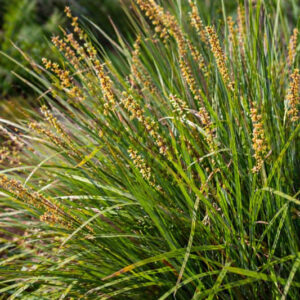
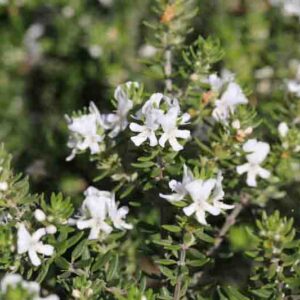
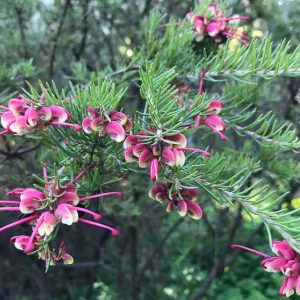
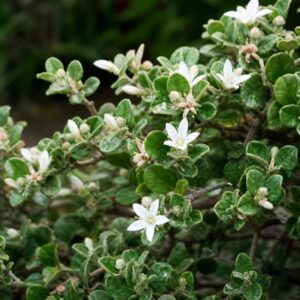
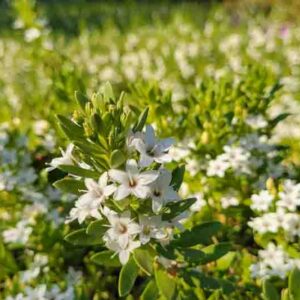
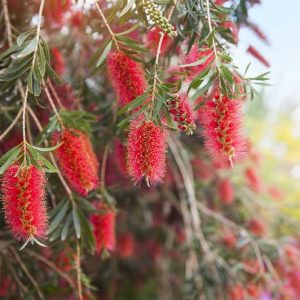
Companion plants: Spiny-headed Mat Rush (Lomandra longifolia) for durable evergreen texture; Coast Rosemary (Westringia fruticosa) for a drought-tolerant gray-green shrub layer; Rosemary Grevillea (Grevillea rosmarinifolia) for nectar-rich flowers; White Correa (Correa alba) for mild-climate evergreen structure; Creeping Boobialla (Myoporum parvifolium) as a low groundcover in sunny open areas; and Weeping Bottlebrush (Callistemon viminalis, also classified as Melaleuca viminalis) where there is sufficient room and slightly more moisture is available.
Keep companion plants away from the trunk flare and avoid placing moisture-demanding species directly beneath the canopy. Compact forms of large-growing companions are often easier to manage in residential landscapes.
Eucalyptus polyanthemos is one of several species commonly sold as Silver Dollar Eucalyptus. Eucalyptus cinerea and Eucalyptus perriniana may share the same common name, so always check the botanical name before buying.
Eucalyptus polyanthemos typically grows 30 to 60 feet tall and 20 to 40 feet wide in cultivation. In favorable open landscapes, some specimens may reach 65 to 80 feet tall and occasionally approach 50 feet wide.
Juvenile leaves are rounded and blue-green. Mature foliage varies among forms and individual trees. Some retain many broad rounded leaves, while others develop more oval or lance-shaped adult foliage.
Yes. Eucalyptus polyanthemos is highly drought tolerant once established. Young trees still need regular deep watering while their roots spread into the surrounding soil.
Eucalyptus polyanthemos is commonly grown in USDA Zones 8 through 11, although cold tolerance varies considerably by provenance, tree age, drainage, and exposure. Young trees are more vulnerable than established specimens.
It is generally unsuitable for a small garden because it develops into a substantial tree with a broad canopy and extensive root system. Plant it away from buildings, utility lines, pools, and narrow paving.
Yes. Eucalyptus foliage and essential oils are considered toxic to dogs, cats, and horses if ingested. Keep cut branches and concentrated eucalyptus products away from pets and livestock.
Flowering varies by subspecies and climate. In Australia, flowers have been recorded from winter through summer. In cultivated Northern Hemisphere landscapes, flowering is often seen from spring into summer.
Updated: August 2026 • Reviewed by Gardenia Editors
| Hardiness |
8 - 11 |
|---|---|
| Climate Zones | 5, 6, 8, 9, 10, 11, 12, 13, 14, 15, 16, 17, 18, 19, 20, 21, 22, 23, 24 |
| Plant Type | Trees |
| Plant Family | Myrtaceae |
| Genus | Eucalyptus |
| Common names | Eucalyptus |
| Exposure | Full Sun |
| Season of Interest | Spring (Early, Mid, Late), Summer (Early, Mid, Late), Fall, Winter |
| Height | 30' - 60' (9.1m - 18.3m) |
| Spread | 20' - 40' (6.1m - 12.2m) |
| Spacing | 480" (12.2m) |
| Maintenance | Low |
| Water Needs | Low |
| Soil Type | Clay, Loam, Sand |
| Soil pH | Acid, Neutral, Alkaline |
| Soil Drainage | Well-Drained |
| Characteristics | Dried Arrangements, Cut Flowers, Fragrant, Showy, Evergreen |
| Native Plants | Australia |
| Tolerances | Drought, Deer, Dry Soil, Clay Soil, Rocky Soil, Heat, Poor Soil, Erosion |
| Attracts | Bees, Birds |
| Garden Styles | Mediterranean Garden, Pollinator Garden |
| Toxic to Humans | High severity |
| Toxic to Cats | Toxic |
| Toxic to Dogs | Toxic |
| Toxic to Horses | Toxic |


| Hardiness |
8 - 11 |
|---|---|
| Climate Zones | 5, 6, 8, 9, 10, 11, 12, 13, 14, 15, 16, 17, 18, 19, 20, 21, 22, 23, 24 |
| Plant Type | Trees |
| Plant Family | Myrtaceae |
| Genus | Eucalyptus |
| Common names | Eucalyptus |
| Exposure | Full Sun |
| Season of Interest | Spring (Early, Mid, Late), Summer (Early, Mid, Late), Fall, Winter |
| Height | 30' - 60' (9.1m - 18.3m) |
| Spread | 20' - 40' (6.1m - 12.2m) |
| Spacing | 480" (12.2m) |
| Maintenance | Low |
| Water Needs | Low |
| Soil Type | Clay, Loam, Sand |
| Soil pH | Acid, Neutral, Alkaline |
| Soil Drainage | Well-Drained |
| Characteristics | Dried Arrangements, Cut Flowers, Fragrant, Showy, Evergreen |
| Native Plants | Australia |
| Tolerances | Drought, Deer, Dry Soil, Clay Soil, Rocky Soil, Heat, Poor Soil, Erosion |
| Attracts | Bees, Birds |
| Garden Styles | Mediterranean Garden, Pollinator Garden |
| Toxic to Humans | High severity |
| Toxic to Cats | Toxic |
| Toxic to Dogs | Toxic |
| Toxic to Horses | Toxic |
How many Eucalyptus polyanthemos (Silver Dollar Gum) do I need for my garden?
| Plant | Quantity | |
|---|---|---|
| Eucalyptus polyanthemos (Silver Dollar Gum) | N/A | Buy Plants |
Create a membership account to save your garden designs and to view them on any device.
Becoming a contributing member of Gardenia is easy and can be done in just a few minutes. If you provide us with your name, email address and the payment of a modest $25 annual membership fee, you will become a full member, enabling you to design and save up to 25 of your garden design ideas.
Join now and start creating your dream garden!
Create a membership account to save your garden designs and to view them on any device.
Becoming a contributing member of Gardenia is easy and can be done in just a few minutes. If you provide us with your name, email address and the payment of a modest $25 annual membership fee, you will become a full member, enabling you to design and save up to 25 of your garden design ideas.
Join now and start creating your dream garden!