Kapuka, New Zealand Broadleaf, New Zealand Privet, Papauma, Pāpāuma, New Zealand Broadleaf Tree, Broadleaf, Griselinia littoralis ‘Kapuka’

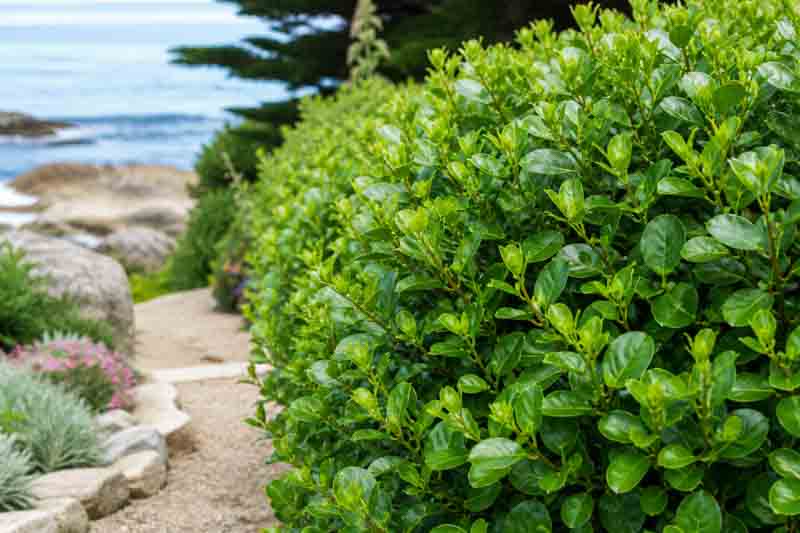


Griselinia littoralis, commonly known as New Zealand broadleaf, kapuka, papauma, or New Zealand privet, is a fast-growing evergreen shrub or small tree prized for its glossy apple-green foliage, wind tolerance, salt-air resilience, and exceptional usefulness as a living screen. If you need a handsome evergreen hedge that looks clean, fresh, and modern all year, Griselinia littoralis is one of the best choices for mild coastal and temperate gardens.
This is a plant with real landscape muscle. It grows quickly, clips beautifully, tolerates seaside exposure, and creates a dense wall of bright green foliage without looking heavy or gloomy. Unlike many hedging shrubs that feel formal or severe, Griselinia has a friendly, luminous quality. Its rounded, leathery leaves catch the light, giving hedges, boundaries, patios, and front gardens an easy, polished look.
Griselinia littoralis is a fast-growing evergreen shrub or small tree from New Zealand, widely planted as a glossy green hedge, coastal screen, windbreak, and privacy plant. It performs best in full sun to light shade, fertile well-drained soil, and mild climates, where it can be clipped into a dense formal hedge or grown more naturally as a bright, broadleaf evergreen screen.
Use: Evergreen hedges, privacy screens, coastal gardens, windbreaks, boundary planting, foundation planting, urban gardens, shelter belts, and large containers.
Highlight: Glossy apple-green leaves create a fresh, dense evergreen screen all year.
Design note: Excellent for clipped hedges, but also handsome as a looser, rounded evergreen shrub where space allows.
| Botanical Name | Griselinia littoralis |
|---|---|
| Family | Griseliniaceae |
| Common Names | New Zealand Broadleaf, Kapuka, Papauma, New Zealand Privet, Broadleaf |
| Native Range | New Zealand |
| Plant Type | Broadleaf evergreen shrub or small tree |
| Hardiness | Best in USDA Zones 7-9; protect from severe frost and cold drying winds in marginal areas |
| Height | Often maintained at 4-12 ft. as a hedge; can become a small tree in mild climates |
| Spread | Usually 4-10 ft. wide in gardens, depending on pruning and conditions |
| Sun Exposure | Full sun to light shade |
| Soil | Fertile, well-drained soil; adaptable to loam, sand, and improved clay if drainage is good |
| Bloom Time | Spring to early summer |
| Bloom Notes | Tiny yellow-green flowers are usually inconspicuous. Purple berries may follow on female plants when a male plant is nearby for pollination. |
| Flower Color | Tiny yellow-green flowers, usually inconspicuous |
| Foliage | Evergreen, leathery, broadly oval, glossy apple-green to yellow-green leaves |
| Drought Tolerant | Moderately drought tolerant once established, but best with occasional deep watering |
| Deer Resistant | Not reliably deer-proof; browsing varies by region |
| Attracts | Small pollinators and birds when berries are produced. |
| Pet and Child Safety | Not grown as an edible plant; discourage chewing of ornamental foliage and berries |
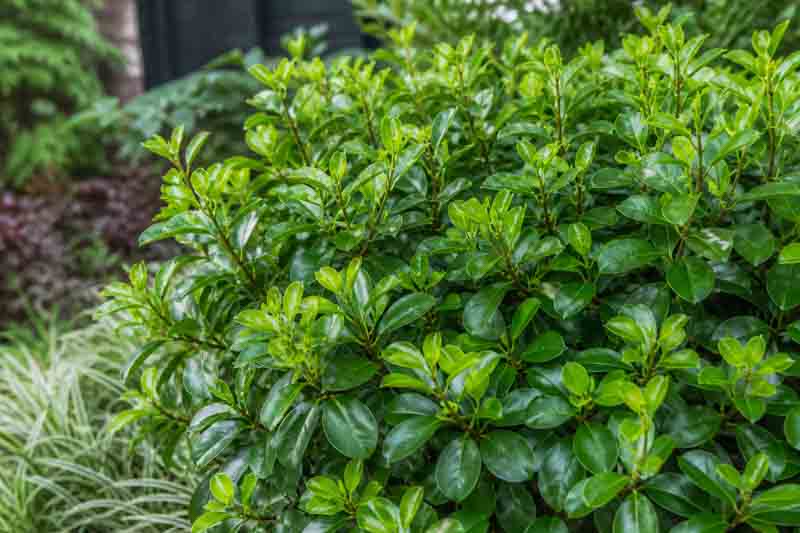
Griselinia littoralis is a dense, fast-growing evergreen native to New Zealand. In gardens, it is most often grown as a hedge or screen, but in favorable mild climates it can develop into a small tree. Its leaves are broad, thick, leathery, and glossy, usually a cheerful apple green that feels brighter than laurel, privet, or yew.
The flowers are not the main reason to grow this plant. They are small, yellow-green, and easy to miss. Female plants may produce purple berries when male plants are nearby for pollination. The true ornamental value is the foliage: clean, resilient, evergreen, and dense enough to create privacy without feeling dark or oppressive.
Good to know: Griselinia littoralis is especially valuable in coastal gardens because it tolerates wind and salt-laden air better than many broadleaf evergreen hedge plants.
Griselinia littoralis is native to New Zealand, where it grows in coastal areas, forest margins, and mild, moist habitats. The specific name littoralis means coastal or shore-loving, a useful clue to its tolerance of maritime exposure. In gardens, this background translates into a plant that appreciates moisture, air movement, and drainage, while coping well with seaside winds.
Griselinia littoralis usually flowers in spring to early summer. The flowers are tiny, yellow-green, and not showy, but they contribute to the plant’s seasonal cycle. If both male and female plants are present, female plants may develop small purple fruits later in the season.
The foliage is the star. Leaves are evergreen, leathery, rounded to oval, glossy above, and often slightly paler beneath. Their bright green color makes Griselinia littoralis an excellent choice for dark fences, narrow side yards, contemporary gardens, and seaside properties where year-round freshness matters.
As a clipped hedge, Griselinia littoralis is commonly maintained at 4-12 ft. tall. Left unpruned in mild climates, it can become much larger and may develop into a small tree. Growth rate is often fast once established, especially in full sun, fertile soil, and regular moisture. For hedging, space plants about 2-3 ft. apart for a dense screen, or wider for a looser, more natural effect.
Griselinia littoralis has received the Royal Horticultural Society Award of Garden Merit, reflecting its strong performance, ornamental value, and reliability in suitable garden conditions.
Griselinia littoralis is best in mild climates, generally USDA Zones 7-9. It tolerates light frost once established but can suffer leaf scorch, stem dieback, or defoliation in severe cold, exposed inland sites, or freezing winds. In marginal gardens, plant it near a wall, fence, courtyard, or established shelter belt.
The small flowers may attract small pollinators, and berries on female plants can interest birds. As a dense evergreen shrub, Griselinia littoralis also provides shelter and nesting cover in layered garden plantings. For the strongest wildlife value, combine it with flowering perennials, native shrubs, seed-bearing grasses, and plants that support bees, butterflies, and beneficial insects.
Griselinia littoralis is not reliably deer-proof. In some gardens it is ignored, while in others young shoots may be browsed, especially during drought or winter food shortages. Newly planted hedges are most vulnerable, so protect young plants where deer pressure is high.
Once established, Griselinia littoralis has moderate drought tolerance, especially in coastal climates with mild temperatures. However, it is not a true dryland shrub. For the best growth, leaf color, and hedge density, water deeply during extended dry periods and mulch the root zone.
Griselinia littoralis is grown as an ornamental landscape plant, not as an edible crop. It is not commonly highlighted as a major toxic shrub, but the safest practice is to prevent children and pets from chewing leaves or berries. Wear gloves if pruning causes skin irritation.
Griselinia littoralis is widely cultivated in mild climates and is not generally treated as a major invasive hedge plant in ordinary garden use. However, gardeners near sensitive habitats should always follow local invasive plant guidance, especially in coastal regions where the climate suits New Zealand plants.
Water deeply and consistently during the first growing season. This is the stage that determines future hedge strength. Once established, Griselinia can handle short dry spells, but prolonged drought may cause dull leaves, yellowing, sparse growth, or leaf drop. Deep watering is better than frequent shallow sprinkling.
Feed in spring with compost or a balanced slow-release fertilizer if growth is weak. Avoid overfeeding with high-nitrogen fertilizers, which can create soft, lush growth that is more vulnerable to cold and wind scorch.
Apply a 2-3 inch layer of compost, bark, or leaf mold around the base of the plant. Mulch helps conserve moisture, suppress weeds, and protect roots from temperature swings. Keep mulch away from the main stems to reduce rot risk.
Care tip:
The secret to a beautiful Griselinia hedge is simple: plant in well-drained soil, water deeply while it establishes, and trim lightly before it becomes overgrown.
Prune Griselinia littoralis in spring or summer once active growth begins. For formal hedges, clip once in late spring and again in late summer if needed. Avoid heavy pruning in late fall because new soft growth can be damaged by winter cold.
For a dense hedge, space young plants about 2-3 ft. apart. Trim the sides lightly as plants grow, encouraging branching from the base upward. Do not wait until the hedge reaches full height before pruning. Early, gentle shaping produces a thicker, more even hedge.
Griselinia littoralis can grow in a large container, especially as a patio screen. Use a big, stable pot with drainage holes and a high-quality free-draining potting mix. Container plants need more regular watering than plants in the ground and may need winter protection in colder climates.
Griselinia littoralis is usually propagated by semi-ripe cuttings taken in summer or early fall. Cuttings preserve the qualities of selected plants, including leaf color, vigor, and growth habit. Seed can be used where berries are produced, but seedlings may vary.
This shrub struggles in waterlogged soil, deep shade, severe frost, hot dry inland exposure, and cold drying winds. Yellowing leaves often point to root stress, poor drainage, drought, or nutrient imbalance. If plants are damaged by winter, wait until spring growth begins before deciding how far to prune back.
| Task | Best Time |
|---|---|
| Planting | Spring, or fall in mild climates |
| Flowering | Spring to early summer |
| Pruning | Spring to late summer |
| Feeding | Spring |
| Winter Protection | Late fall to winter in marginal climates |
Yellow leaves are often caused by poor drainage, root stress, drought, low nutrients, or cold damage. Check soil moisture before feeding. If the ground is wet and roots are struggling, fertilizer will not solve the problem.
Leaf drop may follow drought, transplant shock, frost, or waterlogged soil. Newly planted hedges are most likely to shed leaves if watering is irregular. Keep the root zone evenly moist, not soggy, during establishment.
Brown or scorched foliage usually indicates cold wind, frost, or exposure. Plant in a sheltered position in marginal climates and avoid late-season feeding that encourages tender new growth.
Root rot is the most serious issue in poorly drained soil. Improve drainage before planting, avoid overwatering, and never allow containers to stand in water.
Healthy plants are usually trouble-free, but stressed Griselinia may attract scale insects or other sap-feeding pests. Good spacing, correct watering, and healthy roots are the best long-term protection.
Fast diagnostic: Yellow leaves often mean root stress. Brown winter edges usually mean cold wind. Thin growth usually means shade, drought, or too little pruning early in hedge development.
Use Griselinia littoralis wherever you want a fresh, evergreen, coastal-ready backdrop. Its apple-green foliage looks especially good with silver leaves, blue flowers, white blooms, ornamental grasses, and relaxed Mediterranean-style planting. It can make a driveway feel cleaner, a patio feel more private, or a seaside garden feel lush without fighting the wind.
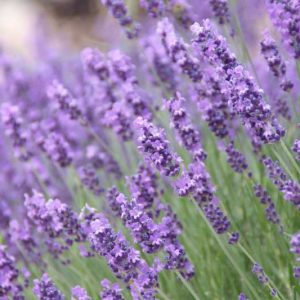
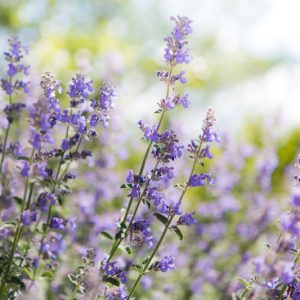
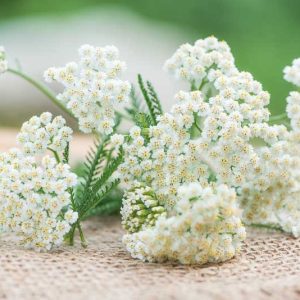
Good companions for Griselinia littoralis include Lavender (Lavandula angustifolia), Rosemary (Salvia rosmarinus), Catmint (Nepeta), Autumn Sage (Salvia greggii), Rockrose (Cistus), Teucrium fruticans, New Zealand Flax (Phormium), Blue Fescue (Festuca glauca), Sea Thrift (Armeria maritima), Yarrow (Achillea), and Hardy Geranium. These companions suit sunny to lightly shaded, well-drained sites in mild climates; place the drought-loving Mediterranean plants slightly away from the wetter root zone of newly planted Griselinia hedges.
Yes. Griselinia littoralis is an evergreen shrub or small tree in mild climates, keeping its glossy apple-green leaves through the year unless damaged by severe cold, drought, or poor drainage.
Griselinia littoralis is generally fast growing once established, especially in full sun, fertile well-drained soil, and regular moisture. It is widely used where a quick evergreen hedge or screen is needed.
As a hedge, Griselinia littoralis is often maintained at 4 to 12 feet tall. In mild climates, unpruned plants can grow much larger and may develop into small trees.
Yes. Griselinia littoralis is one of the best evergreen hedge plants for mild coastal gardens because it tolerates wind, salt-laden air, and clipping.
Prune Griselinia littoralis in spring or summer during active growth. For hedges, clip once in late spring and again in late summer if needed. Avoid hard pruning in late fall.
Yellow leaves usually indicate root stress, poor drainage, drought, nutrient imbalance, or cold damage. Check soil moisture and drainage before applying fertilizer.
Griselinia littoralis tolerates light shade, but it grows densest and fastest in full sun. Deep shade can produce thinner growth and a weaker hedge.
Updated: May 2026 • Reviewed by Gardenia Editors
| Hardiness |
7 - 9 |
|---|---|
| Heat Zones |
7 - 9 |
| Climate Zones | 9, 14, 15, 16, 17, 20, 21, 22, 23, 24 |
| Plant Type | Shrubs |
| Plant Family | Griseliniaceae |
| Exposure | Full Sun |
| Season of Interest | Spring (Early, Mid, Late), Summer (Early, Mid, Late), Fall, Winter |
| Height | 4' - 12' (120cm - 3.7m) |
| Spread | 4' - 10' (120cm - 3m) |
| Spacing | 48" - 120" (120cm - 3m) |
| Maintenance | Low, Average |
| Water Needs | Average |
| Soil Type | Chalk, Clay, Loam, Sand |
| Soil pH | Acid, Neutral, Alkaline |
| Soil Drainage | Well-Drained |
| Characteristics | Showy, Evergreen, Plant of Merit |
| Tolerance | Drought, Salt, Dry Soil |
| Garden Uses | Hedges And Screens, Wall-Side Borders |
| Garden Styles | Coastal Garden, Informal and Cottage |


| Hardiness |
7 - 9 |
|---|---|
| Heat Zones |
7 - 9 |
| Climate Zones | 9, 14, 15, 16, 17, 20, 21, 22, 23, 24 |
| Plant Type | Shrubs |
| Plant Family | Griseliniaceae |
| Exposure | Full Sun |
| Season of Interest | Spring (Early, Mid, Late), Summer (Early, Mid, Late), Fall, Winter |
| Height | 4' - 12' (120cm - 3.7m) |
| Spread | 4' - 10' (120cm - 3m) |
| Spacing | 48" - 120" (120cm - 3m) |
| Maintenance | Low, Average |
| Water Needs | Average |
| Soil Type | Chalk, Clay, Loam, Sand |
| Soil pH | Acid, Neutral, Alkaline |
| Soil Drainage | Well-Drained |
| Characteristics | Showy, Evergreen, Plant of Merit |
| Tolerance | Drought, Salt, Dry Soil |
| Garden Uses | Hedges And Screens, Wall-Side Borders |
| Garden Styles | Coastal Garden, Informal and Cottage |
How many Griselinia littoralis (New Zealand Broadleaf) do I need for my garden?
| Plant | Quantity | |
|---|---|---|
| Griselinia littoralis (New Zealand Broadleaf) | N/A | Buy Plants |
Create a membership account to save your garden designs and to view them on any device.
Becoming a contributing member of Gardenia is easy and can be done in just a few minutes. If you provide us with your name, email address and the payment of a modest $25 annual membership fee, you will become a full member, enabling you to design and save up to 25 of your garden design ideas.
Join now and start creating your dream garden!
Create a membership account to save your garden designs and to view them on any device.
Becoming a contributing member of Gardenia is easy and can be done in just a few minutes. If you provide us with your name, email address and the payment of a modest $25 annual membership fee, you will become a full member, enabling you to design and save up to 25 of your garden design ideas.
Join now and start creating your dream garden!