Blue Wood Aster, Heart-Leaf Aster, Aster cordifolius


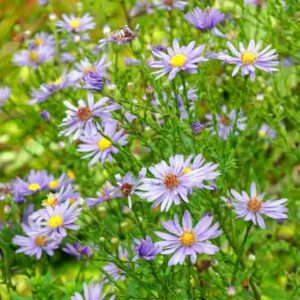
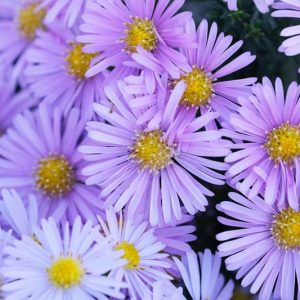
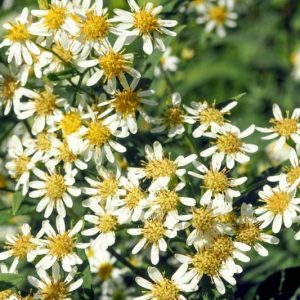
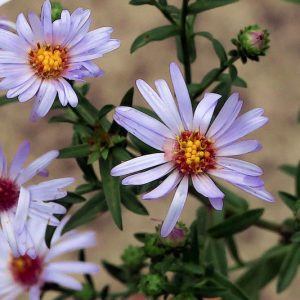
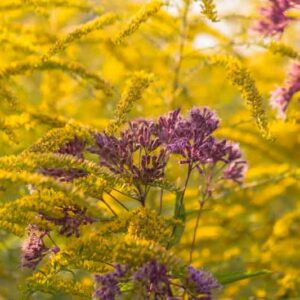
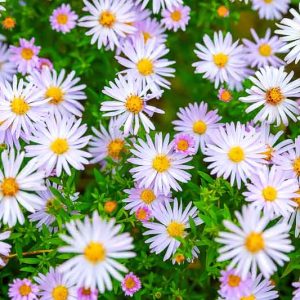
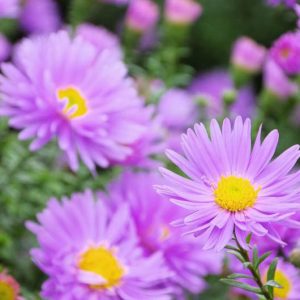
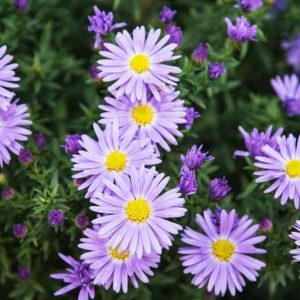
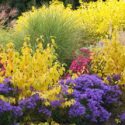
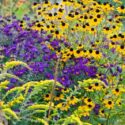
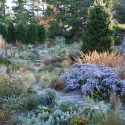
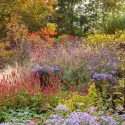
Symphyotrichum cordifolium (Blue Wood Aster) is a robust herbaceous perennial boasting branched, upright to arching stems topped by profuse clusters of daisy-like flowers in late summer and fall. Blooming for weeks, the flowers, usually less than 1 in. across (2.5 cm), feature golden-yellow centers surrounded by narrow rays ranging from deep blue to pale blue. Borne on smooth stems, their soft coloring blends beautifully with many other late-season flowers. The leaves are thin and sharply toothed, with heart-shaped (cordate) lower leaves and ovate to lance-shaped upper leaves. Tough and adaptable, Blue Wood Aster is an excellent choice for mixed borders, woodland edges, and naturalistic plantings, where it provides a graceful backdrop for other fall-blooming perennials.
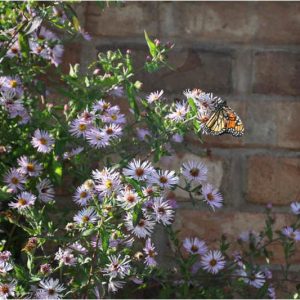
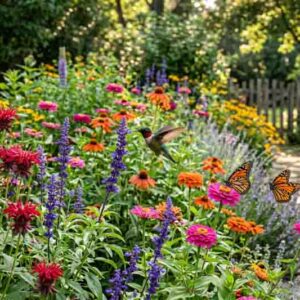
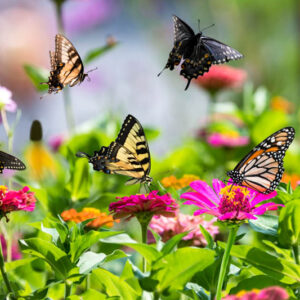
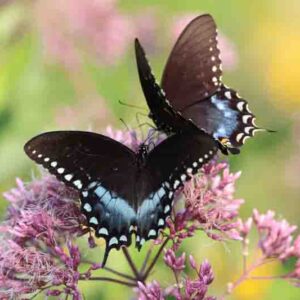
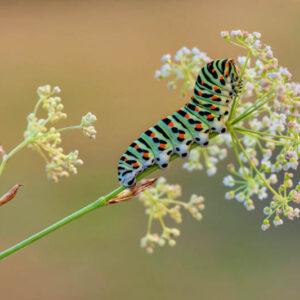
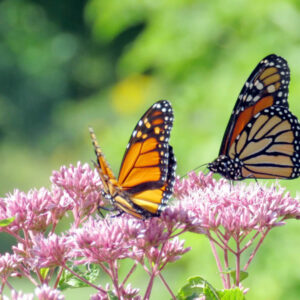
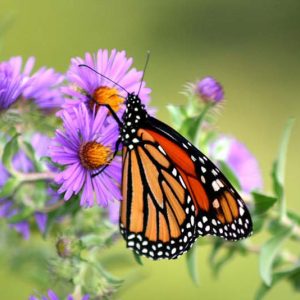
Blue Wood Aster is a documented larval host plant for the Pearl Crescent and is also used by Painted Lady and Painted Crescent caterpillars. Its flowers also provide valuable late-season nectar for adult butterflies, bees, and other pollinators.
| Hardiness |
3 - 8 |
|---|---|
| Heat Zones |
1 - 8 |
| Plant Type | Perennials |
| Plant Family | Compositae |
| Genus | Aster |
| Common names | Aster, Blue Wood Aster |
| Exposure | Full Sun, Partial Sun |
| Season of Interest | Summer (Late), Fall |
| Height | 2' - 5' (60cm - 150cm) |
| Spread | 1' - 2' (30cm - 60cm) |
| Spacing | 24" (60cm) |
| Maintenance | Low |
| Water Needs | Low, Average |
| Soil Type | Chalk, Clay, Loam, Sand |
| Soil pH | Acid, Alkaline, Neutral |
| Soil Drainage | Moist but Well-Drained, Well-Drained |
| Characteristics | Cut Flowers, Showy |
| Native Plants | Alabama, Arkansas, Connecticut, Delaware, Georgia, Illinois, Indiana, Iowa, Kansas, Kentucky, Maine, Maryland, Massachusetts, Michigan, Midwest, Minnesota, Mississippi, Missouri, Nebraska, New Hampshire, New Jersey, New York, North Carolina, Northeast, Ohio, Pennsylvania, Rhode Island, South Carolina, South Dakota, Southeast, Tennessee, United States, Vermont, Virginia, West Virginia, Wisconsin |
| Tolerances | Deer, Clay Soil, Rabbit, Fire |
| Attracts | Butterflies |
| Garden Uses | Beds And Borders |
| Garden Styles | Butterfly Garden, Informal and Cottage, Pollinator Garden, Traditional Garden |
| Toxic to Humans | No known toxicity |
| Toxic to Cats | No known toxicity |
| Toxic to Dogs | No known toxicity |
| Toxic to Horses | No known toxicity |


| Hardiness |
3 - 8 |
|---|---|
| Heat Zones |
1 - 8 |
| Plant Type | Perennials |
| Plant Family | Compositae |
| Genus | Aster |
| Common names | Aster, Blue Wood Aster |
| Exposure | Full Sun, Partial Sun |
| Season of Interest | Summer (Late), Fall |
| Height | 2' - 5' (60cm - 150cm) |
| Spread | 1' - 2' (30cm - 60cm) |
| Spacing | 24" (60cm) |
| Maintenance | Low |
| Water Needs | Low, Average |
| Soil Type | Chalk, Clay, Loam, Sand |
| Soil pH | Acid, Alkaline, Neutral |
| Soil Drainage | Moist but Well-Drained, Well-Drained |
| Characteristics | Cut Flowers, Showy |
| Native Plants | Alabama, Arkansas, Connecticut, Delaware, Georgia, Illinois, Indiana, Iowa, Kansas, Kentucky, Maine, Maryland, Massachusetts, Michigan, Midwest, Minnesota, Mississippi, Missouri, Nebraska, New Hampshire, New Jersey, New York, North Carolina, Northeast, Ohio, Pennsylvania, Rhode Island, South Carolina, South Dakota, Southeast, Tennessee, United States, Vermont, Virginia, West Virginia, Wisconsin |
| Tolerances | Deer, Clay Soil, Rabbit, Fire |
| Attracts | Butterflies |
| Garden Uses | Beds And Borders |
| Garden Styles | Butterfly Garden, Informal and Cottage, Pollinator Garden, Traditional Garden |
| Toxic to Humans | No known toxicity |
| Toxic to Cats | No known toxicity |
| Toxic to Dogs | No known toxicity |
| Toxic to Horses | No known toxicity |
How many Symphyotrichum cordifolium (Blue Wood Aster) do I need for my garden?
| Plant | Quantity | |
|---|---|---|
| Symphyotrichum cordifolium (Blue Wood Aster) | N/A | Buy Plants |
Create a membership account to save your garden designs and to view them on any device.
Becoming a contributing member of Gardenia is easy and can be done in just a few minutes. If you provide us with your name, email address and the payment of a modest $25 annual membership fee, you will become a full member, enabling you to design and save up to 25 of your garden design ideas.
Join now and start creating your dream garden!