Purple Carpet Creeping Thyme, Purple Carpet Thyme, Mother Of Thyme, Creeping Thyme
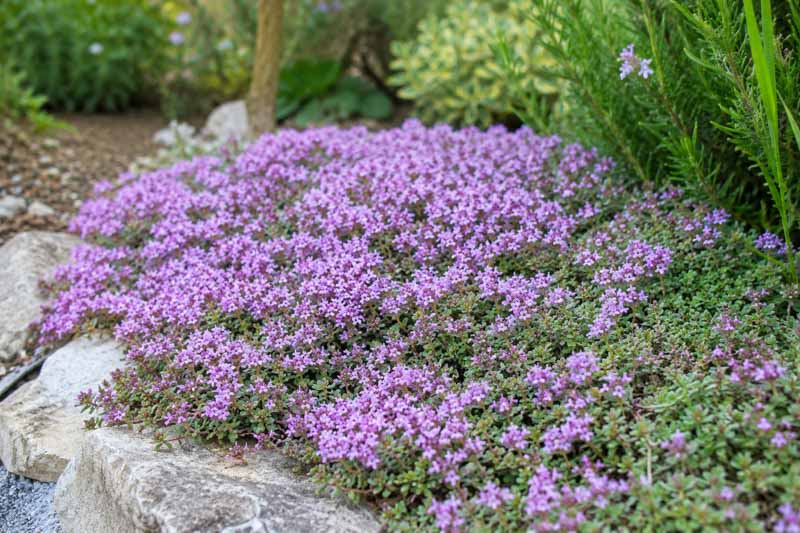


Thymus praecox ‘Purple Carpet’, commonly called Purple Carpet Creeping Thyme, is a low, aromatic, mat-forming perennial grown for its fragrant foliage, purple-pink summer flowers, pollinator value, and ability to thrive in sunny, dry, well-drained places. It is especially useful between stepping stones, along path edges, in rock gardens, over low walls, on dry slopes, in gravel gardens, and as a small-scale lawn alternative where foot traffic is light and occasional. This is not a turfgrass replacement for hard daily use, but where conditions are right, it creates one of the most charming living carpets a gardener can grow.
Low, aromatic, carpet-forming perennial with tiny fragrant leaves and masses of purple-pink flowers in summer.
Use: Excellent for rock gardens, stepping stones, path edges, dry slopes, gravel gardens, small sunny banks, pollinator gardens, herb gardens, and thyme lawn alternatives.
Highlight: A colorful, bee-friendly creeping thyme that tolerates drought, dry soil, shallow rocky soil, deer, and light foot traffic once established.
| Botanical Name | Thymus praecox ‘Purple Carpet’ |
|---|---|
| Family | Lamiaceae |
| Common Names | Purple Carpet Creeping Thyme, Creeping Thyme, Mother of Thyme, Thyme |
| Plant Type and Habit | Woody-based herbaceous perennial; low, creeping, dense, mat-forming ground cover |
| Hardiness | USDA Zones 5 to 8 |
| Size | Typically 3 to 6 inches tall and wide |
| Sun and Exposure | Full sun, ideally 6 or more hours of direct sunlight daily |
| Soil | Average, dry to medium, loose, sandy, rocky, shallow, or low-fertility soil with excellent drainage |
| Bloom Time | Summer, often June to September depending on climate and site |
| Flower Color | Purple-pink, rose-purple, lavender-purple, or purplish tones |
| Wildlife Value | Nectar-rich flowers attract bees, butterflies, and other beneficial pollinators |
| Tolerances | Drought, dry soil, poor soil, shallow rocky soil, deer, rabbits, urban conditions, and light foot traffic |
Plant it where feet occasionally brush the foliage. The tiny leaves release a warm herbal scent that makes sunny paths and patios feel alive.
Wet soil is the main problem. Give this thyme sun, lean soil, and sharp drainage, and avoid burying the crown under mulch.
Think of ‘Purple Carpet’ as living grout: a fragrant, flowering carpet that softens stone, spills over edges, and turns dry gaps into garden detail.
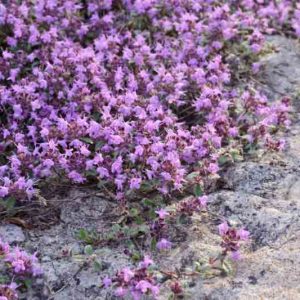
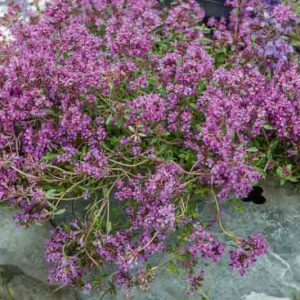
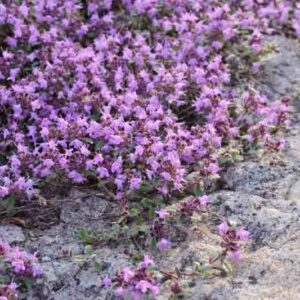
Thymus praecox ‘Purple Carpet’ is a selected creeping thyme grown primarily as an ornamental ground cover. It forms a low mat of small aromatic leaves and produces clusters of tiny tubular flowers in purple, rose-purple, or lavender-pink shades. In bloom, the plant can look like a miniature flowering meadow pressed close to the ground.
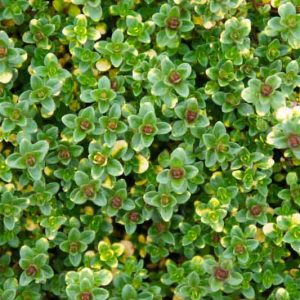
This thyme is creeping, dense, and woody-based. Its thin stems spread across the soil surface, weaving into a tight mat over time. It is not a tall culinary thyme for upright herb gardens; it is a carpeting plant for sunny cracks, ledges, stone paths, dry edges, and small spaces where height would be unwelcome.
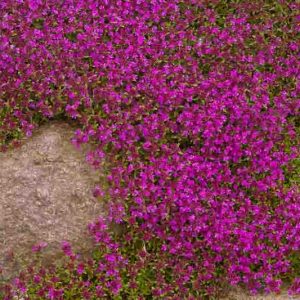
The flowers are small but abundant, and their real impact comes from mass. A single plant is pretty; a group planted between stones or along a sunny path becomes a purple-pink ribbon. The leaves are fragrant when crushed, though the strength of scent can vary with season, heat, moisture, and growing conditions.
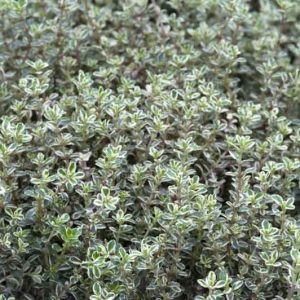
The foliage is tiny, rounded to oval, and closely packed along low stems. In mild winters, plants may remain evergreen. In colder or wetter climates, foliage can thin, bronze, or look tired by late winter, then refresh as growth resumes. A light post-bloom trim keeps the carpet compact and encourages cleaner new growth.
For conservative garden guidance, treat Thymus praecox ‘Purple Carpet’ as best suited to USDA Zones 5 to 8, with possible performance into warmer Zone 9 sites where drainage is excellent and humidity is not excessive. Cold alone is usually less damaging than cold combined with saturated soil. In marginal climates, plant it high, dry, and sunny.
‘Purple Carpet’ shines where traditional ground covers become too tall, too coarse, or too thirsty. Use it between stepping stones, along patios, beside gravel paths, on low sunny banks, in crevices, in alpine troughs, around boulders, or spilling over small ledges. It is also useful in fairy gardens, dry borders, herb gardens, pollinator gardens, and rock gardens.
‘Purple Carpet’ is valued for its rich flower color and low, carpeting habit. It belongs in the same design conversation as creeping thyme, Magic Carpet thyme, red creeping thyme, woolly thyme, and elfin thyme. The best choice depends on flower color, foliage texture, traffic tolerance, climate, and how quickly you want an area to knit together.
Use creeping thyme as a detail plant rather than a universal lawn replacement. It is excellent beside stones and in sunny gaps, but it does not enjoy constant trampling.
When flowering, ‘Purple Carpet’ is highly attractive to bees and may also bring butterflies and other pollinators. This makes it especially valuable in small gardens where every square foot matters. Instead of leaving dry gaps bare, you can turn them into nectar-rich, fragrant, low-growing habitat.
Creeping thyme is generally considered resistant to deer and rabbits. Its aromatic foliage is not usually a preferred food source. Browsing can still occur in difficult seasons, but this plant is a strong candidate for exposed front paths, low borders, and sunny edges where browsing pressure is a concern.
‘Purple Carpet’ is drought tolerant once established. New plants need consistent moisture while roots settle into the surrounding soil. Mature plants prefer dry to medium moisture and should not be kept constantly wet. In most gardens, occasional deep watering during extended drought is better than frequent shallow sprinkling.
Thyme has a long history of culinary and ornamental use, and many Thymus species are used as flavorings in soups, vegetable dishes, and meat dishes. However, Thymus praecox ‘Purple Carpet’ is grown mainly as an ornamental ground cover rather than as a primary kitchen thyme. Do not harvest from plants treated with pesticides, grown in contaminated soil, or planted where pets frequently walk. People with sensitivities should use culinary herbs cautiously, and pets should not be encouraged to eat garden plants in quantity.
Thymus praecox ‘Purple Carpet’ is not generally considered invasive. It spreads by creeping stems and may root where stems contact soil, but it is usually easy to trim, lift, divide, or redirect. In highly favorable sites, it may self-seed lightly, but unwanted seedlings are typically simple to remove.
Full sun is the best exposure. Aim for 6 or more hours of direct sunlight each day. More sun usually means denser growth, stronger fragrance, better flowering, and improved drought tolerance. Too much shade leads to loose growth, weaker bloom, and a patchier carpet.
Drainage is the non-negotiable requirement. ‘Purple Carpet’ grows well in average, sandy, rocky, shallow, dry, or low-fertility soil, provided water drains away quickly. Loose, gritty soil is ideal. Heavy clay, compacted beds, soggy winter pockets, and rich irrigated borders are poor choices unless drainage is corrected first.
Water regularly after planting to help roots establish. Once the plant is settled, reduce watering and allow the soil surface to dry between soakings. In humid regions, excess irrigation can cause more trouble than drought. Yellowing, blackened stems, or collapsing patches often point to poor drainage or overwatering.
Do not pamper creeping thyme with heavy fertilizer. Lean soil encourages tighter growth and better character. Rich soil may produce softer, looser stems that are less attractive and more prone to problems. If soil is extremely poor, a light compost topdressing in spring is usually enough.
Plant in spring after severe frost has passed, or in early fall where winters are not harsh. Set plants at the same depth they were growing in the pot. Avoid burying the crown or covering stems with heavy organic mulch. If planting between stones, leave enough soil volume for roots and enough space so the plant is not crushed by every step.
For small gaps between stones, use individual plants as living accents. For a carpeted effect, space plants close enough that they can knit together but not so tightly that airflow is lost. In formal layouts, plant in repeated pockets rather than expecting one plant to cover a large area quickly.
Maintenance is simple. Trim lightly after flowering to remove spent blooms and encourage dense new growth. Rake or lift away fallen leaves in autumn and spring so the mat can breathe. If plants become leggy, trim modestly, but avoid cutting hard into old woody stems unless there is visible new growth below.
‘Purple Carpet’ can be propagated by division, stem cuttings, or rooted stem sections. Division is easiest in spring as growth resumes. Stem cuttings root best during active growth. Named cultivars may not come true from seed, so vegetative propagation is the best method when you want the same flower color and habit.
‘Purple Carpet’ is generally low maintenance and has few serious insect or disease issues when grown in full sun and fast-draining soil. Most failures come from wet roots, heavy shade, buried crowns, poor airflow, or excessive fertility.
Thymus praecox ‘Purple Carpet’ is a low-growing creeping thyme grown as a fragrant ornamental ground cover. It forms a dense mat of tiny aromatic leaves and produces purple-pink flowers in summer.
Using Missouri Botanical Garden’s species guidance for Thymus praecox, Purple Carpet Creeping Thyme is best described as about 3 to 6 inches tall and wide, forming a low mat that can knit outward gradually in favorable sites.
A conservative range is USDA Zones 5 to 8 for Thymus praecox. NC State lists thyme in Zones 5a to 9b, but performance in warmer or wetter climates depends strongly on sun, airflow, and excellent drainage.
Yes. Full sun is best for dense growth, strong fragrance, good flowering, and drought tolerance. Too much shade makes the plant thinner, looser, and less floriferous.
Purple Carpet Creeping Thyme tolerates light to moderate occasional foot traffic, especially between stepping stones. It is not suitable for heavy daily traffic, active play areas, or paths used constantly by pets.
Yes. Purple Carpet Creeping Thyme is drought tolerant once established. Water regularly during establishment, then grow it on the dry side in well-drained soil.
Thyme has a long history of culinary use, but Purple Carpet Creeping Thyme is grown mainly as an ornamental ground cover. Do not eat plants treated with pesticides or grown in contaminated soil, and do not encourage pets to eat garden plants in quantity.
Patchy creeping thyme is most often caused by wet soil, poor drainage, shade, buried leaves, old woody centers, or too much water. Improve drainage, remove debris, trim lightly after bloom, and avoid frequent irrigation.
Missouri Botanical Garden – Thymus praecox: https://www.missouribotanicalgarden.org/PlantFinder/PlantFinderDetails.aspx?gen=Thymus&isprofile=0&taxonid=281446
NC State Extension – Thymus: https://plants.ces.ncsu.edu/plants/thymus/
Gardenia – Creeping Thyme: https://www.gardenia.net/plant/thymus-serpyllum-creeping-thyme
Gardenia – Colorful Creeping Thyme Varieties as Lawn Alternatives: https://www.gardenia.net/guide/colorful-creeping-thyme-varieties-as-lawn-alternatives
Updated: June 2026 • Reviewed by Gardenia Editors
| Hardiness |
5 - 8 |
|---|---|
| Heat Zones |
1 - 9 |
| Climate Zones | 1, 1A, 1B, 2, 2A, 2B, 3, 3A, 3B, 4, 5, 6, 7, 8, 9, 10, 11, 12, 13, 14, 15, 16, 17, 18, 19, 20, 21, 22, 23, 24, A2, A3 |
| Plant Type | Perennials |
| Plant Family | Lamiaceae |
| Genus | Thymus |
| Common names | Creeping Thyme, Thyme |
| Exposure | Full Sun |
| Season of Interest | Summer (Early, Mid, Late), Fall |
| Height | 3" - 6" (8cm - 15cm) |
| Spread | 3" - 6" (8cm - 15cm) |
| Spacing | 3" - 6" (8cm - 15cm) |
| Maintenance | Low |
| Water Needs | Low |
| Soil Type | Chalk, Loam, Sand |
| Soil pH | Alkaline, Neutral |
| Soil Drainage | Well-Drained |
| Characteristics | Fragrant, Showy, Evergreen |
| Tolerances | Drought, Deer, Rabbit, Dry Soil, Rocky Soil, Poor Soil |
| Attracts | Bees, Butterflies |
| Garden Uses | Banks And Slopes, Beds And Borders, Edging, Ground Covers, Patio And Containers |
| Garden Styles | Butterfly Garden, City and Courtyard, Gravel and Rock Garden, Informal and Cottage, Mediterranean Garden, Pollinator Garden |
| Toxic to Humans | No known toxicity |
| Toxic to Cats | No known toxicity |
| Toxic to Dogs | No known toxicity |
| Toxic to Horses | No known toxicity |


| Hardiness |
5 - 8 |
|---|---|
| Heat Zones |
1 - 9 |
| Climate Zones | 1, 1A, 1B, 2, 2A, 2B, 3, 3A, 3B, 4, 5, 6, 7, 8, 9, 10, 11, 12, 13, 14, 15, 16, 17, 18, 19, 20, 21, 22, 23, 24, A2, A3 |
| Plant Type | Perennials |
| Plant Family | Lamiaceae |
| Genus | Thymus |
| Common names | Creeping Thyme, Thyme |
| Exposure | Full Sun |
| Season of Interest | Summer (Early, Mid, Late), Fall |
| Height | 3" - 6" (8cm - 15cm) |
| Spread | 3" - 6" (8cm - 15cm) |
| Spacing | 3" - 6" (8cm - 15cm) |
| Maintenance | Low |
| Water Needs | Low |
| Soil Type | Chalk, Loam, Sand |
| Soil pH | Alkaline, Neutral |
| Soil Drainage | Well-Drained |
| Characteristics | Fragrant, Showy, Evergreen |
| Tolerances | Drought, Deer, Rabbit, Dry Soil, Rocky Soil, Poor Soil |
| Attracts | Bees, Butterflies |
| Garden Uses | Banks And Slopes, Beds And Borders, Edging, Ground Covers, Patio And Containers |
| Garden Styles | Butterfly Garden, City and Courtyard, Gravel and Rock Garden, Informal and Cottage, Mediterranean Garden, Pollinator Garden |
| Toxic to Humans | No known toxicity |
| Toxic to Cats | No known toxicity |
| Toxic to Dogs | No known toxicity |
| Toxic to Horses | No known toxicity |
How many Thymus praecox ‘Purple Carpet’ (Creeping Thyme) do I need for my garden?
| Plant | Quantity | |
|---|---|---|
| Thymus praecox ‘Purple Carpet’ (Creeping Thyme) | N/A | Buy Plants |
Create a membership account to save your garden designs and to view them on any device.
Becoming a contributing member of Gardenia is easy and can be done in just a few minutes. If you provide us with your name, email address and the payment of a modest $25 annual membership fee, you will become a full member, enabling you to design and save up to 25 of your garden design ideas.
Join now and start creating your dream garden!
Create a membership account to save your garden designs and to view them on any device.
Becoming a contributing member of Gardenia is easy and can be done in just a few minutes. If you provide us with your name, email address and the payment of a modest $25 annual membership fee, you will become a full member, enabling you to design and save up to 25 of your garden design ideas.
Join now and start creating your dream garden!