Find the best companion plants for 32 popular vegetables, from tomatoes and peppers to carrots, cucumbers, beans, and zucchini. Gardenia's A-Z chart explains useful pairings, growing conflicts, and research-backed benefits. Discover flowering companions, avoid common planting mistakes, and turn your choices into a beautiful, productive vegetable garden.
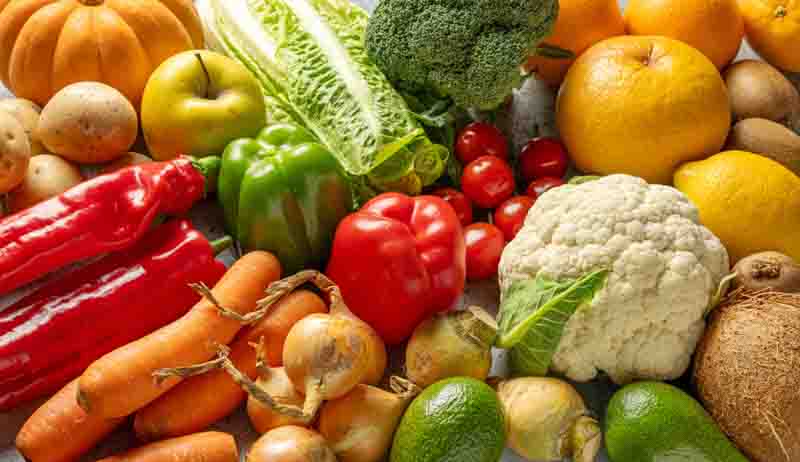


Which vegetables should you plant together? Can tomatoes grow beside peppers? Do onions protect carrots? Should cucumbers share a bed with squash? If you’ve ever compared companion planting charts, you’ve probably noticed something frustrating: one chart recommends a combination that another tells you to avoid.
That’s because vegetable companion planting mixes useful horticultural principles with claims that have been repeated for generations but rarely tested. A companion doesn’t have to repel insects or improve flavor to earn its place. Sometimes its greatest contribution is providing an early harvest, attracting beneficial insects, or making good use of an otherwise empty corner.
Gardenia’s complete A-Z vegetable companion planting chart helps you choose what to grow together, understand which combinations need care, and plan around the mature size of each crop. You’ll also find detailed Gardenia crop guides and a practical planting method that turns a list of companions into a garden that works.
Quick Answer: Some of the best vegetable companions are tomatoes with basil and early lettuce; peppers with chives and nearby alyssum; cucumbers with flowering dill; carrots with onions or radishes; and broccoli or cabbage with nearby insectary flowers. Grow large, sprawling crops with caution near smaller vegetables. Most traditional “bad companions” are not universally harmful. Space, season, sunlight, and shared diseases usually matter more.
Find your vegetable in the first column, then compare its useful companions with plants that need more careful placement. Click linked vegetable names to explore detailed Gardenia guides.
The “Grow with Caution” column identifies potential conflicts, not forbidden combinations. A tall crop that causes problems in a small raised bed may be perfectly suitable in a larger garden.
| Vegetable | Good Companions | Grow with Caution | Why It Matters |
|---|---|---|---|
| Asparagus | Compact flowers at bed edges, shallow annuals outside crowns | Potatoes, deeply dug root crops | Protect long-lived crowns and roots. |
| Bush beans | Early radishes, lettuce, summer savory | Vigorous squash, crowded tomatoes | Preserve airflow and harvesting access. |
| Pole beans | Early lettuce, radishes, corn in suitable systems | Short sun-loving crops beneath trellises | Vertical growth creates shade. |
| Beets | Lettuce, onions, early radishes | Closely spaced carrots, large brassicas | Root space and harvesting room. |
| Broccoli | Flowering cilantro, dill, alyssum nearby | Other large crops in tight beds | Large leaves; flowering habitat nearby. |
| Brussels sprouts | Dill, cilantro, alyssum along borders | Low crops under mature plants | Tall, long-season growth. |
| Cabbage | Nearby dill, cilantro, early radishes | Crowded broccoli or cauliflower | Space and shared brassica pests. |
| Carrots | Onions, chives, lettuce, radishes | Closely planted parsnips, potatoes | Root disturbance; some shared pests. |
| Cauliflower | Nearby cilantro, dill, calendula | Large neighboring brassicas | Canopy competition and temperature needs. |
| Celery | Lettuce, chives, compact edge flowers | Dry-soil herbs, crowded root crops | Consistent moisture is important. |
| Collards | Cilantro, dill, alyssum nearby | Other brassicas without rotation planning | Shared pests and soil history. |
| Corn | Appropriate pole beans, winter squash | Peppers and low crops in its shade | Traditional mixed cropping needs room. |
| Cucumbers | Dill, alyssum, early lettuce, radishes | Sprawling melons and squash | Vine crowding and some shared pests. |
| Eggplants | Basil, early greens, edge flowers | Potatoes, crowded tomatoes | Shared nightshade pathogens and pests. |
| Garlic | Lettuce, spinach, early radishes | Large summer crops shading maturing bulbs | Seasonal timing and light. |
| Kale | Cilantro, flowering dill, alyssum | Dense mature cabbage plantings | Airflow, shade, shared pests. |
| Leeks | Carrots, lettuce, early radishes | Root crops needing disruptive harvests | Leeks occupy the bed for months. |
| Lettuce | Radishes, carrots, chives, young tomatoes | Mature summer crops that overtake it | Early harvest before heat and bolting. |
| Melons | Nearby borage, alyssum, calendula | Cucumbers, pumpkins in tight areas | Vine space, pollination, shared pests. |
| Okra | Basil, compact flowers, bush beans nearby | Short sun-loving crops in its shade | Tall growth in summer. |
| Onions | Carrots, beets, lettuce | Heavy shade from large crops | Bulb development and sunlight. |
| Parsnips | Early radishes, lettuce, onions | Dense carrots and celery | Long roots; some shared pests. |
| Peas | Radishes, spinach, lettuce | Hot-season crops requiring prolonged warmth | Cool growing season and support. |
| Peppers | Basil, chives, early lettuce, alyssum | Potatoes, tall corn close by | Sunlight, space and nightshade diseases. |
| Potatoes | Temporary edge lettuce, nearby flowers | Tomatoes, peppers, deeply rooted companions | Hilling, harvest disturbance, disease rotation. |
| Pumpkins | Nearby flowers; corn and beans in large plots | Zucchini and sweet potatoes in small beds | Very vigorous vines and shared pests. |
| Radishes | Lettuce, carrots, peas, young cucumbers | Other densely planted root crops | Quick early harvest. |
| Spinach | Peas, radishes, lettuce, garlic | Mature tomatoes, hot-weather neighbors | Cool-season harvest and bolting. |
| Sweet potatoes | Nearby flowers and contained herbs | Squash, pumpkins and other vines | Spreading canopy and tuber harvest. |
| Swiss chard | Lettuce, onions, early radishes | Large mature brassicas | Leaf spread and harvest access. |
| Tomatoes | Basil, early lettuce, carrots, alyssum | Potatoes, crowded peppers and eggplants | Canopy size and shared diseases. |
| Turnips | Peas, lettuce, onions | Crowded cabbage-family crops | Cool weather and shared brassica pests. |
| Zucchini | Early radishes, nearby dill, borage, alyssum | Pumpkins, sweet potatoes in tight beds | Large leaves, pollination, shared pests. |
About Gardenia’s A-Z chart: The recommendations combine established growing requirements, seasonal planting principles, and research-informed insect habitat practices. “Good companion” does not mean a proven yield increase, while “grow with caution” identifies a possible management conflict rather than chemical incompatibility. The chart is Gardenia’s editorial synthesis, not a report of controlled field trials.
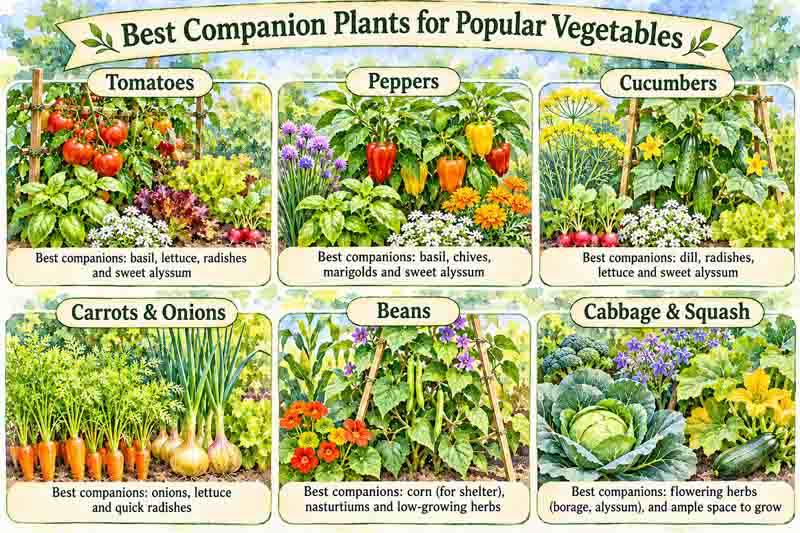
The chart helps you compare crops quickly. These popular combinations deserve a closer look because their benefits are often misunderstood.
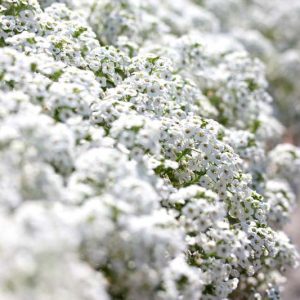
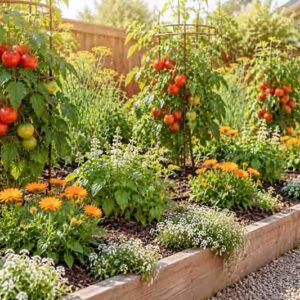
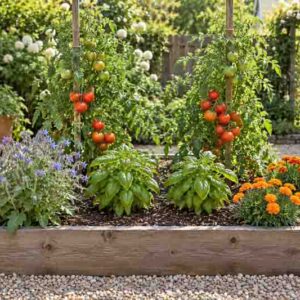
Tomatoes and basil enjoy much the same summer weather. Basil supplies a second harvest, while spring lettuce or radishes can occupy temporary space before tomato plants grow large. Sweet alyssum is attractive along the outside edge.
But tomato vines can transform a spacious spring bed into a thicket by July. Allow room for mature stems, supports and harvesting. Read Gardenia’s Best Companion Plants for Tomatoes for a more detailed comparison.
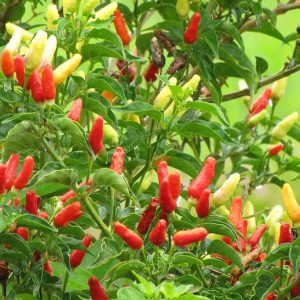
Bell peppers, jalapeños and other Capsicum varieties grow well near basil, chives and low-growing flowers. They are primarily self-pollinating, so attracting bees is not essential for normal fruit set, although flowering habitat remains valuable to the wider garden.
In small raised beds, grow basil or alyssum in adjacent containers or a border rather than beneath mature pepper branches. See Gardenia’s Pepper Companion Planting Guide for a realistic 4 x 8 ft layout.
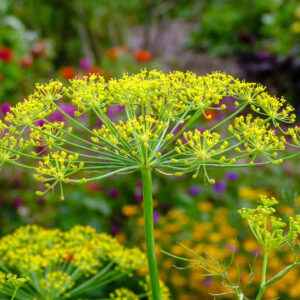
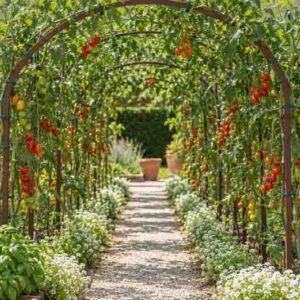
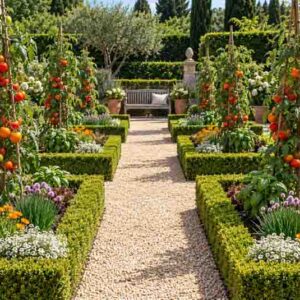
Few kitchen-garden combinations look prettier than trellised cucumbers beside flowering dill. The dill’s yellow flower umbels provide resources for visiting insects, while sweet alyssum softens the bed edges.
Plant quick crops such as radishes or lettuce early, then harvest them before cucumber vines fill the space. Do not rely on radishes to repel cucumber beetles. Explore Gardenia’s Cucumber Companion Guide for the illustrated planting plan.
Carrots and onions can share a carefully spaced vegetable bed. Their different growth forms make them convenient neighbors, and lettuce or quick radishes can provide an additional early harvest.
Although onion scent is traditionally said to deter carrot flies, growing onions beside carrots is not a substitute for pest monitoring or exclusion netting. Find more combinations in Gardenia’s Carrot Companion Guide.
Pole beans need strong support and can shade shorter vegetables. Bush beans are easier to integrate into smaller beds. Both fix atmospheric nitrogen under suitable conditions, but this does not mean surrounding vegetables receive an immediate dose of fertilizer.
Broccoli, cabbage, kale and cauliflower benefit from careful spacing and nearby flowering habitat. Zucchini and pumpkins need substantially more growing room; see Gardenia’s Zucchini Companion Guide and Pumpkin Companion Guide before combining them with other sprawling plants.
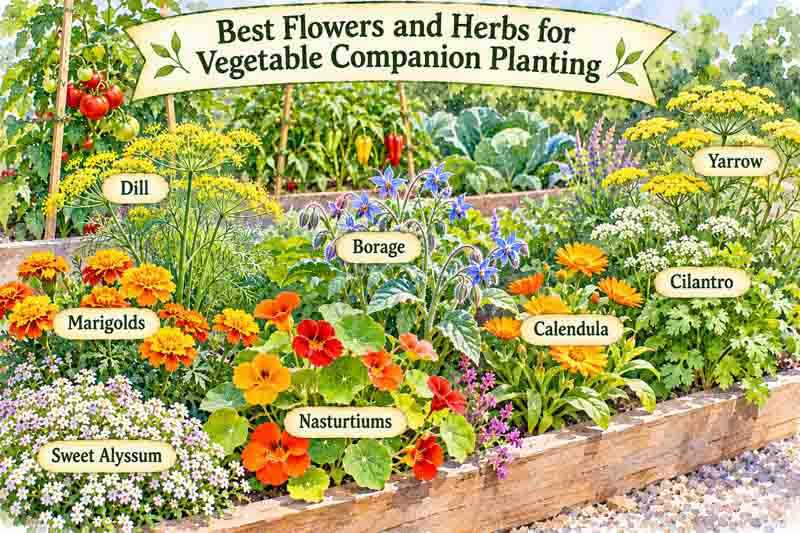
A narrow flowering strip can do more for a vegetable garden than squeezing extra plants between every tomato, pepper and cabbage. It keeps the main crops accessible while bringing color and visiting insects close to the beds.
Explore Companion Planting with Herbs and Companion Planting with Annuals for additional plants and garden inspiration.
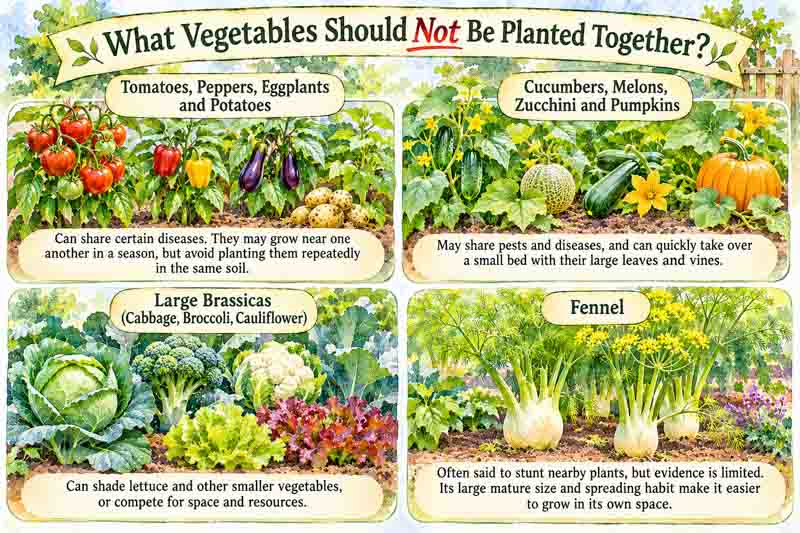
It’s tempting to treat a companion planting chart like a seating plan, with friendly vegetables on one side and sworn enemies on the other. Real growing conflicts are usually easier to explain.
Tomatoes, peppers, eggplants and potatoes can share certain pathogens. They may grow near one another during a season, but planting them repeatedly in the same soil can increase disease risks. Separation alone does not solve infected soil.
Cucumbers, melons, zucchini and pumpkins may share pests and diseases. Their biggest immediate problem in a small bed, however, is often the sheer volume of leaves and vines.
Large brassicas such as cabbage and broccoli can shade lettuce or compete for room with neighboring vegetables. That doesn’t mean they chemically inhibit other crops.
Fennel is routinely accused of stunting nearly everything around it. Evidence for universal garden-wide incompatibility is limited. Its considerable mature size is a more practical reason to give it separate space.
The useful distinction: “Grow with caution” means there is a possible conflict involving space, sunlight, water, harvesting or disease management. It does not mean that two vegetables automatically damage each other when their roots meet.
Companion planting describes several different gardening practices. Some have measurable advantages under suitable conditions; others remain traditional beliefs.
| Claim or Practice | What You Can Reasonably Expect |
|---|---|
| Early lettuce beside young tomatoes | An extra harvest when lettuce is removed before tomatoes spread. |
| Flowering plants for beneficial insects | Floral resources for certain insects; pest reduction varies by crop and conditions. |
| Legumes providing nitrogen | Biological nitrogen fixation; neighboring crops do not automatically receive immediately available fertilizer. |
| Marigolds suppressing nematodes | Possible for particular species and growing systems; a few flowers beside vegetables are usually insufficient. |
| Basil improving tomato flavor | A delicious culinary pairing, but no dependable evidence that proximity changes fruit flavor. |
Good companion planting can improve use of garden space and support plant diversity. It does not replace suitable varieties, healthy soil, watering, rotation or accurate pest diagnosis. Gardenia’s Complete Companion Planting Guide explores these distinctions in more detail.
A companion planting chart helps you choose plants. A garden plan must answer a harder question: Where will they fit when everything is fully grown?
Gardenia’s Three-Layer Method organizes each combination by its job and growing season.
Choose the vegetable that matters most, such as peppers, tomatoes or cucumbers. Reserve the space it needs at maturity, including supports, access and airflow.
Use available ground before the main crop expands. Spring lettuce, radishes or spinach can be harvested early rather than remaining in competition through summer.
Place flowers and herbs around the outside of the vegetable bed or in nearby containers. This creates color and insect habitat while keeping the main crop manageable.
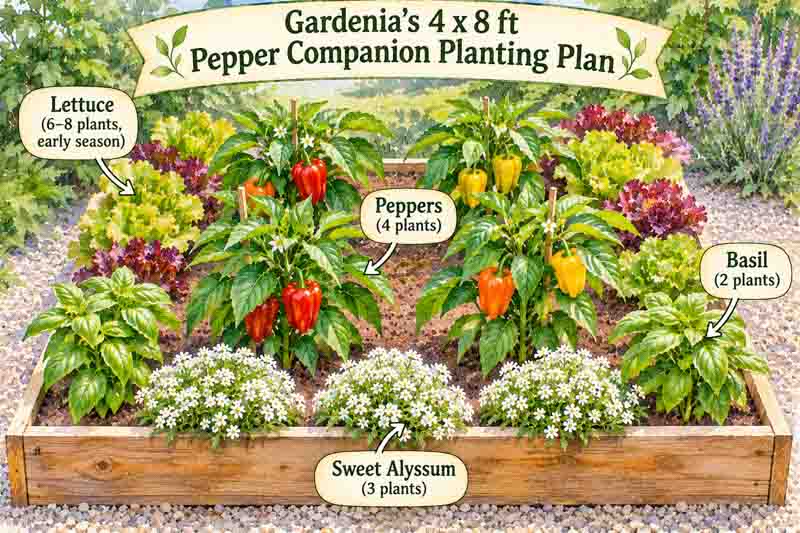
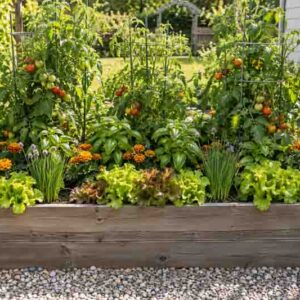
Imagine a sunny 4 x 8 ft raised bed with access from both long sides. Four compact pepper plants form the permanent summer crop. Basil and alyssum grow outside the bed, and lettuce occupies the soil only before the peppers spread.
The result: A productive pepper bed that isn’t overcrowded, an earlier crop of lettuce, fresh basil close at hand, and a flowering border. For vigorous pepper cultivars, reduce the number of permanent plants rather than compromising spacing.
Make this plan your own: Explore crops and flowering companions in Gardenia’s Plant Finder. Then organize your selections with the Garden Design Tool, reviewing mature sizes, seasonal interest and quantities before planting.
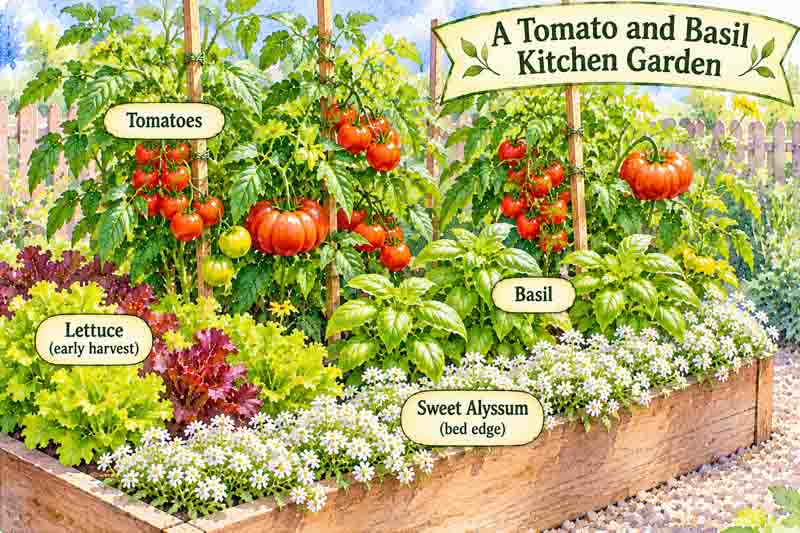
Pair well-spaced tomatoes with basil in an accessible position and a ribbon of sweet alyssum along the outside edge. Use lettuce for an earlier spring harvest. Leave generous room for mature tomato foliage and supports.
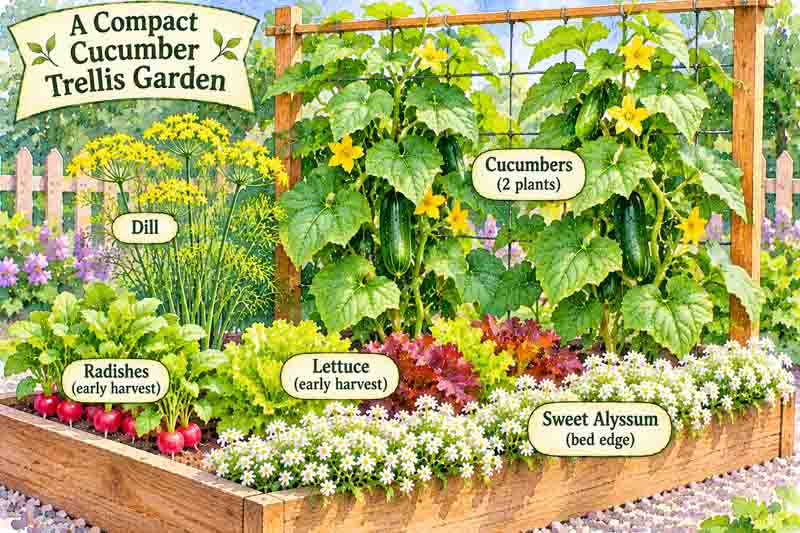
Train two compact cucumbers on a sturdy trellis with dill near one end and alyssum outside the bed. Harvest early radishes or lettuce before cucumber vines spread. This arrangement creates height, flowers and edible crops without relying on unproven pest-repellent claims.
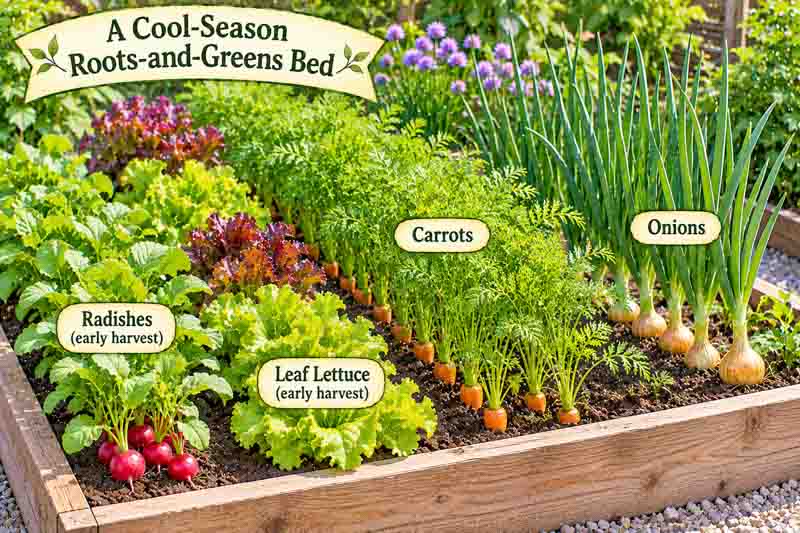
Combine rows of carrots and onions with fast-growing radishes and leaf lettuce. Harvest the quickest crops first, giving carrots and onions room to mature. Choose spacing that allows roots to be lifted without disturbing neighboring crops.
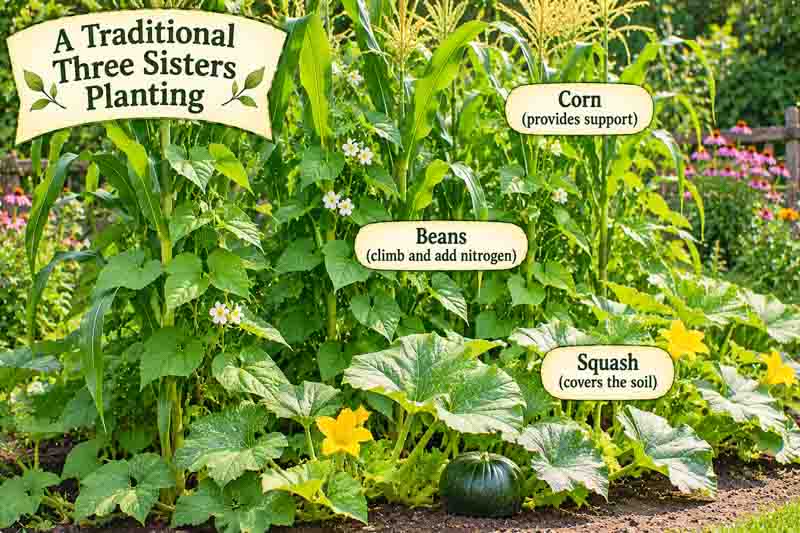
In a spacious garden, compatible corn, climbing beans and squash can form a traditional mixed-cropping system developed and practiced by Indigenous peoples of the Americas. Establish strong corn first, select appropriate bean and squash varieties, and allow substantial room for vines. The system still needs suitable soil fertility, water and careful timing.
Overfilling the bed: Spring seedlings rarely reveal how much room mature vegetables will occupy. Check cultivar dimensions and leave space for airflow and harvesting.
Forgetting the season: Spinach, peas and lettuce generally prefer cooler weather than tomatoes, peppers and summer squash. Plan early harvests or successive crops instead of forcing every vegetable to grow together all summer.
Confusing flowers with pest control: Flowering herbs can support insects, but they do not guarantee freedom from aphids, cabbage caterpillars or cucumber beetles. Identify and monitor pests before choosing a treatment.
Ignoring next year’s crops: Current-season compatibility and crop rotation are different decisions. Avoid repeatedly growing related crops in the same soil when disease concerns make rotation advisable. Consult Gardenia’s Crop Rotation Guide for planning ideas.
Useful vegetable companions include early lettuce, radishes, carrots, chives, basil, dill, sweet alyssum, calendula, marigolds and nasturtiums. Select them according to the main crop’s growing conditions, mature size, season and the purpose of each companion.
Few vegetables are universally incompatible. Take care with crops that shade one another, spread aggressively, interfere with harvesting or share important pests and diseases. Tomatoes, peppers, potatoes and eggplants also require thoughtful nightshade crop rotation.
Some intercropping and succession-planting systems improve use of garden space, and flowering plants can support beneficial insects. However, outcomes depend on crops and management, and many traditional claims about higher yields, better flavor or pest repellence have not been reliably demonstrated.
Yes. Tomatoes and peppers have broadly compatible warm-season needs and can grow near each other with adequate spacing, sunlight and water. Both belong to the nightshade family, so monitor shared disease risks and plan rotation.
Results vary. Some aromatic or flowering plants have shown pest-related effects in specific studies, but ordinary companion planting does not reliably eliminate garden pests. Certain marigolds can suppress particular soil nematodes when used with appropriate methods.
There is no universal companion-planting distance. Follow each crop’s recommended mature spacing, protect access and airflow, and grow vigorous herbs or flowers in neighboring containers or borders when the vegetable bed is already full.
Continue exploring Gardenia: Visit our Complete Companion Planting Guide, browse Companion Planting with Herbs, or use the Garden Design Tool to turn your favorite combinations into a garden plan.
Updated and reviewed by Gardenia: November 2026
Create a membership account to save your garden designs and to view them on any device.
Becoming a contributing member of Gardenia is easy and can be done in just a few minutes. If you provide us with your name, email address and the payment of a modest $25 annual membership fee, you will become a full member, enabling you to design and save up to 25 of your garden design ideas.
Join now and start creating your dream garden!