Butterflies need more than flowers. Discover trees and shrubs that provide nectar, caterpillar food, shelter, and lasting habitat. From pawpaw and spicebush to buttonbush, willow, and tulip tree, learn which woody plants support specific butterflies - and how to choose the right ones for your garden.
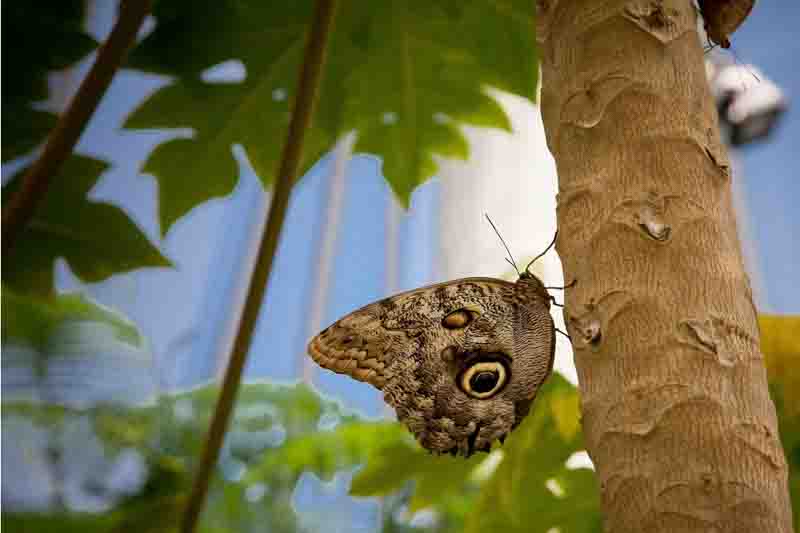


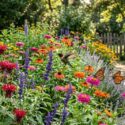
Butterfly gardens are usually built from the ground up: milkweed, coneflowers, asters, blazing star, bee balm, and other nectar-rich perennials. But some of the most important butterfly plants grow above flower level.
Trees and shrubs can feed adult butterflies, shelter them from wind and weather, provide berries and cover for other wildlife, and – most importantly – serve as the plants their caterpillars actually need to survive.
That does not mean every butterfly garden needs a towering oak or an 80-foot Black Cherry. Some of the most useful woody butterfly plants fit comfortably into ordinary yards: Spicebush, Summersweet, Withe Rod, Highbush Blueberry, Hop Tree, American Plum, and Pawpaw all offer significant wildlife value without becoming enormous shade trees.
The easiest way to choose is to match three things: the butterflies that occur near you, the woody plants they use, and the amount of space your garden can realistically provide.
🦋 Nectar Brings Butterflies In – Host Plants Help Raise the Next Generation
Adult butterflies may visit many flowers for nectar. Their caterpillars are much more selective. Zebra Swallowtails depend on Pawpaw and other Asimina species. Spicebush Swallowtails rely primarily on Spicebush and Sassafras. Giant Swallowtails can use Hop Tree and other members of the citrus family. A strong butterfly garden provides food for both life stages.
If you are planting specifically for butterflies, begin with the butterfly rather than the plant label. Find species that occur in your region, identify their woody host plants, then choose a host that actually fits your yard.
Gardenia pairs each butterfly below with important woody hosts and highlights a more practical choice for residential landscapes whenever one is available.
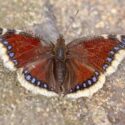
One tree genus can sometimes support several butterflies. Hackberries are a striking example. Depending on region, Celtis species can support Hackberry Emperors, Tawny Emperors, American Snouts, Mourning Cloaks, and other Lepidoptera.
The table is a starting point rather than a universal prescription. Host use and butterfly ranges vary geographically, so the best choice is the plant that supports a butterfly found locally and also fits your climate, soil, moisture, sunlight, and available space.
If you garden on a typical residential lot, start here. These plants offer meaningful butterfly value without requiring the space of a mature Tulip Tree, Black Cherry, or Black Willow.

Lindera benzoin (Spicebush) combines manageable size, shade tolerance, wildlife value, and a very specific butterfly relationship.
Spicebush is a principal larval host for the Spicebush Swallowtail. Small yellow flowers brighten bare stems in early spring, and female plants can produce glossy red fruits later in the year.
Gardenia quick facts: Native to eastern North America. USDA Zones 4-9. About 6-12 ft. tall and 6-12 ft. wide.
It is especially useful along woodland edges, in rain gardens, beside ponds and streams, and in partly shaded borders where many classic butterfly flowers are less comfortable.

Ptelea trifoliata (Hop Tree) is one of the most useful small trees missing from many butterfly-garden lists. It belongs to the citrus family and can serve as a larval host for both the Giant Swallowtail and Eastern Tiger Swallowtail.
Its small greenish-white flowers provide nectar, while the wafer-like fruits give the plant interest later in the season.
Gardenia quick facts: Native to the eastern and central United States. USDA Zones 4-9. About 15-20 ft. tall and 15-20 ft. wide.
Hop Tree tolerates sun, partial shade, dry soil, and rocky conditions. For many homeowners, it is a much more realistic swallowtail host than a huge canopy tree.

Prunus americana (American Plum) is a small native tree or large shrub with fragrant white spring flowers, edible plums, colorful fall foliage, and substantial wildlife value.
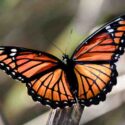
American Plum is a woody larval host associated with the Viceroy. It is much easier to fit into an average garden than a mature willow or cottonwood.
Gardenia quick facts: Native to eastern and central North America. USDA Zones 3-8. About 15-25 ft. tall and 15-25 ft. wide.
It does sucker, so it is best where there is room for a naturalistic thicket or where unwanted shoots can be removed.
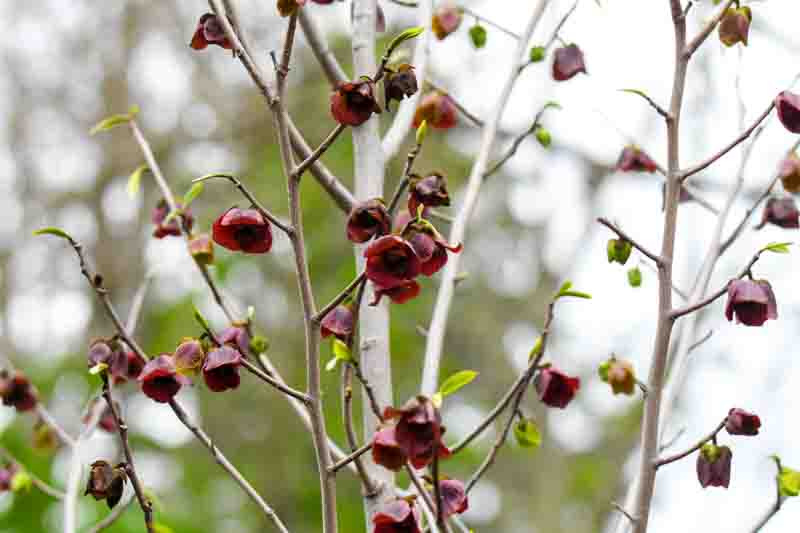
Asimina triloba (Pawpaw) is one of North America’s most distinctive butterfly host plants. Zebra Swallowtail caterpillars depend on Pawpaw and other Asimina species, making them essential host plants for breeding Zebra Swallowtails where the butterfly occurs.
Gardenia quick facts: Native to the eastern and central United States. USDA Zones 5-9. About 15-30 ft. tall and 15-30 ft. wide.
Pawpaw is an attractive understory tree with large tropical-looking leaves, yellow fall color, unusual purple spring flowers, and edible fruit on established plants. It is substantial, but still far easier to accommodate than most canopy trees.
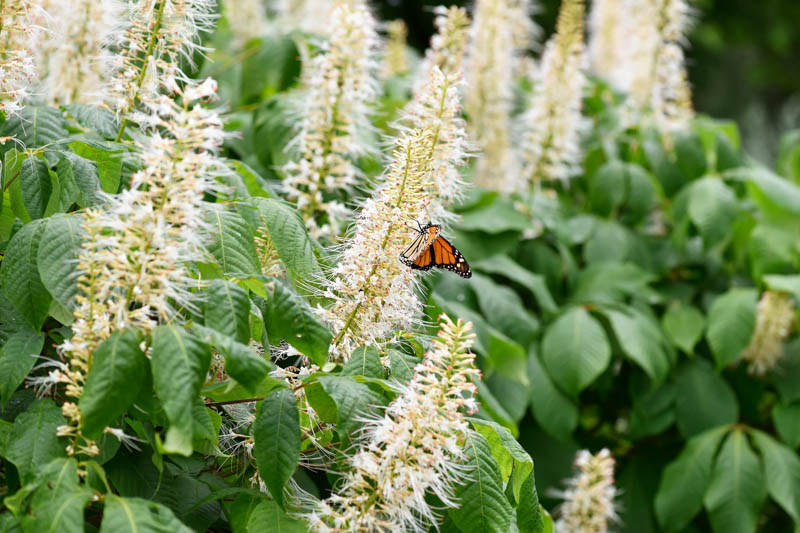
Clethra alnifolia (Summersweet) fills a different role. It is primarily a nectar shrub rather than a specialist caterpillar host, producing fragrant bottlebrush flowers in midsummer when butterflies are highly active.
Gardenia quick facts: Native to eastern North America, from coastal Maine south to northern Florida and west to eastern Texas. USDA Zones 3-9. About 3-8 ft. tall and 4-6 ft. wide.
For even less space, Clethra alnifolia ‘Hummingbird’ stays around 2-4 ft. tall and 3-5 ft. wide. It attracts butterflies and hummingbirds and tolerates partial shade, wet soil, clay, and coastal exposure.
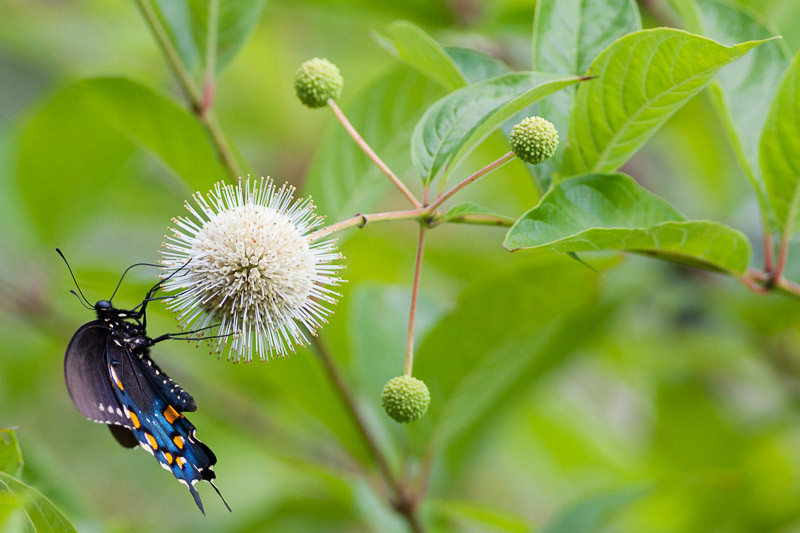
Cephalanthus occidentalis (Buttonbush) turns wet ground into prime pollinator habitat. Its white spherical flower heads are made from dozens of tiny tubular flowers rich in nectar and are visited by butterflies, bees, and hummingbirds.
Gardenia quick facts: Broadly native to North America, including much of the eastern and southern United States and parts of the West. USDA Zones 5-9. About 5-12 ft. tall and 4-8 ft. wide.
Buttonbush is especially useful around ponds, streams, rain gardens, wet low spots, and other places where ordinary landscape shrubs may struggle.

Viburnum nudum (Withe Rod) earns its place because it offers more than nectar. Creamy summer flowers attract butterflies and bees, while berries mature through shades of pink and blue and draw birds later in the year.
Gardenia quick facts: Native to eastern North America. USDA Zones 5-9. About 5-12 ft. tall and 5-12 ft. wide.
It tolerates moist ground and fits naturally around rain gardens, pond edges, mixed shrub borders, and informal hedges.

Vaccinium corymbosum (Highbush Blueberry) is a particularly good choice where soil is acidic. Spring flowers provide nectar, summer berries feed people and wildlife, and the foliage can turn brilliant shades of red, orange, yellow, and purple in fall.
Gardenia quick facts: Native to eastern North America. USDA Zones 5-8. About 6-12 ft. tall and 8-12 ft. wide.
It proves that a butterfly-friendly shrub can also earn its place as an edible and ornamental plant.
The following trees have outstanding wildlife value, but they need room. They make sense on larger properties, woodland edges, naturalized land, stream corridors, and spacious landscapes – not squeezed between a patio and the neighbor’s fence.

Liriodendron tulipifera (Tulip Tree) is one of the signature host trees of the Eastern Tiger Swallowtail.
Gardenia quick facts: Native to eastern North America, from southern Ontario to central Florida and west toward the Mississippi River. USDA Zones 4-9. About 60-80 ft. tall and 30-40 ft. wide.
It is magnificent where there is room. In a smaller residential landscape, however, a compact host such as Hop Tree is much easier to accommodate.
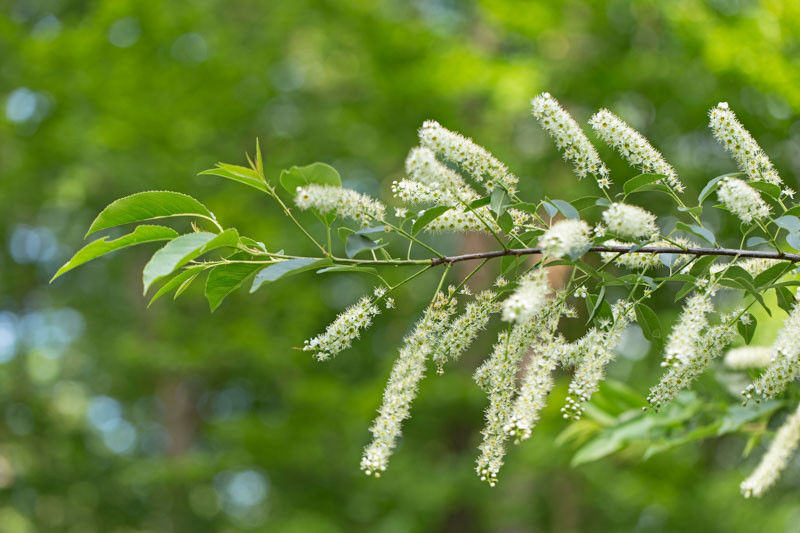
Prunus serotina (Black Cherry) supports Eastern Tiger Swallowtail caterpillars along with many other Lepidoptera. Spring flowers feed pollinators and summer fruit is important to birds.
Gardenia quick facts: Native across a broad area of eastern and central North America. USDA Zones 3-9. About 50-80 ft. tall and 30-60 ft. wide.
If a mature Black Cherry is simply too large, American Plum and other regionally appropriate smaller Prunus species may fit the landscape more naturally.

Salix nigra (Black Willow) supports an impressive group of caterpillars, including the Viceroy, Mourning Cloak, Red-spotted Purple, and tiger swallowtails.
Gardenia quick facts: Native to eastern North America, adjacent Canada, and Mexico. USDA Zones 4-9. About 30-60 ft. tall and 30-60 ft. wide.
Its natural home is beside water. It should not be planted close to foundations, driveways, sewer lines, or other infrastructure.
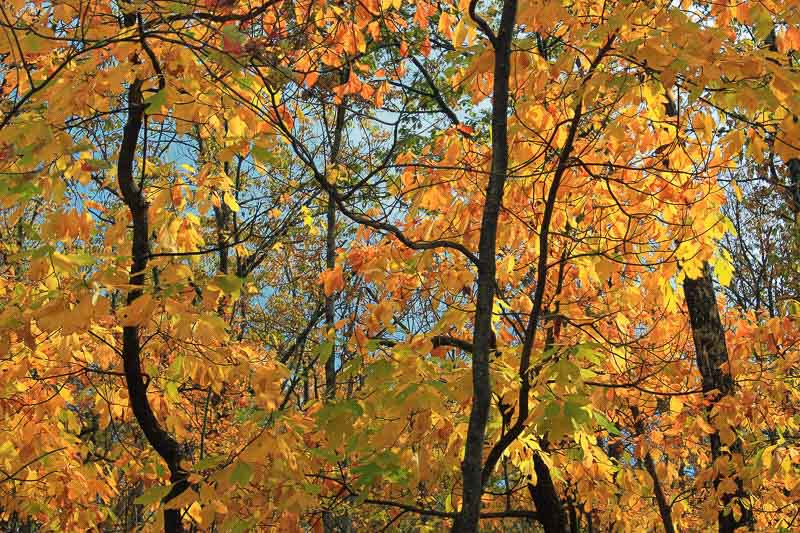
Sassafras is another important host for Spicebush Swallowtail caterpillars and brings unusual leaf shapes, aromatic foliage, berries, and spectacular fall color.
Gardenia quick facts: Native to eastern North America from Maine to Florida and west to Texas. USDA Zones 4-9. About 30-60 ft. tall and 25-40 ft. wide.
Where space is limited, Spicebush provides a much easier way to support the same butterfly.

Celtis occidentalis (Common Hackberry) deserves special attention because its butterfly value is unusually concentrated. The foliage is used by several butterflies, including the American Snout, Tawny Emperor, and Mourning Cloak, while other Celtis species support Hackberry Emperors as well.
Its small flowers are inconspicuous, but its fruits persist into winter and are eaten by many birds. The rough, corky bark also gives the tree character long after the leaves have fallen.
Gardenia quick facts: Native to central and eastern North America. USDA Zones 2-9. About 40-50 ft. tall and 40-50 ft. wide.
Common Hackberry is not a small tree, but its combination of butterfly host value, fruit, shade, drought tolerance, and adaptability makes it worth considering where there is room. In western regions, choose a Celtis species native to your area rather than assuming Common Hackberry is always the right choice.
🦋 Why Hackberry Is Different
Many butterfly plants are associated with one headline species. Hackberries are different: the genus can support several butterflies. That makes a locally appropriate Celtis especially valuable where Hackberry Emperors, Tawny Emperors, American Snouts, or Mourning Cloaks occur.
Most familiar butterfly-host lists lean heavily toward eastern North America. Western gardens need the same principle – local butterflies paired with plants that belong in the local landscape – but often with a different plant palette.
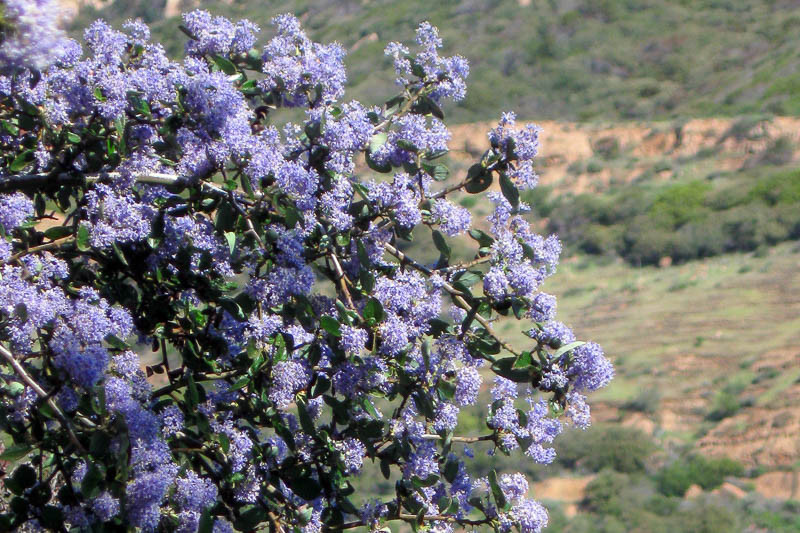
Ceanothus oliganthus (Hairy Ceanothus) is a California native evergreen shrub covered in blue to purple-blue flowers from spring into early summer. It is attractive to butterflies, bees, and birds.
Gardenia quick facts: Native to California. USDA Zones 7-10. About 8-10 ft. tall and 10-12 ft. wide.
Unlike eastern moisture-loving shrubs such as Buttonbush, Hairy Ceanothus is adapted to full sun, well-drained soil, and relatively low water once established. It is a useful reminder that a butterfly shrub should fit the regional climate rather than simply come from a national “best plants” list.
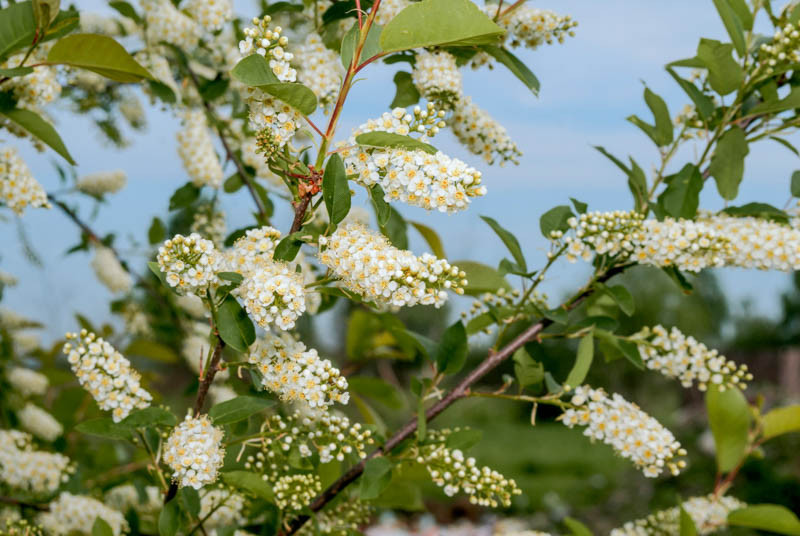
Prunus virginiana (Chokecherry) occurs across an enormous span of North America, including Alaska, the Rocky Mountains, the Pacific Northwest, California, and parts of the Southwest.
Its fragrant spring flowers attract pollinators, while the fruits are valuable to birds and other wildlife. As a native Prunus, its foliage is used by several western butterflies, including the Western Tiger Swallowtail and Coral Hairstreak.
Gardenia quick facts: Native across much of North America. USDA Zones 2-7. About 20-30 ft. tall and 15-20 ft. wide.
Chokecherry can sucker to form colonies, so give it room or remove unwanted shoots. It is particularly useful in native plantings, open woodland edges, larger shrub borders, and naturalistic gardens.
🌎 East and West Need Different Plant Lists
Spicebush may be an outstanding butterfly shrub in the East, while Ceanothus may make far more sense in a dry California garden. Start with butterflies and plants native or well adapted to your own region rather than treating “North American native” as a single ecological category.
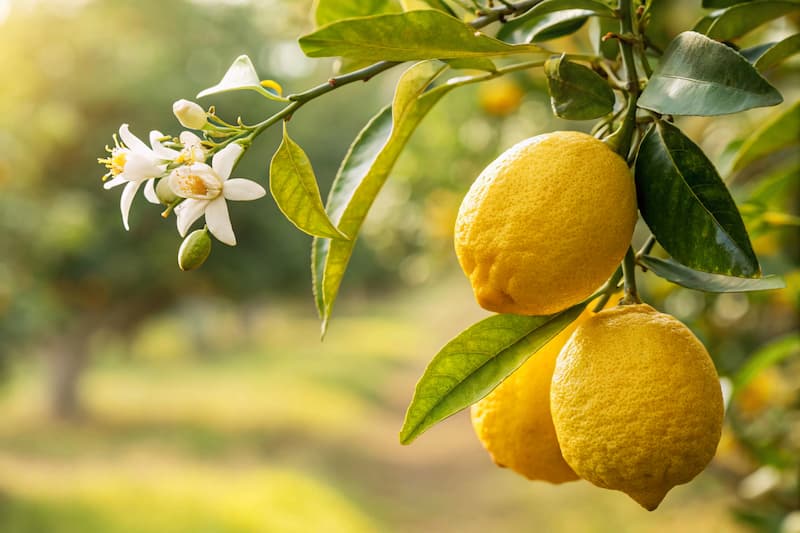
The Giant Swallowtail uses plants in the citrus family, along with native members of the same family such as Hop Tree.
A typical lemon tree is generally suited to USDA Zones 9-11 and reaches roughly 10-20 ft. tall and 8-15 ft. wide, although container plants can remain much smaller. Citrus originated in Asia rather than North America, but in warm-climate gardens it can combine fruit production with Giant Swallowtail host value.
If you want a native and much more cold-hardy alternative in many parts of the United States, Hop Tree is often the more versatile choice.
🐛 Chewed Leaves Are Sometimes the Point
A host plant is there to be eaten. Before reaching for insecticide when you see caterpillar damage on Pawpaw, Spicebush, Hop Tree, citrus, willow, or another host plant, identify the caterpillar. A few ragged leaves may be evidence that your butterfly garden is doing exactly what you hoped.
You do not need a complicated ecological checklist. Ask three questions.
A Pawpaw is invaluable to Zebra Swallowtails where the two occur together. That relationship is much less useful if Zebra Swallowtails do not occur in your area. Begin with local butterflies, not with a national plant list.
If your garden can comfortably hold a 10-foot shrub, choose Spicebush, Summersweet, Buttonbush, Withe Rod, or Blueberry rather than trying to squeeze a mature canopy tree into the space. If you have room for a 15-20 ft. tree, Hop Tree opens up more possibilities.
Wet ground? Buttonbush is hard to beat. Partial shade? Spicebush or Summersweet may fit beautifully. Acidic soil? Highbush Blueberry becomes especially attractive. Dry, rocky ground? Hop Tree is unusually adaptable. Dry California conditions? A native Ceanothus may be far more sensible than an eastern woodland shrub.
🔎 Find Plants That Fit Your Garden
Use the Gardenia Plant Finder to filter shrubs and trees by hardiness, sunlight, soil, drainage, water needs, mature size, native status, wildlife value, and other conditions. Save promising plants to your personal collections before you start designing.
A butterfly garden becomes more useful when plants occupy different heights. You do not need a forest – even a small yard can combine one modest tree, a few shrubs, and a flowering border.
🌳 SMALL TREE / UPPER LAYER
Pawpaw • Hop Tree • American Plum
Host foliage + shelter + structure
🌿 SHRUB LAYER
Spicebush • Buttonbush • Withe Rod • Highbush Blueberry
Host plants + nectar + berries + cover
🌸 FLOWERING PERENNIAL LAYER
Milkweed • Coneflower • Bee Balm • Blazing Star • Asters
Abundant nectar + additional host plants
🍂 GROUND & SHELTER LAYER
Grasses • Leaf litter • Undisturbed corners
Cover + overwintering habitat
The point is not to cram every layer into every yard. It is to stop thinking of a butterfly garden as a flat bed of flowers. A small tree at the back, a few shrubs through the middle, and nectar-rich perennials at the front can create much richer habitat without requiring a huge property.
Native woody plants are especially valuable because many butterfly caterpillars have close relationships with particular native plant groups. But “native to North America” is too broad to guide a planting decision.
A plant that belongs naturally in a Virginia woodland may make little ecological or horticultural sense in coastal California or the desert Southwest. Likewise, a drought-adapted western shrub may struggle in a humid eastern garden.
Use regional information, not just a national native label.
A useful butterfly garden rarely depends on one “perfect” plant. Choose one or two woody plants that fit your space, add nectar-rich perennials that flower at different times, and include host plants for butterflies that actually occur in your area.
Explore Gardenia’s Butterfly Host Plant Guide to match butterflies with caterpillar food plants. Then use the Gardenia Plant Finder to narrow those choices to plants that suit your garden and save them to your personal collections.
🌿 Design the Whole Habitat
Use the Gardenia Garden Design Tool to combine your trees, shrubs, and flowering plants, compare their growing requirements, catch potential incompatibilities, plan seasonal interest, and estimate plant quantities. It turns a list of butterfly plants into a garden you can actually build.
The goal is not to fit as many “butterfly plants” into the yard as possible. It is to choose plants that belong in your landscape and give local butterflies something they genuinely need.
Good smaller choices include Hop Tree, American Plum, and Pawpaw. Hop Tree grows about 15-20 ft. tall and can host Giant and Eastern Tiger Swallowtails. American Plum reaches about 15-25 ft., while Pawpaw grows about 15-30 ft. and is a key host for Zebra Swallowtails.
Spicebush, Buttonbush, Summersweet, Withe Rod, Highbush Blueberry, and regionally appropriate Ceanothus are excellent choices. Spicebush has particular value as a Spicebush Swallowtail host, while Buttonbush, Summersweet, and Ceanothus can provide abundant nectar for adult butterflies.
Spicebush (Lindera benzoin) is a principal larval host for Spicebush Swallowtails. Sassafras is another important host, but Spicebush is much smaller and therefore easier to use in most residential gardens.
Zebra Swallowtail caterpillars depend on Pawpaw species (Asimina), including Asimina triloba. Common Pawpaw is native to the eastern and central United States and typically grows 15-30 ft. tall and wide.
Hop Tree (Ptelea trifoliata) is an excellent native option. It typically reaches about 15-20 ft. tall and wide and serves as a host for Giant Swallowtail caterpillars. Citrus-family plants are also important hosts, especially in warm climates.
Hackberries (Celtis species) are important because several butterflies use them as larval hosts. Depending on region, these can include American Snouts, Tawny Emperors, Hackberry Emperors, Mourning Cloaks, and other Lepidoptera. Choose a Celtis species suited to your region and available space.
Yes. Buttonbush produces nectar-rich spherical flower heads that attract butterflies, bees, and hummingbirds. It is especially valuable in wet locations such as rain gardens, pond edges, stream banks, and naturally damp areas.
No, but woody plants can greatly expand the habitat a garden provides. Some trees and shrubs feed caterpillars, while others supply nectar, shelter, berries, and vertical structure. Even one appropriately sized tree or shrub can add considerable wildlife value.
Regionally appropriate native plants are particularly valuable because many butterfly caterpillars have specific host relationships with native plant groups. Match the plant to butterflies that occur locally and to the growing conditions and available space in your garden.
Updated and reviewed by Gardenia: October 2026
| Genus | Citrus, Liriodendron, Populus, Prunus - Flowering Cherry Tree, Salix |
|---|---|
| Attracts | Butterflies |
| Genus | Citrus, Liriodendron, Populus, Prunus - Flowering Cherry Tree, Salix |
|---|---|
| Attracts | Butterflies |
Create a membership account to save your garden designs and to view them on any device.
Becoming a contributing member of Gardenia is easy and can be done in just a few minutes. If you provide us with your name, email address and the payment of a modest $25 annual membership fee, you will become a full member, enabling you to design and save up to 25 of your garden design ideas.
Join now and start creating your dream garden!