Chinese Ivy, Chinese Jasmine, Star Jasmine, Confederate Jasmine, Jasmin rhynchospermum
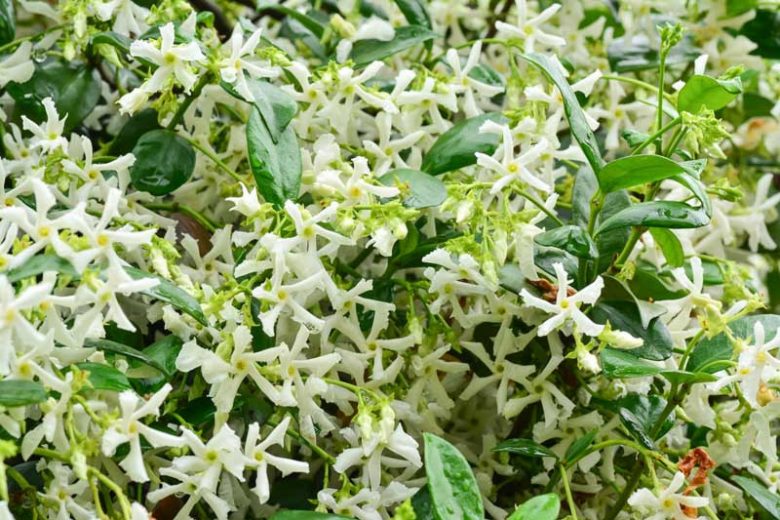
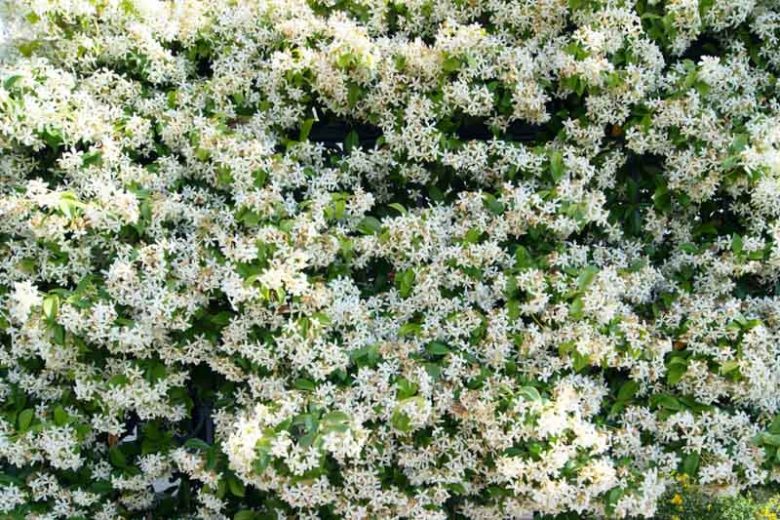


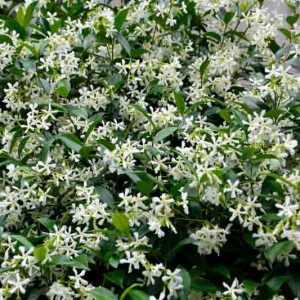
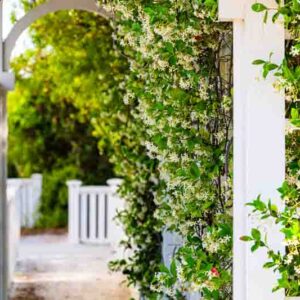
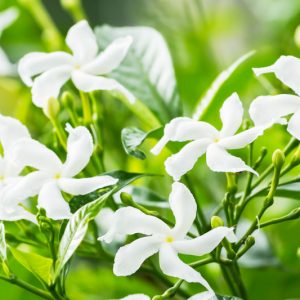
Trachelospermum jasminoides, commonly called Star Jasmine or Confederate Jasmine, is an evergreen climber grown for its glossy foliage and highly fragrant white flowers. Although it is not a true jasmine, it is one of the most popular jasmine-like plants for walls, trellises, fences, containers, and evergreen ground cover.
Trachelospermum jasminoides is an evergreen twining vine or ground cover grown for glossy leaves and intensely fragrant white flowers from late spring into summer, depending on climate. Plant it in full sun to part shade in fertile, well-drained soil, water regularly until established, then deeply as needed. Give it support if climbing, prune after flowering, and protect it from severe winter exposure and waterlogged soil.
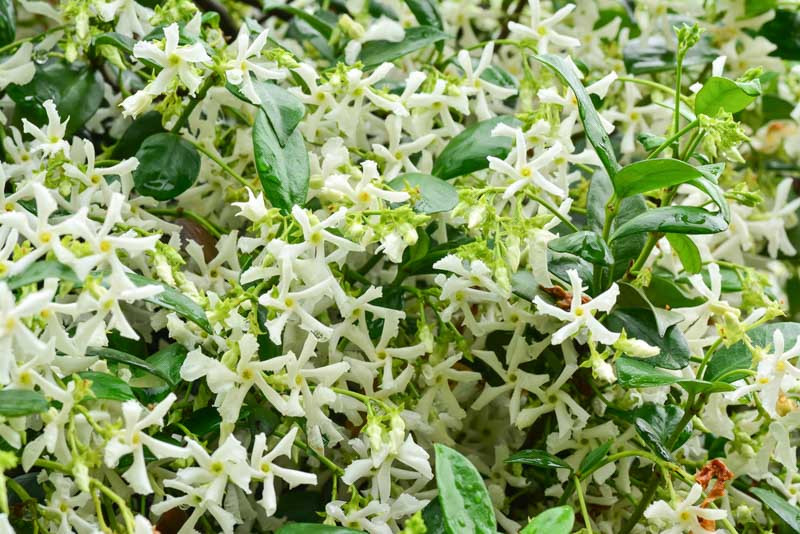
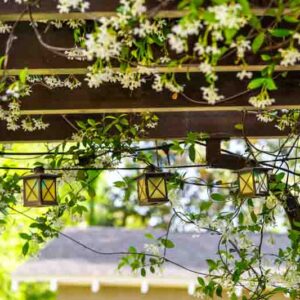
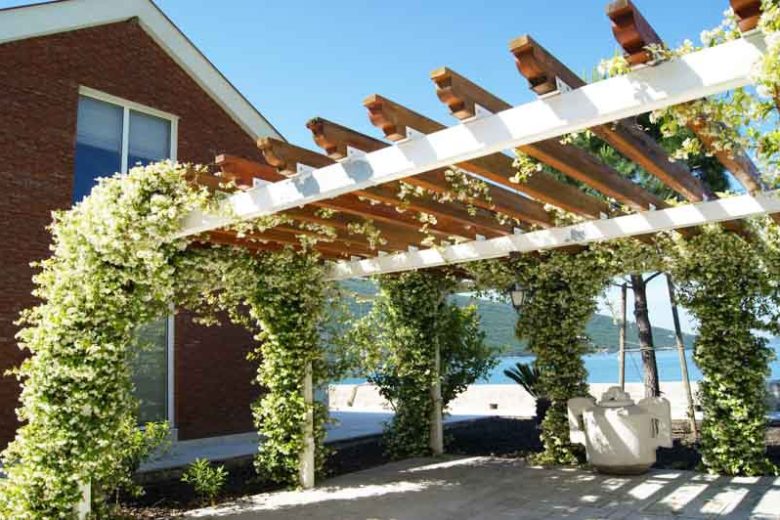
Use: Excellent for trellises, pergolas, fences, walls, containers, slopes, and evergreen ground cover.
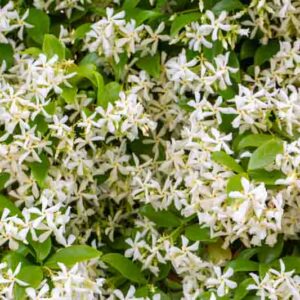
Highlight: Masses of fragrant white pinwheel flowers from late spring into summer, depending on climate.
Design note: Train it upward for a flowering evergreen screen, or let it spread to form a dense, polished carpet.
| Botanical Name | Trachelospermum jasminoides |
|---|---|
| Family | Dogbane family (Apocynaceae) |
| Common Names | Star Jasmine, Confederate Jasmine, Chinese Star Jasmine |
| Native Range | China and Japan |
| Plant Type | Evergreen woody vine; also used as a ground cover or clipped shrub-form plant |
| Hardiness (approx. USDA) | Best in USDA Zones 8-10; may overwinter in protected Zone 7 gardens with some winter damage |
| Height | 2-20 ft. (0.6-6 m), depending on use |
| Spread | 5-20 ft. (1.5-6 m) |
| Sun Exposure | Full sun to part shade |
| Soil | Fertile, well-drained soil |
| Bloom Time | Late spring into summer, depending on climate |
| Flower Color | White, aging to creamy white |
| Foliage | Glossy dark green; often bronze-red in cold weather |
| Drought Tolerant | Yes, once established |
| Attracts | Bees and other pollinators |
| Pet Safety | Generally listed as non-toxic to dogs, cats, and horses |
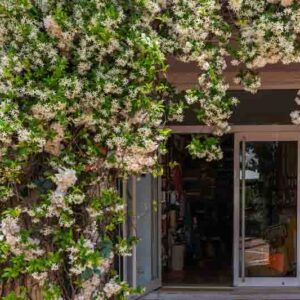
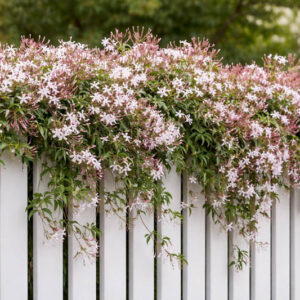
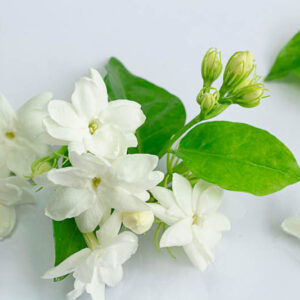
Star Jasmine is a woody evergreen vine with slender twining stems and leathery oval leaves that stay attractive all year. In bloom, it produces clusters of white, pinwheel-shaped flowers with a rich, sweet fragrance. It is often planted near patios, entrances, seating areas, and garden paths where the scent can be enjoyed up close.
With support, Star Jasmine climbs and twines through trellises, fences, pergolas, and wires. Without support, it spreads across the ground, forming a dense evergreen cover. This flexibility makes it one of the most useful fragrant vines for residential landscapes.
Native to China and Japan, Trachelospermum jasminoides is adapted to warm growing seasons and well-drained soil. In gardens, it performs best where roots stay evenly moist during establishment but are never left in soggy ground.
Star Jasmine usually blooms from late spring into summer, depending on climate. Established plants may produce a lighter flush later in the season. Bloom is heaviest when plants receive enough light and are not overfed with nitrogen.
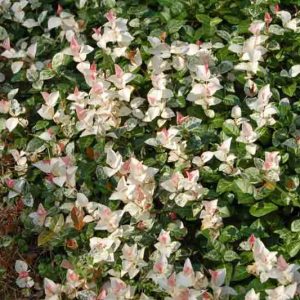
The glossy evergreen leaves are a major part of the plant’s value. New growth may emerge bronze, and cool weather often deepens the foliage to red-bronze tones. Even when not in flower, Star Jasmine gives walls, fences, and planting beds a lush, finished look.
As a climber, Star Jasmine can reach 10-20 ft. (3-6 m) or more with support. As a ground cover, it usually stays much lower but spreads steadily. Regular pruning keeps it dense, neat, and easy to manage.
Star Jasmine is best suited to USDA Zones 8-10. In Texas, it performs beautifully in many zone 8 and warmer gardens, especially where winter cold is not extreme. In Arizona, it can also thrive, but hot inland exposure demands a smarter siting strategy: morning sun, afternoon protection, deeper irrigation, and mulch over the root zone. In both regions, reflected heat and drying winds matter as much as temperature.
Trachelospermum jasminoides has received the Royal Horticultural Society’s Award of Garden Merit, confirming its reliability, beauty, and garden performance.
Star Jasmine contributes more than beauty and fragrance to the garden. Its sweetly scented flowers attract bees and other pollinators, especially when plants are grown in sunny positions and bloom heavily. The dense evergreen growth can also provide shelter and cover for small garden wildlife, helping soften hard landscapes while adding year-round structure.
Star Jasmine is often considered fairly resistant to deer, especially once established, though no plant is completely deer-proof when food is scarce. Rabbits are less likely to cause serious damage to mature plants, but tender young growth may be nibbled in some gardens.
Once established, Star Jasmine is considered moderately drought tolerant. Mature plants can handle short dry periods better than many lush evergreen climbers, but they perform best with occasional deep watering during prolonged heat or drought. Drought stress may reduce flowering, cause leaf drop, or lead to brown, scorched foliage, especially in containers or exposed sites. A layer of mulch helps conserve soil moisture and keeps roots cooler in summer.
Star Jasmine is generally listed as non-toxic to dogs, cats, and horses. This makes it a reassuring choice for many pet-friendly gardens. As with many ornamental plants, however, the stems produce a milky sap, which may irritate sensitive skin during pruning or handling. Wearing gloves is a sensible precaution, especially for gardeners with skin sensitivities.
Star Jasmine is not generally considered invasive, but it can be vigorous in warm climates where growing conditions suit it well. As a climber, it may spread beyond its intended space if not pruned and trained regularly, and as a ground cover it can slowly creep into paths or neighboring beds. In most gardens, this is a matter of maintenance rather than invasiveness. Regular trimming keeps the plant tidy, controlled, and easy to manage.
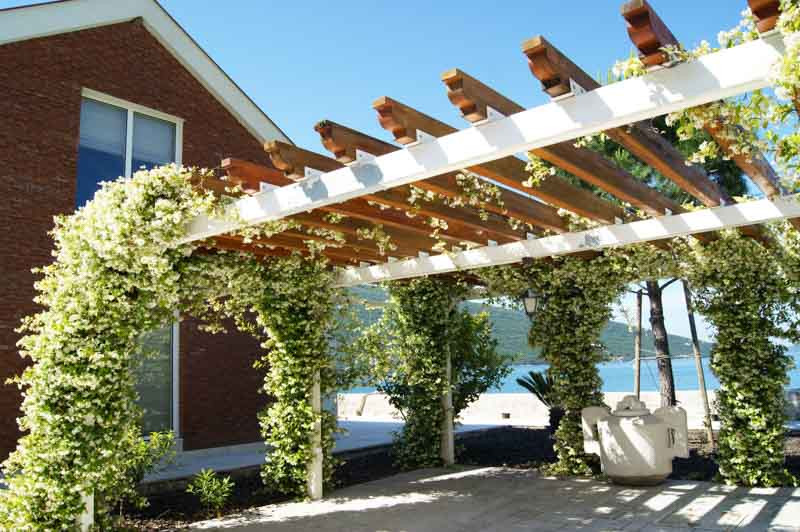
Feed lightly in spring with compost or a balanced slow-release fertilizer. Avoid overfeeding with high-nitrogen fertilizers, which can produce lush leaves but fewer flowers.
Apply a 2-3 in. layer of mulch around the root zone to conserve moisture, moderate soil temperature, and reduce weed competition. Keep mulch slightly away from the crown and main stems.
Container tip:
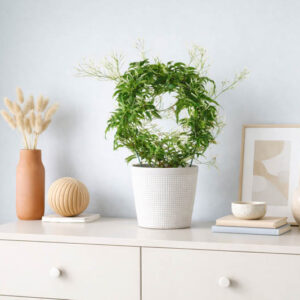
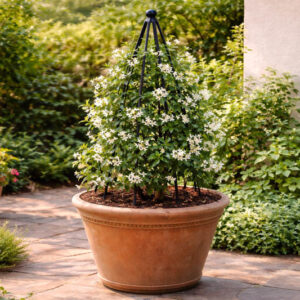
Grow Star Jasmine in a large pot with excellent drainage, a sturdy trellis, and a free-draining mix. Water regularly during establishment, then water deeply when the top 1-2 inches of the potting mix begin to dry.
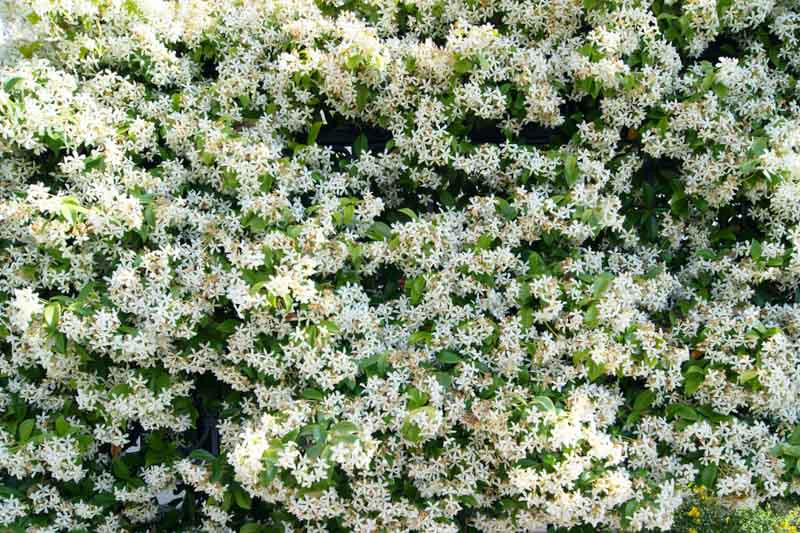
Start training early while stems are flexible. Tie young shoots loosely to wires, lattice, or trellis panels and spread them out to cover the support evenly. If left untrained at first, stems can tangle and become harder to shape later.
Prune after flowering. This is the best time to shorten long shoots, improve shape, and encourage branching without removing the next flush of bloom. Remove dead, weak, or tangled growth as needed.
Training tip:
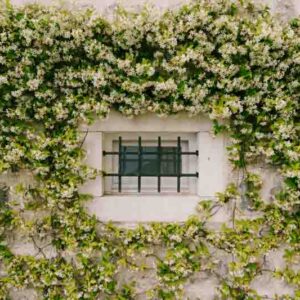
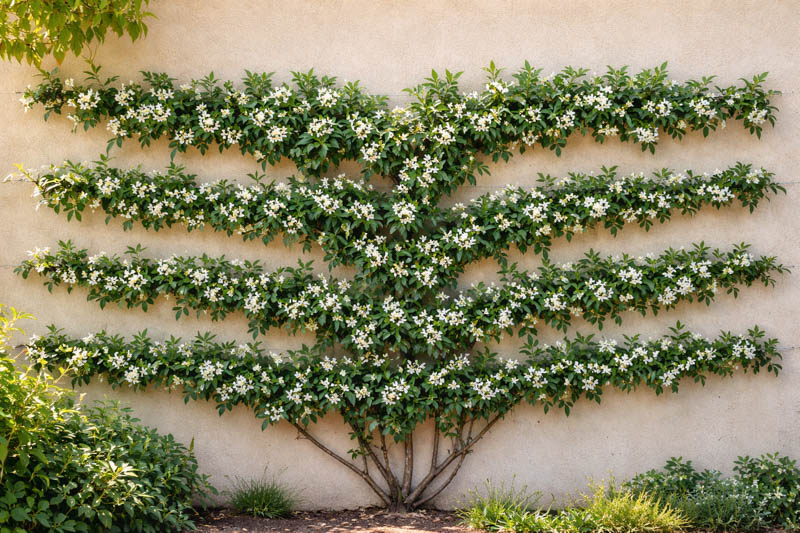
To train Star Jasmine flat against a wall or fence, install horizontal wires and tie in young stems while they are still flexible. Choose a simple framework first, then prune after flowering to keep the outline neat and encourage side branching.
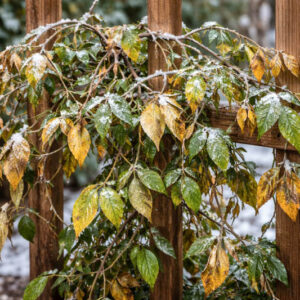
In mild climates, Star Jasmine stays evergreen through winter. In colder or more exposed gardens, foliage may bronze or suffer some wind burn. Protect young plants and containers from severe freezes, and avoid winter-wet soil.
Star Jasmine grows very well in containers when given enough root room and a support structure.
In colder climates, container-grown plants are easier to protect because they can be moved to a sheltered location during harsh winter weather.
Star Jasmine is beautifully suited to espalier, where its twining stems and glossy evergreen foliage can be trained into a refined, fragrant wall feature.
Espalier-grown Star Jasmine is especially effective against warm walls, fences, and sheltered courtyards, where its fragrance and evergreen structure can be enjoyed year-round.
Star Jasmine is easy to care for once established, but timing a few key tasks correctly will improve flowering, growth, and overall plant health.
| Task | Best Time |
|---|---|
| Planting | Plant in spring or fall, when temperatures are mild and roots can establish without heat or frost stress. |
| Feeding | Feed in spring, just as new growth begins. In poor soils, a light second feeding in early summer may help, but avoid overfeeding. |
| Pruning | Prune right after flowering. This helps maintain shape and density without removing developing flower buds. |
| Propagation | Take semi-hardwood cuttings in summer or propagate by layering during the active growing season. |
| Mulching | Apply or refresh mulch in spring to conserve moisture and protect roots before summer heat arrives. |
| Winter protection | Prepare container plants and exposed young vines in late fall to early winter, before severe cold sets in. |
In warm climates, Star Jasmine may keep growing for much of the year. In cooler climates, growth slows in winter, making spring and early summer the main seasons for feeding, training, and active growth.
The easiest ways to propagate Star Jasmine are layering and semi-hardwood cuttings.
Bend a low, flexible stem to the soil, pin part of it down, and keep it lightly moist. Once roots form, cut the new plant away from the parent and transplant it.
Take semi-hardwood cuttings in the warmer months, remove the lower leaves, and root them in a moist, well-drained medium. This is faster and more reliable than growing from seed.
Star Jasmine may form long, narrow paired seed pods after flowering. Seeds can be grown, but they are slower and less dependable than vegetative propagation.
Most Star Jasmine problems can be traced back to light, watering, drainage, pruning, or insect pressure. A more diagnostic approach makes it easier to identify the cause and fix the plant quickly.
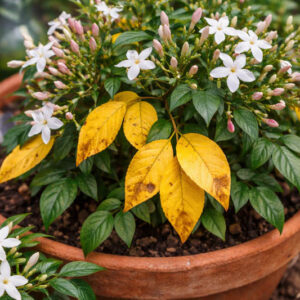
Yellowing leaves usually point to watering stress, but the cause can go in either direction.
If Star Jasmine grows well but blooms poorly, the issue is often one of three things.
Blackened foliage is often not a disease starting in the leaf itself but a surface coating caused by sooty mold.
Bronze or reddish winter foliage is often completely normal in Star Jasmine, especially in cooler weather.
If the plant looks thin, stretched, or bare at the base, insufficient light is often the problem.
Brown, dry, or scorched leaves usually suggest heat stress, drought, or reflected heat from paving or walls.
Star Jasmine dislikes sitting in wet soil, especially in winter or in poorly drained containers.
Container-grown Star Jasmine can decline faster than in-ground plants because pots exaggerate watering problems.
The main difference is botanical. Star Jasmine is not a true jasmine. True jasmines belong to the genus Jasminum, while Star Jasmine belongs to Trachelospermum. It has thicker evergreen leaves, a woody twining habit, and pinwheel-shaped flowers.
Compared with Asiatic Jasmine (Trachelospermum asiaticum), Star Jasmine usually has larger leaves, showier white flowers, and a stronger climbing habit. Asiatic Jasmine is more often grown as a ground cover.
Star Jasmine works beautifully in formal, Mediterranean, cottage, and warm-climate gardens. It softens hard surfaces, perfumes outdoor living areas, and provides evergreen structure without looking heavy.
Choose companions that enjoy similar sun and drainage conditions and that will not overwhelm the vine’s root zone.
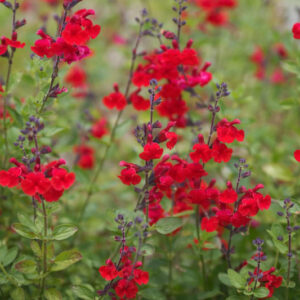
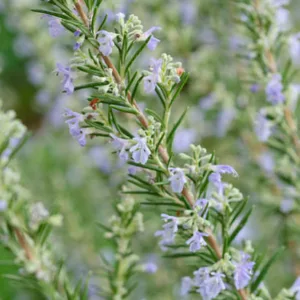
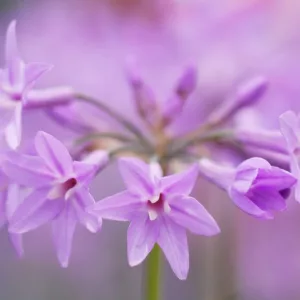
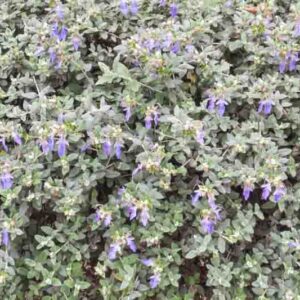
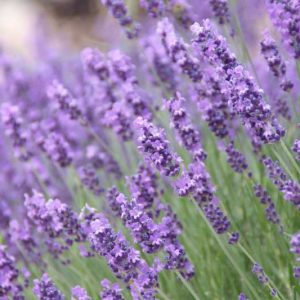
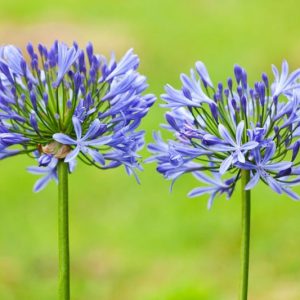
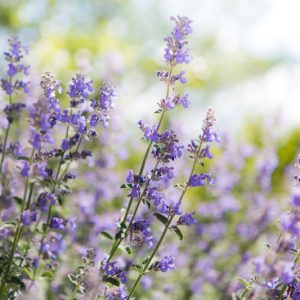
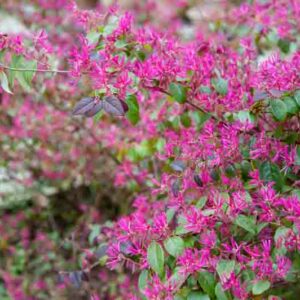
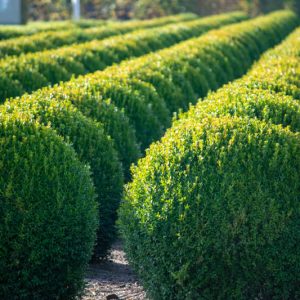
Good companions include: Salvia greggii, rosemary, lavender, dianthus, catmint, liriope, dwarf yaupon holly, nandina, loropetalum, agapanthus, society garlic, boxwood, creeping thyme, teucrium, and clumping ornamental grasses such as Pennisetum alopecuroides.
Yes. Star Jasmine is generally evergreen in mild climates, though leaves may bronze or suffer some damage in severe winter weather.
Star Jasmine usually blooms from late spring into summer, though exact timing depends on climate and growing conditions.
Yes. Use a large container with excellent drainage, a free-draining potting mix, and a sturdy support. Water regularly during establishment and protect the pot in harsh winter weather.
Once established, Star Jasmine grows at a moderate to fairly vigorous rate in warm conditions with good light, well-drained soil, and regular care.
No. Star Jasmine belongs to the genus Trachelospermum, while true jasmines belong to the genus Jasminum.
The most common reasons are too much shade, excessive nitrogen, or pruning at the wrong time. Plants flower best with good light and pruning done after flowering.
Yellow leaves usually indicate watering stress or poor drainage. Check whether the soil is staying too wet or becoming too dry between waterings.
Yes. Its fragrant flowers attract bees and other pollinators.
Updated: March 2026 – Reviewed by Gardenia Editors
| Hardiness |
8 - 10 |
|---|---|
| Heat Zones |
9 - 10 |
| Climate Zones | 8, 9, 10, 11, 12, 13, 14, 15, 16, 17, 18, 19, 20, 21, 22, 23, 24, H1, H2 |
| Plant Type | Climbers, Shrubs |
| Plant Family | Apocynaceae |
| Genus | Trachelospermum |
| Common names | Confederate Jasmine, Star Jasmine |
| Exposure | Full Sun, Partial Sun |
| Season of Interest | Spring (Early, Mid, Late), Summer (Early, Mid, Late), Fall, Winter |
| Height | 2' - 20' (60cm - 6.1m) |
| Spread | 5' - 20' (150cm - 6.1m) |
| Spacing | 120" (3m) |
| Maintenance | Average |
| Water Needs | Average |
| Soil Type | Chalk, Loam, Sand |
| Soil pH | Acid, Alkaline, Neutral |
| Soil Drainage | Well-Drained |
| Characteristics | Fragrant, Plant of Merit, Showy, Evergreen |
| Tolerance | Drought, Deer, Salt |
| Attracts | Bees |
| Garden Uses | Arbors, Pergolas, Trellises, Banks And Slopes, Ground Covers, Patio And Containers, Wall-Side Borders, Walls And Fences |
| Garden Styles | City and Courtyard, Coastal Garden, Informal and Cottage, Pollinator Garden |


| Hardiness |
8 - 10 |
|---|---|
| Heat Zones |
9 - 10 |
| Climate Zones | 8, 9, 10, 11, 12, 13, 14, 15, 16, 17, 18, 19, 20, 21, 22, 23, 24, H1, H2 |
| Plant Type | Climbers, Shrubs |
| Plant Family | Apocynaceae |
| Genus | Trachelospermum |
| Common names | Confederate Jasmine, Star Jasmine |
| Exposure | Full Sun, Partial Sun |
| Season of Interest | Spring (Early, Mid, Late), Summer (Early, Mid, Late), Fall, Winter |
| Height | 2' - 20' (60cm - 6.1m) |
| Spread | 5' - 20' (150cm - 6.1m) |
| Spacing | 120" (3m) |
| Maintenance | Average |
| Water Needs | Average |
| Soil Type | Chalk, Loam, Sand |
| Soil pH | Acid, Alkaline, Neutral |
| Soil Drainage | Well-Drained |
| Characteristics | Fragrant, Plant of Merit, Showy, Evergreen |
| Tolerance | Drought, Deer, Salt |
| Attracts | Bees |
| Garden Uses | Arbors, Pergolas, Trellises, Banks And Slopes, Ground Covers, Patio And Containers, Wall-Side Borders, Walls And Fences |
| Garden Styles | City and Courtyard, Coastal Garden, Informal and Cottage, Pollinator Garden |
How many Trachelospermum jasminoides (Star Jasmine) do I need for my garden?
| Plant | Quantity | |
|---|---|---|
| Trachelospermum jasminoides (Star Jasmine) | N/A | Buy Plants |
Create a membership account to save your garden designs and to view them on any device.
Becoming a contributing member of Gardenia is easy and can be done in just a few minutes. If you provide us with your name, email address and the payment of a modest $25 annual membership fee, you will become a full member, enabling you to design and save up to 25 of your garden design ideas.
Join now and start creating your dream garden!
Create a membership account to save your garden designs and to view them on any device.
Becoming a contributing member of Gardenia is easy and can be done in just a few minutes. If you provide us with your name, email address and the payment of a modest $25 annual membership fee, you will become a full member, enabling you to design and save up to 25 of your garden design ideas.
Join now and start creating your dream garden!