Sedum Guides
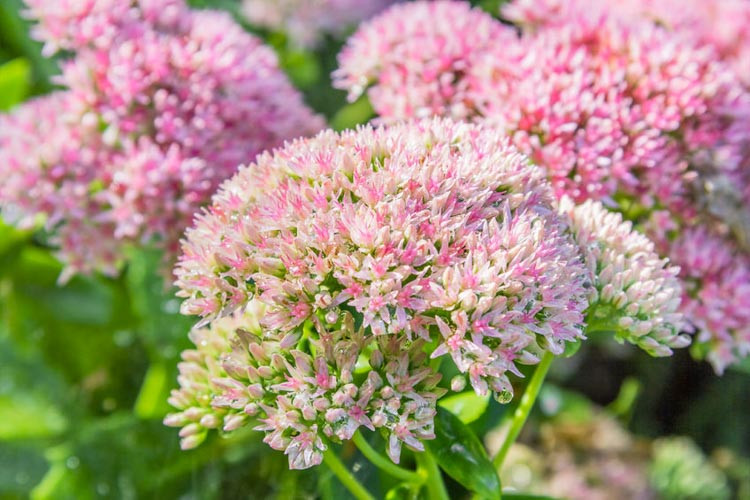
Sedum (Stonecrop) is not just a tough succulent – it is one of the smartest plants for gardeners who want beauty with very little babysitting. The key is choosing the right sedum for the job. Upright stonecrops bring bold late-season flowers to borders, while creeping sedums spill over walls, edge paths, carpet dry soil, and tuck beautifully into rock gardens.
In real gardens, sedum earns its place by solving problems. It handles heat, drought, lean soil, and sunny exposed spots where fussier perennials often fail. It also feeds pollinators, adds sculptural foliage before bloom, and keeps giving interest long after flowers fade. For gardeners building a Mediterranean-style garden or a pollinator garden, sedum is a practical, beautiful choice.
What Makes Sedum Different
Sedum stands out for its succulent leaves, drought tolerance, starry flowers, and relaxed nature. It does best in full sun and sharply drained soil. Too much water, shade, or rich soil can make upright varieties stretch, flop, or lose their compact shape. For plants that look good even before flowers open, see sedum that looks good before it blooms.
Choose the Right Type
Use upright sedums for structure and late flowers. Popular choices include Sedum ‘Autumn Joy’, Sedum ‘Autumn Fire’, and Sedum ‘Matrona’. For ground cover, try spreading types such as Sedum spurium ‘Dragon’s Blood’, Sedum acre, or Sedum kamtschaticum.
Where Sedum Works Best
Think of sedum as a plant for sunny, dry, high-drainage places. Use it along paths, on slopes, in gravel gardens, in raised beds, in containers, between rocks, or at the front of borders. Creeping sedums soften hard edges, while upright sedums pair beautifully with ornamental grasses, asters, coneflowers, and other late-season perennials.
How to Keep It Thriving
The best sedum care advice is simple: give it sun, drainage, and restraint. Avoid overwatering and heavy feeding. If upright plants lean, the cause is often shade, excess moisture, or soil that is too rich – use these easy fixes for flopping sedum. For winter cleanup, learn whether you should cut back sedum in winter.
Make More Plants
Sedum is one of the easiest perennials to propagate. Many types root quickly from cuttings, divisions, or even small stem pieces. That makes it ideal for filling gaps, repeating a design, or sharing with friends. Start with this simple sedum cutting trick and turn one healthy plant into many.
With the right variety and placement, Sedum becomes more than a low-maintenance plant – it becomes a reliable design tool for sunny gardens that need color, texture, resilience, and life.