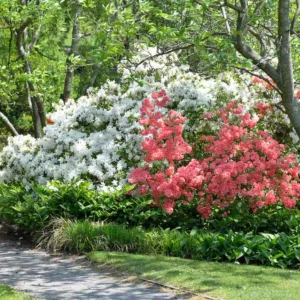
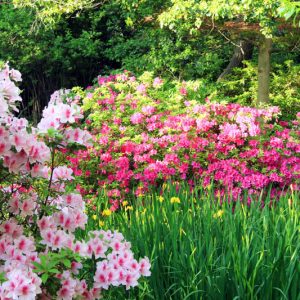
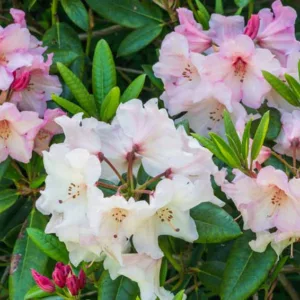
Deer can turn a spectacular azalea or rhododendron into a bare framework of stems, eating leaves, shoots, flower buds, and blooms. Discover which types face the greatest browsing risk, how to recognize deer damage, whether affected shrubs will recover and bloom, and the most effective ways to protect them.
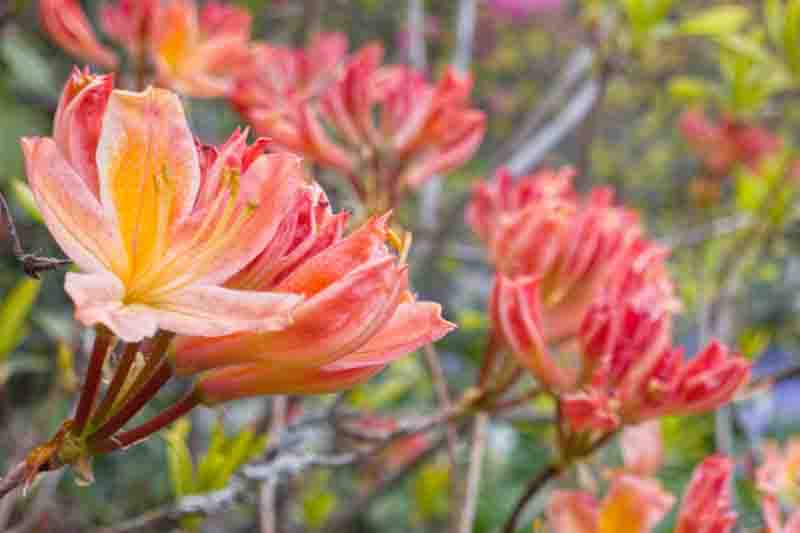


Yes. Deer eat both azaleas and rhododendrons, and some types are highly vulnerable to browsing. Rutgers rates evergreen azaleas and rhododendrons among plants that may be frequently severely damaged, while deciduous azaleas and several rhododendron species have somewhat lower – but still significant – browsing risk. Deer may eat leaves, tender shoots, flower buds, flowers, and small branches.
Azaleas and rhododendrons are often planted for spectacular spring flowers, but they are not shrubs you should assume deer will ignore.
Rutgers Cooperative Extension uses four deer-damage categories ranging from A – Rarely Damaged to D – Frequently Severely Damaged. In its published ratings, evergreen azaleas and rhododendrons fall into the D category, while deciduous azaleas and several rhododendron species fall into C – Occasionally Severely Damaged.
Iowa State Extension likewise includes rhododendrons and azaleas among trees and shrubs frequently severely damaged by deer.
This does not mean every azalea or rhododendron in every garden will be stripped. Deer pressure varies enormously from one neighborhood to another. A shrub may remain untouched for years in one landscape and be heavily browsed in another.
The practical conclusion is simpler: if deer regularly visit your garden, treat azaleas and rhododendrons as vulnerable plants.
Gardenia’s Rhododendron Rule: do not confuse toxicity with deer resistance. Azaleas and rhododendrons contain toxic compounds, but that does not make them reliable deer-proof shrubs.
There is a useful difference in the Rutgers ratings, but it should not be exaggerated into a promise of deer resistance.
| Plant Group | Rutgers Rating | What It Means |
|---|---|---|
| Evergreen Azaleas | D – Frequently Severely Damaged | High browsing risk where deer are active. |
| Deciduous Azaleas | C – Occasionally Severely Damaged | Somewhat lower risk, but significant browsing can still occur. |
| Rhododendrons – general category | D – Frequently Severely Damaged | Do not assume landscape rhododendrons are deer resistant. |
| Carolina Rhododendron Rhododendron carolinianum |
C – Occasionally Severely Damaged | Lower-rated than the generic rhododendron category, but still vulnerable. |
| Catawba Rhododendron Rhododendron catawbiense |
C – Occasionally Severely Damaged | Browsing risk remains meaningful. |
| Rosebay Rhododendron Rhododendron maximum |
C – Occasionally Severely Damaged | Not a deer-proof substitute. |
One especially important exception is Pinxterbloom azalea (Rhododendron periclymenoides). Rutgers places it among plants frequently severely damaged, and University of Maryland Extension describes it as very susceptible to deer browsing.
The takeaway: deciduous does not automatically mean deer resistant, and evergreen does not guarantee damage. Use these ratings as risk levels, not absolute predictions.
Deer may browse far more than the foliage.
University of Minnesota Extension identifies leaves, flowers, buds, and small branches as vulnerable on azaleas and rhododendrons.
Watch for damage to:
This explains why a rhododendron can remain alive yet produce a disappointing spring display. The deer may not have killed the plant – they may simply have eaten the part you were waiting all winter to see.
The pattern of damage is often more informative than the missing foliage itself.
Deer do not have sharp upper incisors for neatly clipping woody stems. They pull and tear vegetation, often leaving ragged or shredded ends.
Typical clues include:
University of Minnesota notes that deer feeding on azaleas and rhododendrons can occur from ground level to roughly 6 feet high.
Rabbit damage is generally lower and smaller stems may be cut much more cleanly, often at an angle.
Gardenia’s Deer Damage Check: missing buds + missing shoots + ragged stem ends + damage above rabbit height strongly point toward deer browsing.
They may, but flower-bud damage is one of the biggest reasons deer browsing is so frustrating on these shrubs.
Azaleas and rhododendrons set most of their spring flower buds on the previous season’s growth. Those buds remain on the branches through fall and winter, so deer browsing during the dormant season can remove flowers months before they would have opened.
If deer eat those buds during autumn, winter, or early spring, the shrub cannot simply replace them in time for its normal spring display.
This is the same reason late pruning can reduce flowering. University of Maryland Extension recommends pruning azaleas and rhododendrons soon after flowering because buds for the next season develop on the previous season’s growth.
If deer remove only a few outer shoots, flowering may simply be patchy. If they repeatedly strip most of the terminal buds, spring bloom can be dramatically reduced.
Gardenia’s Bloom Rule: with azaleas and rhododendrons, winter browsing is not just leaf damage. A deer eating a dormant flower bud may be eating part of next spring’s display months before you notice the loss.
Moderately browsed, established shrubs often recover.
They can produce new leaves and shoots during the growing season, although the plant may look uneven and flowering may be reduced.
Repeated browsing is more serious. If new shoots are removed again and again, the plant loses both foliage and future flowering wood. Young shrubs are especially vulnerable because they have less established structure and fewer stored reserves.
After damage, resist the temptation to immediately reshape the shrub with heavy pruning. First remove only obviously broken or dead material. Additional cutting may remove surviving buds or viable branches that could help the plant recover.
If deer already browse your landscape, protection is more dependable than hoping they will lose interest.
For gardens with serious deer pressure, fencing or individual shrub enclosures provide the most dependable protection.
Cages can be especially useful around newly planted azaleas and valuable specimen rhododendrons. The barrier must stand far enough from the foliage that deer cannot simply reach through and browse the branch tips.
If you need broader protection, see Gardenia’s guide to keeping deer out of the garden for a comparison of fencing, repellents, individual barriers, and other strategies.
Commercial deer repellents can reduce feeding, especially where deer pressure is moderate. Follow the product label carefully and reapply as directed, particularly as new growth appears or weather reduces effectiveness.
Repellents are generally most useful when applied before serious browsing begins and maintained according to the product label, rather than waiting until deer have repeatedly damaged the shrub.
Evergreen rhododendrons and azaleas can remain visible and accessible when many herbaceous foods have disappeared. Protecting branch tips and flower buds through winter can make the difference between a full spring display and very few flowers.
Not reliably.
Planting lavender, hellebores, ferns, boxwood, or other lower-browse plants nearby can create a garden with less overall deer damage, but those plants do not turn an azalea or rhododendron into a deer-resistant shrub.
A deer that wants the flower buds can simply reach past or walk around neighboring plants.
Think deer-resistant planting palette, not protective companion. Use lower-browse plants to reduce the number of vulnerable plants in the garden – not as a living fence around deer favorites.
You can, but your local deer pressure should influence the decision.
| Your Deer Pressure | Practical Approach |
|---|---|
| Rare deer visits | You may be able to grow them with little intervention while monitoring new plantings. |
| Occasional browsing | Repellents and temporary protection around flower buds and new shoots may be enough. |
| Regular deer traffic | Plan on cages, fencing, or another dependable barrier if flowering matters to you. |
| Heavy browsing with no desire to protect plants | A shrub with a stronger deer-resistance record is likely to be a more practical choice. |
If deer repeatedly strip your azaleas or rhododendrons, replacing them can be more practical than protecting them forever.
But deer resistance should never be the only filter.
Azaleas and rhododendrons typically occupy a specific garden niche: they favor acidic soil, good drainage, and often partial shade. A substitute that resists deer but wants completely different conditions may fail for an entirely different reason.
Gardenia’s Deer-Smart Replacement Rule: replace the plant’s role and site fit, not just its name.
Start with Gardenia’s Deer-Resistant Plants, then use the Gardenia Plant Finder to narrow your choices by sun exposure, hardiness, soil pH, drainage, water needs, mature size, garden style, native status, wildlife value, and other tolerances.
If you still want azaleas or rhododendrons, explore the Gardenia Azalea and Rhododendron collection to compare size, hardiness, bloom season, foliage, and growing conditions.
You can also browse Deer-Resistant Garden Ideas, then use the Garden Design Tool to check whether the plants you choose actually share compatible growing conditions.
Yes. Deer may eat azalea leaves, tender shoots, flower buds, flowers, and small branches. Evergreen azaleas are among the higher-risk groups in Rutgers deer-damage ratings.
Yes. Rhododendrons are not reliably deer resistant. Rutgers places the general rhododendron category among plants frequently severely damaged, although several named species receive a somewhat lower rating.
Rutgers gives deciduous azaleas a lower deer-damage rating than evergreen azaleas, but that does not make them deer proof. Significant browsing can still occur, and some deciduous species such as Pinxterbloom azalea are particularly vulnerable.
Yes. Deer may browse flower buds as well as leaves, flowers, shoots, and small branches. Because azaleas and rhododendrons form spring flower buds during the previous growing season, winter browsing can remove part of the following spring’s bloom.
Look for missing leaves, buds and shoots, ragged stem ends, and damage several feet above ground. Deer tear vegetation rather than clipping woody stems cleanly.
Established shrubs can often recover from moderate browsing, but repeated feeding can weaken new growth, distort the plant, and reduce flowering. Young shrubs deserve extra protection.
Physical barriers are the most dependable option under heavy deer pressure. Cages can protect individual shrubs, while deer repellents may reduce browsing where pressure is lighter or moderate.
Not reliably. Deer may avoid neighboring plants and still browse an azalea or rhododendron. Use deer-resistant companions to create a less vulnerable garden overall, not as a substitute for physical protection.
Updated: September 2026 – Reviewed by Gardenia Editors
| Hardiness |
3 - 10 |
|---|---|
| Plant Type | Shrubs |
| Genus | Rhododendron |
| Exposure | Full Sun, Partial Sun |
| Season of Interest | Spring (Early, Mid, Late), Summer (Early), Fall, Winter |
| Maintenance | Low |
| Water Needs | Average |
| Soil Type | Clay, Loam, Sand |
| Soil pH | Acid |
| Soil Drainage | Moist but Well-Drained |
| Tolerances | Rabbit |
| Attracts | Butterflies, Hummingbirds |
| Landscaping Ideas | Beds And Borders, Patio And Containers, Small Gardens |
| Garden Styles | City and Courtyard, Gravel and Rock Garden, Informal and Cottage, Japanese Garden, Traditional Garden |
Create a membership account to save your garden designs and to view them on any device.
Becoming a contributing member of Gardenia is easy and can be done in just a few minutes. If you provide us with your name, email address and the payment of a modest $25 annual membership fee, you will become a full member, enabling you to design and save up to 25 of your garden design ideas.
Join now and start creating your dream garden!