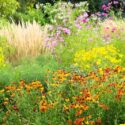
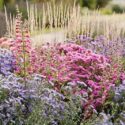
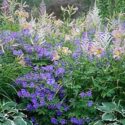
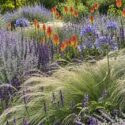
Ready to transform your Southern California garden? Discover the best drought-tolerant plants, vibrant blooms, and smart design ideas to create a lush, water-wise landscape. From native shrubs to striking succulents, this expert guide helps you build a garden that thrives beautifully with less effort and less water.
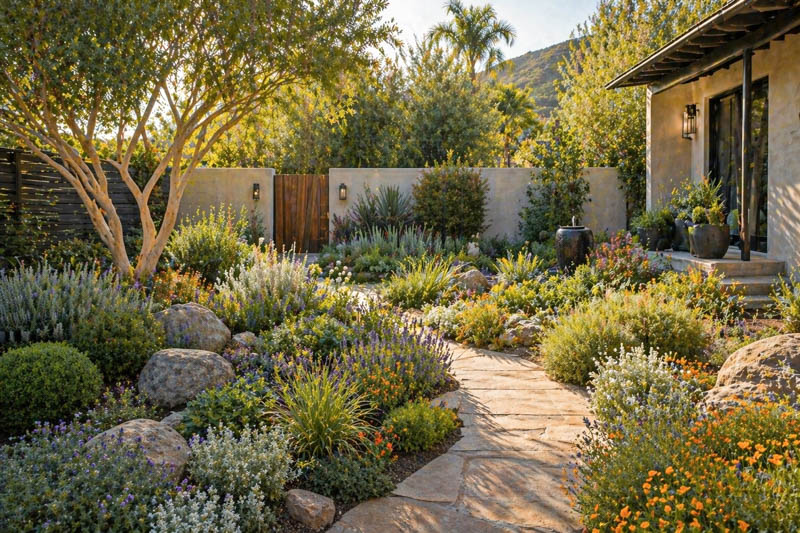


Southern California is one of the most rewarding places in the country to garden, but it is also one of the easiest places to make expensive planting mistakes.
That is because Southern California is not one single gardening climate. It includes cool coastal neighborhoods shaped by marine air, inland valleys that trap heat, foothill gardens with more exposure and temperature swings, and desert or desert-edge landscapes where intense sun, drying winds, and limited rainfall completely change what performs well. A shrub that looks effortless in Santa Barbara may struggle in Pasadena. A succulent that thrives in Palm Springs may fail in a coastal garden with heavier irrigation. Even within one yard, a shaded patio, a slope, and a south-facing wall can behave like different climates.
That is why weak plant guides underperform. They flatten Southern California into one generic category and offer broad lists of “best plants” without addressing the more useful question: best plants for which Southern California garden?
This guide takes a stronger approach. Instead of treating the region as one uniform planting zone, it breaks Southern California into practical garden regions, explains how those environments differ, and offers curated plant palettes that balance native plants and climate-appropriate non-native plants. It is designed to help readers choose plants that are not only beautiful, but also more resilient, easier to maintain, and better matched to real Southern California conditions.
The biggest mindset shift
The best Southern California plant is not the most popular one. It is the one that fits your exact region, light, water pattern, and mature space.
Southern California is often described as Mediterranean, and in broad terms that is fair: relatively mild, wetter winters and dry summers. But that summary is not specific enough to guide plant choice well.
Coastal gardens are shaped by fog, salt influence, and wind. Inland valleys face hotter summer afternoons, lower humidity, and stronger reflected heat. Foothill gardens often deal with more exposure, faster drainage, and wider temperature swings. Desert and desert-edge gardens demand a more extreme version of water-wise planting altogether.
This is also why Sunset Climate Zones are far more useful than broad regional labels alone. Southern California spans multiple Sunset zones, and plant performance can change dramatically across short distances. For most gardeners, the practical takeaway is simple: stop asking for the best plants for Southern California in general. Start asking for the best plants for your part of Southern California.
Why generic plant lists fail
They make readers think one answer works on the coast, inland, foothills, and in the desert. In Southern California, that assumption usually leads to disappointment.
There is another layer to this: microclimate. A dry shaded side yard can behave nothing like a sunny front slope. A courtyard can trap heat. A wall can reflect enough afternoon sun to stress a plant that would otherwise be happy nearby. A low spot can stay moister than the rest of the property. The best Southern California gardens are not planted from averages. They are planted from observation.
This article is intentionally curated, not exhaustive. Use the plant palettes below as a high-confidence starting point.
Start by identifying whether your garden is mainly coastal, inland valley or foothill, or desert / desert-edge. Then narrow your shortlist based on practical realities: sun exposure, mature size, water pattern, and design goal. That sequence matters more than chasing individual plant popularity.
Gardeners who want to refine their choices can use the Gardenia Plant Finder to filter plants by climate zone, light, water needs, size, bloom season, native status, planting place, tolerances, and other practical criteria. In Southern California, that kind of filtering is especially useful because plant performance depends on the combination of conditions, not just one trait.
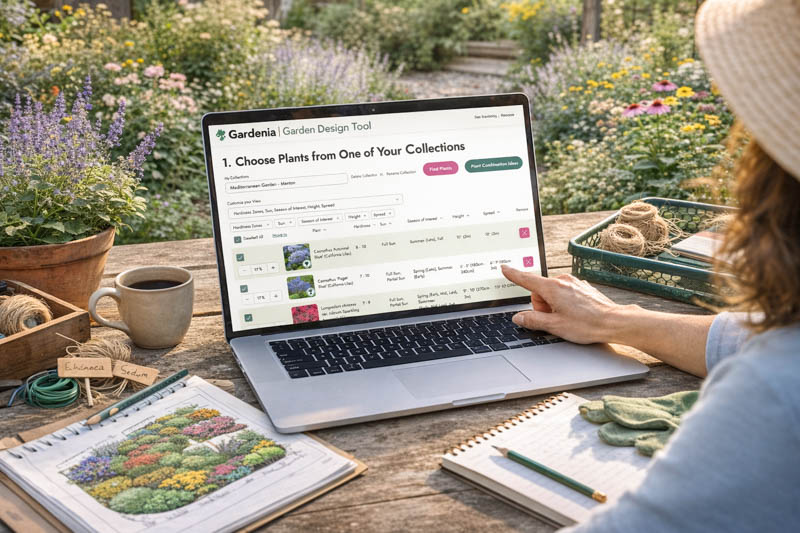
For gardeners thinking beyond individual plants, the Gardenia Design Tool can help compare plants within a broader planting plan. That matters because successful gardens depend not only on choosing good plants, but on combining plants that work well together in scale, rhythm, maintenance level, and water use.
You will also see a Wildfire-Minded Use column. This should not be read as a promise that any plant is fireproof or universally safe. In Southern California, wildfire resilience depends heavily on spacing, pruning, cleanup, irrigation strategy, defensible space, and how the area closest to a structure is managed. The column is best understood as a quick design signal: whether a plant is often used successfully in fire-wise landscapes when maintained well, or whether it deserves more caution near structures.
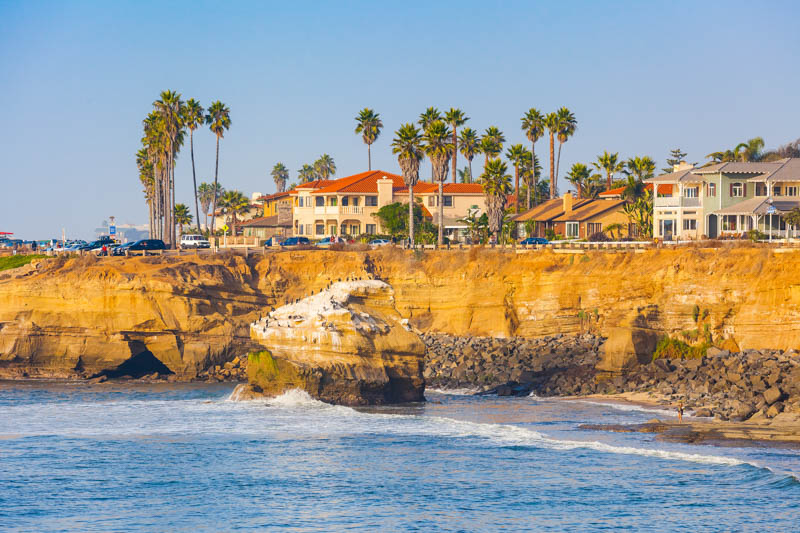
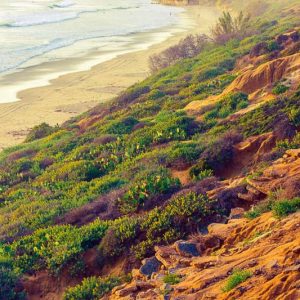
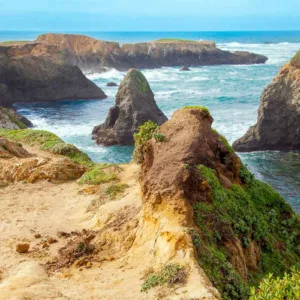
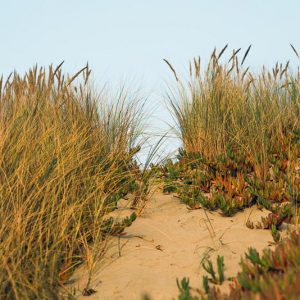
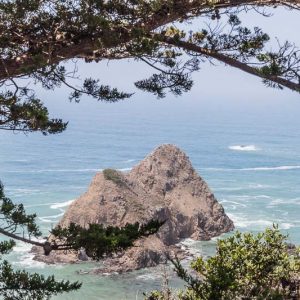
Coastal gardens are often the envy of the rest of the region, but they are not effortless. Marine air moderates temperatures, yet wind, salt spray, bright light, and fast-draining soils shape what truly performs well. The strongest coastal gardens usually feel relaxed but not loose, layered rather than flat, and drought-aware without looking austere.
This is one of the easiest Southern California regions for combining natives with climate-appropriate non-natives. California coastal and sage scrub plants often perform beautifully, but so do many Mediterranean, Australian, and South African plants that appreciate dry summers, bright exposure, and leaner soils. That matters because many readers want both ecological value and ornamental flexibility.
| Plant | Native Status | Bloom Time | Typical Garden Size | Characteristics | Wildfire-Minded Use |
|---|---|---|---|---|---|
| Erigeron glaucus (Seaside Daisy) | Native | Spring to summer | Low, spreading (6–12 in.) | Excellent coastal groundcover for edges, paving gaps, containers, and long bloom | Often suitable with maintenance |
| Mimulus aurantiacus (Bush Monkey Flower) | Native | Spring into summer | 3–4 ft shrub | Reliable flowering shrub for dry coastal gardens and hummingbirds | Use with spacing and cleanup |
| Salvia mellifera (Black Sage) | Native | Spring to early summer | 3–6 ft shrub | Fragrant, habitat-rich, drought-adapted, strong regional identity | Better away from structures unless maintained carefully |
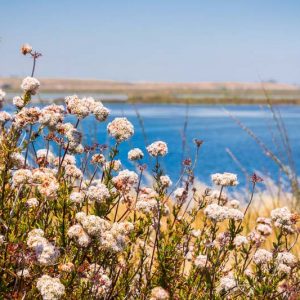
| Eriogonum fasciculatum (California Buckwheat) | Native | Spring through summer | 1–6 ft shrub | Pollinator powerhouse and excellent for slopes and dry gardens | Use with spacing and cleanup |
| Ceanothus thyrsiflorus (Blueblossom) | Native | Late winter to spring | 15–20 ft shrub/small tree | Iconic California shrub with vivid blue flowers and strong structure | Use with caution near structures; avoid summer irrigation |
| Westringia fruticosa (Coastal Rosemary) | Non-native | Intermittent | 4–6 ft shrub | Excellent evergreen structure for hedges and informal planting | Often suitable when pruned and maintained |
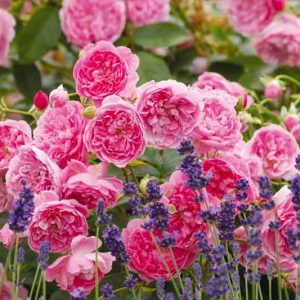
| Lavandula (Lavender) | Non-native | Spring to summer | 2–3 ft shrub | Fragrant, pollinator-friendly, classic Mediterranean plant | Use with pruning and cleanup |
| Sesleria autumnalis (Autumn Moor Grass) | Non-native | Late spring (grown for foliage) | 12–18 in. clumps | Refined, semi-evergreen grass for structure, repetition, and movement | Suitable if cut back and maintained |
| Armeria maritima (Sea Thrift) | Native (coastal regions) | Spring to early summer | 6–12 in. clump | Salt-tolerant, compact edging plant with tidy mounds and pink flowers | Often suitable |
| Dietes grandiflora (African Iris) | Non-native | Spring through fall | 3–4 ft clump | Durable, structured, and useful for modern or formal planting | Often suitable with maintenance |
The strongest coastal gardens usually blend native softness with evergreen structure. Seaside daisy, monkey flower, and sea thrift bring regional character and seasonal bloom, while coastal rosemary, autumn moor grass, and African iris provide year-round form. Adding ceanothus introduces a distinctly Californian presence, but it should be used thoughtfully and placed according to long-term maintenance and water patterns.
🔎 Find More Coastal Plants with our Plant Finder
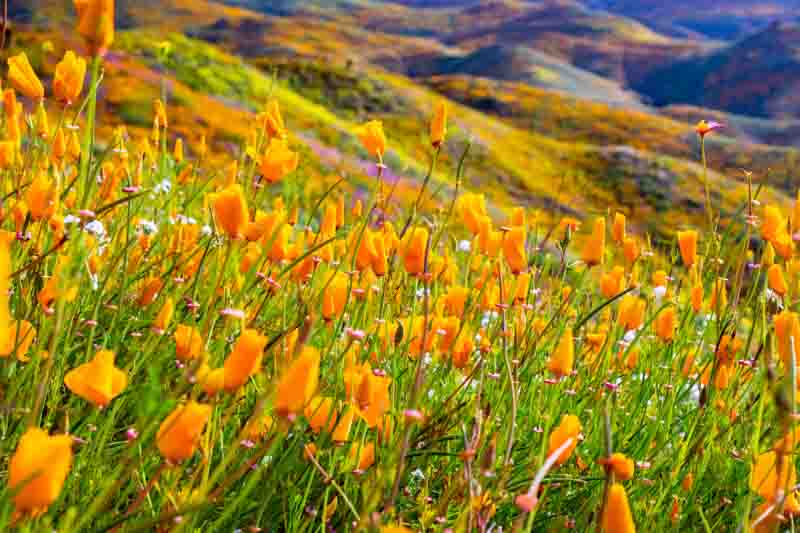
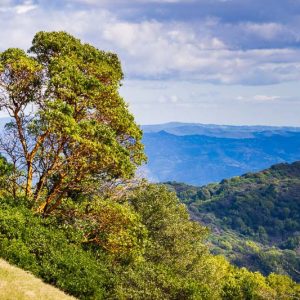
Inland Southern California is where plant selection becomes far less forgiving. Summer heat is stronger, air is drier, irrigation becomes more consequential, and poorly adapted plants reveal themselves quickly. Foothill gardens add exposure, slope, and often faster drainage. Plants here need genuine resilience, not just tolerance on paper.
The most convincing inland and foothill gardens do not fight the climate. They work with it. They use plants that can hold structure in heat, repeat confidently, and still deliver color, texture, and habitat value. This is where disciplined plant choice pays off.
| Plant | Native Status | Bloom Time | Typical Garden Size | Characteristics | Wildfire-Minded Use* |
|---|---|---|---|---|---|
| Salvia clevelandii (Cleveland Sage) | Native | Spring to summer | Medium shrub | A signature Southern California plant with fragrance, pollinator value, and heat tolerance | Use with spacing and cleanup |
| Muhlenbergia rigens (Deer Grass) | Native | Summer into fall effect | Large clump | Excellent for movement, slopes, dry modern planting, and larger drifts | Often suitable if cut back and cleaned |
| Heteromeles arbutifolia (Toyon) | Native | Summer flowers, winter berries | Large shrub to small tree | Evergreen structure, habitat value, screening potential, strong regional character | Better with spacing and maintenance away from structures |
| Penstemon heterophyllus (Foothill Beardtongue) | Native | Spring to early summer | Small perennial | Blue-violet bloom, excellent for low-water borders and hummingbirds | Often suitable with maintenance |
| Teucrium fruticans (Bush Germander) | Non-native | Spring to summer, sometimes longer | Medium shrub | Silver foliage, heat tolerance, informal hedge value, strong Mediterranean feel | Often used well when pruned and thinned |
| Salvia rosmarinus (Rosemary) | Non-native | Often winter to spring | Shrub or groundcover form | Fragrance, evergreen structure, culinary value, flexible garden use | Use with pruning and caution near structures |
| Agapanthus (Lily of the Nile) | Non-native | Summer | Medium clump | Classic Southern California perennial for bold flower heads and clean structure | Often suitable with maintenance |
| Olea europaea (Olive) | Non-native | Spring | Tree | Mediterranean character, drought-smart once established, strong framework plant | Often used with spacing and canopy maintenance |
Inland and foothill gardens benefit from a strong backbone. That might be toyon, olive, or bush germander, combined with deer grass, rosemary, penstemon, or sages. The goal is not to make the garden feel dry and spare. The goal is to build lushness that is believable in an inland Southern California climate.
Best inland strategy
Use a restrained palette of plants that can handle heat, then repeat them confidently. Repetition creates cohesion and reduces maintenance.
🔎 Find More Inland Valley and Foothill Plants with our Plant Finder
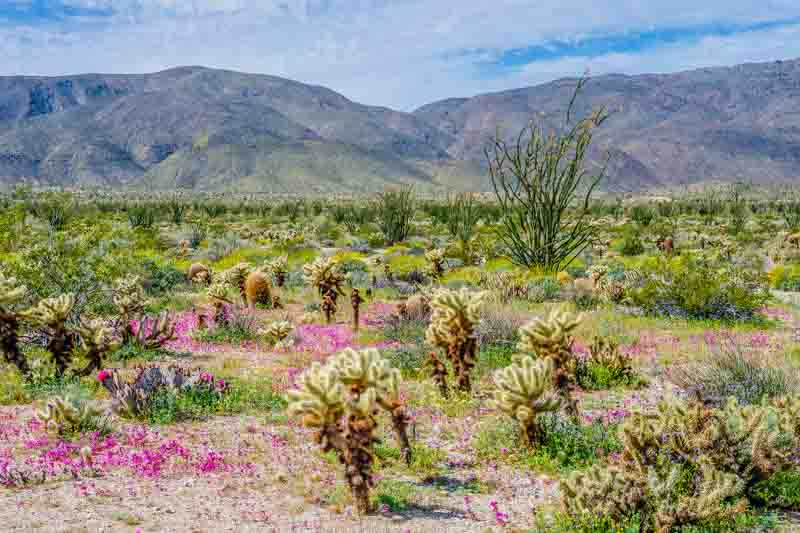
Desert and desert-edge gardens require the most discipline and often produce the most striking results. These are not landscapes that should be crowded with random plant choices. They work best when the palette is edited, the forms are sculptural, and each plant has enough room to be seen.
This is where Southern California gardeners benefit from understanding that design and horticulture are working together. A desert garden is not “lesser” because it uses fewer plants. Done well, it feels deliberate, elegant, and deeply connected to place. The best plants here are not just drought tolerant. They are genuinely adapted to glare, wind, sparse rainfall, and intense summer conditions.
| Plant | Native Status | Bloom Time | Typical Garden Size | Characteristics | Wildfire-Minded Use* |
|---|---|---|---|---|---|
| Encelia farinosa (Brittlebush) | Native | Spring | Medium shrub | Silver foliage, bright bloom, classic desert character | Often suitable with cleanup |
| Chilopsis linearis (Desert Willow) | Native | Late spring through fall | Small tree | One of the best flowering desert trees for color and movement | Use with canopy spacing and cleanup |
| Justicia californica (Chuparosa) | Native | Spring and beyond in favorable sites | Medium shrub | Excellent hummingbird plant with authentic desert style | Use with spacing and cleanup |
| Opuntia basilaris (Beavertail Cactus) | Native | Spring to early summer | Low spreading cactus | Sculptural pads and striking flowers, strong visual impact in gravel gardens | Often suitable when properly placed |
| Hesperaloe parviflora (Red Yucca) | Non-native to California / arid-adapted | Late spring through summer | Clumping accent | Excellent accent plant for hummingbirds, heat tolerance, and narrow upright form | Often suitable |
| Aloe species | Non-native | Often winter to spring | Varies | Strong succulent structure and valuable off-season flower color | Often suitable when healthy and clear of debris |
| Agave species | Mixed | Rare but dramatic flowering cycle | Varies | Architectural anchors for desert and contemporary xeric planting | Often suitable with spacing |
| Leucophyllum frutescens (Texas Sage) | Non-native to California / desert-adapted | Intermittent flushes, often after humidity or rain | Medium to large shrub | Silver foliage, screening potential, one of the most useful heat-tolerant shrubs | Use with spacing and pruning |
Great desert gardens use fewer species more deliberately. A backbone of agaves, aloes, cactus, or red yucca can create strong architecture, while desert willow, brittlebush, and chuparosa add bloom and seasonal rhythm. The result is not a sparse landscape. It is a highly edited one.
Best desert design move
Let plants breathe. In desert gardens, negative space is part of the design, not a sign that the planting is unfinished.
🔎 Find More Desert and Desert-Edge Plants with our Plant Finder
Best conversion path for gardeners
Read the article for direction. Use Plant Finder to refine the shortlist. Use Design Tool to turn that shortlist into a planting plan that feels intentional.
California buckwheat, monkey flower, penstemon, seaside daisy, and native sages are standout choices for supporting bees, butterflies, and hummingbirds.
lavender, rosemary, and many salvias can extend bloom time while maintaining strong ornamental value.
For evergreen framework, coastal rosemary, toyon, olive, Texas sage, and rosemary provide reliable structure.
The key is to match mature size and water needs to your site instead of choosing plants that will outgrow the space or demand more irrigation than the garden can sustain.
California buckwheat, deer grass, and region-appropriate sages are especially useful here. These plants root well, tolerate exposure, and help stabilize soil without turning slopes into a high-maintenance problem.
seaside daisy, penstemon, compact lavenders, dwarf agaves, and smaller aloes are excellent choices for limited spaces.
In small gardens, repeating a few strong plants usually creates a cleaner and more convincing design than packing in too much variety.
Dry shade is one of the hardest conditions in Southern California. Hummingbird sage is one of the most valuable native options. Depending on the site, selected shade-tolerant companions can help create a fuller planting without pushing the garden into a much higher-water pattern.
Any serious Southern California planting guide should address wildfire, but it should do so carefully. The wrong approach is to pretend there are clean, universal fire ratings for every plant. The better approach is to acknowledge that plant choice is only one part of a larger fire-wise strategy.
Wildfire resilience depends on spacing, pruning, cleanup, defensible space, irrigation, and how the area closest to the home is managed. Plants that may be acceptable in one part of the landscape can be much less appropriate right against a structure, under eaves, or where dry litter collects. Dense, overgrown, resinous, or badly maintained plants can become far riskier than the same species used thoughtfully and kept in good condition.
That is why this article uses the term wildfire-minded use rather than pretending to score exact resistance. It is a safer and more realistic way to guide gardeners while respecting the complexity of wildfire planning.
Fire-wise reminder
No plant makes a home wildfire-safe by itself. In Southern California, spacing, defensible space, irrigation, and cleanup matter just as much as plant selection.
The best plants for Southern California gardens are not found on one universal list. They are found by narrowing the field according to region, microclimate, light, water pattern, design style, and mature scale.
Use this guide as your starting map. Then use the Gardenia Plant Finder to refine your shortlist by climate zone, light, water needs, native status, bloom season, size, and planting use. When you are ready to turn those ideas into a real planting composition, use the Gardenia Design Tool to compare plants and shape a more coherent, more resilient, and more beautiful Southern California garden.
The best plants depend on whether your garden is coastal, inland, foothill, or desert-edge. In general, Southern California gardens perform best with climate-appropriate natives, succulents, Mediterranean plants, and other drought-tolerant species matched to local conditions.
Not necessarily. Native plants are among the strongest choices for resilience, wildlife value, and regional identity, but many Southern California gardens also benefit from carefully chosen non-native Mediterranean, Australian, South African, and arid-climate plants that thrive under similar conditions.
Coastal gardens deal with marine influence, wind, and milder temperatures, while inland gardens face hotter summers, drier air, and often stronger temperature swings. Plants that thrive in one setting may struggle badly in the other.
Desert and desert-edge gardens experience harsher sun, reflected heat, hotter winds, and much lower rainfall. They need plants that are genuinely arid-adapted, including desert natives, cacti, succulents, and heat-tolerant shrubs and trees.
It is better to think in terms of fire-wise planting than fireproof plants. Plant choice matters, but so do defensible space, pruning, cleanup, spacing, irrigation, and how the area closest to the house is designed and maintained.
Start by identifying your region, then narrow your choices by light, mature size, water pattern, native status, and design purpose. Gardenia Plant Finder is especially useful because it lets you filter plants using those practical criteria instead of relying on generic lists.
Gardenia Design Tool helps you compare shortlisted plants and assemble combinations that work together in terms of scale, bloom sequence, structure, and growing needs. It is particularly useful when you want to move from plant ideas to a real planting plan.
Yes. Sunset Climate Zones are often more useful than broad regional labels because they reflect the real climatic differences that affect plant performance across California. They are especially helpful when you want to refine a shortlist after identifying whether your garden is coastal, inland, foothill, or desert-edge.
Updated: April 2026 • Reviewed by Gardenia Editors
Create a membership account to save your garden designs and to view them on any device.
Becoming a contributing member of Gardenia is easy and can be done in just a few minutes. If you provide us with your name, email address and the payment of a modest $25 annual membership fee, you will become a full member, enabling you to design and save up to 25 of your garden design ideas.
Join now and start creating your dream garden!
Create a membership account to save your garden designs and to view them on any device.
Becoming a contributing member of Gardenia is easy and can be done in just a few minutes. If you provide us with your name, email address and the payment of a modest $25 annual membership fee, you will become a full member, enabling you to design and save up to 25 of your garden design ideas.
Join now and start creating your dream garden!