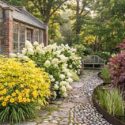
Want a garden that looks lush without constant watering? This expert guide reveals how to design a drought-tolerant landscape using smart plant choices, layered layouts, and water-wise strategies. Create a beautiful, resilient outdoor space that thrives in dry conditions while reducing maintenance and conserving water year-round.
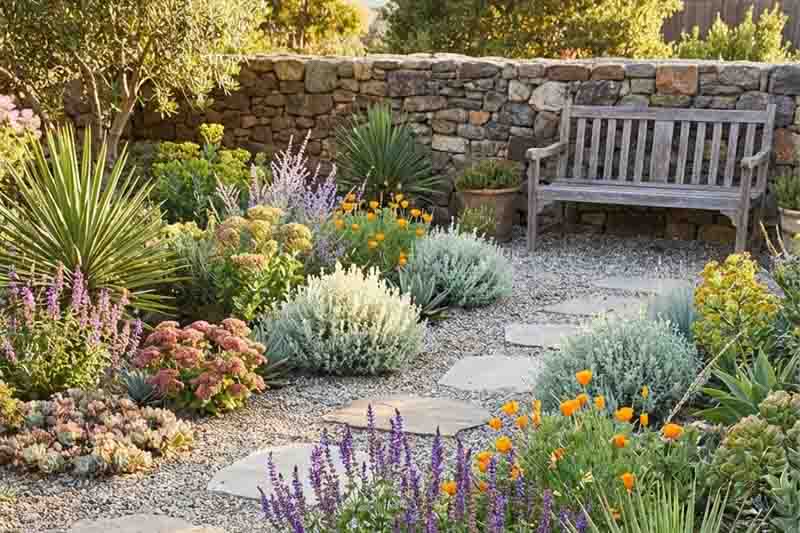


A drought-tolerant garden does not have to look sparse, dusty, or stripped down to survive. The best ones feel layered, intentional, and settled. They hold their shape in peak summer heat, stay attractive between bloom cycles, and use less water because the design works as a whole.
That distinction matters. Many low-water landscapes fail because drought tolerance is treated as a plant list instead of a design system. A few tough plants go in, irrigation is reduced, and the rest is left to chance. Over time, roots stay shallow, soil dries unevenly, weeds colonize open gaps, and the garden becomes harder—not easier—to manage.
A successful drought-tolerant garden works differently. Climate, soil, mulch, hydrozoning, spacing, irrigation, and plant structure all support one another. When those pieces are aligned, the result is a landscape that looks fuller, performs more reliably, and becomes easier to maintain as it matures.
This guide explains how to build that kind of garden from the ground up and how to turn the principles into a practical planting plan using the Gardenia Plant Finder and the Gardenia Design Tool.
A drought-tolerant garden is a landscape designed to remain healthy and attractive with limited supplemental irrigation once plants are established.
That does not mean no water. Even resilient plants need regular moisture while establishing roots. In most gardens, the first one to two years determine whether plants become self-supporting or remain irrigation-dependent. Long-term drought resilience comes from deeper root systems, better soil performance, and a layout that reduces stress before it starts.
Whether a garden actually performs well with low water depends on five interacting factors:
Many so-called drought-tolerant gardens fail because one of these variables is ignored—usually soil, climate fit, or the establishment phase.
For a broader overview of low-water garden styles, see Drought-Tolerant Gardens: Plants, Designs, and Care.
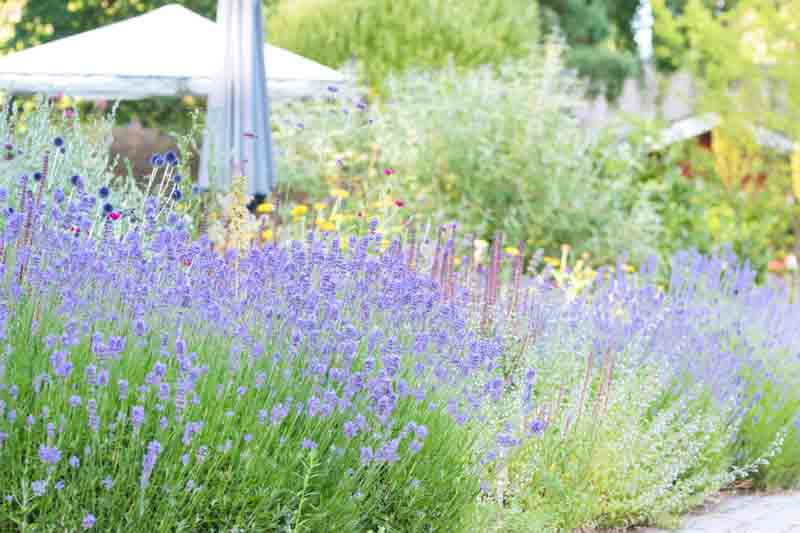
These terms overlap, but they are not identical.
In practice, the best drought-tolerant gardens use xeriscape principles. That does not mean they must look stark or gravel-heavy. A water-wise garden can still feel lush, shaded, textural, and immersive.
The strongest low-water landscapes are designed as systems. The weakest are assembled as collections of plants.
If you want a drought-tolerant garden that still looks full and beautiful, seven elements need to work together:
The biggest design mistake in drought-tolerant gardening is starting with a generic plant list before understanding the site. The real question is not simply which plants tolerate drought. It is what kind of drought, in what climate, and in what soil?
A plant that thrives in summer-dry California may struggle in a humid Southern garden. A prairie perennial that tolerates dry spells in a northern climate may struggle in desert heat. A Mediterranean shrub that loves dry air may fail in winter-wet clay. Climate determines strategy more than any single plant choice.
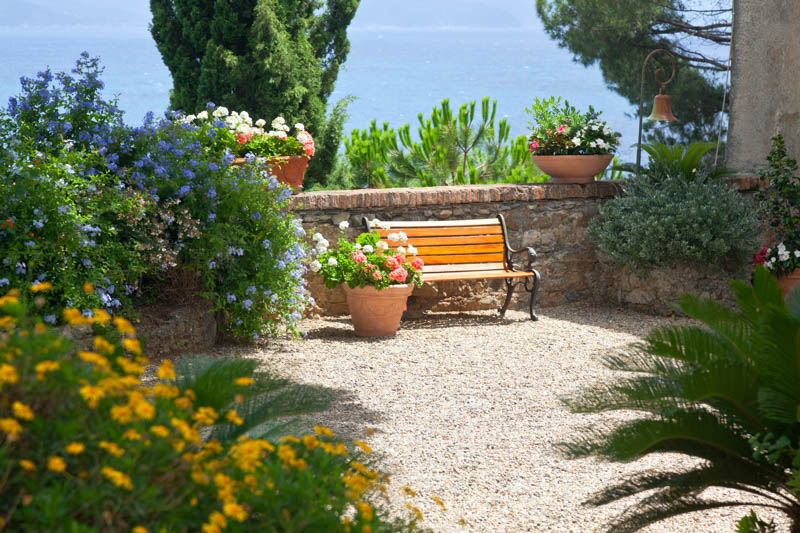
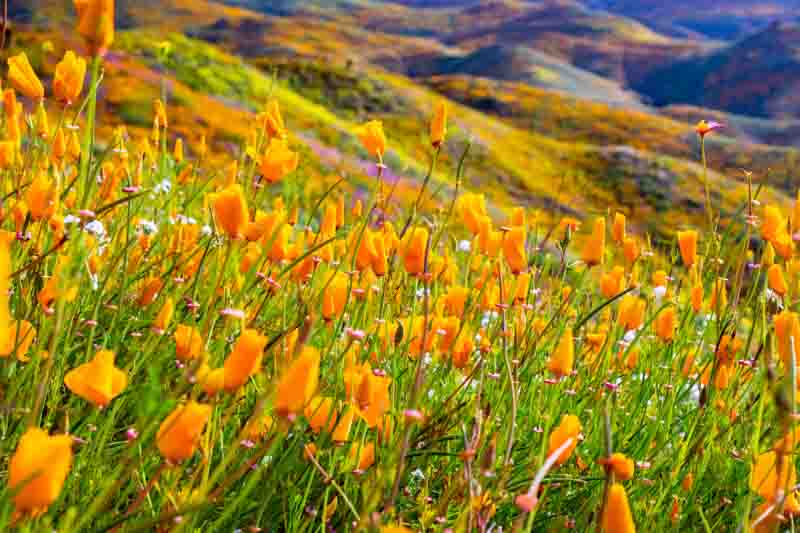
Examples: California, parts of Southern Europe, coastal Australia
These regions have wet winters and dry summers, making them especially well suited to many classic drought-adapted plants and layered dry-garden design.
Related plant and design references: lavender, rosemary, olive trees, rockrose, santolina, euphorbia, ornamental grasses, and Mediterranean Garden Design Guide.
Examples: the Southwestern United States, inland valleys, arid regions with extreme summer heat
Here the challenge is not just low rainfall. It is intense sun, high evaporation, reflected heat, and hot wind. In these landscapes, shade and root-zone protection matter as much as plant toughness.
Related references: agave, yucca, dasylirion, desert shrubs, and arid-climate trees.
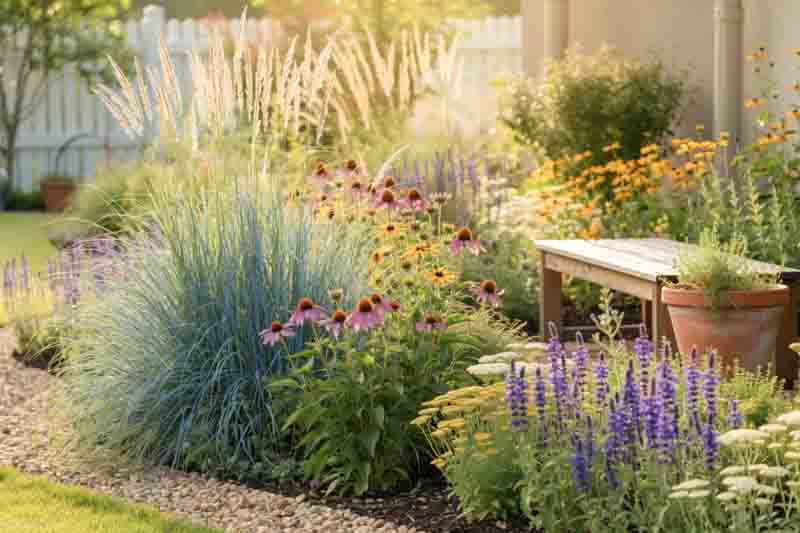
Examples: the Southeast, humid subtropical regions, parts of the Mid-Atlantic
In humid climates, the problem is often not continuous drought but irregular rainfall combined with drainage issues, disease pressure, and warm nights that keep soils and foliage damp for longer.
Related references: coneflowers, black-eyed susans, yarrow, and salvias.
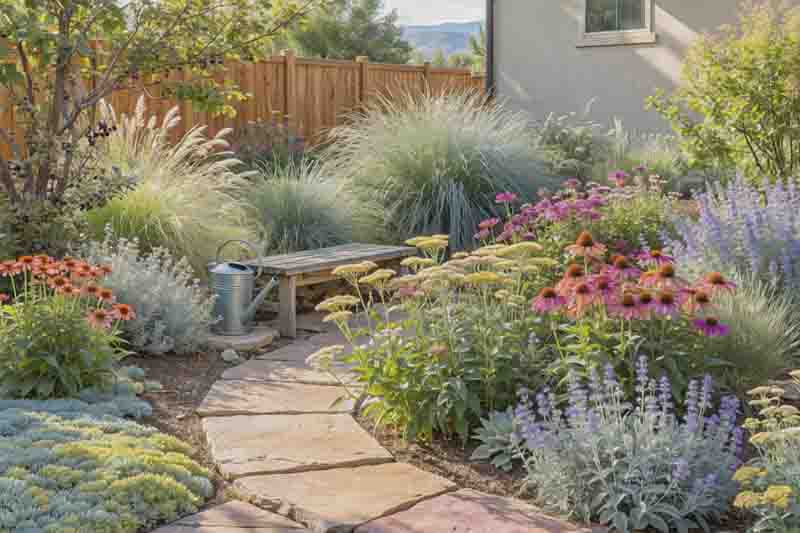
Examples: northern and interior regions, Zones 5–7 and colder
In colder climates, drought tolerance has to be paired with winter hardiness and reliable drainage. Many plants survive summer dryness but fail in winter-wet soil.
Related references: sedum, coneflowers, yarrow, and catmint.
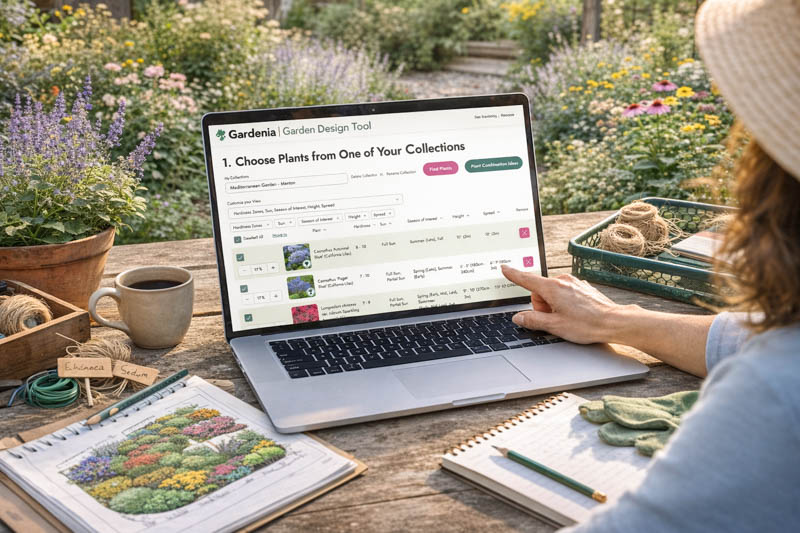
The most effective way to use the Gardenia Plant Finder is not simply to browse attractive plants. Use it to answer specific design questions. Which plants thrive in full sun with low water? Which shrubs tolerate dry, rocky soil? Which perennials provide late-season color without increasing irrigation demand? Which groundcovers can help shade the soil and reduce evaporation?
Save the best candidates to your personal garden collection. Then move to the Gardenia Design Tool to turn that plant list into a workable layout. This is where you can review and adjust your plant list, check bloom timing, and calculate how many plants you need.
Together, these tools help prevent one of the most common drought-garden mistakes: choosing individually drought-tolerant plants without building a planting plan that actually functions as a drought-tolerant system.
The most successful drought-tolerant gardens do not rely on flowers alone. They look complete because they have strong underlying structure. Without that framework, a planting may look attractive for a few weeks in spring and then feel flat, gappy, or tired by late summer.
A useful way to think about this is the Four-Layer Model.
This includes small trees or large sculptural shrubs that create overhead presence, shade, and scale.
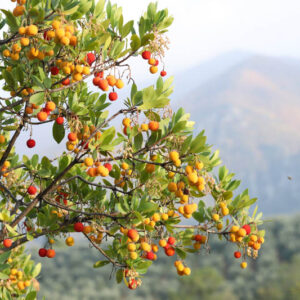
Related references: olive tree, arbutus, palo verde, and Best Mediterranean Trees.
These are evergreen shrubs, bold perennials, and grasses that hold the composition together through the year.
Related references: lavender, rosemary, santolina, muhlenbergia, and stipa.
This layer brings changing color, pollinator value, and movement.
Related references: salvia, echinacea, yarrow, gaura, verbena, and penstemon.
This layer covers the soil between larger plants.
Related references: creeping thyme, sedum, dymondia, and barrenwort.
The Four-Layer Model works because it resembles stable plant communities in nature: upper layers soften heat and light, middle layers provide structure, and lower layers protect the soil surface.
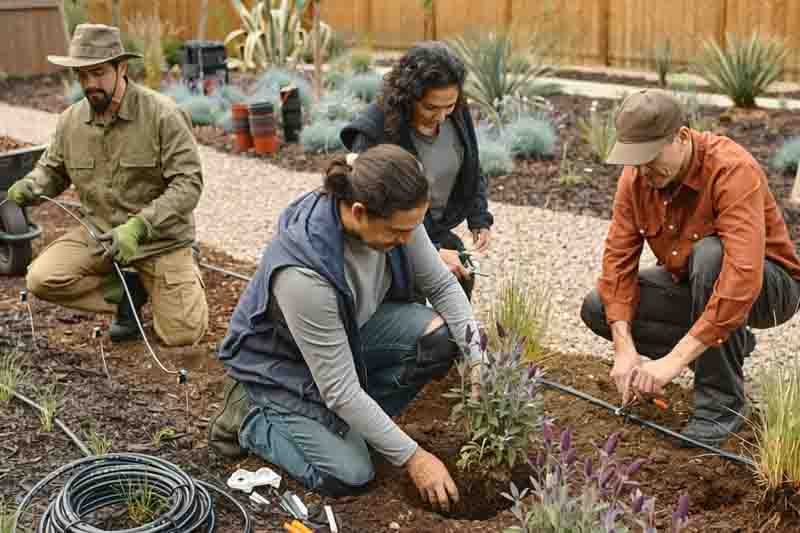
Hydrozoning means grouping plants with similar water needs and placing those groups where they make sense in the landscape. It is one of the most important principles in water-wise design because it reduces waste, simplifies irrigation, and prevents the whole garden from being watered for the sake of a few thirstier plants.
Most drought-tolerant landscapes include three broad hydrozones:
For plants that need little supplemental irrigation once established.
Best locations: exposed slopes, outer borders, gravel gardens, and full-sun areas away from regular watering.
For plants that still benefit from occasional deep watering, especially in heat.
Best locations: foundation beds, focal planting areas, and spaces where a fuller ornamental effect is desired.
For plants that need more consistent moisture or benefit from cooler, sheltered conditions.
Best locations: near downspouts, courtyards, north or east exposures, and protected areas under light canopy.
Hydrozoning is what keeps a low-water garden from becoming a high-water garden in disguise.
Soil determines what happens after water hits the ground. Even the best plant palette will struggle if water runs off too quickly, pools too long, or never reaches the root zone evenly.
Texture matters. Sandy soils drain quickly and often benefit from more organic matter to improve water-holding capacity. Clay soils retain more moisture but can compact easily and stay too wet around crowns or roots. Loam sits in the middle and usually offers the most forgiving balance.
In practical terms, soil improvement often saves more water than swapping out one plant for another. A garden with better soil structure can absorb water more evenly, keep moisture available for longer, and support deeper rooting.
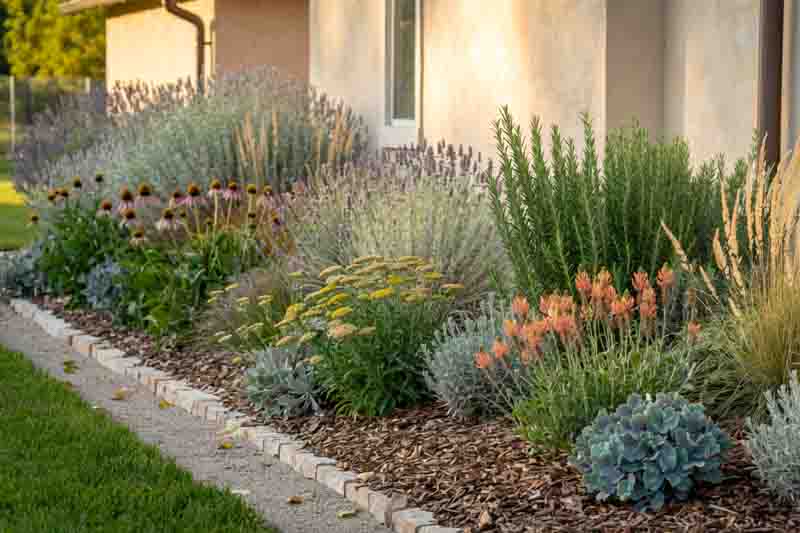
Mulch is not just decorative. In a drought-tolerant garden, it is part of the water-management system.
A good mulch layer helps by:
In most garden beds, a mulch layer of about 2 to 3 inches is a practical target. Around trees and shrubs, 3 to 4 inches is often used, depending on mulch type and fire safety concerns. Keep mulch pulled back from trunks and plant crowns to reduce the risk of rot.
Includes shredded bark, arbor mulch, leaf mold, and composted wood products.
Best for: improving soil over time and supporting moisture retention.
Use carefully around: plants that resent moisture sitting against the crown.
Includes gravel, decomposed granite, and stone.
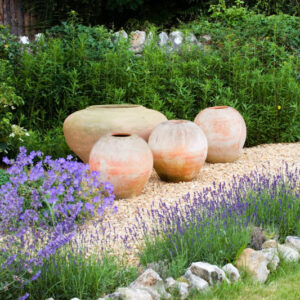
Best for: Mediterranean and desert-style gardens, sharply drained sites, and architectural planting.
Use carefully in: highly reflective, heat-intense spaces where young plants may overheat.
Many low-water gardens are planted too sparsely. The result is exposed soil, higher evaporation, more weeds, and a look that never feels fully resolved. The better goal is planned closure: designing the planting so it grows into a stable, connected community over time.
This matters for water use as well as appearance. When soil is shaded, evaporation drops, roots stay cooler, and weeds have less room to establish.
A drought-tolerant garden still needs irrigation—especially during establishment. The goal is not zero water. The goal is watering in a way that encourages roots to move deeper into the soil profile.
In general, drip irrigation is the most efficient choice for mixed planting beds because it delivers water close to the root zone, reduces evaporation, and can be matched more precisely to hydrozones than overhead spray. Spray systems lose more water to wind and surface evaporation and are harder to calibrate in mixed borders.
During establishment, watering should be deep enough to moisten the active root zone rather than just wetting the top inch or two of soil. Over time, watering intervals should lengthen while root-zone coverage remains adequate. Mature gardens generally perform better with occasional deep soaking than with shallow, frequent irrigation.
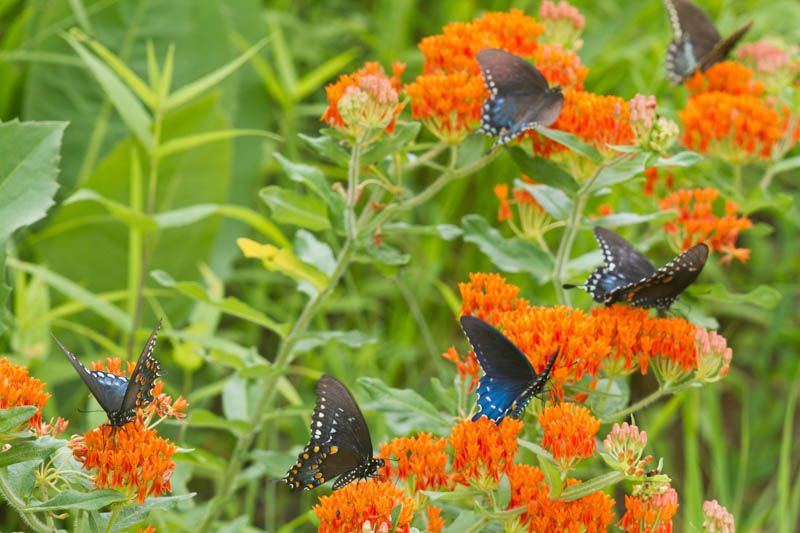
Native plants can be excellent choices in drought-tolerant gardens because they are often adapted to local rainfall patterns, soils, and seasonal rhythms. But native does not automatically mean low water in every condition, and non-native does not automatically mean wasteful.
The strongest gardens usually combine both ideas well:
For more selection ideas, see Drought-Tolerant Plants Guide.
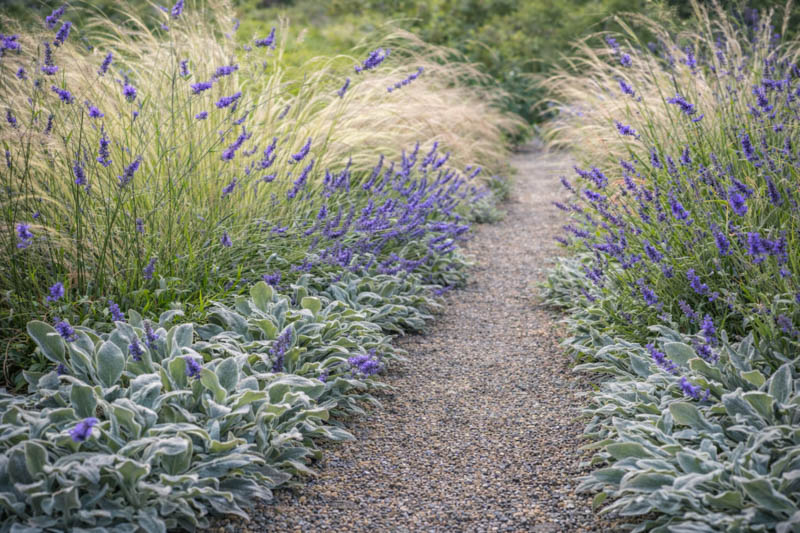
Goal: create a calm, immersive, drought-tolerant border with soft texture, fragrance, and movement.
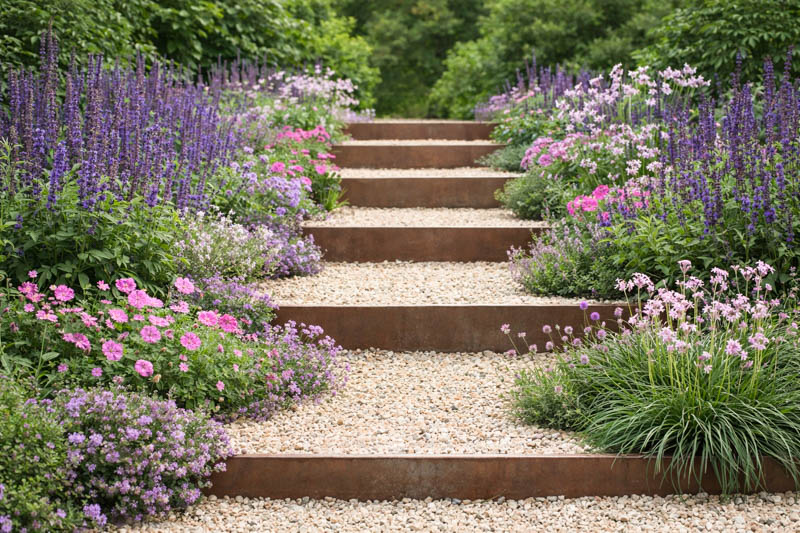
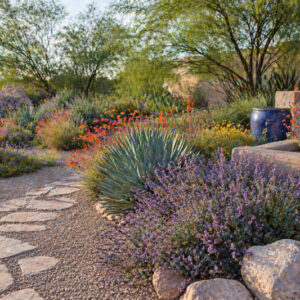
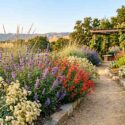
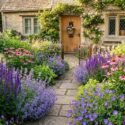
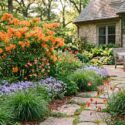
This planting creates a calm, structured border that reveals more detail the closer you get. A gravel step path rises through layered drifts of purple spikes, soft pink blooms, and low aromatic edging. The palette feels relaxed and natural, but the repetition and spacing keep it controlled and intentional.
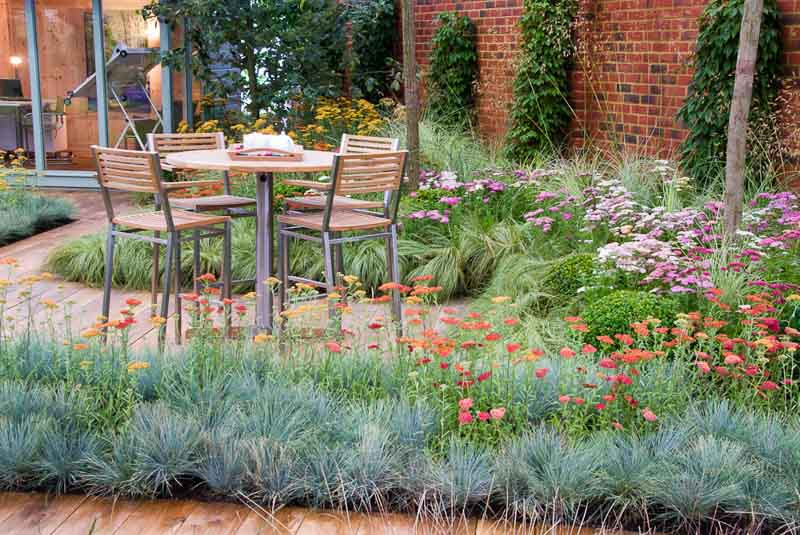
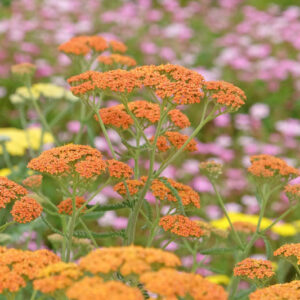
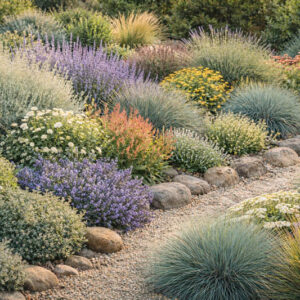
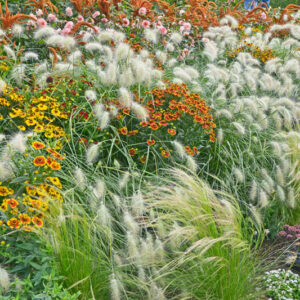
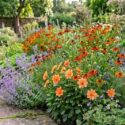
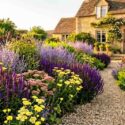
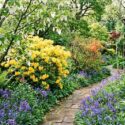
This planting creates a soft, naturalistic summer border filled with warm color, fine texture, and gentle movement. Airy drifts of yarrow in peach, yellow, and soft pink float above a woven base of evergreen grasses, creating a relaxed, modern look that holds together through the season.
For more ideas, browse drought tolerant garden ideas and see How to Build a Beautiful Drought-Tolerant Garden.
A drought-tolerant garden is lower maintenance than a thirsty landscape, but it is not maintenance-free. The difference is that the work becomes more strategic and less constant.
Well-designed drought-tolerant landscapes often look better over time because the planting settles into a stable pattern instead of being pushed by excess irrigation and constant correction.
This pattern is common. In spring, residual soil moisture is still available, temperatures are moderate, and newly installed plants look fresh. By late summer, weak design decisions become visible: exposed soil overheats, shallow watering creates shallow roots, mixed water needs cause uneven stress, and the planting loses cohesion.
When that happens, the problem is rarely that drought-tolerant gardening does not work. It is that the site was never designed as a drought-tolerant system in the first place.
Start by understanding your climate and soil. Choose plants adapted to both. Group them by water need, plant densely enough to shade the soil, add mulch, and use irrigation to encourage deep roots during establishment. Build the design around structure first, then seasonal color. That is how you create a drought-tolerant garden that uses less water and still looks lush.
A drought-tolerant garden is designed to stay healthy and attractive with minimal supplemental watering once plants are established. It relies on climate-adapted plants, good soil structure, mulch, and efficient irrigation.
Yes. With layered planting, proper spacing, and strong structure, a drought-tolerant garden can look full, textured, and vibrant rather than sparse or dry.
Most plants need one to two years of consistent watering to establish deep roots. After that, many drought-adapted plants require significantly less irrigation.
The best plants depend on your climate, but common choices include lavender, salvia, yarrow, ornamental grasses, sedum, rosemary, and regionally adapted native plants.
During establishment, plants should be watered deeply and regularly. Once established, most drought-tolerant gardens benefit from occasional deep watering rather than frequent shallow irrigation.
Organic mulch improves soil and moisture retention, while gravel or mineral mulch works well in Mediterranean and desert-style gardens. Both help reduce evaporation and protect the soil.
No. They require less frequent maintenance, but still need pruning, occasional irrigation adjustments, and mulch renewal to remain healthy and attractive.
Hydrozoning is the practice of grouping plants with similar water needs together so they can be watered efficiently. It reduces water waste and improves plant health.
Yes, but it is usually reduced or replaced with low-water alternatives such as groundcovers, gravel, or drought-tolerant grasses to minimize irrigation needs.
Updated: April 2026 • Reviewed by Gardenia Editors
Create a membership account to save your garden designs and to view them on any device.
Becoming a contributing member of Gardenia is easy and can be done in just a few minutes. If you provide us with your name, email address and the payment of a modest $25 annual membership fee, you will become a full member, enabling you to design and save up to 25 of your garden design ideas.
Join now and start creating your dream garden!
Create a membership account to save your garden designs and to view them on any device.
Becoming a contributing member of Gardenia is easy and can be done in just a few minutes. If you provide us with your name, email address and the payment of a modest $25 annual membership fee, you will become a full member, enabling you to design and save up to 25 of your garden design ideas.
Join now and start creating your dream garden!