Small yellow onion, Yellow-flowered garlic, Yellow-flowered onion, Ornamental onion, Cepa flava, Codonoprasum flavum, Kalabotis flavum, Allium tauricum
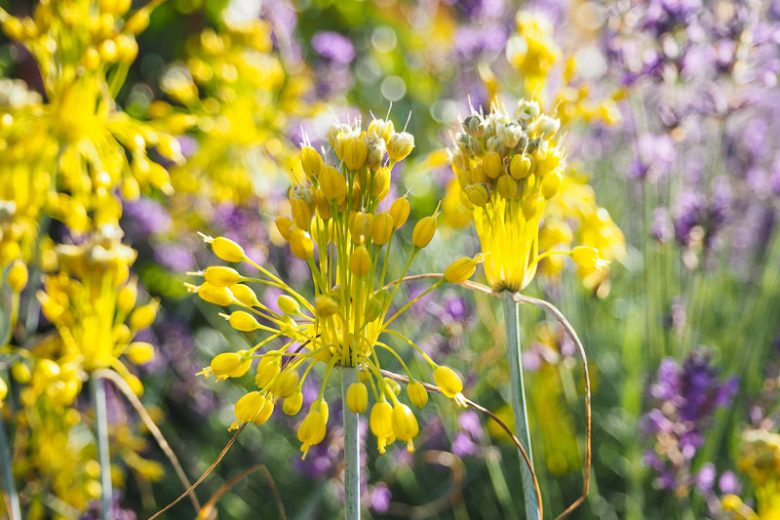
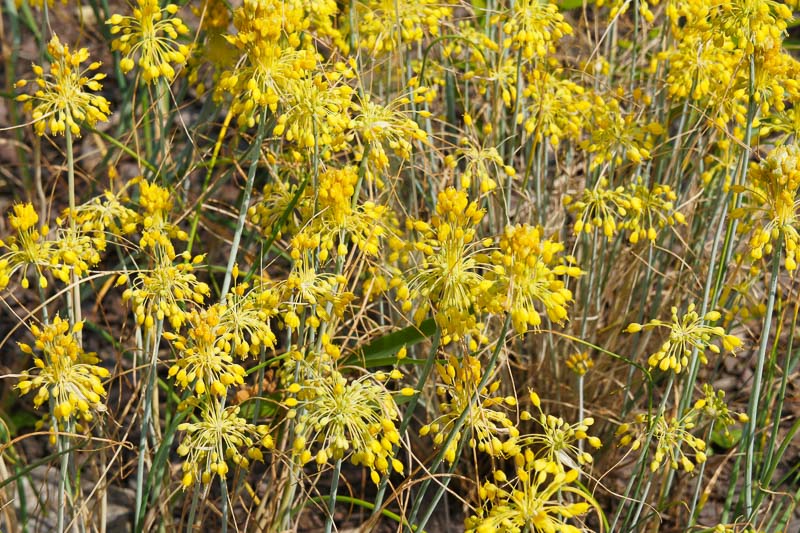


Allium flavum, often called Yellow-Flowered Garlic, is one of those “small plant, big payoff” bulbs. It sends up slender, arching stems topped with fragrant umbels of golden-yellow, bell-shaped flowers that dangle like tiny lanterns. Up close, the blooms look delicate and detailed. From a distance, they read as a warm, glowing haze that softens gravel, stone, and sharp-edged plantings.
Blooming from late spring into early summer, this bulbous perennial is built for gardeners who love beauty without fuss. Give it full sun and well-drained soil, and it will return reliably, often naturalizing into cheerful clumps. Once established, it leans toward the dry side and fits perfectly into water-wise plantings as a naturally drought-tolerant ornamental onion. Bonus – it brings in bees and butterflies while being typically ignored by deer.
Summary: A bulbous perennial allium with fragrant, pendant, golden-yellow bell-shaped flowers in airy umbels, blooming late spring to early summer.
Use: Ideal for rock gardens, gravel gardens, Mediterranean-style borders, and sunny edging where drainage is sharp.
Highlight: Warm yellow color, graceful flower movement, and strong pollinator appeal.
Note: Best in full sun and dry to medium moisture, well-drained soil – often drought-tolerant once established.
| Botanical Name | Allium flavum |
|---|---|
| Family | Amaryllis family (Amaryllidaceae) |
| Common Names | Yellow-Flowered Garlic, small yellow onion, ornamental onion |
| Native Range |
Native context: Native to the Mediterranean region as well as the Black and Caspian Sea regions, which helps explain its love of sun and dislike of winter-wet soil. Garden note: In the right site, it is a tidy naturalizer that comes back year after year. |
| Plant Type and Habit | Bulbous perennial forming clumps of narrow leaves and airy, arching flower stems |
| Hardiness (approx. USDA) | Often grown in USDA Zones 4-10 (best longevity where bulbs stay dry in winter) |
| Height | 4-12 in. (10-30 cm) |
| Spread | 2-3 in. (5-8 cm), slowly forming clumps |
| Spacing | 2-4 in. (5-10 cm) between bulbs for a natural drift |
| Sun and Exposure | Best in full sun; light afternoon shade can help in hot summer climates |
| Soil | Average, sandy to gritty, dry to medium moisture, well-drained soils. Add grit to clay soils to improve drainage. |
| Seasonal Interest | Late spring to early summer |
| Flower Color | Golden yellow |
| Foliage Color | Blue-green, narrow, grassy foliage |
| Drought Tolerant | Yes (once established) |
| Nectar – Pollen | Yes |
| Attracts | Bees, butterflies, moths, and other pollinators |
| Deer – Rabbit | Typically deer resistant; often also avoided by rabbits |
| Toxicity | Like many alliums, it can be toxic to dogs and cats if chewed. Plant where pets will not nibble. |
| Invasive Status | Not considered invasive; may naturalize gently by offsets and occasional seed in ideal conditions |
Allium flavum is a compact ornamental allium grown for its distinctive bloom style: instead of a tight globe, it carries an umbel of drooping, bell-shaped flowers on fine, slightly arching stems. Each stem can hold dozens of little bells, so the plant looks airy but still surprisingly full when planted in groups. The blooms are typically a warm golden yellow, and many gardeners notice a gentle fragrance, especially on warm days.
Native to the Mediterranean region as well as the Black and Caspian Sea regions, Allium flavum is naturally adapted to sun, lean soils, and a summer-drier rhythm. In garden terms, that translates to one simple priority: do not let the bulb sit wet, especially in winter or early spring. If your soil drains well, this plant is easy, steady, and long-lived.
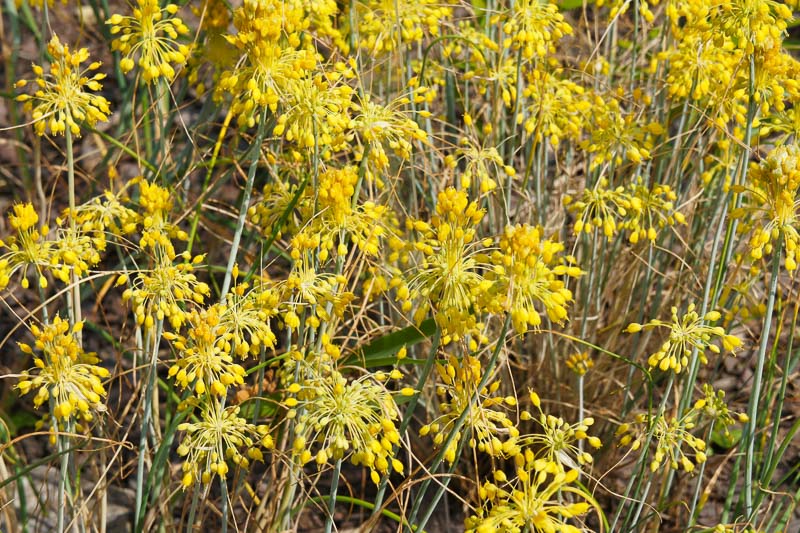
This is a bulbous perennial that forms a small clump of narrow, blue-green leaves, then sends up flowering stems as late spring warms into early summer. It stays compact (often 4-12 inches tall in bloom), which makes it perfect near paths, between rocks, or at the front of a border where you want fine texture. Over time, it can naturalize by offsets, and in friendly conditions it may also self-seed lightly, building a bigger display with minimal effort.
Bloom time is typically late spring to early summer. The flowers open as – alliums often do – right when many spring bulbs are fading, so you get a seamless handoff of interest. The pendant shape adds movement: breezes make the bells sway, which is especially charming in gravel gardens and rock gardens where other plants can look more rigid. If you love cut flowers, snip a few stems for small vases; the umbels read as light, bright, and wildflower-pretty.
The foliage is narrow and tidy, but like many ornamental onions, it can start to fade as bloom ramps up. That is normal. The trick is to design around it: weave bulbs through low, mounding perennials so the leaves quietly disappear while the yellow bells stay visible above.
Allium flavum has earned the prestigious Award of Garden Merit from the Royal Horticultural Society – a strong signal that it performs reliably and is worth the space.
In practice, Yellow-Flowered Garlic is widely grown across cold to mild climates. The deciding factor is rarely winter temperature – it is usually winter wetness. If your winters are rainy or your soil is heavy, plant in a raised area, add grit, and prioritize drainage. In the right conditions, it is a “set it and forget it” bulb.
The nectar-rich florets are a magnet for beneficial insects. Allium flavum is known for attracting bees, butterflies, moths, and other pollinators, making it a smart choice for gardens that aim to support biodiversity. It is especially helpful because it blooms in that valuable “bridge” window between spring peak and summer abundance.
Most browsing animals are not fans of onion-scented foliage. In many gardens, deer ignore Yellow-Flowered Garlic, and rabbits often pass it by too. To lean into that advantage, pair it with other plants commonly considered deer resistant or rabbit-tolerant.
Once established, Allium flavum is comfortably drought-tolerant. In plain language: it would rather be a bit dry than consistently wet. If you remember one rule, make it this – sharp drainage is the key to long-term success.
Ornamental alliums are grown for display, not for eating. Like many alliums, they can be harmful to pets if chewed. If you have dogs or cats that nibble plants, place bulbs where they cannot access them.
Allium flavum is generally not considered invasive in garden settings. It may naturalize by offsets and occasionally by seed, but it is usually easy to manage. If seedlings pop up in the wrong spot, they are simple to lift while small.
Heavy feeding is not needed. A light spring top-dress of compost is enough. Too much fertilizer can push soft growth and reduce the crisp, tidy look that makes this allium so useful in gravel and rock settings.
This is typically a low-drama bulb, especially in dry, open sites. If pests appear, they are often opportunistic and tied to nearby plants rather than the bulb itself. You might occasionally see aphids on tender growth, or thrips causing streaking on leaves. In damp gardens, slugs and snails may chew foliage. Healthy bulbs in well-drained soil are far less likely to struggle.
Allium flavum—often called yellow-flowered garlic or small yellow onion—is a fall-planted ornamental allium grown from a bulb. In late spring to early–mid summer, it sends up slender stems topped with loose umbels of nodding, bell-shaped, golden-yellow flowers. The effect is airy, delicate, and perfect for sunny borders and rock gardens.
Allium flavum typically blooms from late spring into early–mid summer (often June–July, sometimes stretching later depending on climate). It’s a great “bridge” bloomer that adds fresh color and texture after many spring bulbs have finished.
Most Allium flavum forms bloom at about 12 inches tall. The plant stays narrow, with grassy, blue-green leaves and a modest footprint—ideal for weaving between perennials without taking over.
Yes—full sun gives the strongest stems and best flowering. It will tolerate very light shade, but too much shade can reduce bloom and make stems lean. For the neatest, most floriferous display, plant it where it gets at least 6 hours of sun.
Sharp drainage is the key. Allium flavum thrives in well-drained, lean to average soil and is especially happy in gritty beds, slopes, and rock gardens. Avoid soggy winter soil—if you have heavy clay, improve drainage with grit and compost or plant in a raised area.
Plant the bulbs in fall, after temperatures cool but before the ground freezes. Choose a sunny spot with well-drained soil, set bulbs pointy side up, and water once to settle them in. After that, they’re low-maintenance and often handle dry summers well once established.
Plant bulbs about 2–3 times as deep as the bulb is tall (commonly around 3–4 inches deep for smaller bulbs). Space them roughly 2-4 inches apart. In drifts, slightly closer spacing looks fuller and more natural.
Yes, it can naturalize gently over time through bulb offsets and occasional self-seeding, especially in well-drained soil. If you want more plants, let some seedheads mature. If you prefer a tidier look, deadhead after flowering to reduce seedlings.
Deadheading is optional. Cut the flower heads after bloom if you want to limit self-seeding and keep borders crisp. If you like the texture or want light naturalizing, leave the seedheads to dry—they can also be used in fresh or dried arrangements.
Let the foliage yellow naturally—those leaves recharge the bulb for next year. To hide fading foliage, plant Allium flavum among low, mounding companions (like catmint, dianthus, or sedum) that fill in as summer progresses.
Allium flavum is sometimes listed as an edible allium, but it’s most often grown as an ornamental. If you plan to eat any ornamental allium, confirm identification, ensure it hasn’t been treated with non-food-safe chemicals, and use caution—don’t assume garden bulbs are meant for the kitchen.
| Hardiness |
4 - 10 |
|---|---|
| Heat Zones |
1 - 9 |
| Plant Type | Bulbs |
| Plant Family | Amaryllidaceae |
| Genus | Allium |
| Common names | Onion, Ornamental Onion |
| Exposure | Full Sun |
| Season of Interest | Spring (Late), Summer (Early) |
| Height | 4" - 1' (10cm - 30cm) |
| Spread | 2" - 3" (5cm - 8cm) |
| Spacing | 2" - 4" (5cm - 10cm) |
| Maintenance | Low |
| Water Needs | Low |
| Soil Type | Chalk, Clay, Loam, Sand |
| Soil pH | Acid, Alkaline, Neutral |
| Soil Drainage | Moist but Well-Drained, Well-Drained |
| Characteristics | Cut Flowers, Plant of Merit, Showy |
| Tolerances | Deer, Clay Soil, Dry Soil, Rabbit |
| Attracts | Bees, Butterflies |
| Garden Uses | Beds And Borders, Patio And Containers |
| Garden Styles | Butterfly Garden, Gravel and Rock Garden, Informal and Cottage, Mediterranean Garden, Pollinator Garden |
| Toxic to Humans | Low severity |
| Toxic to Cats | Toxic |
| Toxic to Dogs | Toxic |
| Toxic to Horses | No known toxicity |

| Hardiness |
4 - 10 |
|---|---|
| Heat Zones |
1 - 9 |
| Plant Type | Bulbs |
| Plant Family | Amaryllidaceae |
| Genus | Allium |
| Common names | Onion, Ornamental Onion |
| Exposure | Full Sun |
| Season of Interest | Spring (Late), Summer (Early) |
| Height | 4" - 1' (10cm - 30cm) |
| Spread | 2" - 3" (5cm - 8cm) |
| Spacing | 2" - 4" (5cm - 10cm) |
| Maintenance | Low |
| Water Needs | Low |
| Soil Type | Chalk, Clay, Loam, Sand |
| Soil pH | Acid, Alkaline, Neutral |
| Soil Drainage | Moist but Well-Drained, Well-Drained |
| Characteristics | Cut Flowers, Plant of Merit, Showy |
| Tolerances | Deer, Clay Soil, Dry Soil, Rabbit |
| Attracts | Bees, Butterflies |
| Garden Uses | Beds And Borders, Patio And Containers |
| Garden Styles | Butterfly Garden, Gravel and Rock Garden, Informal and Cottage, Mediterranean Garden, Pollinator Garden |
| Toxic to Humans | Low severity |
| Toxic to Cats | Toxic |
| Toxic to Dogs | Toxic |
| Toxic to Horses | No known toxicity |
How many Allium flavum (Yellow-Flowered Garlic) do I need for my garden?
| Plant | Quantity | |
|---|---|---|
| Allium flavum (Yellow-Flowered Garlic) | N/A | Buy Plants |
Create a membership account to save your garden designs and to view them on any device.
Becoming a contributing member of Gardenia is easy and can be done in just a few minutes. If you provide us with your name, email address and the payment of a modest $25 annual membership fee, you will become a full member, enabling you to design and save up to 25 of your garden design ideas.
Join now and start creating your dream garden!