Dutch Garlic ‘Purple Sensation’, Persian Onion ‘Purple Sensation’, Flowering Onion ‘Purple Sensation’, Ornamental Onion ‘Purple Sensation’, Allium ‘Purple Sensation’, Allium aflatunense ‘Purple Sensation’
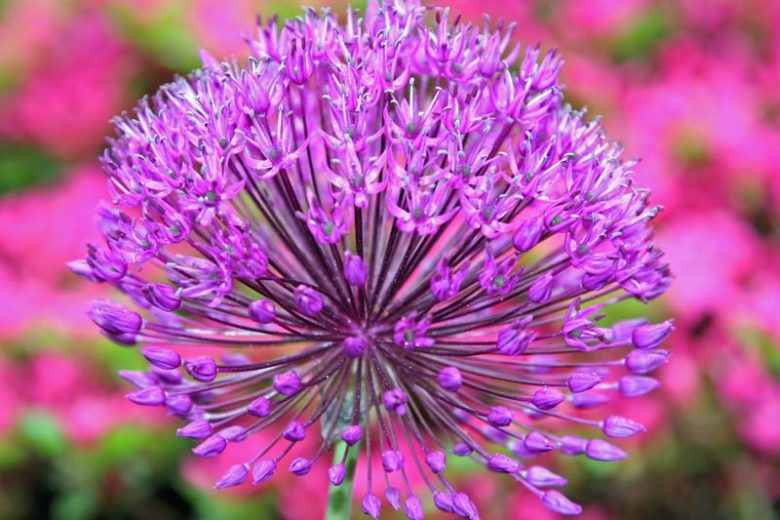
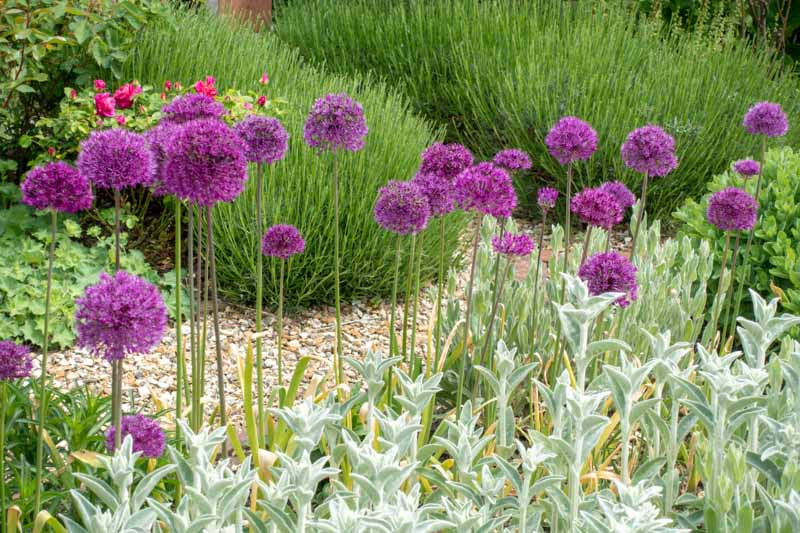
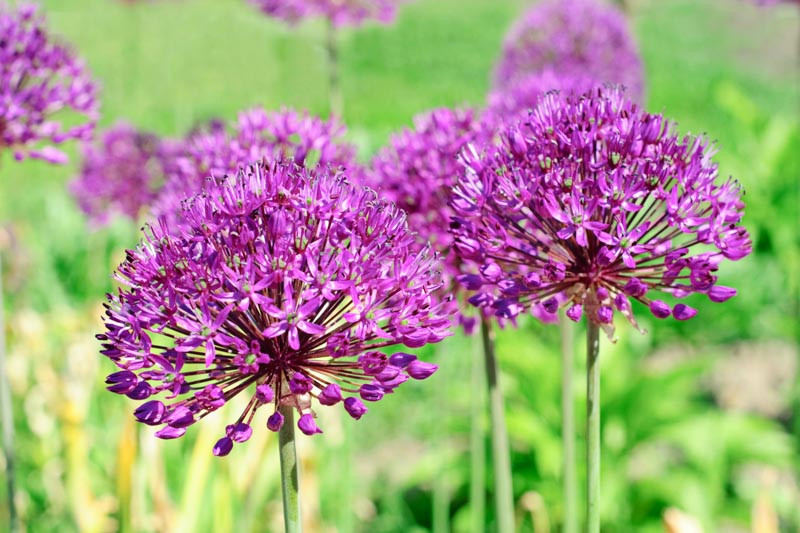
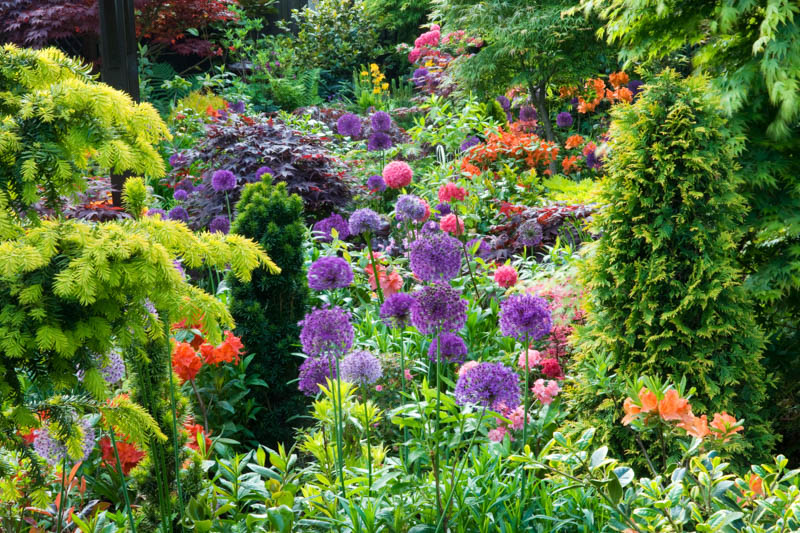
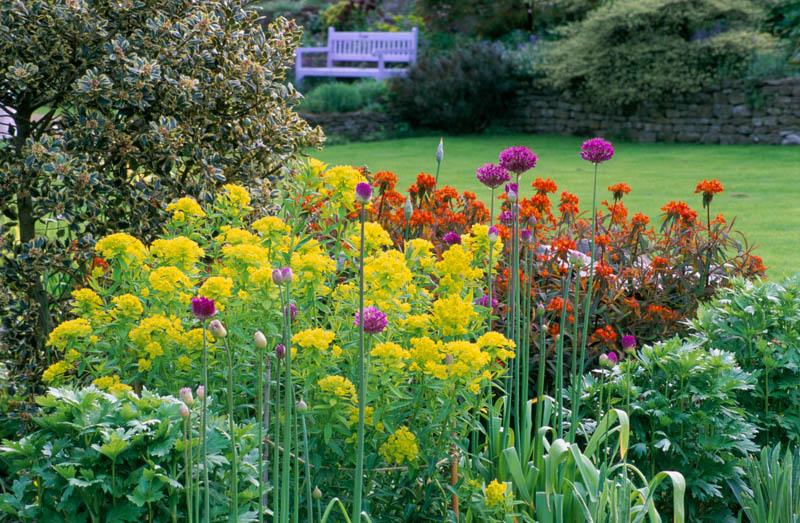
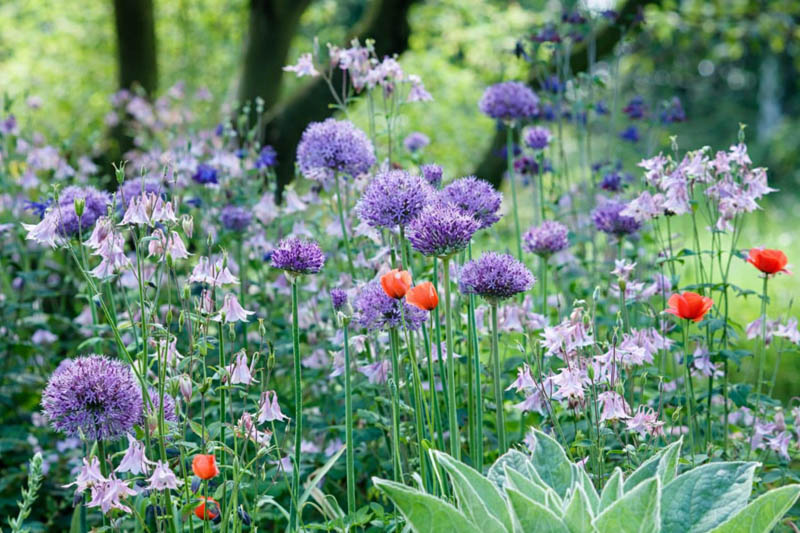
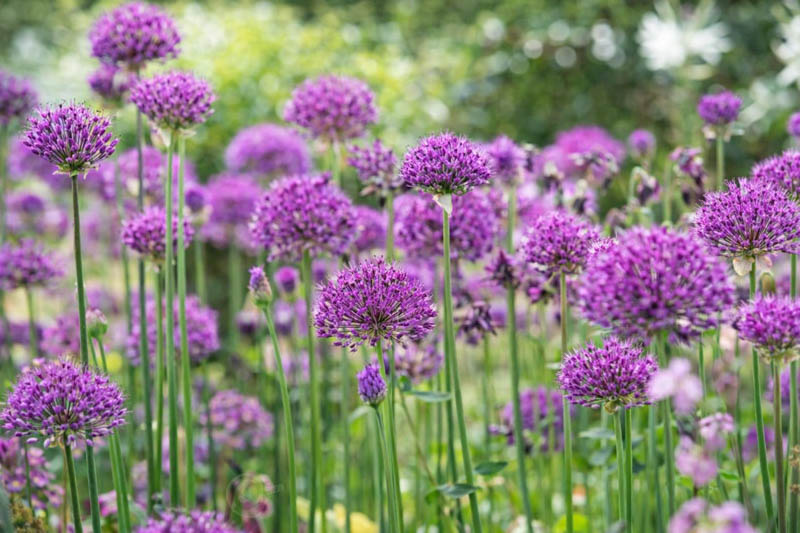


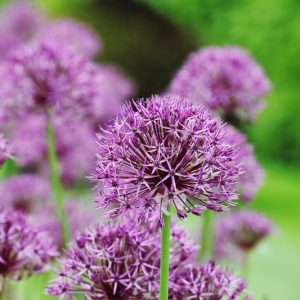
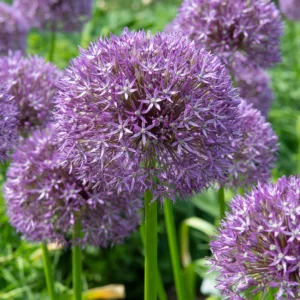
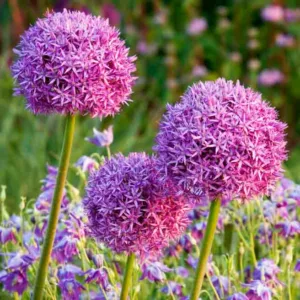
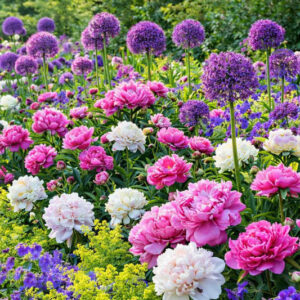
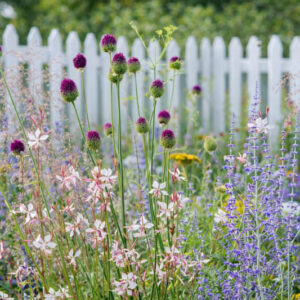
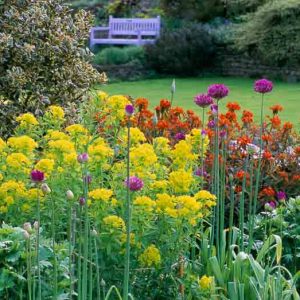
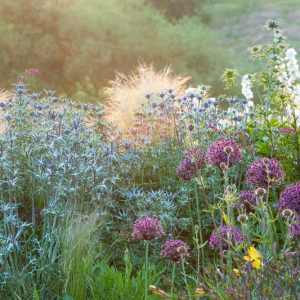
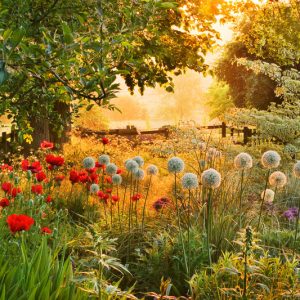
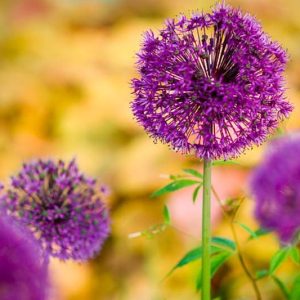
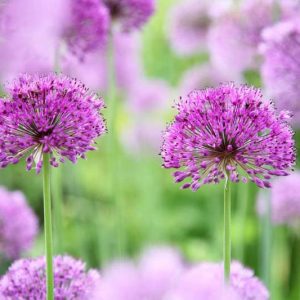
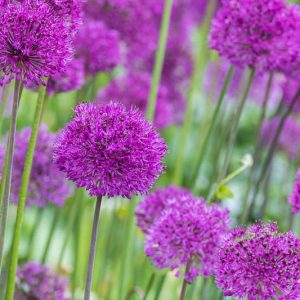
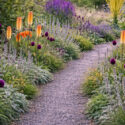
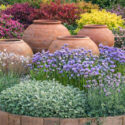
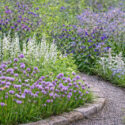
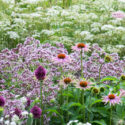
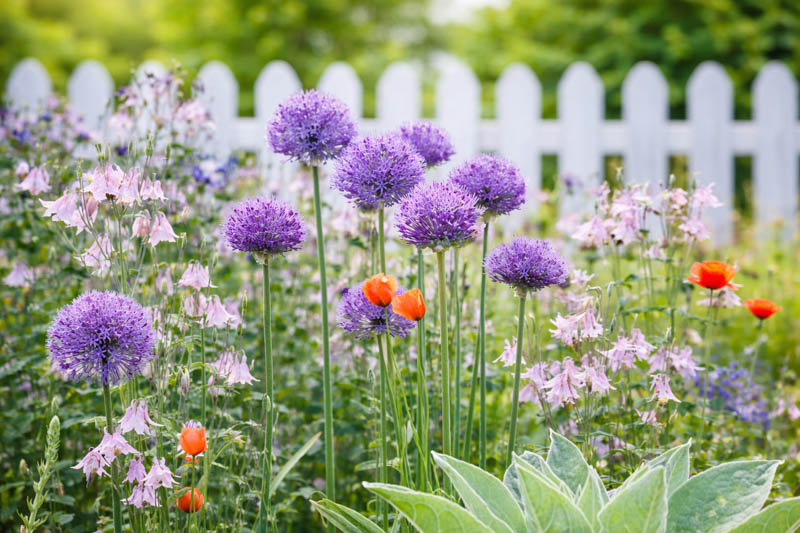
Allium hollandicum ‘Purple Sensation’ is one of those spring bulbs that makes people stop mid-walk and ask what they’re looking at. In late spring to early summer, it sends up tall, sturdy stems topped with perfectly round violet flowerheads that read as crisp, architectural punctuation in the garden.
Gardeners value it for combining strong visual impact with low maintenance. It performs best in sunny borders, mixes easily with perennials and grasses, attracts pollinators, and is typically ignored by deer and rabbits.
Allium hollandicum ‘Purple Sensation’ is a spring-blooming ornamental allium with spherical violet flowerheads on tall stems. Plant the bulbs in fall in full sun and very well-drained soil; winter-wet conditions are the most common cause of bulb failure. Foliage often yellows around bloom time – this is normal.
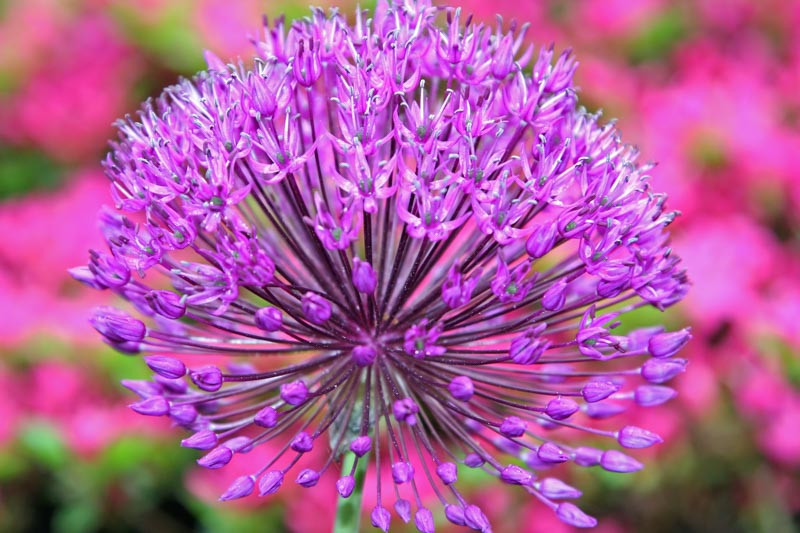
Use: Excellent for borders, cottage gardens, naturalistic planting, pollinator gardens, and cut flower beds.
Highlight: Strong structure with excellent vase life (often about 2 weeks).
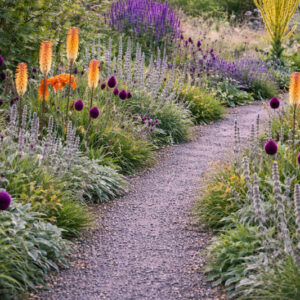
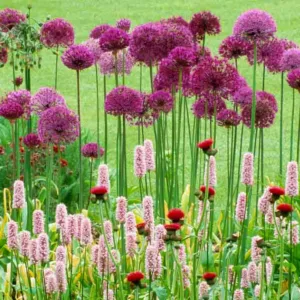
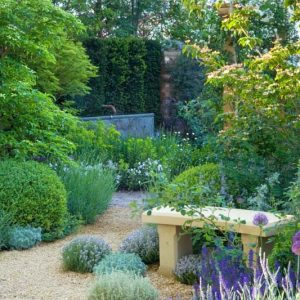
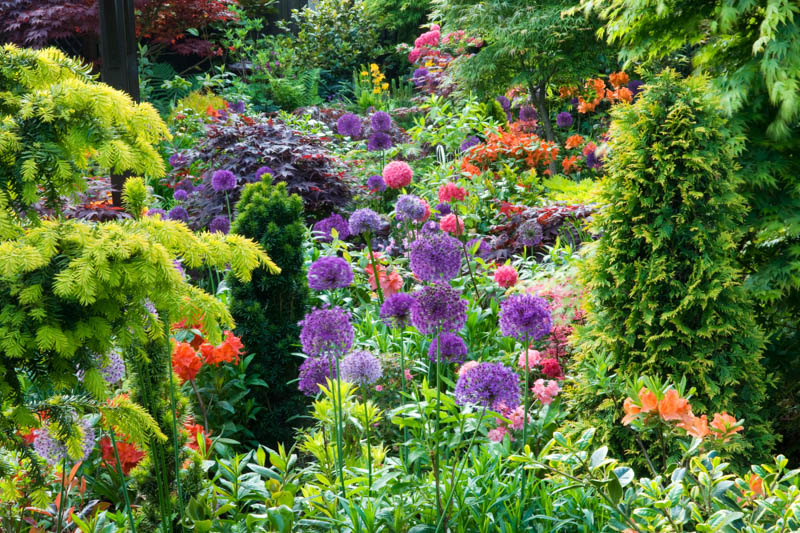
Design note: Plant in groups so the globes read as intentional structure, not scattered dots.
| Botanical Name | Allium hollandicum ‘Purple Sensation’ |
|---|---|
| Family | Amaryllis family (Amaryllidaceae) |
| Common Names | Ornamental onion, ornamental allium |
| Native Range |
Native context: The species is associated with regions of Central to Western Asia. Note: ‘Purple Sensation’ is a cultivated selection grown for garden performance and showy flowerheads. |
| Plant Type and Habit | Bulbous perennial with upright stems and globe-shaped flower clusters |
| Hardiness (approx. USDA) | Often grown in USDA Zones 4-9 (varies with drainage and winter moisture) |
| Height | 28-36 in. (70-90 cm) |
| Spread | 12-24 in. (30-60 cm), forming clumps over time |
| Spacing | 6-8 in. (15-20 cm) between bulbs for a full, high-impact display |
| Sun and Exposure | Best in full sun for sturdy stems and richest bloom color |
| Soil | Fertile is fine, but prioritize sharp drainage: sandy to gritty, dry to medium moisture, well-drained soils. Avoid winter-wet sites. |
| Seasonal Interest | Late spring to early summer |
| Flower Color | Rich violet-lilac (purple) |
| Foliage Color | Blue-green |
| Drought Tolerant | Yes (once established) |
| Nectar / Pollen | Yes |
| Attracts | Bees, butterflies, moths, and other pollinators |
| Deer / Rabbit | Typically deer resistant; often also avoided by rabbits |
| Toxicity | Like many alliums, it may be toxic to dogs and cats if chewed (risk of GI upset and, in larger amounts, anemia). Plant where pets are unlikely to nibble. |
| Invasive Status | Not considered invasive; clumps slowly expand and may self-seed lightly in ideal conditions |
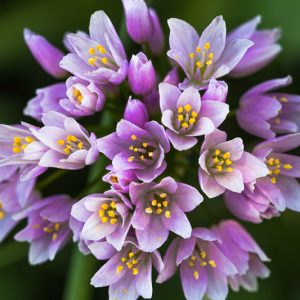
A favorite of many gardeners and a multiple award-winner, Allium hollandicum ‘Purple Sensation’ is a striking ornamental onion with perfectly round flowerheads, about 3 in. wide (8 cm), packed with dozens of small, star-shaped, rich violet-lilac flowers. They are borne atop sturdy stalks, which arise from a clump of 6 to 8 handsome, blue-green leaves. Blooming in late spring to early summer, this spectacular allium enjoys long-lasting blooms and makes outstanding cut flowers that often last about 2 weeks.
Allium hollandicum is associated with parts of Central to Western Asia, depending on how it is treated in horticulture. ‘Purple Sensation’ is a garden cultivar selected for oversized, intensely colored flowerheads and reliable performance in ornamental borders.
‘Purple Sensation’ is a bulbous perennial that grows from a planted bulb into a spring clump of foliage, then quickly pushes up flowering stems. In bloom, plants typically reach 28-36 in. (70-90 cm). After flowering, the clump can naturalize and return for years, especially where soil drains well and bulbs are not disturbed too often.
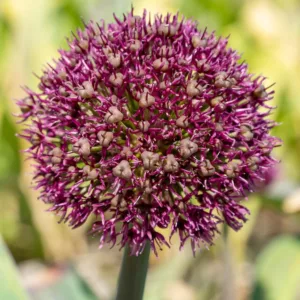
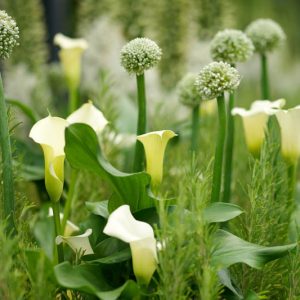
The headline feature is the flower: a dense, spherical head made of dozens of starry florets. Bloom usually lands in late spring (often May in many climates) and can run into early summer depending on region and seasonal temperatures. The flowers hold their shape for weeks, then transition into attractive seed heads that still look sculptural, especially when backlit.
The foliage is a tidy cluster of blue-green leaves at the base. Like many ornamental alliums, the leaves often start to yellow as bloom peaks. This is not a flaw – it’s the plant shifting energy back into the bulb for next year. A simple design trick is to weave alliums through later-emerging perennials so fading foliage is gently hidden as the purple globes float above.
Normal vs. problem:
Yellowing leaves at bloom time are usually normal for ornamental alliums. Soggy soil, a bad smell at the bulb, or soft, collapsing stems are bigger warning signs.
It has been awarded the prestigious Award of Garden Merit by the Royal Horticultural Society, a reliable clue that it performs well across a range of typical garden conditions.
‘Purple Sensation’ is commonly grown in cool to temperate regions where winters provide a chill period and summers are not constantly wet. In practical terms, gardeners succeed widely when bulbs are planted in a sunny spot with excellent drainage, especially through winter.
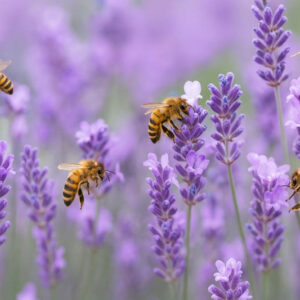
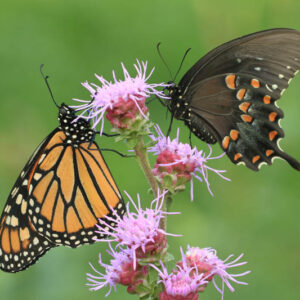
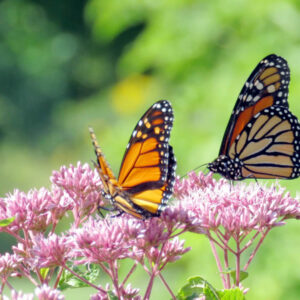
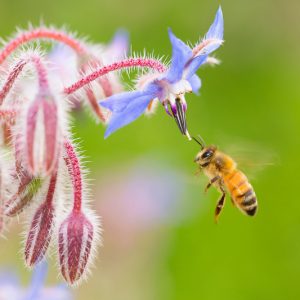
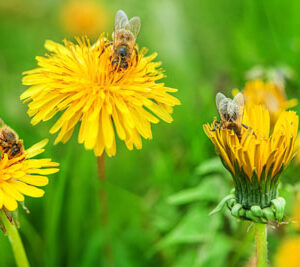
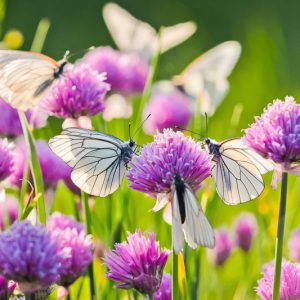
Those dense, nectar-rich florets are busy with visitors. ‘Purple Sensation’ is known for attracting bees, butterflies, moths, and other pollinators. It’s a strong “bridge plant” because it blooms right as many spring bulbs finish and early-summer perennials begin.
Alliums are widely appreciated because browsing animals tend to avoid onion-scented foliage. In most gardens, deer ignore it, and rabbits often pass it by. If you garden under heavy browsing pressure, pairing alliums with other plants that are commonly considered deer resistant or rabbit-tolerant can help reinforce the “not worth it” message.
Once established, ‘Purple Sensation’ is comfortably drought tolerant. In plain language: it would rather be slightly dry than consistently wet. The number-one way to disappoint an allium is to plant it where winter moisture sits around the bulb.
Ornamental alliums are grown for display, not eating. Many allium species can cause stomach upset in cats and dogs if chewed. If you garden with curious pets, discourage nibbling and place bulbs where pets are unlikely to browse.
‘Purple Sensation’ is not considered invasive. It can naturalize by forming offsets and may self-seed lightly, but it is typically easy to manage. If seedlings appear where you do not want them, they are simple to lift while small.
You do not need heavy feeding. In spring, a light top-dressing of compost or a balanced bulb fertilizer is usually sufficient. Over-fertilizing can encourage lush leaves at the expense of sturdy stems and can make surrounding perennials flop into the alliums.
In general, this is a low-drama bulb. Occasionally, you may see aphids on nearby plants or tender growth. Thrips may also appear, causing silvery streaking or distortion on leaves and flower stems. In damp gardens, slugs or snails may chew foliage. Healthy bulbs in well-drained soil are far less likely to struggle.
First step:
If pests appear, start by improving airflow and avoiding overhead watering; stressed, crowded plants have more issues than well-spaced alliums in sun.
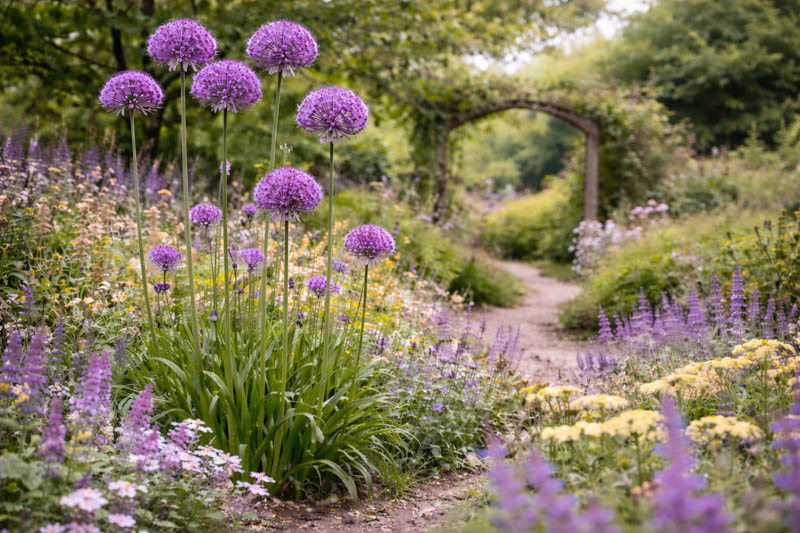
Allium ‘Purple Sensation’ is a popular ornamental onion grown for its large, spherical, deep purple flower heads that bloom in late spring.
It typically blooms in late spring, usually in May, depending on climate and growing conditions.
It usually reaches 24-36 inches (60-90 cm) tall, making it ideal for the middle or back of garden borders.
Yes, it is a hardy perennial bulb that returns year after year when grown in suitable conditions.
It performs best in full sun and well-drained soil. Poor drainage can cause the bulbs to rot.
Yes, like most ornamental alliums, it is generally resistant to deer and rabbits due to its onion scent.
Plant the bulbs about 2-3 times the bulb height deep, with the pointed end up. In most gardens, that works out to roughly 2-3 times the bulb’s height rather than a single fixed number.
No – let the foliage yellow naturally after bloom so the bulb can recharge for next year. Cutting leaves early is a common reason for a weaker return.
Updated: January 2026 – Reviewed by Gardenia Editors
| Hardiness |
4 - 9 |
|---|---|
| Heat Zones |
1 - 9 |
| Climate Zones | 2, 2A, 2B, 3, 3A, 3B, 4, 5, 6, 7, 8, 9, 10, 11, 12, 13, 14, 15, 16, 17, 18, 19, 20, 21, 22, 23, 24 |
| Plant Type | Bulbs |
| Plant Family | Amaryllidaceae |
| Genus | Allium |
| Common names | Onion, Ornamental Onion |
| Exposure | Full Sun |
| Season of Interest | Spring (Late), Summer (Early) |
| Height | 2' - 3' (60cm - 90cm) |
| Spread | 1' - 2' (30cm - 60cm) |
| Spacing | 8" (20cm) |
| Depth | 8" (20cm) |
| Maintenance | Low |
| Water Needs | Average |
| Soil Type | Chalk, Clay, Loam, Sand |
| Soil pH | Acid, Alkaline, Neutral |
| Soil Drainage | Moist but Well-Drained, Well-Drained |
| Characteristics | Dried Arrangements, Cut Flowers, Fragrant, Plant of Merit, Showy |
| Tolerance | Drought, Clay Soil, Deer, Rabbit, Dry Soil |
| Attracts | Bees, Butterflies |
| Garden Uses | Beds And Borders, Patio And Containers |
| Garden Styles | City and Courtyard, Coastal Garden, Gravel and Rock Garden, Informal and Cottage |
| Hardiness |
4 - 9 |
|---|---|
| Heat Zones |
1 - 9 |
| Climate Zones | 2, 2A, 2B, 3, 3A, 3B, 4, 5, 6, 7, 8, 9, 10, 11, 12, 13, 14, 15, 16, 17, 18, 19, 20, 21, 22, 23, 24 |
| Plant Type | Bulbs |
| Plant Family | Amaryllidaceae |
| Genus | Allium |
| Common names | Onion, Ornamental Onion |
| Exposure | Full Sun |
| Season of Interest | Spring (Late), Summer (Early) |
| Height | 2' - 3' (60cm - 90cm) |
| Spread | 1' - 2' (30cm - 60cm) |
| Spacing | 8" (20cm) |
| Depth | 8" (20cm) |
| Maintenance | Low |
| Water Needs | Average |
| Soil Type | Chalk, Clay, Loam, Sand |
| Soil pH | Acid, Alkaline, Neutral |
| Soil Drainage | Moist but Well-Drained, Well-Drained |
| Characteristics | Dried Arrangements, Cut Flowers, Fragrant, Plant of Merit, Showy |
| Tolerance | Drought, Clay Soil, Deer, Rabbit, Dry Soil |
| Attracts | Bees, Butterflies |
| Garden Uses | Beds And Borders, Patio And Containers |
| Garden Styles | City and Courtyard, Coastal Garden, Gravel and Rock Garden, Informal and Cottage |
How many Allium hollandicum ‘Purple Sensation’ (Ornamental Onion) do I need for my garden?
| Plant | Quantity | |
|---|---|---|
| Allium hollandicum ‘Purple Sensation’ (Ornamental Onion) | N/A | Buy Plants |
Create a membership account to save your garden designs and to view them on any device.
Becoming a contributing member of Gardenia is easy and can be done in just a few minutes. If you provide us with your name, email address and the payment of a modest $25 annual membership fee, you will become a full member, enabling you to design and save up to 25 of your garden design ideas.
Join now and start creating your dream garden!
Create a membership account to save your garden designs and to view them on any device.
Becoming a contributing member of Gardenia is easy and can be done in just a few minutes. If you provide us with your name, email address and the payment of a modest $25 annual membership fee, you will become a full member, enabling you to design and save up to 25 of your garden design ideas.
Join now and start creating your dream garden!