Hobblebush, Witch-hobble, Alder-leaved Viburnum, Moosewood, Viburnum alnifolium, Viburnum grandifolium, Viburnum nudum var. cassinoides
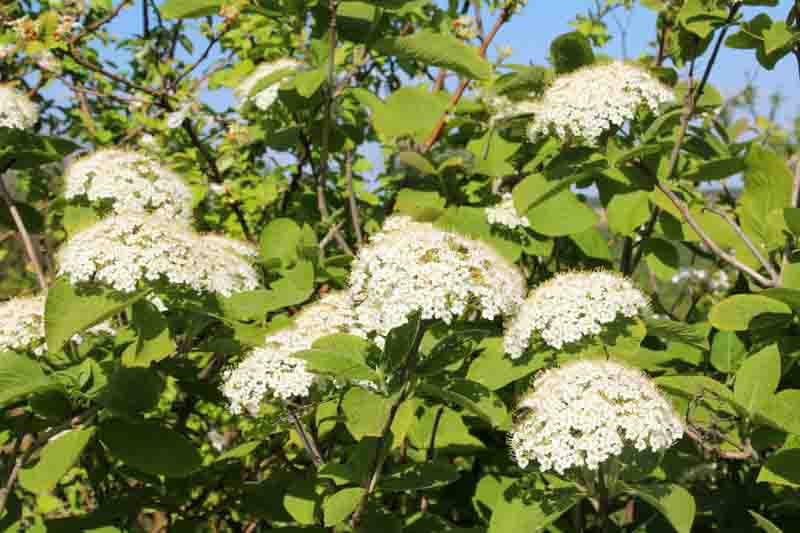


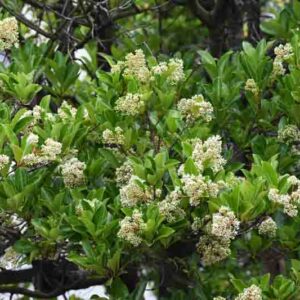
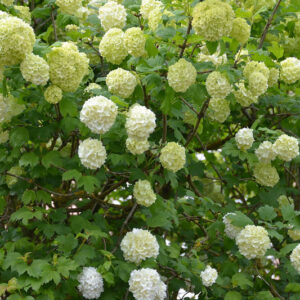
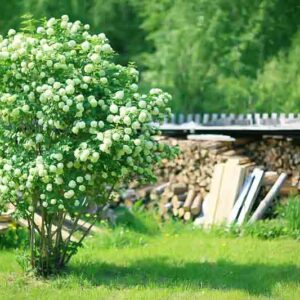
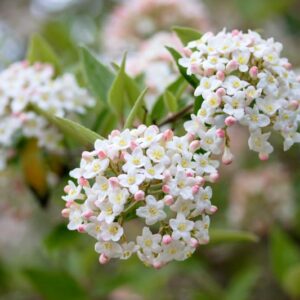
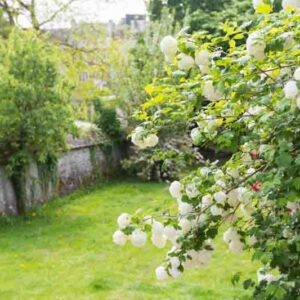
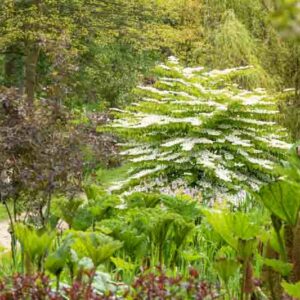
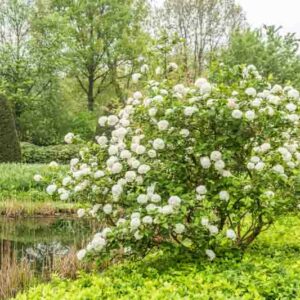
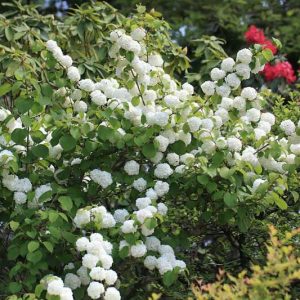
Viburnum lantanoides, commonly called hobblebush, is one of the most distinctive native shrubs of northeastern woodlands. In spring, it lights up shady landscapes with broad, lacecap flower clusters made of tiny creamy fertile flowers in the center and larger showy white sterile florets around the edges. The effect is refined, luminous, and unforgettable in a woodland garden.
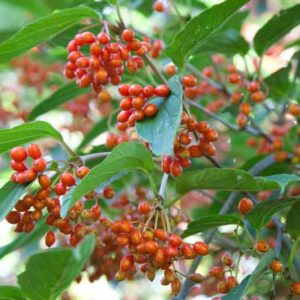
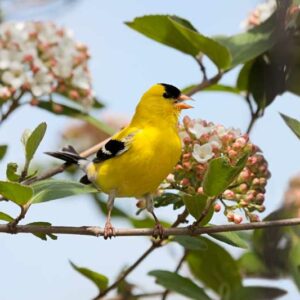
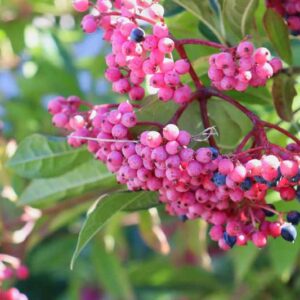
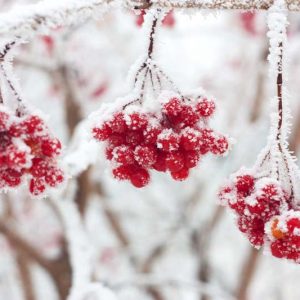
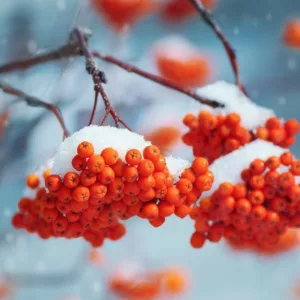
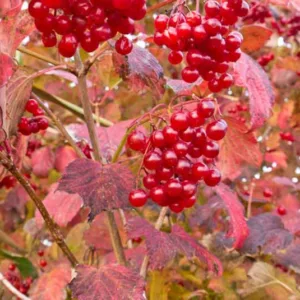
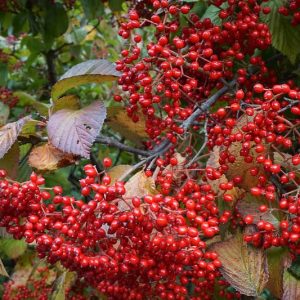
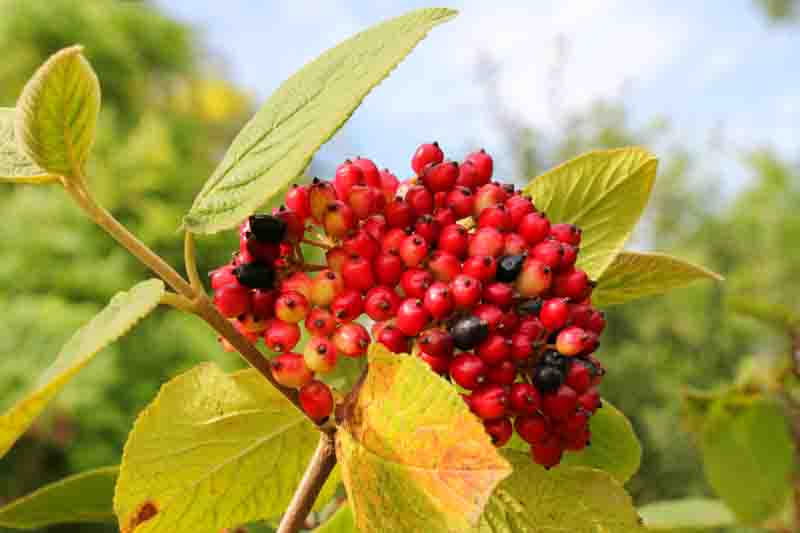
But hobblebush is not just a spring bloomer. Its oversized, heart-shaped leaves add a lush, almost tropical texture through the growing season, then the plant shifts again as berries develop and change color from green to red and finally to deep blue-black. Those fruits are highly attractive to birds and other wildlife, giving this shrub real ecological value in addition to ornamental appeal.
Whether you use it in a native woodland border, along a shaded path, in a wildlife garden, or as part of a naturalized planting, Viburnum lantanoides offers beauty, habitat value, and strong seasonal interest. For gardeners seeking a shade-loving native shrub with spring blooms and late-summer berries, hobblebush is an outstanding choice.
Summary: Deciduous native woodland shrub with broad, heart-shaped foliage, elegant lacecap flowers in spring, and berries that mature from red to blue-black by late summer and early fall.
Use: Ideal for woodland borders, native shade gardens, wildlife plantings, naturalized slopes, and layered understory designs.
Highlight: Showy spring bloom, bold leaf texture, strong bird value, and excellent adaptation to cool woodland conditions.
Note: Arching branches may root where they touch the ground, helping hobblebush form colonies over time in favorable sites.
| Botanical Name | Viburnum lantanoides |
|---|---|
| Family | Adoxaceae |
| Common Names | Hobblebush, American wayfaring tree, moosewood |
| Native Range | Native to the northeastern and north-central United States, especially in cool deciduous forests, wooded slopes, stream margins, and rich understory habitats. |
| Plant Type and Habit | Deciduous shrub with a broad, layered, arching habit that often spreads naturally by rooting stems. |
| Hardiness (USDA) | Generally hardy in USDA Zones 3 to 6, especially where summers are not excessively hot or dry. |
| Size | Typically 3-10 feet tall (0.9-3 m) and 6-12 feet wide (1.8 to 3.6 m), with a broad, colony-forming presence in woodland gardens. |
| Sun and Exposure | Part shade. Best flowering often occurs with bright dappled light or gentle morning sun. |
| Soil | Thrives in moist, humus-rich, well drained soils. Appreciates woodland conditions with leaf mold and consistent organic matter. |
| Seasonal Interest | Late spring to early summer flowers followed by late summer to early fall berries. Foliage may develop attractive reddish to wine-purple tones in autumn. |
| Primary Uses | Accent shrub, native understory plant, woodland edge shrub, bird friendly landscape plant, and naturalized habitat shrub. |
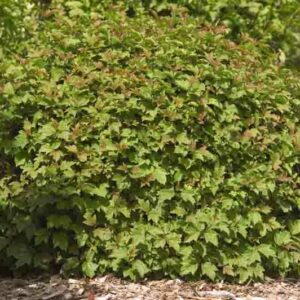
Viburnum lantanoides is a large, deciduous native shrub with a broad, arching structure and strong woodland character. It is one of the signature shrubs of northeastern forests, valued for its layered branching, dramatic leaf size, and highly ornamental spring bloom. In the landscape, it reads as both natural and refined, making it especially useful in sophisticated native gardens and informal shade plantings.
The common name hobblebush comes from the way low branches can arch outward, root where they touch the ground, and create obstacles along woodland paths. That spreading habit is part of its charm in naturalized settings, where the plant can slowly form handsome colonies and soften the edges of shaded spaces.
Hobblebush is native to eastern North America, with a strong presence in the northeastern United States and nearby regions of Canada. It naturally occurs in:
This ecological background explains why the plant performs best in gardens that mimic woodland conditions. It is especially effective in native shade gardens, naturalized borders, and layered understory plantings that prioritize habitat value and seasonal interest.
Hobblebush grows at a moderate rate. Young plants establish steadily, then broaden into substantial shrubs with gracefully tiered branching. Over time, older stems may bend and root, allowing the shrub to widen naturally.
Unlike tightly clipped landscape shrubs, Viburnum lantanoides is best appreciated for its informal, woodland habit. It creates a soft, horizontal presence that fits beautifully beneath deciduous trees and around the edges of shaded garden rooms.
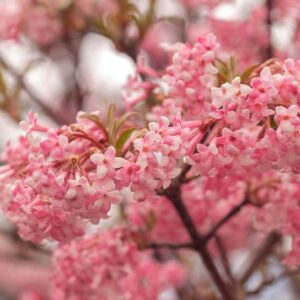
The flowers of Viburnum lantanoides are among its most memorable features. In late spring to early summer, the shrub bears broad, flattened lacecap clusters made of two flower types:
This combination makes hobblebush especially eye-catching in shade, where the bright outer florets seem to float above the foliage.
The color transition itself is ornamental, since multiple shades can appear on the same cluster before the fruit fully matures. The berries are technically edible and sometimes used in jams or preserves, though they are primarily valued as wildlife food.
Hobblebush foliage is large, softly textured, and strongly veined, giving the shrub a bold visual presence uncommon among native woodland plants. Leaves are:
In autumn, the foliage may shift to shades of burgundy, reddish purple, or wine tones, adding another layer of appeal before leaf drop.
Viburnum lantanoides is well suited to regions with:
It is an excellent choice for northern native landscapes, especially where many traditional flowering shrubs struggle in shade. In hot southern climates, however, the plant can be less comfortable unless given very favorable cool, moist woodland conditions.
Hobblebush is versatile within shade-oriented and naturalistic design schemes:
Its layered branching and broad leaves also make it highly effective in gardens designed for texture and seasonal contrast rather than nonstop bloom.
Hobblebush is a strong performer in wildlife friendly landscaping:
Because the plant contributes flowers, fruit, shelter, and seasonal cover, it is far more than ornamental. It is a working shrub in a habitat-centered landscape. How to Build a Wildlife Garden that Buzzes with Life Year-Round
Viburnum lantanoides is not among the most deer-proof native shrubs. In areas with high deer pressure, foliage and young stems may be browsed, especially in spring. Young plants benefit from protection until established.
While not a wetland shrub, hobblebush performs best where soils remain consistently moist but not waterlogged. It is not the ideal choice for hot, exposed drought-prone sites. In the right woodland setting, however, it is durable and long lived.
Hobblebush is primarily grown as an ornamental and wildlife shrub. As with most landscape plants, it is wise to discourage children and pets from eating significant quantities of berries or foliage.
Within its native range, Viburnum lantanoides is a well behaved native shrub. It may expand gradually by layering stems, but this is a natural and usually desirable trait in woodland gardens rather than an invasive tendency.
Overall, hobblebush care is straightforward when the plant is given the conditions it prefers: part shade, woodland soil, and consistent moisture.
Plant hobblebush where it receives:
Viburnum lantanoides adapts best to soils that are:
It is especially at home in woodland loam, where roots can stay evenly moist without being smothered by standing water.
Extended drought can reduce vigor, stress the foliage, and limit berry production.
Fertilizer is rarely necessary for hobblebush:
Mulch is particularly beneficial for this woodland shrub:
Hobblebush maintenance is relatively minimal:
In suitable conditions, Viburnum lantanoides is a dependable, low maintenance native shrub with relatively few serious issues.
Most problems can be minimized by giving the plant the cool, moist, woodland conditions it naturally prefers.
Viburnum lantanoides is most effective when used as a structural shrub in layered shade plantings rather than as a stand-alone specimen. Its broad leaves, horizontal branching, and spring flower display make it ideal for compositions built around texture, seasonality, and ecological function.
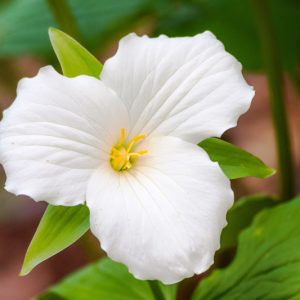
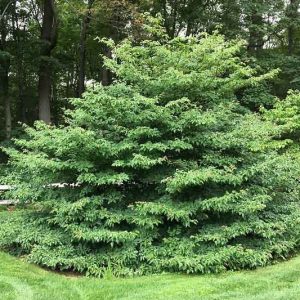
For a classic woodland planting, pair hobblebush with Cornus alternifolia, Osmunda cinnamomea, Polystichum acrostichoides, and Trillium grandiflorum. This combination creates a natural progression of height, leaf texture, and seasonal interest, with hobblebush anchoring the shrub layer.
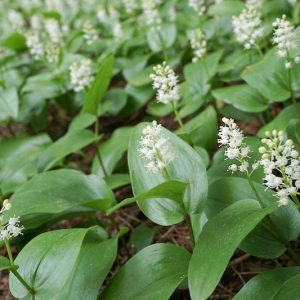
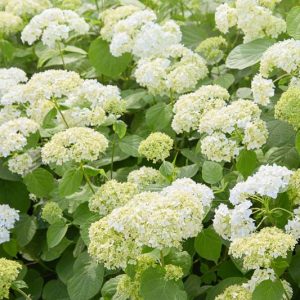
In a native shade border, combine it with Hydrangea arborescens, Tiarella cordifolia, Athyrium filix-femina, and Maianthemum racemosum. The result is a softer, garden-ready look that still feels regionally appropriate and supports pollinators and birds.
Hobblebush also works beautifully in bird-friendly understory plantings with other fruiting shrubs and small trees. Try it with Ilex verticillata, Aronia melanocarpa, and Amelanchier canadensis to extend fruit interest across seasons and build a more habitat-rich design.
Because the foliage is large and visually weighty, hobblebush pairs especially well with fine-textured ferns, spring ephemerals, and smaller woodland perennials that soften its outline. Used this way, it brings structure to the planting without making the composition feel heavy.
Viburnum lantanoides, usually known as hobblebush, is a deciduous native shrub of northeastern woodlands. It is known for its broad heart-shaped leaves, lacecap white flowers in spring, and berries that ripen from red to blue-black in late summer and early fall. Gardeners value it for its woodland beauty, habitat benefits, and strong seasonal interest in shade gardens.
In the wild, hobblebush grows in cool deciduous forests, wooded slopes, stream margins, and rich understory habitats across the northeastern and north-central United States. It performs best in regions with cold winters, moderate summer temperatures, reliable moisture, and part shade to full shade.
A typical Viburnum lantanoides shrub reaches about 6 to 12 feet tall and wide. In favorable woodland conditions, plants may broaden further over time as low arching branches root where they touch the ground.
Viburnum lantanoides prefers consistent moisture, especially while becoming established. Once established, it is reasonably durable in evenly moist woodland soil, but it is not the best shrub for hot, dry, drought-prone locations.
Hobblebush prefers part shade to full shade and moist, organic, well drained soil. It thrives in woodland conditions enriched with leaf litter and performs especially well where roots stay cool and evenly moist.
Yes, Viburnum lantanoides is excellent for wildlife. Its spring flowers attract pollinators, while its berries provide a valuable late-season food source for birds and other woodland animals.
Within its native range, hobblebush is usually considered a well behaved native shrub. It may spread slowly by layering stems, but this is generally a desirable characteristic in naturalized woodland gardens rather than an invasive problem.
Hobblebush flowers in spring, then sets fruit that develops over summer. The berries usually begin coloring in late summer, often pass through a red stage, and mature to blue-black in early fall. They may persist briefly, but birds often consume them quickly.
Yes, Viburnum lantanoides is an excellent choice for low maintenance, wildlife friendly woodland gardens when planted in the right conditions. It offers spring bloom, bold foliage, and bird-feeding berries with relatively modest pruning and fertilizer needs.
Updated: April 2026 • Reviewed by Gardenia Editors
| Hardiness |
3 - 6 |
|---|---|
| Plant Type | Shrubs |
| Plant Family | Adoxaceae |
| Genus | Viburnum |
| Common names | Viburnum |
| Exposure | Partial Sun |
| Season of Interest | Spring (Late), Summer (Early, Mid, Late), Fall |
| Height | 3' - 10' (90cm - 3m) |
| Spread | 6' - 12' (180cm - 3.7m) |
| Spacing | 72" - 120" (180cm - 3m) |
| Maintenance | Average |
| Water Needs | Average |
| Soil Type | Loam, Sand |
| Soil pH | Acid, Neutral |
| Soil Drainage | Moist but Well-Drained |
| Characteristics | Showy, Fruit & Berries |
| Native Plants | United States, Pennsylvania, Rhode Island, Vermont, Connecticut, Maine, Massachusetts, New Hampshire, New York, Northeast, Midwest, Michigan, Minnesota, Wisconsin |
| Attracts | Bees, Butterflies, Birds |
| Garden Uses | Hedges And Screens |
| Garden Styles | Butterfly Garden, Informal and Cottage, Pollinator Garden, Woodland Garden |
| Toxic to Humans | No known toxicity |
| Toxic to Cats | No known toxicity |
| Toxic to Dogs | No known toxicity |
| Toxic to Horses | No known toxicity |


| Hardiness |
3 - 6 |
|---|---|
| Plant Type | Shrubs |
| Plant Family | Adoxaceae |
| Genus | Viburnum |
| Common names | Viburnum |
| Exposure | Partial Sun |
| Season of Interest | Spring (Late), Summer (Early, Mid, Late), Fall |
| Height | 3' - 10' (90cm - 3m) |
| Spread | 6' - 12' (180cm - 3.7m) |
| Spacing | 72" - 120" (180cm - 3m) |
| Maintenance | Average |
| Water Needs | Average |
| Soil Type | Loam, Sand |
| Soil pH | Acid, Neutral |
| Soil Drainage | Moist but Well-Drained |
| Characteristics | Showy, Fruit & Berries |
| Native Plants | United States, Pennsylvania, Rhode Island, Vermont, Connecticut, Maine, Massachusetts, New Hampshire, New York, Northeast, Midwest, Michigan, Minnesota, Wisconsin |
| Attracts | Bees, Butterflies, Birds |
| Garden Uses | Hedges And Screens |
| Garden Styles | Butterfly Garden, Informal and Cottage, Pollinator Garden, Woodland Garden |
| Toxic to Humans | No known toxicity |
| Toxic to Cats | No known toxicity |
| Toxic to Dogs | No known toxicity |
| Toxic to Horses | No known toxicity |
How many Viburnum lantanoides (Hobblebush) do I need for my garden?
| Plant | Quantity | |
|---|---|---|
| Viburnum lantanoides (Hobblebush) | N/A | Buy Plants |
Create a membership account to save your garden designs and to view them on any device.
Becoming a contributing member of Gardenia is easy and can be done in just a few minutes. If you provide us with your name, email address and the payment of a modest $25 annual membership fee, you will become a full member, enabling you to design and save up to 25 of your garden design ideas.
Join now and start creating your dream garden!
Create a membership account to save your garden designs and to view them on any device.
Becoming a contributing member of Gardenia is easy and can be done in just a few minutes. If you provide us with your name, email address and the payment of a modest $25 annual membership fee, you will become a full member, enabling you to design and save up to 25 of your garden design ideas.
Join now and start creating your dream garden!