Tomato 'Brandywine'


Solanum lycopersicum ‘Brandywine’ is a famous open-pollinated pink beefsteak tomato valued for its large, juicy fruits, rich old-fashioned flavor, and distinctive potato-leaf foliage. The vigorous indeterminate vines produce substantial slicing tomatoes that have helped make Brandywine one of the best-known names in heirloom tomato gardening.
This profile covers the pink, potato-leaf Brandywine commonly sold today as ‘Brandywine’. The Brandywine name has also been applied to several historically and horticulturally distinct tomatoes, including Red Brandywine, Yellow Brandywine, Sudduth’s Strain, and other selections. Their fruit color, leaf type, maturity, size, and history should not automatically be treated as identical.
Gardenia cultivar insight: “Brandywine” is not a sufficiently precise name for comparing every Brandywine tomato. Gardenia treats the familiar pink, potato-leaf Brandywine separately from historically documented Red Brandywine and named selections such as Sudduth’s Strain. Always check the exact strain before assigning fruit color, leaf type, maturity, size, or historical origin.
| Botanical Name | Solanum lycopersicum ‘Brandywine’ |
|---|---|
| Family | Solanaceae |
| Common Names | Brandywine tomato, Pink Brandywine tomato |
| Identity | This profile describes the pink, potato-leaf Brandywine commonly sold under the unqualified name ‘Brandywine’; other Brandywine strains should be evaluated separately |
| Plant Type and Habit | Warm-season fruiting annual; vigorous, indeterminate vine requiring sturdy support |
| Size | Commonly about 6-7 ft. tall (1.8-2.1 m) when supported, potentially taller in a long growing season |
| Growth Habit | Indeterminate; continues producing new stems, flowers, and fruit through the season until frost, disease, or unfavorable weather ends growth |
| Leaf Type | Potato leaf; broad, relatively smooth-edged foliage rather than the more deeply divided leaves typical of many tomatoes |
| Tomato Type | Open-pollinated pink beefsteak / slicing tomato, widely grown as an heirloom |
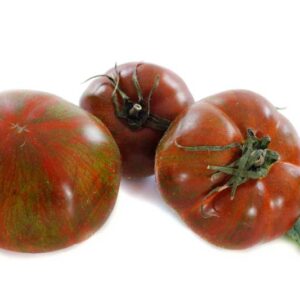
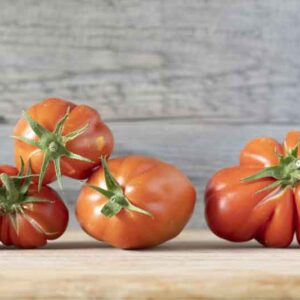
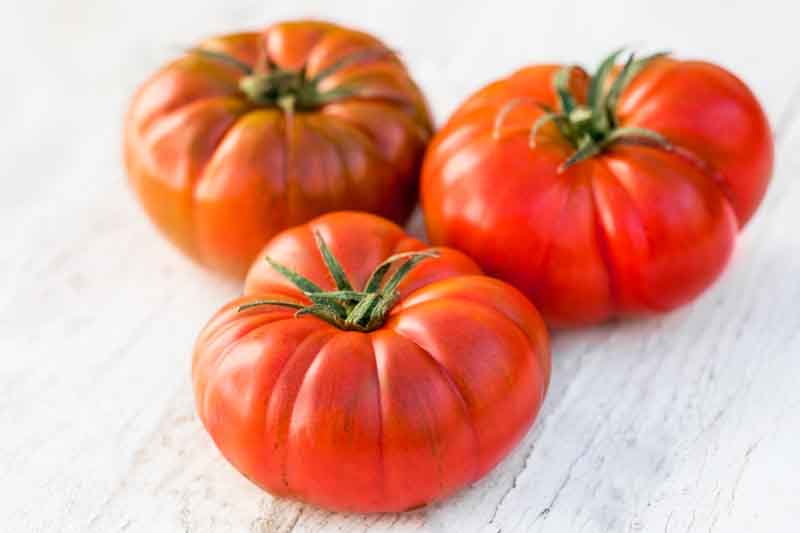
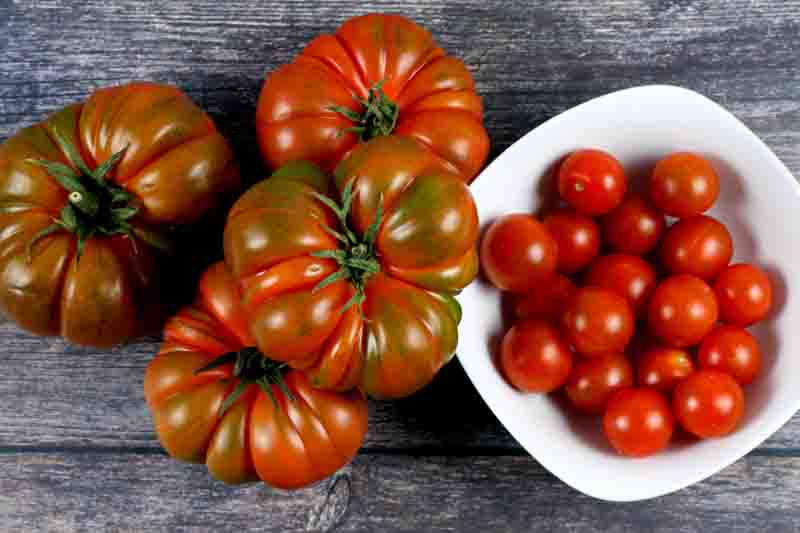
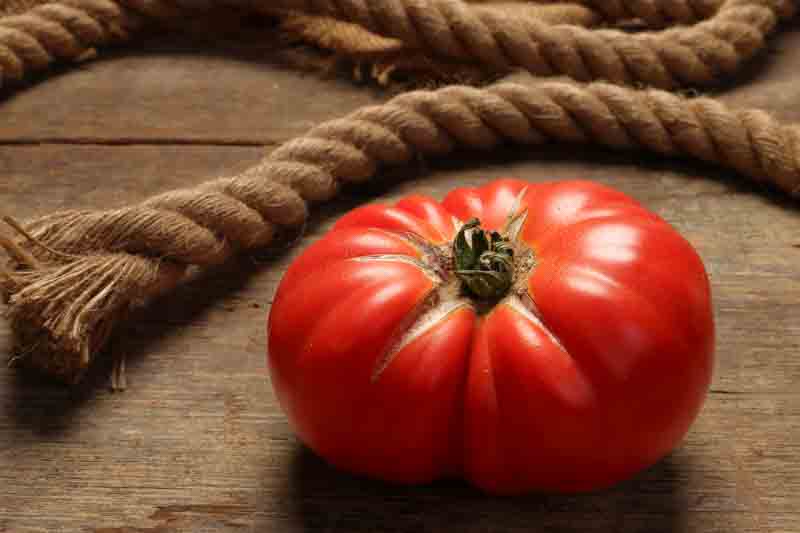
| Fruit | Large, somewhat flattened and often irregular pink beefsteak fruits, commonly 10-16 oz.; larger fruits may exceed 1 lb. under favorable conditions or in certain strains |
| Flavor | Rich, full, complex tomato flavor with juicy, tender flesh; especially prized for fresh eating |
| Days to Maturity | Usually about 80-90 days from transplanting for classic pink Brandywine selections, although maturity varies among strains and seed sources |
| Sun and Exposure | Full sun; at least 6 hours of direct sunlight, with 8 or more hours preferable |
| Soil | Fertile, organically rich, moist but well-drained clay, loam, or sandy soil; slightly acidic to neutral, ideally around pH 6.0-6.8 |
| Spacing | 24-36 in. (60-90 cm); use the wider end for large cages, multi-stem training, or humid conditions |
| Water | Maintain reasonably even soil moisture, particularly while large fruits are developing |
| Best Uses | Fresh slicing, sandwiches, burgers, salads, tomato toast, and fresh sauces |
| Disease Resistance | No standardized modern disease-resistance package should be assumed; disease performance can vary among Brandywine strains, seed sources, climates, and growing conditions |
| Container Suitability | Possible in a very large container, but less naturally suited to pots than compact or determinate tomatoes because of its vigorous indeterminate growth and large fruit |
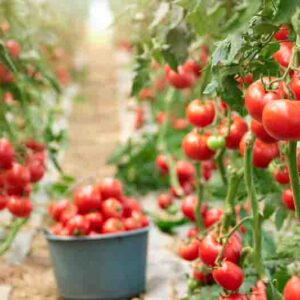
Pink ‘Brandywine’ is best known for its flavor. The large beefsteak fruits have juicy, tender flesh and a rich, balanced tomato character that has made Brandywine a reference point for fresh-eating heirloom tomatoes.
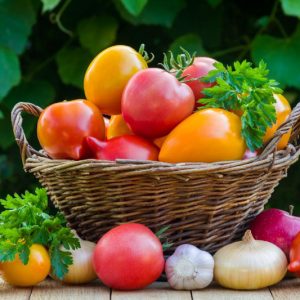
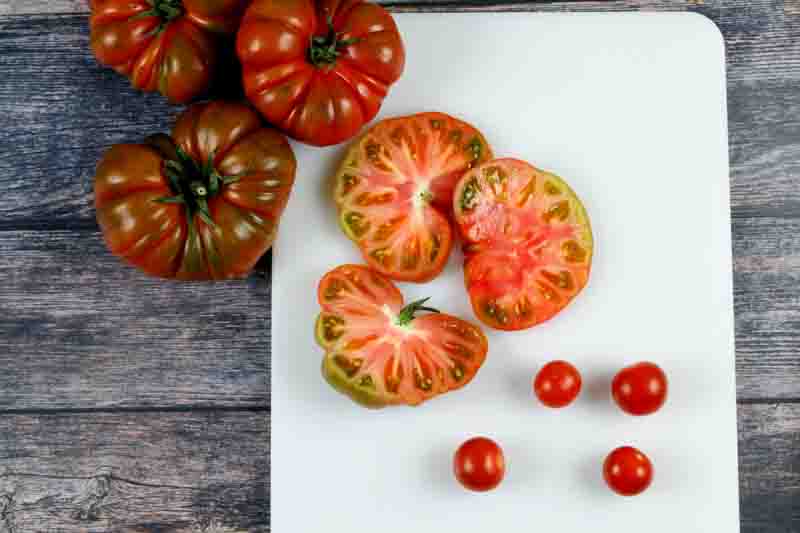
The fruits are generally large, somewhat flattened, and often irregular or lobed around the shoulders. Many weigh about 10-16 oz., although individual fruits can exceed 1 lb. depending on strain, fruit load, and growing conditions.
The broad potato-leaf foliage is another important identifying trait. Instead of the deeply divided leaves typical of most tomatoes, the classic pink Brandywine has larger, smoother-edged leaves that can make the plant easy to recognize even before fruit develops.
Best reason to grow pink ‘Brandywine’: Grow it for the eating experience. This is not the obvious choice for uniform commercial-style fruit, compact growth, or a standardized disease-resistance package. Its enduring appeal is large, juicy slicing tomatoes with exceptional fresh flavor.
Brandywine is one of the most confusing names in heirloom tomatoes. Different tomatoes have circulated as Brandywine, Pink Brandywine, Red Brandywine, Yellow Brandywine, Brandywine Sudduth’s Strain, OTV Brandywine, and other selections.
The familiar pink Brandywine described on this page is a potato-leaf, indeterminate tomato producing large pink beefsteak fruits. That should not be confused with historically documented Red Brandywine, which has different fruit color and leaf characteristics, or with named selections such as Sudduth’s Strain, which should be treated as its own strain when comparing fruit size, maturity, history, and performance.
The word “heirloom” also needs some care. Pink Brandywine is widely sold and grown as an heirloom tomato, but the histories of the various Brandywine tomatoes are not interchangeable. Some have documented commercial histories, while others are associated with family seed histories.
Gardenia identity rule: Do not assign a Brandywine trait from the name alone. Before comparing fruit color, leaf type, size, maturity, flavor, or history, identify the exact Brandywine strain or selection. A pink potato-leaf Brandywine should not inherit traits documented for Red Brandywine, Sudduth’s Strain, or another Brandywine-named tomato.
Pink ‘Brandywine’ is an indeterminate tomato. It continues producing new stems, flower clusters, and fruit through the growing season rather than terminating after one concentrated crop.
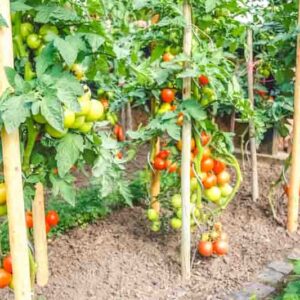
Plants commonly reach about 6-7 ft. (1.8-2.1 m) when supported and can grow taller during a long season. Because the vines carry substantial foliage and large beefsteak fruits, install a sturdy cage, stake, or trellis early rather than trying to support the plant after it becomes heavy.
For help understanding tomato growth habits, see Gardenia’s Determinate vs. Indeterminate Tomatoes.
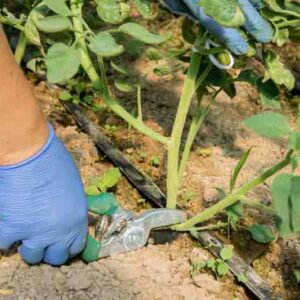
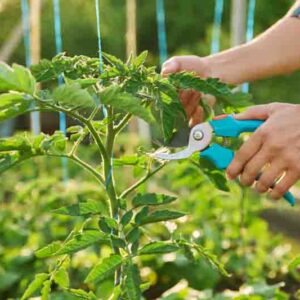
Pruning rule: A sucker is a potentially productive stem, not automatically wasted growth. Remove selected suckers when needed to fit the plant to its stake, string, trellis, or allotted space, but do not strip productive foliage simply because the plant is indeterminate.
For detailed pruning guidance, see Gardenia’s How and When to Prune Tomatoes.
Grow ‘Brandywine’ in full sun, with at least 6 hours of direct sunlight and preferably 8 or more for vigorous growth, flowering, and fruit development.
Plant in fertile, organically rich, moist but well-drained soil. Clay, loam, or sandy soil can work when drainage and fertility are suitable. Aim for a slightly acidic to neutral soil pH around 6.0-6.8.
Space plants about 24-36 inches (60-90 cm) apart. Use the wider end of the range for large cages, multi-stem plants, humid climates, or situations where more airflow is desirable.
Maintain reasonably even soil moisture. Large beefsteak tomatoes can crack when developing fruits experience abrupt changes from dry soil to abundant moisture, particularly as they approach maturity.
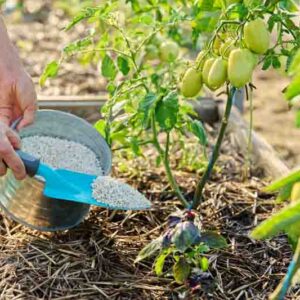
Use balanced fertility and avoid excessive nitrogen. A large leafy vine is not necessarily a productive vine, and a soil test is more useful than adding fertilizer automatically.
For the best crop: Give ‘Brandywine’ time, full sun, strong support, steady moisture, and enough foliage to fuel and shade its large fruits. Growing conditions can strongly influence both yield and fruit quality.
For broader growing guidance, see Gardenia’s Tomato (Solanum lycopersicum) profile.
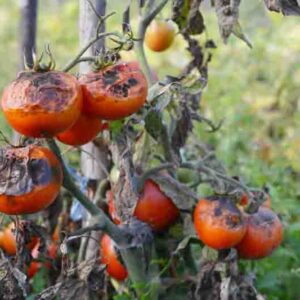
Pink ‘Brandywine’ should not be treated as a modern hybrid with a standardized package of resistance genes. Disease performance can differ among strains and seed sources and is strongly influenced by weather, garden hygiene, airflow, crop rotation, and local disease pressure.
Potential problems include:
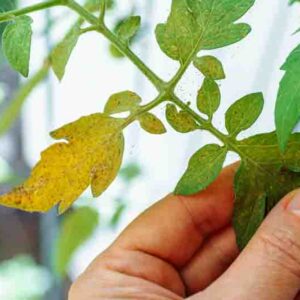
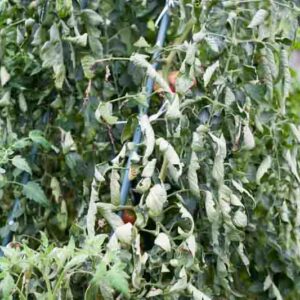
Early blight and Septoria leaf spot, especially where infected debris or prolonged leaf wetness favors disease.
Late blight when regional weather and disease pressure favor infection.
Blossom-end rot when calcium delivery to developing fruit is disrupted by moisture or root stress.
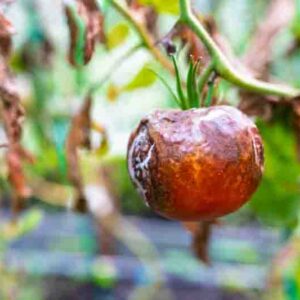
Fruit cracking, especially after abrupt changes in soil moisture.
Catfacing and irregular fruit shape, particularly when flowers develop during unfavorable temperatures.
Tomato hornworms and other common tomato pests.
If symptoms are unclear, use Gardenia’s Tomato Problems: What Is Wrong With My Plant?. For infectious diseases, see Tomato Diseases: Identification, Treatment & Prevention.
Harvest the fruit when it has developed a deep rosy-pink color and gives slightly to gentle pressure. Fully ripe Brandywine tomatoes are juicy and relatively tender, so handle them carefully.
Large heirloom beefsteaks do not always ripen with perfectly uniform color or shape. Judge ripeness by the cultivar’s mature color, overall feel, and fruit condition rather than waiting for supermarket-style uniformity.
If heavy rain, cracking, pests, or extreme weather threaten, mature fruit can be harvested once ripening has begun and allowed to finish indoors.
Gardenia harvest cue: A ripe pink ‘Brandywine’ should feel heavy, richly colored, and slightly yielding rather than hard. If cracking or severe weather is likely, there is little benefit in leaving an already ripening beefsteak on the vine merely to achieve perfectly uniform color.
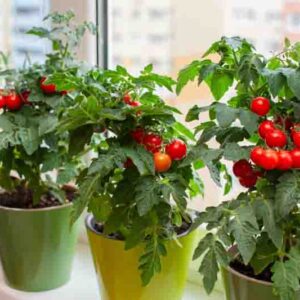
‘Brandywine’ can grow successfully in a container, but its tall indeterminate habit and large fruit make it much less convenient than compact tomato cultivars.
Use a generous container, preferably around 10 gallons or larger for one plant, together with a strong support system. Greater root volume provides a larger moisture reserve and helps reduce the severe moisture fluctuations that can occur in undersized pots.
Container-grown plants may need frequent moisture checks during hot or windy weather. Pruning can help fit the vine to its support, but pruning cannot compensate for an inadequate root zone.
Container reality: Grow ‘Brandywine’ in a pot because you want Brandywine flavor, not because it is naturally a container tomato. For limited space or small containers, dwarf or compact determinate cultivars are generally easier choices.
Choose companion plants that tolerate the same full sun, fertile soil, good drainage, and regular moisture without crowding the tomato’s vigorous root system or canopy.
Basil (Ocimum basilicum) enjoys full sun, well-drained soil, and regular moisture and fits naturally into an edible tomato bed.
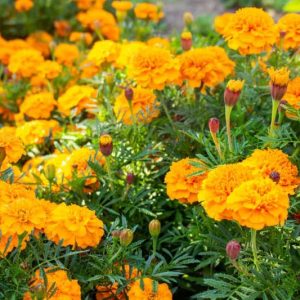
French Marigold (Tagetes patula) thrives in full sun and well-drained soil while adding long-season flowers around vegetable beds.
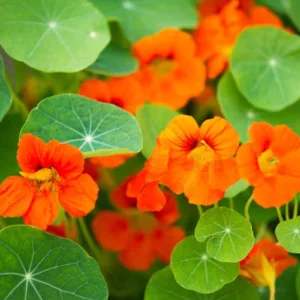
Nasturtium (Tropaeolum majus) can trail around the edge of the planting without competing for vertical canopy space.
Garlic (Allium sativum) shares a preference for sun and good drainage and can occupy space before the tomato reaches full summer size.
For more ideas based on compatible growing conditions and practical garden functions rather than folklore, see Gardenia’s Companion Plants for Tomatoes.
The pink potato-leaf ‘Brandywine’ described here is indeterminate. It continues producing new stems, flowers, and fruit through the growing season and requires sturdy support.
Pink ‘Brandywine’ commonly reaches about 6-7 feet (1.8-2.1 m) when supported and can grow taller during a long growing season.
Pink ‘Brandywine’ commonly produces fruits around 10-16 ounces, although larger fruits exceeding 1 pound can occur depending on strain and growing conditions.
Classic pink Brandywine selections commonly mature in roughly 80-90 days after transplanting, although maturity varies among strains, seed sources, climates, and growing conditions.
Pink ‘Brandywine’ is prized for rich, full, complex tomato flavor and juicy, tender flesh. It is primarily grown as a premium fresh-eating and slicing tomato.
The classic pink Brandywine described on this page has potato-leaf foliage, with broad, relatively smooth-edged leaves. Not every tomato carrying the Brandywine name has the same leaf type.
Yes, but pink ‘Brandywine’ needs a very large container, preferably around 10 gallons or more, strong support, full sun, and reliable moisture. Its vigorous indeterminate habit makes it less convenient for containers than compact cultivars.
No. Several distinct tomatoes and strains circulate under Brandywine-related names, including pink Brandywine, Red Brandywine, Yellow Brandywine, Sudduth’s Strain, and others. Fruit color, leaf type, size, maturity, history, and performance can differ.
Pink Brandywine is widely grown and sold as an heirloom tomato, but the histories of different Brandywine strains are not identical. Some Brandywine tomatoes have documented commercial histories, while others are associated with family seed histories.
| Hardiness |
2 - 11 |
|---|---|
| Climate Zones | 1, 1A, 1B, 2, 2A, 2B, 3, 3A, 3B, 4, 5, 6, 7, 8, 9, 10, 11, 12, 13, 14, 15, 16, 17, 18, 19, 20, 21, 22, 23, 24, A1, A2, A3, H1, H2 |
| Plant Type | Annuals, Fruits, Perennials |
| Plant Family | Solanaceae |
| Genus | Solanum, Tomatoes |
| Common names | Tomato |
| Exposure | Full Sun |
| Season of Interest | Summer (Early, Mid, Late), Fall |
| Height | 6' - 7' (180cm - 210cm) |
| Spread | 2' - 3' (60cm - 90cm) |
| Spacing | 24" - 36" (60cm - 90cm) |
| Maintenance | High |
| Water Needs | Average |
| Soil Type | Clay, Loam, Sand |
| Soil pH | Acid, Neutral |
| Soil Drainage | Moist but Well-Drained |
| Tolerance | Rabbit, Clay Soil |
| Attracts | Bees |
| Garden Uses | Beds And Borders, Patio And Containers, Wall-Side Borders |
| Garden Styles | City and Courtyard, Informal and Cottage, Pollinator Garden |


| Hardiness |
2 - 11 |
|---|---|
| Climate Zones | 1, 1A, 1B, 2, 2A, 2B, 3, 3A, 3B, 4, 5, 6, 7, 8, 9, 10, 11, 12, 13, 14, 15, 16, 17, 18, 19, 20, 21, 22, 23, 24, A1, A2, A3, H1, H2 |
| Plant Type | Annuals, Fruits, Perennials |
| Plant Family | Solanaceae |
| Genus | Solanum, Tomatoes |
| Common names | Tomato |
| Exposure | Full Sun |
| Season of Interest | Summer (Early, Mid, Late), Fall |
| Height | 6' - 7' (180cm - 210cm) |
| Spread | 2' - 3' (60cm - 90cm) |
| Spacing | 24" - 36" (60cm - 90cm) |
| Maintenance | High |
| Water Needs | Average |
| Soil Type | Clay, Loam, Sand |
| Soil pH | Acid, Neutral |
| Soil Drainage | Moist but Well-Drained |
| Tolerance | Rabbit, Clay Soil |
| Attracts | Bees |
| Garden Uses | Beds And Borders, Patio And Containers, Wall-Side Borders |
| Garden Styles | City and Courtyard, Informal and Cottage, Pollinator Garden |
How many Solanum lycopersicum ‘Brandywine’ (Tomato) do I need for my garden?
| Plant | Quantity | |
|---|---|---|
| Solanum lycopersicum ‘Brandywine’ (Tomato) | N/A | Buy Plants |
Create a membership account to save your garden designs and to view them on any device.
Becoming a contributing member of Gardenia is easy and can be done in just a few minutes. If you provide us with your name, email address and the payment of a modest $25 annual membership fee, you will become a full member, enabling you to design and save up to 25 of your garden design ideas.
Join now and start creating your dream garden!
Create a membership account to save your garden designs and to view them on any device.
Becoming a contributing member of Gardenia is easy and can be done in just a few minutes. If you provide us with your name, email address and the payment of a modest $25 annual membership fee, you will become a full member, enabling you to design and save up to 25 of your garden design ideas.
Join now and start creating your dream garden!