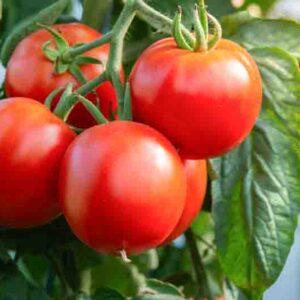
Tomato 'San Marzano'
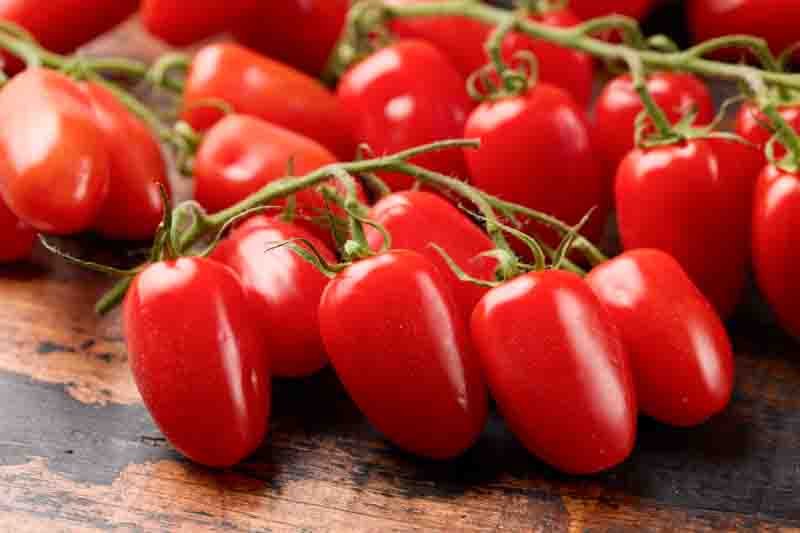
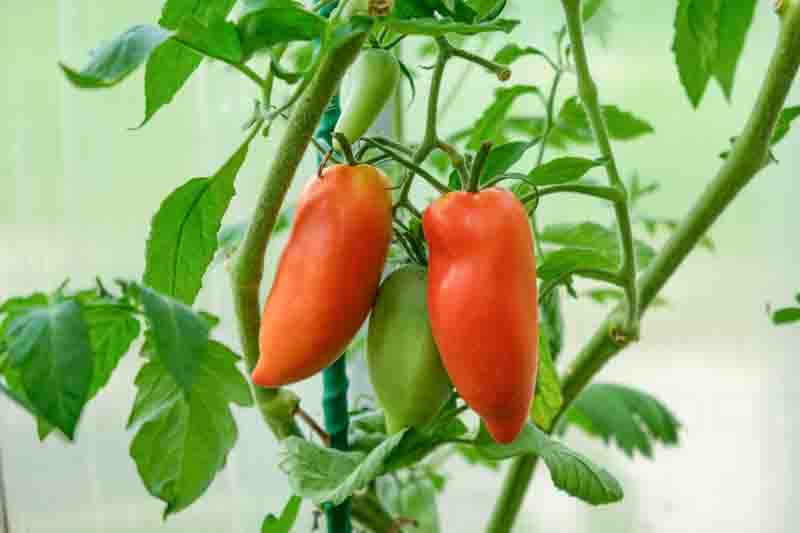



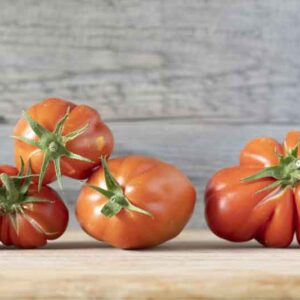
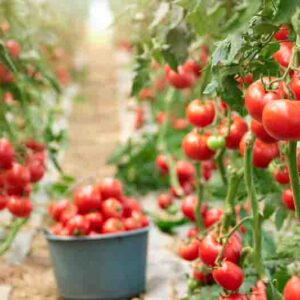
Solanum lycopersicum ‘San Marzano’ is a famous Italian plum and paste tomato prized for its elongated red fruits, dense meaty flesh, relatively small seed cavities, and excellent cooking qualities. Compared with many slicing tomatoes, its fruits contain a high proportion of usable flesh and relatively little watery pulp, allowing them to cook down efficiently into richly flavored sauces, purées, passata, and preserves.
Traditional San Marzano tomatoes are open-pollinated and indeterminate, producing fruit over an extended season rather than ripening in one concentrated flush. However, “San Marzano” now covers several strains and selections, so mature size, fruit weight, maturity, and disease resistance can vary depending on the exact seed line.
Gardenia cultivar insight: A tomato grown from ‘San Marzano’ seed is not automatically a San Marzano PDO tomato. The protected Italian designation Pomodoro San Marzano dell’Agro Sarnese-Nocerino applies only to approved San Marzano lines grown and processed within the legally defined production area in Campania. Cultivar identity and geographic food certification are two different things.
| Botanical Name | Solanum lycopersicum ‘San Marzano’ |
|---|---|
| Family | Solanaceae |
| Common Names | San Marzano tomato, San Marzano paste tomato, San Marzano plum tomato |
| Origin | Italy, historically associated with Campania and the Agro Sarnese-Nocerino area; several San Marzano strains and selections are now in cultivation |
| Plant Type and Habit | Warm-season fruiting annual; vigorous, indeterminate vine requiring support |
| Size | Often about 4-6 ft. tall (1.2-1.8 m) when supported, potentially taller depending on strain, pruning, climate, and season length |
| Growth Habit | Indeterminate; continues flowering and producing fruit through the growing season |
| Tomato Type | Open-pollinated plum / paste tomato; multiple strains exist |
| Fruit | Elongated red plum tomatoes, commonly about 4-6 oz. (115-170 g); fruit size varies among San Marzano strains |
| Fruit Characteristics | Dense, meaty flesh, relatively small seed cavities, a good proportion of solids, and comparatively little watery pulp |
| Flavor | Rich, balanced tomato flavor that becomes especially valuable when cooked and concentrated |
| Days to Maturity | Varies by strain; approximately 65-90 days from transplanting, with many commonly sold selections maturing around 75-80 days |
| Sun and Exposure | Full sun; at least 6 hours of direct sunlight, preferably 8 or more |
| Soil | Fertile, organically rich, moist but well-drained clay, loam, or sandy soil; slightly acidic to neutral, ideally around pH 6.0-6.8 |
| Spacing | 24-36 in. (60-90 cm); use the wider end for caged or multi-stem plants |
| Harvest | Extended harvest; pick when fruits are fully red and firm-ripe or at breaker stage if weather or cracking threatens |
| Best Uses | Sauce, passata, paste, purée, canning, roasting, drying, pizza sauce, soups, and cooked tomato dishes |
| Disease Resistance | Varies by strain and seed source; a universal modern resistance package should not be assumed from the San Marzano name alone |
| Container Suitability | Possible in a large container with strong support, but vigorous indeterminate growth makes it less convenient than compact paste tomatoes |
‘San Marzano’ is primarily a cooking tomato. Its elongated fruits contain dense flesh, relatively small seed cavities, and less watery pulp than many large slicing tomatoes. That means less liquid needs to evaporate before a sauce becomes thick and concentrated.
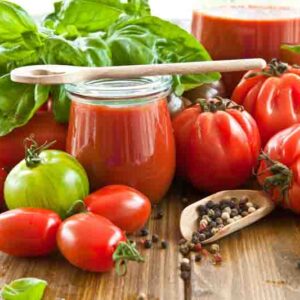
The fruit is especially well suited to sauces, passata, purée, canning, roasting, and drying. Whole fruits also peel readily once blanched, another advantage when processing a substantial harvest.
The flavor is good fresh, but San Marzano’s real strength becomes obvious after cooking. Heat concentrates its tomato flavor while the dense flesh gives sauces body without requiring as much reduction as very juicy slicing cultivars.
Best reason to grow ‘San Marzano’: Grow it because you make tomato sauce. A juicy beefsteak may be wonderful on a sandwich, but San Marzano’s dense flesh and relatively low proportion of watery pulp make it far more efficient when the goal is a thick sauce, passata, paste, or preserved tomato crop.
The San Marzano name can describe a tomato grown by a home gardener, a family of related San Marzano strains, or a legally protected Italian food product. Those meanings should not be confused.
The European protected designation Pomodoro San Marzano dell’Agro Sarnese-Nocerino PDO is much more specific. The official specification permits tomatoes derived from San Marzano 2 and KIROS, or improved strains of those varieties, when they are grown within the designated production area and processed there according to the PDO rules.
The PDO specification also defines characteristics of the fresh fruit used for processing, including elongated shape, red color, small seed cavities, readily detachable skin, and specified compositional standards.
Gardenia identity rule: “San Marzano” on a seed packet identifies plant material. “Pomodoro San Marzano dell’Agro Sarnese-Nocerino PDO” identifies a legally protected agricultural and processed food product tied to approved plant lines, geography, cultivation, and processing. Growing San Marzano seed outside the designated Italian production area does not create a PDO tomato.
San Marzano tomatoes are closely associated with Campania in southern Italy and particularly with the countryside around San Marzano sul Sarno, Nocera, and Sarno.
Popular tradition traces the tomato to seed supposedly brought to the Kingdom of Naples from Peru in the 18th century. That story remains part of San Marzano folklore, but official regional sources distinguish it from documented history and place the first certain evidence of the San Marzano ecotype in the local production area in the early 20th century.
Over time, growers and breeders selected different San Marzano lines. Modern seed catalogs therefore do not necessarily sell genetically identical material simply because every packet carries the words “San Marzano.”
Gardenia history note: The romantic 18th-century origin story should be presented as tradition, not documented fact. The more defensible distinction is between the traditional account and the documented presence of the San Marzano ecotype in the Campania production area by the early 1900s.
Traditional San Marzano is an indeterminate tomato. The vines continue growing, flowering, and setting fruit through the season instead of producing one concentrated crop.
Traditional San Marzano strains are commonly grown to about 4-6 ft. (1.2-1.8 m) with support, but mature size varies considerably. Some selections remain closer to 4 ft., while vigorous plants can grow taller in a long season. Strain, pruning, support system, fertility, climate, and season length all influence final vine size.
Height should therefore be treated as a practical growing range rather than a fixed defining characteristic of every tomato carrying the San Marzano name.
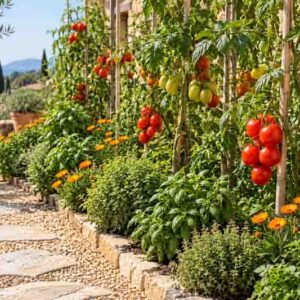
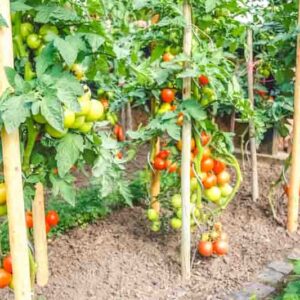
Support the vines with stakes, cages, strings, or a trellis before they become heavily loaded with fruit.
For more on tomato growth habit, see Gardenia’s Determinate vs. Indeterminate Tomatoes.
Pruning rule: A sucker can become another productive fruiting stem. Prune San Marzano according to the support system, spacing, airflow, and number of stems you can manage rather than removing every sucker automatically.
For detailed pruning guidance, see Gardenia’s How and When to Prune Tomatoes.
Grow San Marzano in full sun, with at least 6 hours of direct sunlight and preferably 8 or more for strong flowering, fruit set, and ripening.
Plant in fertile, organically rich, moist but well-drained soil. Clay, loam, or sandy soil can work when drainage and fertility are suitable. Aim for a slightly acidic to neutral pH around 6.0-6.8.
Allow about 24-36 inches (60-90 cm) between plants. Use the wider end of the range for large cages, multi-stem plants, or humid conditions where greater airflow is desirable.
Maintain reasonably even root-zone moisture. Elongated paste tomatoes can develop blossom-end rot when moisture or root stress disrupts calcium delivery to developing fruit.
Use balanced fertility and avoid excessive nitrogen. Too much nitrogen can encourage vigorous leafy growth while delaying flowering or ripening.
For the best crop: Give San Marzano full sun, strong support, steady moisture, and enough leaf area to fuel a long harvest. Because strains vary in vigor, adjust pruning and spacing to the actual plant rather than relying on the cultivar name alone.
For complete tomato care, see Gardenia’s Tomato (Solanum lycopersicum) profile.
Disease-resistance information for San Marzano needs to be interpreted carefully because several strains circulate under the name. Some references list resistance to Verticillium or Fusarium wilts for particular San Marzano selections, while others provide no standardized resistance package at all.
Gardenia resistance rule: Do not transfer disease-resistance codes from one San Marzano strain to every tomato carrying the San Marzano name. Check the exact seed strain and supplier. “San Marzano type” is even broader and may include modern hybrids with resistance packages very different from traditional open-pollinated San Marzano.
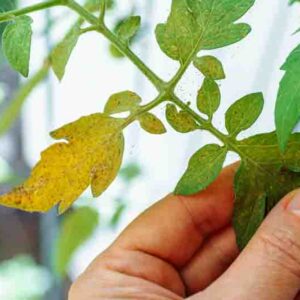
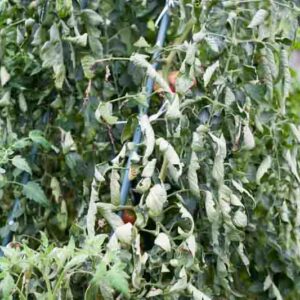
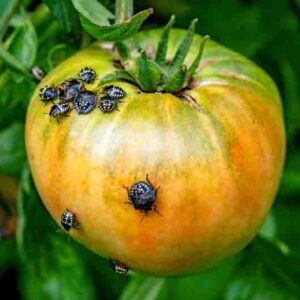
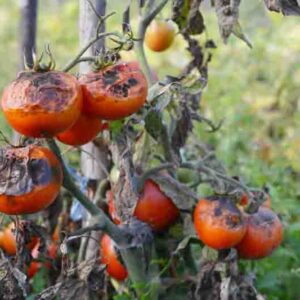
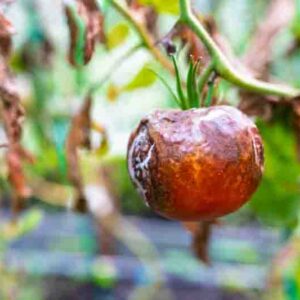
Potential problems include early blight, late blight, Septoria leaf spot, blossom-end rot, fruit cracking, and pests such as tomato hornworms.
If symptoms are unclear, use Gardenia’s Tomato Problems: What Is Wrong With My Plant?. For infectious diseases, see Tomato Diseases: Identification, Treatment & Prevention.
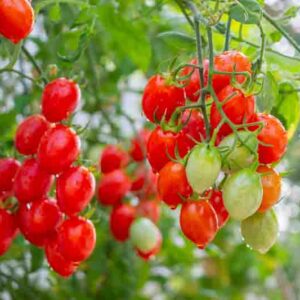
Harvest fruits when they have developed a rich red color and are firm-ripe. Because traditional San Marzano plants are indeterminate, fruits mature progressively rather than all at once.
If heavy rain, pest pressure, or extreme weather threatens, fruit can be picked after ripening has clearly begun and allowed to finish indoors.
For sauce, remove the skins if desired, then cook the dense flesh until it reaches the preferred consistency. The relatively high proportion of usable flesh means San Marzano tomatoes generally require less reduction than very watery slicing cultivars.
Gardenia kitchen rule: Do not judge a paste tomato by raw juiciness alone. San Marzano’s value lies in what remains after cooking: a high proportion of usable flesh, relatively small seed cavities, and a sauce that concentrates efficiently.
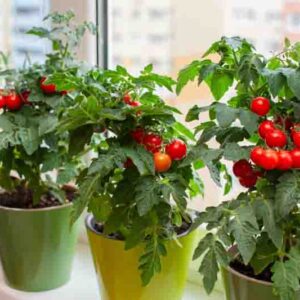
San Marzano can grow successfully in a container, but an indeterminate paste tomato needs more root volume and support than its narrow fruits might suggest.
Use a large container, preferably around 10 gallons or more, with strong vertical support. Larger containers also maintain more stable root-zone moisture, which is particularly useful for reducing stress associated with blossom-end rot.
Container-grown plants may need frequent moisture checks in hot or windy weather. Pruning can help fit the plant to its support, but it cannot compensate for an undersized root zone.
Container reality: Plum-shaped fruit does not mean a compact plant. Traditional San Marzano is indeterminate. If space is extremely limited, a determinate paste tomato may be easier to manage.
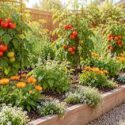
Choose companion plants that share full sun, fertile soil, good drainage, and regular moisture without crowding the tomato canopy.
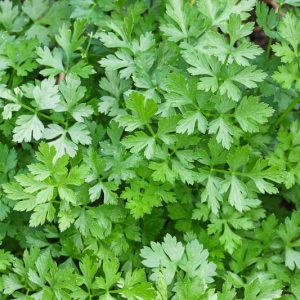
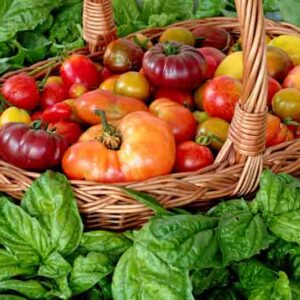
Basil (Ocimum basilicum) fits naturally into an edible tomato bed and shares similar sun and moisture requirements.
French Marigold (Tagetes patula) thrives in full sun and well-drained soil and adds long-season flowers.
Nasturtium (Tropaeolum majus) can trail around bed edges without competing for vertical canopy space.
Garlic (Allium sativum) shares a preference for sun and good drainage and can occupy space before tomato vines reach full summer size.
For more ideas based on compatible conditions rather than folklore, see Gardenia’s Companion Plants for Tomatoes.
Traditional open-pollinated San Marzano tomatoes are indeterminate. They continue flowering and producing fruit through the growing season and benefit from sturdy support. Some modern San Marzano-type hybrids can have different growth habits.
Traditional San Marzano strains are commonly grown to about 4-6 feet (1.2-1.8 m) with support. Some selections remain closer to 4 feet, while vigorous plants can grow taller depending on strain, pruning, climate, support, and season length.
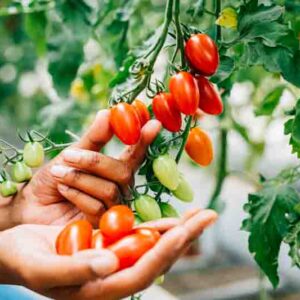
San Marzano fruits are elongated plum tomatoes commonly weighing about 4-6 ounces (115-170 g), although fruit size varies among strains and selections.
Maturity varies considerably by strain. San Marzano selections are commonly listed from roughly 65 to 90 days after transplanting, with many maturing around 75-80 days.
Their elongated fruits contain dense, meaty flesh, relatively small seed cavities, and comparatively little watery pulp. They therefore cook down efficiently into thick sauces, passata, paste, and purée.
No. Several strains and selections circulate under the San Marzano name, and modern San Marzano-type hybrids also exist. Fruit size, maturity, plant size, growth habit, and disease resistance can differ, so check the exact strain or cultivar.
No. You can grow genuine San Marzano plant material wherever the climate permits tomatoes, but the protected Pomodoro San Marzano dell’Agro Sarnese-Nocerino PDO designation requires approved varieties or strains to be grown and processed within the legally defined Italian production area.
Yes. Use a large container, preferably around 10 gallons or more, with full sun, steady moisture, and sturdy support for the indeterminate vines.
Traditional San Marzano strains are open-pollinated heritage tomatoes and are commonly sold as heirlooms. However, several distinct strains and modern San Marzano-type hybrids exist, so the exact seed identity matters.
Yes, from a genuine open-pollinated San Marzano strain, provided the seed has not been unintentionally crossed with another tomato cultivar. Seeds from F1 San Marzano-type hybrids will not reliably reproduce the parent cultivar.
| Hardiness |
2 - 11 |
|---|---|
| Climate Zones | 1, 1A, 1B, 2, 2A, 2B, 3, 3A, 3B, 4, 5, 6, 7, 8, 9, 10, 11, 12, 13, 14, 15, 16, 17, 18, 19, 20, 21, 22, 23, 24, A1, A2, A3, H1, H2 |
| Plant Type | Annuals, Fruits, Perennials |
| Plant Family | Solanaceae |
| Genus | Solanum, Tomatoes |
| Common names | Tomato |
| Exposure | Full Sun |
| Season of Interest | Summer (Early, Mid, Late), Fall |
| Height | 4' - 6' (120cm - 180cm) |
| Spread | 2' - 3' (60cm - 90cm) |
| Spacing | 24" - 36" (60cm - 90cm) |
| Maintenance | High |
| Water Needs | Average |
| Soil Type | Clay, Loam, Sand |
| Soil pH | Acid, Neutral |
| Soil Drainage | Moist but Well-Drained |
| Tolerance | Rabbit, Clay Soil |
| Attracts | Bees |
| Garden Uses | Beds And Borders, Patio And Containers, Wall-Side Borders |
| Garden Styles | City and Courtyard, Informal and Cottage, Pollinator Garden |


| Hardiness |
2 - 11 |
|---|---|
| Climate Zones | 1, 1A, 1B, 2, 2A, 2B, 3, 3A, 3B, 4, 5, 6, 7, 8, 9, 10, 11, 12, 13, 14, 15, 16, 17, 18, 19, 20, 21, 22, 23, 24, A1, A2, A3, H1, H2 |
| Plant Type | Annuals, Fruits, Perennials |
| Plant Family | Solanaceae |
| Genus | Solanum, Tomatoes |
| Common names | Tomato |
| Exposure | Full Sun |
| Season of Interest | Summer (Early, Mid, Late), Fall |
| Height | 4' - 6' (120cm - 180cm) |
| Spread | 2' - 3' (60cm - 90cm) |
| Spacing | 24" - 36" (60cm - 90cm) |
| Maintenance | High |
| Water Needs | Average |
| Soil Type | Clay, Loam, Sand |
| Soil pH | Acid, Neutral |
| Soil Drainage | Moist but Well-Drained |
| Tolerance | Rabbit, Clay Soil |
| Attracts | Bees |
| Garden Uses | Beds And Borders, Patio And Containers, Wall-Side Borders |
| Garden Styles | City and Courtyard, Informal and Cottage, Pollinator Garden |
How many Solanum lycopersicum ‘San Marzano’ (Tomato) do I need for my garden?
| Plant | Quantity | |
|---|---|---|
| Solanum lycopersicum ‘San Marzano’ (Tomato) | N/A | Buy Plants |
Create a membership account to save your garden designs and to view them on any device.
Becoming a contributing member of Gardenia is easy and can be done in just a few minutes. If you provide us with your name, email address and the payment of a modest $25 annual membership fee, you will become a full member, enabling you to design and save up to 25 of your garden design ideas.
Join now and start creating your dream garden!
Create a membership account to save your garden designs and to view them on any device.
Becoming a contributing member of Gardenia is easy and can be done in just a few minutes. If you provide us with your name, email address and the payment of a modest $25 annual membership fee, you will become a full member, enabling you to design and save up to 25 of your garden design ideas.
Join now and start creating your dream garden!