Tomato 'Cherokee Purple'
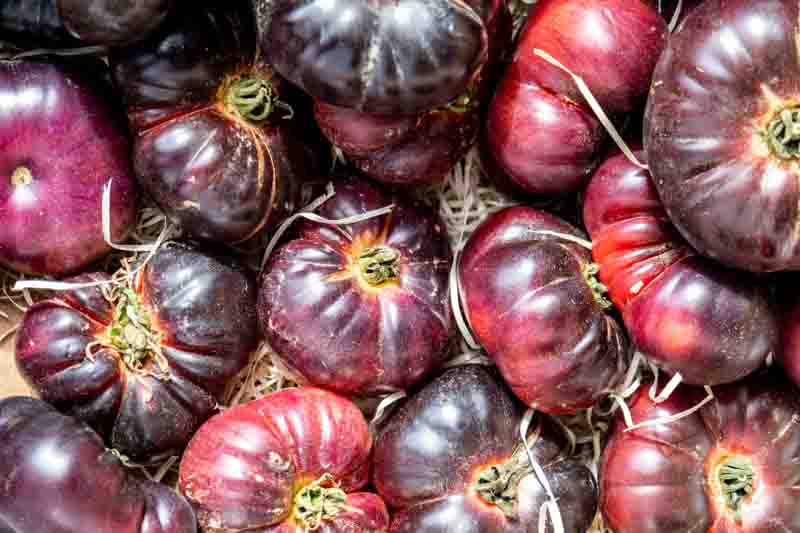


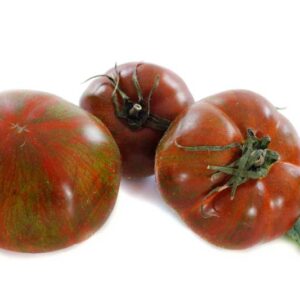
Solanum lycopersicum ‘Cherokee Purple’ is a celebrated open-pollinated heirloom tomato grown for its large, richly flavored slicing fruits and distinctive dusky pink-purple coloring. The fruits typically develop darker shoulders, deep rose to brick-red flesh, and a soft, juicy texture that makes this cultivar especially prized for fresh eating.
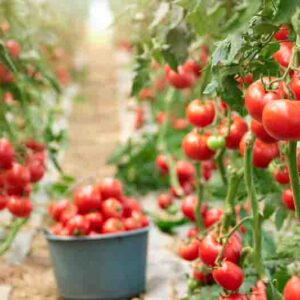
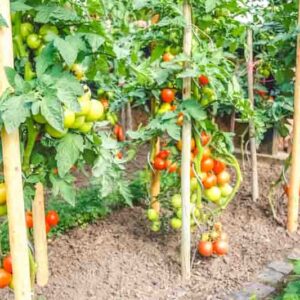
Unlike compact determinate tomatoes, ‘Cherokee Purple’ is indeterminate. It continues producing new stems, flowers, and fruit through the growing season and needs strong staking, caging, or trellising to support its vigorous growth and heavy fruits.
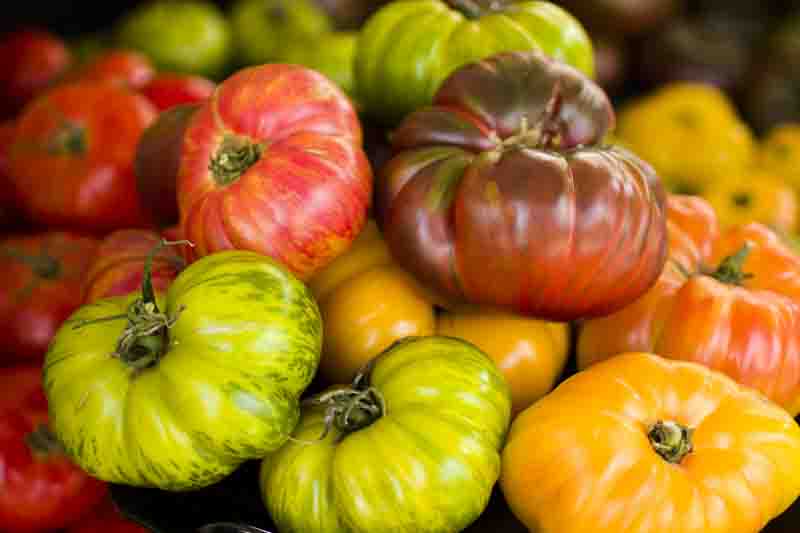
Gardenia cultivar insight: Grow ‘Cherokee Purple’ for flavor and character rather than perfectly uniform fruit. Large heirloom slicers can vary in shape and size and may show green shoulders, cracking, or irregular form. That variability is part of the cultivar’s character and does not automatically mean something is wrong with the plant.
| Botanical Name | Solanum lycopersicum ‘Cherokee Purple’ |
|---|---|
| Family | Solanaceae |
| Common Name | Cherokee Purple tomato |
| Modern History | Seed was sent from Tennessee to tomato collector Craig LeHoullier in 1990; he named the cultivar ‘Cherokee Purple’, and Southern Exposure Seed Exchange introduced it commercially in 1993 |
| Plant Type and Habit | Warm-season fruiting annual; vigorous, indeterminate vine requiring support |
| Size | Typically about 5 ft. tall (1.5 m), but potentially taller in a long growing season depending on support, pruning, fertility, and climate |
| Growth Habit | Indeterminate; continues producing new shoots, flowers, and fruit until frost, disease, or unfavorable weather ends growth |
| Tomato Type | Open-pollinated heirloom slicer; often grouped with beefsteak-type tomatoes |
| Fruit | Large, somewhat flattened fruits, commonly about 8-12 oz. and often around 10 oz., with dusky pink-purple skin, darker shoulders, and deep pink to brick-red flesh |
| Flavor | Rich, sweet-savory, complex tomato flavor; especially prized for fresh slicing |
| Days to Maturity | Approximately 70-85 days from transplanting, depending on strain and growing conditions |
| Sun and Exposure | Full sun; at least 6 hours of direct sunlight, with 8 or more hours preferable |
| Soil | Fertile, organically rich, moist but well-drained clay, loam, or sandy soil; slightly acidic to neutral, ideally around pH 6.0-6.8 |
| Water | Maintain reasonably even soil moisture, particularly while large fruits are developing |
| Harvest | Harvest when fruits develop their characteristic dusky color and begin to soften slightly; green or dark shoulders may remain when fully ripe |
| Best Uses | Fresh slicing, sandwiches, salads, tomato toast, Caprese-style dishes, and fresh sauces |
| Disease Resistance | No standardized modern disease-resistance package should be assumed. Southern Exposure reports good Septoria leaf spot resistance in its maintained original strain, but performance may vary among seed sources and growing conditions |
| Container Suitability | Possible in a very large container, but less naturally suited to pots than compact or determinate tomatoes because of its indeterminate growth and large fruit |
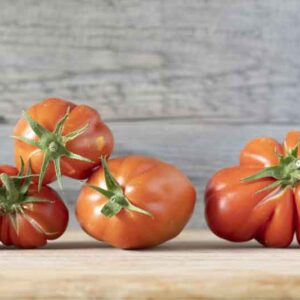
‘Cherokee Purple’ is best known for the combination of its unusual appearance and rich flavor. The fruits ripen to a dusky rose-purple rather than conventional bright red, often retaining green or darker shoulders around the stem. Inside, the flesh ranges from deep pink to brick red and is soft, juicy, and richly flavored.
The fruits are large and somewhat flattened, commonly weighing about 8-12 oz. and often close to 10 oz., although individual tomatoes can be larger or smaller depending on strain, weather, fertility, and fruit load.
Its appeal is primarily fresh eating. Thick slices work beautifully in sandwiches, salads, tomato toast, and simple dishes where flavor is allowed to stand on its own.
Best reason to grow ‘Cherokee Purple’: This is a tomato for gardeners who put fresh flavor first. If you want highly uniform fruit, a compact plant, or a long list of documented disease-resistance genes, a modern hybrid may be a better fit.
The modern history of ‘Cherokee Purple’ is unusually well documented. In 1990, John D. Green of Sevierville, Tennessee, sent seeds from an unnamed purple tomato to tomato collector Craig LeHoullier. LeHoullier grew the seed, recognized the cultivar’s distinctive characteristics, named it ‘Cherokee Purple’, and shared it with seed companies. Southern Exposure Seed Exchange introduced it commercially in 1993.
The seed arrived with a family story connecting the tomato to Cherokee people in Tennessee many decades earlier. That history is widely repeated, but the earlier provenance has not been independently documented in the way the cultivar’s modern 1990s history has.
Gardenia history note: The documented modern history begins with John D. Green sending seed to Craig LeHoullier in 1990 and continues with commercial introduction in 1993. The earlier Cherokee connection comes from the family history that accompanied the seed and should be described as reported tradition rather than independently proven breeding provenance.
‘Cherokee Purple’ is an indeterminate tomato. It continues extending and producing flowering shoots through the growing season rather than ripening one concentrated crop.
The original strain is relatively compact for an indeterminate tomato and commonly reaches about 5 ft. (1.5 m), although plants can grow taller in long seasons or under less restrictive training.
Use a strong cage, stake, or trellis from the beginning. Large fruits place considerable weight on the stems, and an unsupported plant can sprawl heavily onto the soil.
For help understanding growth habit, see Gardenia’s Determinate vs. Indeterminate Tomatoes.
Pruning rule: Do not remove suckers simply because they are suckers. On an indeterminate tomato, each retained sucker can become another flowering and fruiting stem. Prune according to the support system, spacing, airflow, and number of stems you can manage.
Grow ‘Cherokee Purple’ in full sun, ideally with at least 6 hours of direct sunlight and preferably 8 or more for strong flowering, fruit development, and flavor.
Plant in fertile, organically rich, moist but well-drained soil. Tomatoes tolerate clay, loam, or sandy soil when drainage and fertility are suitable. Aim for a slightly acidic to neutral soil pH around 6.0-6.8.
Space plants roughly 24-36 inches (60-90 cm) apart. Give additional room when plants are allowed to carry several stems or where humid conditions increase foliar disease pressure.
Maintain reasonably even root-zone moisture. Large-fruited tomatoes can be prone to cracking when soil moisture fluctuates sharply, particularly while fruits are expanding or approaching maturity.
Use balanced fertility and avoid excessive nitrogen. Strong vegetative growth is not the same as high fruit production, and a soil test is more useful than adding fertilizer by habit.
For the best crop: Give ‘Cherokee Purple’ strong support, steady moisture, full sun, and enough leaf area to protect its large fruit. Flavor may be the headline trait, but good root-zone management is what allows the plant to deliver it.
For broader growing guidance, see Gardenia’s Tomato (Solanum lycopersicum) profile.
‘Cherokee Purple’ should not be treated as a modern disease-resistant hybrid with a standardized package of resistance genes. Performance depends on seed source, climate, disease pressure, and garden conditions.
Southern Exposure reports good resistance to Septoria leaf spot in its maintained original strain, but that observation should not be generalized into a broad resistance claim for every seed source sold as ‘Cherokee Purple’.
Potential problems include:
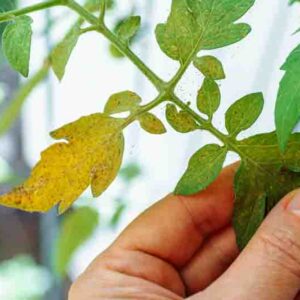
Early blight and Septoria leaf spot, particularly where foliage remains wet or infected debris is present.
Late blight where weather and regional disease pressure favor infection.
Blossom-end rot, especially when calcium delivery to rapidly developing fruit is disrupted by moisture or root stress.
Fruit cracking, which can increase after rapid changes in soil moisture.
Catfacing or irregular fruit shape, particularly when flowers develop under unfavorable temperature conditions.
Tomato hornworms and other common tomato pests.
If symptoms are unclear, use Gardenia’s Tomato Problems: What Is Wrong With My Plant?. For infectious diseases, see Tomato Diseases: Identification, Treatment & Prevention.
Do not wait for the shoulders to turn uniformly red. Mature ‘Cherokee Purple’ fruit often retains greenish or darker shoulders even when the rest of the tomato has reached its characteristic dusky pink-purple color.
Harvest when the fruit has developed its mature color and gives slightly to gentle pressure. Because the flesh is relatively soft and juicy, handle ripe fruit carefully.
If cracking, heavy rain, pests, or extreme weather threaten, mature fruit can be harvested once ripening has begun and allowed to finish indoors.
Gardenia harvest cue: Judge ‘Cherokee Purple’ by overall color and feel, not by whether the shoulders have lost every trace of green. Waiting for a uniformly red tomato can mean leaving a ripe fruit on the vine longer than necessary.
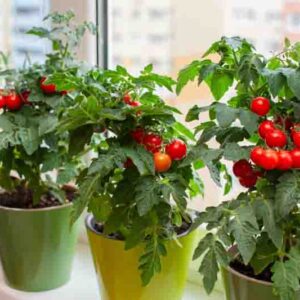
‘Cherokee Purple’ can be grown in a container, but it is not one of the easiest tomato cultivars for small pots. Its indeterminate growth and large fruit demand substantial root volume, strong support, and careful watering.
For one plant, use a large container, preferably around 10 gallons or more. A larger root zone provides a more stable moisture reserve and makes it easier to sustain continued growth and fruit development.
Install the support at planting rather than after the vine becomes large. In hot or windy weather, container-grown plants may need frequent moisture checks.
Container reality: ‘Cherokee Purple’ can succeed in a pot, but choose it for flavor rather than convenience. Gardeners wanting a naturally compact container tomato will usually have easier options among dwarf or determinate cultivars.
Choose companions that tolerate the same sunny, fertile, moist but well-drained growing conditions and that do not crowd the tomato’s root zone or canopy.
Basil (Ocimum basilicum) enjoys full sun, well-drained soil, and regular moisture and fits naturally into an edible tomato bed.
French Marigold (Tagetes patula) thrives in full sun and well-drained soil and adds long-season flowers around the planting.
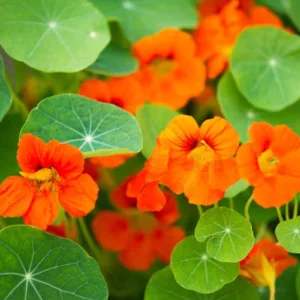
Nasturtium (Tropaeolum majus) can trail around the bed edge while sharing sunny, well-drained conditions.
Garlic (Allium sativum) shares a preference for sun and good drainage and can make use of garden space before the tomato reaches full summer size.
For more ideas based on compatible growing conditions and useful garden functions rather than folklore, see Gardenia’s Companion Plants for Tomatoes.
‘Cherokee Purple’ is indeterminate. It continues producing new shoots, flowers, and fruit through the growing season and needs sturdy support.
‘Cherokee Purple’ commonly reaches about 5 feet (1.5 m) tall but can grow taller in a long season depending on support, pruning, fertility, climate, and other growing conditions.
Fruits commonly weigh about 8-12 ounces and are often around 10 ounces, although individual tomatoes can be larger or smaller depending on strain and growing conditions.
‘Cherokee Purple’ generally reaches maturity about 70-85 days after transplanting, depending on strain, climate, and growing conditions.
‘Cherokee Purple’ is prized for a rich, complex, sweet-savory tomato flavor and soft, juicy flesh, making it especially popular for fresh slicing.
Green or dark shoulders are a normal characteristic of ‘Cherokee Purple’. The fruit can be fully ripe even when some green coloration remains around the stem.
Yes, but they need a large container, preferably around 10 gallons or more, along with strong support, full sun, and reliable moisture because the plants are indeterminate and produce large fruit.
Yes. ‘Cherokee Purple’ is an open-pollinated heirloom tomato. Its documented modern history begins with seed sent from Tennessee to Craig LeHoullier in 1990, and it entered commercial distribution in 1993.
Do not assume a broad modern disease-resistance package. Southern Exposure reports good Septoria leaf spot resistance in its maintained original strain, but disease performance may vary among seed sources, climates, and garden conditions.
| Hardiness |
2 - 11 |
|---|---|
| Climate Zones | 1, 1A, 1B, 2, 2A, 2B, 3, 3A, 3B, 4, 5, 6, 7, 8, 9, 10, 11, 12, 13, 14, 15, 16, 17, 18, 19, 20, 21, 22, 23, 24, A1, A2, A3, H1, H2 |
| Plant Type | Annuals, Fruits, Perennials |
| Plant Family | Solanaceae |
| Genus | Solanum, Tomatoes |
| Common names | Tomato |
| Exposure | Full Sun |
| Season of Interest | Summer (Early, Mid, Late), Fall |
| Height | 4' - 5' (120cm - 150cm) |
| Spread | 2' - 3' (60cm - 90cm) |
| Spacing | 24" - 36" (60cm - 90cm) |
| Maintenance | High |
| Water Needs | Average |
| Soil Type | Clay, Loam, Sand |
| Soil pH | Acid, Neutral |
| Soil Drainage | Moist but Well-Drained |
| Tolerance | Rabbit, Clay Soil |
| Attracts | Bees |
| Garden Uses | Beds And Borders, Patio And Containers, Wall-Side Borders |
| Garden Styles | City and Courtyard, Informal and Cottage, Pollinator Garden |


| Hardiness |
2 - 11 |
|---|---|
| Climate Zones | 1, 1A, 1B, 2, 2A, 2B, 3, 3A, 3B, 4, 5, 6, 7, 8, 9, 10, 11, 12, 13, 14, 15, 16, 17, 18, 19, 20, 21, 22, 23, 24, A1, A2, A3, H1, H2 |
| Plant Type | Annuals, Fruits, Perennials |
| Plant Family | Solanaceae |
| Genus | Solanum, Tomatoes |
| Common names | Tomato |
| Exposure | Full Sun |
| Season of Interest | Summer (Early, Mid, Late), Fall |
| Height | 4' - 5' (120cm - 150cm) |
| Spread | 2' - 3' (60cm - 90cm) |
| Spacing | 24" - 36" (60cm - 90cm) |
| Maintenance | High |
| Water Needs | Average |
| Soil Type | Clay, Loam, Sand |
| Soil pH | Acid, Neutral |
| Soil Drainage | Moist but Well-Drained |
| Tolerance | Rabbit, Clay Soil |
| Attracts | Bees |
| Garden Uses | Beds And Borders, Patio And Containers, Wall-Side Borders |
| Garden Styles | City and Courtyard, Informal and Cottage, Pollinator Garden |
How many Solanum lycopersicum ‘Cherokee Purple’ (Tomato) do I need for my garden?
| Plant | Quantity | |
|---|---|---|
| Solanum lycopersicum ‘Cherokee Purple’ (Tomato) | N/A | Buy Plants |
Create a membership account to save your garden designs and to view them on any device.
Becoming a contributing member of Gardenia is easy and can be done in just a few minutes. If you provide us with your name, email address and the payment of a modest $25 annual membership fee, you will become a full member, enabling you to design and save up to 25 of your garden design ideas.
Join now and start creating your dream garden!
Create a membership account to save your garden designs and to view them on any device.
Becoming a contributing member of Gardenia is easy and can be done in just a few minutes. If you provide us with your name, email address and the payment of a modest $25 annual membership fee, you will become a full member, enabling you to design and save up to 25 of your garden design ideas.
Join now and start creating your dream garden!