Which plants help eggplants thrive, and which create problems? Discover the best vegetables, herbs, and flowers to grow nearby, plus research-backed strategies for managing flea beetles. Learn why crop rotation matters, avoid common companion planting myths, and explore Gardenia's original eggplant garden plan with practical spacing and planting quantities.


What should you plant next to eggplant? Basil, beans, marigolds, and radishes frequently appear on companion planting lists, while tomatoes, potatoes, and fennel are sometimes described as terrible neighbors. But which combinations genuinely work, and which claims are gardening folklore?
The best companion plants for eggplant share its warm-season growing requirements, provide another useful harvest, support beneficial insects, or help manage particular pests. Others are better grown separately because they compete for sunlight, spread too vigorously, or share important diseases.
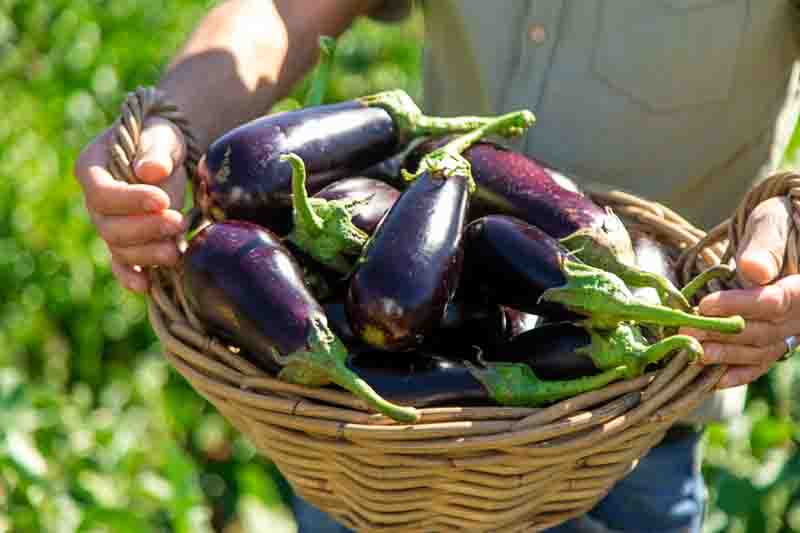
Eggplant (Solanum melongena), also known as aubergine or brinjal, produces beautiful purple flowers and glossy fruits in shades of purple, white, green, and lavender. It thrives in summer warmth but can suffer significant flea beetle damage, especially when young.
Discover the best and worst eggplant companion plants, what research reveals about pest management, and how to recreate Gardenia’s original 4 x 8 ft Eggplant Companion Garden.
Quick Answer: Basil, bush beans, chives, onions, and compact flowering plants make useful eggplant companions. Sweet alyssum, French marigolds, zinnias, and flowering herbs support garden insect diversity. Radishes and certain mustards can serve as managed flea beetle trap crops. Potatoes, crowded tomatoes, large squash, and tall corn are often better separated because of shared pests, diseases, or competition. Few plants are universally incompatible with eggplant.
Gardenia’s Eggplant Companion Decision Matrix evaluates neighboring plants according to growing compatibility, mature size, pest-management evidence, and disease concerns.
A good companion is not necessarily a proven pest repellent. Likewise, a plant that benefits from separate growing space is not automatically harmful to eggplant.
| Companion Plant | Assessment | Main Advantage | What to Watch |
|---|---|---|---|
| Basil | Excellent practical neighbor | Compatible warmth; culinary harvest | Needs adequate sunlight |
| Bush beans | Good with spacing | Additional summer harvest | Competition; nematodes |
| Radishes, mustard | Research-supported candidates | Managed flea beetle trap crops | Plant early; manage attracted pests |
| Sweet alyssum | Good flowering border | Nectar for beneficial insects | May decline in intense heat |
| French marigolds | Good flowering border | Compact growth; summer flowers | No guaranteed pest control |
| Cilantro, dill | Seasonal companions | Flowers support natural enemies | Heat sensitivity; mature height |
| Peppers, tomatoes | Conditional | Similar temperature needs | Shared diseases; crowding |
| Potatoes | Better separated | No special companion benefit | Shared pests; harvesting disturbance |
| Squash, corn | Better separated in small beds | Additional harvests | Shade; extensive foliage |
| Lettuce, peas | Best grown in succession | Early-season harvests | Different temperature preferences |
Gardenia’s approach: Start with sunlight, water, mature size, and growing season. Then consider whether a companion provides another harvest, floral resources, or a documented pest-management benefit. Avoid treating traditional claims about insect-repelling plants as guarantees.
Ready to plant? Jump to Gardenia’s original 4 x 8 ft Eggplant Companion Garden, with planting quantities, spacing, and a separate early-season flea beetle trap-crop option.

Eggplant belongs to the nightshade family, alongside tomatoes, peppers, and potatoes. It needs a long, warm growing season and performs poorly when planted into cold soil.
Most eggplants grow approximately 2-4 ft tall, although compact and vigorous varieties differ considerably. Allowing enough room for their mature branches is more important than squeezing additional companions beneath the foliage.
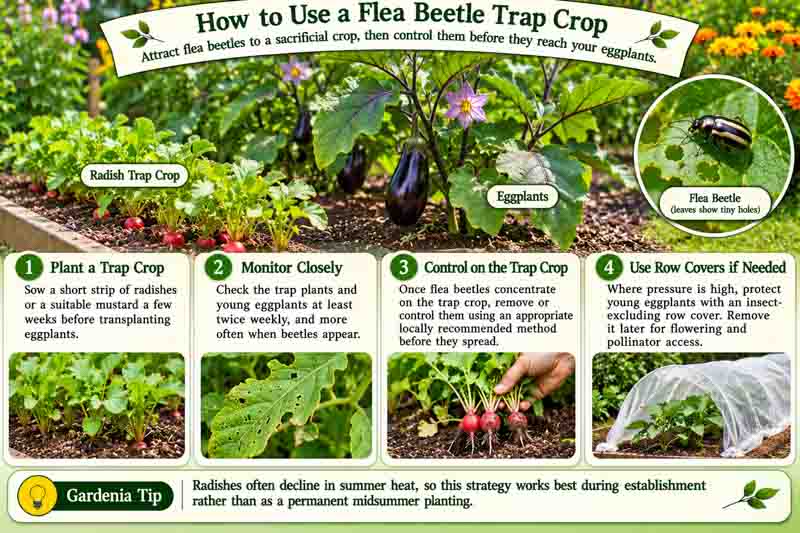
Flea beetles are among eggplant’s most troublesome pests. Adults chew numerous tiny holes in the leaves, sometimes creating a shot-hole appearance. Young transplants are especially vulnerable.
Unlike an ordinary companion, a trap crop is deliberately grown to attract a particular pest away from the main crop, where the insects can be monitored and managed.
University of California IPM identifies radishes such as ‘Chinese Daikon’ and ‘Snow Belle’, along with ‘Chinese Southern Giant’ mustard, as possible cultural controls for eggplant flea beetles.
Utah State University Extension recommends establishing suitable trap crops approximately 2-4 weeks before the main crop, allowing them to become attractive to flea beetles first.
These techniques may provide partial protection. Their success depends on pest species, timing, local conditions, and active management.
Plant a small, separate strip of radishes or suitable mustard before transplanting eggplants. Keep the strip accessible so beetles can be inspected and controlled.
Monitor frequently: Check the trap plants and young eggplants at least twice weekly, increasing inspections when beetles appear. Once pests concentrate on the trap crop, remove or control them using an appropriate locally recommended method before they disperse.
Radishes often decline in summer heat, so this strategy is generally most practical during establishment rather than as a permanent midsummer planting.
Where flea beetles are severe, use insect-excluding row covers to protect young transplants. Remove covers when needed for flowering and pollinator access. Although eggplant flowers are self-fertile, insect-mediated vibration can improve pollination in some conditions.
Gardenia’s research interpretation: Radishes and mustard are not ordinary companions that magically repel insects. They are potential pest-management tools requiring advance planting, frequent inspection, and intervention. A trap crop that attracts beetles but leaves them unmanaged may offer little protection.
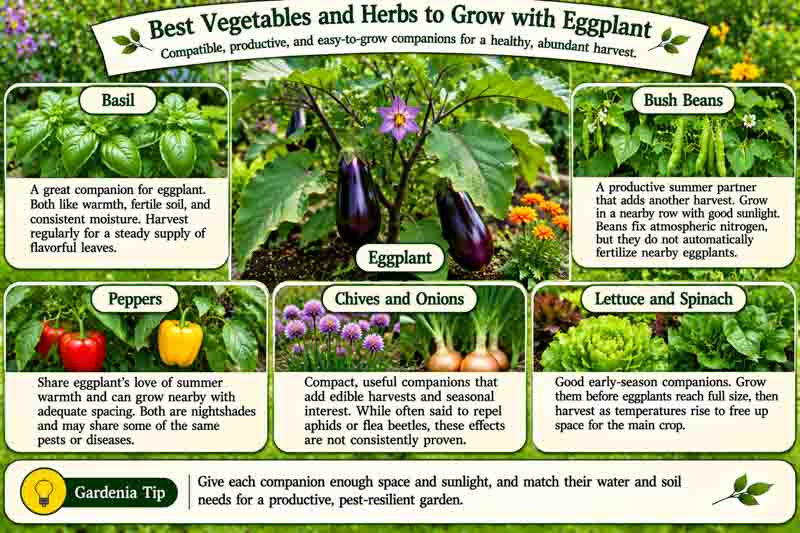
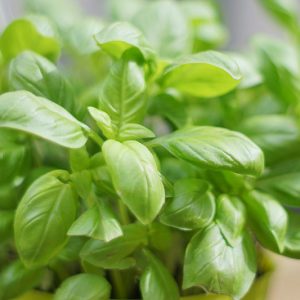
Basil is an excellent practical neighbor for eggplant. Both enjoy warmth, fertile soil, and consistent moisture. Grow basil along a sunny edge, clear of the eggplant’s mature canopy, and harvest regularly.
Claims that basil reliably repels flea beetles from eggplant remain unproven. Its dependable benefits are growing compatibility and a useful culinary harvest. Explore Gardenia’s Basil Companion Planting Guide.
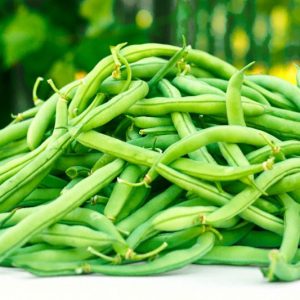
Bush beans provide another warm-season harvest without requiring tall supports. Grow them in neighboring rows where they receive sufficient sunlight rather than beneath dense eggplant foliage.
Although beans fix atmospheric nitrogen through root-associated bacteria, they do not automatically supply enough nitrogen to fertilize nearby eggplants during the growing season.
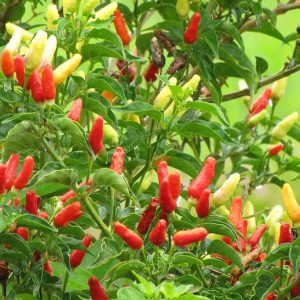
Peppers share eggplant’s preference for summer warmth and can grow nearby with suitable spacing. However, both belong to the nightshade family and may share important pests or diseases.
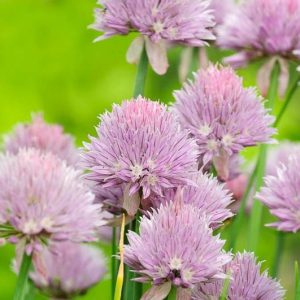
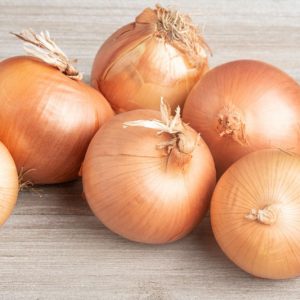
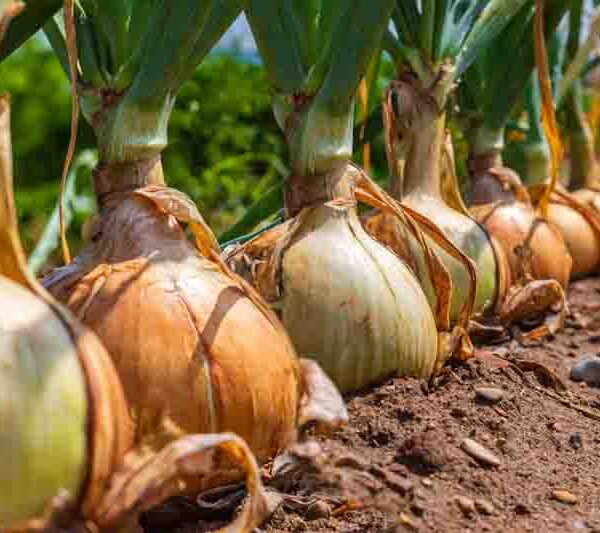
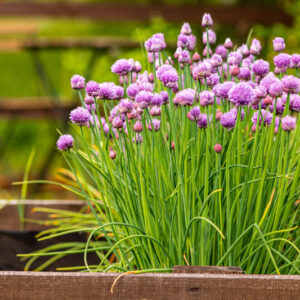
Chives and onions are compact culinary companions. Their flowers or harvests add value, but claims that they consistently repel aphids or flea beetles should be treated cautiously.
Lettuce and spinach can occupy space early in the season, before eggplants develop their full spread. Harvest these cool-weather vegetables as temperatures rise, freeing room for the main crop.
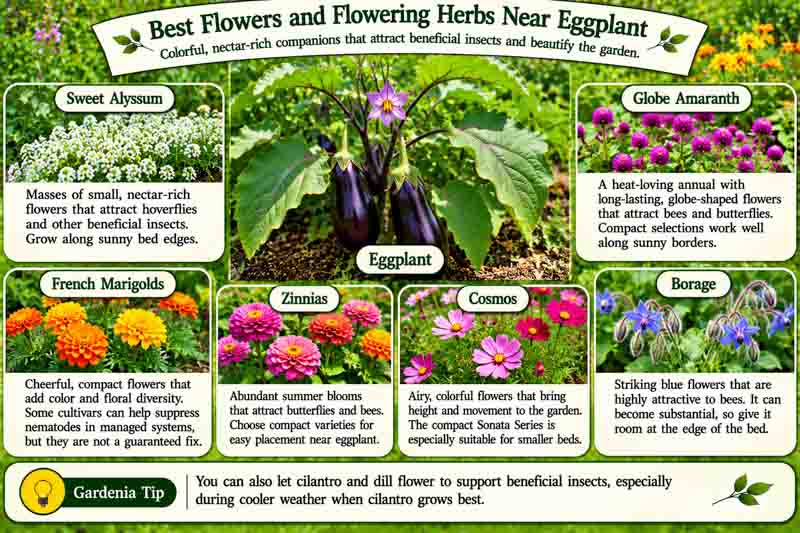
Flowering companions make an eggplant garden more attractive while supplying nectar and pollen to beneficial insects. Select species suited to the local climate and keep taller flowers away from the vegetable canopy.
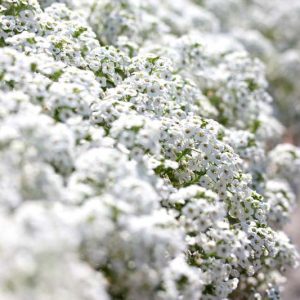
Sweet alyssum produces masses of small, nectar-rich flowers visited by hoverflies and other beneficial insects. Hoverfly larvae feed on aphids, making alyssum a useful addition to an insect-friendly garden.
Grow it along sunny bed edges. In very hot climates, choose heat-tolerant selections or replace declining plants when conditions become milder.
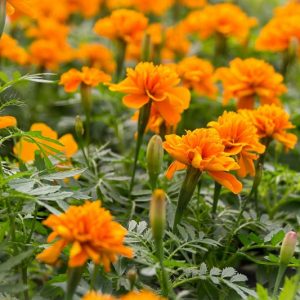
French marigolds provide cheerful orange, yellow, and red flowers in compact, bushy plants. They make excellent summer edging and add floral diversity.
Certain cultivars have shown nematode-suppressing effects in managed cropping systems, but a few marigolds beside eggplant cannot be relied upon to eliminate soil pests.
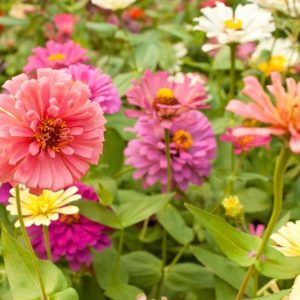
Zinnias bloom abundantly in summer and attract butterflies and bees. Choose compact varieties to avoid crowding the vegetables.
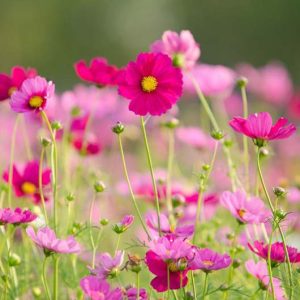
Cosmos adds airy foliage and colorful flowers. The compact Sonata Series is particularly suitable for smaller gardens.
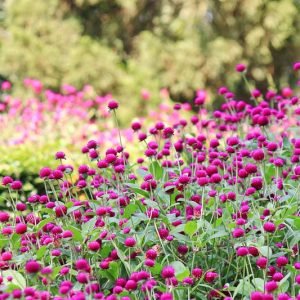
Globe amaranth thrives in summer warmth, producing purple, pink, or white globe-shaped flowers visited by bees and butterflies. Compact selections are excellent for sunny borders.
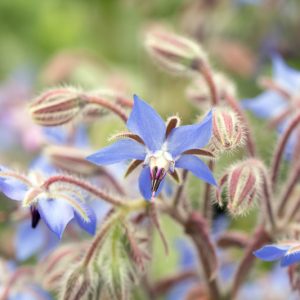
Borage produces striking blue flowers attractive to bees. Because it can become substantial, position it outside a small eggplant bed.
Flowering cilantro and dill also support visiting insects, although cilantro usually performs better during cooler weather.
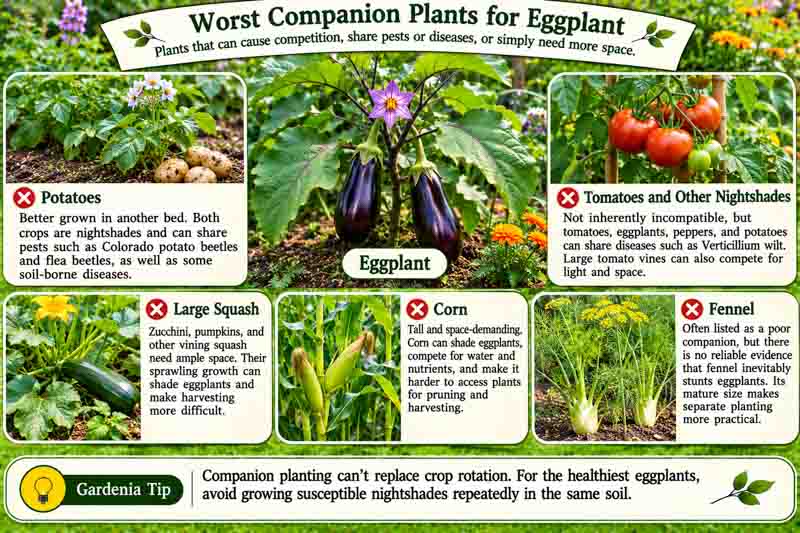
Most plants labeled bad eggplant companions are not chemically incompatible. Problems usually involve shared pests, soil-borne diseases, excessive shade, or competition for water and space.
Potatoes are generally better grown in another bed. Both crops belong to the nightshade family and can share Colorado potato beetles, flea beetles, and some soil-borne pathogens.
Hilling and harvesting potatoes may also disturb nearby eggplant roots. Avoid rotating eggplants into soil with a history of serious nightshade diseases.
Tomatoes are not inherently bad companions. Their warm-season requirements overlap with eggplant’s, but large vines can compete for light and space.
More importantly, tomatoes, eggplants, peppers, and potatoes can share diseases such as Verticillium wilt. In affected gardens, rotating among susceptible nightshade crops does not provide an effective disease break.
Zucchini, pumpkins, and corn require considerable growing space. Broad leaves, sprawling vines, and tall stalks can shade eggplants or restrict harvesting access.
These crops are not inherently harmful, but separate planting areas are generally easier to manage in small gardens.
Fennel often appears on lists of plants that should never grow beside eggplant. However, claims that it inevitably stunts eggplants by releasing inhibitory chemicals are not supported by dependable home-garden evidence.
Its mature size makes separate planting sensible, particularly in compact vegetable beds.
Remember: Growing tomatoes beside eggplant does not automatically cause disease. The greater concern is repeatedly growing susceptible crops in soil where a pathogen has already become established. Companion planting cannot replace appropriate crop rotation.
Flea beetles: Protect young transplants through early monitoring, suitable row covers, and carefully managed trap crops where appropriate. Inspect leaves frequently for small feeding holes.
Colorado potato beetles: Adults and larvae may damage foliage. Nearby marigolds do not provide dependable protection. Identify the insects and use appropriate local control methods.
Aphids: Flowering alyssum and herbs can provide resources for natural enemies, including hoverflies and parasitoid wasps. Their presence may contribute to natural control but cannot guarantee it.
Spider mites: These pests often flourish during hot, dry conditions. Maintain consistent irrigation and examine leaf undersides when foliage becomes stippled or discolored.
Verticillium wilt and root-knot nematodes: Soil history, crop rotation, and resistant varieties where available are more important than companion flowers. Remove severely affected plants as appropriate and seek local guidance for persistent problems.
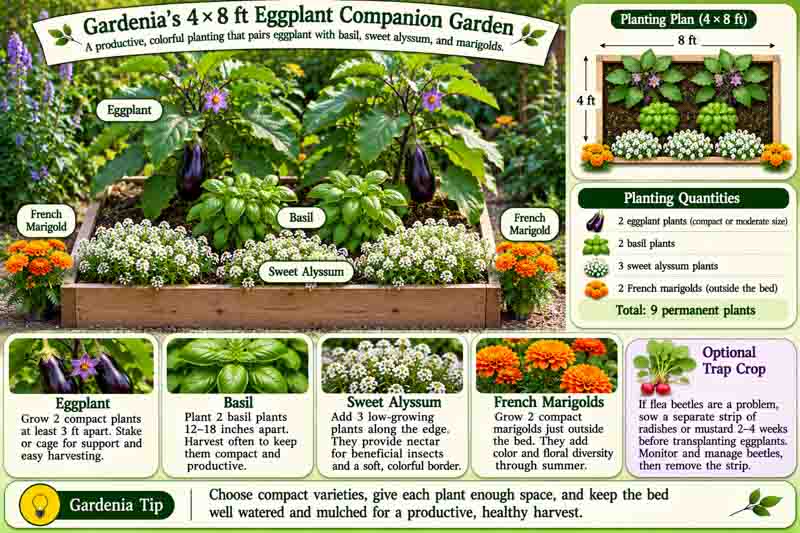
Gardenia’s Summer Eggplant Companion Garden combines two productive eggplants, fragrant basil, low-growing sweet alyssum, and French marigolds in a colorful, accessible planting.
The main raised bed measures 8 x 4 ft. Two French marigolds grow immediately outside the footprint, leaving more room for the vegetables.
Grow 2 eggplant plants in the northern half of the bed, at least 3 ft apart. Choose compact or moderately sized cultivars with an expected mature spread of approximately 2-3 ft.
Support the plants with stakes or cages and leave access from the sides for harvesting. If choosing vigorous, wide-spreading varieties, move some companions into containers instead.
Plant 2 compact basil plants toward the southern half, approximately 12-18 inches apart, positioned where expanding eggplant branches will not overwhelm them.
Harvest frequently to maintain compact growth and airflow.
Position 3 compact sweet alyssum plants along the southern edge, allowing enough room for their mature spread. In very hot climates, choose heat-tolerant selections or replace declining plants seasonally.
Grow 2 compact French marigolds just outside the southern corners, where they receive full sun without crowding the vegetable roots.
If flea beetles are a recurring problem, sow a small, separate radish or suitable mustard strip approximately 2-4 weeks before transplanting eggplants. Monitor frequently and manage beetles attracted to the strip.
This temporary planting is not part of the permanent garden quantities. It should be removed or otherwise managed when no longer useful.
Gardenia’s planting quantities: 2 compact eggplants, 2 basil plants, and 3 sweet alyssum plants inside the 8 x 4 ft bed, plus 2 French marigolds outside. Total: 9 permanent plants. The optional trap-crop strip is managed separately.
Why this design works: Eggplants have sufficient room to mature, basil remains accessible for harvesting, and the flowers occupy the edges. The optional radish or mustard strip is managed independently as a pest-control experiment rather than an ordinary permanent companion.
Adapt the plan: If your eggplants develop a canopy wider than expected, move the basil into nearby containers and keep the bed edges clear. Mature plant size should always take priority over following a planting diagram exactly.
Create your own eggplant garden: Compare eggplant, basil, sweet alyssum, and French marigolds. Use Gardenia’s Plant Finder and Garden Design Tool to select varieties, compare conditions, and organize your garden.
For additional growing advice, visit Gardenia’s Eggplant Plant Profile.
Basil, bush beans, chives, sweet alyssum, French marigolds, and compact flowering annuals are useful companions when adequately spaced. Radishes and certain mustards may serve as managed flea beetle trap crops rather than ordinary permanent companions.
Potatoes, crowded tomatoes, large squash, and tall corn are often better separated because of shared pests, diseases, or competition. Very few vegetables are inherently incompatible with eggplant. Crop history and mature size are more important than traditional companion-planting prohibitions.
Certain radishes may serve as flea beetle trap crops, attracting beetles to plants where they can be monitored and managed. They should be established before eggplant and actively monitored. Simply planting radishes nearby does not guarantee protection.
Yes. Tomatoes, peppers, and eggplant share warm-season growing requirements but may also share pests and soil-borne diseases. Provide enough space and avoid repeatedly growing susceptible nightshade crops in soil with known disease problems.
Basil and French marigolds can grow successfully near eggplant, but neither reliably prevents all eggplant pests. Some marigold cultivars suppress certain nematodes under specific cropping conditions, while basil’s pest-related effects cannot be generalized to eggplant.
Yes, particularly early in the season before eggplants spread. Lettuce and spinach prefer cooler conditions, so harvest them before intense summer heat and before eggplants require the additional growing space.
Discover Gardenia’s guides to tomato companion plants, pepper companions, basil companions, companion planting with herbs, and the Complete Companion Planting Guide.
Updated and reviewed by Gardenia: November 2026
Create a membership account to save your garden designs and to view them on any device.
Becoming a contributing member of Gardenia is easy and can be done in just a few minutes. If you provide us with your name, email address and the payment of a modest $25 annual membership fee, you will become a full member, enabling you to design and save up to 25 of your garden design ideas.
Join now and start creating your dream garden!