Garden mum or florist mum? The difference is more nuanced than “perennial versus annual.” Discover how outdoor hardiness, bloom timing, pot culture, and intended use separate them, why supermarket mums are a special case, how to identify what you bought, and which chrysanthemum is right for your garden.
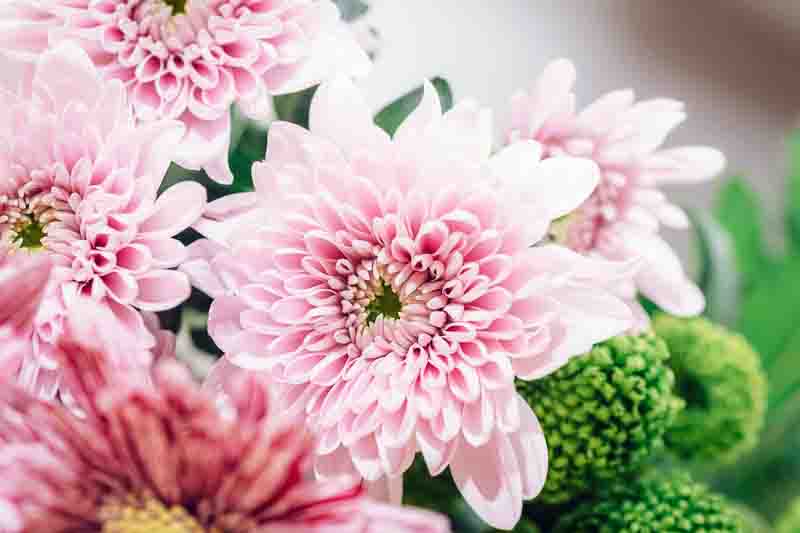


Garden mums and florist mums are not two completely separate botanical kinds of chrysanthemum. The names describe how cultivated mums have been selected, produced, and used. Garden mums are chosen primarily for reliable outdoor flowering and garden performance. Florist mums are produced primarily for flowering displays, gift plants, cut flowers, or specialist blooms.
That distinction sounds simple until you bring home a pot covered in flowers and wonder what you actually bought. Is it hardy? Can you plant it outside? Will it return next year? Is the perfectly rounded mum at the supermarket a florist mum – or a garden mum grown in a pot?
The flowers alone usually cannot answer those questions.
Garden mum vs florist mum in one sentence: The most useful distinction is not botanical identity but intended performance – garden mums are selected for outdoor flowering and garden use, while florist mums are selected primarily for controlled flowering and display.
If you are choosing chrysanthemums for the landscape, browse Gardenia’s Chrysanthemum collection or compare Chrysanthemums side by side by hardiness, size, bloom season, and growing conditions.
Many garden and florist chrysanthemums belong to the same broad cultivated hybrid complex, commonly associated with Chrysanthemum × morifolium. A single botanical name therefore does not tell you how a particular cultivar will behave in the garden.
Instead, compare how the plant was selected and intended to perform:
| Feature | Garden Mum | Florist Mum |
|---|---|---|
| Primary use | Beds, borders, landscape containers | Gift plants, indoor displays, cut flowers, exhibition |
| Outdoor hardiness | Often selected for greater outdoor hardiness; cultivar-dependent | Varies and is often not the primary breeding or production goal |
| Natural bloom timing | Generally selected to flower early enough for autumn gardens | Some flower considerably later outdoors |
| Growth habit | Compact, mounded, spreading, or perennial-border forms | Highly variable according to pot, cut-flower, or exhibition use |
| Best choice for a perennial border | Usually yes, when cultivar hardiness fits the climate | Usually not the first choice |
The common shortcut – “garden mums are perennial; florist mums are annual” – misses an important point. Many florist chrysanthemums are perennial plants biologically. What may be missing is adequate winter hardiness, sufficiently early natural flowering, or selection for long-term landscape performance.
Think performance, not taxonomy: “Garden mum” and “florist mum” are most useful as horticultural categories. They tell you more about what the plant was selected to do than about a clean botanical divide.
A garden mum is a chrysanthemum selected to perform outdoors. Depending on the cultivar, it may form a dense cushion, a rounded mound, a broad spreading clump, or a taller perennial-border plant.
Garden selections are commonly valued for:
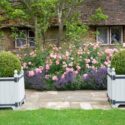
Hardy Rubellum or heritage chrysanthemums are particularly valuable in perennial gardens. They often have a softer, more informal outline than the dense balls of flowers associated with seasonal porch pots and mingle naturally with asters, ornamental grasses, sedums, goldenrods, and other late-season plants.
But the words “garden mum” still do not guarantee survival everywhere. A named cultivar and documented hardiness range are much more useful than a generic “hardy mum” label.
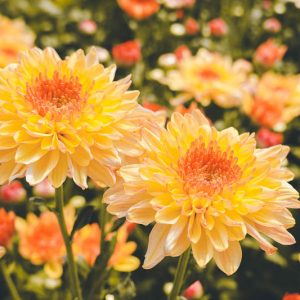
Florist mums are cultivated primarily for their flowering display. They include the chrysanthemums sold as flowering gift plants as well as many cultivars grown commercially for bouquets, sprays, and spectacular exhibition blooms.
You may encounter them as:
Professional growers can control chrysanthemum flowering by manipulating light and darkness. This makes florist mums valuable year-round flowering crops rather than plants tied only to the natural fall season.
The trade-off is that winter hardiness and natural outdoor flowering time may not have been the priorities that shaped a particular florist cultivar.
A florist mum can therefore survive as a plant yet still disappoint outdoors. If its natural bloom cycle is very late, frost may arrive before the buds open in a cold climate.
Survival is only half the story: A good garden chrysanthemum must survive your winter and flower early enough to produce a useful display in your growing season.
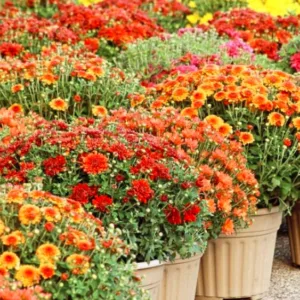
The perfectly rounded mum covered with hundreds of buds outside a supermarket in September deserves its own category of discussion.
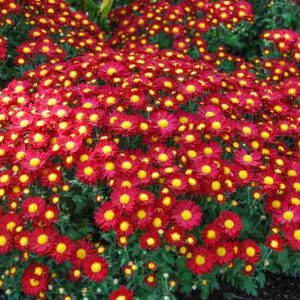
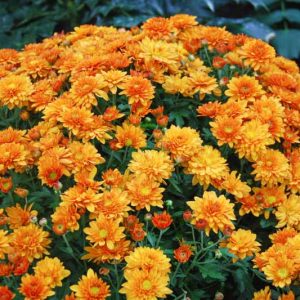
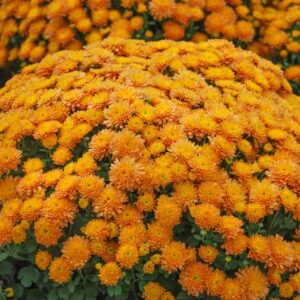
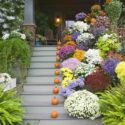
A supermarket fall mum is not automatically a florist mum, and it is not automatically non-hardy. Many are compact pot-grown mums selected for dense branching and a rounded display; some fall into horticultural groups such as Charm or Cushion mums. Their dense branching and rounded habit make them ideal for autumn containers and mass retail.
Some may also possess useful garden hardiness. The difficulty is that retail pots are often sold without a cultivar name or detailed hardiness information.
If all the tag says is “Fall Mum,” you can safely conclude that it was produced to give you an excellent fall display. You cannot safely conclude how cold-hardy it is.
This distinction prevents two common mistakes: assuming every supermarket mum is a tender florist chrysanthemum, or assuming every plant sold outdoors in fall is automatically a hardy perennial.
Without a cultivar label, no visual checklist can identify a chrysanthemum with certainty. But a handful of practical clues can tell you what expectations are reasonable.
Gardenia’s Mum Identity Scorecard weighs label information, where the plant was sold, when it was flowering, its intended use, and its growth form. It is a practical buying and identification framework – not a botanical classification.
| Clue | Points Toward Garden Use | Points Toward Seasonal / Florist Use |
|---|---|---|
| Named cultivar with USDA zone | Strong clue | – |
| Sold in perennial section | Strong clue | – |
| Rubellum / heritage designation | Strong clue | – |
| Unnamed flowering gift from florist | – | Strong clue |
| Flowering outside the natural fall season | – | Strong clue that flowering was commercially controlled |
| Autumn supermarket cushion | Possible | Strong clue for pot culture, not proof of tenderness |
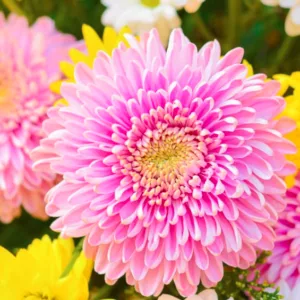
| Huge trained exhibition bloom | – | Strong specialist/florist clue |
Gardenia interpretation: Several strong garden clues suggest a chrysanthemum selected for landscape use. Mostly florist/display clues suggest treating the plant as a temporary flowering plant unless cultivar information proves otherwise. Mixed clues mean one thing: find the cultivar name before making assumptions about hardiness.
Chrysanthemums are photoperiodic. They begin the flowering process in response to shorter days and, more accurately, long periods of uninterrupted darkness.
Garden chrysanthemums have generally been selected to respond under natural outdoor conditions early enough to bloom during the fall garden season. Some florist cultivars need a longer dark period and naturally flower later.
That difference matters most where frost comes early. A garden mum may already be covered with flowers while a florist cultivar growing outdoors is only developing buds.
Night lighting can interfere with the process. A porch light, security lamp, landscape light, or streetlight can interrupt the plant’s dark period and postpone flowering.
A chrysanthemum flowering beautifully on one side while the portion facing a streetlight remains green can look like a mysterious fertilizer or pruning problem. In reality, the plant may simply be receiving too much light at night.
This is one of the clearest reasons not to judge chrysanthemums by winter survival alone. The best outdoor cultivar is both hardy enough and early enough for your climate.
Gardeners sometimes find apparently contradictory advice. One source calls florist mums annuals; another describes cultivated chrysanthemums as perennials. Both may be talking about the same broad group of plants.
The contradiction disappears once you separate botanical life cycle from practical garden use.
Gardenia’s terminology rule: Calling a plant “perennial” describes what its life cycle can be. Calling it a “reliable perennial garden mum” requires something more – suitable cultivar hardiness, outdoor bloom timing, and growing conditions.
This distinction is useful well beyond chrysanthemums. “Perennial” should never be interpreted as “will survive every winter everywhere.”
Yes – but planting it outdoors and turning it into a dependable perennial are not the same thing.
Before planting a florist mum in the garden, consider four uncertainties:
In mild climates, an outdoor experiment may succeed. In cold climates, however, a named hardy garden mum is a much better choice when your goal is a permanent planting.
If your main question is whether a mum will survive winter and return, explore Gardenia’s Chrysanthemum growing guides for more detailed perennial and care advice.
Moving from a broad label such as “garden mum” to a named cultivar changes the decision completely. Gardenia’s plant collection includes hardy chrysanthemums with very different habits and garden roles.
| Garden Mum | USDA Zones | Habit / Garden Value |
|---|---|---|
| ‘Clara Curtis’ | 4-9 | 1-2 ft. tall, spreading 2-4 ft.; warm pink flowers and broad perennial habit |
| ‘Emperor of China’ | 4-9 | 2-3 ft. tall and wide; silvery-pink double flowers and handsome fall foliage |
| ‘Hillside Sheffield Pink’ | 4-9 | 2-3 ft. tall and wide; soft apricot-pink flowers and an informal border habit |
The lesson is more important than the individual cultivars: garden mums are not interchangeable. A spreading perennial 4 feet across needs a very different place from a compact mound destined for the front of a border or container.
Once you know you want a garden mum, use Gardenia’s Chrysanthemum comparison tool to compare cultivars instead of choosing by flower color alone.
| Your Goal | Best Starting Point |
|---|---|
| A long-lived perennial border | Named hardy garden mum |
| Instant fall porch color | Compact seasonal pot/cushion mum |
| A flowering indoor gift | Florist mum |
| A relaxed perennial fall border | Rubellum / heritage chrysanthemum |
| Exceptional cut or exhibition flowers | Florist / exhibition cultivar |
If a perennial garden is your goal, shop for the plant rather than the display:
Know you want a garden mum? Don’t stop at the category.
Use Gardenia’s Chrysanthemum comparison tool to find cultivars suited to your USDA zone, space, bloom season, and growing conditions. That is far more useful than choosing between two pots simply because one has more flowers open today.
Garden mums are selected primarily for outdoor performance; florist mums are selected primarily for flowering display. The categories overlap botanically, so the safest way to choose a perennial mum is to move beyond the label and check the named cultivar’s hardiness, bloom timing, size, and intended use.
For a lasting garden plant, start with a named hardy Chrysanthemum. For spectacular temporary color, a florist or seasonal pot mum may be exactly the right plant.
Garden mums are selected primarily for outdoor garden performance, including useful natural bloom timing and, in hardy cultivars, better winter survival. Florist mums are selected primarily for flowering displays, pots, cut flowers, or exhibition. The terms describe horticultural use more than completely separate botanical groups.
Many florist chrysanthemums are perennial plants biologically, but that does not mean they are reliable outdoor perennials in every climate. Their hardiness, natural bloom timing, and suitability for landscape use depend on the cultivar.
Not necessarily. Many autumn supermarket mums are compact Charm or Cushion types bred for pot culture. Some may also be garden-hardy, but without a cultivar name and USDA hardiness rating their winter performance cannot be predicted reliably.
Yes, but outdoor planting does not guarantee that it will become a dependable perennial. A florist mum may lack adequate cold hardiness, flower too late outdoors, or be planted too late in fall to establish before winter.
The strongest evidence is a named cultivar with a USDA hardiness range or a plant sold specifically for perennial garden use. Rubellum or heritage designations are also strong clues. Appearance alone cannot reliably determine landscape hardiness.
Garden mums are generally selected to initiate flowers with a shorter period of uninterrupted darkness, allowing them to bloom earlier under natural fall conditions. Some florist cultivars require longer nights and may flower too late outdoors in cold climates.
The term is usually horticultural shorthand. Many cultivated chrysanthemums are perennial biologically, but florist mums may be used for only one season because they are not reliably hardy or do not flower successfully outdoors in a particular climate.
A named hardy garden mum suited to your USDA hardiness zone is the best starting point. Hardy Rubellum or heritage chrysanthemums are particularly valuable for perennial borders. Also compare bloom time, mature size, sunlight, and drainage requirements.
Updated: September 2026 • Reviewed by Gardenia Editors
| Hardiness |
5 - 9 |
|---|---|
| Heat Zones |
5 - 9 |
| Climate Zones | 2, 2A, 2B, 3, 3A, 3B, 4, 5, 6, 7, 8, 9, 10, 11, 12, 13, 14, 15, 16, 17, 18, 19, 20, 21, 22, 23, 24, H1 |
| Plant Type | Annuals, Perennials, Shrubs |
| Plant Family | Asteraceae |
| Genus | Chrysanthemum |
| Exposure | Full Sun |
| Season of Interest | Summer (Late), Fall |
| Maintenance | Average |
| Water Needs | Average |
| Soil Type | Clay, Loam, Sand |
| Soil pH | Acid, Alkaline, Neutral |
| Soil Drainage | Moist but Well-Drained |
| Characteristics | Cut Flowers, Showy |
| Attracts | Butterflies |
| Landscaping Ideas | Beds And Borders, Patio And Containers |
| Garden Styles | City and Courtyard, Cutting Garden, Informal and Cottage, Traditional Garden |
| Hardiness |
5 - 9 |
|---|---|
| Heat Zones |
5 - 9 |
| Climate Zones | 2, 2A, 2B, 3, 3A, 3B, 4, 5, 6, 7, 8, 9, 10, 11, 12, 13, 14, 15, 16, 17, 18, 19, 20, 21, 22, 23, 24, H1 |
| Plant Type | Annuals, Perennials, Shrubs |
| Plant Family | Asteraceae |
| Genus | Chrysanthemum |
| Exposure | Full Sun |
| Season of Interest | Summer (Late), Fall |
| Maintenance | Average |
| Water Needs | Average |
| Soil Type | Clay, Loam, Sand |
| Soil pH | Acid, Alkaline, Neutral |
| Soil Drainage | Moist but Well-Drained |
| Characteristics | Cut Flowers, Showy |
| Attracts | Butterflies |
| Landscaping Ideas | Beds And Borders, Patio And Containers |
| Garden Styles | City and Courtyard, Cutting Garden, Informal and Cottage, Traditional Garden |
Create a membership account to save your garden designs and to view them on any device.
Becoming a contributing member of Gardenia is easy and can be done in just a few minutes. If you provide us with your name, email address and the payment of a modest $25 annual membership fee, you will become a full member, enabling you to design and save up to 25 of your garden design ideas.
Join now and start creating your dream garden!
Create a membership account to save your garden designs and to view them on any device.
Becoming a contributing member of Gardenia is easy and can be done in just a few minutes. If you provide us with your name, email address and the payment of a modest $25 annual membership fee, you will become a full member, enabling you to design and save up to 25 of your garden design ideas.
Join now and start creating your dream garden!