Your rhododendron looks healthy, but where are the flowers? Discover eight common reasons rhododendrons and azaleas fail to bloom, from shade and late pruning to drought and damaged buds. Learn how to identify the problem, restore healthy growing conditions, and give your shrub a better chance of flowering next spring.
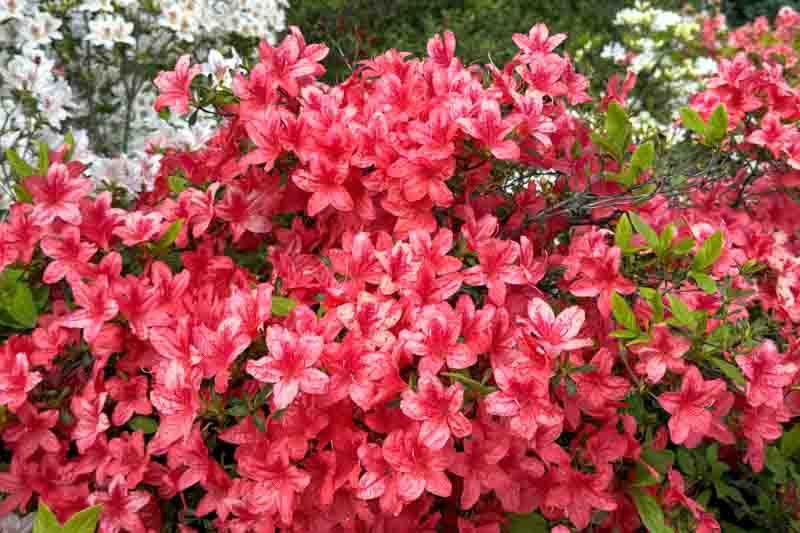


If your rhododendron has healthy leaves but few or no flowers, the most common causes include too much shade, pruning at the wrong time, summer drought, winter bud damage, and excessive nitrogen. Poor root conditions, bud disease, or the plant’s age and flowering season may also be responsible.
Few things are more disappointing than a rhododendron that grows beautifully but refuses to bloom. Spring arrives, neighboring shrubs burst into flower, and yours produces another crop of green leaves. Before reaching for fertilizer or pruning shears, take a closer look at its buds.
Most spring-flowering rhododendrons and azaleas form their flower buds during the previous growing season. A disappointing display this spring may therefore be the result of something that happened months earlier. The key is to discover whether the buds failed to form, died before opening, or simply have not reached their normal flowering time.
Start with the buds: Few or no flower buds? Check light, pruning, summer moisture, and fertilization. Brown or dead buds? Investigate frost injury, drought, or disease. Healthy, plump buds? Check your rhododendron’s expected flowering season before assuming something is wrong.
Different symptoms suggest different causes. This quick guide helps narrow down the possibilities.
| What you notice | Possible cause | What to check |
|---|---|---|
| Healthy foliage, few flower buds | Shade, late pruning, excess nitrogen | Light and previous year’s care |
| Buds brown after freezing weather | Winter injury or late frost | Bud interiors and weather history |
| Poor flowering after a dry summer | Drought during bud development | Previous summer’s soil moisture |
| Yellow leaves and weak growth | Unsuitable soil or damaged roots | Soil pH, drainage, planting depth |
| Dead buds with tiny black bristles | Possible fungal bud blast | Bud surface and disease symptoms |
| Healthy unopened buds in spring | Possibly a late-flowering variety | Species and normal bloom season |
Rhododendrons are often described as shade-loving shrubs, but that can be misleading. Many prefer bright, filtered light or partial sun rather than deep shade. A plant beneath dense trees may receive enough light to grow leaves but too little to flower generously.
This problem can develop gradually. A rhododendron that bloomed beautifully when planted may become less floriferous as neighboring trees grow and cast heavier shade.
Look for healthy foliage, relatively few flower buds, and blooms concentrated on the brightest side of the shrub. Long, open growth with widely spaced leaves can also suggest insufficient light.
Observe the plant’s exposure throughout the day. Carefully thinning overhanging branches may help, or you may need to move the shrub to a brighter position.
Do not automatically choose full sun. Many large-leaved rhododendrons appreciate morning sunlight with afternoon protection, particularly in hot climates. Some compact and alpine types tolerate considerably more direct sun where temperatures remain cool and moisture is reliable.
Not sure how much light your rhododendron needs? Our Rhododendrons for Sun vs. Shade Guide explains the best exposures for different varieties and how to recognize too much or too little sunlight.
If inadequate light was responsible, improved exposure may encourage more flower buds during the next growing season.
Late pruning is one of the easiest explanations to overlook. You tidy your rhododendron in August, admire its neat outline, and discover the following spring that almost no flowers appear.
Most traditional spring-flowering rhododendrons and azaleas bloom from buds formed the previous year. Once those buds have developed, shortening the shoots can remove the following season’s flowers.
Think back to the last pruning. Was the shrub clipped in midsummer or fall? Were all its outer branches shortened? Does it flower only on shoots that escaped trimming?
These are strong clues that the flower buds were removed rather than failing to form.
For routine shaping, prune immediately after flowering. This gives new growth time to develop before next year’s flower buds form.
Dead or dangerous branches can be removed when necessary, but avoid unnecessary late-season clipping. Reblooming azaleas also need careful timing because summer pruning can reduce later flowers.
For illustrated instructions, including heading cuts, thinning cuts, and rejuvenation, see Gardenia’s guide to pruning rhododendrons and azaleas for better blooms.
Already pruned too late? You cannot restore flower buds that have been cut off. Allow the shrub to grow normally, avoid further unnecessary pruning, and protect the buds that develop during the next growing season.
The flowers you hope to enjoy next spring depend partly on how well your rhododendron grows this summer. Prolonged drought can interfere with flower-bud formation even when the foliage eventually recovers.
Rhododendrons have shallow, fine roots that are particularly vulnerable to drying soil. Hot weather, sandy ground, and competition from nearby trees can quickly reduce available moisture.
Consider the previous summer. Did the leaves wilt, curl, or develop brown edges during prolonged heat? Was the shrub newly planted or growing beneath mature trees?
Severe moisture stress during bud development may leave the plant with fewer buds or buds that fail to mature properly.
Keep the root zone evenly moist during active growth, particularly through dry summer weather. Check beneath the mulch rather than relying on rainfall alone.
Apply approximately 2-3 in. (5-7.5 cm) of suitable organic mulch to conserve moisture and keep roots cooler, leaving the crown uncovered.
Water thoroughly when needed, but never keep the soil permanently saturated. Rhododendrons require moisture and good drainage.
Sometimes a rhododendron enters winter covered in promising buds but produces almost no flowers in spring. The shrub survives, yet its flower buds have been damaged by freezing weather.
Flower buds are not always as cold-hardy as stems or foliage. A cultivar may survive winter temperatures while losing much of its potential flower display.
Late frost can also damage buds that have begun swelling or opening, especially after an unusually warm spell.
Cold-damaged buds may be brown or dry inside even when their outer scales initially look normal. Examine several buds and compare exposed branches with more sheltered parts of the shrub.
Weather history helps. Damage appearing after severe freezing conditions suggests frost injury, although drought and disease may produce similar symptoms.
Do not confuse this with normal winter leaf curling. Many evergreen rhododendrons roll and droop their leaves during freezing weather, then recover as temperatures rise.
Choose sheltered planting positions away from severe drying winds and frost pockets. Where bud damage happens repeatedly, consider a cultivar with better flower-bud hardiness for your climate.
Remember that USDA hardiness zones indicate winter temperature ranges. They do not guarantee that every cultivar’s flower buds will survive local winter conditions.
A rhododendron with lush foliage but few flowers may be receiving more nitrogen than it needs. Excessive nitrogen can encourage vegetative growth at the expense of flower-bud production.
This is worth investigating when the shrub grows beside a lawn that receives regular nitrogen fertilizer. Nutrients intended for the grass may reach the rhododendron’s roots.
However, vigorous foliage alone does not prove overfeeding. Shade and late pruning can produce similar results.
Review your fertilizer use before adding anything else. Established rhododendrons in suitable soil often require little supplemental feeding.
If a soil test or clear nutrient deficiency indicates feeding is needed, use an appropriate fertilizer for acid-loving plants at the recommended rate.
Avoid high-nitrogen applications and unnecessary bloom boosters. Fertilizer cannot compensate for insufficient light or flower buds killed by frost.
For advice on choosing the right fertilizer, when to feed, and how to avoid overfertilizing, see Gardenia’s Rhododendron Soil & Fertilizer Guide.
If poor flowering comes with yellow leaves, weak shoots, or wilting, investigate the roots. Rhododendrons need acidic, moist but well-drained soil, and flowering often suffers when those conditions are unsuitable.
Most prefer soil around pH 4.5-6.0, although individual tolerances vary. In alkaline conditions, iron becomes less available, sometimes causing yellow young leaves with greener veins.
Waterlogging is equally troublesome. Roots deprived of oxygen cannot function normally, and prolonged wetness increases the risk of Phytophthora root rot.
Test soil pH, check drainage, and make sure the root crown is not buried too deeply. Compacted soil and competing tree roots may also contribute to poor growth.
Do not assume every yellow leaf indicates iron deficiency. Root damage and other nutrient problems can cause similar symptoms.
Gardenia’s iron deficiency guide explains how to recognize chlorosis and investigate its causes.
Before fertilizing a struggling rhododendron: Check soil pH, drainage, and root health. Adding nutrients will not solve poor flowering if the roots cannot absorb water and nutrients properly.
Brown buds do not always mean frost damage. Rhododendrons can also develop fungal bud blast, a disease associated with Seifertia azaleae.
Affected buds die and remain closed. As the fungus develops, tiny black, bristle-like structures may appear on their surface, sometimes giving the dead buds a fuzzy appearance.
Look closely at several affected buds. Brown buds with characteristic black fungal structures suggest bud blast. Buds damaged by frost may also turn brown but lack those structures.
The fungal structures may appear only after the bud has died, so early symptoms can be difficult to distinguish.
Rhododendron leafhoppers have historically been associated with bud blast, but their role in spreading the fungus remains uncertain. Finding leafhoppers does not prove they caused the disease.
On smaller shrubs, remove affected buds where practical and dispose of them away from the plant. If symptoms are widespread or uncertain, seek a local plant-health diagnosis.
Avoid applying pesticides without confirming the cause. Frost injury, drought, and fungal disease require different responses.
Not every healthy rhododendron flowers heavily each year. Young plants may need time to reach reliable flowering maturity, especially when grown from seed. Recently transplanted shrubs may also produce fewer flowers while reestablishing their roots.
These are often temporary problems. If the plant is growing well and producing healthy buds, patience may be all that is needed.
A persistent climate mismatch is different. Some cultivars repeatedly lose buds to cold, while others struggle with prolonged summer heat. A plant may survive in a location without flowering reliably there.
Not every rhododendron blooms in April or May. Some flower in late winter, many in spring, and several azaleas bloom well into summer.
Before assuming something is wrong, identify your plant and check its normal blooming season. Gardenia’s rhododendron and azalea blooming-season guide compares early, midseason, and late-flowering selections.
Gardenia’s Bloom Diagnosis separates the flowering cycle into three stages. This helps you distinguish a plant that never formed buds from one that formed them but lost them before blooming.
| Stage | Question | What to investigate |
|---|---|---|
| 1. Bud formation | Did flower buds develop? | Light, pruning, summer drought, fertilization |
| 2. Bud survival | Did the buds survive winter? | Freezing injury, exposure, moisture stress |
| 3. Flower opening | Did healthy buds open on schedule? | Late frost, bud blast, normal bloom season |
Before assuming your rhododendron has failed to bloom, check when it is supposed to flower. Rhododendrons and azaleas can bloom from midwinter through late summer, depending on the species, cultivar, and climate.
Gardenia’s plant collection illustrates just how different their flowering schedules can be. These five selections represent the main flowering periods, from very early to very late.
| Flowering period | Rhododendron or Azalea | Typical bloom time |
|---|---|---|
| Very Early | Rhododendron mucronulatum ‘Cornell Pink’ | Midwinter to early spring – clear pink flowers appear on bare branches, often before most other rhododendrons awaken. |
| Early | Rhododendron ‘April Rose’ | Early to mid-spring – double, purplish-red flowers provide an early splash of color. |
| Midseason | Rhododendron ‘Ken Janeck’ | Mid-spring – soft pink flowers open from deeper rose-pink buds and gradually fade toward white. |
| Late | Rhododendron calendulaceum (Flame Azalea) | Late spring to early summer – brilliant yellow, orange, or red flowers extend the azalea season. |
| Very Late | Rhododendron prunifolium (Plumleaf Azalea) | Mid to late summer – vivid orange to red flowers appear long after most spring-blooming azaleas have finished. |
What does this mean for your garden? A flowerless ‘Cornell Pink’ in late spring may already have finished blooming, while a Plumleaf Azalea without flowers in May may be behaving perfectly normally. By contrast, a ‘Ken Janeck’ that produces no flowers during its usual mid-spring display deserves a closer look at its buds and growing conditions.
These flowering periods are relative rather than fixed calendar dates. Local climate, elevation, and seasonal weather can shift bloom times by several weeks.
Gardenia’s guide to extending the rhododendron and azalea blooming season explores how early, midseason, and late-flowering selections can provide color over a much longer period.
Before treating a rhododendron that appears not to bloom, identify the plant and check its normal flowering period. Sometimes the flowers are not missing – you are simply looking for them at the wrong time.
Once you have identified the likely cause, focus on the next flowering cycle.
After flowering: Prune only where needed and allow new shoots to develop.
During summer: Maintain consistent moisture while flower buds are forming.
Before fall: Avoid unnecessary late pruning and excessive fertilizer.
During winter: Protect vulnerable shrubs from severe drying winds and observe bud condition.
Next spring: Compare the number and condition of buds with the previous year.
Keep a simple record of flowering dates, pruning, summer drought, and winter damage. Even a few notes can reveal whether the same problem returns year after year.
Sometimes the shrub is simply poorly matched to its location. A cultivar that repeatedly loses buds in winter, suffers through hot summers, or grows in permanent deep shade may never flower reliably despite careful maintenance.
Gardenia’s Rhododendron and Azalea Comparison Tool helps you explore alternatives, while Plant Finder and the Garden Design Tool help you select plants suited to your garden’s growing conditions and available space.
A healthy-looking rhododendron may fail to bloom because of deep shade, late pruning, summer drought, excessive nitrogen, or damaged flower buds. Check whether buds formed and survived winter before choosing a remedy.
On many rhododendrons, flower buds are larger, rounder, and plumper than the narrower, more pointed leaf buds. Their appearance varies by species and cultivar, so compare several buds on the same plant.
No fertilizer guarantees flowering. Established rhododendrons often need little feeding, and excessive nitrogen can encourage leafy growth. Fertilize only when growing conditions and nutrient needs justify it.
Brown unopened buds may result from frost, drought, or fungal bud blast. Tiny black bristle-like structures on dead buds suggest bud blast, while damage appearing after severe freezing weather may indicate cold injury.
It may flower again after producing new buds during a suitable growing season. Avoid unnecessary pruning and provide appropriate light, moisture, and growing conditions.
Many established rhododendrons bloom annually under favorable conditions, but flowering intensity varies with cultivar, maturity, weather, and previous-season stress.
Many rhododendrons flower better in partial sun or bright dappled shade than in deep shade. However, intense afternoon sun can cause stress in hot climates. The ideal exposure depends on the cultivar and location.
A rhododendron that refuses to bloom is usually giving you a clue. Perhaps flower buds never formed, winter weather damaged them, or the plant simply has not reached its normal flowering season. Start with the buds, check the previous year’s growing conditions, and correct the problem you can identify. A little observation and the right adjustment often accomplish far more than another application of fertilizer or another round of pruning.
Updated by Gardenia: October 2026
| Hardiness |
3 - 10 |
|---|---|
| Plant Type | Shrubs |
| Genus | Rhododendron |
| Exposure | Full Sun, Partial Sun |
| Season of Interest | Spring (Early, Mid, Late), Summer (Early), Fall, Winter |
| Maintenance | Low |
| Water Needs | Average |
| Soil Type | Clay, Loam, Sand |
| Soil pH | Acid |
| Soil Drainage | Moist but Well-Drained |
| Tolerances | Rabbit |
| Attracts | Butterflies, Hummingbirds |
| Landscaping Ideas | Beds And Borders, Patio And Containers, Small Gardens |
| Garden Styles | City and Courtyard, Gravel and Rock Garden, Informal and Cottage, Japanese Garden, Traditional Garden |
Create a membership account to save your garden designs and to view them on any device.
Becoming a contributing member of Gardenia is easy and can be done in just a few minutes. If you provide us with your name, email address and the payment of a modest $25 annual membership fee, you will become a full member, enabling you to design and save up to 25 of your garden design ideas.
Join now and start creating your dream garden!