Can rhododendrons thrive where summers are long, hot, and humid? Absolutely, with the right varieties and growing conditions. Discover fragrant Southern native azaleas, reblooming evergreens, and heat-bred Southgate rhododendrons. Learn why sun tolerance differs from drought tolerance and how to keep these spectacular flowering shrubs healthy through summer.


Love rhododendrons but worried your summers are too hot? You may have more choices than you think. Fragrant native azaleas brighten Southern woodlands, evergreen azaleas thrive in many warm-climate gardens, and specially bred rhododendrons bring spectacular flower clusters to places where traditional varieties often struggle.
The secret is choosing plants for your particular summer climate. A rhododendron that flourishes in humid Georgia may struggle in inland California, even if both gardens share the same USDA hardiness zone.
Fortunately, gardeners have some valuable guidance. The American Rhododendron Society (ARS) identifies varieties that perform well in different regions, while breeding programs such as Southgate have developed rhododendrons specifically for warmer Southern conditions.
Quick answer: For hot, humid Southern gardens, good starting points include Florida Flame Azalea (Rhododendron austrinum), Alabama Azalea (R. alabamense), selected Southern Indica azaleas, and Southgate rhododendrons. Evergreen hybrids such as ‘Nestucca’ and ‘Scintillation’ also appear on Southern ARS recommendation lists. However, heat tolerance is not the same as drought tolerance, and local growing conditions still matter.
Rhododendrons are famous for their spectacular spring flowers, but many traditional large-leaved varieties prefer relatively cool, moist growing conditions. Their shallow root systems make them especially vulnerable when soil temperatures rise or moisture becomes unreliable.
Hot weather can cause several problems:
A rhododendron may look magnificent in April but develop curled or brown leaves by August. Before blaming the climate, check its roots, drainage, sunlight, and watering.
Remember: A heat-tolerant rhododendron is not necessarily drought-tolerant. Even varieties suited to humid Southern summers may need regular moisture and protection from the strongest afternoon sun.
Some of the loveliest flowering shrubs for warm Southern gardens are already native to the region. These deciduous azaleas offer beautiful spring flowers, often with delightful fragrance, and look especially at home beneath tall trees or along woodland paths.
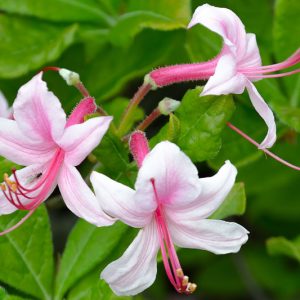
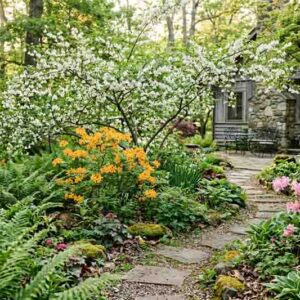
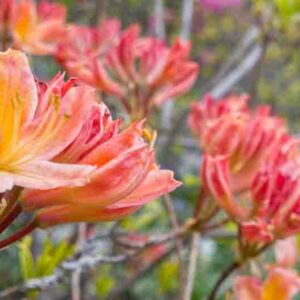
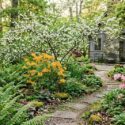
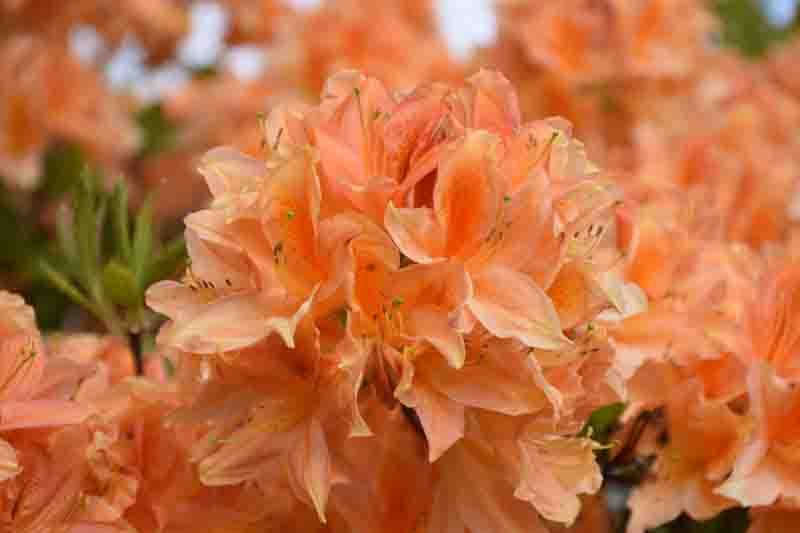
Florida Flame Azalea (Rhododendron austrinum) brings golden-yellow, orange, and peach-colored flowers to the spring garden, often accompanied by a wonderful honeysuckle fragrance. Native to the Florida Panhandle and neighboring areas, it is an excellent candidate for acidic woodland borders with reliable moisture.
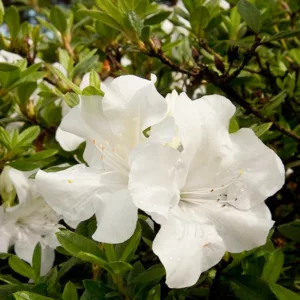
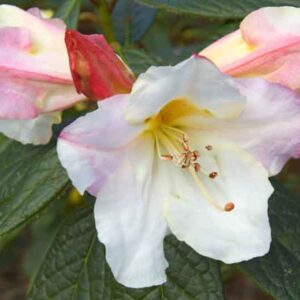
Alabama Azalea (Rhododendron alabamense) offers white flowers with yellow markings and a fresh, lemony fragrance. Blooming in spring, it is especially appealing near paths, patios, or entrances where its scent can be appreciated.
Piedmont Azalea (Rhododendron canescens) produces fragrant pink to nearly white flowers on a graceful, spreading shrub. It works beautifully in informal woodland plantings, although it needs enough room to develop its naturally generous habit.
| Plant Type | Shrubs |
|---|---|
| Genus | Rhododendron |
| Exposure | Partial Sun |
| Season of Interest | Spring (Early, Mid, Late), Summer (Early), Fall, Winter |
| Maintenance | Low |
| Water Needs | Average |
| Soil Type | Clay, Loam, Sand |
| Soil pH | Acid |
| Soil Drainage | Moist but Well-Drained |
| Characteristics | Showy |
| Tolerances | Rabbit |
| Attracts | Butterflies, Hummingbirds |
| Landscaping Ideas | Beds And Borders, Hedges And Screens, Wall-Side Borders |
| Garden Styles | City and Courtyard, Informal and Cottage, Japanese Garden, Traditional Garden |
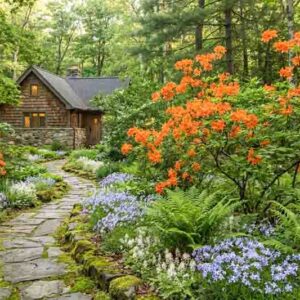
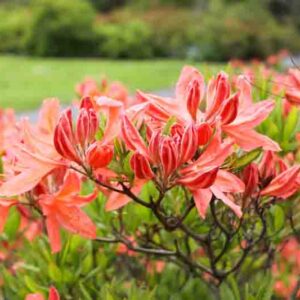
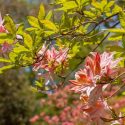
For brighter flower colors, consider Oconee Azalea (Rhododendron flammeum), which produces striking orange, red, or yellow-orange flowers in spring. It is particularly appealing in naturalistic gardens where its vivid blooms can shine against emerging green foliage.
Plumleaf Azalea (Rhododendron prunifolium) deserves special attention for its later flowering season. Its orange to red flowers typically appear in summer, extending the native azalea display well beyond the usual spring peak. This species appreciates acidic soil and reliable moisture, particularly in warmer locations.
These plants are native to different habitats within the Southeast, so they should not be treated as interchangeable. Some naturally grow in relatively moist woodland settings, while others tolerate somewhat drier conditions once established.
Gardenia’s advice: Start with native species found in your region, then compare their mature size, moisture requirements, and preferred exposure. A native azalea planted in the wrong place can struggle just as much as an introduced variety.
If you love the dramatic flower trusses and substantial evergreen foliage of traditional rhododendrons, there are promising choices for parts of the South.
The American Rhododendron Society’s District 10 Good Performer lists include several large-leaved evergreen hybrids recommended by gardeners in the southeastern United States.
These recommendations are valuable because they reflect regional gardening experience. However, a plant performing well in the North Carolina mountains is not automatically suitable for coastal Florida or the hottest lowlands of Georgia.
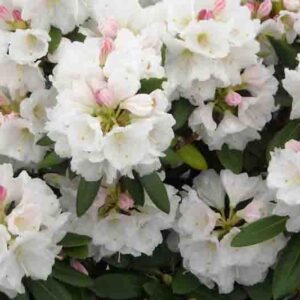
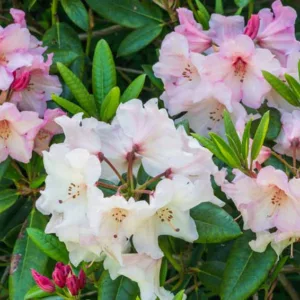
‘Nestucca’ is an elegant evergreen hybrid with raspberry-pink buds opening to generous clusters of white flowers. Its relatively compact habit makes it appealing for sheltered woodland borders, and it appears among Southern ARS recommendations.
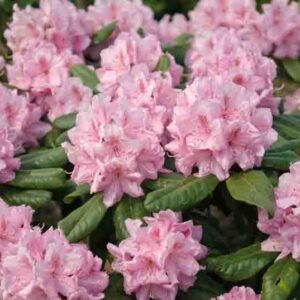
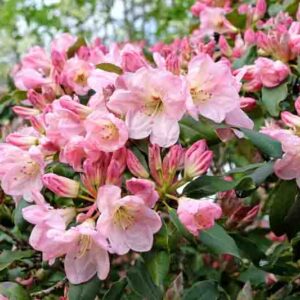
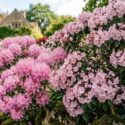
‘Scintillation’ is admired for its impressive pale pink flower trusses and handsome evergreen foliage. This celebrated Dexter hybrid can make a magnificent specimen in a spacious garden, provided it receives suitable moisture and protection from excessive afternoon heat.
‘Mary Fleming’ is a charming dwarf evergreen rhododendron with creamy, wavy-edged flowers delicately flushed salmon-pink and marked with a deeper pink throat blotch. Blooming in mid-spring, it forms a compact, spreading shrub just 18-30 inches (45-75 cm) tall and wide. Recognized by the American Rhododendron Society in both Southeastern and South Central regions, this heat-tolerant selection is particularly appealing for small gardens, woodland borders, and containers.
‘English Roseum’ is a vigorous evergreen rhododendron with generous clusters of rose-lilac flowers. It can become a substantial shrub, making mature size an important consideration.
‘Roseum Elegans’ produces handsome lavender-rose flower trusses above dense evergreen foliage. Although widely valued for cold hardiness, it should still be planted in a suitable microclimate when summers are particularly hot.
‘Wheatley’ is prized for its beautiful pale pink flowers and attractive growth habit. It appears on Southern ARS lists and may suit protected gardens where other large-leaved rhododendrons have already demonstrated good performance.
In gardens with prolonged extreme summer heat, locally documented performance becomes especially important.
For gardeners who want the lush evergreen foliage and magnificent flower clusters of traditional rhododendrons, the Southgate series is particularly interesting.
Developed by breeder Dr. John Thornton in Louisiana, these hybrids were selected for improved performance in warmer Southern climates. According to the LSU AgCenter, the breeding work included extensive use of Rhododendron hyperythrum, a species valued in the development of heat-tolerant hybrids.
Unlike evergreen rhododendrons recommended primarily through regional gardening experience, the Southgate selections come from a breeding program specifically aimed at improving warm-climate performance.
| Cultivar | Flower Color | Approximate Size at 10 Years |
|---|---|---|
| Southgate Brandi | Ruffled pink | 3 ft. tall x 4 ft. wide |
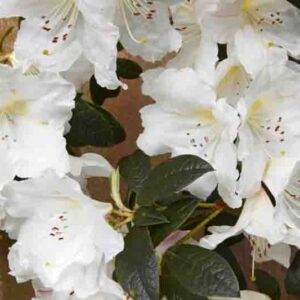
| Southgate Breezy | White with a maroon blotch | 4 ft. tall x 5 ft. wide |
| Southgate Radiance | Light purple | 4 ft. tall x 5 ft. wide |
| Southgate Divine | White with purple speckles | 4 ft. tall x 5 ft. wide |
| Southgate Grace | White, opening from pink buds | 4 ft. tall x 6 ft. wide |
Sizes are approximate ten-year figures reported by LSU AgCenter. Mature plants may become larger.
Southgate hybrids still need acidic, well-drained soil, consistent moisture, and some afternoon protection. Improved heat tolerance does not make them suitable for dry, alkaline landscapes or persistently saturated ground.
For more information, read the LSU AgCenter’s report on Southgate rhododendrons.
Gardeners looking for evergreen foliage and generous spring flowers should not overlook azaleas. Many are better established in warm Southern landscapes than traditional large-leaved rhododendrons.
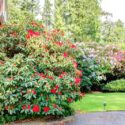
Southern Indica azaleas have been grown in parts of the Southeast for generations. These vigorous evergreen shrubs are valued for their large, colorful flowers and their ability to grow in relatively sunny positions when soil moisture is adequate.
They are particularly useful for flowering hedges, informal screens, and substantial foundation plantings. However, their mature size can surprise gardeners who expect a compact shrub.
Choose a locally proven cultivar, allow room for its eventual spread, and avoid excessively hot, reflected-sun exposures.
Encore azaleas offer another possibility for warm-climate gardens. Unlike traditional spring-only azaleas, these evergreen selections can produce additional flowers during summer or fall when growing conditions are favorable.
The amount of rebloom varies with the cultivar, weather, sunlight, and plant health. Some perform well with considerable sunshine, but afternoon shade may help protect foliage in particularly hot inland gardens.
Three attractive examples include:
For the best flowering, give Encore azaleas adequate light, consistent moisture, and suitable acidic soil. Avoid assuming that more sun always produces better results in the hottest regions.
California gardeners have some wonderful rhododendron choices, particularly along the coast, where ocean breezes, relatively mild summers, and winter rainfall create favorable growing conditions. From the Bay Area and Monterey to sheltered gardens farther south, rhododendrons can produce magnificent spring displays when their soil and moisture needs are met.
The American Rhododendron Society’s District 5 Good Performer lists identify cultivars that have performed well in California gardens. These regional recommendations are especially useful because USDA hardiness zones alone cannot tell you whether a rhododendron will tolerate summer heat.
Here are six beautiful selections worth considering, from large-flowered showpieces to fragrant shrubs and compact evergreens.
‘Percy Wiseman’ is a delightful choice for gardeners who love changing flower colors. Its rounded trusses open creamy pink, gradually passing through softer pink shades before becoming creamy white with a yellow throat. Blooming in mid to late spring, this compact, well-branched evergreen shrub is recommended by the ARS for the De Anza and Monterey Bay regions. It performs best with reliable moisture and protection from intense afternoon sun in warmer locations.
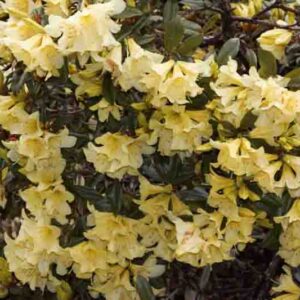
‘Saffron Queen’ is hard to resist, with luminous yellow, trumpet-shaped flowers and a delightful fragrance. Blooming in early to mid-spring, it also offers attractive peeling bark and an airy, upright habit. Recommended in the ARS Eureka and Monterey Bay regions, this relatively tender rhododendron is particularly suited to mild coastal gardens protected from frost and excessive summer heat.
‘Christmas Cheer’ brings an unusually early display, with pink buds opening into delicate, pale pink to nearly white flowers. In mild climates, blooming may begin in late winter, well before many other rhododendrons. Its handsome evergreen foliage and broad, rounded habit make it an attractive woodland specimen. The ARS includes it among recommended performers for the Eureka and Monterey Bay regions.
‘Fragrantissimum’ is one of the most enticing rhododendrons for a sheltered patio or courtyard. Its large, frilled white flowers, delicately flushed pink and marked with a yellow throat, release an unmistakable honeysuckle fragrance in spring. This tender evergreen has a loose, open habit and can even be trained against a wall. It appears on several California ARS lists, including those for the San Francisco Bay Area, De Anza, Monterey Bay, and Southern California. Give it acidic, well-drained soil and protection from frost and harsh afternoon heat.
‘Else Frye’ is another exceptional fragrant selection, producing enormous, ruffled white flowers with golden throats and delicate pink shading. Its powerful, lily-like fragrance makes it a wonderful choice near seating areas and garden paths. Recommended by California ARS chapters, this tender evergreen is best suited to mild, protected sites where its impressive flowers and handsome textured foliage can be enjoyed up close.
‘Ginny Gee’ offers something quite different. This charming dwarf rhododendron becomes almost completely covered in small, ruffled white flowers touched with pink in mid-spring. Its dense, low-growing habit makes it perfect for rock gardens, the front of borders, and containers. Its compact habit and small evergreen leaves make it a particularly appealing choice for coastal gardens, rock gardens, and containers. Give it acidic, well-drained soil and consistent moisture, especially during hot weather.
These six rhododendrons have demonstrated good performance in particular California regions, but they are not equally suited to every California garden.
Gardenia’s advice: In California, choose rhododendrons according to your local summer climate rather than your USDA hardiness zone alone. A plant recommended for fog-influenced Monterey may not thrive in Sacramento, Fresno, or an exposed inland Southern California garden without substantial protection.
For more region-specific recommendations, explore Gardenia’s Guide to Azaleas and Rhododendrons for Northern California.
There is no single best rhododendron for every warm-climate garden. The most useful question is whether a plant has demonstrated good performance under conditions similar to yours.
| Your Garden | Best Starting Point | What Matters Most |
|---|---|---|
| Hot, humid Southeastern woodland | Florida Flame, Alabama, and Piedmont Azaleas | Native range, drainage, and moisture |
| Deep South, large evergreen flowers | Southgate rhododendrons | Local performance, acidic soil, afternoon shade |
| Upper South, sheltered woodland border | ‘Nestucca’, ‘Scintillation’, and other ARS performers | Local recommendations and mature size |
| Sunny Southern flowering border | Selected Southern Indica azaleas | Sun exposure, water, and space |
| Small warm-climate garden | Compact Encore azaleas | Mature dimensions and rebloom potential |
| Mild coastal California | Suitable ARS District 5 recommendations | Coastal climate and summer moisture |
| Hot, dry inland landscape | Only locally proven, carefully sheltered selections | Alkalinity, dry wind, irrigation, and root-zone heat |
How Gardenia evaluates these choices: Breeding history, documented regional performance, native habitat, and cultivar-specific growing requirements provide different kinds of evidence. None should be treated as a guarantee of success in every garden.
Choosing a suitable plant is only the beginning. Even heat-adapted rhododendrons need the right growing conditions, particularly during their first few summers.
Many large-leaved evergreen rhododendrons perform best with gentle morning sunshine and protection from the strongest afternoon heat. Some Southern Indica and Encore azaleas tolerate more sunlight, especially where moisture is reliable.
A position beneath high, open tree branches can provide useful filtered light without creating excessively deep shade.
Learn more in How Much Sun Do Rhododendrons Need?
Apply approximately 2-3 inches (5-7.5 cm) of loose organic mulch, such as pine needles or shredded bark. Keep mulch away from the trunk and root crown.
Newly planted shrubs require particularly careful watering while their roots become established. Check moisture beneath the mulch rather than watering according to a rigid schedule.
Water thoroughly when the root zone begins to dry, but do not keep the soil constantly saturated. During prolonged heat waves, container-grown plants may need much more frequent attention than shrubs growing in the ground.
Most rhododendrons prefer acidic soil, commonly around pH 4.5-6.0, with approximately pH 5.5 often considered ideal.
Test your soil before attempting to lower its pH. If the soil is strongly alkaline or poorly drained, consider a carefully prepared raised bed or a container filled with an appropriate acidic potting mix.
Planting depth matters too. Keep the upper root ball at or slightly above the surrounding soil level, especially in heavy soils. Never bury the crown beneath additional soil.
For detailed advice, see Best Soil and Fertilizer for Rhododendrons.
Many spring-flowering rhododendrons form their flower buds during the growing season. Severe summer drought can affect bud development, while pruning too late may remove buds that would otherwise flower the following spring.
Prune traditional spring-flowering varieties soon after blooming, when needed, and avoid unnecessary cutting later in the season.
Brown or wilting leaves are often blamed on heat, but several different problems can produce similar symptoms. The first step is to check the soil and growing conditions rather than immediately increasing irrigation.
| What You See | Possible Cause | What to Check First |
|---|---|---|
| Brown, crisp leaf margins | Drought, hot wind, sun stress, or salt injury | Root-zone moisture and exposure |
| Bleached or scorched leaf patches | Excessive direct sunshine | Afternoon sun and reflected heat |
| Wilting despite wet soil | Poor drainage or damaged roots | Waterlogging and root condition |
| Yellow young leaves with green veins | Possible iron chlorosis | Soil pH and root health |
| Few flowers the following spring | Summer stress, pruning, or other bud problems | Previous summer conditions and pruning time |
Important: Wilting in wet soil does not necessarily mean the plant needs more water. Damaged or oxygen-starved roots may be unable to absorb moisture even when the surrounding soil is saturated.
For further help, explore Gardenia’s Rhododendron and Azalea Guides, including advice on pests, diseases, and common leaf problems.
Hot, dry climates present a different challenge from the humid Southeast. Strong sunshine, low humidity, drying winds, and alkaline soils can combine to make traditional rhododendrons difficult to grow.
Some varieties may succeed in sheltered, irrigated gardens with reliably acidic, well-drained soil. However, a cultivar that flourishes along the California coast may struggle in the Central Valley or other intensely hot inland regions.
Water quality is another consideration. Irrigation water containing substantial bicarbonates can gradually increase the alkalinity of container-growing media, while dissolved salts may accumulate where evaporation is high.
Growing rhododendrons in containers can help overcome unsuitable native soil, but the containers themselves must be protected from excessive heat and drying.
When to choose another plant: If your garden combines extreme afternoon heat, alkaline soil, dry wind, and limited irrigation, a flowering shrub naturally adapted to those conditions may be a more dependable choice.
The right rhododendron is the one that suits your garden’s conditions, not simply the one with the prettiest flowers. Use Gardenia’s Plant Finder to explore suitable plants by hardiness zone, sunlight, soil pH, drainage, moisture, and other growing requirements. Then use Gardenia’s Garden Design Tool to compare growing conditions, mature sizes, seasonal interest, and planting quantities before committing to your design.
For planting inspiration, explore our Rhododendron and Azalea Garden Designs and Best Companion Plants for Azaleas and Rhododendrons.
Yes. Southern native azaleas, selected evergreen hybrids, Southgate rhododendrons, and suitable evergreen azaleas can perform well in warm regions. Success depends on the cultivar, local summer conditions, soil drainage, moisture, and sunlight.
Promising choices include Florida Flame Azalea, Alabama Azalea, Piedmont Azalea, selected Southern Indica azaleas, and Southgate rhododendrons. In suitable regional conditions, ARS-recommended evergreen hybrids such as ‘Nestucca’ and ‘Scintillation’ are also worth considering.
Southgate rhododendrons are large-leaved evergreen hybrids bred for improved performance in warmer Southern climates. Selections include Brandi, Breezy, Radiance, Divine, and Grace. They still need acidic soil, suitable drainage, and adequate moisture.
Some Southern Indica and Encore azaleas tolerate substantial sunlight when moisture is adequate. Most large-leaved evergreen rhododendrons perform more reliably with morning sun and afternoon shade, especially in hot regions.
Not necessarily. A variety that tolerates prolonged summer heat may still have shallow roots that require regular moisture. Heat tolerance and drought tolerance are different characteristics.
Possible causes include drought, sun scorch, hot wind, salt injury, and root damage. If the soil is wet and the plant is wilting, investigate drainage and root health before adding more water.
Some can, but USDA zones describe average annual extreme minimum temperatures, not summer heat. A mild coastal Zone 9 garden may be much more suitable for rhododendrons than a hot, dry inland garden in the same zone.
Rhododendrons are not limited to cool Northern gardens. From fragrant Southern native azaleas to spectacular Southgate hybrids, gardeners in warmer climates have some beautiful options.
Choose varieties with credible evidence of local performance, protect their shallow roots from excessive heat and drought, and give them the acidic, well-drained soil they need. With the right combination of plant and place, those magnificent spring flowers can become a lasting feature of your garden.
Sources: American Rhododendron Society District 10 and District 5 Good Performer lists; LSU AgCenter Southgate rhododendron research.
Updated and reviewed by Gardenia: October 2026
| Plant Type | Shrubs |
|---|---|
| Genus | Rhododendron |
| Exposure | Partial Sun |
| Season of Interest | Spring (Early, Mid, Late), Summer (Early), Fall, Winter |
| Maintenance | Low |
| Water Needs | Average |
| Soil Type | Clay, Loam, Sand |
| Soil pH | Acid |
| Soil Drainage | Moist but Well-Drained |
| Characteristics | Showy |
| Tolerances | Rabbit |
| Attracts | Butterflies, Hummingbirds |
| Landscaping Ideas | Beds And Borders, Hedges And Screens, Wall-Side Borders |
| Garden Styles | City and Courtyard, Informal and Cottage, Japanese Garden, Traditional Garden |
Create a membership account to save your garden designs and to view them on any device.
Becoming a contributing member of Gardenia is easy and can be done in just a few minutes. If you provide us with your name, email address and the payment of a modest $25 annual membership fee, you will become a full member, enabling you to design and save up to 25 of your garden design ideas.
Join now and start creating your dream garden!