Sedum earns its keep long after flowers fade. In winter, those sturdy stems and seedheads can sparkle with frost, feed birds, shelter insects, and anchor a sleeping border. But in wet climates, smart tidying prevents rot. Here is exactly when to leave sedum standing, cut it back, or do both.
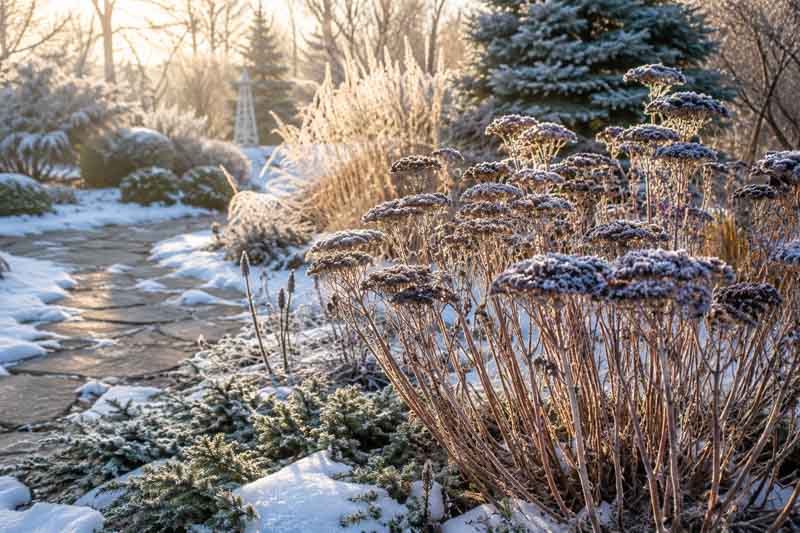


Few perennials carry a garden through winter as gracefully as sedum. Long after the flowers fade, upright sedums – many now classified botanically as Hylotelephium – keep their broad seedheads like bronze umbrellas above the border. Low-growing stonecrops tighten into colorful mats, often flushing coral, copper, burgundy, red, or gold as temperatures drop.
So the real winter question is not simply “Should I cut back sedum?” The better question is: “What is this plant still doing for the garden – and what does my climate demand?” In many gardens, the best answer is to leave sedum standing for structure, frost beauty, and wildlife value. In wet climates, heavy soil, or containers, a careful tidy-up may prevent crown rot and winter losses.
The most professional approach is selective winter care. Keep what is dry, sturdy, and ornamental. Remove what is soggy, diseased, collapsed, or trapping moisture around the crown. That balance gives you the best of both worlds: a beautiful winter garden and a healthier plant in spring.
Quick answer
Leave upright sedum seedheads standing through winter if they are dry, firm, and attractive. Tidy or cut back sedum if stems are blackened, soggy, diseased, flattened over the crown, or holding wet leaves. In most gardens, the main cutback is best done in late winter or early spring, just before new shoots grow strongly.
| Situation | Best Action | Why It Works |
|---|---|---|
| Sturdy upright stems with dry seedheads | Leave standing | Adds frost structure, winter interest, and possible wildlife value. |
| Cold, dry winter climate | Leave until late winter or early spring | Frozen, drier soil usually reduces rot risk. |
| Mild, wet winter climate | Tidy earlier | Improves airflow and keeps moisture away from the crown. |
| Mushy, blackened, moldy, or collapsed stems | Remove promptly | Reduces disease pressure and helps prevent crown rot. |
| Low-growing sedum mats | Lightly tidy | Removes wet debris without damaging evergreen or semi-evergreen growth. |
| Container sedums | Inspect often | Pots can stay too wet, freeze and thaw, or dry out in winter wind. |

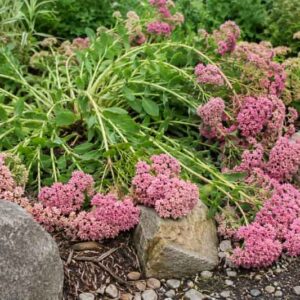
Sedum is one of the great four-season perennials because its value does not end when the flowers fade. Tall border sedums such as ‘Autumn Joy’, ‘Matrona’, ‘Purple Emperor’, ‘Thunderhead’, and ‘Brilliant’ often hold their dried flowerheads for months. In a bare winter border, those seedheads catch frost, snow, low sunlight, and dew. They make the garden look intentional instead of empty.
There is also wildlife value. Sedum seedheads may attract small birds, while standing stems and dry plant material can offer shelter for overwintering insects. Not every stem becomes habitat and not every seedhead is heavily used, but a winter garden with some standing perennials is generally more useful than one stripped bare in late fall.
From a design perspective, sedum gives winter borders what they often lack: shape. Rounded seedheads contrast beautifully with upright ornamental grasses, clipped evergreens, dark conifers, bare branches, seedpods, and gravel paths. If you cut every perennial to the ground in fall, you lose the quiet architecture that makes a winter garden feel alive.
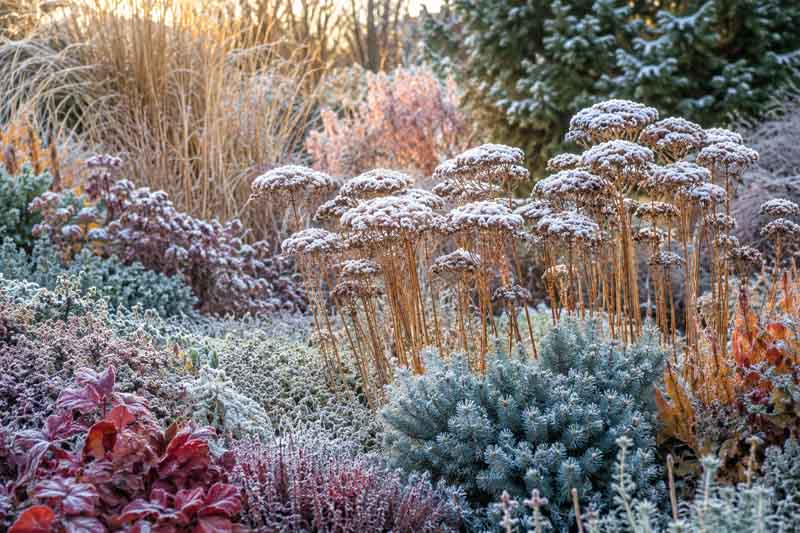
Leave sedum alone in winter when the plant is upright, dry, and healthy. This is especially true for established clumps growing in sunny borders with well-drained soil. The dried stems also act as natural plant markers, reminding you where the crown is before spring growth begins. That can prevent accidental stepping, hoeing, mulching, or early-season damage.
Cold climates with freezing winters are often ideal for leaving sedum standing. When the soil freezes and the plant remains relatively dry, the risk of crown rot is usually lower than in climates where winter means months of cold rain. A clump of sedum dusted with snow can be one of the prettiest sights in the dormant garden.
Dry-summer, Mediterranean, prairie, gravel, and rock garden plantings also suit a relaxed winter approach. In these settings, sedum usually performs best with lean soil, sharp drainage, full sun, and minimal pampering. Let the stems stand, enjoy the structure, and cut them back before vigorous spring growth begins.
Winter beauty test
If the seedheads are upright, tan, bronze, copper, or russet, leave them. If they are slimy, black, collapsed, or plastered over the crown, remove them. Sedum usually tells you what it needs.
Cut back sedum when old growth becomes a liability. The clearest warning sign is moisture trapped around the crown. Sedum has fleshy, water-storing tissues, and while many types are very cold-hardy, they do not like sitting wet for long periods. Heavy soil, winter rain, wet mulch, crowded stems, and fallen leaves can create ideal conditions for rot.
Remove stems that are soft, mushy, blackened, moldy, or foul-smelling. Also clear leaves from nearby trees that collect in the middle of the clump. A few dry leaves are harmless; a wet mat pressed against the crown is not. If material looks diseased, avoid tossing it into a casual cold compost pile.
In rainy coastal climates, mild winter regions, poorly drained clay, or containers that stay damp, cut upright sedums back partially in late fall or early winter. Leave short stubs, about 3-6 inches, rather than shaving the plant to soil level. Those stubs mark the crown and reduce the risk of cutting into new basal buds later.
For low-growing sedums such as Sedum rupestre ‘Angelina’, Sedum spurium ‘Dragon’s Blood’, Sedum album ‘Coral Carpet’, and ‘John Creech’, winter pruning is usually more of a tidy than a cutback. Snip or pull away dead patches, remove fallen leaves, and trim wandering stems if they are invading paths, neighboring crowns, or container rims.
In cold northern gardens, the safest and most attractive approach is often to leave upright sedum standing until late winter or early spring. Snow, frost, and freezing temperatures preserve the seedheads, and the plant is not sitting in warm, wet soil. Cut the stems back when you see new shoots pushing from the crown.
In mild, wet winter climates, be more proactive. If your sedum grows in clay, receives regular winter rain, or sits under dripping shrubs, remove collapsed stems earlier. Improve drainage with grit, raised planting, slopes, gravel mulch, or container mixes designed for succulents. Avoid thick bark mulch piled around the crown because it can hold moisture exactly where sedum wants air.
In hot, dry climates, winter sedum care is usually simple. Leave structure where it looks good, tidy only what is damaged, and avoid winter irrigation unless plants are newly planted or containers have become bone dry. Sedum dislikes prolonged wetness more than it dislikes winter neglect.
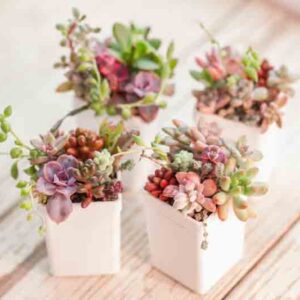
In containers, inspect more often. Pots freeze and thaw, dry out faster in wind, and can also stay too wet if drainage holes clog. Lift pots onto feet, use a gritty mix, and remove soggy debris from the crown. Container sedums rarely need a hard winter prune, but they do need excellent airflow and drainage.
Drainage rule
A sedum may be hardy to your zone and still fail in winter if the crown stays wet. Hardiness handles cold; drainage prevents rot.
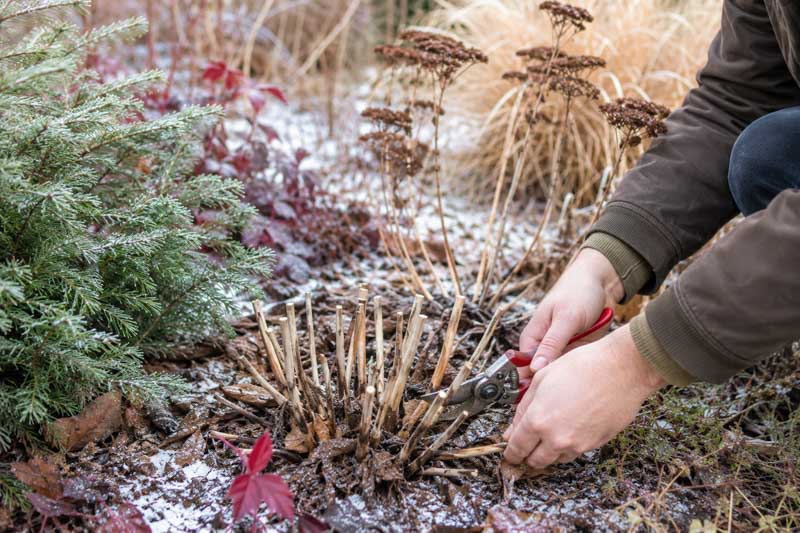
Use clean, sharp pruners. For upright sedum, gather the dried stems loosely in one hand and cut them 2-4 inches above the crown in late winter or early spring. If new shoots are already visible, cut carefully above them. Do not yank old stems from the crown, because you may pull out new buds or loosen the plant.
If you are cutting back in fall or early winter because of rot risk, leave slightly taller stubs, around 4-6 inches. This keeps the crown visible through winter and prevents you from accidentally mulching, stepping on, or slicing into it. After cutting, remove wet debris from the center and check that water drains away from the plant.
For creeping sedums, use scissors, small shears, or your fingers. Trim mats lightly, lift out dead pieces, and clear wet leaves. If a mat has become too thick, thin small sections rather than scalping the whole plant. Many low-growing sedums root as they spread, so unwanted edges are usually easy to pull, edit, and replant elsewhere.
What Not to Do
Also avoid making winter cleanup too neat. A garden stripped to bare soil offers little shelter for beneficial insects and little visual interest for you. Sedum is one of the plants that earns the right to stay standing – provided it is not diseased or trapping moisture.
Late fall: Inspect the plant after flowering. Leave attractive seedheads. Remove only broken, diseased, soggy, or collapsed growth. Clear wet leaves from the crown, especially in clay soil or rainy climates.
Midwinter: Tidy after storms if stems have flattened over the crown. Do not worry about dry, upright stems. They are still contributing structure, wildlife value, and winter interest.
Late winter to early spring: Complete the main cutback before new growth gets tall. This timing gives you the longest winter display without making spring cleanup difficult. Cut above emerging shoots and remove old stems gently.
If your sedum flops every summer, winter is not the only time to think about pruning. Use the Chelsea chop in late spring or early summer on upright types. Cutting stems back by one-third to one-half before flower buds form can produce shorter, bushier plants that hold up better in late season.
Upright border sedums need the most judgment because their stems and seedheads are so visible. Leave them for winter structure whenever possible, but cut them back if they collapse, rot, or trap wet debris around the crown.
Low-growing sedums need more debris removal than pruning. Mats of evergreen or semi-evergreen stonecrop can suffer if wet leaves sit on them for weeks. Gently lift leaves, snip dead patches, and trim edges only where needed.
Container sedums need drainage checks. Make sure pots have open drainage holes, avoid saucers filled with water, and use a gritty mix. In cold climates, containers may need protection from repeated freeze-thaw cycles. In mild, wet climates, they may need shelter from excessive rain.
Tender succulents sold as sedums, such as Sedum morganianum or Sedum x rubrotinctum, are different from hardy garden stonecrops. Where they are not hardy, they need frost protection or indoor overwintering rather than ordinary garden cutback.
For more plant choices, use the Gardenia Sedum comparison tool, explore Sedum growing guides, and browse Sedum plant combinations for companions that look good even after frost. For propagation, see the sedum cutting trick, and for groundcover behavior, see low-growing sedums that creep, clump, or spread.
Best practice
Do not choose between “leave everything” and “cut everything.” The professional approach is selective winter cleanup: keep strong structure, remove rot risks, and let climate guide the timing.
So, should you leave sedum in winter, cut it back, or tidy it? In most gardens, leave it first, tidy as needed, and cut back later. Strong seedheads bring winter structure, frost beauty, and wildlife value. Clean, airy crowns reduce rot risk. Late winter or early spring cutback prepares the plant for fresh growth without sacrificing the quiet beauty of the dormant season.
Think of sedum as a winter asset, not a fall chore. When it stands well, let it stand. When it gets wet, diseased, or messy around the crown, intervene. That simple balance gives you healthier plants, better habitat, and a more beautiful winter garden.
Not always. Upright sedum can be left standing through winter if the stems are dry, firm, and attractive. Cut back sedum if it is mushy, diseased, collapsed over the crown, or trapping wet leaves. In many gardens, the best full cutback is in late winter or early spring.
The best time to cut back most upright sedums is late winter or early spring, just before or as new shoots emerge. In wet winter climates, you can remove collapsed or rotting stems earlier to improve airflow and reduce crown rot risk.
Yes, sedum seedheads and standing stems can add wildlife value by offering seeds, shelter, and overwintering habitat for small garden creatures. They also add winter structure for gardeners, especially when touched by frost or snow.
Sedum often rots in winter when the crown stays wet. Heavy clay, poor drainage, wet mulch, fallen leaves, crowded stems, and containers without free drainage can all hold moisture around the plant. Sedum may be cold-hardy but still fail in soggy winter soil.
Low-growing sedum usually needs light tidying rather than hard pruning. Remove wet leaves, dead patches, and mushy stems. Trim wandering edges if needed, but avoid scalping evergreen or semi-evergreen mats during cold, wet weather.
Yes. Autumn Joy sedum is often excellent left standing through winter because its dried flowerheads provide strong structure. Leave it if the stems remain upright and dry. Cut it back earlier only if stems collapse, become soggy, or encourage rot around the crown.
For upright sedum, cut old stems to about 2-4 inches above the crown in late winter or early spring. If cutting earlier in fall or winter because of wet conditions, leave 4-6 inch stubs to mark the crown and protect emerging buds.
Use caution. Sedum does not like wet mulch piled against the crown. In cold climates, a light, airy layer around the plant may help, but avoid burying the crown. Gravel mulch or sharply drained soil is usually safer than heavy bark or soggy compost.
Updated: June 2026 • Reviewed by Gardenia Editors
| Hardiness |
3 - 9 |
|---|---|
| Plant Type | Cactus & Succulents, Perennials |
| Genus | Sedum |
| Exposure | Full Sun, Partial Sun |
| Season of Interest | Spring (Mid, Late), Summer (Early, Mid, Late), Fall |
| Maintenance | Low |
| Soil Drainage | Well-Drained |
| Attracts | Bees, Butterflies, Birds |
| Hardiness |
3 - 9 |
|---|---|
| Plant Type | Cactus & Succulents, Perennials |
| Genus | Sedum |
| Exposure | Full Sun, Partial Sun |
| Season of Interest | Spring (Mid, Late), Summer (Early, Mid, Late), Fall |
| Maintenance | Low |
| Soil Drainage | Well-Drained |
| Attracts | Bees, Butterflies, Birds |
Create a membership account to save your garden designs and to view them on any device.
Becoming a contributing member of Gardenia is easy and can be done in just a few minutes. If you provide us with your name, email address and the payment of a modest $25 annual membership fee, you will become a full member, enabling you to design and save up to 25 of your garden design ideas.
Join now and start creating your dream garden!
Create a membership account to save your garden designs and to view them on any device.
Becoming a contributing member of Gardenia is easy and can be done in just a few minutes. If you provide us with your name, email address and the payment of a modest $25 annual membership fee, you will become a full member, enabling you to design and save up to 25 of your garden design ideas.
Join now and start creating your dream garden!