Floppy sedum is usually a sign of too much shade, water, fertilizer, rich soil, or overcrowding. With full sun, lean soil, good drainage, spring pinching, and timely division, upright stonecrop can stay compact, sturdy, colorful, and pollinator-friendly from summer flowers through beautiful fall seed heads.
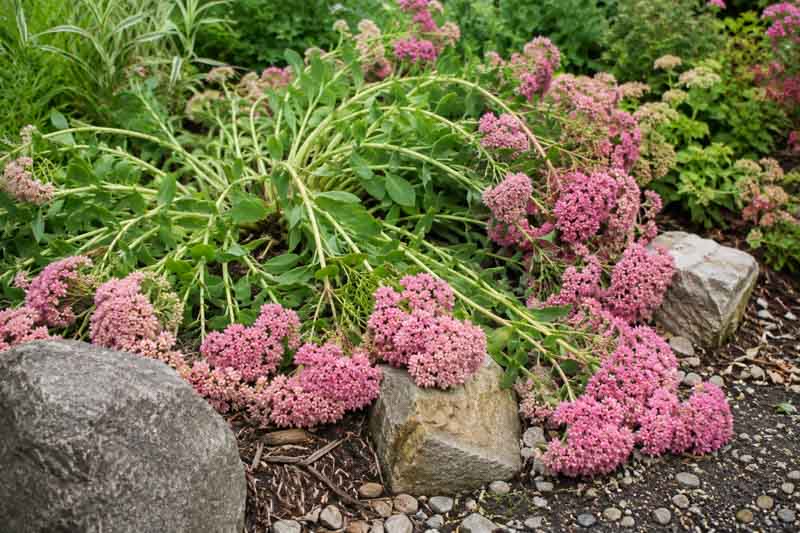


If your sedum looked sturdy in spring but is now leaning, splitting open, or collapsing just as the flower heads begin to color, you are not alone. Floppy sedum is one of the most common problems gardeners notice with upright stonecrops such as Sedum ‘Autumn Joy’, Sedum ‘Brilliant’, Sedum ‘Matrona’, and other tall border sedums.
The good news is that a sedum falling over is usually not dying. In most cases, it is responding to growing conditions that make the stems too tall, soft, crowded, shaded, or heavily loaded with flowers. Fix those conditions, and next year’s plant can be much stronger, shorter, and more upright.
Quick answer
Sedum usually flops because it is growing in too much shade, overly rich soil, excess fertilizer, too much water, crowded clumps, or because heavy flower heads are pulling weak stems outward. The best fixes are full sun, lean well-drained soil, no fertilizer, spring division, discreet support, and a late-spring pinch called the Chelsea chop.
Before you fix the problem, make sure you are looking at the right kind of sedum. Low-growing groundcover sedums naturally creep, trail, spill, or carpet the soil. Plants such as Sedum rupestre ‘Angelina’, Sedum spurium ‘Dragon’s Blood’, Sedum album ‘Coral Carpet’, and Sedum acre are not meant to stand upright like border perennials. Their sideways habit is normal.
The classic “why is my sedum flopping?” problem usually affects taller, clump-forming stonecrops. Many of these plants are now botanically placed in Hylotelephium, but gardeners, nurseries, and plant labels still commonly call them sedum. These upright types produce fleshy stems, succulent leaves, and broad late-season flower heads that are loved by bees, butterflies, and other beneficial insects.
To compare different sedum types, browse the Gardenia Sedum Plant Finder, the Sedum comparison page, the Sedum growing guides, and Sedum plant combination ideas.
Use this quick guide to match the symptom you see with the most likely cause and the best fix.
| What You See | Likely Cause | Best Fix |
|---|---|---|
| Tall, pale, leaning stems | Too much shade | Move to full sun or a brighter site in spring. |
| Huge leafy growth that collapses | Rich soil or fertilizer | Stop feeding and grow sedum in leaner soil. |
| Stems open from the center | Old, crowded clump | Divide in spring and replant healthy outer sections. |
| Plant falls after flowers open | Heavy flower heads | Use spring pinching and discreet supports. |
| Mushy stems at soil level | Rot from wet soil | Remove rotting parts and improve drainage. |
Upright sedum stands best in full sun. In bright light, the stems usually stay shorter, thicker, and better able to carry their large flower clusters. In too much shade, the plant stretches toward the light. The result is long, soft growth with more space between leaves and weaker stems that lean or split open.
This can happen even if the sedum was once perfect. A young tree may mature, a shrub may widen, or nearby perennials may begin casting more shade. Suddenly, a sedum that stood beautifully for years begins to flop every summer.
Sun tip
Give upright sedum at least 6 hours of direct sun when possible. In very hot climates, a little afternoon shade may be tolerated, but deep shade almost always leads to weaker, leggier growth.
Sedum is a plant for restraint, not pampering. It thrives in average, dry to medium, well-drained soil and often performs better in moderate to lean conditions than in rich, heavily amended beds. When sedum receives too much nitrogen, compost, or lawn fertilizer, it may produce lush growth that looks impressive early in the season but collapses later.
The problem is simple: fast growth is not always strong growth. Extra fertility can produce taller stems and larger leaves without building the firm structure needed to support heavy flower heads.
If your sedum is planted in a fertile perennial border, stop fertilizing it. Avoid placing compost-heavy mulch directly around the crown. Do not feed sedum just because it looks floppy. Fertilizer usually makes the problem worse, not better.
Sedum is drought-tolerant once established, but young plants still need regular watering while they root. Trouble begins when mature sedums are watered like thirsty perennials, planted in low wet spots, or grown in heavy soil that stays damp after rain.
Consistently moist conditions can create soft stems and weak crowns. In poorly drained soil, excess water may also lead to rot. A sedum that is simply flopping from soft growth may still look green and healthy. A sedum collapsing from rot may have mushy stems, blackened tissue, or sections that pull away easily at soil level.
Drainage matters
Water sedum during establishment, then reduce irrigation. For long-term success, choose raised beds, slopes, gravelly soil, or planting pockets where water drains quickly.
One reason upright sedums are so popular is their late-season flower display. The broad, flat clusters begin as green buds, then shift into pink, rose, red, copper, or brown tones depending on the variety and season. They are beautiful in the garden and excellent for pollinators.
Those same flower heads can become heavy, especially after rain. If stems are already tall from shade, rich soil, or excess water, the extra weight can pull them outward. This is why sedum often seems to flop suddenly just as it starts blooming. The weakness was building for weeks, but the flowers finally tipped the balance.
Older favorites such as ‘Autumn Joy’ are especially loved, but they may open up in rich soil, part shade, or very comfortable garden conditions. Shorter, more compact selections are often easier to keep upright in small borders.
A mature sedum clump can become congested with age. When the center gets woody, tired, or crowded, new stems often grow around the outside. Later in the season, the plant may open from the middle and flop outward in a ring.
This is especially common when a sedum has not been divided for several years. The plant is not necessarily unhealthy. It simply needs refreshing. Division improves vigor, air circulation, and structure.
Best timing
Divide upright sedum in spring, just as new shoots emerge. Replant firm, healthy outer sections and discard weak, woody, hollow, or rotted centers.
The Chelsea chop is one of the best ways to keep upright sedum compact. In late spring or early summer, before flower buds are obvious, cut stems back by about one-third to one-half. This delays flowering slightly, but it encourages shorter, bushier growth that is much less likely to collapse.
You do not have to cut the whole plant evenly. For a natural look, shorten only the outer stems and leave the center taller. You can also cut the front half of the clump and leave the back half untouched. This creates a layered plant with a longer bloom season and better self-support.
If your sedum flops every year, add the Chelsea chop to your calendar. It is far easier to prevent floppy growth in late spring than to rescue a collapsed plant in late summer.
If your sedum is already leaning, do not panic. The fastest solution is discreet support. Use a grow-through ring, half-hoop, short twiggy branches, soft twine, or neighboring plants to lift the stems gently. Avoid tying the plant into a tight bundle, which can look unnatural and trap moisture inside the clump.
If some stems are broken, cut them for flower arrangements. Sedum blooms last well in vases and also dry attractively. Remove any mushy, blackened, or rotting stems at once, especially near the crown.
Do not try to fix floppy sedum with fertilizer. Do not soak it repeatedly to “perk it up.” Those responses usually make the stems softer. Support the plant for the current season, then correct the underlying cause in spring.
Floppy sedum often gets worse when gardeners respond with too much kindness. Sedum is a tough, drought-tolerant perennial that prefers simple care. The more you push it to grow lush and fast, the more likely it is to collapse.
For stronger upright sedum next year, focus on five things: sun, drainage, lean soil, division, and spring pinching. These steps address the real reasons sedum falls over rather than hiding the symptoms.
If the plant is shaded, move it in spring. If the soil is rich and moist, lift the clump and replant it in a leaner, better-drained pocket. If the sedum is old and hollow in the center, divide it. If it grows tall every year, pinch or cut it back in late spring.
In windy gardens, use sturdy companions as living supports. Upright sedums combine beautifully with lavender, salvia, catmint, coneflower, and compact ornamental grasses. For more ideas, explore Gardenia’s Sedum plant combinations.
Design shortcut
Plant upright sedum where it gets sun and air, then surround it with lower, sturdy perennials that help hide supports and keep the border looking full even if stems lean slightly late in the season.
No upright sedum is completely flop-proof in deep shade or rich wet soil, but compact varieties and shorter selections usually hold up better than tall, lush plants. When choosing sedum for a small garden, windy border, or fertile bed, compare mature height, spread, flower size, and growth habit before buying.
If you love the look of upright sedums but want a cleaner, sturdier effect, consider compact or strongly branched varieties from the Gardenia Sedum comparison page. If you do not need upright flowers, switch to low-growing types such as Sedum ‘Lime Zinger’, Sedum ‘Blue Elf’, Sedum ‘Dazzleberry’, or Sedum takesimense ATLANTIS for colorful groundcover-style impact.
For dry edges, rock gardens, containers, and slopes, low sedums may be a better choice than forcing a tall border sedum into a spot where it never stands well.
Most sedum flopping is a cultural issue, not a disease. However, sudden collapse at the base can signal rot, especially in wet soil or heavy clay. Check for mushy stems, a bad smell, blackened tissue, or pieces that detach easily from the crown.
If rot is present, remove affected growth immediately. Improve drainage before replanting, and avoid heavy mulch around the crown. In severe cases, save healthy pieces from the edge of the plant and discard the rotted center.
Pests are less common causes of sedum flopping, but aphids, scale insects, mealybugs, slugs, snails, and vine weevil larvae may weaken plants. If collapse is patchy rather than evenly outward, inspect the stems, leaves, and crown closely.
Sedum flops when its stems are not strong enough to support the growth above them. Too much shade, excess fertility, frequent watering, crowded clumps, and heavy flower heads are the main reasons upright stonecrop falls over.
The solution is not more care. It is better-matched care. Give sedum full sun, sharp drainage, lean soil, modest water, spring division when needed, and a timely Chelsea chop. Treat it like the rugged stonecrop it is, and it will reward you with sturdy stems, late-season flowers, pollinator value, and long-lasting garden structure.
Sedum usually flops because it is growing in too much shade, overly rich soil, excess fertilizer, too much water, or crowded conditions. Tall upright sedums with large flower heads are especially likely to lean when their stems grow soft or stretched.
Grow Autumn Joy sedum in full sun, avoid fertilizer, keep the soil well drained, divide old clumps in spring, and cut the stems back by one-third to one-half in late spring. This produces shorter, bushier growth that holds up better.
If sedum is already flopping, you can support it, cut broken stems for arrangements, or remove damaged growth. To prevent flopping, cut stems back in late spring before flower buds form. Avoid hard pruning late in the season if you want flowers.
Yes. Established sedum prefers dry to medium, well-drained soil. Too much water can encourage soft growth and may lead to crown rot in poorly drained sites.
Yes. Fertilizer, especially nitrogen-rich fertilizer, encourages lush leafy growth that may be too weak to support heavy flower heads. Sedum usually performs best in average to lean soil.
Divide upright sedum in spring when new shoots begin to emerge. Division refreshes crowded clumps, removes weak centers, improves air circulation, and helps prevent the plant from splitting open later in the season.
Yes. Use discreet supports early in the season for the most natural look. Grow-through rings, half-hoops, soft twine, twiggy branches, or neighboring plants work better than tight bundles tied after the plant has already collapsed.
No. Flopping mainly affects taller upright sedums and hylotelephiums. Low-growing sedums such as Angelina, Dragon’s Blood, Coral Carpet, and Sedum acre naturally creep, trail, or carpet the ground rather than standing upright.
Yes. A floppy sedum can continue flowering and may look attractive with light support. However, the strongest recovery usually happens the following season after you improve sun, drainage, soil fertility, spacing, or spring pruning.
Updated: June 2026 • Reviewed by Gardenia Editors
| Hardiness |
3 - 9 |
|---|---|
| Plant Type | Cactus & Succulents, Perennials |
| Genus | Sedum |
| Exposure | Full Sun, Partial Sun |
| Season of Interest | Spring (Mid, Late), Summer (Early, Mid, Late), Fall |
| Maintenance | Low |
| Soil Drainage | Well-Drained |
| Attracts | Bees, Butterflies, Birds |
| Hardiness |
3 - 9 |
|---|---|
| Plant Type | Cactus & Succulents, Perennials |
| Genus | Sedum |
| Exposure | Full Sun, Partial Sun |
| Season of Interest | Spring (Mid, Late), Summer (Early, Mid, Late), Fall |
| Maintenance | Low |
| Soil Drainage | Well-Drained |
| Attracts | Bees, Butterflies, Birds |
Create a membership account to save your garden designs and to view them on any device.
Becoming a contributing member of Gardenia is easy and can be done in just a few minutes. If you provide us with your name, email address and the payment of a modest $25 annual membership fee, you will become a full member, enabling you to design and save up to 25 of your garden design ideas.
Join now and start creating your dream garden!
Create a membership account to save your garden designs and to view them on any device.
Becoming a contributing member of Gardenia is easy and can be done in just a few minutes. If you provide us with your name, email address and the payment of a modest $25 annual membership fee, you will become a full member, enabling you to design and save up to 25 of your garden design ideas.
Join now and start creating your dream garden!