Donard Seedling Escallonia


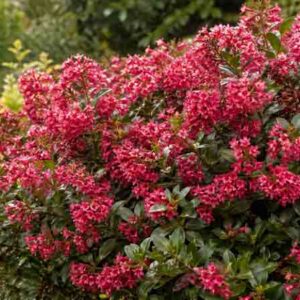
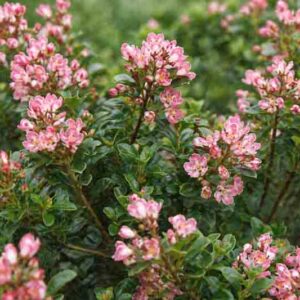
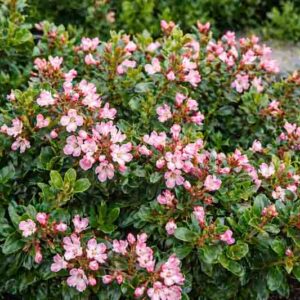
Escallonia ‘Donard Seedling’ is a vigorous, bushy, broadleaf evergreen shrub prized for glossy dark green foliage, arching stems, and masses of blush-white to pale pink flowers that open from deeper pink buds in early summer. It is one of the most useful escallonias for mild-climate gardens because it combines year-round structure, generous flowering, coastal tolerance, and a naturally informal habit that looks polished without feeling stiff.
This is the kind of shrub gardeners choose when they want beauty with purpose. It can soften a boundary, create a flowering hedge, screen an unattractive fence, anchor a sunny border, or bring evergreen presence to a coastal garden. The leaves are small, leathery, and glossy, giving the plant a clean appearance even when it is not in bloom. Then, in early summer, the pink buds open into saucer-shaped, pale flowers that brighten the whole shrub.
Escallonia ‘Donard Seedling’ is a vigorous evergreen flowering shrub, typically reaching about 5-8 ft. tall and wide in favorable mild gardens, with glossy dark green foliage and blush-white flowers opening from pink buds in early summer. It grows best in full sun to part shade, moist but well-drained soil, and sheltered sites protected from cold drying winds, making it excellent for informal hedges, coastal gardens, wildlife borders, and evergreen screens.
Use: Flowering hedges, evergreen screens, coastal gardens, wildlife gardens, cottage gardens, mixed borders, wall-side planting, sunny slopes, and large containers.
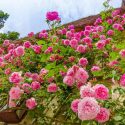
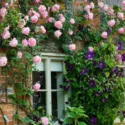
Highlight: Pink buds open to blush-white flowers against glossy dark green evergreen foliage in early summer.
Design note: Best as a lightly clipped informal hedge or relaxed specimen shrub where its arching habit, small leaves, and soft flower color can show naturally.
| Botanical Name | Escallonia ‘Donard Seedling’ |
|---|---|
| Family | Escalloniaceae |
| Common Names | Donard Seedling Escallonia, Escallonia Donard Seedling |
| Native Range | Cultivated garden selection; the genus Escallonia is native mainly to South America |
| Native U.S. States | None. Escallonia ‘Donard Seedling’ is not native to the United States. |
| Plant Type | Evergreen broadleaf flowering shrub |
| Hardiness | Best in USDA Zones 8-9; often considered one of the hardier escallonias in mild, sheltered gardens |
| Height | Usually 5-8 ft. tall |
| Spread | Usually 5-8 ft. wide, depending on climate, pruning, soil, and exposure |
| Sun Exposure | Full sun to partial shade; best flowering in full sun |
| Soil | Moist but well-drained or well-drained soil; adaptable to chalk, clay, loam, and sand if drainage is good |
| Bloom Time | Early summer, often continuing into midsummer in mild gardens |
| Flower Color | Pink buds opening to blush-white or pale pinkish white flowers |
| Foliage | Evergreen, leathery, glossy, dark green leaves |
| Drought Tolerant | Moderately drought tolerant once established, especially in coastal or mild climates |
| Deer Resistant | Some resistance, but not deer-proof; browsing varies locally |
| Attracts | Bees, bumblebees, hoverflies, and other pollinating insects |
| Pet and Child Safety | Not commonly listed as highly toxic, but ornamental and not edible; discourage chewing |
Escallonia ‘Donard Seedling’ is a cultivated evergreen shrub with a dense, bushy, slightly arching habit. Its small, leathery leaves are glossy dark green, creating a refined texture that works beautifully in both formal and informal planting. In early summer, rounded pink buds open into small, saucer-shaped flowers, usually blush-white or very pale pink. The effect is fresh, luminous, and softer than the stronger crimson or rose-red escallonias.
This cultivar is especially valued for hedging because it is vigorous without looking coarse. It grows into a dense screen, responds well to light clipping, and keeps its foliage through winter in suitable climates. At the same time, it remains pretty enough for a mixed border, where the pale flowers can lift darker evergreens, roses, lavender, catmint, ornamental grasses, and silver-leaved Mediterranean plants.
Good to know: Escallonia ‘Donard Seedling’ is a smart choice when you want a flowering hedge that feels softer, lighter, and more pollinator-friendly than a plain evergreen wall.
‘Donard Seedling’ is a garden cultivar rather than a wild species. The genus Escallonia is native mainly to South America, where many species grow in mild climates, mountain slopes, woodland margins, and coastal-influenced habitats. That background helps explain this shrub’s preference for sun, drainage, shelter, and moderate moisture rather than heavy wet ground or severe winter exposure.
Bloom normally begins in early summer. In mild, settled gardens, flowering can continue into midsummer, especially when the plant is not stressed by drought. The buds are pink and the open flowers are pale, giving the shrub a two-tone look while both buds and blooms are present. This makes it particularly attractive in hedges, where the entire surface can appear lightly frosted with bloom.
The foliage is a major part of the appeal. The leaves are evergreen, glossy, leathery, and dark green, helping Escallonia ‘Donard Seedling’ provide year-round privacy and structure. In winter, it can act as a calm green backdrop for early bulbs, hellebores, grasses, and clipped topiary. In summer, it becomes more decorative as the pale flowers brighten the outer stems.
In favorable mild gardens, Escallonia ‘Donard Seedling’ typically matures around 5-8 ft. tall and wide, with some references listing about 2.5 m in both height and spread. Growth depends on climate, soil, watering, pruning, and exposure. Plants grown in exposed or colder sites may remain smaller, while sheltered coastal gardens can produce fuller, faster growth. For hedges, allow enough width for the shrub to arch slightly rather than forcing it into a narrow, stressed strip.
Escallonia ‘Donard Seedling’ is best suited to mild-winter regions and is often grown in USDA Zones 8-9. It is considered comparatively hardy among escallonias, but it still dislikes icy wind, cold wet soil, and severe frost pockets. In marginal gardens, plant it near a wall, fence, hedge, or building where it receives some protection. Avoid late-season pruning because soft new growth is more vulnerable to winter injury.
The flowers attract bees, hoverflies, and other small beneficial insects. Because the shrub is evergreen and dense, it can also add light shelter for birds when used as part of a layered hedge or mixed wildlife planting.
Escallonia is not usually considered a favorite deer plant, but it is not deer-proof. Browsing pressure changes by region, season, drought, and local deer populations. Young plants and tender new shoots are always more vulnerable than mature woody growth. In high-pressure deer areas, protect new plantings until established.
Once established, Escallonia ‘Donard Seedling’ has moderate drought tolerance, particularly in coastal and mild climates. However, it looks better with occasional deep watering during extended dry spells. It dislikes extremes: permanently wet soil can damage roots, while severe drought can reduce flowering, dull the foliage, and increase stress-related pest or disease issues.
Escallonia is grown as an ornamental shrub, not as an edible plant. It is not widely known as a major toxic garden shrub, but the safest approach is to keep children and pets from chewing ornamental plants. Wear gloves when pruning if you have sensitive skin, as you would with any woody evergreen shrub.
Escallonia ‘Donard Seedling’ is not generally known as an invasive shrub in ordinary garden use. Still, gardeners in mild coastal regions should follow local guidance, especially near natural habitats. Dispose of prunings responsibly and monitor for unwanted seedlings if growing escallonias near open land.
Water regularly during the first growing season so the plant can establish a strong root system. After establishment, water deeply during long dry periods rather than sprinkling lightly every day. Deep watering encourages roots to move down into the soil, which improves drought resilience and overall plant health.
Escallonia ‘Donard Seedling’ usually needs only modest feeding. In spring, add compost or a balanced slow-release fertilizer if the soil is poor or growth seems weak. Avoid excessive nitrogen, which can produce soft leafy growth at the expense of flowers and winter toughness.
Apply a 2-3 inch layer of organic mulch around the root zone to conserve moisture, suppress weeds, and buffer soil temperature. Keep mulch a few inches away from the base of the stems so the crown remains dry and healthy.
Care tip:
The winning formula is simple: sun, drainage, shelter, and light pruning after bloom. Most problems begin when Escallonia ‘Donard Seedling’ is shaded, waterlogged, overcrowded, or exposed to cold drying winds.
Prune Escallonia ‘Donard Seedling’ after flowering. Lightly shorten long shoots, remove dead or damaged stems, and shape the shrub while preserving its naturally rounded outline. Avoid hard spring pruning except to remove frost-damaged wood, because spring cutting can reduce the early-summer flower display.
For an informal flowering hedge, space plants about 3-4 ft. apart. Closer spacing gives faster cover, while wider spacing allows a looser, more natural effect. A lightly clipped hedge can still bloom well, but repeated tight shearing reduces flowers and can make the hedge woody inside. Trim after the main flush of bloom for the best balance of neatness and flower power.
Escallonia ‘Donard Seedling’ can grow in a large container in mild climates. Use a sturdy pot with drainage holes and a free-draining potting mix. Water deeply when the upper mix begins to dry. In cold climates, containers need extra protection because roots in pots are more exposed to freezing than roots in the ground.
Named cultivars such as Escallonia ‘Donard Seedling’ are best propagated from cuttings rather than seed. Softwood cuttings can be taken in early summer, semi-hardwood cuttings in late summer, and hardwood cuttings from late fall into winter. Cuttings preserve the exact flower color, growth habit, and foliage characteristics of the parent plant.
This shrub struggles in deep shade, waterlogged soil, exposed frost pockets, and sites blasted by cold drying winter winds. It may also suffer in extremely hot inland gardens if drought stress is prolonged. If leaves brown after winter, wait until new growth begins before pruning. Many plants recover once damaged stems are trimmed back to healthy wood.
| Task | Best Time |
|---|---|
| Planting | Spring, or early fall in mild climates |
| Flowering | Early summer, sometimes into midsummer |
| Pruning | After the main flowering period |
| Feeding | Spring, only if needed |
| Winter Protection | Late fall to winter in marginal climates |
Poor flowering is usually caused by too much shade, spring pruning, drought stress, or excessive nitrogen. Move young plants to a sunnier position if needed, prune after flowering, and water deeply during long dry spells.
Escallonia leaf spot can cause dark marks, yellowing, and premature leaf drop, especially where foliage stays damp and air circulation is poor. Improve spacing, avoid overhead watering, remove badly affected leaves, and prune lightly after flowering to open the plant.
Brown foliage after winter often means cold wind damage or frost injury. Do not rush to cut the shrub back in late winter. Wait until new growth appears, then prune to healthy wood.
Root rot is most likely in poorly drained soil. If a plant wilts while the soil remains wet, drainage may be the problem. Improve soil structure, replant on a slight mound, or choose a better-drained site.
Healthy escallonias are generally easy to grow, but stressed plants may attract scale insects or other sap-feeding pests. Good light, drainage, spacing, and watering practices are the best long-term defenses.
Fast diagnostic: Few flowers usually mean shade or spring pruning. Spotted leaves often point to damp foliage and poor airflow. Winter browning usually means cold wind exposure.
Use Escallonia ‘Donard Seedling’ where you want evergreen structure without a heavy, formal feel. Its pale flowers look beautiful with blue, violet, silver, white, soft pink, and deep green planting partners. It is especially effective as a flowering hedge behind lower perennials or as a glossy evergreen anchor in a coastal border.
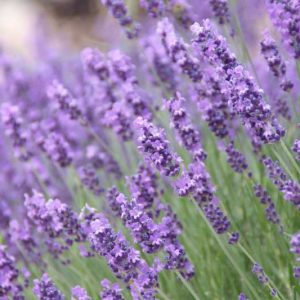
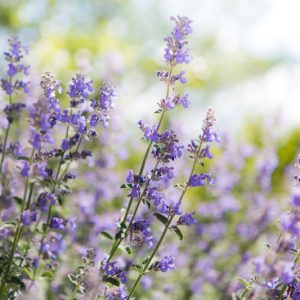
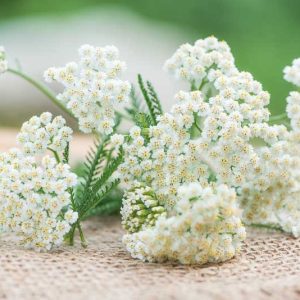
Good companions for Escallonia ‘Donard Seedling’ include Lavender (Lavandula angustifolia), Rosemary (Salvia rosmarinus), Catmint (Nepeta), Autumn Sage (Salvia greggii), Rockrose (Cistus), Teucrium fruticans, New Zealand Flax (Phormium), Blue Fescue (Festuca glauca), Sea Thrift (Armeria maritima), Yarrow (Achillea), and Hardy Geranium. These plants suit sunny to lightly shaded sites, well-drained soil, and low to moderate moisture once established.
Yes. Escallonia ‘Donard Seedling’ is an evergreen shrub in mild climates, keeping its glossy dark green leaves through the year unless damaged by severe cold, wet soil, or drying winter winds.
Escallonia ‘Donard Seedling’ usually grows about 5 to 8 feet tall and wide in favorable mild gardens, though it may stay smaller in exposed sites or with regular pruning.
It typically blooms in early summer, with pink buds opening to blush-white or pale pinkish white flowers. In mild gardens, flowering may continue into midsummer.
It tolerates partial shade, but flowers best in full sun. Deep shade usually reduces blooming and can make growth thinner and less compact.
Yes. Escallonia ‘Donard Seedling’ is excellent for informal flowering hedges and evergreen screens, especially in mild coastal gardens. Clip lightly after flowering for the best bloom display.
Prune after the main flowering period. Avoid hard spring pruning except to remove frost-damaged stems, because spring pruning can reduce the early-summer flowers.
Leaf spotting is often linked to damp foliage, crowded growth, poor air circulation, or escallonia leaf spot disease. Improve airflow, avoid overhead watering, and remove badly affected leaves.
Updated: April 2026 • Reviewed by Gardenia Editors
| Hardiness |
7 - 9 |
|---|---|
| Heat Zones |
8 - 9 |
| Climate Zones | 4, 5, 6, 7, 8, 9, 14, 15, 16, 17, 18, 19, 20, 21, 22, 23, 24 |
| Plant Type | Shrubs |
| Plant Family | Escalloniaceae |
| Genus | Escallonia |
| Exposure | Full Sun, Partial Sun |
| Season of Interest | Spring (Early, Mid, Late), Summer (Early, Mid, Late), Fall, Winter |
| Height | 5' - 8' (150cm - 240cm) |
| Spread | 5' - 8' (150cm - 240cm) |
| Spacing | 60" - 96" (150cm - 240cm) |
| Maintenance | Low |
| Water Needs | Average |
| Soil Type | Chalk, Clay, Loam, Sand |
| Soil pH | Acid, Neutral, Alkaline |
| Soil Drainage | Moist but Well-Drained, Well-Drained |
| Characteristics | Showy, Evergreen |
| Tolerance | Drought, Salt, Dry Soil, Clay Soil |
| Attracts | Bees, Butterflies |
| Garden Uses | Beds And Borders, Hedges And Screens, Wall-Side Borders |
| Garden Styles | Butterfly Garden, City and Courtyard, Coastal Garden, Informal and Cottage, Pollinator Garden |


| Hardiness |
7 - 9 |
|---|---|
| Heat Zones |
8 - 9 |
| Climate Zones | 4, 5, 6, 7, 8, 9, 14, 15, 16, 17, 18, 19, 20, 21, 22, 23, 24 |
| Plant Type | Shrubs |
| Plant Family | Escalloniaceae |
| Genus | Escallonia |
| Exposure | Full Sun, Partial Sun |
| Season of Interest | Spring (Early, Mid, Late), Summer (Early, Mid, Late), Fall, Winter |
| Height | 5' - 8' (150cm - 240cm) |
| Spread | 5' - 8' (150cm - 240cm) |
| Spacing | 60" - 96" (150cm - 240cm) |
| Maintenance | Low |
| Water Needs | Average |
| Soil Type | Chalk, Clay, Loam, Sand |
| Soil pH | Acid, Neutral, Alkaline |
| Soil Drainage | Moist but Well-Drained, Well-Drained |
| Characteristics | Showy, Evergreen |
| Tolerance | Drought, Salt, Dry Soil, Clay Soil |
| Attracts | Bees, Butterflies |
| Garden Uses | Beds And Borders, Hedges And Screens, Wall-Side Borders |
| Garden Styles | Butterfly Garden, City and Courtyard, Coastal Garden, Informal and Cottage, Pollinator Garden |
How many Escallonia ‘Donard Seedling’ (Escallonia) do I need for my garden?
| Plant | Quantity | |
|---|---|---|
| Escallonia ‘Donard Seedling’ (Escallonia) | N/A | Buy Plants |
Create a membership account to save your garden designs and to view them on any device.
Becoming a contributing member of Gardenia is easy and can be done in just a few minutes. If you provide us with your name, email address and the payment of a modest $25 annual membership fee, you will become a full member, enabling you to design and save up to 25 of your garden design ideas.
Join now and start creating your dream garden!
Create a membership account to save your garden designs and to view them on any device.
Becoming a contributing member of Gardenia is easy and can be done in just a few minutes. If you provide us with your name, email address and the payment of a modest $25 annual membership fee, you will become a full member, enabling you to design and save up to 25 of your garden design ideas.
Join now and start creating your dream garden!