Peach Blossom Escallonia

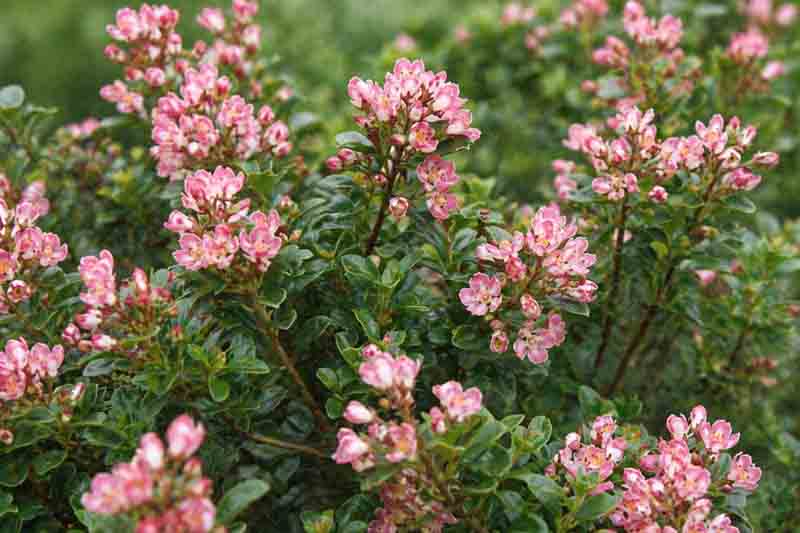


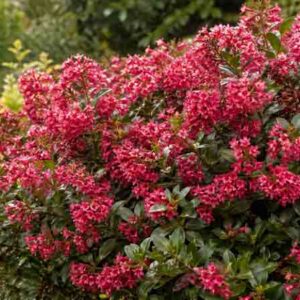
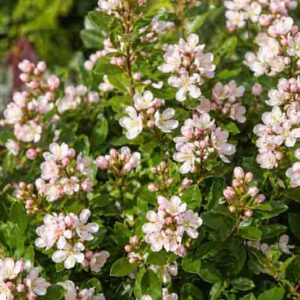
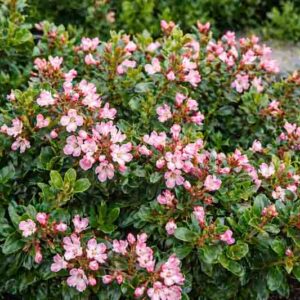
Escallonia ‘Peach Blossom’ is a vigorous, bushy, broadleaf evergreen shrub grown for glossy dark green foliage, graceful arching stems, and charming peach-pink flowers with pale, white-centered throats. It is one of those rare shrubs that feels both practical and romantic – useful enough for hedging and screening, yet pretty enough to hold its own in a flower-filled cottage garden, coastal border, or sunny foundation planting.
In the right garden, this Escallonia becomes a hardworking evergreen backbone. It brings year-round structure, summer color, pollinator activity, and a softer alternative to rigid evergreen hedges. Its compact, shiny leaves make it look neat even out of bloom, while the warm peachy flowers give it a fresh, inviting character during early and midsummer.
Escallonia ‘Peach Blossom’ is a vigorous evergreen flowering shrub, usually growing about 6-8 ft. tall and wide in favorable mild gardens, with glossy dark green foliage and peach-pink, white-centered flowers in early to midsummer. It performs best in full sun, well-drained soil, and sheltered coastal or mild-climate gardens, where it makes an excellent informal hedge, flowering screen, foundation shrub, or pollinator-friendly evergreen border plant.
Use: Flowering hedges, evergreen screens, coastal gardens, foundation planting, mixed borders, cottage gardens, pollinator gardens, sunny banks, slopes, and large containers.
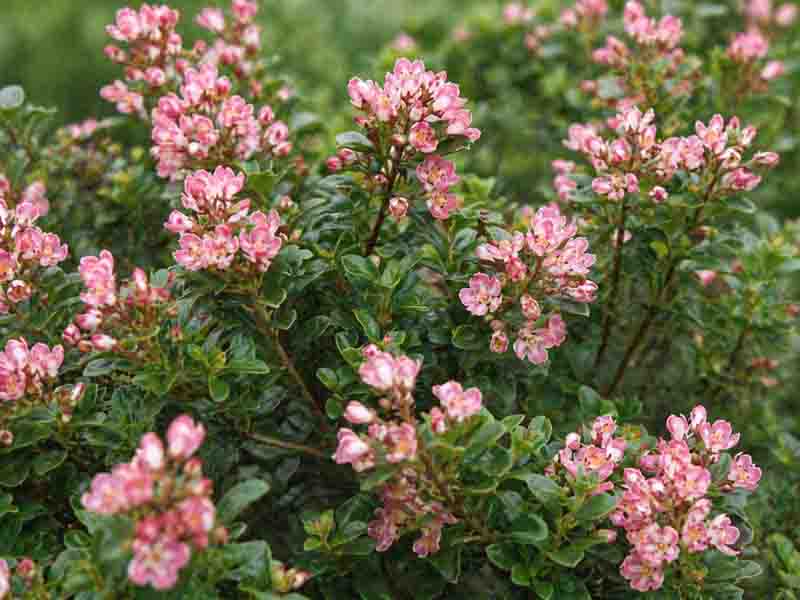
Highlight: Peach-pink flowers with pale centers brighten glossy dark green evergreen foliage in early and midsummer.
Design note: Best as a relaxed, lightly pruned shrub or informal flowering hedge where its arching habit and warm-toned flowers can show naturally.
| Botanical Name | Escallonia ‘Peach Blossom’ |
|---|---|
| Family | Escalloniaceae |
| Common Names | Peach Blossom Escallonia, Escallonia Peach Blossom |
| Native Range | Cultivated garden selection; the genus Escallonia is native mainly to South America |
| Native U.S. States | None. Escallonia ‘Peach Blossom’ is not native to the United States. |
| Plant Type | Evergreen broadleaf flowering shrub |
| Hardiness | Best in USDA Zones 8-9; may succeed in sheltered Zone 7 gardens |
| Height | Usually 6-8 ft. tall in favorable mild gardens; often smaller with regular pruning or in exposed sites |
| Spread | Usually 6-8 ft. wide, depending on climate, pruning, soil, and water |
| Sun Exposure | Full sun to part shade; full sun gives the best flowering |
| Soil | Fertile, well-drained soil; adaptable to loam, sand, chalk, and improved clay if drainage is good |
| Bloom Time | Early to midsummer; may continue longer in mild coastal climates |
| Flower Color | Peach-pink flowers with pale to white centers |
| Foliage | Evergreen, small, glossy, dark green leaves |
| Drought Tolerant | Moderately drought tolerant once established, especially in coastal climates |
| Deer Resistant | Some resistance, but not deer-proof; browsing varies by region |
| Attracts | Bees, hoverflies, and other small beneficial insects |
| Pet and Child Safety | Not commonly listed as toxic, but not edible; discourage pets and children from chewing ornamental plants |
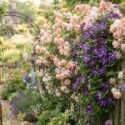
Escallonia ‘Peach Blossom’ is a cultivated evergreen shrub with a naturally bushy, arching habit. Its leaves are small, leathery, glossy, and dark green, giving the plant a refined, well-dressed look throughout the year. In early to midsummer, clusters of peach-pink flowers open along the stems, often showing pale centers that make the blooms appear fresh, luminous, and softly two-toned.
This shrub is valued because it solves real garden problems while still feeling beautiful. It can screen a boundary, soften a fence, frame a driveway, fill a sunny corner, or anchor a mixed border. In mild coastal gardens, it is especially useful because established plants tolerate wind and salt-laden air better than many broadleaf evergreens.
Good to know: Escallonia ‘Peach Blossom’ flowers best when allowed to keep some natural shape. Light clipping after bloom is usually better than repeated hard shearing.
‘Peach Blossom’ is a garden cultivar rather than a wild species. The genus Escallonia is native mainly to South America, including regions with mild climates, mountains, woodland edges, and coastal influence. That background helps explain why this shrub enjoys sun, shelter, free-draining soil, and relief from severe winter exposure.
Bloom usually begins in early summer and continues into midsummer. In mild coastal regions, flowering may be generous and long-lasting, especially when plants are not drought stressed. In cooler gardens, the display may be shorter and more concentrated. In hot inland sites, occasional deep watering during long dry periods helps preserve leaf quality and supports flowering.
The evergreen foliage is one of the main reasons to grow this plant. Even when the flowers have finished, Escallonia ‘Peach Blossom’ provides glossy texture, privacy, wind-filtering structure, and a polished green background. Its leaves are smaller and neater than those of many screening shrubs, so the plant feels elegant rather than heavy.
In favorable mild gardens, Escallonia ‘Peach Blossom’ can reach about 6-8 ft. tall and wide, though mature size depends on climate, exposure, soil, moisture, and pruning. In colder, windier, or drier gardens, it may stay smaller. For hedging, allow enough width for the plant to arch naturally. A squeezed, narrow hedge is harder to maintain and usually produces fewer flowers.
Escallonia ‘Peach Blossom’ is a proven garden performer and has received the prestigious Award of Garden Merit from the Royal Horticultural Society.
Escallonia ‘Peach Blossom’ is best suited to mild-winter gardens, especially USDA Zones 8-9. It may succeed in sheltered Zone 7 gardens, but it dislikes freezing winds, cold wet soil, and exposed frost pockets. In marginal climates, plant it near a wall, fence, hedge, or building where it receives sun and protection. Avoid late-season pruning, which can encourage soft new growth before winter.
The flowers attract bees, hoverflies, and other small beneficial insectss. Because the shrub is evergreen and dense, it can also provide light cover for birds in a layered garden.
Escallonia is not usually considered a favorite deer plant, but it should not be described as deer-proof. Browsing varies widely by region, season, drought pressure, and local deer populations. Young, tender growth is always more vulnerable than mature woody stems.
Once established, Escallonia ‘Peach Blossom’ has moderate drought tolerance, particularly in coastal climates. However, it looks and flowers best with occasional deep watering during long dry periods. It dislikes both extremes – permanently wet soil and severe dryness.
Escallonia is grown as an ornamental shrub, not an edible plant. It is not widely known as a major toxic garden shrub, but the safest approach is to keep children and pets from chewing ornamental plants. Wear gloves when pruning if your skin is sensitive, as with any woody shrub.
Escallonia ‘Peach Blossom’ is not generally known as an invasive shrub in typical garden use. Still, gardeners in mild coastal regions should follow local guidance, especially near natural areas. Dispose of prunings responsibly and monitor for unwanted seedlings, although named cultivars are usually maintained by cuttings rather than seed.
Water regularly during the first growing season so the plant develops a strong root system. Once established, Escallonia ‘Peach Blossom’ can cope with moderate dryness, especially near the coast, but it performs best with occasional deep watering in extended dry spells. Avoid shallow daily watering, which encourages weak surface roots.
Feed lightly in spring if growth is weak or the soil is poor. A compost mulch or balanced slow-release fertilizer is usually enough. Avoid heavy nitrogen feeding, which can encourage soft leafy growth at the expense of flowers and winter resilience.
Apply a 2-3 inch layer of organic mulch around the root zone to conserve moisture, reduce weeds, and buffer soil temperatures. Keep mulch a few inches away from the main stems so the crown stays dry and healthy.
Care tip:
The two most important requirements are sun and drainage. Most problems begin when Escallonia ‘Peach Blossom’ is shaded, waterlogged, overcrowded, or exposed to icy winter wind.
Prune Escallonia ‘Peach Blossom’ after flowering. Avoid hard pruning in early spring because it can remove developing flower buds and reduce the summer display. For a specimen shrub, remove dead, damaged, crossing, or awkward stems, then shorten long shoots to maintain a balanced outline.
For an informal flowering hedge, space plants about 3-4 ft. apart, depending on the desired density and local growth rate. A lightly clipped hedge can still flower well, but repeated tight shearing usually produces more leaves and fewer blooms. For the best effect, let the plant keep a gently rounded outline and trim after the main flush of flowers.
Escallonia ‘Peach Blossom’ can grow in a large container in mild climates. Use a sturdy pot with drainage holes and a free-draining potting mix. Water deeply when the top of the mix begins to dry. In colder climates, move containers to a sheltered wall, porch, or unheated greenhouse during hard freezes because roots in pots are more exposed than roots in the ground.
Named cultivars such as Escallonia ‘Peach Blossom’ are best propagated from semi-ripe cuttings, usually taken in summer. Cuttings preserve the exact flower color, growth habit, and foliage traits of the parent plant. Seed propagation is not recommended for maintaining a named cultivar because seedlings may vary.
This shrub struggles in deep shade, heavy wet soil, exposed frost pockets, and hot inland sites where drought stress is severe. It may also suffer when cold winter winds dry the leaves while the soil is frozen or saturated. If leaves brown after winter, wait until new growth begins before pruning; plants can often recover from moderate frost or wind damage.
| Task | Best Time |
|---|---|
| Planting | Spring, or early fall in mild climates |
| Flowering | Early to midsummer, depending on climate |
| Pruning | After the main flowering period |
| Feeding | Spring, only if needed |
| Winter Protection | Late fall to winter in marginal climates |
Poor flowering is usually caused by too much shade, hard spring pruning, drought stress, or excessive nitrogen. Grow the plant in more sun if possible, prune after flowering, and water deeply during long dry spells.
Escallonia leaf spot can cause dark spotting, yellowing, and premature leaf drop, especially in damp conditions with poor air movement. Improve spacing, avoid overhead watering, remove badly affected leaves, and prune lightly to increase airflow.
Brown leaves after winter often indicate cold wind damage or frost injury. Do not rush to cut the plant back. Wait until new spring growth shows which stems are alive, then prune back to healthy wood.
Root rot is most likely in poorly drained soil. If a plant wilts despite wet soil, drainage may be the problem. Replant on a slight mound, improve soil structure, or choose a better-drained location.
Healthy escallonias are generally easy to grow, but stressed plants may attract scale insects or other sap-feeding pests. Good light, drainage, spacing, and watering practices are the best long-term defenses.
Fast diagnostic: Few flowers usually mean shade or badly timed pruning. Spotted leaves often point to damp foliage and poor airflow. Winter browning usually means cold wind exposure.
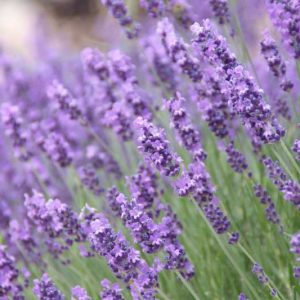
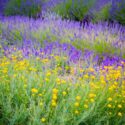
Use Escallonia ‘Peach Blossom’ where you want evergreen structure with warmth and softness. The peach-pink flowers are especially attractive with lavender-blue, violet, silver, cream, and soft yellow companions. It can make a front garden feel welcoming, a coastal boundary feel lush, or a sunny mixed border feel more permanent and layered.
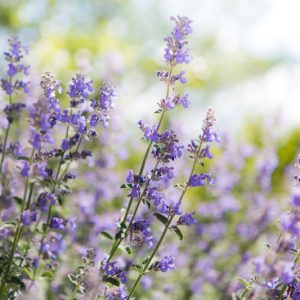
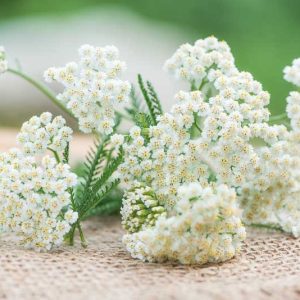
Good companions for Escallonia ‘Peach Blossom’ include Lavender (Lavandula angustifolia), Rosemary (Salvia rosmarinus), Catmint (Nepeta), Autumn Sage (Salvia greggii), Rockrose (Cistus), Teucrium fruticans, New Zealand Flax (Phormium), Blue Fescue (Festuca glauca), Sea Thrift (Armeria maritima), Yarrow (Achillea), and Hardy Geranium. These plants suit sunny to lightly shaded sites, well-drained soil, and low to moderate moisture once established.
Yes. Escallonia ‘Peach Blossom’ is an evergreen shrub in mild climates, keeping its glossy dark green leaves through the year unless damaged by severe cold or drying winter winds.
Escallonia ‘Peach Blossom’ usually grows about 6 to 8 feet tall and wide in favorable mild gardens, though it may stay smaller in exposed sites or with regular pruning.
It typically blooms in early to midsummer, with the best display in sunny, mild gardens where the plant has well-drained soil and is not drought stressed.
It tolerates light shade, but flowers best in full sun. Deep shade usually reduces blooming and can make growth thinner and less compact.
Yes. Escallonia ‘Peach Blossom’ makes an attractive informal flowering hedge or evergreen screen, especially in mild coastal gardens. Prune after flowering for the best bloom display.
Prune after the main flowering period. Avoid hard spring pruning because it can remove flower buds and reduce the summer display.
Leaf spotting is often linked to damp foliage, crowded growth, poor air circulation, or escallonia leaf spot disease. Improve airflow, avoid overhead watering, and remove badly affected leaves.
Updated: April 2026 • Reviewed by Gardenia Editors
| Hardiness |
7 - 9 |
|---|---|
| Heat Zones |
8 - 9 |
| Climate Zones | 4, 5, 6, 7, 8, 9, 14, 15, 16, 17, 18, 19, 20, 21, 22, 23, 24 |
| Plant Type | Shrubs |
| Plant Family | Escalloniaceae |
| Genus | Escallonia |
| Exposure | Full Sun, Partial Sun |
| Season of Interest | Spring (Early, Mid, Late), Summer (Early, Mid, Late), Fall, Winter |
| Height | 6' - 8' (180cm - 240cm) |
| Spread | 6' - 8' (180cm - 240cm) |
| Spacing | 72" - 96" (180cm - 240cm) |
| Maintenance | Low |
| Water Needs | Average |
| Soil Type | Chalk, Clay, Loam, Sand |
| Soil pH | Acid, Neutral, Alkaline |
| Soil Drainage | Moist but Well-Drained, Well-Drained |
| Characteristics | Showy, Evergreen, Plant of Merit |
| Tolerance | Drought, Salt, Dry Soil, Clay Soil |
| Attracts | Bees, Butterflies |
| Garden Uses | Beds And Borders, Hedges And Screens, Wall-Side Borders |
| Garden Styles | Butterfly Garden, City and Courtyard, Coastal Garden, Informal and Cottage, Pollinator Garden |


| Hardiness |
7 - 9 |
|---|---|
| Heat Zones |
8 - 9 |
| Climate Zones | 4, 5, 6, 7, 8, 9, 14, 15, 16, 17, 18, 19, 20, 21, 22, 23, 24 |
| Plant Type | Shrubs |
| Plant Family | Escalloniaceae |
| Genus | Escallonia |
| Exposure | Full Sun, Partial Sun |
| Season of Interest | Spring (Early, Mid, Late), Summer (Early, Mid, Late), Fall, Winter |
| Height | 6' - 8' (180cm - 240cm) |
| Spread | 6' - 8' (180cm - 240cm) |
| Spacing | 72" - 96" (180cm - 240cm) |
| Maintenance | Low |
| Water Needs | Average |
| Soil Type | Chalk, Clay, Loam, Sand |
| Soil pH | Acid, Neutral, Alkaline |
| Soil Drainage | Moist but Well-Drained, Well-Drained |
| Characteristics | Showy, Evergreen, Plant of Merit |
| Tolerance | Drought, Salt, Dry Soil, Clay Soil |
| Attracts | Bees, Butterflies |
| Garden Uses | Beds And Borders, Hedges And Screens, Wall-Side Borders |
| Garden Styles | Butterfly Garden, City and Courtyard, Coastal Garden, Informal and Cottage, Pollinator Garden |
How many Escallonia ‘Peach Blossom’ (Escallonia) do I need for my garden?
| Plant | Quantity | |
|---|---|---|
| Escallonia ‘Peach Blossom’ (Escallonia) | N/A | Buy Plants |
Create a membership account to save your garden designs and to view them on any device.
Becoming a contributing member of Gardenia is easy and can be done in just a few minutes. If you provide us with your name, email address and the payment of a modest $25 annual membership fee, you will become a full member, enabling you to design and save up to 25 of your garden design ideas.
Join now and start creating your dream garden!
Create a membership account to save your garden designs and to view them on any device.
Becoming a contributing member of Gardenia is easy and can be done in just a few minutes. If you provide us with your name, email address and the payment of a modest $25 annual membership fee, you will become a full member, enabling you to design and save up to 25 of your garden design ideas.
Join now and start creating your dream garden!