Evergreen Privacy Screen Ideas
Imagine stepping onto a secluded patio framed by lush evergreen foliage, enjoying a quiet garden bench hidden from neighboring views, or looking out at a beautiful green boundary instead of an ordinary fence. An evergreen privacy screen can transform the atmosphere of a garden, creating a sense of enclosure while providing structure throughout the seasons. But the most successful screens do more than block a view. They frame outdoor spaces, create attractive backdrops for flowers, and make even modest gardens feel more established. Explore inspiring evergreen privacy screen ideas, from elegant narrow hedges and flowering rhododendron borders to natural layered plantings that balance privacy with beauty.
Explore Beautiful Evergreen Privacy Screen Ideas for Small Backyards, Patios, and Front Gardens
The most effective privacy screens are designed around the views you want to block. Instead of surrounding an entire garden with tall shrubs, position evergreens where they provide useful screening while preserving sunlight, circulation, and attractive views.
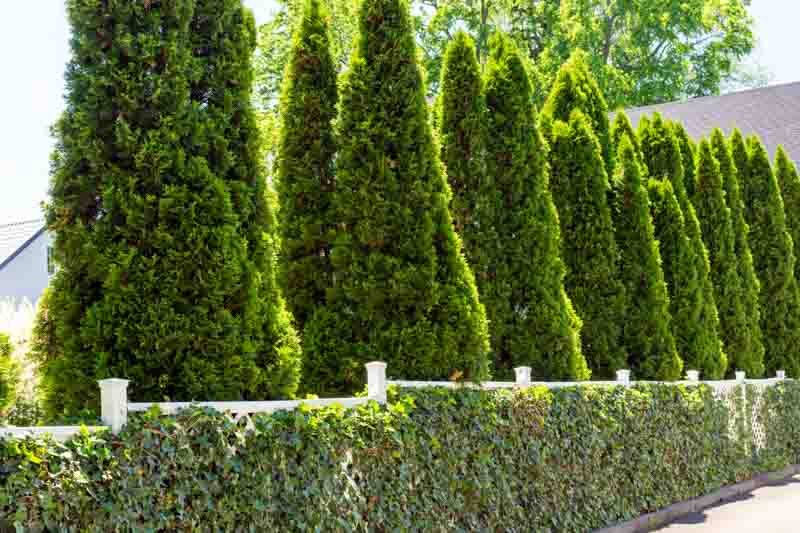
How do you create an elegant evergreen screen for a small backyard? Choose naturally upright shrubs whose mature widths suit the planting strip. Thuja occidentalis ‘Smaragd’, with its dense emerald foliage and relatively narrow habit, can create a beautiful background for a small lawn, patio, or perennial border.
What is a beautiful narrow privacy screen? A repeated planting of Thuja occidentalis North Pole can introduce vertical evergreen structure where a broad hedge would occupy too much space. Allow for the plants’ mature spread and avoid planting them so tightly that airflow and root growth are compromised.
How do you create privacy around a patio? Position the screen where it blocks the most intrusive view, rather than creating a continuous wall on every side. A grouping of upright evergreens behind the seating area can provide privacy while leaving another side open to attractive garden planting.
Can evergreen shrubs replace a garden fence? Sometimes. A dense, well-established hedge can provide visual screening and soften a boundary, although it may not replace a fence where physical security, pet containment, or legal boundary requirements are important.
How do you design a modern evergreen privacy screen? Choose plants with strong natural forms and a restrained color palette. A row of upright hollies, yews, or suitable arborvitae can create a clean architectural backdrop. Keep companion planting simple, with repeated ornamental grasses or low flowering perennials that share the site conditions.
What is a beautiful formal evergreen hedge? Taxus x media ‘Hicksii’ forms a dense evergreen structure that can be maintained as a clipped hedge. It works beautifully in traditional gardens where a neat outline suits the architecture. Remember that yew is highly poisonous if ingested.
How do you soften an unattractive boundary? Plant an evergreen screen in front of the fence, leaving enough access for maintenance. Use suitable lower-growing plants in front to create a gradual transition between the vertical foliage and the garden.
Can evergreen screens make a front yard more attractive? Absolutely. Carefully positioned evergreen shrubs can reduce exposure to the street, frame a front entrance, and provide year-round structure. Avoid allowing the planting to obscure windows, doorways, or important visibility near driveways and roads.
How do you create privacy without losing too much sunlight? Consider the orientation and mature height of the screen. A strategically placed grouping may block a neighboring view more effectively than a continuous tall hedge that shades the entire garden.
Gardenia’s design tip: Think of an evergreen screen as part of the garden’s architecture. The most beautiful privacy plantings provide enclosure without making the outdoor space feel dark, narrow, or overcrowded.
Explore Gardenia’s Hedges and Screens Garden Ideas, Best Plants for Garden Privacy, and Evergreen Trees for Year-Round Screening.
Discover Flowering Evergreen Privacy Screen Ideas with Rhododendrons, Hollies, and Glossy Shrubs
Evergreen privacy screens don’t have to be solid walls of conifers. Broadleaf evergreen shrubs can provide dense green foliage throughout the year while introducing seasonal flowers, beautiful leaf textures, and a more relaxed garden atmosphere.
How do you create a flowering evergreen privacy screen? Choose large-growing evergreen shrubs whose foliage provides sufficient coverage even when they are not blooming. Rhododendrons are particularly attractive in suitable acidic soils, combining substantial glossy leaves with spectacular spring flowers.
What is a beautiful rhododendron privacy screen? Combine large-growing evergreen rhododendrons such as ‘English Roseum’ and ‘Roseum Elegans’ in a generous woodland-style planting. Their dark foliage provides structure, while pink and lavender-toned spring flowers create a spectacular seasonal display. Explore Gardenia’s Rhododendron Privacy Screen: A Flowering Evergreen Border.
Can rhododendrons provide privacy in partial shade? Yes, when suitable varieties are selected and their soil and moisture requirements are met. Many rhododendrons appreciate partial shade, acidic soil, and good drainage. They can create an especially beautiful screen in woodland or traditional gardens.
What is a beautiful Mediterranean-style evergreen screen? Viburnum tinus (Laurustinus) has handsome dark green foliage and clusters of pale flowers that bring interest during cooler months. In suitable mild climates, it can create an attractive informal boundary with a softer appearance than conifers. Check regional invasive-plant guidance before using it.
How do you create an elegant glossy-leaved screen? Prunus laurocerasus (Cherry Laurel) creates a substantial green backdrop with large, glossy leaves. Its vigorous growth makes it useful for spacious boundaries but potentially overwhelming in narrow gardens. The plant is toxic if ingested and invasive in some regions.
Can evergreen holly create a beautiful formal screen? Yes. Ilex crenata (Japanese Holly) has small, glossy leaves that respond well to shaping. It can be attractive in formal gardens, but the chosen cultivar must reach the desired screening height.
How do you create a woodland screen with seasonal interest? Combine appropriately sized evergreen rhododendrons with compatible shade-loving plants at their base. Hostas, ferns, and other woodland perennials can introduce contrasting foliage, provided the planting has enough room and the same soil and moisture requirements.
Can flowering evergreens attract wildlife? Some provide useful shelter and floral resources, depending on the species and region. Native or regionally appropriate evergreen shrubs are often valuable choices for wildlife-friendly landscapes.
Should flowering evergreen shrubs be clipped tightly? Usually not if their main appeal is their natural shape and flowers. Frequent tight clipping can remove flowering shoots and reduce the softness of an informal screen. Choose a plant whose mature form fits the design.
What is the best way to combine privacy with flowers? Let the evergreen shrubs provide the permanent screen and use flowers as a seasonal bonus. A beautiful display is more successful when privacy remains effective after flowering has finished.
Gardenia’s flowering screen advice: Use generous, naturally shaped evergreen shrubs to create privacy that feels like a garden border rather than a barrier. Their foliage should provide the structure, while seasonal flowers add charm and color.
Discover Gardenia’s Flowering Rhododendron Privacy Garden, Best Rhododendrons for Privacy, and Rhododendron Companion Plants.
Learn How to Create Natural Layered Evergreen Screens with Year-Round Beauty and Privacy
A layered evergreen screen can be more attractive than a uniform row of identical shrubs. Combining compatible plants with different heights, leaf textures, and natural shapes creates depth while maintaining the green coverage needed for privacy.
How do you create a natural evergreen privacy screen? Begin with a few reliable evergreen shrubs that reach the desired screening height. Add compatible lower-growing evergreens or perennial planting in front to soften their bases. Repeat the main shrubs in relaxed groups so the screen looks intentional rather than random.
Can you combine conifers with broadleaf evergreens? Absolutely. The fine-textured foliage of arborvitae or yew can contrast beautifully with broadleaf evergreen shrubs. Choose plants with compatible soil, moisture, and sunlight requirements, and allow sufficient width for their mature growth.
How do you design an informal evergreen boundary? Avoid making every plant identical. Use a limited selection of compatible evergreens with complementary mature sizes and let their natural forms overlap gently. This can create a softer appearance than a tightly clipped hedge.
What is a beautiful evergreen screen for a woodland garden? Large-growing rhododendrons provide broadleaf evergreen structure and spring flowers, while lower shade-tolerant plants introduce texture. The resulting planting can feel lush and natural without relying on formal clipping.
Can evergreen screens create a backdrop for colorful flower borders? Yes. Dark green yews, hollies, or suitable arborvitae provide a beautiful contrast for flowering perennials and shrubs. Position the lower planting far enough forward that it receives adequate sunlight and does not compete excessively with the screen’s roots.
How do you create a wildlife-friendly evergreen boundary? Select regionally appropriate evergreen trees and shrubs that provide shelter and nesting opportunities. Add compatible flowering plants and shrubs that offer seasonal food resources, without compromising the screen’s main evergreen structure.
How do you design privacy for a narrow garden? Use naturally upright evergreens where they suit the climate and soil. Keep the screen focused on the necessary sightline and avoid planting broad, vigorous species that will eventually block paths or crowd nearby buildings.
Can a layered screen reduce wind? A suitably designed planting can filter wind and create a more sheltered microclimate, although performance depends on height, porosity, layout, and exposure. Very dense, abrupt barriers may create turbulence, so a layered windbreak often requires more planning than a simple privacy hedge.
How do you include winter interest in an evergreen screen? Combine contrasting foliage shades, natural silhouettes, and suitably hardy shrubs. Dark green yews, emerald arborvitae, and broadleaf evergreens can provide visual variety even during the coldest months.
What is the best evergreen screen for a contemporary garden? A simple, repeated planting of naturally upright evergreens often works particularly well. Combine the screen with a restrained selection of compatible grasses or low perennials to create a clean design without excessive symmetry.
What is the biggest mistake when designing a layered evergreen screen? Planting too many vigorous shrubs in a narrow space. Each species needs room for its mature growth, roots, and maintenance. Overcrowding eventually creates bare branches, competition, and an unattractive tangle of foliage.
How can you create an attractive privacy screen without an enormous budget? Start with the most important sightline and plant the necessary evergreen structure first. Smaller healthy plants may take longer to provide coverage but can be more affordable. Add complementary lower planting gradually as the screen establishes.
Gardenia’s final design advice: The most beautiful evergreen privacy screens combine function with thoughtful planting. Choose plants that will remain dense and manageable, give them room to grow, and introduce complementary foliage or flowers where space permits. A living screen should make the garden feel more inviting, not merely hidden from view.
Explore Gardenia’s Hedges and Screens Garden Ideas, Low-Maintenance Screening Shrubs, and Choosing the Best Privacy Plants.