Is your camellia leafy but flowerless, dropping buds, turning brown, or refusing to open? Diagnose ten common causes, from incorrect pruning and summer drought to frost, transplant shock, mites, and natural bud thinning. Follow practical fixes that protect developing buds and help restore a dependable winter or spring display.
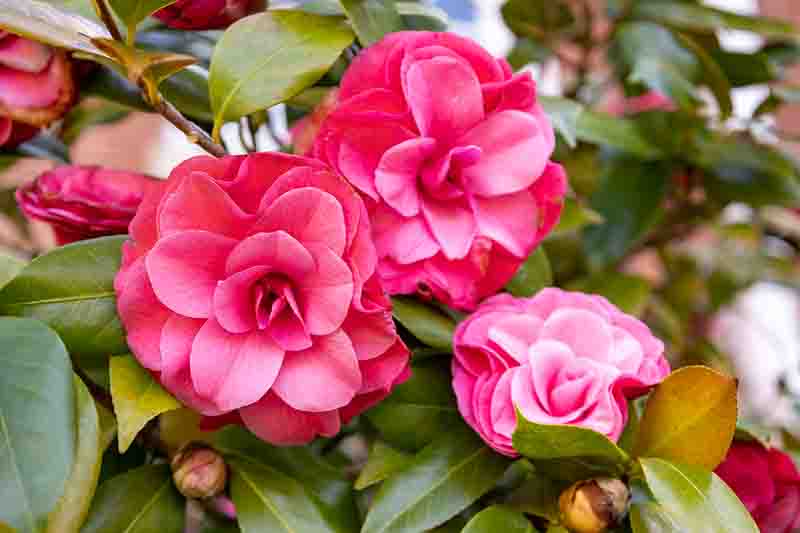


A camellia covered in glossy green leaves but producing few or no flowers can be frustrating. Perhaps no flower buds developed. Maybe the buds formed and then dropped, turned brown, remained tightly closed, or opened only halfway.
Fortunately, a camellia that is not flowering usually provides useful clues. Deep shade, pruning at the wrong time, excessive nitrogen, summer drought, frost, transplant shock, and damaged flower buds can all reduce blooming. Limited bud drop, however, may be completely normal because camellias sometimes produce more buds than they can support.
Camellias differ from shrubs that flower exclusively on new spring growth. Many winter- and spring-flowering camellias develop their flower buds on established stems during the previous growing season. Bud formation commonly begins during summer, so growing conditions many months before flowering can determine the quality of the eventual display.
Use the symptoms below to determine why your camellia is not blooming, why its buds are dropping, or why the flowers are failing to open.
Fast diagnosis: If no buds formed, investigate maturity, pruning, shade, and fertilizer. If buds formed but failed, focus on moisture, frost exposure, transplant stress, and the condition of the individual buds.
| What You See | Likely Explanation |
|---|---|
| No flower buds | Immature plant, excessive shade, too much nitrogen, or incorrect pruning time |
| Buds form but fall | Moisture stress, temperature swings, frost, transplant shock, or natural bud thinning |
| Buds turn brown before opening | Frost injury, drought, irregular moisture, poor drainage, root stress, or bud mites |
| Flowers open only partially | Cold injury, dried or damaged buds, pests, or unfavorable weather |
| Flowers open, then develop spreading brown patches | Camellia flower blight, gray mold, frost, or persistent wet weather |
Young camellias often need time to establish before producing an abundant floral display. A nursery plant may arrive with mature flower buds and bloom during its first season, then flower lightly the following year while its roots adapt to the garden.
Seed-grown camellias can take considerably longer to reach flowering maturity than named cultivars propagated from cuttings or grafts. Even vegetatively propagated plants may bloom modestly while young, especially when growth is slow or the plant was recently installed.
Check that the plant is producing healthy leaves and steady growth. Maintain consistent moisture, protect the shallow roots with mulch, and avoid heavy fertilizer. A healthy young camellia often needs patience rather than additional feeding.
Before assuming a problem: A young plant that is correctly planted and gradually increasing in size may simply not be mature enough for a heavy bloom display.
Incorrect pruning time is one of the easiest ways to remove an entire season of camellia flowers. Many winter- and spring-flowering cultivars carry their buds on growth formed during the previous season. Pruning in late summer, fall, winter, or shortly before flowering can remove those buds.
Young flower buds may be difficult to recognize when they first develop. Repeated shearing is particularly risky because it removes the outer branch tips where many buds are carried.
Prune promptly after the flowers fade, before the next season’s flower buds begin developing. Remove dead, damaged, crossing, or badly placed branches, but avoid routine shearing. If flower buds are already visible, postpone nonessential shaping until after the next bloom.
Camellias generally need little pruning. Complete necessary work soon after flowering and preserve the plant’s naturally attractive framework.
Camellias are often described as shade-loving shrubs, but deep shade can greatly reduce flowering. A plant beneath a dense evergreen canopy or against a permanently dark wall may survive and maintain handsome foliage while forming few flower buds.
Japanese camellias and many Williamsii hybrids generally perform well in partial shade or filtered light. Sasanqua cultivars usually tolerate more direct sun. The ideal exposure still depends on climate, because a site suitable in a cool coastal garden may be too hot in a warmer inland region.
Observe the site during the growing season. If overhead plants create dense shade, selectively thinning their canopy may improve light without exposing the camellia to harsh afternoon sun. A young camellia in a permanently dark location may need to be moved during cool weather.
For help matching different groups to your conditions, see Camellia Types: Japonica vs Sasanqua and More.
A camellia with long, soft shoots and unusually lush, dark-green foliage but few buds may be receiving excessive nitrogen. Nitrogen encourages leafy growth and can interfere with timely flower-bud development. Late feeding may also stimulate tender shoots that are vulnerable to cold.
The plant does not need to be fertilized directly for this to happen. Lawn fertilizer, products used on nearby shrubs, and nutrient-rich runoff can all reach the camellia’s root zone.
Stop fertilizing a vigorous, dark-green camellia. Keep high-nitrogen lawn fertilizer away from its roots, and do not rely on high-phosphorus bloom boosters. Apply nutrients only when plant symptoms or a soil test indicate a genuine deficiency.
Read the foliage: Lush, rapidly extending shoots with no buds may suggest excess nutrition. Pale leaves, sparse growth, and dieback point instead toward root stress, unsuitable soil pH, poor drainage, or a true nutrient deficiency.
Summer drought is one of the most important and frequently overlooked reasons for camellia bud drop. Many spring-flowering camellias begin developing the following season’s flower buds during summer. Dry soil at this stage can prevent buds from forming properly or cause them to abort long before the flowering season.
Camellias planted beneath roof overhangs may miss natural rainfall. Container plants dry out quickly, while nearby trees and large shrubs can compete aggressively for moisture.
Water deeply during prolonged dry periods in summer and early fall. Keep the soil evenly moist but never saturated. Apply 2-3 inches (5-7.5 cm) of organic mulch over the root zone, keeping it several inches away from the trunk.
Deep, occasional irrigation is more useful than frequent shallow sprinkling. Check the soil beneath the mulch rather than assuming that light rain has reached the root system.
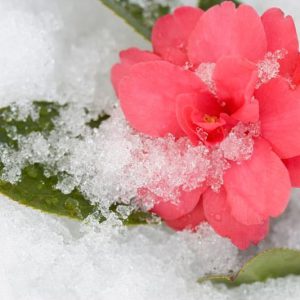
A camellia shrub may survive temperatures that damage its exposed buds and flowers. After a hard freeze, buds may turn brown, stop enlarging, remain tightly closed, or fall. Partially opened flowers may develop brown edges or collapse.
The severity of the damage depends on cultivar hardiness, bud maturity, freeze duration, wind exposure, and the speed at which frozen tissue thaws. A later-flowering cultivar may escape a freeze that destroys flowers on an early selection.
Choose cultivars with proven hardiness for your region and avoid low frost pockets. When the soil is dry, water before severe cold, maintain mulch over the roots, and protect containers or especially valuable shrubs during exceptional freezes.
Gardeners near the colder edge of the camellia-growing range can explore Gardenia’s guide to cold-hardy camellias.
Morning sun is not normally harmful to camellias. The problem occurs when direct sunlight strikes already frozen buds and flowers, causing them to thaw rapidly. Delicate tissue may brown or collapse even though the foliage and stems remain healthy.
This issue is most noticeable on east-facing walls and exposed sites that receive strong sunlight immediately after a frosty night.
Position frost-prone camellias where cold flowers can thaw gradually. Shelter from cold wind and direct early-morning sun is especially valuable for early-flowering cultivars. Filtered light or a protected northern or northwestern exposure may help.
Important distinction: Sun does not cause the original freeze. It can worsen damage by rapidly thawing tissue that is already frozen.
A newly planted or recently moved camellia may shed its flower buds while adapting to a disturbed root system. Camellias are shallow-rooted and relatively slow to establish. Moving a mature plant, damaging roots, planting too deeply, or allowing the original root ball to dry can intensify stress.
A recently transplanted shrub may carry more flower buds than its reduced root system can support. Dropping those buds allows the plant to conserve moisture and direct resources toward root recovery.
Keep the upper surface of the root ball at or slightly above the surrounding soil level. Water consistently during establishment, mulch without covering the trunk, and avoid heavy fertilizer or unnecessary pruning. Allow at least one full growing season for recovery.
For complete planting instructions, see How to Plant, Care for, and Grow Camellias.
Pests are much less common causes of camellia bloom failure than drought, pruning, frost, or temperature stress. They should be considered when individual buds are distorted, scarred, unusually slow to develop, or repeatedly unable to open.
Camellia bud mites are microscopic pests that feed in and around developing buds. Affected buds may develop slowly, brown at the tips, fall prematurely, or fail to open. Because the mites are extremely small, expert examination may be needed for confirmation.
Thrips are a less common possibility. These slender insects may hide within tight buds and flowers, where their feeding scars petals and produces pale, silvery, or brown streaks. Damaged flowers may become distorted or open poorly.
Inspect affected buds with a hand lens and compare them with healthy ones. Remove badly damaged buds, flowers, and fallen debris. Because pest injury can resemble frost or drought damage, seek confirmation from a local extension service or plant clinic before applying pesticides. Follow every product label and avoid spraying open flowers while pollinators are active.
Not every fallen camellia bud indicates a problem. Healthy plants sometimes produce more flower buds than they can support, particularly vigorous cultivars and selections with large or double blooms. The shrub may naturally shed part of the crop so the remaining flowers can develop successfully.
Natural thinning generally affects only some buds. Many others remain firm, continue swelling, and open normally. Bud drop is more concerning when nearly every bud falls or when it occurs alongside wilting, yellowing leaves, weak growth, persistently wet soil, or widespread browning.
Do not treat limited natural bud thinning. Maintain steady moisture and observe the remaining buds. Investigate further when the loss is severe, occurs repeatedly, or is accompanied by additional symptoms.
Unopened buds that turn brown are commonly associated with frost, drought, root stress, poor drainage, or bud mites. Flowers that begin opening normally and then develop rapidly expanding brown patches point toward a different problem.
Camellia flower blight causes tan or brown spots on petals that enlarge rapidly until much of the bloom is affected. Gray mold can also damage open flowers during cool, damp weather. Neither disease normally explains why no flower buds formed.
Remove affected flowers promptly and collect fallen blooms from beneath the plant. Do not compost diseased petals. Replace contaminated surface mulch when necessary and keep old flower debris from accumulating beneath the shrub.
Combine a suitable cultivar with bright filtered light, acidic well-drained soil, steady summer moisture, restrained feeding, and pruning promptly after bloom.
Many camellia flowering problems begin months before the flowers are expected. Protect the buds during summer and fall, and the display is far more likely to follow in winter or spring.
If your camellia has no flower buds, begin with plant maturity, pruning time, shade, and fertilizer. If buds formed and then dropped, investigate summer drought, irregular watering, frost, transplant stress, and natural thinning. Unopened brown buds suggest environmental or pest damage, while rapidly browning open flowers may indicate disease.
Protect the future flower crop long before bloom. Water during summer dry spells, prune only after flowering, avoid excessive nitrogen, and choose a sheltered site suited to the cultivar. Once the underlying problem is corrected, a healthy camellia can return to dependable flowering for many years.
A leafy camellia with no flowers may be too young, growing in deep shade, receiving excessive nitrogen, or pruned after its flower buds began developing. Check the plant’s maturity, light exposure, feeding history, and pruning time.
Camellia bud drop is commonly caused by summer drought, irregular watering, temperature swings, frost, or transplant stress. Limited bud thinning may also be natural when the plant sets more buds than it can support.
Unopened camellia buds may turn brown because of frost, drought, irregular watering, poor drainage, root stress, or bud mites. Flowers that open and then develop spreading brown patches may have flower blight or gray mold.
Camellia buds may remain closed after cold injury, drought stress, irregular watering, or mite damage. Inspect the buds for browning, scarring, distortion, or unusually slow development before choosing a treatment.
Prune promptly after the camellia finishes flowering, before the next season’s buds begin developing. Late-summer, fall, winter, or pre-bloom pruning can remove flower buds carried on the previous season’s growth.
Yes. Many spring-flowering camellias develop flower buds during summer. Dry soil during this important stage can prevent buds from forming properly or cause them to abort before the flowering season.
Yes. Camellias may produce more flower buds than they can support and naturally shed part of the crop. The loss is usually harmless when many firm, healthy buds remain and continue developing.
Morning sun is not normally harmful, but direct sunlight can rapidly thaw already frozen buds and flowers after a frost. This rapid thawing may turn petals brown or destroy flowers, so frost-prone plants benefit from shelter from early-morning sun.
Updated: July 2026 • Reviewed by Gardenia Editors
| Hardiness |
6 - 9 |
|---|---|
| Heat Zones |
7 - 8 |
| Climate Zones | 4, 5, 6, 7, 8, 9, 12, 14, 15, 16, 17, 18, 19, 20, 21, 22, 23, 24 |
| Plant Type | Shrubs |
| Plant Family | Theaceae |
| Genus | Camellia |
| Exposure | Full Sun, Partial Sun, Shade |
| Season of Interest | Spring (Early, Mid), Fall, Winter |
| Maintenance | Low |
| Water Needs | Average |
| Soil Type | Clay, Loam, Sand |
| Soil pH | Acid, Neutral |
| Soil Drainage | Moist but Well-Drained, Well-Drained |
| Characteristics | Cut Flowers, Fragrant, Plant of Merit, Showy |
| Landscaping Ideas | Beds And Borders, Hedges And Screens, Patio And Containers, Wall-Side Borders |
| Garden Styles | City and Courtyard, Informal and Cottage, Japanese Garden, Traditional Garden |
| Hardiness |
6 - 9 |
|---|---|
| Heat Zones |
7 - 8 |
| Climate Zones | 4, 5, 6, 7, 8, 9, 12, 14, 15, 16, 17, 18, 19, 20, 21, 22, 23, 24 |
| Plant Type | Shrubs |
| Plant Family | Theaceae |
| Genus | Camellia |
| Exposure | Full Sun, Partial Sun, Shade |
| Season of Interest | Spring (Early, Mid), Fall, Winter |
| Maintenance | Low |
| Water Needs | Average |
| Soil Type | Clay, Loam, Sand |
| Soil pH | Acid, Neutral |
| Soil Drainage | Moist but Well-Drained, Well-Drained |
| Characteristics | Cut Flowers, Fragrant, Plant of Merit, Showy |
| Landscaping Ideas | Beds And Borders, Hedges And Screens, Patio And Containers, Wall-Side Borders |
| Garden Styles | City and Courtyard, Informal and Cottage, Japanese Garden, Traditional Garden |
Create a membership account to save your garden designs and to view them on any device.
Becoming a contributing member of Gardenia is easy and can be done in just a few minutes. If you provide us with your name, email address and the payment of a modest $25 annual membership fee, you will become a full member, enabling you to design and save up to 25 of your garden design ideas.
Join now and start creating your dream garden!
Create a membership account to save your garden designs and to view them on any device.
Becoming a contributing member of Gardenia is easy and can be done in just a few minutes. If you provide us with your name, email address and the payment of a modest $25 annual membership fee, you will become a full member, enabling you to design and save up to 25 of your garden design ideas.
Join now and start creating your dream garden!