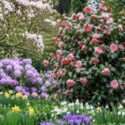
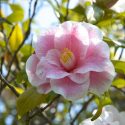
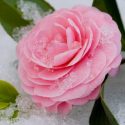
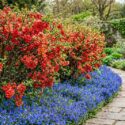
Should you grow a japonica, sasanqua, Williamsii hybrid, or fragrant camellia? Discover how the major camellia types differ in flower size, bloom season, growth rate, sun tolerance, hardiness, and landscape use. This expert guide makes it easy to choose the best camellia for your garden.
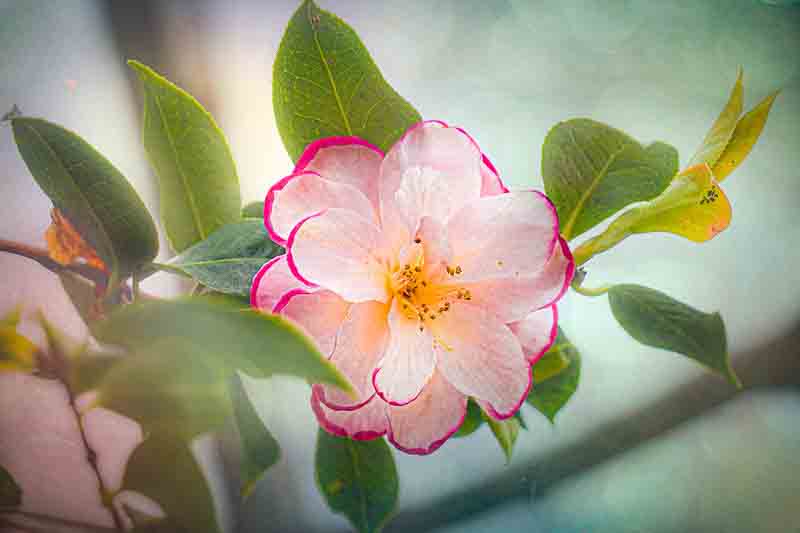


Few evergreen shrubs can rival a camellia in bloom. Its glossy foliage brings year-round structure, while its flowers can brighten the garden from fall through spring. Yet choosing a camellia is not always straightforward. What is the difference between Camellia japonica and Camellia sasanqua? Where do Williamsii, Hiemalis, Vernalis, Reticulata, fragrant hybrids, and tea camellias fit? And which group is best suited to a hedge, container, shaded border, sunny wall, or winter garden?
The two most widely grown ornamental camellia types are Camellia japonica and Camellia sasanqua. Japonicas are generally selected for their larger winter and spring flowers, dense evergreen growth, and preference for partial shade. Sasanquas flower earlier, often grow faster, tolerate more direct sun, and adapt particularly well to hedges, screens, espaliers, and mixed borders.
Other camellia groups add different qualities. Williamsii hybrids are prized for generous flowering and graceful growth. Hiemalis and Vernalis camellias help bridge the early and midseason display. Reticulata hybrids offer exceptionally large flowers. Lutchuensis-derived hybrids introduce fragrance, while Camellia sinensis provides the leaves used to make tea.
This guide explains the major camellia species and hybrid groups, how they differ, when they bloom, and how their natural habits influence their best uses in the garden.
The simplest distinction: Japonicas are prized primarily as flowering specimens, while sasanquas are often selected for both their flowers and their ability to provide landscape structure.
| Feature | Camellia japonica | Camellia sasanqua |
|---|---|---|
| Main bloom season | Winter through spring | Fall through early winter |
| Flowers | Usually larger, heavier, and more formal | Usually smaller, lighter, and produced abundantly |
| Growth habit | Dense, upright, and substantial | Open, graceful, spreading, or upright |
| Growth rate | Usually slow to moderate | Often faster than japonica, but cultivar-dependent |
| Leaves | Larger, broader, and coarser | Smaller and more finely textured |
| Sun tolerance | Usually prefers partial shade | Generally tolerates more direct sun once established |
| Best uses | Specimens, woodland gardens, foundations, and containers | Hedges, screens, espaliers, sunny borders, and slopes |
| Typical fragrance | Usually little or none | Some cultivars are lightly scented |
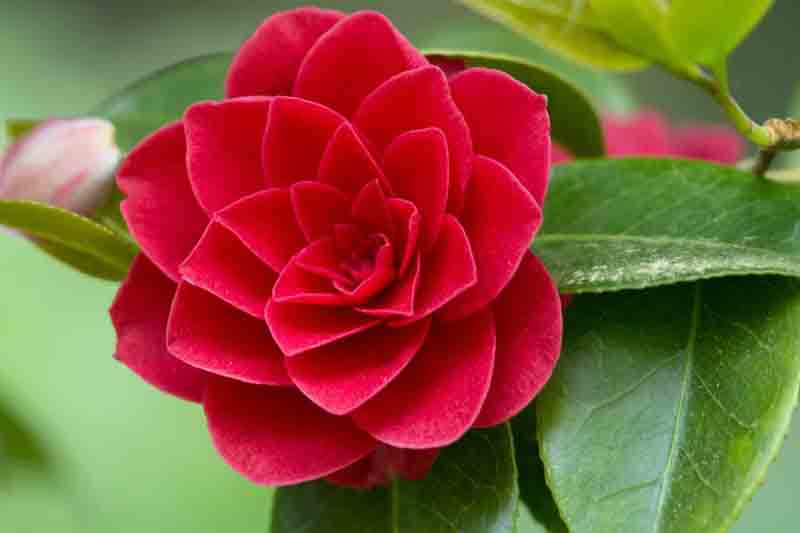
Japanese camellia, or Camellia japonica, is the classic camellia of old gardens, woodland estates, and traditional Southern landscapes. Native to eastern Asia, it develops into a substantial evergreen shrub or small tree with broad, glossy, dark green leaves and a naturally dense framework.
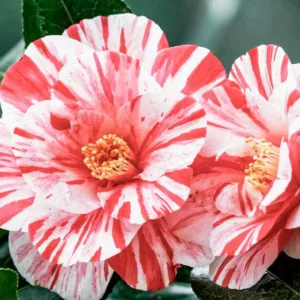
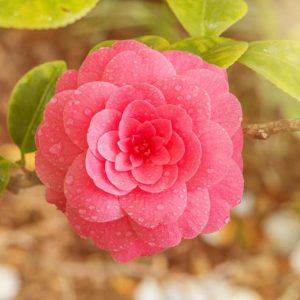
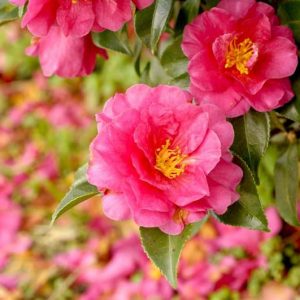
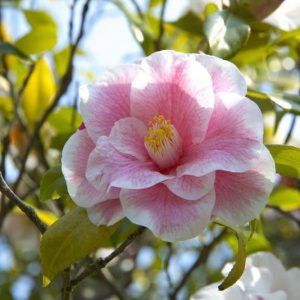
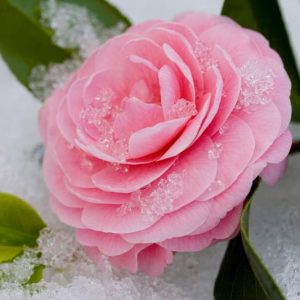
Japanese camellias are celebrated for their large flowers. Depending on the cultivar, blooms may be single, semi-double, anemone-form, peony-form, rose-form double, or formal double. Colors range from pure white and shell pink to rose, crimson, and deep red. Many cultivars also display stripes, mottling, contrasting edges, or irregular splashes of color.
Most japonicas flower during the middle and later parts of the camellia season, broadly corresponding to winter and spring in the Northern Hemisphere. Exact timing varies with cultivar, latitude, elevation, and winter temperatures. A variety opening in January in a mild coastal garden may not flower until March in a cooler inland location.
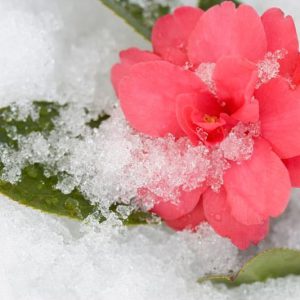
Japonicas generally benefit from protection against intense afternoon sun, cold drying winds, and sudden temperature changes. Their heavy flowers may be blemished by hard frost, heavy rain, or persistent wind, so a sheltered location with morning sun or filtered light is ideal in many climates.
Popular examples include ‘Alba Plena’, ‘Debutante’, ‘Apple Blossom’, and ‘Korean Fire’.
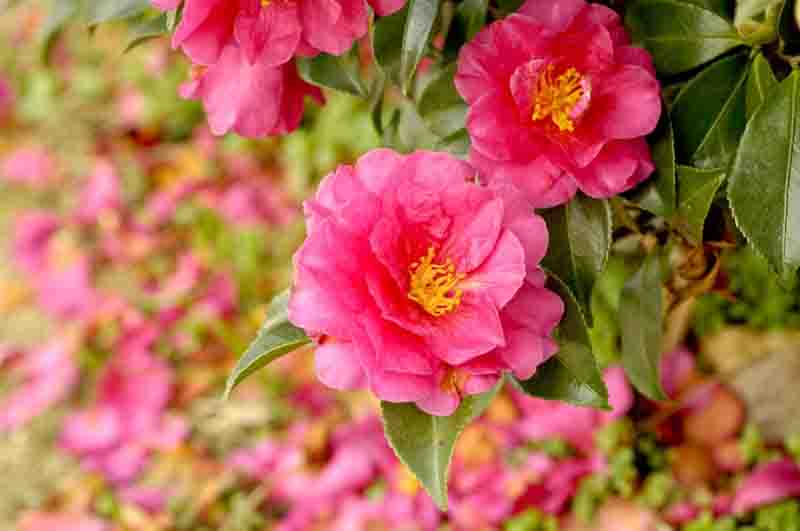
Sasanqua camellia, or Camellia sasanqua, usually begins the ornamental camellia season. Depending on the cultivar and local climate, flowers may open from early fall through midwinter, bringing color to the garden before most japonicas have started blooming.
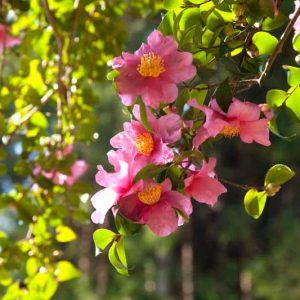
Sasanquas generally have smaller leaves, lighter flowers, and a looser, more graceful habit than japonicas. Individual blooms may be less imposing, but they are often produced in remarkable abundance. Their petals frequently fall separately as the flowers fade, creating a colorful carpet beneath the plant.
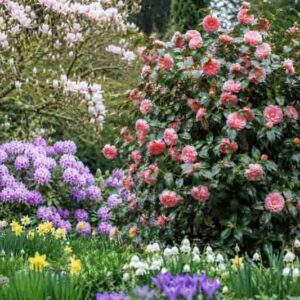
Many popular sasanqua cultivars grow faster than typical japonicas and also tolerate more direct sun, provided their roots remain cool and evenly moist. Their flexible branches and relatively open growth make them especially useful for hedges, screens, espaliers, wall training, informal borders, slopes, and small flowering trees.
Excellent choices include ‘Setsugekka’, ‘Plantation Pink’, ‘Shishigashira’, and ‘Mine-No-Yuki’.
Design insight: Japonicas tend to command attention as individual flowering specimens. Sasanquas integrate more easily into hedges, screens, layered borders, walls, and other structural plantings.
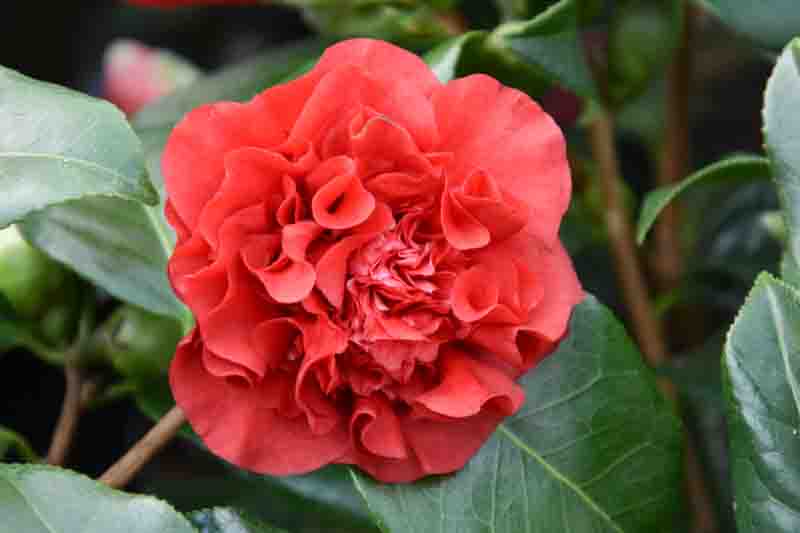
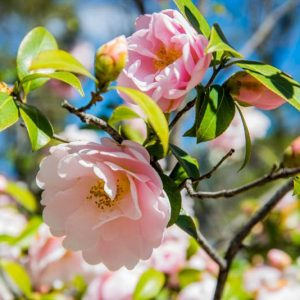
Camellia x williamsii hybrids originated from crosses between Camellia japonica and Camellia saluenensis. They combine attractive evergreen foliage with generous flower production and often display a more graceful, less rigid habit than traditional japonicas.
Williamsii camellias generally flower from midwinter into spring, often overlapping with the main japonica season. Some cultivars begin in midseason, while others continue well into the later camellia season.
Well-known selections include ‘Debbie’, ‘Les Jury’, and ‘E.G. Waterhouse’. Williamsii hybrids are excellent choices for gardeners seeking a refined, floriferous camellia that is distinct from both classic japonicas and fall-blooming sasanquas.
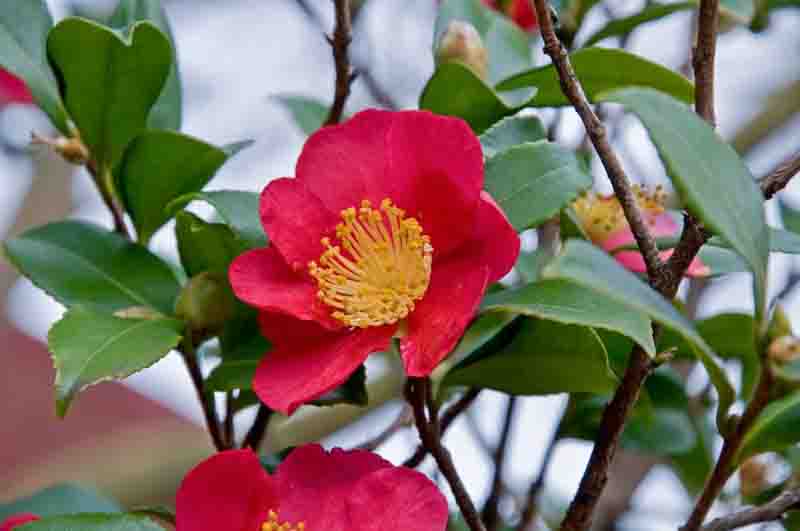
Camellia hiemalis is an accepted camellia species closely related to the sasanqua group. Plants and cultivars associated with it are generally valued for abundant fall or early winter flowers and compact, spreading, or upright growth. Individual cultivar classifications and parentage may vary among horticultural references and registries.
‘Chansonette’, with lavender-pink formal double flowers and spreading growth, is one of the best-known examples.
Camellias commonly grouped as Camellia x vernalis are generally associated with crosses between Camellia sasanqua and Camellia japonica. Their foliage, flowers, and flowering season often appear intermediate between those of their parents. Many bloom after the earliest sasanquas but before or alongside early japonicas.
‘Yuletide’ is one of the most recognizable Vernalis-type camellias. Its vivid red single flowers, prominent golden stamens, and upright habit make it especially valuable for fall and winter color.
Calendar dates vary considerably with cultivar, latitude, elevation, and winter temperatures. Early-, mid-, and late-season classifications are more reliable for comparison than assigning every camellia to a fixed month.
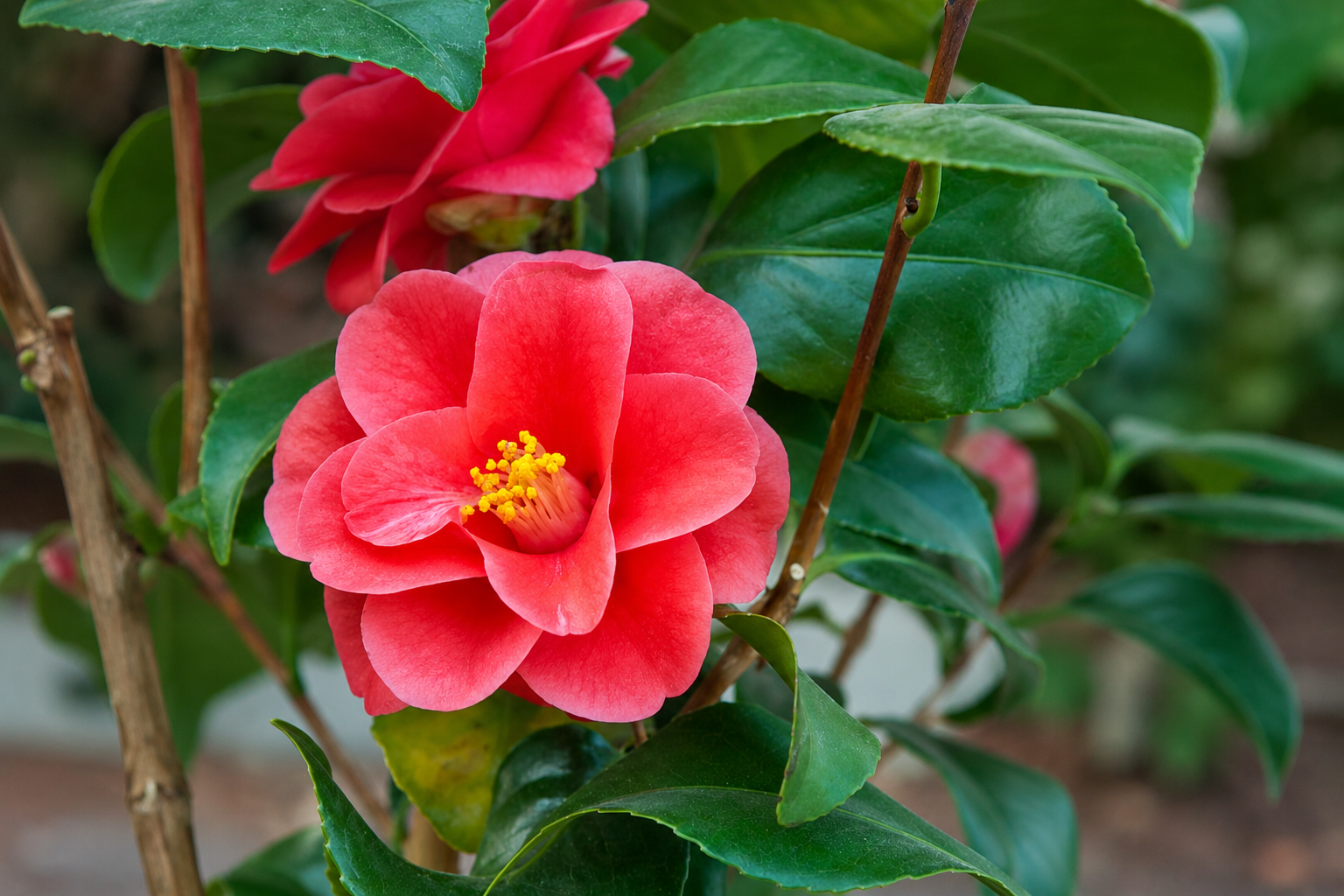
Camellia reticulata and its hybrids produce some of the largest flowers in the genus. Their blooms may be broad, richly colored, heavily petaled, and dramatically sculpted, making these camellias highly valued by collectors and exhibitors.
Reticulatas often develop into open, upright shrubs or small trees with less densely clothed branches than typical japonicas. Many flower during the middle or later part of the camellia season. Their dramatic blooms make them outstanding specimens, but their relatively open structure is usually less suitable for a tightly clipped hedge.
Cold tolerance varies considerably among Reticulata cultivars and hybrids. Many perform best in mild climates and sheltered locations, so gardeners in colder regions should check the documented hardiness of the individual cultivar.
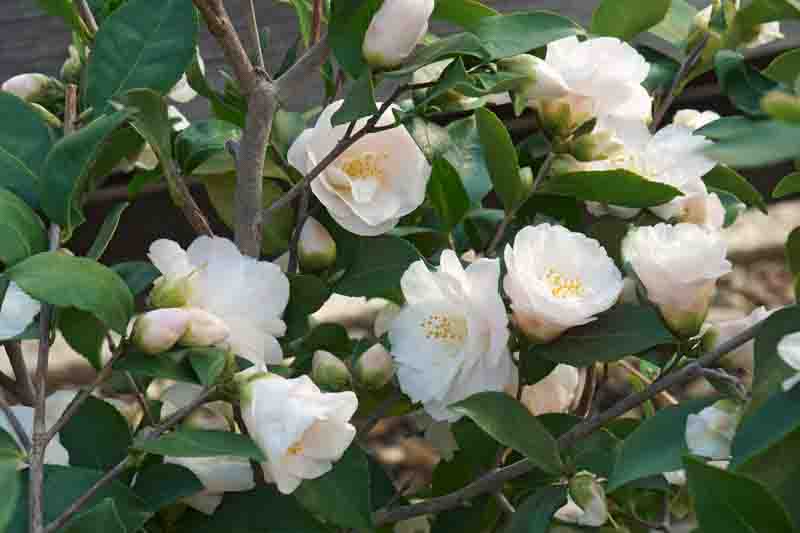
Most traditional japonica camellias have little or no noticeable fragrance. Breeders have therefore crossed ornamental camellias with fragrant species, especially Camellia lutchuensis, to create hybrids that combine perfume with attractive flowers and evergreen foliage.
These hybrids frequently have smaller flowers than the largest japonicas or Reticulatas, but they compensate with fragrance, abundant bloom, elegant branching, and finely textured leaves. Their scent may be light and sweet, fresh and floral, or reminiscent of lily of the valley.
Examples include ‘Fragrant Pink’, ‘Cinnamon Cindy’, and ‘Spring Mist’. Explore additional choices in Gardenia’s guide to the most fragrant camellias.
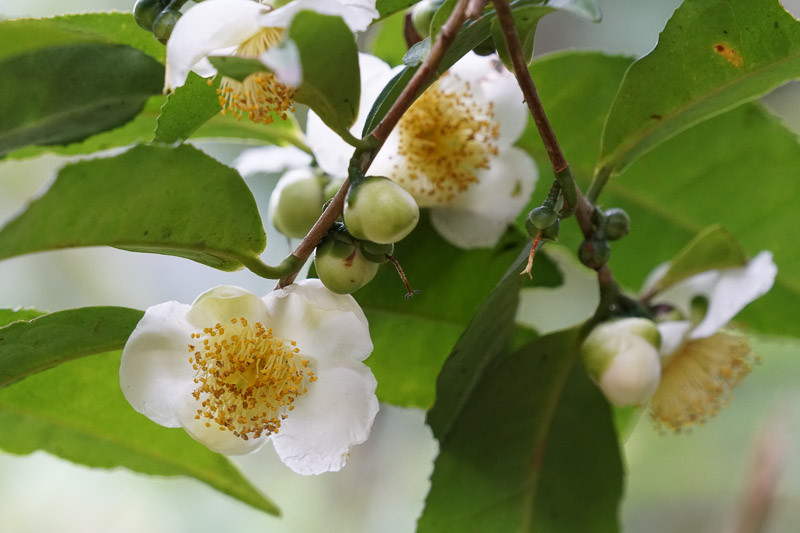
Camellia sinensis is the species whose young leaves and buds are used to make white, green, oolong, and black tea. These teas are not produced from entirely different plant species. Their differences result primarily from cultivar, growing conditions, harvest timing, and how the leaves are processed after picking.
Tea camellia has smaller, simpler white flowers with prominent golden stamens. It is grown primarily for its leaves rather than for a dramatic ornamental display, but it still makes an attractive evergreen shrub for edible landscapes, informal hedges, herb gardens, and productive home gardens.
Gardeners planning to harvest leaves should select a suitable tea cultivar and avoid using pesticides unless the product is specifically labeled for edible crops and tea plants.
Do not select a camellia by flower color alone. Also compare mature height and width, growth habit, hardiness, flowering season, sun tolerance, and flower form. A camellia that eventually reaches 12 feet is not interchangeable with a compact cultivar remaining below 4 feet.
Camellias also vary dramatically in flower form, flower size, and flowering sequence. For detailed guidance on those characteristics, see Gardenia’s guide to choosing a camellia by flower form, size, fragrance, and bloom season.
Use Gardenia’s camellia comparison tool to compare individual cultivars, or search the Gardenia Plant Finder by hardiness zone, mature size, sun exposure, bloom season, flower color, and landscape use.
Although individual species and cultivars differ, most camellias share the same basic growing requirements:
Planting warning: Never bury a camellia deeply. Position the top of the root ball at or slightly above the surrounding soil level, especially in heavy soil.
For detailed planting, watering, feeding, and pruning guidance, see How to Plant, Care for, and Grow Camellias. Gardeners in colder regions should also explore cold-hardy camellias.
A beautiful flower photograph does not reveal whether a camellia is suitable for your site. Avoid these common mistakes when comparing species, hybrid groups, and cultivars:
The two most widely grown ornamental camellia types are Camellia japonica and Camellia sasanqua. Japonicas generally provide larger winter and spring flowers on dense shrubs that appreciate partial shade. Sasanquas flower earlier, grow more quickly, tolerate more sun, and adapt particularly well to hedges, screens, walls, and mixed borders.
Williamsii, Hiemalis, Vernalis, Reticulata, fragrant hybrids, and tea camellias expand the choices further. The best group is the one whose growth habit, flowering season, mature size, cold tolerance, and landscape role fit the conditions of your garden.
Camellia japonica generally has larger flowers, broader leaves, denser growth, and a winter-to-spring flowering season. Camellia sasanqua usually blooms in fall or early winter, grows faster, has smaller leaves and flowers, and tolerates more direct sun.
Sasanqua camellias and related early-flowering hybrids usually bloom first, beginning in fall or early winter. Japanese camellias commonly follow from winter into spring, depending on cultivar and climate.
Camellia sasanqua generally grows faster than Camellia japonica. Actual growth still depends on cultivar, climate, soil, moisture, light, and how quickly the plant becomes established.
Upright sasanqua camellias are usually the best choices for hedges because they grow relatively quickly, tolerate more sun than japonicas, respond well to selective pruning, and produce abundant fall flowers.
Camellia reticulata and Reticulata hybrids produce some of the largest camellia flowers. Many Japanese camellias also have large blooms, especially formal double, peony-form, and rose-form cultivars.
Most traditional japonica camellias have little or no fragrance. Some sasanquas are lightly scented, while hybrids bred from fragrant species such as Camellia lutchuensis can produce noticeably perfumed flowers.
Established sasanqua camellias tolerate more direct sun than japonicas and may grow in full sun in mild climates when their roots remain cool and evenly moist. In hot regions, protection from intense afternoon sun is usually preferable.
A Williamsii camellia is a hybrid derived from Camellia japonica and Camellia saluenensis. These hybrids are valued for generous flowering, graceful growth, attractive evergreen foliage, and often clean shedding of spent blooms.
Updated: July 2026 • Reviewed by Gardenia Editors
| Hardiness |
6 - 9 |
|---|---|
| Heat Zones |
7 - 8 |
| Climate Zones | 4, 5, 6, 7, 8, 9, 12, 14, 15, 16, 17, 18, 19, 20, 21, 22, 23, 24 |
| Plant Type | Shrubs |
| Plant Family | Theaceae |
| Genus | Camellia |
| Exposure | Full Sun, Partial Sun, Shade |
| Season of Interest | Spring (Early, Mid), Fall, Winter |
| Maintenance | Low |
| Water Needs | Average |
| Soil Type | Clay, Loam, Sand |
| Soil pH | Acid, Neutral |
| Soil Drainage | Moist but Well-Drained, Well-Drained |
| Characteristics | Cut Flowers, Fragrant, Plant of Merit, Showy |
| Landscaping Ideas | Beds And Borders, Hedges And Screens, Patio And Containers, Wall-Side Borders |
| Garden Styles | City and Courtyard, Informal and Cottage, Japanese Garden, Traditional Garden |
| Hardiness |
6 - 9 |
|---|---|
| Heat Zones |
7 - 8 |
| Climate Zones | 4, 5, 6, 7, 8, 9, 12, 14, 15, 16, 17, 18, 19, 20, 21, 22, 23, 24 |
| Plant Type | Shrubs |
| Plant Family | Theaceae |
| Genus | Camellia |
| Exposure | Full Sun, Partial Sun, Shade |
| Season of Interest | Spring (Early, Mid), Fall, Winter |
| Maintenance | Low |
| Water Needs | Average |
| Soil Type | Clay, Loam, Sand |
| Soil pH | Acid, Neutral |
| Soil Drainage | Moist but Well-Drained, Well-Drained |
| Characteristics | Cut Flowers, Fragrant, Plant of Merit, Showy |
| Landscaping Ideas | Beds And Borders, Hedges And Screens, Patio And Containers, Wall-Side Borders |
| Garden Styles | City and Courtyard, Informal and Cottage, Japanese Garden, Traditional Garden |
Create a membership account to save your garden designs and to view them on any device.
Becoming a contributing member of Gardenia is easy and can be done in just a few minutes. If you provide us with your name, email address and the payment of a modest $25 annual membership fee, you will become a full member, enabling you to design and save up to 25 of your garden design ideas.
Join now and start creating your dream garden!
Create a membership account to save your garden designs and to view them on any device.
Becoming a contributing member of Gardenia is easy and can be done in just a few minutes. If you provide us with your name, email address and the payment of a modest $25 annual membership fee, you will become a full member, enabling you to design and save up to 25 of your garden design ideas.
Join now and start creating your dream garden!