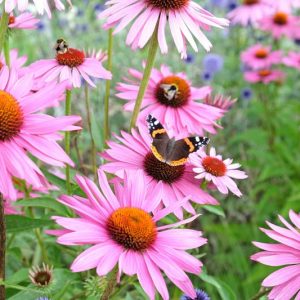
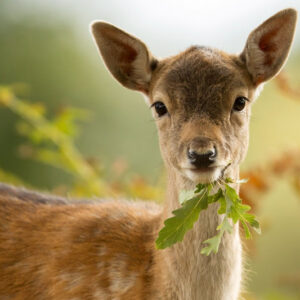
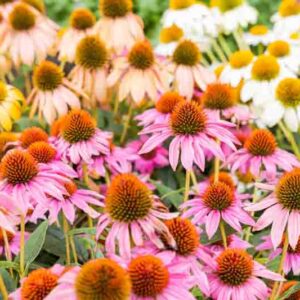
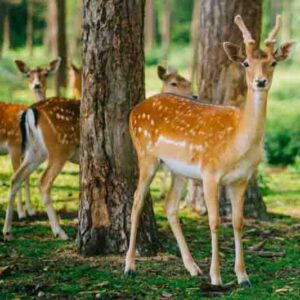
Do deer eat Echinacea? Usually not much - but coneflowers are not deer-proof. Discover how deer resistant purple coneflower really is, when plants are most vulnerable, how to recognize browsing, whether damaged Echinacea will recover and bloom, and when young plants need extra protection in deer-prone gardens.
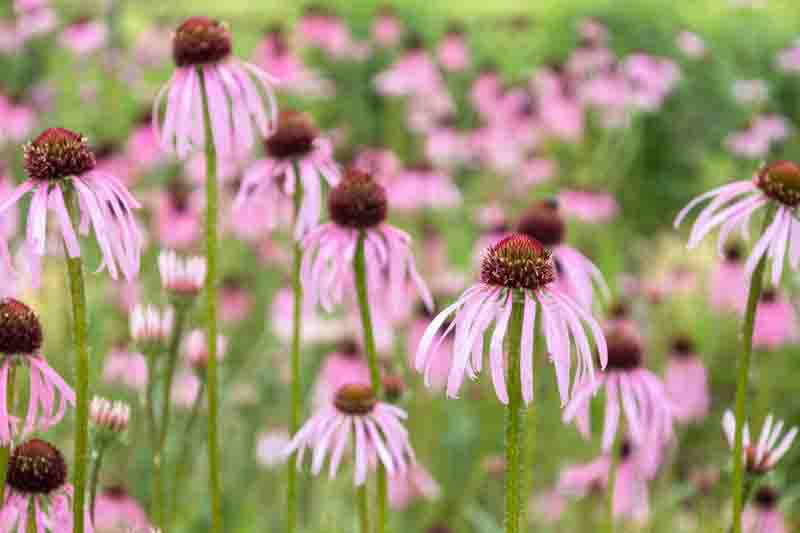


Deer can eat Echinacea, but purple coneflower is usually a lower-browse perennial rather than a favorite deer food. Rutgers rates Echinacea purpurea B – Seldom Severely Damaged, and several horticultural sources describe coneflower as deer resistant or deer tolerant. Still, no Echinacea is deer-proof. Young plants and fresh growth may be sampled, particularly where deer pressure is high or other food is scarce.
Echinacea has a good record in deer-prone gardens, but the phrase “deer resistant” needs some context.
Rutgers Cooperative Extension rates purple coneflower (Echinacea purpurea) B – Seldom Severely Damaged. Rutgers also makes an important point about the rating system itself: no plant is deer-proof, and local deer populations and weather can change how much browsing occurs.
Iowa State University Extension likewise places purple coneflower among perennials that are seldom severely damaged by deer. Clemson Cooperative Extension describes Echinacea as deer resistant, and Missouri Botanical Garden includes deer among the plant’s tolerances.
Not every authority uses the same label, however. Penn State describes purple coneflower as not deer-resistant.
At first glance, that sounds contradictory. In practice, it illustrates a problem with the term deer resistant: different sources use different thresholds for it. A plant does not need to be completely ignored by deer to have a relatively low risk of serious browsing.
For gardeners, the more useful question is therefore not:
“Can a deer ever eat Echinacea?” It is: “How likely is Echinacea to suffer repeated, serious browsing compared with other garden plants?”
The available evidence suggests that purple coneflower is generally on the safer side of that equation.
Gardenia’s Echinacea Rule: think lower browse risk, not zero browse risk. Echinacea is a sensible perennial for many deer-prone gardens, but it should not be treated as a plant deer cannot eat.
Purple coneflower does not have the soft, lush appearance of many heavily browsed garden plants.
Its foliage is relatively coarse, its stems are sturdy, and its flower heads develop the stiff, prickly central cones that inspired the botanical name Echinacea, from the Greek word associated with a hedgehog.
Those characteristics may contribute to its lower appeal, but it is better not to explain deer resistance with a single feature. Deer feeding behavior is variable, and rough foliage does not create a guarantee.
The stronger evidence is the plant’s browsing record. Rutgers and Iowa State both place purple coneflower among plants that are seldom seriously damaged, while other horticultural references recognize its relatively good deer resistance.
That combination makes Echinacea useful in sunny flower borders where gardeners want substantial summer color without relying entirely on plants that deer frequently target.
If deer do browse Echinacea, damage may involve leaves, shoot tips, developing flower stems, or buds. Fresh growth is worth watching particularly closely on newly planted coneflowers.
The important distinction is between occasional sampling and repeated browsing.
A missing leaf or one damaged stem does not mean that Echinacea has suddenly become a favorite deer food. A plant that is tasted and then largely ignored is behaving exactly as a lower-browse perennial might.
Repeated loss of fresh stems is different. If new growth keeps disappearing as soon as the plant produces it, the local browsing pressure is high enough to affect flowering and establishment.
Look for clues such as:
One damaged stem is sampling. Repeatedly disappearing new growth is a browsing problem. Watch the pattern before deciding that your coneflowers need permanent protection.
Not every damaged coneflower has been browsed.
This matters because Echinacea can develop several problems that look nothing like normal deer feeding once you know what to look for.
Deer browsing removes plant tissue. Shoots, leaves, buds, or parts of stems are simply gone, and damaged stems may look torn rather than neatly clipped.
Leaf-feeding insects are more likely to leave holes, chewed margins, or skeletonized areas while much of the leaf remains attached.
Disease can cause spots, yellowing, wilting, or stem decline rather than the sudden disappearance of healthy tissue.
Echinacea also deserves one particularly useful diagnostic check. If flower heads become green, tufted, leaf-like, or strangely distorted, deer are not the likely explanation. Aster yellows and eriophyid mites can cause abnormal flower development in coneflowers.
Gardenia’s Deer Damage Check: missing tissue + ragged stem ends + suddenly absent shoots or buds support a browsing diagnosis. Green, tufted, or malformed flower heads point toward a plant-health problem instead.
Often, yes. The outcome depends mainly on how much of the plant was removed and whether browsing continues.
Echinacea flowers on stems produced during the current growing season. Losing a few leaves therefore does not automatically mean losing the summer display.
If a deer removes the tip of a developing flowering stem, that particular flower may be lost. The plant may still branch or produce additional flowering stems, especially if it is established and the damage occurs early enough in the growing season.
Repeated browsing has a much greater effect. A plant cannot build a full flower display if its developing stems keep disappearing.
For a mature clump with many shoots, losing one or two stems may barely be noticeable by midsummer. For a new Echinacea with only a handful of shoots, the same amount of browsing can represent a large share of the entire plant.
For flowering, repeated loss of growing shoots matters much more than an occasional nibbled leaf. That is the damage pattern worth responding to.
Healthy, established coneflowers usually recover from modest browsing.
Echinacea is an herbaceous perennial. Its above-ground stems naturally die back after the growing season, while the perennial crown survives to produce new growth again.
That makes the loss of an occasional stem quite different from severe damage to a woody shrub.
Repeated browsing is still worth taking seriously, particularly on young plants. If fresh shoots are removed again and again, flowering declines and a newly planted coneflower has less foliage available to establish a strong root system.
After browsing, there is usually no need to cut the entire plant down. Remove badly broken stems if necessary and leave healthy foliage in place so the plant can continue growing.
Keep new plants watered appropriately while they establish, but do not try to compensate for deer damage with excessive fertilizer. Healthy, steady growth is more useful than forcing an abundance of soft new tissue.
A mature coneflower clump does not necessarily need protection simply because deer live nearby.
New plants deserve more attention. A recently planted Echinacea with three or four shoots has much less growth to lose than an established clump carrying dozens of stems.
Fresh growth is also worth monitoring. If deer begin repeatedly removing developing shoots, intervene before the plant spends the season replacing the same growth.
Local deer pressure matters more than any plant list. Rutgers specifically notes that deer resistance varies with deer populations and weather. During periods of food scarcity or unusually heavy browsing pressure, deer may eat plants they normally leave alone.
This is why two gardeners can have completely different experiences with the same perennial. One may never see a bite; another may need temporary protection every spring.
Because Echinacea already has a comparatively low risk of serious browsing, protection should match the actual problem rather than automatically escalating to fencing.
Where deer regularly pass through the garden, a temporary cage or small barrier can protect newly planted coneflowers until they develop larger crowns and more shoots.
Commercial deer repellents can reduce browsing where pressure is not extreme. Follow the product label carefully and maintain coverage as plants produce fresh growth or weather reduces effectiveness.
An occasional missing stem may not justify intervention. If deer repeatedly remove regrowth, a physical barrier is more dependable than allowing the plant to replace the same shoots again and again.
The goal is not necessarily to make Echinacea impossible for deer to reach. It is to prevent enough repeated damage that the plant cannot establish, grow, or flower normally.
For many gardens, yes.
Purple coneflower combines comparatively low browsing risk with a long summer flowering season, strong value for bees and butterflies, and good drought tolerance once established.
Seed-producing forms add another layer of wildlife value. If spent flower heads are left standing, finches and other seed-eating birds can feed on the seeds from summer into winter.
That wildlife benefit does not apply equally to every modern cultivar. Highly modified or sterile flower forms may produce less pollen, nectar, or seed than fertile single-flowered forms. If supporting pollinators and birds is a priority, cultivar choice matters.
Deer resistance should not be the only reason to choose Echinacea, either. Coneflowers perform best when the garden can also provide suitable light and drainage.
| Your Garden | Is Echinacea a Good Fit? |
|---|---|
| Sunny border with occasional deer | Excellent candidate. Echinacea combines relatively low browse risk with summer flowers and wildlife value. |
| New planting with regular deer traffic | Good candidate, but monitor young plants. Temporary protection may help during establishment. |
| Heavy local deer pressure | Possible, but not guaranteed. Even lower-browse plants may be sampled when preferred food is limited. |
| Sunny, well-drained pollinator garden | Strong fit. Choose fertile forms if seed production and maximum wildlife value are priorities. |
| Persistently wet or poorly drained site | Poorer fit. Low deer risk cannot compensate for unsuitable growing conditions. |
If Echinacea works in your garden, there is no reason to stop with one deer-resistant perennial.
The more useful goal is to build a planting in which the plants share the same growing conditions while also keeping browsing risk reasonably low.
That means looking beyond a simple “deer resistant” label.
A neighboring plant should also match your Echinacea in the conditions that matter: sunlight, drainage, water needs, hardiness, mature size, and the role you want it to play in the planting.
Gardenia’s Deer-Smart Echinacea Strategy: start with browsing risk, then check whether the plants actually belong in the same garden.
Explore the Gardenia Echinacea collection to compare different coneflowers, or visit the Purple Coneflower profile for detailed information on size, growing conditions, season of interest, and garden uses.
If you want to build a lower-browse planting around Echinacea, use the Gardenia Plant Finder to find plants that combine deer resistance with the same sun, soil, drainage, water needs, hardiness, mature size, garden style, native goals, wildlife value, and other tolerances.
Then browse Deer-Resistant Garden Ideas for inspiration and use the Garden Design Tool to check whether the plants you choose are compatible with your garden conditions and with one another before planting.
Deer can eat Echinacea, but serious browsing is usually uncommon. Rutgers rates Echinacea purpurea B – Seldom Severely Damaged, making purple coneflower a relatively low-browse choice for many deer-prone gardens.
Echinacea is often described as deer resistant, but it is not deer-proof. Rutgers rates purple coneflower B – Seldom Severely Damaged. Local deer may still sample plants, especially where browsing pressure is high.
Different horticultural sources use different thresholds for the term deer resistant. The more useful interpretation is relative browsing risk: purple coneflower is rated Seldom Severely Damaged by Rutgers, but no plant is guaranteed to remain untouched.
Often, yes. Losing a few leaves or stems may have little effect on an established plant. Repeated browsing of developing shoots can reduce flowering because those stems would have carried summer blooms.
Healthy established Echinacea usually recovers from modest browsing. Repeated removal of new shoots is more concerning, especially on newly planted coneflowers that have only a few stems.
Look for missing shoots, leaves or buds and rough, ragged stem ends. Deer browsing removes plant tissue. Green, tufted or malformed flower heads are more likely to indicate a plant-health problem such as aster yellows or mite damage.
Not always, but newly planted Echinacea is worth monitoring where deer are common. A mature clump can tolerate an occasional lost stem more easily than a young plant with only a few shoots.
Yes. Purple coneflower combines relatively low deer-browsing risk with flowers that support pollinators. Fertile, seed-producing forms can also provide seeds for birds when spent flower heads are left standing.
Updated: September 2026 – Reviewed by Gardenia Editors
| Hardiness |
3 - 9 |
|---|---|
| Heat Zones |
1 - 9 |
| Climate Zones | 1, 1A, 1B, 2, 2A, 2B, 3, 3A, 3B, 4, 5, 6, 7, 8, 9, 10, 11, 12, 13, 14, 15, 16, 17, 18, 19, 20, 21, 22, 23, 24, A2, A3 |
| Plant Type | Perennials |
| Genus | Echinacea |
| Exposure | Full Sun |
| Season of Interest | Spring (Late), Summer (Early, Mid, Late), Fall |
| Maintenance | Low |
| Water Needs | Low, Average |
| Soil Type | Clay, Loam, Sand |
| Soil pH | Acid, Alkaline, Neutral |
| Soil Drainage | Well-Drained |
| Characteristics | Dried Arrangements, Cut Flowers, Showy |
| Tolerances | Deer |
| Attracts | Bees, Birds, Butterflies, Hummingbirds |
| Landscaping Ideas | Beds And Borders, Patio And Containers |
| Garden Styles | City and Courtyard, Informal and Cottage, Prairie and Meadow |
Create a membership account to save your garden designs and to view them on any device.
Becoming a contributing member of Gardenia is easy and can be done in just a few minutes. If you provide us with your name, email address and the payment of a modest $25 annual membership fee, you will become a full member, enabling you to design and save up to 25 of your garden design ideas.
Join now and start creating your dream garden!