Pennsylvania Growing Zones Guide: Frost Dates, Maps & What to Plant
Gardening in Pennsylvania might mean a rooftop tomato jungle in Philadelphia, a backyard berry patch in Pittsburgh, an orchard in Adams County, a shady woodland garden in the Poconos, or a lake-cooled vegetable bed near Erie. Pennsylvania planting zones stretch from chilly northern highlands with short, frost-prone seasons to comparatively mild southeastern valleys where gardeners can push the envelope with longer-season crops.
This guide will help you understand your Pennsylvania growing zone, read the USDA map, plan around frost dates, and choose the best plants for your corner of the Keystone State.
What Planting Zone Is Pennsylvania In?
Pennsylvania sits at the crossroads of the Mid-Atlantic and Northeast, with climates shaped by the Appalachians, river valleys, and Lake Erie. On the latest 2023 USDA Plant Hardiness Zone Map, Pennsylvania runs roughly from zone 5a to zone 7b
- Northern Highlands & Northern Tier: Higher elevations and northern counties (Bradford, McKean, Potter, Susquehanna, etc.) are mostly zones 5a–6a, with cold, snowy winters and short but productive summers.
- Poconos & Northeast Mountains: The Pocono Plateau and nearby valleys around Scranton–Wilkes-Barre and Stroudsburg sit mainly in zones 5b–6b, with long winters, cool nights, and frequent spring frosts.
- Allegheny Plateau & Pittsburgh Region: Pittsburgh and much of western and southwestern Pennsylvania fall around zones 6a–7a, enjoying four distinct seasons, warm summers, and a moderate growing season.
- Central Valleys & Ridges: State College, Harrisburg, York, and much of the Susquehanna and Juniata valleys are generally zones 6a–7a, with good conditions for fruits, vegetables, and ornamentals that like a bit of winter chill.
- Southeastern Lowlands & Philadelphia Metro: Philadelphia, the Lehigh Valley, Lancaster, and nearby suburbs lie mostly in zones 6b–7b. Winters are relatively mild, and the growing season is among the longest in the state.
- Lake Erie Shore & Northwest Snowbelt: Erie and surrounding communities are influenced by lake-effect snow and moderating waters, landing in zones 6a–6b, with cold winters, cool springs, and generous summer moisture.
USDA Hardiness Zone Map for Pennsylvania
The updated 2023 USDA Plant Hardiness Zone Map is based on 30-year averages (1991–2020) of each location’s coldest winter temperatures. In Pennsylvania, the map highlights a clear gradient: colder zones in the northern highlands and higher ridges, and warmer zones along the southeast, in river valleys, and in urban heat islands such as downtown Philadelphia and Pittsburgh.
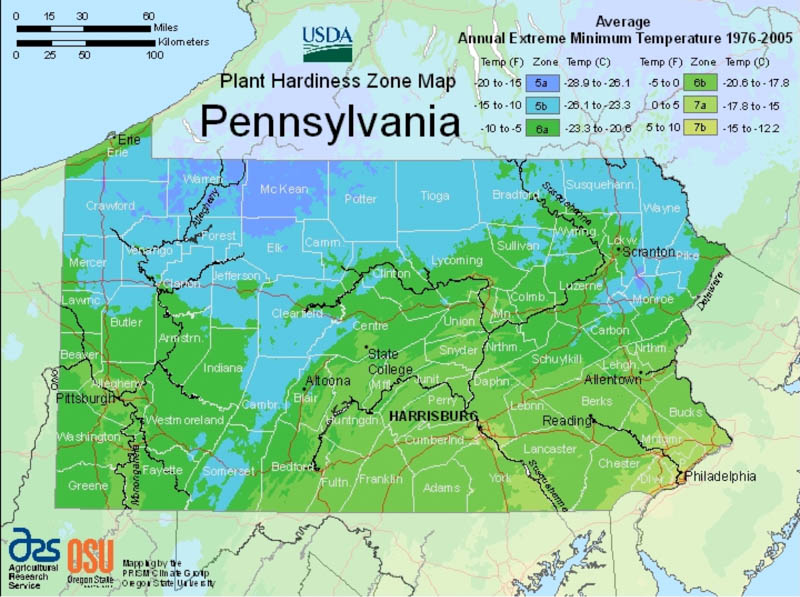
A simplified Pennsylvania planting zone map based on the USDA 2023 Hardiness Zone Map, using 1991–2020 climate data.
Use the zone map together with your ZIP code to pinpoint your exact Pennsylvania garden zone. Look up your Pennsylvania planting zone by ZIP code using the USDA tool, then come back here or visit our Plant Finder for plants tailored to your zone, soil, and sun conditions.
Pennsylvania Growing Zones by Region
On a map, Pennsylvania might look compact, but its growing zones and microclimates are surprisingly varied. Elevation, slope, proximity to rivers or lakes, pavement and brick, and even neighborhood tree cover can nudge conditions a half to a full zone warmer or colder from one garden to the next.
Southeastern Lowlands & Philadelphia Metro (Approx. Zones 6b–7b)
This region includes Philadelphia and its suburbs, the Delaware Valley, and much of Lancaster, Chester, Montgomery, and Bucks Counties—plus the Lehigh Valley (Allentown, Bethlehem, Easton).
- Long growing seasons and comparatively mild winters make this area excellent for a wide range of vegetables, fruits, and ornamentals.
- Urban heat islands in dense city neighborhoods may support some borderline-tender perennials and shrubs when planted in protected courtyards.
- Humid summers, clay or compacted soils, and occasional heavy rains mean good drainage, mulching, and disease-resistant varieties are key.
🔎 Find plants by hardiness zone
South-Central Valleys & Dutch Country (Approx. Zones 6a–7b)
Harrisburg, York, Lancaster County farmland, Gettysburg, and much of the lower Susquehanna Valley sit in a relatively mild belt with rich soils and strong agricultural traditions.
- Great for apples, peaches, sweet corn, pumpkins, and mixed vegetable gardens that appreciate warm summers and moderate winters.
- Average last frosts typically arrive in late April; first frosts often hold off until mid–late October, giving ~150–200 frost-free days, depending on elevation and valley position.
- Humidity favors fungal diseases on roses, tomatoes, and cucurbits—good air circulation, crop rotation, and mulching help.
🔎 Find plants by hardiness zone
Allegheny Plateau & Pittsburgh Region (Approx. Zones 6a–7a)
Pittsburgh and surrounding communities (Monroeville, Cranberry, Mt. Lebanon, Washington) occupy rolling hills and river valleys with four true seasons.
- Excellent for cool- and warm-season vegetables, small fruits, and ornamentals that like winter chill but not extreme cold.
- Average last frosts usually arrive in early–mid May (often near Mother’s Day); first frosts typically arrive by mid October, giving roughly 150–170 frost-free days.
- Heavy clay soils are common; raised beds, compost, and avoiding compaction when soils are wet are crucial.
🔎 Find plants by hardiness zone
Poconos & Northeast Mountains (Approx. Zones 5a–6b)
From Scranton–Wilkes-Barre to the Pocono resorts and higher ridgetops, this region is cooler and often snowier than the state average.
- Shorter growing seasons favor cold-hardy vegetables, brambles, and perennials adapted to cool nights.
- Average last frosts can linger into late April or early May; first frosts may return in late September or early October, especially at higher elevations.
- Season extension tools—row covers, low tunnels, and cold frames—stretch the harvest window.
🔎 Find plants by hardiness zone
Lake Erie Shore & Northwest Counties (Approx. Zones 5b–6b)
Erie and nearby communities experience cold, snowy winters with strong lake-effect events, but the lake also moderates extreme spring and fall temperatures.
- Good for cool-season vegetables, apples, grapes, and ornamentals that enjoy reliable winter chill.
- Average last frosts usually fall in early May; first frosts typically arrive in mid–late October, giving roughly 150–170 frost-free days.
- Wind exposure and heavy winter snow loads mean staking, windbreaks, and careful plant placement are important.
🔎 Find plants by hardiness zone
Pennsylvania Frost Dates: When to Plant and When to Protect
In Pennsylvania, frost behaves differently from county to county. In the warmest southeastern valleys, gardeners may start planting hardy crops in late March, while in the northern tier and higher ridges, killing frosts can linger into late May or even early June. Statewide, average last frosts range from early April in the warmest lowlands to late May or early June in the coldest highlands. First fall frosts may hit northern gardens in late September but hold off until late October or early November in milder southern and urban areas.
| Region / City |
Average Last Spring Frost |
Average First Fall Frost |
Approx. Frost-Free Days |
| Philadelphia (SE Coastal Plain) |
Late March–Early April (around Mar 31–Apr 5) |
Mid–Late November (around Nov 12–20) |
~210–230 days |
| Harrisburg (South-Central Valley) |
Late April (around Apr 21–30) |
Early–Mid October (around Oct 4–16) |
~165–180 days |
| Pittsburgh (Allegheny Plateau) |
Early–Mid May (around May 10–15) |
Mid October (around Oct 15–20) |
~150–165 days |
| Allentown / Lehigh Valley |
Early May (around May 1–10) |
Early October (around Oct 2–10) |
~150–165 days |
| Scranton / Pocono Foothills |
Late April–Early May (around Apr 25–May 5) |
Late September–Early October (around Sep 25–Oct 10) |
~135–155 days |
| Erie (Lake Erie Shore) |
Late May (around May 20–30) |
Mid–Late October (around Oct 15–30) |
~150–170 days |
Dates summarized from regional climate data and frost-date tools; always check a local forecast and ZIP-code–based lookup for the most precise information for your garden.
Use these frost dates as flexible guidelines—your specific yard may run warmer or cooler depending on wind exposure, slope, pavement, nearby water, and tree cover. They’re averages, not promises, so keep an eye on the forecast in spring and fall and protect tender plants whenever temperatures dip toward freezing.
Best Plants for Pennsylvania Planting Zones
Once you know your Pennsylvania planting zone—and whether you garden on a windy ridge, in a river valley, or in a protected city courtyard—you can work with your climate instead of against it. Focus on plants rated for your hardiness zone (5–7) and time annual crops around your local frost dates and soil conditions.
Vegetables for Pennsylvania Growing Zones
- Cool-season crops (early spring and fall statewide): lettuce, spinach, arugula, kale, collards, peas, broccoli, cabbage, carrots, beets, turnips, and radishes.
- Warm-season crops (plant after your last frost): tomatoes, peppers, zucchini and other summer squash, pumpkins, cucumbers, beans, sweet corn, and melons in the warmest regions.
- Short-season & high-elevation favorites (zones 5–6): Quick-maturing salad mixes, baby carrots, radishes, bush beans, and compact determinate tomatoes grown under protection in cooler parts of the state.
Fruits & Trees for Pennsylvania Hardiness Zones
- Statewide staples (zones 5–7): apples, pears, cherries, plums, and apricots, matched to your chill hours and protected from late frosts.
- Small fruits: grapes, strawberries, currants, blackberries, and raspberries do well with full sun, good air flow, and consistent moisture.
- Warm-pocket experiments (zones 7a–7b): In sheltered, south-facing spots in southeastern cities, adventurous gardeners may trial hardy figs, pomegranates, or container citrus that can be moved indoors for winter.
Flowers & Ornamentals for Pennsylvania Garden Zones
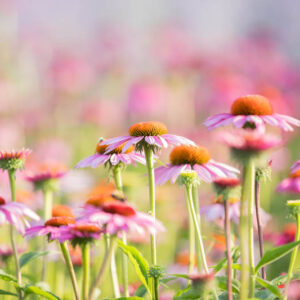
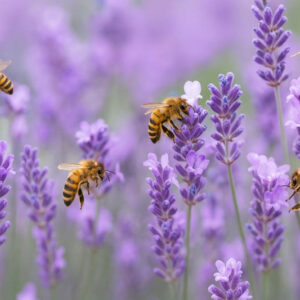
- Reliable perennials: coneflower, black-eyed Susan, yarrow, catmint, lavender, and ornamental sages love sun and well-drained soil.
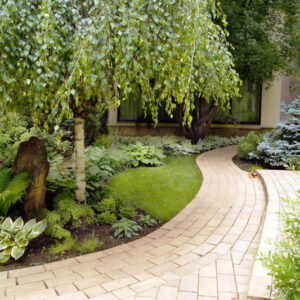
- Shade-garden classics: Hostas, ferns, heucheras, astilbes, and woodland phlox thrive under mature trees and along north-facing walls.
- Structural plants: Flowering dogwood, serviceberry, hydrangeas, lilacs, and ornamental grasses provide multi-season interest and habitat for birds and pollinators.
Native Plants for Pennsylvania Landscapes
Pennsylvania native plants are adapted to local soils, rainfall, and wildlife, making them resilient and ecologically valuable. Mix native wildflowers, shrubs, grasses, and trees for a landscape that feels naturally Pennsylvanian and supports bees, butterflies, and songbirds.
- Native wildflowers: purple coneflower (Echinacea purpurea), bee balm (Monarda), Joe Pye weed (Eutrochium), goldenrod (Solidago spp.), and woodland phlox (Phlox divaricata).
- Native grasses: little bluestem (Schizachyrium scoparium), switchgrass (Panicum virgatum), and Indiangrass (Sorghastrum nutans) for low-maintenance meadows and borders.
- Native shrubs & trees: redbud, serviceberry, winterberry holly, red maple, white oak, and black gum for structure, shade, fall color, and wildlife food.
Browse curated lists like great pollinator plants for Pennsylvania and monarch nectar plants for Pennsylvania to build a Pennsylvania garden that hums with life from early spring bulbs through autumn foliage.
Interactive Pennsylvania Planting Calendar (General Guide)
Tap a month to see what to plant in Pennsylvania by zone. Use this as a starting point, then adjust for your exact frost dates, elevation, and whether you garden in a warm southeastern valley, a central hill town, or a cool northern ridge.
🌆 Zone 7: SE Lowlands & Cities (Philadelphia, Lancaster)
🌾 Zones 6–7: Central Valleys & Hills (Harrisburg, Pittsburgh, York)
🌲 Zones 5–6: Northern Highlands & Poconos
January – Plan, Dream & Start Slow Indoors
- All zones: Review last year’s garden, order seeds, and map out beds. Clean tools and set up grow lights.
- Zones 6–7: Start slow-growing perennials, onions, and leeks indoors late in the month.
- Zones 5–6: Focus on planning; it’s usually too early for most indoor starts unless you have excellent light and space.
February – Seed-Starting Season Begins
- Zone 7: Start cool-season crops indoors (broccoli, cabbage, lettuce) and early flowers; start onions and leeks if not already done.
- Zones 6–7: Begin starting brassicas and hardy annual flowers; sow herbs like parsley and chives indoors.
- Zones 5–6: Start onions and leeks inside; wait a bit longer for tomatoes and peppers.
March – Early Cool-Season Planting
- Zone 7: Direct-sow peas, spinach, radishes, and lettuce as soon as soil can be worked; set out hardy transplants under row cover.
- Zones 6–7: Start peas and spinach outdoors later in the month; keep brassicas indoors until closer to your last frost.
- Zones 5–6: Continue seed starting indoors for brassicas, herbs, and flowers; direct sow only in the warmest microclimates toward month’s end.
April – Main Cool-Season Planting
- Zone 7: Finish planting peas, greens, potatoes, onions, and brassicas; start hardening off warm-season transplants late in the month.
- Zones 6–7: Direct-sow carrots, beets, chard, and more peas; plant potatoes and onions; set out brassicas under protection.
- Zones 5–6: As soil warms, sow peas and hardy greens; keep tomatoes and peppers indoors for another few weeks.
May – Last Frosts & Warm-Season Kickoff
- Zone 7: After your last frost, transplant tomatoes, peppers, eggplant, basil, and warm-season annuals; sow beans, corn, squash, and cucumbers.
- Zones 6–7: Once frost danger passes (often early–mid May), plant warm-season crops; protect tender transplants if a late cold snap threatens.
- Zones 5–6: In northern and high-elevation areas, plant warm-season crops toward late May and be ready with row covers.
June – Grow, Stake & Mulch
- All zones: Stake tomatoes, trellis peas and cucumbers, and mulch beds to retain moisture and suppress weeds.
- Zone 7: Sow another round of beans and summer squash; thin fruit trees and monitor for pests.
- Zones 5–6: Plant any remaining warm-season crops early in the month and keep newly transplanted seedlings well-watered.
July – Peak Summer & First Harvests
- All zones: Harvest early tomatoes, greens, peas, and summer squash; watch for disease during humid spells.
- Zone 7: Start seeds indoors or in a shaded nursery bed for fall crops (broccoli, cabbage, kale).
- Zones 5–6: Sow beans, carrots, and beets for late-season harvest; keep crops watered during dry stretches.
August – Fall Garden Planting
- Zone 7: Direct-sow spinach, lettuce, radishes, and turnips for fall harvest; transplant fall brassicas started in July.
- Zones 6–7: Plant fall greens, carrots, and beets early in the month; use shade cloth to help seedlings establish in lingering heat.
- Zones 5–6: Focus on quick crops like radishes and greens; begin prepping beds for garlic and cover crops.
September – Cooler Nights & Second Seasons
- Zone 7: Enjoy fall greens and late tomatoes; plant garlic toward month’s end.
- Zones 6–7: Harvest summer crops and new plantings of kale, lettuce, and radishes; be prepared to cover tender crops in higher elevations.
- Zones 5–6: Monitor for early frosts; prioritize harvesting and protecting warm-season crops.
October – Frosts, Fall Color & Garlic Time
- Zone 7: Plant garlic, spring-flowering bulbs, and hardy perennials; continue harvesting cool-season crops.
- Zones 6–7: Harvest pumpkins, winter squash, apples, and late tomatoes; mulch beds and plant garlic before hard freezes.
- Zones 5–6: Clean up beds after frost, plant garlic and bulbs, and add compost before winter.
November – Wrap-Up & Winter Prep
- Zone 7: Harvest final greens and root crops; protect overwintering kale and herbs with mulch or low tunnels.
- Zones 6–7: Finish mulching, drain hoses and irrigation lines, and protect young trees from rodents and deer.
- Zones 5–6: Secure row covers, protect perennials with mulch, and store tools and containers for winter.
December – Rest, Reflect & Enjoy Evergreens
- All zones: Enjoy winter interest from evergreens, ornamental grasses, and berries.
- Review what grew well, what struggled, and which varieties you want to repeat or replace next year.
Pennsylvania Gardening Tips by Zone
Pennsylvania gardeners juggle clay soils, humid summers, deer and groundhogs, late spring frosts, and shifting hardiness zones. These tips help your plants thrive from zone 5a to 7b:
- Know your microclimate. A sheltered rowhouse yard in Philadelphia may behave like a warmer zone 7b, while a windy hilltop in the Poconos feels like a colder zone 5.
- Time your seasons. In the southeast, you can start earlier in spring and keep growing later into fall; in the north and at higher elevations, focus on compact, quick-maturing varieties and season extension tools.
- Improve heavy soils. Much of Pennsylvania has clay or compacted soils—add compost regularly, avoid tilling when soil is wet, and consider raised beds for vegetables.
- Water wisely. Use drip irrigation or soaker hoses under mulch to limit foliar diseases and conserve water during dry spells.
- Embrace mulch. Organic mulches moderate soil temperature, suppress weeds, and reduce splash-borne diseases on tomatoes, roses, and cucurbits.
- Rotate crops. Moving plant families around the garden each year helps manage pests and soil-borne diseases, especially in humid climates.
- Plan for wildlife. Use fencing, cages, and resistant plant choices to coexist with deer, rabbits, and groundhogs.
- Lean on natives. Let native trees, shrubs, and perennials form the backbone of your landscape, with more water-hungry or tender plants tucked into key spots.
Beyond USDA Zones: Heat, Snow & Microclimates in Pennsylvania
While USDA hardiness zones (5a–7b on the 2023 map) tell you how cold it gets in winter, they don’t capture summer humidity, heat waves, lake-effect snow, or drainage. For a fuller picture, combine your USDA zone with local frost dates, slope and exposure (south-facing vs. north-facing), and soil type. In practice, that means a tomato on a sunny, brick-backed patio in Philadelphia lives in a very different world than a tomato on a breezy ridge in Potter County—even if both are technically zone 6 or 7.
Start Growing in Your Pennsylvania Planting Zone
Now that you understand your Pennsylvania planting zone, frost dates, and regional climate, you’re ready to choose plants that match your conditions and build a thriving garden—whether you’re growing heirloom tomatoes on a city balcony or apples and wildflowers on a country acre. Blend edible crops, flowering perennials, and native plants for a landscape that feeds both your household and local wildlife. Curious how Pennsylvania compares to other regions? Visit our national USDA planting zone guide to explore growing zones across the United States.
Frequently Asked Questions
What USDA planting zones is Pennsylvania in?
On the 2023 USDA Plant Hardiness Zone Map, Pennsylvania spans roughly zones 5a to 7b. Most gardeners fall between zones 5b and 7a, depending on elevation, latitude, and proximity to cities or large rivers.
How do I find my exact planting zone in Pennsylvania?
Use your ZIP code in the USDA’s online Plant Hardiness Zone Map tool, then zoom in on the Pennsylvania state map. This will show your half-zone (for example, 6a vs. 6b). Combine that with local frost-date information from a trusted garden or weather site for precise planting decisions.
When is the last frost in Pennsylvania?
Statewide, average last spring frosts range from early April in the warmest southeastern valleys to late May or early June in colder northern and high-elevation areas. In many central and southwestern locations, the last frost typically arrives between late April and mid May. Always check your local forecast before planting tender crops.
When is the first fall frost in Pennsylvania?
The first fall frost usually arrives between late September and early October in the northern tier and higher ridges, and between mid October and early November in central and southeastern valleys. Urban centers like Philadelphia often stay frost-free the longest thanks to heat stored in pavement and buildings.
How long is the growing season in Pennsylvania?
Pennsylvania’s frost-free growing season averages about 150 days statewide, but it varies from roughly 130 days in the coldest northern counties to 200+ days in the warmest southeastern locations. Your local growing season is the number of days between your average last spring frost and first fall frost.
What vegetables grow best in Pennsylvania?
Cool-season staples like lettuce, spinach, peas, broccoli, and root crops thrive in spring and fall, while warm-season vegetables such as tomatoes, peppers, squash, beans, cucumbers, and sweet corn perform well in summer. In cooler zones, choose early or short-season varieties and use row covers to stretch the season.
Which fruit trees are good choices for Pennsylvania yards?
Apples, pears, peaches, plums, cherries, and apricots all grow well when matched to your hardiness zone and chill hours. Many homeowners also plant berries (strawberries, raspberries, blueberries, and blackberries) and hardy grapes. In the warmest southeastern microclimates, gardeners sometimes experiment with figs or hardy kiwifruit.
Are native plants important in Pennsylvania gardens?
Yes. Native plants are adapted to Pennsylvania’s climate and soils, support local pollinators and birds, and generally need less watering and fertilizing once established. Incorporating native trees, shrubs, grasses, and wildflowers alongside traditional ornamentals creates more resilient, wildlife-friendly gardens.
How is climate change affecting Pennsylvania’s planting zones?
The 2023 USDA map shows many locations, including parts of Philadelphia and other Mid-Atlantic cities, shifting roughly a half zone warmer compared with earlier maps. That often means fewer extreme cold events, slightly longer growing seasons, and the possibility of growing some plants that once struggled—though heat waves, heavy rains, and new pests may also increase.
Updated: December 2025 • Reviewed by Gardenia Editors
While every effort has been made to describe these plants accurately, please keep in mind that height, bloom time, and color may differ in various climates. The description of these plants has been written based on numerous outside resources.