Transform harsh, sun-baked North Florida beds into a vibrant, low-maintenance oasis with native shrubs that love heat and sand. From beautyberry and saw palmetto to buttonbush and viburnum, these wildlife-friendly plants deliver flowers, berries, fragrance, and structure while shrugging off drought, humidity, storms, and tough coastal conditions effortlessly, year-round, naturally.
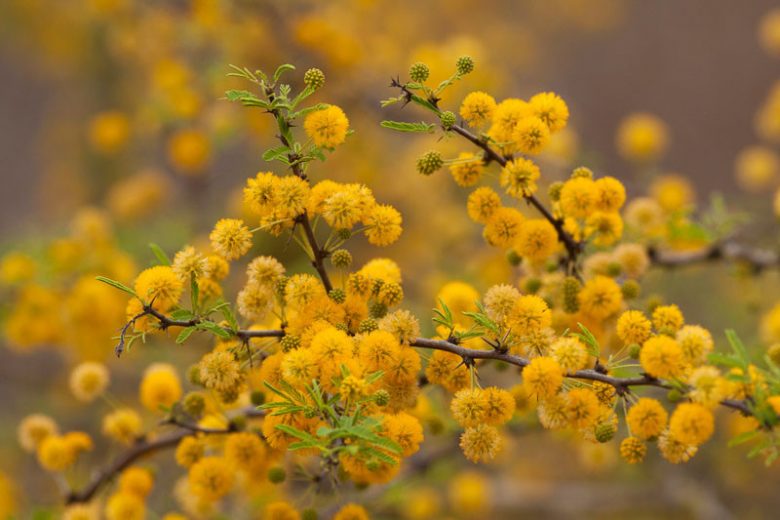


If you garden anywhere from Tallahassee to Jacksonville, Gainesville to the Panhandle coast, you know one thing for sure – North Florida sunshine means business. Hot summers, reflective sand, and periodic drought can cook the wrong shrubs in no time. The solution is simple: choose sun-loving native shrubs that evolved with this exact climate and avoid known invasive species.
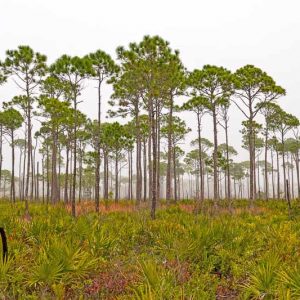
North Florida spans USDA zones 8a, 8b, and pockets of 9a, with habitats ranging from coastal dunes and salt-sprayed hammocks to pine flatwoods, upland sands, and open savannas. When you plant shrubs native to these ecosystems, you’re choosing plants that already know how to handle blazing sun, humidity, sandy soils, and fast-changing weather while feeding birds, butterflies, and other wildlife.
Remember: Never harvest native plants from the wild, and always choose nursery-grown plants, preferably from local seed sources whenever possible.
Before planting, take a moment to match each section of your yard to the right native shrub. Sun-loving doesn’t always mean identical needs!
Tip: Observe where sunshine hits your yard throughout the day. Plants marked “full sun” need at least 6 hours of direct light daily—8+ is even better for many of these species.
Below are the top-performing native shrubs, each perfectly adapted to full sun in Zones 8–9. These species come directly from the ecological heritage of North Florida and surrounding regions. They’re your most climate-smart, wildlife-friendly options.
| Hardiness |
8 - 9 |
|---|---|
| Plant Type | Shrubs |
| Exposure | Full Sun |
| Native Plants | United States, Southeast, Florida |
Unlike exotic ornamentals that often demand extra water, fertilizer, or pest control, native shrubs have adapted to the sunny, sandy, sometimes droughty conditions of North Florida. They play a vital role in feeding birds, butterflies, moths, native bees, and other beneficial insects—many of whom depend on these plants for survival.
If you’ve struggled with sunburned azaleas, thirsty boxwoods, or pest-prone exotics, you’ll love how effortlessly these natives perform once they settle in.
Mix Callicarpa americana, Erythrina herbacea, Baccharis halimifolia, and Lantana involucrata along a fence or sunny border. You’ll have blooms and wildlife action from spring to fall.
Use Morella cerifera (Wax Myrtle), Yucca aloifolia, and Forestiera segregata for a wind-resistant, salt-tolerant privacy screen.
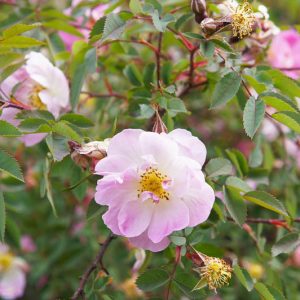
Layer Cephalanthus occidentalis, Rosa palustris, and Ilex verticillata for a lush, water-loving, wildlife-rich planting.
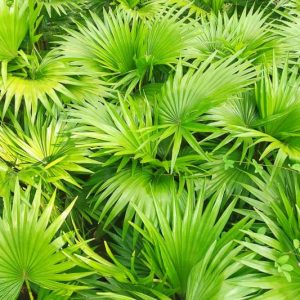
Combine Conradina canescens, Serenoa repens, Rhus aromatica, and Yucca aloifolia for a desert-like, no-irrigation landscape.
Planting native shrubs in full sun is straightforward, but a few techniques ensure long-term success:
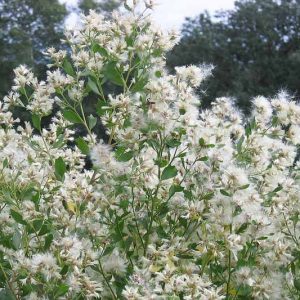
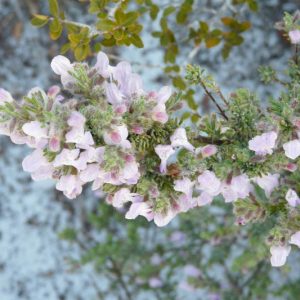
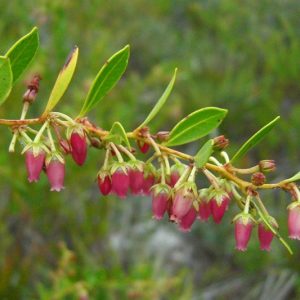
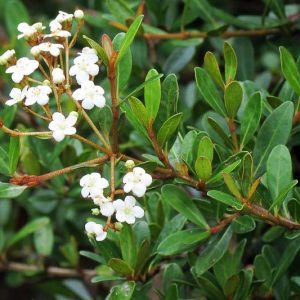
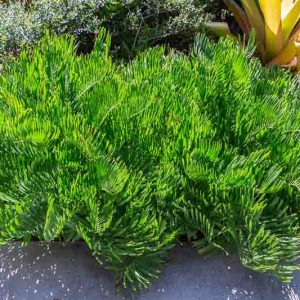
The most dependable sun-loving native shrubs for North Florida (USDA zones 8a, 8b, and mild 9a) include Callicarpa americana (American Beautyberry), Baccharis halimifolia (Eastern Baccharis), Serenoa repens (Saw Palmetto), Morella cerifera (Wax Myrtle), Viburnum dentatum (Arrowwood Viburnum), Viburnum obovatum (Walter’s Viburnum), Conradina canescens (Wild Rosemary), Rhus aromatica (Fragrant Sumac), Yucca aloifolia (Spanish Bayonet), Cephalanthus occidentalis (Buttonbush), Ilex verticillata (Winterberry), Rosa palustris (Swamp Rose), Vaccinium myrsinites (Evergreen Blueberry), Forestiera segregata (Florida Privet), Erythrina herbacea (Coralbean), Lyonia lucida (Fetterbush), Lycium carolinianum (Christmas Berry), and Zamia pumila (Coontie). Together they cover dry sandhills, coastal sites, sunny wet areas, and typical suburban yards in full sun.
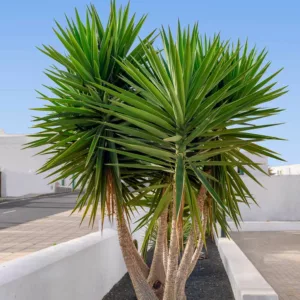
For very hot, drought-prone, sandy sites in North Florida, choose native shrubs that evolved in sandhill and scrub habitats. Top options are Conradina canescens (Wild Rosemary), Rhus aromatica (Fragrant Sumac), Serenoa repens (Saw Palmetto), Yucca aloifolia (Spanish Bayonet), and Callicarpa americana (American Beautyberry). Once established, these sun-loving natives tolerate intense heat, lean soil, and little to no supplemental irrigation, especially when mulched with pine straw or leaf litter.
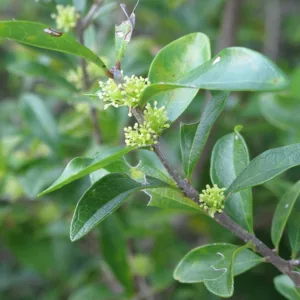
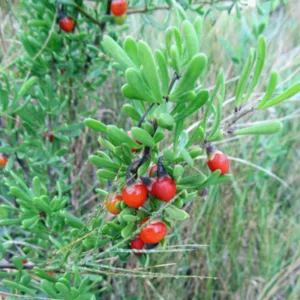
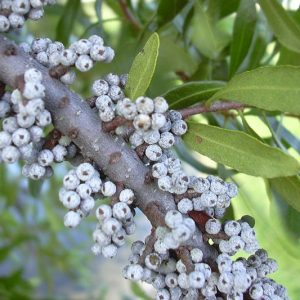
Coastal North Florida gardens with salt-laden wind, reflective sand, and full sun benefit from tough, salt-tolerant native shrubs. Reliable choices include Morella cerifera (Wax Myrtle), Serenoa repens (Saw Palmetto), Yucca aloifolia (Spanish Bayonet), Baccharis halimifolia (Eastern Baccharis), Forestiera segregata (Florida Privet), and Lycium carolinianum (Christmas Berry). These species tolerate sandy, fast-draining soils and salt exposure while providing evergreen structure, cover for birds, and seasonal berries or flowers.
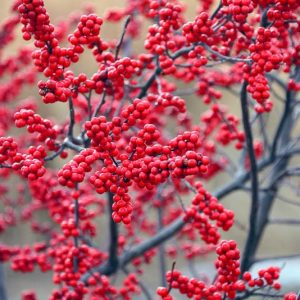
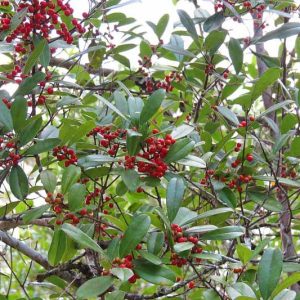
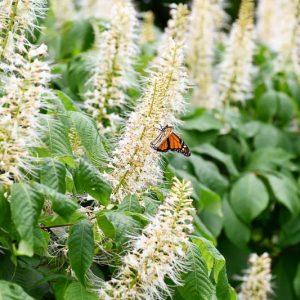
For rain gardens, pond edges, roadside swales, and other sunny but moist spots in North Florida, use water-tolerant native shrubs. Cephalanthus occidentalis (Buttonbush), Ilex verticillata (Winterberry), Rosa palustris (Swamp Rose), Lyonia lucida (Fetterbush), and some forms of Viburnum dentatum (Arrowwood Viburnum) handle periodic flooding or consistently damp soils in full sun. These shrubs offer nectar-rich flowers for pollinators and berries that feed songbirds while stabilizing wet banks.
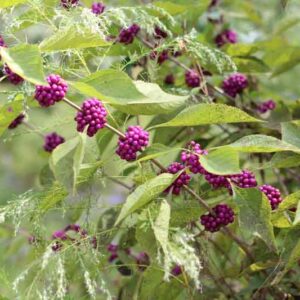
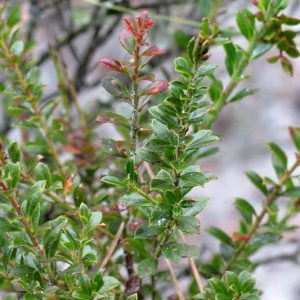
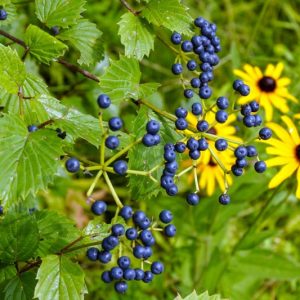
Many North Florida native shrubs that enjoy full sun are excellent wildlife plants. Callicarpa americana (American Beautyberry) produces clusters of purple fruit relished by birds. Viburnum dentatum and Viburnum obovatum bear blue or black berries that feed migrating and resident birds. Ilex verticillata (Winterberry) and Forestiera segregata (Florida Privet) provide abundant red or dark fruit. Vaccinium myrsinites (Evergreen Blueberry) offers edible berries for wildlife and people, while Lycium carolinianum (Christmas Berry) and Serenoa repens (Saw Palmetto) contribute additional fruit and cover.
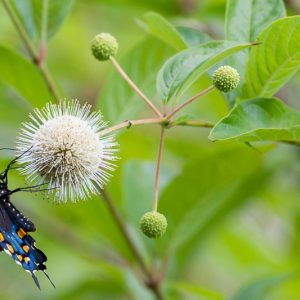
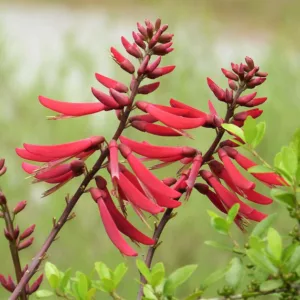
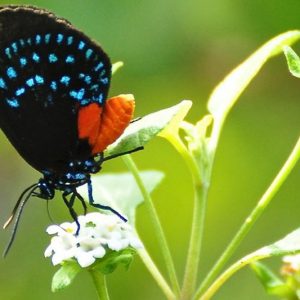
Yes. Sun-loving native shrubs are critical nectar, pollen, and larval resources for pollinators in North Florida. Erythrina herbacea (Coralbean) is a key hummingbird plant, Cephalanthus occidentalis (Buttonbush) is famous for attracting bees and butterflies, and Baccharis halimifolia (Eastern Baccharis) provides important late-season nectar. Callicarpa americana (American Beautyberry), Rosa palustris (Swamp Rose), Rhus aromatica (Fragrant Sumac), and various viburnums support native bees, butterflies, and moths. Zamia pumila (Coontie) is the sole larval host for the Atala hairstreak butterfly in regions where that species occurs.
To establish sun-loving native shrubs in North Florida, remove invasive plants and weedy turf, then loosen only the top few inches of soil, preserving natural structure. Plant shrubs at or slightly above the existing grade, water deeply and regularly during the first growing season, and mulch 2–3 inches deep with pine straw, leaves, or wood chips, keeping mulch a few inches away from the stems. Most native shrubs need little or no fertilizer and only occasional pruning to remove dead or crossing branches. Once roots are established, many can thrive on rainfall alone, especially in well-mulched beds matched to each shrub’s preferred moisture level.
Updated: November 2025 • Reviewed by Gardenia Editors
Raul Baena, Shutterstock
| Hardiness |
8 - 9 |
|---|---|
| Plant Type | Shrubs |
| Exposure | Full Sun |
| Native Plants | United States, Southeast, Florida |
Create a membership account to save your garden designs and to view them on any device.
Becoming a contributing member of Gardenia is easy and can be done in just a few minutes. If you provide us with your name, email address and the payment of a modest $25 annual membership fee, you will become a full member, enabling you to design and save up to 25 of your garden design ideas.
Join now and start creating your dream garden!
Create a membership account to save your garden designs and to view them on any device.
Becoming a contributing member of Gardenia is easy and can be done in just a few minutes. If you provide us with your name, email address and the payment of a modest $25 annual membership fee, you will become a full member, enabling you to design and save up to 25 of your garden design ideas.
Join now and start creating your dream garden!