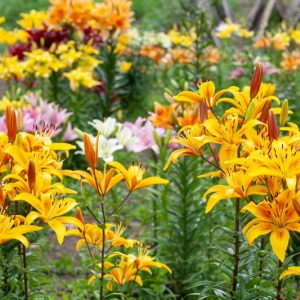
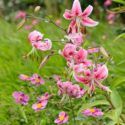
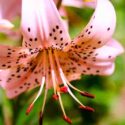
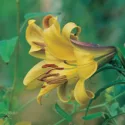
Graceful, hardy, and remarkably tolerant of light shade, Martagon lilies bring dozens of recurved Turk's cap flowers to woodland gardens and borders. Discover the best varieties, planting conditions, soil, bloom time, care, companions, and propagation tips - plus why these long-lived lilies reward gardeners who give them time to establish.
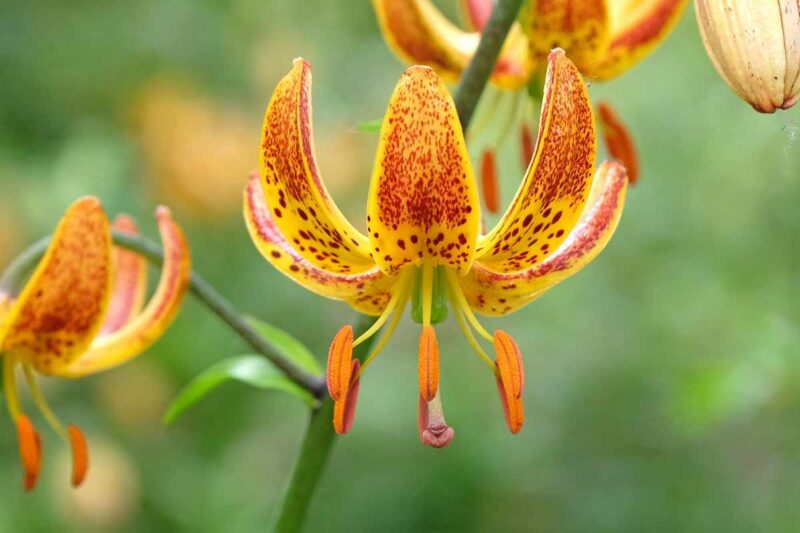


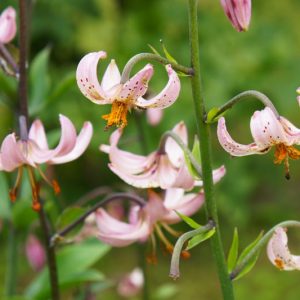
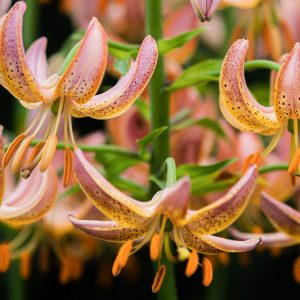
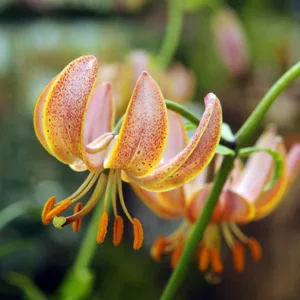
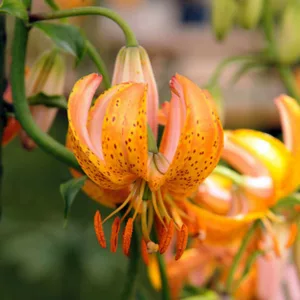
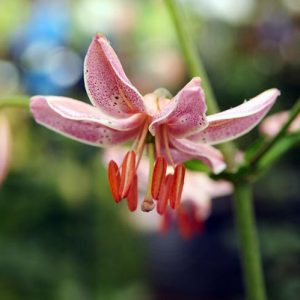
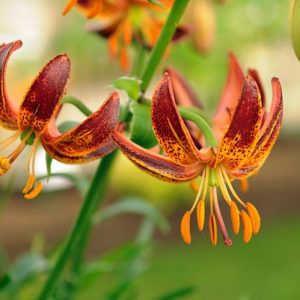
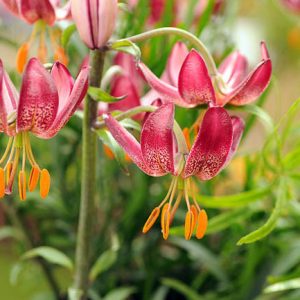
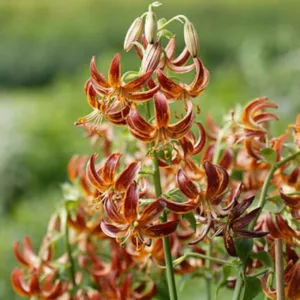
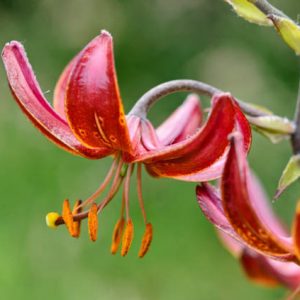
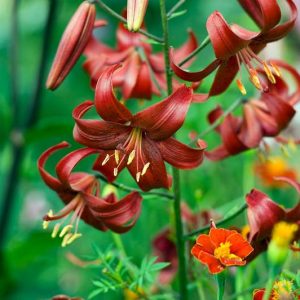
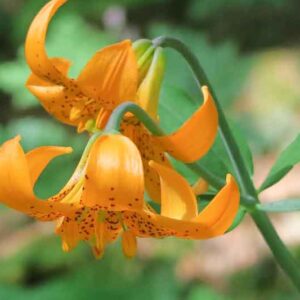
Martagon lilies are unlike almost any other true lily. Instead of a few enormous, upward-facing flowers, they produce tall, elegant stems carrying numerous smaller, nodding blooms with strongly recurved tepals – the distinctive Turk’s cap shape that gives them one of their common names.
They are also among the most useful lilies for gardeners with light shade. While Asiatic lilies, Oriental lilies, and many other Lilium perform best with abundant light, Martagon lilies are particularly well adapted to dappled woodland conditions and partially shaded borders.
The tradeoff is patience. Martagons can be slow to settle after planting or transplanting and may take a season or longer to flower well. Once established, however, they can become remarkably persistent, long-lived garden plants that return for many years.
For gardeners who want something more subtle than the enormous flowers of an Oriental or Orienpet lily, Martagons offer a completely different kind of spectacle: tall stems, whorled foliage, dozens of intricate flowers, and an airy woodland character that works beautifully with ferns, hostas, woodland perennials, and shrubs.
Gardenia’s shortcut: choose Martagon lilies for light shade, woodland character, and long-term garden performance – but plant them carefully and give them time to settle.
| Feature | Martagon Lily Profile |
|---|---|
| Plant group | Lilium martagon and related Martagon-type lilies. Martagon hybrids belong to Horticultural Division II, while the species and its selected forms belong to Division IX. |
| Common names | Martagon Lily, Turk’s Cap Lily, Mountain Lily |
| Plant type | Bulbous perennial |
| Bloom season | Early to midsummer |
| Height | Often 3-6 ft. (90-180 cm), but Gardenia records range from about 2 ft. (60 cm) to 7 ft. (210 cm) |
| Flowers | Numerous, mostly downward-facing, usually 2-4 in. (5-10 cm), with strongly recurved tepals |
| Fragrance | Variable; often slight or distinctive rather than strongly perfumed |
| Light | Partial shade to full sun in cooler climates; especially valuable in light woodland shade |
| Soil | Fertile, humus-rich, moist but well-drained; many hybrids favor neutral to slightly alkaline conditions |
| Hardiness | Many are very cold-hardy; individual cultivars commonly fall within USDA Zones 3-7 or broader |
| Best uses | Woodland gardens, woodland edges, mixed borders, cottage gardens, naturalistic plantings, cutting gardens, and large containers |
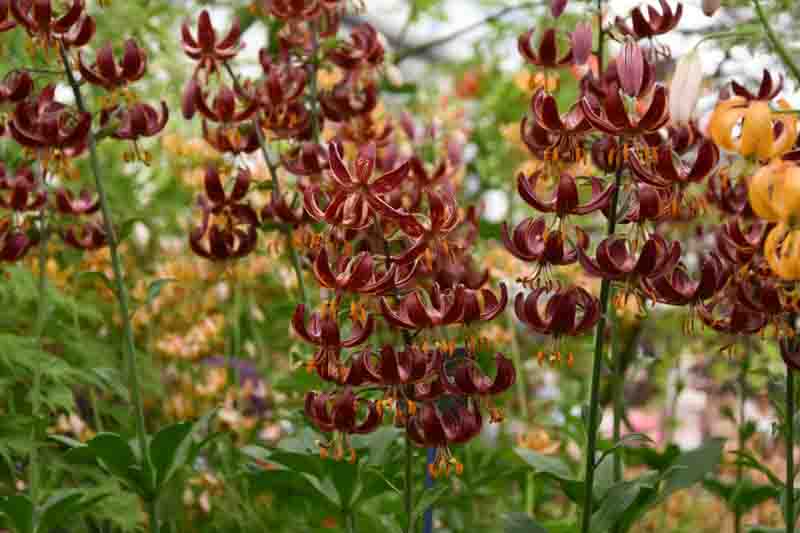
Martagon lilies commonly refers to Lilium martagon and the related Martagon hybrids. The species itself belongs to the Species and Cultivars of Species Division, while Martagon hybrids belong to Horticultural Division II.
Lilium martagon is native across a broad Eurasian range, from southwestern and central Europe eastward through Russia and into Mongolia. It has also been introduced beyond its native range.
Martagon hybrids derive from species such as Lilium martagon, Lilium hansonii, Lilium medeoloides, and related lilies.
Their appearance makes them easy to distinguish from many other garden lilies. Instead of leaves being distributed singly along the stem, Martagons typically produce conspicuous whorls of leaves. Above them rise tall flowering stems carrying numerous smaller blooms.
The flowers usually:
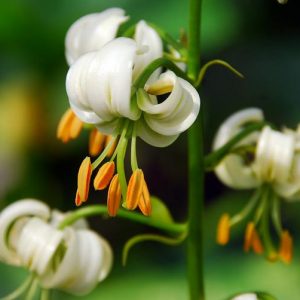
A mature Martagon stem can carry an astonishing number of flowers. Gardenia’s Lilium martagon ‘Album’, for example, may carry up to 40 white flowers on a single stem. The effect is completely different from the handful of enormous flowers produced by many Oriental lilies.
Martagon lilies are among the earlier lily groups to flower, generally blooming in early to midsummer. They often overlap with early Asiatic lilies and precede the main flowering season of many Trumpet and Oriental lilies.
This makes them especially useful for gardeners building a long lily season. Rather than expecting one cultivar to flower for months, combine lilies from different groups whose natural flowering periods follow one another.
For a longer lily season: use Martagons and early Asiatics to begin the display, then continue with Trumpet, Oriental, and Orienpet lilies. Gardenia’s Lilies for Long Summer Blooms explains how to build a succession from early to late summer.
Martagon lilies demonstrate why flower size is not the same as garden impact. Their individual flowers are smaller than the giant blooms of Oriental or Orienpet lilies, but they compensate with abundance.
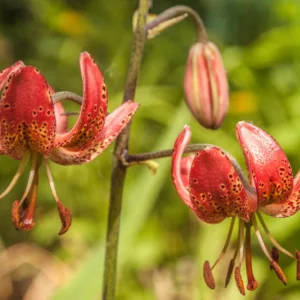
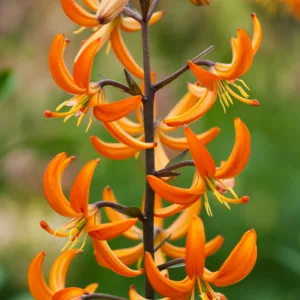
A well-established stem may carry dozens of nodding flowers arranged along a tall raceme. As each bloom curls backward, the stamens and anthers become conspicuous, giving the flowers an intricate, almost sculptural appearance.
Color can be surprisingly varied:
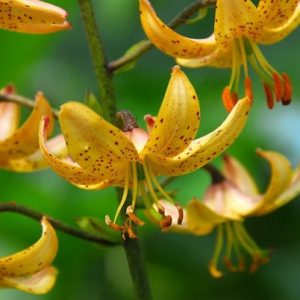
Many Martagons are heavily spotted, and their recurved tepals display the markings especially clearly.
This is one of the strongest reasons to grow them. Martagons are particularly well adapted to light or dappled shade.
They are at home in bright woodland conditions, beneath high-branched deciduous trees, along woodland edges, or in partially shaded borders. The ideal setting provides plenty of filtered light without subjecting plants to intense afternoon heat.
That does not mean deep shade. Too little light can reduce flowering and encourage stems to lean toward brighter conditions.
Gardenia site insight: among the major garden lily groups, Martagons are particularly well adapted to light woodland shade, giving them an especially valuable role in sites where more sun-oriented lilies may flower less freely.
Many Martagon lilies grow approximately 3-6 ft. (90-180 cm) tall, but that average hides considerable cultivar variation.
Gardenia’s records range from compact ‘Sunny Morning’ at about 2-3 ft. (60-90 cm) to Lilium martagon ‘Album’, which can reach 5-7 ft. (150-210 cm).
Their height also feels different from the bulk of a large-flowered Oriental or Orienpet. Martagon stems are relatively slender, and the numerous small nodding flowers create an airy vertical effect rather than a heavy block of bloom.
Gardenia cultivar insight: Martagons share the same graceful Turk’s cap character, but not the same scale. Gardenia’s records range from compact ‘Sunny Morning’ at about 2-3 ft. (60-90 cm) to Lilium martagon ‘Album’ at 5-7 ft. (150-210 cm). The group predicts flower form and woodland character far better than final height.
Martagon lilies have a reputation for taking their time after planting or transplanting. A newly moved bulb may produce limited growth or fail to flower during its first season while it rebuilds its root system and adapts to the new site.
This does not necessarily mean the plant has failed.
Once established, Martagons can persist and flower for many years. The practical lesson is simple: choose the planting position carefully and avoid unnecessary disturbance.
Gardenia’s Martagon establishment rule: judge a Martagon over years, not weeks. A newly planted or moved bulb may take time to settle, but established clumps can become remarkably durable.
This makes Martagons especially well suited to permanent woodland gardens and mixed borders where the planting will not be repeatedly redesigned.
Martagon lilies perform best in fertile, humus-rich soil that remains reasonably moist during active growth but drains freely.
Good soil structure is particularly important because a successful Martagon may remain in the same location for many years.
Soil pH deserves some nuance. Many Gardenia Martagon hybrid records favor neutral to slightly alkaline soil, including ‘Sunny Morning’ and Lilium martagon ‘Album’. Cultivar requirements should still be checked rather than assuming every Martagon responds identically.
This differs from Oriental lilies, where acidic to neutral soil is a much stronger group-level preference.
Fall is an excellent time to plant Martagon lily bulbs, although potted plants can also be planted at other suitable times when conditions allow.
Lily bulbs lack the dry protective tunic found on tulips and daffodils, so plant healthy bulbs promptly rather than allowing them to dry out after purchase.
Planting depth and spacing vary somewhat with bulb size and cultivar. Gardenia’s Martagon records commonly place bulbs around 7-8 in. (18-20 cm) deep; use the individual plant profile or Gardenia’s Lily Planting Depth and Spacing Guide for the final spacing recommendation.
For detailed recommendations by lily type, see Gardenia’s Lily Planting Depth and Spacing Guide.
For general planting, watering, feeding, staking, and seasonal care, use Gardenia’s How to Grow Lilies: Complete Planting and Care Guide.
Martagons are fundamentally lilies of cooler temperate conditions. They generally perform best where summers are not persistently hot and humid and where the root zone can remain reasonably cool.
In warmer regions:
If heat is a major concern, compare Orienpet lilies, which often offer greater heat tolerance along with large, fragrant flowers.
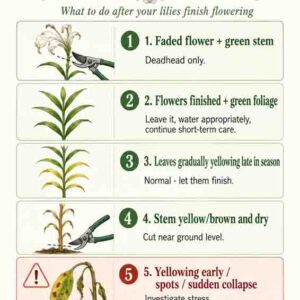
After flowering, remove spent flowers if you do not want seed, but leave healthy green stems and leaves intact.
The foliage continues photosynthesizing and replenishing the bulb after flowering. Cutting it away too soon can reduce the plant’s ability to build reserves for the following year.
Gardenia’s after-bloom rule: Flowers Off, Foliage On. This applies to Martagons just as it does to Asiatic, Oriental, Trumpet, and Orienpet lilies.
For more detail, see Gardenia’s What to Do With Lilies After They Bloom.
Martagon lilies can be propagated by offsets, bulb scales, or seed. Seed is particularly interesting with species and selected forms, although seedlings take time to reach flowering size.
Hybrid seedlings should not be expected to reproduce a named cultivar exactly.
Martagons may also self-seed where conditions suit them. If seedlings are welcome, allow some seed capsules to mature. If you prefer a tidier planting or want to prevent self-sowing, remove the spent flowers before seed develops.
Martagon lilies are often robust once established, but they remain true lilies and can suffer from many of the same pests and diseases as other members of Lilium.
Potential problems include Botrytis or gray mold, lily disease, viruses, and bulb or basal rot.
Good prevention starts with healthy bulbs, adequate air movement, appropriate spacing, and especially good drainage. Persistently wet soil can weaken bulbs and encourage decay.
When an established Martagon suddenly performs poorly, also consider environmental causes such as excessive shade, prolonged drought, root disturbance, or an unsuitable hot site before assuming disease.
Martagons are among the most naturally elegant lilies to use in garden design. Their tall stems and numerous small flowers have a lighter visual presence than the immense blooms of Oriental or Orienpet lilies.
Their downward-facing flowers are especially beautiful where they can be seen slightly from below – along a rising path, on a slope, beside a terrace, or among lower woodland plants.
Good companions include:
Do not crowd the bulbs with aggressive, densely rooted neighbors. The goal is to create a layered woodland planting without forcing the lilies to compete heavily for moisture and nutrients.
Gardenia’s Great Companion Plants for Martagon Lilies provides specific suggestions, while Great Companion Plants for Lilies explains the broader principles of lily companion planting.
Martagon lilies occupy a garden niche that most other lilies do not. Their greatest advantage is not giant flower size or perfume – it is their combination of shade tolerance, longevity, graceful form, and abundant flowers.
For an overview of the main lily groups, see Gardenia’s How to Choose Lilies.
Choose Martagons for light shade: they are particularly well adapted to woodland edges and partially shaded borders.
Choose Martagons for flower abundance: the flowers are smaller than Oriental blooms, but a mature stem may carry dozens of them.
Choose Martagons for longevity: established plants can persist for years when left undisturbed.
Choose Martagons for naturalistic design: whorled foliage and nodding Turk’s cap flowers blend naturally with ferns, hostas, shrubs, and woodland perennials.
Think twice if you want instant impact: newly planted bulbs may need time to establish.
Think twice in persistently hot, humid conditions: another lily group may prove easier.
Gardenia’s Martagon tradeoff: smaller individual flowers and slower establishment in exchange for shade tolerance, flower abundance, woodland fit, and long-term persistence.
Knowing that you want a Martagon is only the first decision. Individual cultivars differ considerably in height, flower color, spotting, hardiness, and garden scale.
Know you want a Martagon lily but not which one? Use Gardenia’s Lilium Comparison Tool to compare lilies by height, hardiness, bloom season, flower color, soil, drainage, pH, light, and other garden characteristics – then narrow the choices to plants that actually fit your site.
You can also browse Gardenia’s complete Lilium plant collection or explore the Lilium guide library.
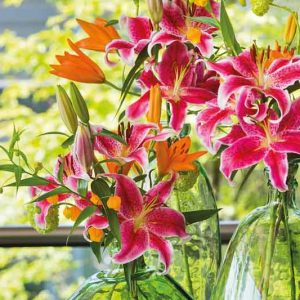
Martagon lilies can be used as cut flowers, although their appeal in arrangements differs from large-flowered Orientals. Their tall stems and clusters of small recurved flowers create an airy, architectural effect.
If cutting stems from established garden plants, leave enough healthy foliage behind to continue photosynthesis and replenish the bulb.
For more on lilies in arrangements, see Gardenia’s Lily Flowers: From Garden Favorites to Stunning Arrangements.
Yes. Martagon lilies are true lilies in the genus Lilium and are extremely dangerous to cats. Flowers, leaves, stems, and pollen can all present a serious risk, and water from a vase containing true lilies may also be dangerous.
If exposure is suspected, seek urgent veterinary attention rather than waiting for symptoms. For more information, see Gardenia’s Lilies and Cats Safety Guide.
| Hardiness |
3 - 9 |
|---|---|
| Heat Zones |
1 - 7 |
| Climate Zones | 1, 2, 3, 4, 5, 6, 7, 8, 9, 10, 14, 15, 16, 17 |
| Plant Type | Bulbs, Perennials |
| Genus | Lilium |
| Exposure | Full Sun, Partial Sun |
| Season of Interest | Summer (Early, Mid) |
| Height | 2' - 6' (60cm - 180cm) |
| Spread | 1' - 2' (30cm - 60cm) |
| Spacing | 7" (18cm) |
| Depth | 7" (18cm) |
| Maintenance | Average |
| Water Needs | Average |
| Soil Type | Chalk, Clay, Loam, Sand |
| Soil pH | Alkaline, Neutral |
| Soil Drainage | Moist but Well-Drained, Well-Drained |
| Characteristics | Cut Flowers, Showy |
| Attracts | Bees |
| Landscaping Ideas | Beds And Borders, Patio And Containers |
| Garden Styles | City and Courtyard, Cutting Garden, Informal and Cottage |
The name Martagon lily is used for the species Lilium martagon and, more broadly in gardening, for Martagon-type hybrids. In horticultural classification, Martagon hybrids belong to Division II, while Lilium martagon and its selected forms belong to Division IX, the Species Division.
Martagon lilies generally bloom in early to midsummer and are among the earlier lily groups to flower. Exact timing depends on cultivar, climate, and seasonal conditions.
Yes. Martagon lilies are particularly well adapted to light woodland or dappled shade. They still need adequate light to flower well and should not be planted in very deep shade.
Many Martagon lilies grow about 3 to 6 feet tall, but cultivar variation is substantial. Gardenia records range from compact cultivars around 2 to 3 feet to selections reaching about 7 feet.
Newly planted or transplanted Martagon lilies may take a year or longer to establish before flowering well. Excessive shade, dry soil, poor drainage, heat stress, or repeated disturbance can also reduce flowering.
Martagon lilies perform best in fertile, humus-rich, moist but well-drained soil. Many Martagon hybrids favor neutral to slightly alkaline conditions, although exact requirements vary among species and cultivars.
Fall is an excellent time to plant Martagon lily bulbs. Gardenia’s Martagon records commonly place bulbs about 7 to 8 inches deep, while final spacing should be checked against the individual cultivar or planting guide.
Martagon lilies generally prefer cooler temperate conditions and may struggle in persistently hot, humid climates. In warmer regions, provide afternoon shade, a cool root zone, reliable moisture, and good drainage.
Deadhead faded flowers if you do not want seed, but leave healthy green leaves and stems intact. Cut them back only after the foliage has yellowed or browned naturally.
Yes. Martagon lilies are true lilies in the genus Lilium and are extremely dangerous to cats. Flowers, leaves, stems, pollen, and water from a vase containing true lilies can present a serious risk. Seek urgent veterinary attention if exposure is suspected.
Martagon lilies are not simply smaller-flowered versions of other lilies. Their appeal lies in a very different combination of qualities: whorled foliage, tall graceful stems, dozens of intricate Turk’s cap flowers, impressive cold hardiness, and an unusual ability to perform in light shade.
They reward careful siting more than constant intervention. Give them fertile, moisture-retentive but well-drained soil, enough light to flower, protection from excessive heat, and – above all – time to establish. Once settled, Martagons can become some of the most enduring lilies in the garden.
Updated: August 2026 • Reviewed by Gardenia Editors
| Hardiness |
3 - 9 |
|---|---|
| Heat Zones |
1 - 7 |
| Climate Zones | 1, 2, 3, 4, 5, 6, 7, 8, 9, 10, 14, 15, 16, 17 |
| Plant Type | Bulbs, Perennials |
| Genus | Lilium |
| Exposure | Full Sun, Partial Sun |
| Season of Interest | Summer (Early, Mid) |
| Height | 2' - 6' (60cm - 180cm) |
| Spread | 1' - 2' (30cm - 60cm) |
| Spacing | 7" (18cm) |
| Depth | 7" (18cm) |
| Maintenance | Average |
| Water Needs | Average |
| Soil Type | Chalk, Clay, Loam, Sand |
| Soil pH | Alkaline, Neutral |
| Soil Drainage | Moist but Well-Drained, Well-Drained |
| Characteristics | Cut Flowers, Showy |
| Attracts | Bees |
| Landscaping Ideas | Beds And Borders, Patio And Containers |
| Garden Styles | City and Courtyard, Cutting Garden, Informal and Cottage |
Create a membership account to save your garden designs and to view them on any device.
Becoming a contributing member of Gardenia is easy and can be done in just a few minutes. If you provide us with your name, email address and the payment of a modest $25 annual membership fee, you will become a full member, enabling you to design and save up to 25 of your garden design ideas.
Join now and start creating your dream garden!
Create a membership account to save your garden designs and to view them on any device.
Becoming a contributing member of Gardenia is easy and can be done in just a few minutes. If you provide us with your name, email address and the payment of a modest $25 annual membership fee, you will become a full member, enabling you to design and save up to 25 of your garden design ideas.
Join now and start creating your dream garden!