Asiatic or Oriental lilies? Asiatic lilies bloom earlier, offer brilliant colors, and are usually unscented and easy to grow. Oriental lilies flower later with larger, intensely fragrant blooms and a stronger preference for acidic soil. Compare flowers, height, hardiness, containers, climate, and care to choose the right lilies.
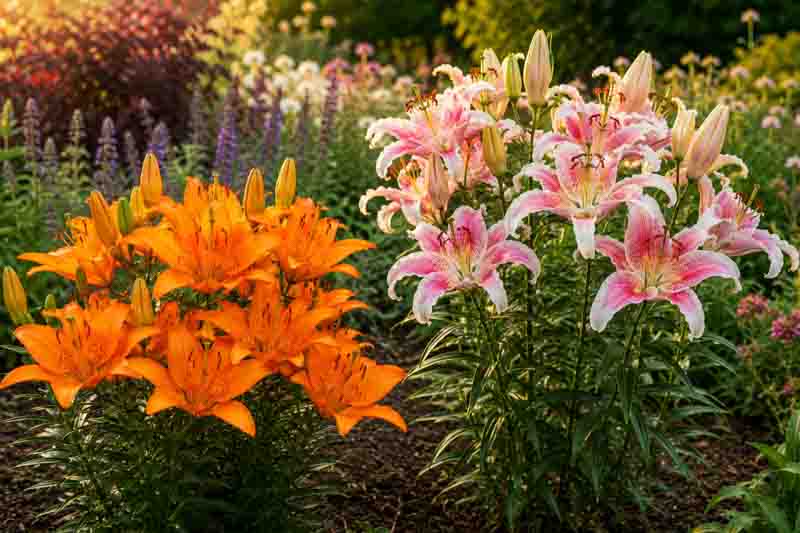


Asiatic or Oriental lily? Both are true lilies in the genus Lilium, both grow from bulbs, and both can produce spectacular summer flowers. But once you look beyond the familiar trumpet-shaped blooms, the differences are substantial.
Asiatic lilies generally bloom earlier, offer the broadest range of vivid colors, have little or no fragrance, and are among the easiest lilies to grow. Oriental lilies flower later, usually produce larger and more sumptuous blooms, are famous for their powerful perfume, and have a much stronger preference for acidic soil.
Neither group is automatically better. The right choice depends on when you want flowers, whether fragrance matters, what soil you have, how much space is available, and where you intend to grow or cut the flowers.
Gardenia’s shortcut: Asiatic for earlier color and versatility. Oriental for later fragrance and scale. Grow both when you want a longer lily season.
| Difference | Asiatic Lilies | Oriental Lilies |
|---|---|---|
| 1. Bloom time | Early to midsummer | Mid to late summer |
| 2. Fragrance | Usually little or none | Usually strongly fragrant |
| 3. Flower size | Often medium-sized, with some large-flowered exceptions | Generally larger and more substantial |
| 4. Flower shape and color | Exceptional color range, often upward- or outward-facing | Broader, often ruffled flowers in white, pink, crimson, and burgundy tones |
| 5. Height | Often about 2-5 ft. (60-150 cm) | Often about 2-6 ft. (60-180 cm) |
| 6. Soil pH | Adaptable; often happy in neutral to slightly alkaline soil | Prefer acidic soil; alkaline conditions can be limiting |
| 7. Climate and hardiness | Very hardy overall, but exact range depends on cultivar | Also highly hardy in many cultivars; do not assume they are less cold-hardy |
| 8. Ease of growing | Generally easier and more adaptable | More particular about soil and site |
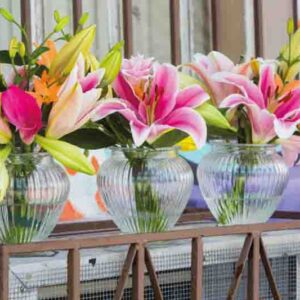
| 9. Containers | Excellent, with many compact choices | Excellent, especially when alkaline garden soil makes containers preferable |
| 10. Cut flowers | Bright color with little fragrance | Large statement flowers with powerful perfume |
Remember: these are group-level tendencies, not rules for every lily. Height, hardiness, flower size, bloom timing, and other traits vary considerably by cultivar. Use the group to narrow your search, then compare the actual plants.
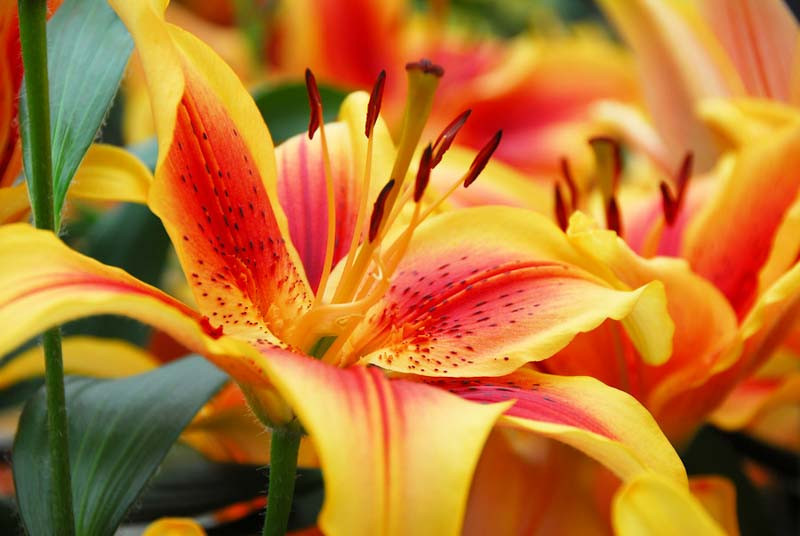
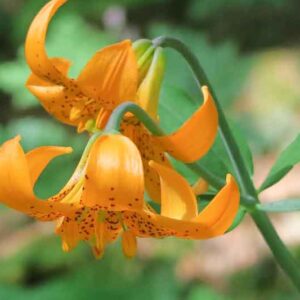
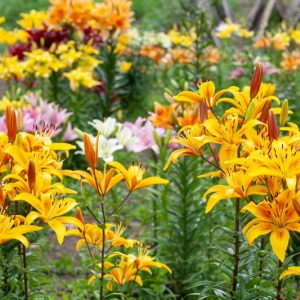
Asiatic lilies are true lily hybrids in Lilium Horticultural Division I. They descend from several Asian lily species and have become garden favorites because they combine showy flowers with excellent vigor, hardiness, and relatively easy cultivation.
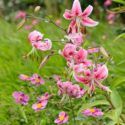
The group is remarkably diverse. Depending on the cultivar, Asiatic lilies may be compact enough for containers or tall enough for the middle of a border. Flowers can face upward, outward, or downward and range through almost every warm and pastel shade imaginable.
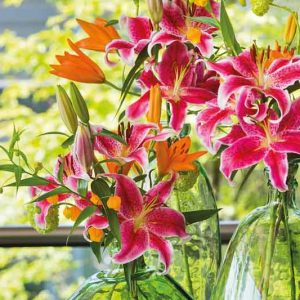
Popular examples include dark-red Lilium ‘Black Out’, pink-spotted Lilium ‘Dot Com’, scarlet-red Lilium ‘Gran Paradiso’, soft pink-and-cream Lilium ‘Rosella’s Dream’, and dramatically colored Lilium ‘Forever Susan’.
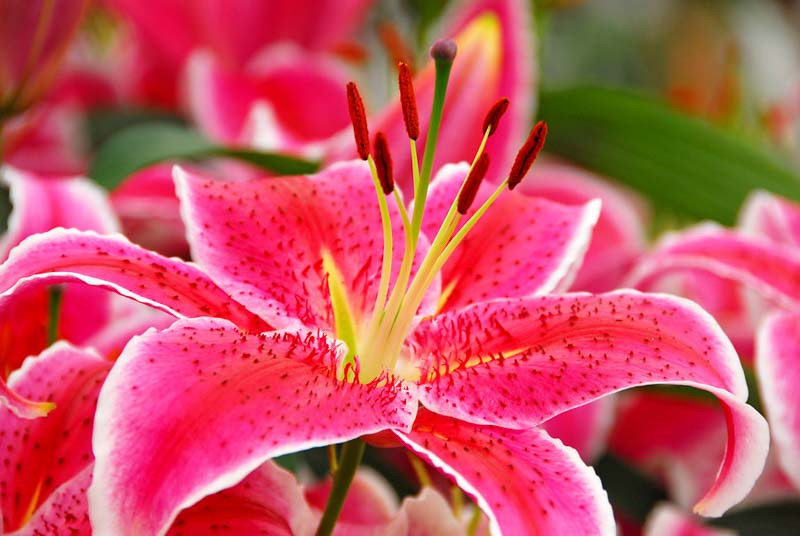
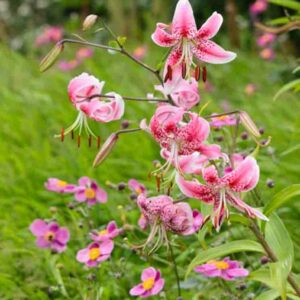
Oriental lilies belong to Lilium Horticultural Division VII. Their ancestry includes species such as Lilium auratum and Lilium speciosum, and their garden personality is quite different from that of Asiatic hybrids.
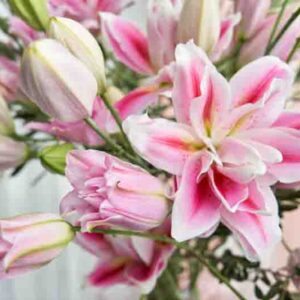
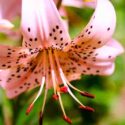
Oriental lilies are celebrated for their large, often ruffled flowers and intense perfume. They generally flower after Asiatic lilies, bringing dramatic color and fragrance into the middle and later part of summer.
Classic examples include Lilium ‘Star Gazer’, white-flowered Lilium ‘Casa Blanca’, and intensely fragrant Lilium ‘Muscadet’.
If perfume is one of your main reasons for growing lilies, explore Gardenia’s Most Fragrant Oriental Lilies.
Asiatic lilies generally bloom before Oriental lilies. Most Asiatic hybrids flower in early to midsummer, while Orientals typically take over from midsummer into late summer.
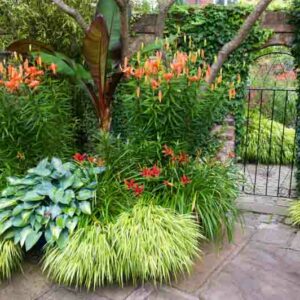
That difference is valuable in garden design because you do not necessarily need to choose one group over the other. Planting both can create a natural flowering relay.
Add Trumpet lilies or Orienpet lilies and the flowering season can be stretched further.
For a group-by-group timeline, see Gardenia’s When Do Lilies Bloom? Lily Bloom Calendar and Lilies for Long Summer Blooms.
Gardenia season strategy: Asiatic lilies open the main lily season; Oriental lilies extend it later. If continuous summer flowers matter more than choosing a single group, grow both.
This is one of the clearest differences between the two groups.
Most Asiatic lilies have little or no fragrance, while Oriental lilies are renowned for their powerful perfume. Some Orientals can scent a large part of the garden on a warm summer evening and become even more intense indoors.
Gardenia’s Most Fragrant Lilies guide compares fragrance across Oriental, Trumpet, Orienpet, LA, and species lilies.
Oriental lilies generally produce larger, broader, more substantial blooms than Asiatic lilies. Their flowers can create an almost architectural focal point in the border.
Asiatic flowers are often smaller on average, but this is exactly the sort of group-level rule that should not be applied blindly to individual cultivars. ‘Dot Com’, for example, can produce flowers about 8 in. (20 cm) across.
Gardenia buying tip: Oriental usually means larger-flowered, but not always. Compare the cultivar before deciding that an Asiatic lily will give you a smaller display.
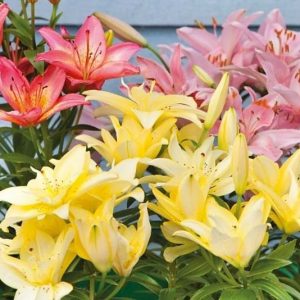
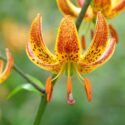
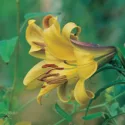
If sheer color choice matters most, Asiatic lilies have the advantage. Their palette ranges from pale creams and pinks to saturated yellow, orange, scarlet, burgundy, and near-black tones, with many spotted and bicolored cultivars.
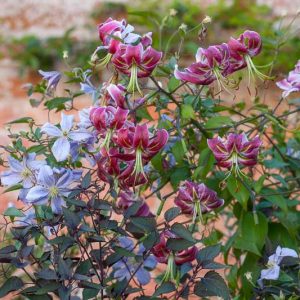
Oriental lilies have a somewhat narrower but highly distinctive palette dominated by white, cream, pink, crimson, red, and burgundy. Their flowers frequently have broad tepals, ruffled margins, dramatic central bands, spots, or contrasting edges.
There is no true blue lily in either group, so blue-violet companion plants can provide dramatic contrast. Gardenia’s Great Companion Plants for Lilies explains how to match plants by growing conditions and season as well as color.
Height is not a reliable way to distinguish Asiatic and Oriental lilies. Although Orientals can become tall and imposing, both groups contain compact and taller cultivars.
A compact Oriental may be shorter than a vigorous Asiatic. Mature cultivar size matters far more than the group name when fitting lilies into a planting plan.
Asiatic and Oriental labels describe broad tendencies, but actual cultivars show how much variation exists within each group. Gardenia’s plant records make an important point: choose the group first, then choose the cultivar.
| Cultivar | Group | Height | Hardiness | What It Shows |
|---|---|---|---|---|
| Lilium ‘Dot Com’ | Asiatic | 2-3 ft. (60-90 cm) | USDA 4-8 | Flowers can reach about 8 in. (20 cm), showing that Asiatic flowers are not necessarily small. |
| Lilium ‘Gran Paradiso’ | Asiatic | 3-4 ft. (90-120 cm) | USDA 4-8 | A taller scarlet-red Asiatic that demonstrates the group’s range in stature. |
| Lilium ‘Rosella’s Dream’ | Asiatic | 2-3 ft. (60-90 cm) | USDA 4-8 | Its soft cream and cherry-pink flowers show that Asiatic color is not limited to fiery reds and oranges. |
| Lilium ‘Forever Susan’ | Asiatic | 2-3 ft. (60-90 cm) | USDA 4-8 | Its burgundy, orange, and golden coloring demonstrates how bold Asiatic bicolors can be. |
| Lilium ‘Star Gazer’ | Oriental | 2-3 ft. (60-90 cm) | USDA 3-9 | A relatively compact Oriental, proving that Oriental lilies are not automatically taller than Asiatics. |
| Lilium ‘Casa Blanca’ | Oriental | 3-4 ft. (90-120 cm) | USDA 4-9 | Large white flowers and powerful fragrance exemplify the classic Oriental character. |
| Lilium ‘Muscadet’ | Oriental | 3-4 ft. (90-120 cm) | USDA 4-9 | Huge white flowers with pink markings, strong fragrance, and mid-late summer bloom capture the dramatic Oriental style. |
Gardenia takeaway: group predicts the general character; cultivar determines the actual plant. Compare mature height, hardiness, flower size, bloom timing, color, and site requirements before buying.
This may be the most important practical difference between the two groups.
Both Asiatic and Oriental lilies need fertile soil with good drainage. Their fleshy bulbs are vulnerable to prolonged waterlogging, and neither group should be planted where water regularly sits around the bulbs.
The major difference is soil pH.
In an alkaline garden, containers can make Oriental lilies much easier to grow because you can provide a suitable peat-free ericaceous growing medium instead of trying to change the chemistry of an entire border.
Check the soil before falling in love with the flower. For Oriental lilies, the right pH may matter more to long-term success than choosing the most spectacular cultivar in the catalog.
Asiatic lilies have a strong reputation for toughness, but that does not mean Oriental lilies are inherently tender. Many cultivars in both groups survive substantial winter cold.
The individual plant matters more than the group label. Gardenia’s cultivar records demonstrate the overlap:
Soil, drainage, summer conditions, winter wet, and the cultivar’s actual hardiness range all influence success. A blanket statement that “Asiatic lilies are hardier than Oriental lilies” is too simplistic.
Asiatic lilies are generally the easier group for beginners. Their combination of vigor, hardiness, adaptable soil preferences, and reliable flowering has made them some of the most widely grown garden lilies.
Oriental lilies are not especially difficult when their needs are met, but they are less forgiving of unsuitable soil.
If you want some of the dramatic flower size and fragrance associated with Orientals combined with exceptional vigor, consider Orienpet lilies, which combine Oriental and Trumpet/Aurelian ancestry.
Both Asiatic and Oriental lilies can be excellent container plants, but they offer different advantages.
See Gardenia’s Best Lilies for Pots and Containers for cultivar suggestions and practical container-growing guidance.
Both groups make excellent cut flowers, but they create very different arrangements.
When cutting garden lilies, avoid removing the entire leafy stem. Leave substantial foliage behind so the bulb can continue photosynthesizing and replenishing its reserves after flowering.
If the label has disappeared, several clues can point you in the right direction. No single feature is infallible, however, especially with the enormous variation created by modern lily breeding.
Identification can become more complicated with interdivisional hybrids. LA lilies combine Longiflorum and Asiatic ancestry, while Orienpets combine Oriental and Trumpet/Aurelian lilies, so these hybrids can display traits from more than one group.
Yes – and from a flowering-season perspective, they are excellent partners.
Asiatic lilies begin the display earlier, while Oriental lilies take over later. The main limitation is soil. In acidic to neutral, well-drained conditions, both groups may grow happily in the same general planting. In distinctly alkaline soil, the Asiatics may thrive while Orientals are better placed in containers with an acidic growing medium.
Rather than scattering single bulbs throughout the border, group several bulbs of the same cultivar for greater visual impact. Use different groups and cultivars to create a deliberate progression of height, color, and bloom time.
For planting depth and spacing, see Gardenia’s Lily Planting Depth and Spacing Guide.
Choose Asiatic lilies for earlier flowers, brilliant color, little fragrance, generally easy cultivation, and greater flexibility in soil conditions.
Choose Oriental lilies for later bloom, powerful perfume, large dramatic flowers, and gardens or containers where acidic conditions can be provided.
Choose both if your real priority is a longer lily season rather than choosing a winner.
Knowing the difference between Asiatic and Oriental lilies gets you into the right part of the lily world. It does not tell you which exact cultivar will work best in your garden.
Ready to choose the actual lily? Use Gardenia’s Lilium Comparison Tool to compare individual cultivars side by side by hardiness, height, spread, bloom season, soil, drainage, pH, light, and other characteristics.
Explore Gardenia’s full Asiatic Lily guide and Oriental Lily guide once you know which group is the better starting point.
If fragrance is driving the decision, browse Gardenia’s Most Fragrant Lilies and Most Fragrant Oriental Lilies.
If you are still comparing the major lily groups, see Gardenia’s How to Choose Lilies.
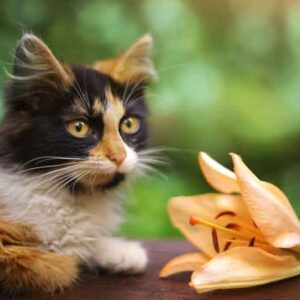
Both Asiatic and Oriental lilies are true lilies (Lilium) and are extremely dangerous to cats. Flowers, leaves, stems, pollen, and other plant material can present a serious risk.
If cats can access your garden or cut-flower arrangements, read Gardenia’s Are Lilies Poisonous to Cats? safety guide before growing or bringing true lilies indoors.
Asiatic lilies generally bloom earlier, offer a broader range of bright colors, have little or no fragrance, and are among the easiest lilies to grow. Oriental lilies usually bloom later, have larger and more flamboyant flowers, are strongly fragrant, and have a much stronger preference for acidic soil.
Asiatic lilies generally bloom first, usually in early to midsummer. Oriental lilies typically flower later, from midsummer into late summer. Growing both groups is an effective way to extend the lily season rather than choosing only one.
Oriental lilies are much more strongly fragrant. Powerful perfume is one of their defining characteristics. Most Asiatic lilies have little or no fragrance, making them a good choice for gardeners who prefer lilies without a strong scent.
Oriental lilies generally produce larger, broader, more substantial flowers than Asiatic lilies, but there is considerable cultivar variation. Some Asiatic cultivars also produce very large flowers, so check the mature flower size of the exact cultivar rather than relying on the group alone.
Asiatic lilies are generally easier and more adaptable. Oriental lilies can also grow very well, but their stronger preference for acidic soil makes site selection more important. In alkaline gardens, Oriental lilies are often easier to grow in containers with an appropriate ericaceous growing medium.
Not necessarily. Asiatic lilies have an excellent reputation for toughness, but many Oriental cultivars are also very cold-hardy. Exact hardiness depends on the cultivar, and drainage, winter wet, summer conditions, and soil suitability also influence long-term performance.
Yes, particularly in acidic to neutral, well-drained soil. Asiatic lilies generally flower first and Oriental lilies later, so growing both creates useful succession. In strongly alkaline soil, Oriental lilies may be better grown separately in containers with an acidic growing medium.
Both grow well in containers. Asiatic lilies offer many compact choices and little fragrance, while Oriental lilies provide large fragrant flowers. Containers are particularly useful for Oriental lilies when garden soil is alkaline because the growing medium and pH can be controlled.
Both make excellent cut flowers. Choose Asiatic lilies for bright color with little fragrance and Oriental lilies for larger, dramatic flowers with strong perfume. The better choice depends mainly on whether fragrance is desirable where the flowers will be displayed.
Yes. Asiatic and Oriental lilies are true lilies in the genus Lilium and are extremely dangerous to cats. Keep cats away from the flowers, leaves, stems, pollen, and other plant material, and seek urgent veterinary advice if exposure is suspected.
Asiatic and Oriental lilies share the elegance of true Lilium, but they serve different roles in the garden. Asiatic lilies bring earlier bloom, extraordinary color variety, little fragrance, and generally easy cultivation. Oriental lilies follow later with larger, intensely fragrant flowers and a stronger preference for acidic soil.
Remember Gardenia’s shortcut: Asiatic for earlier color and versatility. Oriental for later fragrance and scale. Both for a longer lily season.
Updated: August 2026 • Reviewed by Gardenia Editors
| Hardiness |
3 - 9 |
|---|---|
| Heat Zones |
1 - 3 |
| Climate Zones | 1, 2, 3, 4, 5, 6, 7, 8, 9, 14, 15, 16, 17, 18, 19, 20, 21, 22, 23 |
| Plant Type | Bulbs, Perennials |
| Genus | Lilium |
| Exposure | Full Sun, Partial Sun |
| Season of Interest | Spring (Late), Summer (Early, Mid, Late) |
| Maintenance | Low |
| Water Needs | Average |
| Soil Type | Chalk, Clay, Loam, Sand |
| Soil pH | Acid, Alkaline, Neutral |
| Soil Drainage | Moist but Well-Drained, Well-Drained |
| Characteristics | Cut Flowers, Fragrant, Showy |
| Landscaping Ideas | Beds And Borders, Patio And Containers |
| Garden Styles | City and Courtyard, Cutting Garden, Informal and Cottage, Traditional Garden |
| Hardiness |
3 - 9 |
|---|---|
| Heat Zones |
1 - 3 |
| Climate Zones | 1, 2, 3, 4, 5, 6, 7, 8, 9, 14, 15, 16, 17, 18, 19, 20, 21, 22, 23 |
| Plant Type | Bulbs, Perennials |
| Genus | Lilium |
| Exposure | Full Sun, Partial Sun |
| Season of Interest | Spring (Late), Summer (Early, Mid, Late) |
| Maintenance | Low |
| Water Needs | Average |
| Soil Type | Chalk, Clay, Loam, Sand |
| Soil pH | Acid, Alkaline, Neutral |
| Soil Drainage | Moist but Well-Drained, Well-Drained |
| Characteristics | Cut Flowers, Fragrant, Showy |
| Landscaping Ideas | Beds And Borders, Patio And Containers |
| Garden Styles | City and Courtyard, Cutting Garden, Informal and Cottage, Traditional Garden |
Create a membership account to save your garden designs and to view them on any device.
Becoming a contributing member of Gardenia is easy and can be done in just a few minutes. If you provide us with your name, email address and the payment of a modest $25 annual membership fee, you will become a full member, enabling you to design and save up to 25 of your garden design ideas.
Join now and start creating your dream garden!
Create a membership account to save your garden designs and to view them on any device.
Becoming a contributing member of Gardenia is easy and can be done in just a few minutes. If you provide us with your name, email address and the payment of a modest $25 annual membership fee, you will become a full member, enabling you to design and save up to 25 of your garden design ideas.
Join now and start creating your dream garden!