Evergreen Path Border Guides
A garden path framed by beautiful evergreen plants has a charm that lasts long after the summer flowers have faded. Neat boxwood hedges create an elegant entrance, silver shrubs bring a Mediterranean touch to sunny gravel walks, and graceful evergreen sedges soften the edges of shaded stone paths. But how do you design a border that stays attractive without constantly growing across the walkway? Our evergreen path border gardening guides explain how to choose plants, plan a beautiful layout, calculate spacing, establish healthy growth, and maintain year-round structure. Discover practical advice on evergreen path edging, low hedges, shade-tolerant foliage borders, planting distances, winter care, and low-maintenance garden pathways. Whether you’re creating a formal front entrance or a peaceful woodland walk, learn how to make the planting as practical as it is beautiful.
Learn How to Design a Beautiful Evergreen Path Border for Sun and Shade
The most attractive evergreen path borders have a clear sense of rhythm. The planting follows the walkway, defines its edges, and complements the surrounding garden without hiding the route.
But a low clipped boxwood hedge creates a very different effect from a softly flowing border of evergreen sedges. Choosing the right style is the first step.
Six principles for designing an evergreen path border:
- Choose the garden style: A low boxwood hedge works beautifully in a formal courtyard. Dwarf mondo grass suits sheltered Japanese-inspired gardens, while silver Santolina creates a relaxed Mediterranean effect.
- Measure the usable space: Record the path width and the planting depth on each side. Allow room for mature foliage without reducing the comfortable walking area.
- Choose the correct plant height: Very low foliage plants create a restrained outline, while shrubs and larger sedges can give a wider path more substance. Avoid using tall or arching plants where they obscure steps or narrow entrances.
- Understand sunlight and soil: Mondo grass and selected sedges suit sheltered shade or partial shade, while Santolina needs sunshine and excellent drainage. Boxwood has different requirements again.
- Repeat the planting: One dominant species creates visual unity. In a naturalistic path border, introduce a second foliage texture in repeated groups rather than changing species every few feet.
- Plan for winter: Evergreen foliage may persist through mild winters but suffer damage in colder or more exposed sites. Check the individual species and cultivar before relying on year-round coverage.
Should evergreen borders be formal or informal? Either can look beautiful. A formal border usually relies on a consistent line of compact shrubs, while informal borders use rounded mounds or overlapping grass-like foliage.
What about a curved garden path? Follow the natural curve with repeated groups. Slow-growing dwarf mondo grass can create a low ribbon, while larger plants may be spaced in loose groups to avoid an overly rigid appearance.
How do you combine evergreen foliage colors? Dark green and white variegation create a calm contrast. Golden sedges brighten shade, while silver Santolina works beautifully against warm gravel and stone. Use a restrained palette so the walkway remains the focus.
Can evergreen edging replace a physical path border? Plants provide visual definition, but they don’t necessarily prevent gravel or soil from migrating. Structural edging may still be needed where paving materials must be contained.
Should plants grow onto the path? A little soft foliage overlap can be attractive on an informal path, but the required clear width must remain open. Keep steps, drainage openings, and changes in level visible.
Gardenia’s design advice: Start with the path’s purpose, then choose plants that support it. A front entrance needs a consistently clear route, while a secondary woodland path may accommodate a softer planted edge.
Explore Gardenia’s How to Design a Garden Border, How to Choose the Right Hedge, and Shade Garden Design Guide.
Discover How to Plant, Space, and Establish Evergreen Path Edging
A newly planted evergreen border may look a little sparse. That’s normal. The challenge is giving plants enough space to mature without leaving unnecessarily large gaps or crowding them so tightly that they struggle later.
Seven steps to establishing a beautiful evergreen path border:
- Measure the full border: Record its length, planting depth, and any curves. Identify gates, steps, drainage points, and narrow areas where plants need extra clearance.
- Prepare the planting strip: Remove persistent weeds, check soil texture and drainage, and prepare the soil according to the selected species. Don’t treat dry-garden Santolina and moisture-loving woodland plants as interchangeable.
- Lay out plants before digging: Position nursery pots along the path and step back to inspect the rhythm. Consider how wide each plant will become after several growing seasons.
- Space for mature size: Compact boxwoods, dwarf mondo grass, variegated sedges, and Liriope all develop at different rates and widths. Use individual plant recommendations rather than one standard spacing.
- Plant at the appropriate depth: Keep most container-grown plants at their correct finished soil level. Avoid burying woody stems or crowns and ensure firm root-to-soil contact.
- Water during establishment: Newly planted evergreens need appropriate moisture for root development, even if they become relatively drought-tolerant later. Avoid waterlogging roots.
- Monitor the border: Weed between young plants, inspect for stress or pests, and keep foliage away from the walking surface as the planting develops.
How far apart should boxwoods be planted? The distance depends on cultivar, starting plant size, mature width, and whether you want a continuous hedge or individual rounded shrubs. Planting closer may produce a hedge sooner, but overcrowding can increase competition and reduce airflow.
How should dwarf mondo grass be spaced? Because it spreads relatively slowly, plants may remain as individual tufts for some time. Spacing depends on whether you want immediate visual coverage or are comfortable allowing the border to fill gradually.
How much space does Carex need? Consider the full arching width of the mature mound, not simply its upright height. A sedge that looks compact in a nursery pot can eventually lean over adjacent paving.
How do you calculate quantities? Divide the border length by your intended center-to-center spacing. For example, a 30-ft. straight border planted at 18-inch centers has approximately 20 spacing intervals. The exact number of plants depends on how you treat the ends and curves.
When is the best time to plant? Spring or early autumn often provides favorable conditions in temperate climates, but local weather, frost dates, soil temperatures, and plant hardiness matter.
What about mulch? Suitable mulch can help reduce weeds and conserve moisture while plants establish. Keep it away from stems and crowns. In sunny dry-garden borders, avoid creating persistently wet conditions around plants that require sharp drainage.
Can you mix evergreen and deciduous plants? Certainly. A low evergreen foreground can provide permanent definition while flowering perennials, spring bulbs, and deciduous ornamental grasses add seasonal interest behind it.
Gardenia’s recommendation: Choose planting distances for mature plants, not for the immediate appearance of nursery-sized specimens. A little patience produces a healthier, better-proportioned border.
Read Gardenia’s Small Plants for Borders and Edging, Plants for Garden Pathways, and Best Plants for Dry Shade.
Learn How to Maintain Evergreen Borders, Prevent Winter Damage, and Keep Paths Tidy
Evergreen borders provide lasting structure, but they aren’t completely maintenance-free. A little care keeps the foliage attractive and prevents plants from gradually taking over the path.
The right maintenance depends on whether you’re growing clipped woody shrubs, spreading ground-level plants, or evergreen and semi-evergreen sedges.
How should boxwood borders be maintained? Choose a cultivar with a suitable natural size. Where clipping is desired, trim carefully at the appropriate time and avoid unnecessarily severe cuts. Maintain airflow, monitor plant health, and be alert for boxwood blight, box tree moth, and other locally important problems.
Do evergreen sedges need cutting back? Not all of them. Carex ‘Ice Dance’ and Carex ‘Everillo’ often benefit from selective removal of damaged foliage rather than severe annual cutting. Winter performance and grooming requirements depend on the cultivar and climate.
How do you care for mondo grass? Established mondo grass generally needs little trimming. Remove damaged leaves when necessary, control weeds between young tufts, and allow its low foliage to develop naturally.
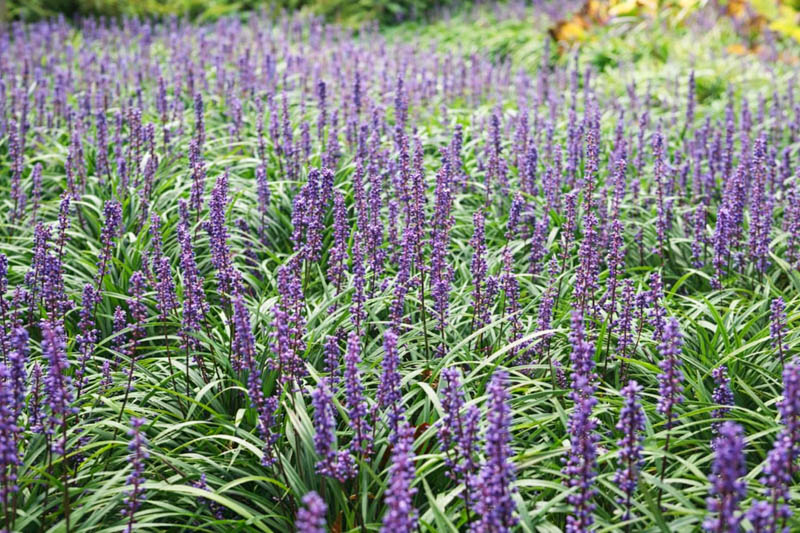
What about Liriope? Suitable Liriope varieties can provide a handsome green border with seasonal violet flowers. Remove damaged winter foliage as appropriate, and divide overcrowded clumps if necessary. Avoid cutting into emerging new growth.
How should Santolina be maintained? Good sunlight and well-drained soil are essential. Light, regular shaping may help maintain its rounded form, but avoid severe cutting into old, bare wood that may not regenerate reliably.
Why do evergreen leaves turn brown in winter? Possible causes include cold injury, winter sun, drying winds, frozen soil, drainage problems, or normal seasonal changes. Check the plant and local conditions before applying fertilizer or removing apparently damaged growth.
How often should you water evergreen edging? New plants require appropriate moisture while establishing. Once rooted, irrigation needs vary greatly. Mondo grass under trees may need different watering from Santolina along a hot gravel walk.
How do you maintain path clearance? Inspect the border as plants mature. Remove foliage that obscures steps, lighting, paving edges, or drainage. If a plant repeatedly outgrows the strip, replacing it with a smaller cultivar may be more practical than constant pruning.
What makes an evergreen path border low-maintenance? A plant that naturally fits its location, remains healthy in the available conditions, and doesn’t require frequent intervention. Choosing the right mature size is often more important than selecting the slowest-growing species.
Can an evergreen border support wildlife? Some shrubs offer shelter, and flowering plants such as Liriope or Santolina may provide seasonal resources. Combine the structural edge with suitable regionally native flowers or shrubs if wildlife habitat is a priority.
Gardenia’s final principle: A beautiful evergreen border should complement the route in every season. Keep its shape healthy and natural, preserve a clear walking surface, and let the foliage form a consistent connection between the path and the garden.
Explore Gardenia’s Shade Garden Plant Guide, Liriope Growing Guides, and Mediterranean Garden Care Guide.