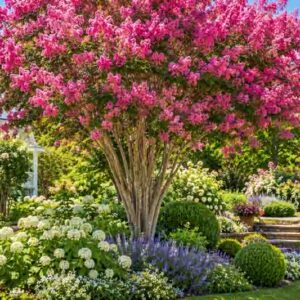
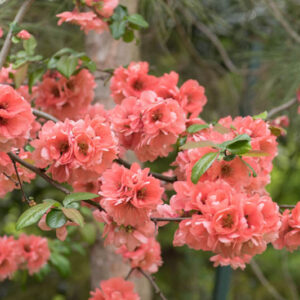
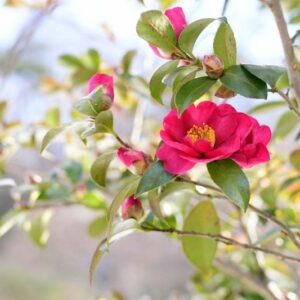
Catawba Crape Myrtle, Catawba Crepe Myrtle, Catawba Crapemyrtle, Purple Crape Myrtle, Purple Crepe Myrtle, Dark Purple Crape Myrtle, Crape Myrtle, Crepe Myrtle, Crapemyrtle
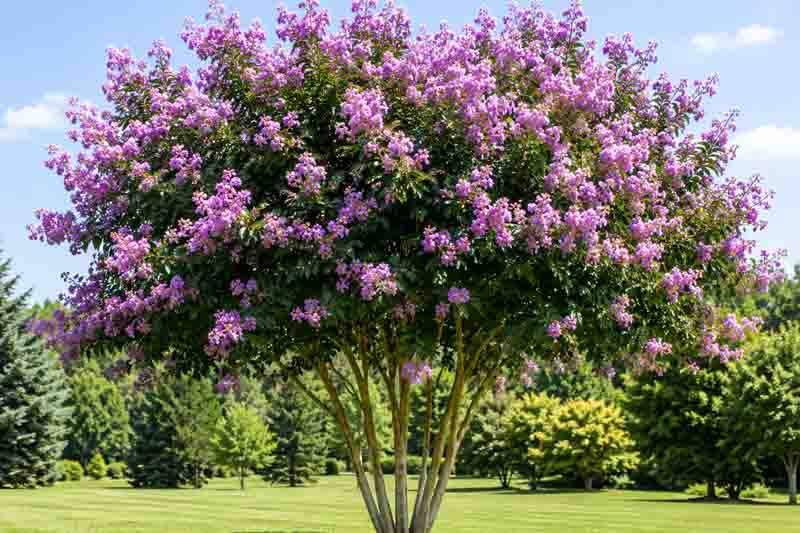


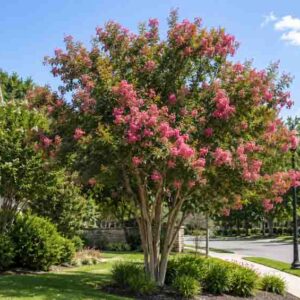
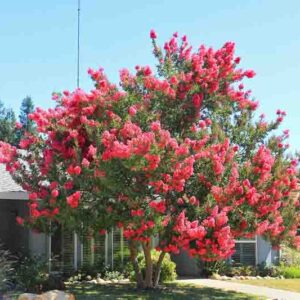
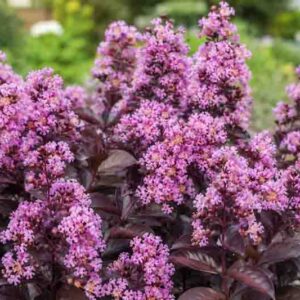
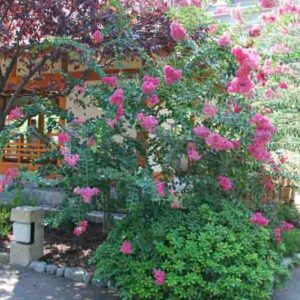
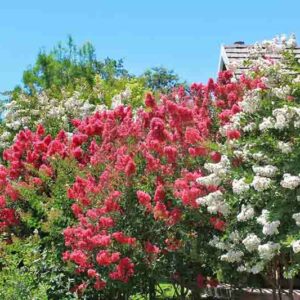
Lagerstroemia indica ‘Catawba’, commonly known as Catawba crape myrtle or Catawba crepe myrtle, is a compact, deciduous flowering tree celebrated for its saturated violet-purple blooms, graceful vase-shaped habit, colorful autumn foliage, and attractive exfoliating bark. Blooming when many trees have finished flowering, it brings weeks of intense color to sunny gardens from midsummer into early fall.
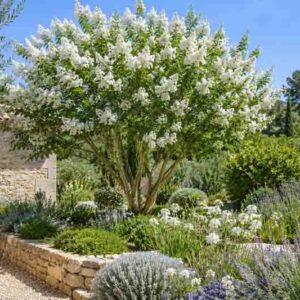
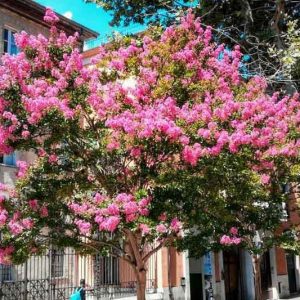
Smaller than many full-size crape myrtles, ‘Catawba’ generally matures at about 10 to 15 ft. tall and wide (3-4.5 m). Its manageable dimensions make it an excellent choice for residential landscapes, courtyards, foundation plantings, mixed borders, patios, and small lawns where a 25-ft. tree would be overwhelming.
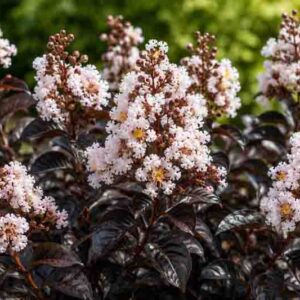
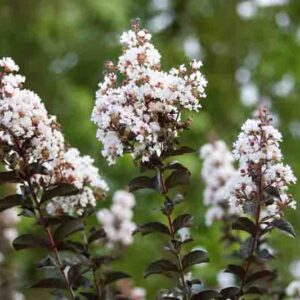
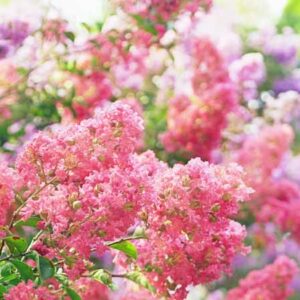
The flower clusters are a particularly rich purple – often described as violet-purple, dark purple, or deep lavender-purple. Bronze-tinged new leaves mature to dark green before turning orange-red in fall. After leaf drop, the smooth, peeling bark and sculptural trunks extend the display through winter.
Summary: Compact purple-flowering crape myrtle with a multi-stemmed, upright to vase-shaped habit and strong four-season interest.
Use: Excellent as a specimen tree, flowering accent, lawn tree, foundation plant, informal screen, or large border shrub.
Highlight: Long-lasting violet-purple flowers followed by orange-red fall foliage and decorative winter bark.
Note: Good resistance to powdery mildew does not mean immunity. Full sun, open spacing, and good air circulation remain important.
| Botanical Name | Lagerstroemia indica ‘Catawba’ |
|---|---|
| Family | Lythraceae |
| Common Names | Catawba crape myrtle, Catawba crepe myrtle |
| Plant Type and Habit | Deciduous large shrub or small tree; upright, rounded to vase-shaped, naturally multi-stemmed |
| Hardiness (USDA) | Zones 7 to 9; top growth may suffer winter injury near the cold edge of its range |
| Size | Typically 10-15 ft. tall and 10-15 ft. wide (3-4.5 m) |
| Sun and Exposure | Full sun; at least 6 hours of direct sun for best flowering and disease resistance |
| Soil | Average, fertile, well-drained clay, loam, or sandy soil; adaptable to acid, neutral, or mildly alkaline conditions |
| Bloom Time | Midsummer to early fall, depending on climate |
| Flower Color | Rich violet-purple to dark lavender-purple |
| Foliage and Fall Color | Bronze-tinged new growth, dark green summer leaves, and orange-red autumn color |
| Wildlife Value | Flowers may be visited by bees and other insects; best regarded as a supplemental floral resource |
| Deer Resistance | Generally deer resistant, although young growth may occasionally be browsed |
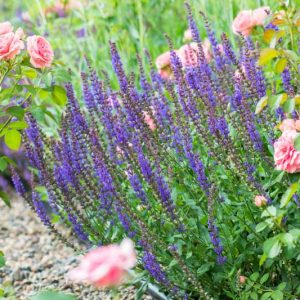
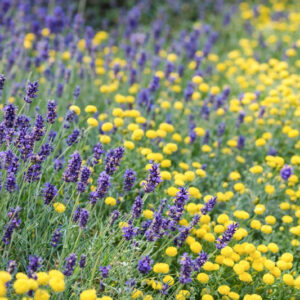
Let the purple flowers command the composition. Pair ‘Catawba’ with silver foliage, soft blue flowers, ornamental grasses, or restrained yellow accents rather than surrounding it with several competing bright colors.
‘Catawba’ is a selected cultivar of Lagerstroemia indica, an Asian species widely grown as crape myrtle. It develops into a dense large shrub or compact small tree, commonly with several trunks rising into an upright, spreading, vase-shaped crown. Gardeners can retain the natural multi-stemmed form or train a young plant to fewer trunks for a more tree-like silhouette.
The abundant flowers are carried in upright terminal panicles. Each bloom has the ruffled, crepe-paper petals that give crape myrtle its common name. Although exact timing varies with heat and latitude, the main display usually begins in midsummer and may continue into early fall. Removing faded clusters can improve neatness, but it is not essential for healthy flowering.
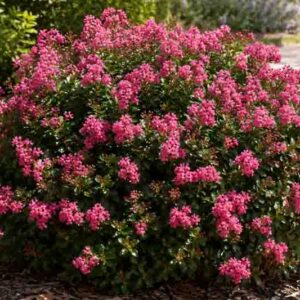
At approximately 10 to 15 ft. tall and 10 to 15 ft. wide, ‘Catawba’ occupies the useful middle ground between dwarf crape myrtles and large shade-tree cultivars. It is substantial enough to anchor a landscape yet compact enough for many suburban gardens. Growth is moderate to fast in warm climates when plants receive full sun, adequate moisture, and reasonable fertility.
Allow the canopy to develop naturally. Crowding the tree against walls, beneath utility lines, or into narrow foundation beds often leads to repeated hard pruning and loss of its graceful architecture. Proper siting is the best long-term maintenance strategy.
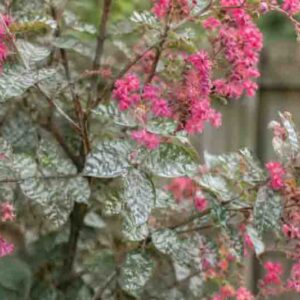
The rich purple flowers are the defining feature, but ‘Catawba’ offers much more than a summer bloom display. New leaves may emerge bronze before becoming dark green. In fall, the foliage develops brilliant orange-red tones. Winter exposes smooth, mottled bark and sinuous trunks that become increasingly decorative with age.
Flower color changes with light, weather, camera exposure, and soil conditions. In the garden, ‘Catawba’ generally reads as a strong violet-purple rather than the reddish magenta or near-blue purple sometimes seen in edited photographs.
‘Catawba’ is most dependable in USDA Zones 7 to 9. It thrives in hot summers and flowers best where the growing season supplies abundant heat. Near the cold limit, stems may be damaged during severe winters, although established roots can sometimes resprout. A warm, protected position and a properly mulched root zone improve performance in marginal climates.
The flowers may be visited by bees and other insects, but crape myrtle is best regarded as a supplemental floral resource rather than a high-value pollinator tree.
Crape myrtles are generally considered deer-resistant plants. Established trees are seldom heavily damaged, but no ornamental is completely deer-proof. Protect young trunks and tender shoots where browsing pressure is severe.
Once established, ‘Catawba’ handles summer heat and periods of drought well. Newly planted specimens still require deep, regular watering, especially during their first growing season. Even mature trees flower and retain foliage better when watered during prolonged drought. Constantly wet soil, however, can lead to weak growth and root problems.
Crape myrtle is not commonly regarded as toxic to people, cats, dogs, or horses. As with any ornamental plant, however, intentional consumption should be discouraged.
‘Catawba’ is not an aggressive, spreading cultivar. The parent species, Lagerstroemia indica, has naturalized outside cultivation in parts of the southeastern United States. Gardeners near sensitive natural areas can remove occasional seedlings and follow local invasive-plant guidance.
Full sun is strongly recommended for abundant flowering, compact growth, and reduced disease pressure. Provide at least six hours of direct sunlight daily; eight or more hours generally produce the strongest flowering, densest habit, and best disease resistance. Shade encourages sparse bloom, leaning growth, and greater vulnerability to powdery mildew.
‘Catawba’ adapts to clay, loam, or sandy soil provided drainage is adequate. It performs in acidic, neutral, and mildly alkaline soils, although slightly acidic conditions are often ideal. Avoid low sites that remain waterlogged. In compacted urban soil, loosen a broad planting area rather than creating a small pocket of heavily amended soil.
Water deeply after planting and whenever the upper root zone begins to dry. Deep irrigation encourages a resilient root system; frequent shallow sprinkling does not. Once established, water during extended dry periods rather than keeping the soil continuously wet.
Overfertilizing can produce lush leaves at the expense of flowers and may encourage aphids. A soil test is the most reliable guide. In ordinary garden soil, a spring application of compost or a modest, balanced slow-release fertilizer is usually sufficient.
Plant in spring or fall, setting the root flare at or slightly above the surrounding soil level. Dig a hole wider than the root ball but no deeper, backfill with the existing soil, water thoroughly, and mulch broadly. Space plants according to their mature 10-15 ft. spread rather than their nursery size.
Crape myrtles flower on new wood, so structural pruning is performed in late winter or early spring before growth begins. Remove dead, damaged, rubbing, or inward-growing branches, along with unwanted basal suckers. Thin selectively to reveal the trunks and improve air circulation.
Avoid topping – the severe annual cutting commonly called “crape murder.” It destroys the natural form, creates weak clusters of shoots, increases maintenance, and can leave branches unable to support heavy flower heads. A properly placed ‘Catawba’ should need only light corrective pruning.
If the tree must be cut back hard every winter to fit its location, it is the wrong plant for the site. Preserve the graceful trunks and vase-shaped crown by choosing adequate space from the beginning.
To preserve the characteristics of ‘Catawba’, propagate vegetatively from softwood, semi-ripe, or hardwood cuttings. Seedlings may vary in flower color, size, and disease resistance and should not be expected to remain true to the cultivar.
‘Catawba’ has good resistance to powdery mildew, but resistance is not immunity. Full sun, air circulation, sensible watering, and appropriate spacing remain the best preventive care. Stressed or shaded plants are more likely to develop problems.
The following companions match ‘Catawba’ well because they enjoy full sun, heat, and well-drained soil and tolerate moderate dryness after establishment. Keep thirsty plants out of the immediate root zone, and preserve open space around the trunks for airflow and visibility.
Lagerstroemia ‘Catawba’ typically grows about 10 to 15 feet tall and 10 to 15 feet wide. Its compact, upright to vase-shaped habit makes it smaller and easier to place than many large crape myrtle cultivars.
Catawba crape myrtle produces rich violet-purple to dark lavender-purple flower clusters. Color can appear slightly different with changing light, weather, soil conditions, and photography.
Catawba crape myrtle generally blooms from midsummer into early fall. Timing and duration vary with climate, heat, sunlight, plant age, and moisture.
Yes. Plant it in full sun with at least six hours of direct sunlight daily. Strong sun supports abundant flowers, compact growth, vivid fall color, and better resistance to fungal diseases.
Catawba has good resistance to powdery mildew, but it is not immune. Shade, crowding, poor airflow, humid weather, and susceptible basal shoots can still allow the disease to develop.
Established Catawba crape myrtles tolerate heat and moderate drought, but young trees need regular deep watering. Mature plants also flower and retain foliage better when irrigated during prolonged dry periods.
Prune lightly in late winter or early spring. Remove dead, crossing, inward-growing branches and unwanted suckers while retaining the natural trunk and canopy structure. Never top the tree or cut all branches back to stubs.
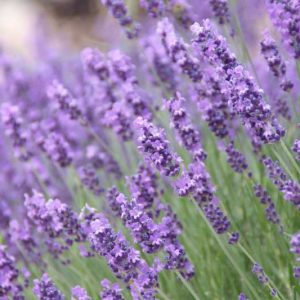
Good companions include Russian sage, lavender, catmint, threadleaf coreopsis, coneflower, and switchgrass. These plants share its preference for full sun, heat, and well-drained soil.
NC State Extension Plant Toolbox – Lagerstroemia indica ‘Catawba’: https://plants.ces.ncsu.edu/plants/lagerstroemia-indica-catawba/
University of Florida IFAS Extension – Crapemyrtle Pruning and Cultivar Sizes: https://ask.ifas.ufl.edu/publication/EP399
Clemson Cooperative Extension – Crape Myrtle: https://hgic.clemson.edu/factsheet/crape-myrtle/
Clemson Cooperative Extension – Crape Myrtle Diseases and Insect Pests: https://hgic.clemson.edu/factsheet/crape-myrtle-diseases-insect-pests/
Updated: July 2026 • Reviewed by Gardenia Editors
| Hardiness |
7 - 9 |
|---|---|
| Heat Zones |
7 - 9 |
| Climate Zones | 7, 8, 9, 10, 12, 13, 14, 15, 18, 19, 20, 21, H1, H2 |
| Plant Type | Shrubs, Trees |
| Plant Family | Lythraceae |
| Genus | Lagerstroemia |
| Common names | Crepe Myrtle |
| Exposure | Full Sun |
| Season of Interest | Summer (Mid, Late), Fall |
| Height | 10' - 15' (3m - 4.6m) |
| Spread | 10' - 15' (3m - 4.6m) |
| Spacing | 120" - 180" (3m - 4.6m) |
| Maintenance | Low |
| Water Needs | Average |
| Soil Type | Chalk, Loam, Sand |
| Soil pH | Acid, Neutral |
| Soil Drainage | Well-Drained |
| Characteristics | Showy |
| Tolerance | Drought, Deer, Clay Soil |
| Attracts | Bees, Birds |
| Garden Uses | Beds And Borders |
| Garden Styles | City and Courtyard, Informal and Cottage, Mediterranean Garden, Pollinator Garden |


| Hardiness |
7 - 9 |
|---|---|
| Heat Zones |
7 - 9 |
| Climate Zones | 7, 8, 9, 10, 12, 13, 14, 15, 18, 19, 20, 21, H1, H2 |
| Plant Type | Shrubs, Trees |
| Plant Family | Lythraceae |
| Genus | Lagerstroemia |
| Common names | Crepe Myrtle |
| Exposure | Full Sun |
| Season of Interest | Summer (Mid, Late), Fall |
| Height | 10' - 15' (3m - 4.6m) |
| Spread | 10' - 15' (3m - 4.6m) |
| Spacing | 120" - 180" (3m - 4.6m) |
| Maintenance | Low |
| Water Needs | Average |
| Soil Type | Chalk, Loam, Sand |
| Soil pH | Acid, Neutral |
| Soil Drainage | Well-Drained |
| Characteristics | Showy |
| Tolerance | Drought, Deer, Clay Soil |
| Attracts | Bees, Birds |
| Garden Uses | Beds And Borders |
| Garden Styles | City and Courtyard, Informal and Cottage, Mediterranean Garden, Pollinator Garden |
How many Lagerstroemia indica ‘Catawba’ (Crape Myrtle) do I need for my garden?
| Plant | Quantity | |
|---|---|---|
| Lagerstroemia indica ‘Catawba’ (Crape Myrtle) | N/A | Buy Plants |
Create a membership account to save your garden designs and to view them on any device.
Becoming a contributing member of Gardenia is easy and can be done in just a few minutes. If you provide us with your name, email address and the payment of a modest $25 annual membership fee, you will become a full member, enabling you to design and save up to 25 of your garden design ideas.
Join now and start creating your dream garden!
Create a membership account to save your garden designs and to view them on any device.
Becoming a contributing member of Gardenia is easy and can be done in just a few minutes. If you provide us with your name, email address and the payment of a modest $25 annual membership fee, you will become a full member, enabling you to design and save up to 25 of your garden design ideas.
Join now and start creating your dream garden!