Pocomoke Crape Myrtle, Pocomoke Crepe Myrtle, Pocomoke Crapemyrtle, Pocomoke Dwarf Crape Myrtle, Dwarf Crape Myrtle, Rose-Pink Crape Myrtle, Pink Crape Myrtle, Crape Myrtle, Crepe Myrtle, Crapemyrtle
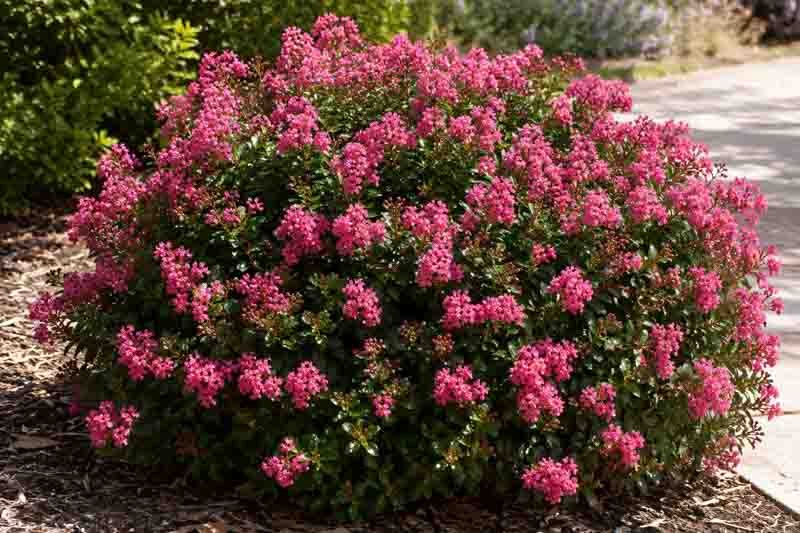


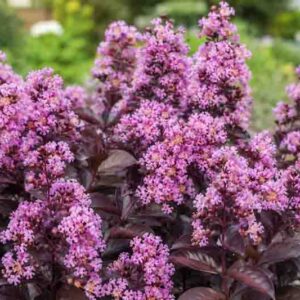
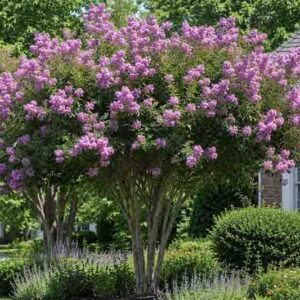
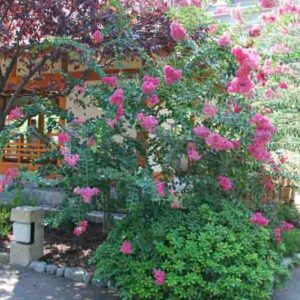
Lagerstroemia ‘Pocomoke’, commonly called Pocomoke crape myrtle or Pocomoke crepe myrtle, is a miniature deciduous flowering shrub prized for its deep rose-pink blooms, glossy dark green foliage, dense rounded habit, and exceptional usefulness in small gardens. It delivers the summer color and heat tolerance associated with crape myrtles without developing into a tree.
Released by the U.S. National Arboretum in 1998, ‘Pocomoke’ was selected to remain naturally low and compact. Depending on climate, age, and growing conditions, it commonly reaches about 2 to 5 ft. tall and wide (60-150 cm). Its manageable size makes it especially valuable for foundation beds, low hedges, mass plantings, sunny borders, rock gardens, and large containers.
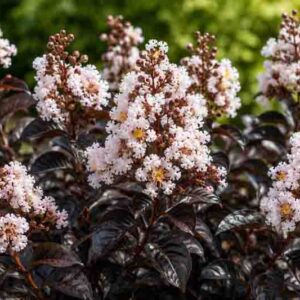
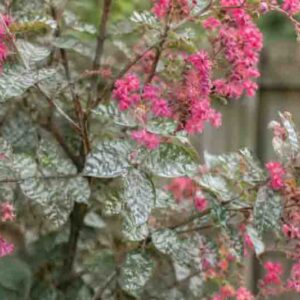
The richly colored flowers appear in midsummer and may continue into early fall in warm climates. Maroon-tinged new foliage matures to glossy dark green before developing bronze-red to reddish fall tones. Although the bark is less prominent than on tree-form crape myrtles, older stems may still add subtle winter texture after the leaves fall.
Summary: Miniature rose-pink crape myrtle forming a dense, rounded mound with glossy foliage and strong summer color.
Use: Excellent for small gardens, low hedges, foundation beds, mass plantings, sunny borders, rock gardens, and large containers.
Highlight: One of the smallest National Arboretum crape myrtles, with a naturally compact habit that generally needs little size-control pruning.
Note: Full sun is strongly recommended for the heaviest flowering and tightest growth. Avoid wet, poorly drained soil and excessively alkaline conditions.
| Botanical Name | Lagerstroemia ‘Pocomoke’; often listed in commerce as Lagerstroemia indica ‘Pocomoke’ |
|---|---|
| Family | Lythraceae |
| Common Names | Pocomoke crape myrtle, Pocomoke crepe myrtle, miniature crape myrtle, dwarf crape myrtle |
| Origin | Miniature hybrid introduced by the U.S. National Arboretum in 1998 |
| Plant Type and Habit | Deciduous dwarf flowering shrub; dense, rounded, mounded, compact, and multi-stemmed |
| Hardiness (USDA) | Zones 6 to 9; top growth may suffer winter damage near the cold edge of its range |
| Size | Commonly 2-5 ft. tall and wide (60-150 cm), depending on climate and age |
| Growth Rate | Slow to moderate |
| Sun and Exposure | Full sun; at least 6 hours of direct sunlight, with 8 or more hours ideal |
| Soil | Average, moderately fertile, well-drained clay, loam, or sandy soil; slightly acidic to neutral conditions are best |
| Bloom Time | Midsummer through late summer, sometimes continuing into early fall |
| Flower Color | Deep rose-pink to rich rosy pink |
| Foliage and Fall Color | Maroon-tinged new leaves, glossy dark green summer foliage, and bronze-red to reddish autumn color |
| Disease Resistance | Highly resistant to powdery mildew; also rated resistant to leaf spot in comparative trials |
| Wildlife Value | Flowers may be visited by bees and other insects; best regarded as a supplemental floral resource |
| Deer Resistance | Generally deer resistant, although tender growth may occasionally be sampled |
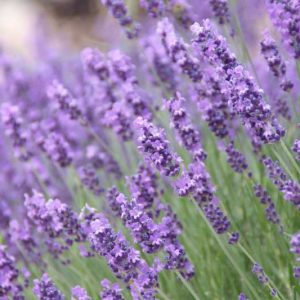
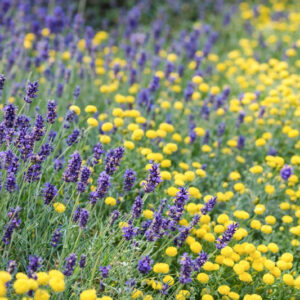
Use ‘Pocomoke’ as a low summer-flowering anchor at the front of a sunny border. Its saturated rose-pink flowers are especially effective against silver foliage, blue-gray grasses, white stone, or restrained lavender-blue companions.
‘Pocomoke’ is a miniature hybrid crape myrtle developed through the U.S. National Arboretum breeding program and released in 1998. It was selected for a genuinely compact, mound-shaped habit, deep rose-pink flowers, and high resistance to powdery mildew. Unlike tree-form crape myrtles, it remains a low shrub and normally keeps its rounded shape without annual size-control pruning.
The cultivar is often sold as Lagerstroemia indica ‘Pocomoke’, but its breeding background is more complex than that name suggests. The broadly accurate and commercially clear designation is Lagerstroemia ‘Pocomoke’.
‘Pocomoke’ forms a dense, multi-stemmed mound with closely spaced branches and small leaves. Published size descriptions vary: young or colder-climate plants may remain around 20-36 in. tall, while established shrubs in favorable conditions can approach 4-5 ft. Mature spread is often equal to or greater than height.
This variation is important when planning a hedge or foundation bed. Space shrubs about 3-5 ft. apart, depending on whether you want individual rounded specimens or a continuous flowering mass. Do not place them so close to a walkway that mature branches must be repeatedly sheared.
The deep rose-pink flowers are carried in compact terminal clusters over the small, glossy leaves. Bloom commonly begins in July or midsummer and continues through August, with flowers sometimes extending into early fall where warm weather persists.
The display is strongest in uninterrupted sun. Plants grown in partial shade may survive, but flowering becomes lighter and the mound may open or lean toward available light. Removing individual spent clusters is optional and usually unnecessary for a healthy, established shrub.
New growth may emerge maroon or reddish before maturing to glossy dark green. In fall, the foliage can develop bronze-red, burgundy, or reddish tones, although the intensity varies with temperature and site. After leaf drop, the fine branching structure and gray-tan stems remain visible.
Because ‘Pocomoke’ has small stems, its exfoliating bark is less dramatic than that of large cultivars such as ‘Natchez‘. Its primary winter value comes from the dense, rounded silhouette rather than bold trunk color.
Do not judge the final size from a newly purchased plant. ‘Pocomoke’ is extremely compact, but an established shrub can become several feet wide. Allow enough space for its natural mound instead of maintaining it as a tightly clipped ball.
‘Pocomoke’ is generally grown in USDA Zones 6 to 9. In Zone 6 and colder parts of Zone 7, stems may die back during severe winters and regrow from the crown. A sunny, protected site and a broad organic mulch layer help protect the roots, but flowering may begin later where the growing season is short.
The flowers may receive visits from bees and other insects, but ‘Pocomoke’ is best considered a supplemental floral resource. Combine it with native perennials and grasses that provide nectar, pollen, seeds, and shelter across a longer season.
Crape myrtles are generally considered deer-resistant plants. However, low-growing shrubs are more accessible than tree canopies, and deer may sample tender new shoots where browsing pressure is severe.
Once established, ‘Pocomoke’ tolerates heat and moderate drought. Newly planted shrubs and container-grown specimens need consistent moisture while roots develop. Long dry periods can reduce flowering, scorch foliage, or cause premature leaf drop.
Crape myrtle is not commonly regarded as toxic to people, cats, dogs, or horses. Nevertheless, ornamental plant material should not be intentionally eaten, and any concerning ingestion should be discussed with an appropriate medical or veterinary professional.
‘Pocomoke’ is a compact shrub rather than an aggressive spreader. It does not run by underground stems, but occasional seedlings may appear where capsules mature. Related Lagerstroemia indica material has naturalized in parts of the southeastern United States, so remove unwanted seedlings near sensitive natural areas.
Full sun is strongly recommended. Provide at least six hours of direct sunlight daily; eight or more hours generally produce the heaviest flowering, tightest habit, and lowest fungal disease pressure. Avoid sites shaded by buildings, trees, or taller shrubs.
‘Pocomoke’ grows in clay, loam, or sandy soil if drainage is adequate. Slightly acidic to neutral soil is ideal. In strongly alkaline ground, iron chlorosis may cause yellow leaves with greener veins. Improve drainage before planting, but avoid creating a narrow pocket of highly amended soil.
Water deeply after planting and whenever the developing root zone begins to dry. Once established, irrigate during extended drought rather than applying frequent shallow sprinklings. Container plants dry much faster than shrubs in the ground and may require regular watering during hot weather.
Excess fertilizer encourages leafy growth and may reduce flowers. Apply compost or a modest slow-release fertilizer in spring only when soil fertility or plant performance indicates a need. A soil test is especially useful when foliage shows chlorosis.
Plant in spring or fall with the root flare at or slightly above grade. Dig the planting hole wider than the root ball but no deeper, backfill with the existing soil, water thoroughly, and mulch over the root zone. Allow enough space for a mature spread of approximately 3-5 ft.
‘Pocomoke’ flowers on new wood, so remove dead, damaged, crossing, or winter-killed stems in late winter or early spring. Light thinning may improve air circulation, but routine hard pruning is unnecessary because the plant is genetically compact.
Avoid cutting every stem back to short stubs. Severe annual pruning delays the natural development of the mound, produces weak shoot clusters, and can reduce early flowering. If a shrub repeatedly outgrows its position, transplant it or choose a smaller cultivar rather than forcing it into the space.
Preserve the naturally rounded form. Remove only what is dead, damaged, badly placed, or needed to maintain airflow – not the healthy framework that gives ‘Pocomoke’ its distinctive mound.
Choose a broad, frost-resistant container with generous drainage holes. Use a high-quality, well-drained potting mix and water whenever the upper layer begins to dry. In cold climates, protect the root ball from repeated freezing by moving the container to a sheltered location or insulating the pot.
Propagate ‘Pocomoke’ vegetatively from cuttings to preserve its compact habit, flower color, and disease resistance. Seedlings may vary and should not be expected to reproduce the cultivar accurately.
‘Pocomoke’ is highly resistant to powdery mildew and has performed well against leaf spot in comparative cultivar trials. It can still experience ordinary crape myrtle pests or environmental problems, especially when crowded, shaded, overfertilized, or grown in poorly drained or alkaline soil.
These companions share the shrub’s preference for full sun and well-drained soil and remain suitably scaled for a compact planting. Keep adequate space around ‘Pocomoke’ so its low rounded form remains visible, and check local heat tolerance in the warmest parts of Zone 9.
Pocomoke crape myrtle commonly grows about 2 to 5 feet tall and 3 to 5 feet wide. Young plants and shrubs in colder climates may remain smaller, while older specimens in favorable conditions can approach the upper end of that range.
Pocomoke produces deep rose-pink to rich rosy-pink flowers. The color is stronger and more saturated than the pale pink or lavender flowers found on many other dwarf crape myrtles.
Pocomoke generally blooms from midsummer through late summer and may continue into early fall in warm climates. Full sun, summer heat, and adequate moisture during establishment support the best display.
Yes. Pocomoke is highly resistant to powdery mildew and has also shown resistance to leaf spot in comparative trials. Resistance is not complete immunity, so full sun, airflow, and proper spacing remain beneficial.
Yes. Its compact habit makes Pocomoke well suited to a large container with generous drainage holes. Container plants need regular summer watering and extra root protection where winters are cold.
Yes. Give Pocomoke at least six hours of direct sunlight each day, with eight or more hours ideal. Full sun produces more flowers, denser growth, and lower fungal disease pressure.
Prune lightly in late winter or early spring, removing dead, damaged, crossing, or winter-killed stems. Pocomoke is naturally compact and does not need severe annual cutting to control its size.
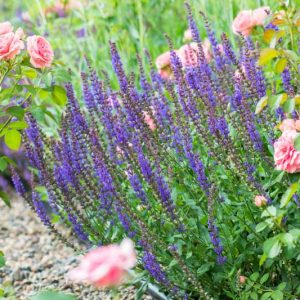
Good companions include catmint, threadleaf coreopsis, lavender, pink muhly grass, and purple coneflower. These plants tolerate full sun, heat, and well-drained soil and provide complementary color and texture at an appropriate scale.
U.S. National Arboretum – International Cultivar Registration Authority, Lagerstroemia ‘Pocomoke’: https://www.usna.usda.gov/science/icra/lagerstroemia/pq/
U.S. National Arboretum – Lagerstroemia ‘Pocomoke’ Introduction: https://www.usna.usda.gov/assets/images/as_standard_image/Lagerstroemia_Pocomoke.pdf
NC State Extension Plant Toolbox – Lagerstroemia ‘Pocomoke’: https://plants.ces.ncsu.edu/plants/lagerstroemia-pocomoke/
University of Arkansas Division of Agriculture – Dwarf Crape Myrtle Cultivars: https://www.uaex.uada.edu/yard-garden/resource-library/crapemyrtle/detail-dwarf/
Clemson Cooperative Extension – Crape Myrtle Diseases and Insect Pests: https://hgic.clemson.edu/factsheet/crape-myrtle-diseases-insect-pests/
Updated: July 2026 • Reviewed by Gardenia Editors
| Hardiness |
6 - 9 |
|---|---|
| Heat Zones |
7 - 9 |
| Climate Zones | 7, 8, 9, 10, 12, 13, 14, 15, 18, 19, 20, 21, H1, H2 |
| Plant Type | Shrubs |
| Plant Family | Lythraceae |
| Genus | Lagerstroemia |
| Common names | Crepe Myrtle |
| Exposure | Full Sun |
| Season of Interest | Summer (Mid, Late), Fall |
| Height | 2' - 5' (60cm - 150cm) |
| Spread | 2' - 5' (60cm - 150cm) |
| Spacing | 36" - 60" (90cm - 150cm) |
| Maintenance | Low |
| Water Needs | Average |
| Soil Type | Chalk, Loam, Sand |
| Soil pH | Acid, Neutral |
| Soil Drainage | Well-Drained |
| Characteristics | Showy |
| Tolerances | Drought, Deer, Clay Soil, Heat |
| Attracts | Bees, Birds |
| Garden Uses | Beds And Borders, Patio And Containers |
| Garden Styles | City and Courtyard, Informal and Cottage, Mediterranean Garden, Pollinator Garden |
| Toxic to Humans | No known toxicity |
| Toxic to Cats | Not toxic |
| Toxic to Dogs | Not toxic |
| Toxic to Horses | Not toxic |


| Hardiness |
6 - 9 |
|---|---|
| Heat Zones |
7 - 9 |
| Climate Zones | 7, 8, 9, 10, 12, 13, 14, 15, 18, 19, 20, 21, H1, H2 |
| Plant Type | Shrubs |
| Plant Family | Lythraceae |
| Genus | Lagerstroemia |
| Common names | Crepe Myrtle |
| Exposure | Full Sun |
| Season of Interest | Summer (Mid, Late), Fall |
| Height | 2' - 5' (60cm - 150cm) |
| Spread | 2' - 5' (60cm - 150cm) |
| Spacing | 36" - 60" (90cm - 150cm) |
| Maintenance | Low |
| Water Needs | Average |
| Soil Type | Chalk, Loam, Sand |
| Soil pH | Acid, Neutral |
| Soil Drainage | Well-Drained |
| Characteristics | Showy |
| Tolerances | Drought, Deer, Clay Soil, Heat |
| Attracts | Bees, Birds |
| Garden Uses | Beds And Borders, Patio And Containers |
| Garden Styles | City and Courtyard, Informal and Cottage, Mediterranean Garden, Pollinator Garden |
| Toxic to Humans | No known toxicity |
| Toxic to Cats | Not toxic |
| Toxic to Dogs | Not toxic |
| Toxic to Horses | Not toxic |
How many Lagerstroemia ‘Pocomoke’ (Crape Myrtle) do I need for my garden?
| Plant | Quantity | |
|---|---|---|
| Lagerstroemia ‘Pocomoke’ (Crape Myrtle) | N/A | Buy Plants |
Create a membership account to save your garden designs and to view them on any device.
Becoming a contributing member of Gardenia is easy and can be done in just a few minutes. If you provide us with your name, email address and the payment of a modest $25 annual membership fee, you will become a full member, enabling you to design and save up to 25 of your garden design ideas.
Join now and start creating your dream garden!
Create a membership account to save your garden designs and to view them on any device.
Becoming a contributing member of Gardenia is easy and can be done in just a few minutes. If you provide us with your name, email address and the payment of a modest $25 annual membership fee, you will become a full member, enabling you to design and save up to 25 of your garden design ideas.
Join now and start creating your dream garden!